-
Clash and Convergence: How Vedic and Western Worldviews Shaped Science, Faith, and History

This long-form essay traces how encounters between Vedic knowledge systems and Western scholarship reshaped global debates on science, faith, and history. It contextualizes John Bentley’s 1825 rebuke of John Playfair within wider conflicts over chronology, authority, and civilizational legitimacy. Readers gain a clear view of India’s mathematical and astronomical achievements, the emergence of Indology, and…
-
Can God Be Seen? Discipline, Darshan, and the Hard-Won Freedom of True Liberation

Can God be seen? Dharmic traditions answer yes—but only when the instrument of knowing is refined by ethics, contemplation, study, service, and grace. Drawing on the Bhagavad Gita, the Upanishads, Yoga Sutras, and parallel insights from Buddhism, Jainism, and Sikhism, this essay explains why darshan is not a spectacle but a disciplined way of seeing.…
-
Auspicious Departure of Ranjit das (ACBSP): Kirtan, Grace, and Vaishnava Legacy in Alachua

Ranjit das, ACBSP, passed away on February 25 at 6:45 pm ET in Alachua, Florida, surrounded by soft kirtan and the loving care of his family and community. The use of ACBSP denotes a disciple of Srila A. C. Bhaktivedanta Swami Prabhupada, reflecting affiliation with ISKCON and the Gaudiya Vaishnava guru–śiṣya paramparā. This tribute explains…
-
Maharashtra ATS Exposes Football-Based Radicalisation: Safeguarding Youth, Sport, and Unity

Maharashtra’s Anti-Terrorism Squad has highlighted the risk of violent extremist recruitment exploiting football clubs, demanding a precise and rights-respecting response. This analysis explains why sports ecosystems can be vulnerable, how offline grooming fuses with online radicalisation, and which behavioral indicators merit attention without profiling. It outlines practical safeguards that clubs, coaches, and families can adopt,…
-
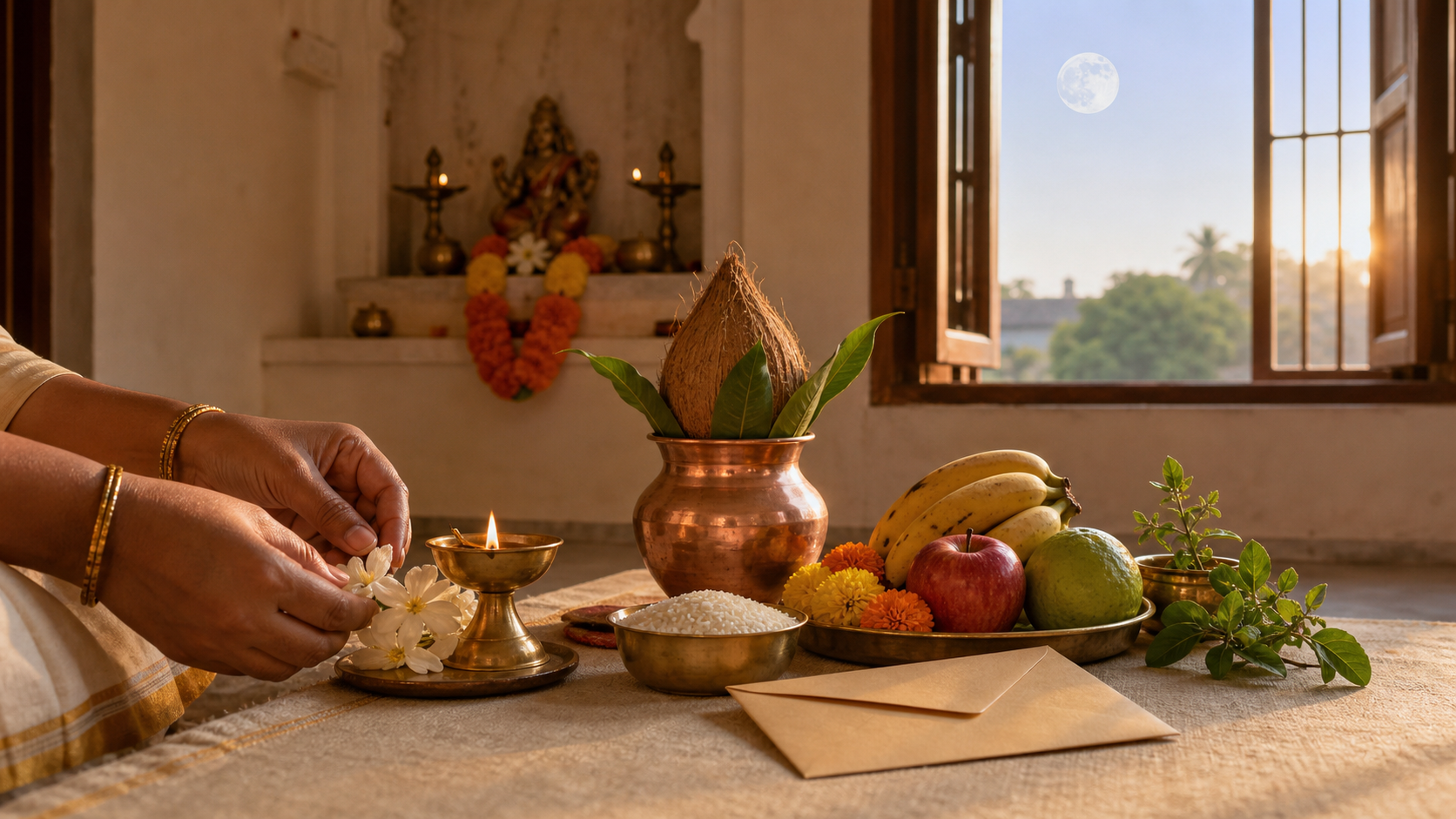
Bedi (Beri) Lakshmi in Bengal: Sacred Grain Altars and the Living Symbolism of Prosperity

Bedi (Beri) Lakshmi is a distinctive Bengali household rite in which Goddess Lakshmi is invoked through a grain-filled altar and a carefully sanctified boundary. The practice centers prosperity in living seed, uniting ecology, economy, and devotion within the domestic sphere. Marked especially on Kojagari Purnima, it employs rice-paste alpana, paddy, turmeric, and lamp to translate…
-
Inside West Bengal’s Quiet Mobilization: RSS ‘jagaran,’ Identity Politics, and 2026 Stakes

Reports from West Bengal point to a quiet, neighborhood-level mobilization linked to RSS affiliates, popularly described as a ‘jagaran’ or awakening campaign. This long-form analysis separates organizational mechanics, legal-constitutional boundaries, and socio-cultural textures from partisan claims. It explains how booth-level turnout engineering, welfare credibility, and trusted intermediaries often shape outcomes more than large rallies. It…
-
Childhood Trauma, Self-Doubt, and Toxic Relationships: A Dharmic, Evidence‑Based Path to Healing

This analysis examines how childhood trauma fuels self-doubt in abusive relationships and explains why dangerous familiarity is often misread as chemistry. It unpacks the roles of attachment patterns, intermittent reinforcement, toxic shame, and the autonomic nervous system in perpetuating trauma bonds. It then outlines dharmic, evidence‑informed healing tools—mindfulness, meditation, Yoga, pranayama, metta, seva, and svadhyaya—and…
-
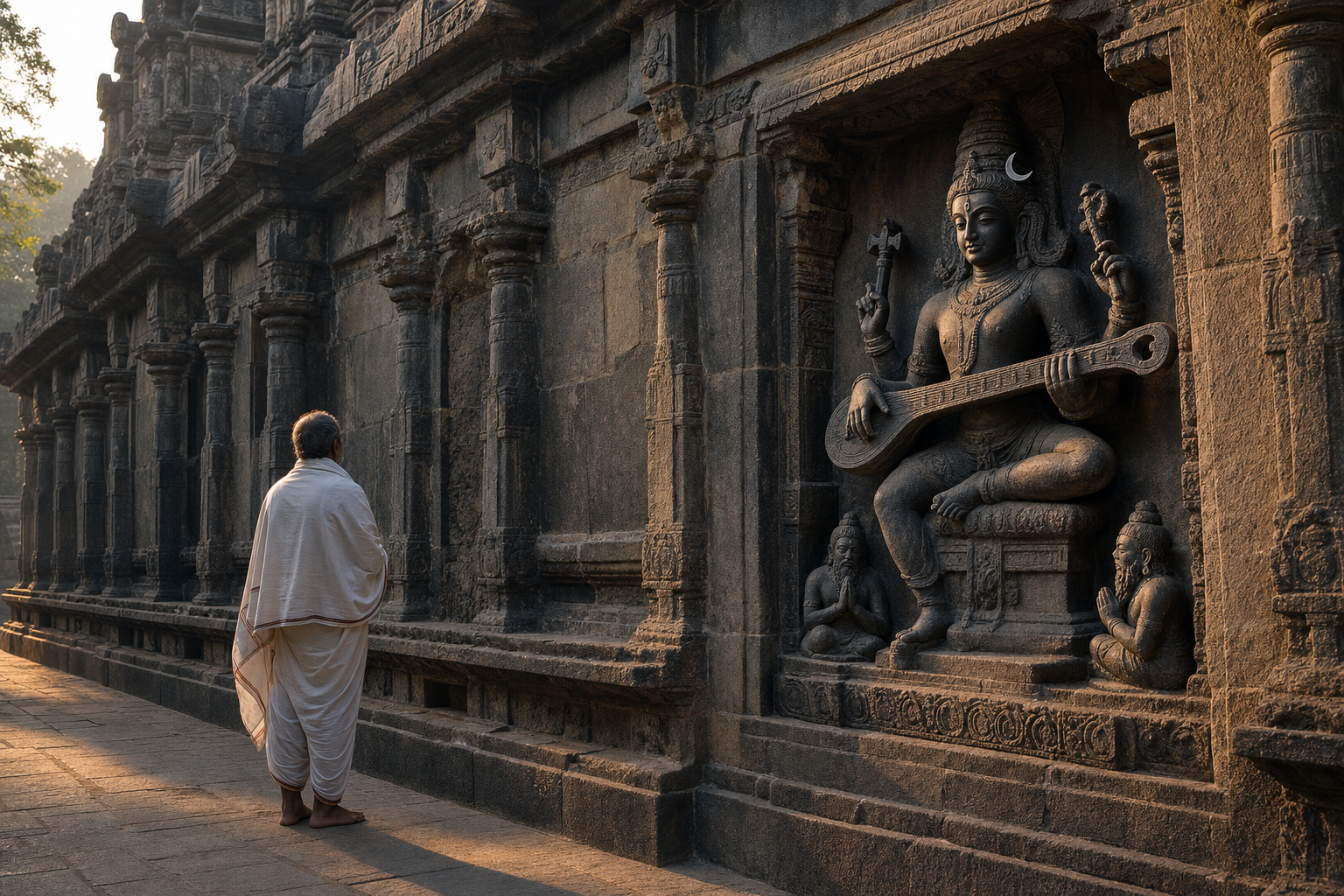
Masi Magam 2026 at Kumbakonam’s Chakrapani Temple: Rituals, Theerthavari, and Sacred Significance

Masi Magam 2026 at Kumbakonam’s Chakrapani Temple will be held on 2 March 2026, aligning the full Moon with Magha Nakshatra for a day of ritual immersion and renewal. The festival centers on the theerthavari of the utsava-murti, framed by Vedic chant, abhishekam, and deepa-aradhana within Kumbakonam’s storied temple-tank network. Devotees value this observance for…
-
Shocking Misuse of Icons: Shivaji Maharaj and Maharani Padmini as Toilet Signs in Haryana

Reports from Sikri, Haryana, indicate that portraits of Chhatrapati Shivaji Maharaj and Maharani Padmini were used as toilet signage in a banquet hall—an act widely perceived as disrespectful. This analysis explains why such placement violates heritage ethics, drawing on semiotics, constitutional duties, and best-practice design standards. It situates Shivaji Maharaj and Maharani Padmini within India’s…
-
Kalki’s White Horse Devadatta: Profound Symbolism, Dharmic Unity, and Timeless Renewal

This article unpacks the symbolism of the Kalki Avatar’s white horse, Devadatta, drawing on the Vishnu Purana and the Bhagavata Purana to show how the motif encodes sattva, disciplined energy, and dharma-restoration at the end of Kali Yuga. It connects Vedic horse imagery (aśva) to prāṇa, time, and ethical action, and clarifies the distinction between…
-
The Art of Objectivity: Dharmic Wisdom for Clear Thinking, Equanimity, and Just Action

This essay presents a rigorous, dharmic approach to objectivity that integrates Hindu, Buddhist, Jain, and Sikh wisdom. It explains how Nyaya pramana, Sankhya-Yoga, and the Bhagavad Gita’s buddhi-yoga cultivate clear perception and ethical decision-making. It shows how Jain Anekantavada prevents dogmatism, while Buddhist mindfulness builds equanimity and Sikh ideals of nirbhau-nirvair align clarity with courage.…
-
March 5, 2026 Panchang: Krishna Paksha Dwitiya→Tritiya, Good Time (Muhurat), Nakshatra & Rashi

On Thursday, March 5, 2026, Krishna Paksha Dwitiya prevails until 4:28 PM, after which Krishna Paksha Tritiya begins, according to most regional Hindu Panchang computations. The day aligns with Guruvara (Thursday), emphasizing learning, counsel, and ethical leadership. Readers can identify Good Time (Shubh Muhurat) using Abhijit around local solar noon and positive Choghadiya blocks, while…
-
Why Chamunda’s Severed, Smiling Head Signifies Bliss: Decoding Ego-Death and Moksha

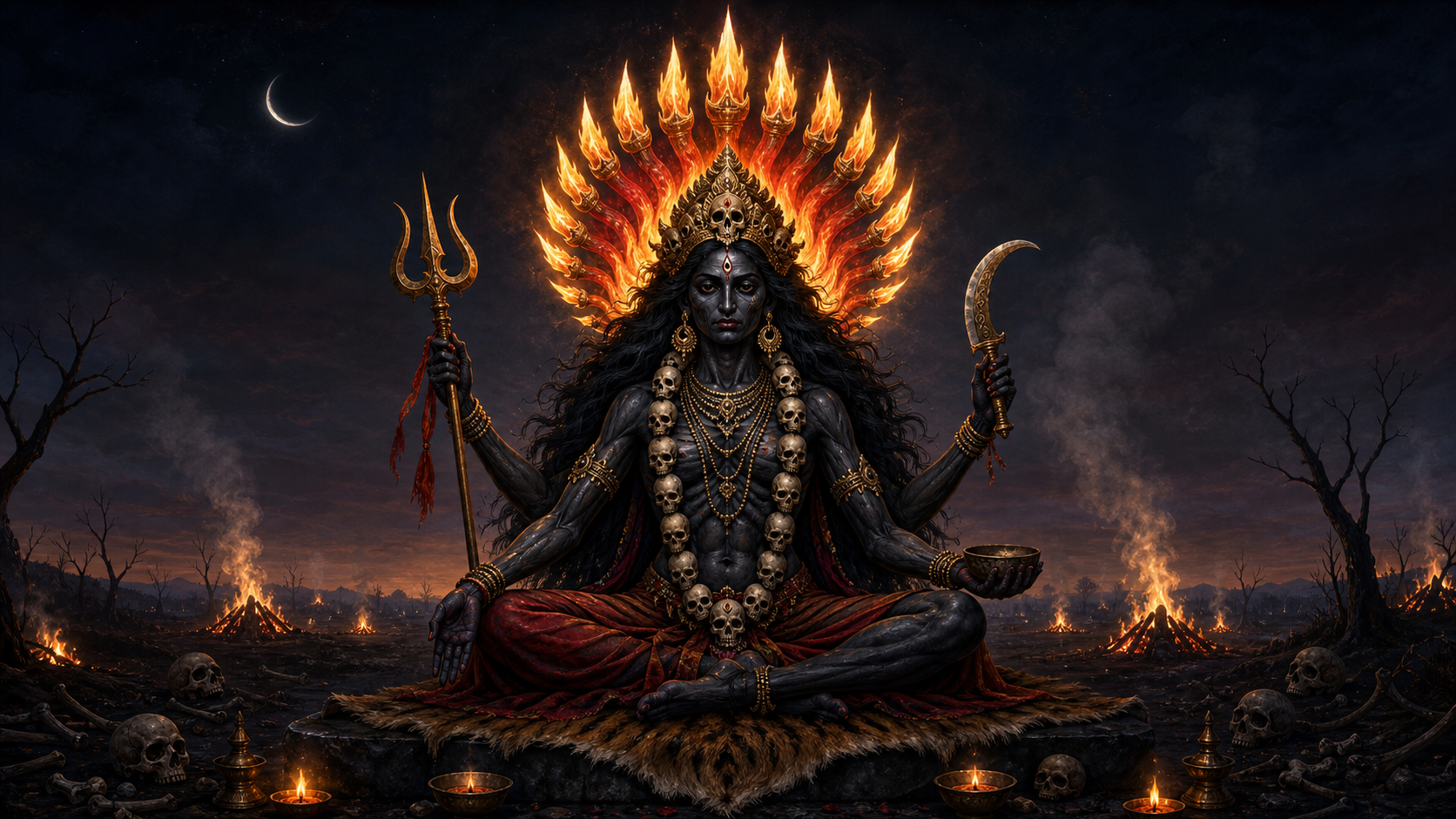
Chamunda’s severed head is not an emblem of violence but a precise symbol of liberation: the serene face represents ego-death and the bliss of moksha. By situating the image within Shakta tantra, cremation-ground sadhana, and the mundamala/kapala vocabulary, the analysis shows how fear is transmuted into insight. Panchamundi Asana symbolism and comparisons with Kali and…
-
Dissolving Matter’s Mirage: Dharmic Wisdom on Returning to the Primordial, Nondual Source

This essay examines how dharmic traditions understand the illusion of materiality and the emergence of a primordial, nondual source through deep inquiry. Drawing on the Upanishads, Bhagavad Gita, Advaita Vedanta, and yogic practice, it explains the movement from gross to subtle via pañca-kośa and the triad of sthūla–sūkṣma–kāraṇa śarīra. It highlights complementary perspectives in Buddhism…
-
The School of Life: Insights from HH Svayam Bhagavan Keshava Maharaja’s Marathon Podcast (Dec 2025)

In December 2025, HH Svayam Bhagavan Keshava Maharaja’s Marathon Podcast, The School of Life, presented a disciplined framework for living as a spiritual education. The approach integrates puruṣārthas with yogic psychology, translating Vedic philosophy and the Upanishads into daily, reproducible practices. Bhakti, karma yoga, jñāna, and dhyāna are balanced with ethics like satya, ahiṁsā, and…
-
Lunar Eclipse 3 March 2026: Definitive Chandra Grahana Sankalpa, Pitru Tarpana & Dāna Mantras Guide

A shastra-aligned, long-form guide to the 3 March 2026 lunar eclipse (Chandra Grahana), this article provides precise Sankalpa templates that can be filled with local panchanga details, complete Pitru Tarpana ślokas for tilodaka offerings, and Thila Tarpana Anantara Vidhi (Samarpana) mantras. It explains sūtaka observance, outlines pre/during/post-eclipse practice flow, and presents widely recited Chandra mantras…
-
Mylapore Kapaleeswarar Brahmotsavam 2026: Dates, Rituals, and Panguni Uthiram Complete Guide

Mylapore Kapaleeswarar Temple Brahmotsavam 2026 spans March 23 to April 1, aligning with Panguni Uthiram and offering a complete arc of ritual intensity and community celebration in Chennai. The festival opens with Dhwajarohanam at 7.30 am on March 23, features Kapaleeswarar Ratholsavam on March 29, and culminates on April 1. Signature processions, including the revered…
-
Unlocking Kosha: From the Five Sheaths of the Self to the Treasury of Hindu Statecraft

Kosha holds a powerful dual meaning in Hindu thought: the five sheaths (panchakoshas) that veil the self in Vedanta and the treasury that sustains a kingdom in classical statecraft. Grounded in the Taittiriya Upanishad and Pancha Kosha Viveka, this analysis clarifies each sheath—annamaya, pranamaya, manomaya, vijnanamaya, anandamaya—and maps practices from asana and pranayama to pratyahara,…
-
Uniting Farms and Temples: ISKCON’s 3rd National Goshalas & Farms Conference—Day 1, Ahmedabad 2026

Day 1 of the 3rd National Conference (ISKCON GBC Ministry of Cow Protection & Agriculture), held on February 22, 2026 at Gopal Krishna Gaushala in Ahmedabad, set a practical blueprint for unifying farms and temples through “Krishi Go-Raksha Vanijyam.” The sessions translated dharmic ethics and Vedic Traditions into actionable plans for Sustainable agriculture, integrating cow-centered…