
-
Krishna Katha: Powerful Lessons in Bhakti, Dharma, and Inner Transformation

Krishna Katha is more than devotional storytelling; it is a disciplined practice of hearing sacred truth through the names, teachings, qualities, and pastimes of Sri Krishna. This article explores the theological, ethical, cultural, and emotional importance of Krishna Katha while remaining faithful to the limited source data available for the session titled “Krishna Katha |…
-
SB 4.8.53 Revealed: The Transformative Power of Sacred Japa and Guru-Guided Bhakti

Śrīmad-Bhāgavatam 4.8.53 presents Nārada Muni’s confidential instruction to Dhruva Mahārāja on the power of mantra-japa and focused meditation. The verse teaches that sacred sound is not a mechanical formula but a disciplined practice received through guru-paramparā and lived with sincerity. Its reference to extraordinary yogic vision is best understood within the wider Bhāgavatam emphasis on…
-
Ideal Family Life in Srimad Bhagavatam: Powerful Dharma for the Modern Home
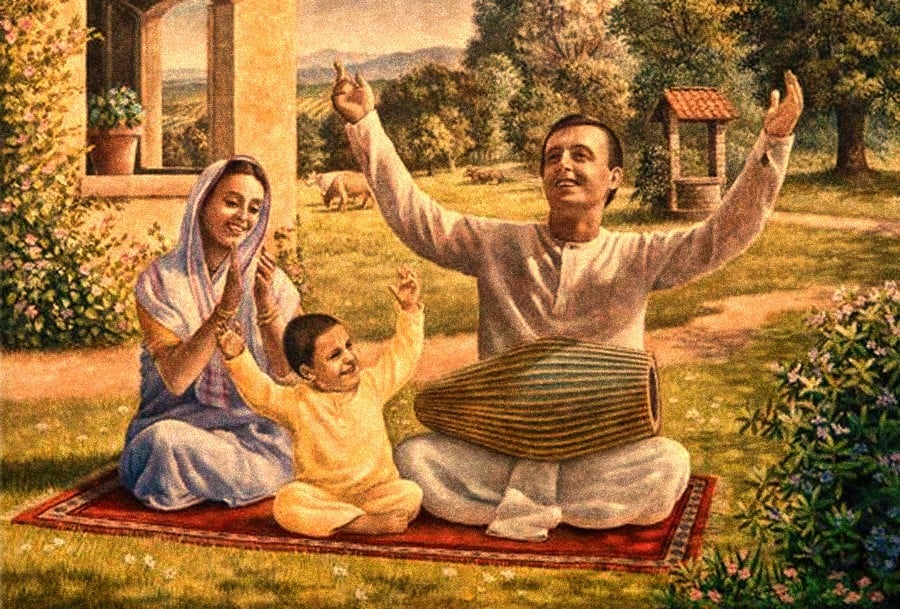
Srimad Bhagavatam, Canto 7, Chapter 14 explains how householders can pursue liberation while living amid family, work, wealth, ritual, and social duties. Narada Muni teaches that grhastha life becomes sacred when the fruits of labor are offered to Krsna, Vasudeva, and when the home becomes a center of prasada, hospitality, charity, and spiritual hearing. The…
-
Powerful Lessons from Śrīmad-Bhāgavatam 11.3.7 on Karma, Time, and Freedom
This reflection on His Grace Sarvabhauma Prabhu’s discourse on Śrīmad-Bhāgavatam 11.3.7 explains the verse’s teaching on karma, birth, death, māyā, and cosmic time. It presents the Bhāgavata’s view that action shapes consciousness and that unconscious desire can bind the living being to repeated suffering. The discussion also clarifies that karma is not fatalism, because human…
-
Powerful Lessons from Śrīmad Bhāgavatam 3.26.56-57 on Body, Prāṇa and Death

Śrīmad Bhāgavatam 3.26.56-57 presents a profound meditation on the virāṭ-puruṣa, the universal form, through the manifestation of skin, herbs, reproductive power, water, apāna, and death. These verses show how the body and cosmos are interwoven in Vedic philosophy, making ordinary embodied life a field for spiritual reflection. The discussion highlights the sacred role of medicinal…
-
Powerful Lessons from ŚB 4.19.24-25 on Dharma, Envy, and Sacred Restraint

ŚB 4.19.24-25 presents a profound lesson on dharma, sacred restraint, and the dangers of religious externalism. The episode shows Lord Brahmā intervening when King Pṛthu’s sacrifice is threatened by Indra’s envy and misuse of renunciant symbols. Rather than excusing wrongdoing, the verses teach that even justified anger must remain governed by divine purpose and moral…
-
SB 2.1.21 Explained: A Powerful Path from Remembrance to Devotional Shelter

Śrīmad-Bhāgavatam 2.1.21 explains how disciplined remembrance leads the yogī toward bhakti, devotional connection, and shelter in the all-auspicious Lord. The verse appears in the Second Canto’s teaching on cosmic contemplation and the universal form, showing how meditation can mature into loving devotion. Its key terms reveal a practical psychology of attention: what the mind repeatedly…
-
Srimad Bhagavatam 3.26.53-55: Powerful Insights on Creation and Consciousness

Śrīmad-Bhāgavatam 3.26.53-55 offers a profound account of the virāṭ-puruṣa and the ordered emergence of speech, breath, smell, sight, hearing, and their presiding deities. These verses present Vedic cosmology as a sacred systems model in which the body, senses, elements, and divine governance are deeply connected. The discussion highlights how speech is linked with fire, sight…
-
Powerful Lessons from SB 5.24.03: Rāhu, Sudarśana, and Divine Protection
This reflection on the Srimad Bhagavatam class SB 5.24.03 explores the deeper meaning of Rāhu, the eclipse, and the protective power of the Sudarśana cakra. It presents the verse as more than a cosmological description, showing how the Bhagavata Purana uses sacred imagery to teach divine protection, purified vision, and resilience. The discussion highlights Lord…
-
Powerful Lesson from ŚB 4.19.23: Exposing False Spirituality with Dharma

ŚB 4.19.23 offers a powerful reflection on the difference between authentic dharma and religious appearance without inner substance. Set within the episode of King Pṛthu and Indra, the verse examines how envy and insecurity can distort sacred symbols. Its central warning concerns pākhaṇḍa, or pseudo-spirituality, where outward signs are separated from humility, discipline, and truth.…
-
Powerful Lessons from Śrīmad-Bhāgavatam 3.26.53-55 on the Cosmic Body

Śrīmad-Bhāgavatam 3.26.53-55 presents a profound account of the virāṭ-puruṣa entering the golden cosmic egg and organizing creation into meaningful departments. These verses explain how speech, breath, smell, sight, hearing, and their presiding deities emerge within the universal form. The teaching offers a technical Vedic framework for understanding the senses as sacred instruments rather than isolated…
-
Powerful Lessons from Srimad-Bhagavatam 3.24.5 on Faith, Guru, and Devotion

This article expands the brief Alachua Temple Live notice into a detailed study of HH Bir Krishna Mhj’s June 24, 2026 class on Śrīmad-Bhāgavatam 3.24.5. It explains the verse’s emphasis on śraddhā, guru-tattva, Devahūti’s spiritual seriousness, and the indwelling presence of the Supreme Lord. The discussion places the verse within Canto 3, Chapter 24, “The…
-
Why Karma Still Leaves Room for Freedom: Powerful Lessons from SB 11.3.6

Śrīmad-Bhāgavatam 11.3.6 offers a compact but powerful explanation of karma, embodiment, desire, and human responsibility. The verse teaches that the embodied being acts through the senses, receives the results of those actions, and wanders through worldly happiness and distress. This article explains why the teaching is not fatalistic, but instead preserves meaningful free will within…
-
Nirjala Ekadashi’s Powerful Lesson: Bhima, Bhagavatam, and Devotional Discipline
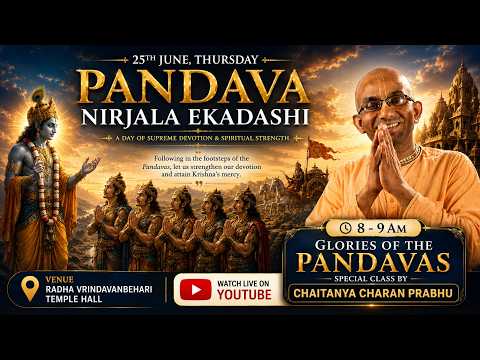
Pandava Nirjala Ekadashi is one of the most demanding and meaningful observances in the Vaishnava calendar. Associated with Bhima of the Pandavas, it teaches that sincere spiritual discipline must be guided by honesty, humility, and scriptural wisdom. The featured Srimad Bhagavatam class by HG Chaitanya Charan Prabhu highlights how fasting becomes transformative when joined with…
-
Powerful Bhāgavatam Insight: How the Supersoul Guides Mind, Senses, and Māyā
This post reflects on HH Bhakti Gaurav Narayan Swami Maharaj’s featured discourse on Śrīmad-Bhāgavatam 11.3.4, dated 21-06-2026. It explains how the verse describes the Supersoul entering embodied beings and activating the mind and senses. The discussion highlights key concepts such as pañca-dhātu, the ten senses, the mind, māyā, Paramātmā, and the three guṇas. It presents…
-
Seven Powerful Purposes of ISKCON: A Scholarly Guide to Bhakti and Unity
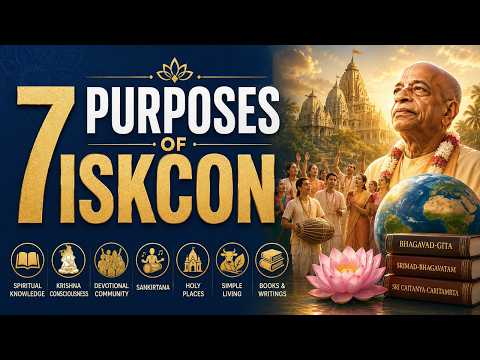
This article expands the featured ISKCON Radhadesh video into a detailed academic reflection on the seven foundational purposes of ISKCON. It explains how Srila Prabhupada’s vision connects spiritual education, Krishna consciousness, community, sankirtana, sacred spaces, simple living, and publishing. The discussion highlights the theological role of Bhagavad Gita and Srimad Bhagavatam while keeping the tone…
-
Powerful Srimad Bhagavatam 1.6.24 Wisdom: Why Devotion Never Fades
This article explores the deeper meaning of Srimad Bhagavatam 1.6.24 as discussed in the featured video by His Holiness Janananda Goswami Maharaja on Tuesday, 23 June 2026. The verse teaches that intelligence fixed in devotion to Bhagavan is never lost and that divine remembrance continues by grace. It examines the context of Narada’s instruction to…
-
Why Bhagavatam 11.3.6 Powerfully Reveals Karma, Freedom, and Inner Awakening

Śrīmad-Bhāgavatam 11.3.6 offers a profound explanation of karma, desire, and embodied life. The verse shows how the living being acts through the senses, accepts the fruits of action, and wanders through alternating happiness and distress. Its message is not fatalistic; it preserves meaningful human agency within the field created by past karma. The teaching encourages…
-
Srimad Bhagavatam 11.11.1: Powerful Freedom Beyond Bondage and Liberation

This long-form reflection on Srimad Bhagavatam 11.11.1 examines Lord Krishna’s teaching to Uddhava on bondage, liberation, māyā, and the guṇas. It explains how the soul’s true identity remains spiritual even while embodied experience is shaped by material nature. The discussion places the verse within the Uddhava Gita and the Eleventh Canto’s wider teachings on devotional…
-
Bhadra Purnima Bhagavatam Marathon: Mayapur’s Powerful Call to Sacred Wisdom

The Bhagvatam Bhadra Purnima Marathon inauguration at Sri Dham Mayapur highlights the sacred importance of gifting, studying, and preserving the Śrīmad-Bhāgavatam. Rooted in Śrīmad-Bhāgavatam 12.13.13, the observance treats scripture as a living source of wisdom worthy of honor and transmission. This article explains the theological meaning of Bhadra Purnima, the role of Mayapur in Gaudiya…