
-
Sri Baladeva Vidyabhushana: Powerful Lessons from a Brilliant Vaishnava Scholar

Sri Baladeva Vidyabhushana Disappearance Day honors one of the most brilliant acharyas of the Gaudiya Vaishnava tradition. His life shows how bhakti, Vedanta, Sanskrit scholarship, and humility can work together in service of dharma. He is especially remembered for composing the Govinda-bhashya, a major commentary on the Vedanta-sutra that established the philosophical authority of Gaudiya…
-
Srimad Bhagavatam 10.29.18-22: The Gopis’ Sacred Call to Transformative Bhakti

Srimad Bhagavatam 10.29.18-22 presents one of the most profound moments in the Rasa-lila narrative, where the gopis respond to Sri Krishna’s flute with complete devotional absorption. These verses explore the tension between worldly duty and divine love without dismissing the importance of dharma. Krishna’s challenging words to the gopis reveal the depth, purity, and seriousness…
-
Srimad Bhagavatam 3.26.47-49: Powerful Sankhya Wisdom on Senses and Earth

Srimad Bhagavatam 3.26.47-49 offers a precise Sāṅkhya analysis of the senses, their objects, and the five gross elements. The passage explains hearing through sound, touch through air, sight through form, taste through water, and smell through earth. It also teaches that the effect carries the qualities of its cause, which is why earth is described…
-
Vaikuntha’s Seventh Gate: Powerful Lessons on Humility, Focus, and Sacred Vision

Śrīmad-Bhāgavatam 3.15.27 presents the four Kumāras passing through the gates of Vaikuṇṭha with unwavering focus before meeting the divine doorkeepers at the seventh gate. This reflection explains the verse through Vaishnava theology, scriptural context, and practical spiritual psychology. It highlights how sacred beauty should deepen devotion rather than distract from it. The discussion also examines…
-
Gita Nagari Bhagavatam Class: A Powerful Daily Practice for Bhakti and Puja

Gita Nagari’s daily Srimad Bhagavatam class offers a meaningful model of scriptural learning joined with devotion, greetings, and puja. The practice brings the Bhagavata Purana into everyday life through hearing, reflection, ritual worship, and community participation. This article explains the theological, cultural, and practical significance of studying Srimad Bhagavatam in a daily setting. It highlights…
-
Bhurijana Dasa Live: A Powerful Gateway to Bhakti, Study, and Dharmic Unity

A brief live announcement for Bhurijana Dasa opens into a deeper reflection on bhakti, scriptural learning, and the living guru-shishya tradition. The post explains why live spiritual teachings matter in a distracted digital age and how they can become meaningful satsang rather than passive content. It places Vaishnava study within the wider context of Hindu…
-
Gajendra’s Lesson: How Family Life Becomes a Powerful Path to Spiritual Perfection

Śrīmad-Bhāgavatam 8.2.30 uses the struggle between Gajendra and the crocodile to teach a practical science of spiritual strength. The elephant weakens because he is pulled into an unsuitable environment, while the crocodile grows stronger in its natural element. This lesson is especially relevant for householders, who can pursue perfection without artificially imitating renunciation. Family life…
-
Water, Forest, and the Soul: A Powerful Reading of Srimad Bhagavatam 11.3.25

This article offers a detailed academic reflection on Srimad Bhagavatam 11.3.25 through the themes of water, forest, simplicity, and spiritual perception. It explains the Sanskrit terms sarvatra, ātma, īśvara, kaivalyam, aniketatām, and santoṣa in clear contemporary language. The discussion connects Vaishnava theology with environmental stewardship, showing how sacred ecology begins with disciplined consciousness. It also…
-
Bhagavatam 4.21.37–52: Maharaja Prithu’s Transformative Dharma of Leadership, Bhakti, and Unity
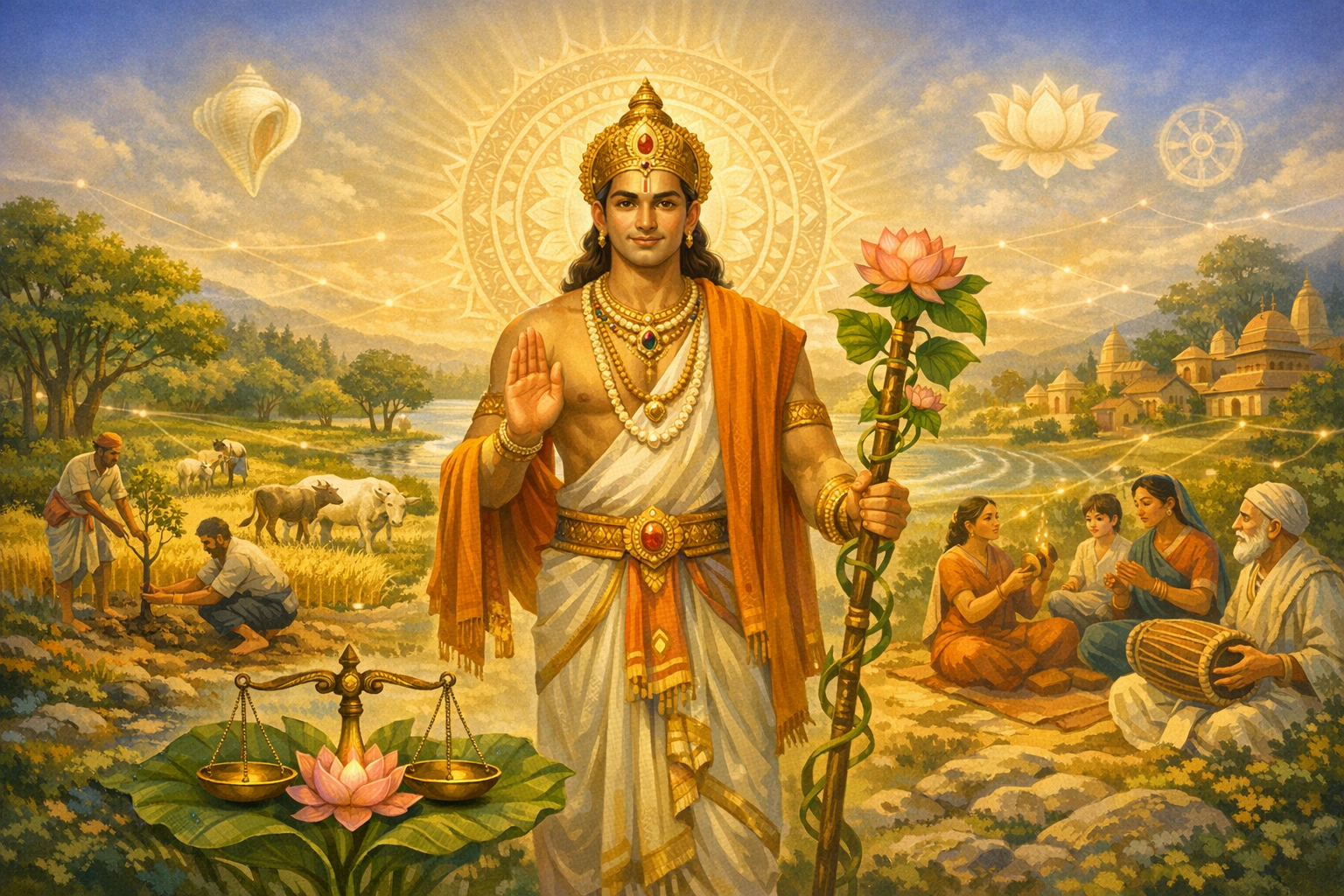
Srimad-Bhagavatam 4.21.37–52 closes Maharaja Prithu’s instructions with a rare integration of rajadharma (ethical governance) and bhakti-yoga (devotional practice). The verses argue that just leadership, social cooperation, and personal sadhana are mutually reinforcing and teleologically ordered toward pleasing the Supreme. Framed through the Paramātman perspective, the text grounds nonviolence, truthfulness, and compassion in the recognition of…
-
ŚB 4.19.14–22 decoded: Pṛthu’s Aśvamedha, Indra’s Envy, and the Ethics of Dharma

Śrīmad-Bhāgavatam (ŚB) 4.19.14–22 examines how power and piety interact when public ritual becomes a theater for rivalry. Set during King Pṛthu’s aśvamedha-yajñas, these verses depict Indra weaponizing ascetic symbols to mask sabotage, thereby illustrating the danger of kūṭa-dharmacounterfeit religiosity. The passage distinguishes authentic renunciation from its costume, urging institutions to anchor trust in conduct, not…
-
SB 11.3.5 Unveiled: Navayogendras on Bhakti, Deity Worship, and Fearless Devotional Life

This in-depth exploration situates SB 11.3.5 within the Nimi–Navayogendra dialogue of the Bhagavata Purana and explains how the verse anchors a practical turn toward embodied devotion. It clarifies the integration of association with the saintly, disciplined hearing, Deity worship (arcana), and compassionate service as core commitments of bhakti. Readers gain a precise sense of how…
-
Decoding SB 1.16.5: Dharma‑Bull, Mother Earth, and Kali‑yuga in Srila Prabhupada’s Teachings

SB 1.16.5 presents the iconic tableau of the Dharma‑bull and Mother Earth to diagnose the onset of Kali‑yuga as both a moral and ecological crisis. Through Srila Prabhupada’s teachings, the verse becomes a practical framework: strengthen truthfulness, cleanliness, mercy, and austerity to restore social trust and environmental balance. The episode models just governance in the…
-
ISKCON London Srimad Bhagavatam: Deep Bhakti, Living Wisdom, Dharmic Unity | 23 Jun 2026

On 23 June 2026, ISKCON London hosted a Srimad Bhagavatam class that combined rigorous textual study with practical guidance for daily life. Framed within Gaudiya Vaishnavism and Srila Prabhupada’s purports, the session presented bhakti-yoga as a disciplined, transformative practice rather than sentiment. Participants explored how the Bhagavatam’s nine processes of devotion refine character, stabilize attention,…
-
Srimad Bhagavatam 2.2.27 Decoded: Transformative Focus, Paramatma Realization, and Bhakti Yoga

Srimad Bhagavatam 2.2.27 synthesizes Chapter Two’s yogic arcpratyahara, dharana, and dhyanainto steadfast remembrance of the Paramatma in the heart. Read alongside community practice in settings such as ISV BYS, the verse frames technique as servant to bhakti, where breath, attention, and sacred sound converge. The result is a stable, tender clarity that supports both inner…
-
Decoding ŚB 4.19.13: Prithu’s Sacrifices, Indra’s Envy, and the Power of Dharmic Unity
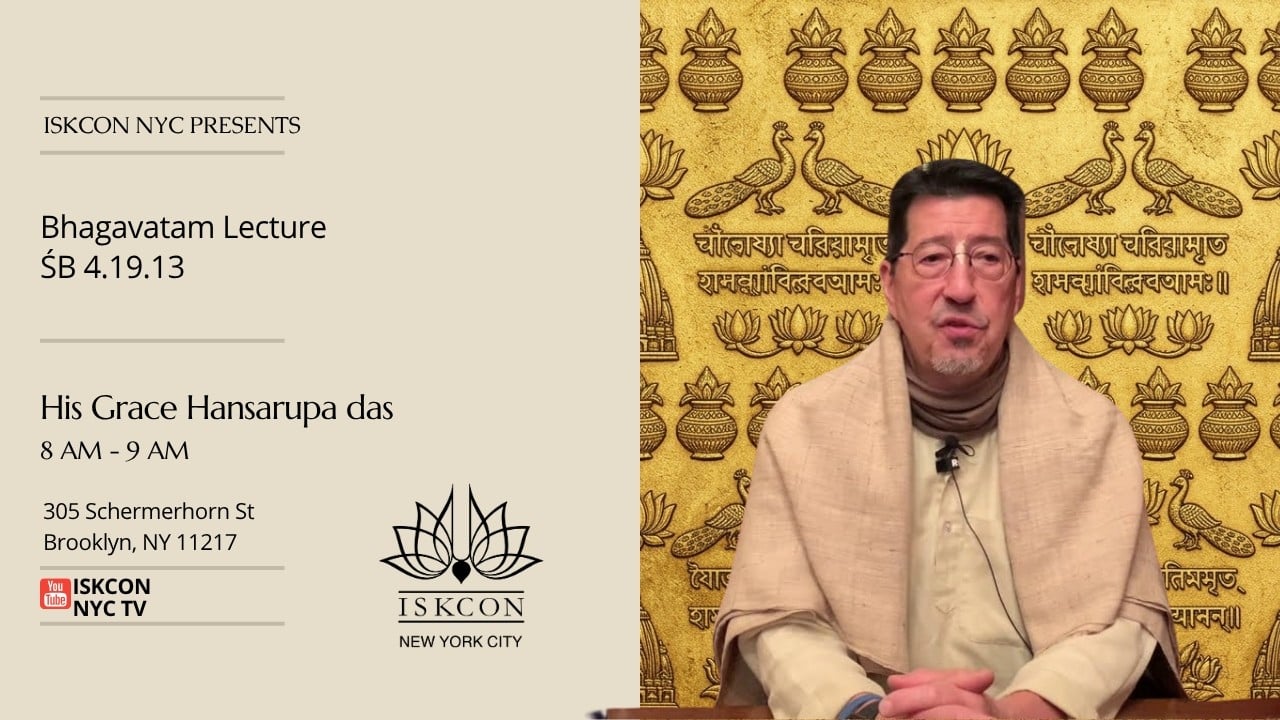
ŚB 4.19.13, discussed in a thoughtful NYC satsanga by HG Hansarupa das, anchors King Prithu’s sacrifices in the Srimad Bhagavatham as a model of ethical leadership and devotion-centered ritual. The verse sits within a chapter that warns against spiritual opportunism and reaffirms that yajña is meaningful only when guided by humility, integrity, and compassion. Framed…
-
Hari Kirtana for the Modern Age: A Scientific and Transformative Guide to Bhakti-Yoga

Hari Kirtanacongregational chanting of the divine names of Hariunites the aims of yoga, jñāna, and meditation into a single, accessible practice grounded in Dharmic unity. Scriptural anchors from the Bhagavad Gita and the Srimad Bhagavatham align with modern research on sound, breath, and attention, showing how mantra-synchronized breathing can calm the nervous system and deepen…
-
Srimad Bhagavatam 2.8.8 at ISKCON London: Timeless Answers, Clear Practice, Dharmic Unity
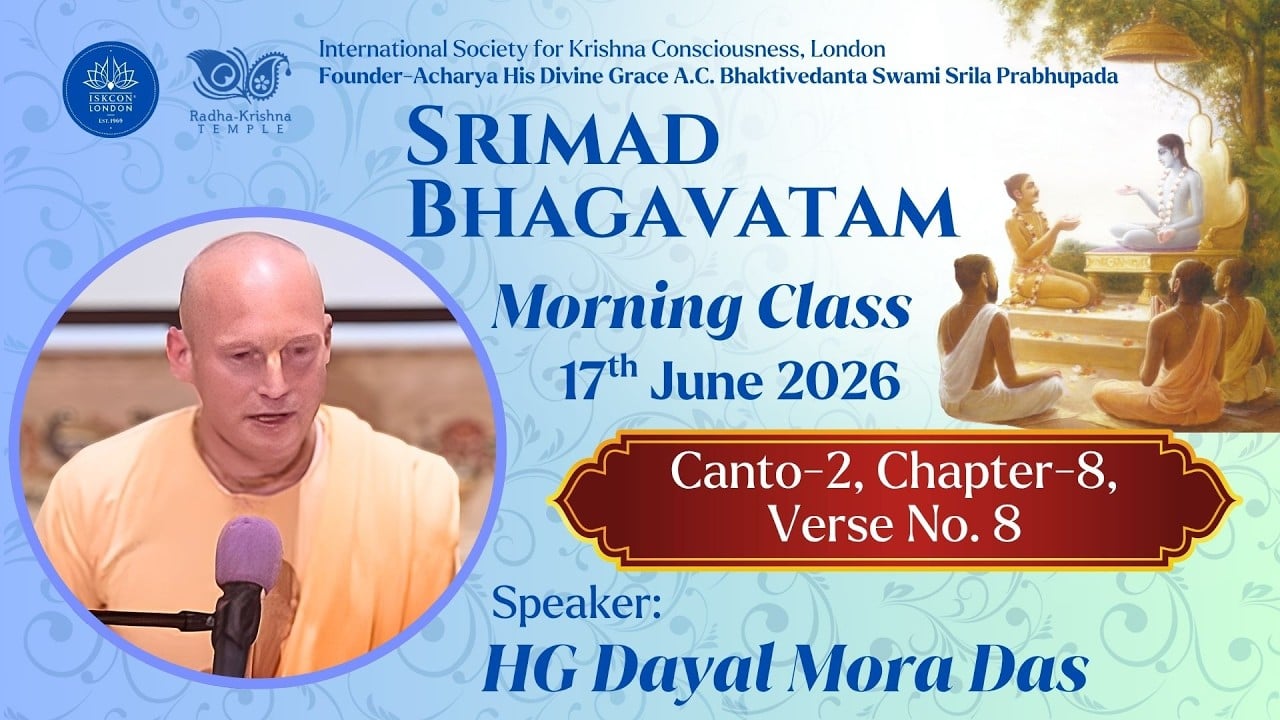
Hosted on 17 June 2026 at ISKCON London, this Srimad Bhagavatam 2.8.8 class by HG Dayal Mora Das situates a single verse within the architecture of Canto 2, Chapter 8. Readers gain a precise map of Parikshit’s questions, spanning cosmology, time, avatara-tattva, and the bhakti method of hearing and remembrance. The analysis clarifies key Sanskrit…
-
Krishna Consciousness and Unshakable Clarity: Why a God-Centered Mind Defies Bewilderment
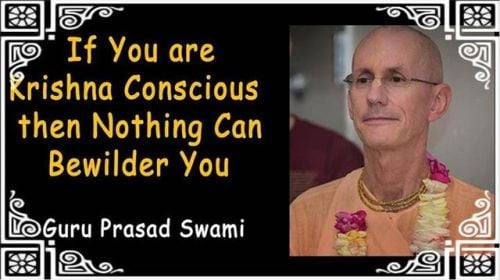
Guru Prasad Swami’s insight“If you are Krishna conscious then nothing can bewilder you”summarizes a classical bhakti thesis: devotional remembrance produces unshakable clarity. Grounded in Srimad Bhagavatam and Bhagavad-gita, the article explains how hearing, chanting, and service align attention, ethics, and resilience. It outlines a practical sadhana regimen common in ISKCONjapa, study, prasadam, and satsangathat steadily…
-
Srila Prabhupada’s Vedic Planetarium: Mayapur’s Adbhuta-Mandira and a Living Cosmology Blueprint
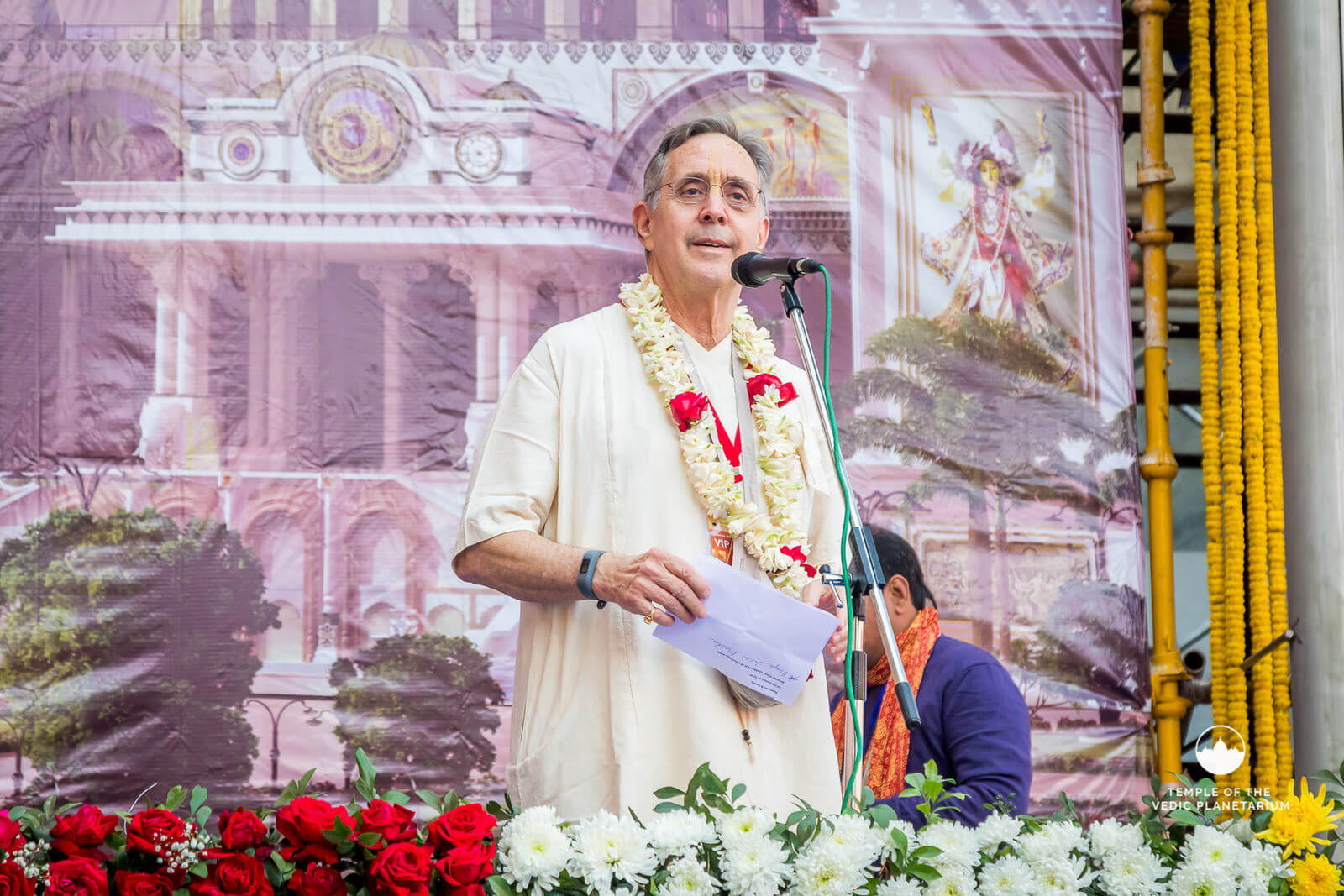
This article examines Srila Prabhupada’s Temple of the Vedic Planetarium (TOVP) as a visionary fusion of Vedic cosmology, museum pedagogy, and temple architecture. It preserves key historical quotations, including the fifth canto mandate and the 1976 Washington design directive, while situating the project within Gaudiya Vaishnava lineage and the prophecy of an adbhuta-mandira at Mayapur.…
-
Why the Human Form Matters: Vedic Enumeration, Dharmic Unity, and Modern Biodiversity Science

This essay bridges Vedic wisdom and modern biodiversity science to explore why the human form is regarded as rare, purposeful, and ethically charged across Hinduism, Buddhism, Jainism, and Sikhism. It explains how empirical methods estimate Earth’s species while acknowledging measurement limits, and how the Puranic enumeration of 8.4 million yonis offers a metaphysical taxonomy that…