
-
Beyond Ego (Ahamkara): Atman, Attachment, and Liberation across Hindu, Buddhist, Jain, Sikh Paths
This comprehensive analysis explains how Hinduism, aligned with Buddhism, Jainism, and Sikhism, understands internal attachment as self-identification with ego (ahamkara/asmita). It clarifies core doctrinesAtman–Brahman, avidya–adhyasa, and the Yoga kleshaswhile mapping practical methods in Karma Yoga, Bhakti, Jnana, and Raja Yoga. Readers gain a technical yet accessible framework using Pancha Kosha Viveka, samskara theory, and Gita-based…
-
Decoding ‘Hindu’: Etymology, Vedic Foundations, and the Timeless Unity of Sanatana Dharma
This essay clarifies the relationship between “Hindu,” “Hinduism,” and Sanatana-dharma by tracing the etymology of “Hindu” from Old Persian Hinduš (linked to the Sindhu River) through Greek and Arabic usage to its modern role as a civilizational identifier. It explains why “Hinduism” emerged in colonial discourse as an umbrella for diverse practices, while Sanatana-dharma functions…
-
Vasudhaiva Kutumbakam Today: A Dharmic Blueprint for Unity, Security, and Shared Prosperity
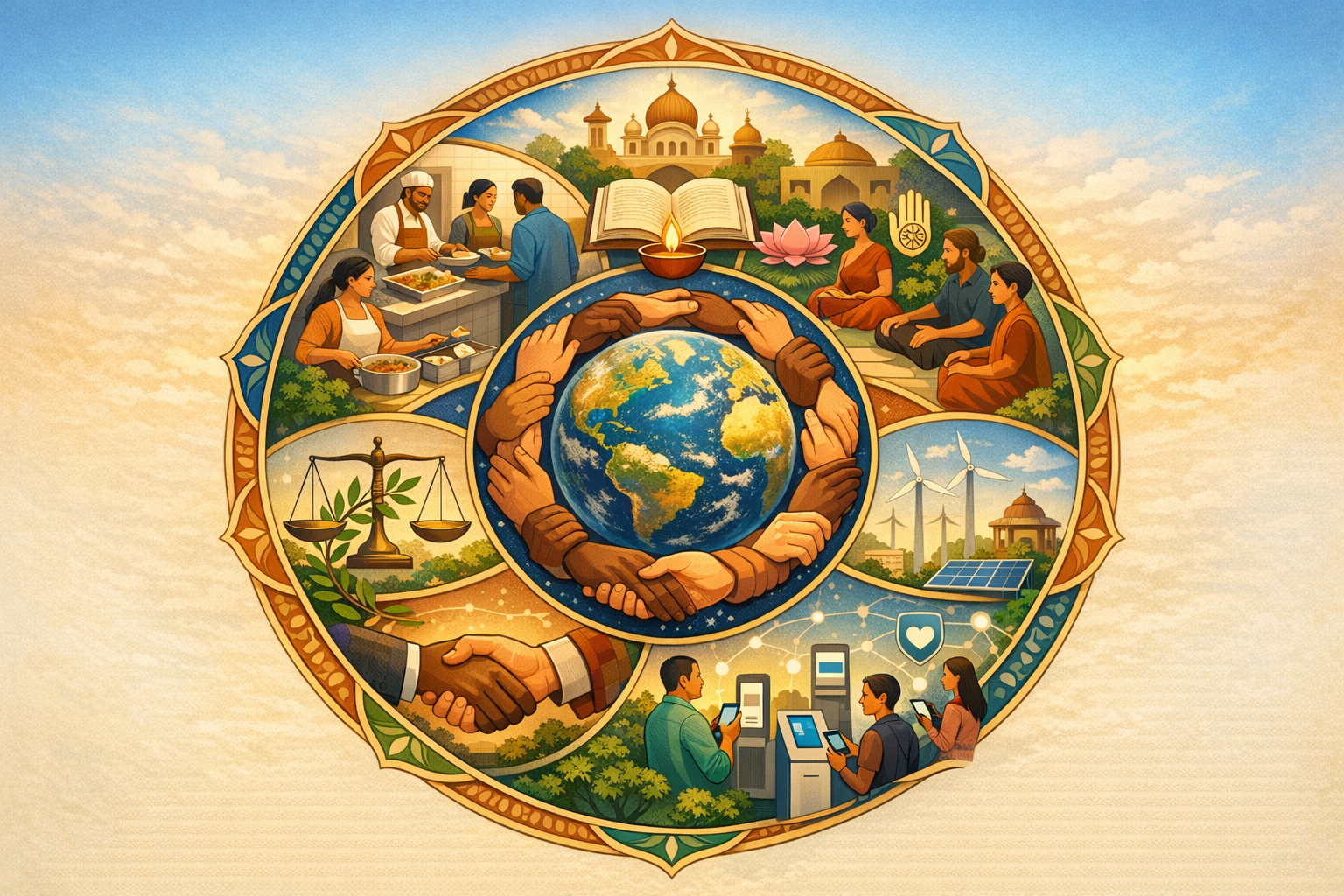
Vasudhaiva Kutumbakam the world is one family is reframed here as a practical, measurable framework for public policy, interfaith harmony, and global cooperation. Rooted in the Maha Upanishad and echoed across Buddhism, Jainism, and Sikhism, the concept aligns ethical statecraft with inclusive development and human security. The analysis outlines design principles dignity by default, dialogue-first,…
-
Beyond Marks and Robes: Recognizing True Sanatana Dharma by Conduct and Consciousness

The dharmic traditions of the Indian subcontinent teach that true spiritual identity is recognized through conduct and consciousness, not through marks, robes, or ritual display. Sanatana Dharma and its sister pathsBuddhism, Jainism, and Sikhismconverge on ethical and contemplative maturity as the most reliable signatures of practice. Scriptural anchors such as the Upanishads, the Bhagavad Gita,…
-
Beyond Fear: Dharmic Pluralism in HinduismIshta, Gita, UpanishadsUniting Diverse Paths
This analysis explains how Hinduism replaces fear-based religious identity with a rigorous philosophy of unity-in-diversity grounded in the Upanishads and the Bhagavad Gita. It details the Ishta principle, panchayatana-puja, and the four yogas as practical engines of pluralism that honor individual temperament while aiming at a shared telos. It situates Hindu pluralism within the broader…
-
The Upanishads’ Radical Vision: Beyond Worship to Realize Atman–Brahman Within
This essay clarifies the Upanishads’ radical claim that ultimate reality is not an external deity to be appeased but the Self (Atman), recognized as non-different from Brahman. It explains how ritual and devotion (upāsanā) are honored as preparatory means, while liberating knowledge (jñāna) is the goal. Readers gain a technical overview of key methodsśravaṇa, manana,…
-
Craving the Crowd, Bearing Its Dust: Hindu-Dharmic Insights on Desire, Acceptance, Complaint
This reflection unpacks the proverb “If you want to be part of the crowd, do not complain about its dirt” through a dharmic, multi-tradition lens. It explains why the human need for belonging carries ethical trade-offs and how Hindu, Buddhist, Jain, and Sikh teachings transform complaint into constructive participation. Drawing on the Bhagavad Gita, Patanjali’s…
-
Timeless Lila: Exploring the Divine Play of Being and Becoming Across Dharmic Paths
This long-form exploration presents Lilathe eternal divine playas a framework for understanding how being and becoming interrelate across Hinduism, Buddhism, Jainism, and Sikhism. Drawing on the Upanishads, Vedanta (Advaita, Vishishtadvaita, Dvaita), the Bhagavad Gita, and Shaiva–Shakta thought, it clarifies how creation, preservation, and dissolution express a living unity. It maps key concepts like dharma, karma,…
-
Unity in Diversity: Harnessing Dharmic Pluralism for Deeper Spiritual Harmony and Growth
This analysis presents Unity in Diversity as a disciplined dharmic pluralism that elevates both personal practice and community life. Anchored in Srila Prabhupada’s insight that spiritual variety leads to agreement, it distinguishes unity from uniformity and diversity from fragmentation. It clarifies acintya-bheda-abheda and Ishta in Hinduism, integrating Swami Vivekananda’s views to show how devotion can…
-
Ashta Sastha Revealed: Eight Transformative Forms of Lord Ayyappa and Their Spiritual Power
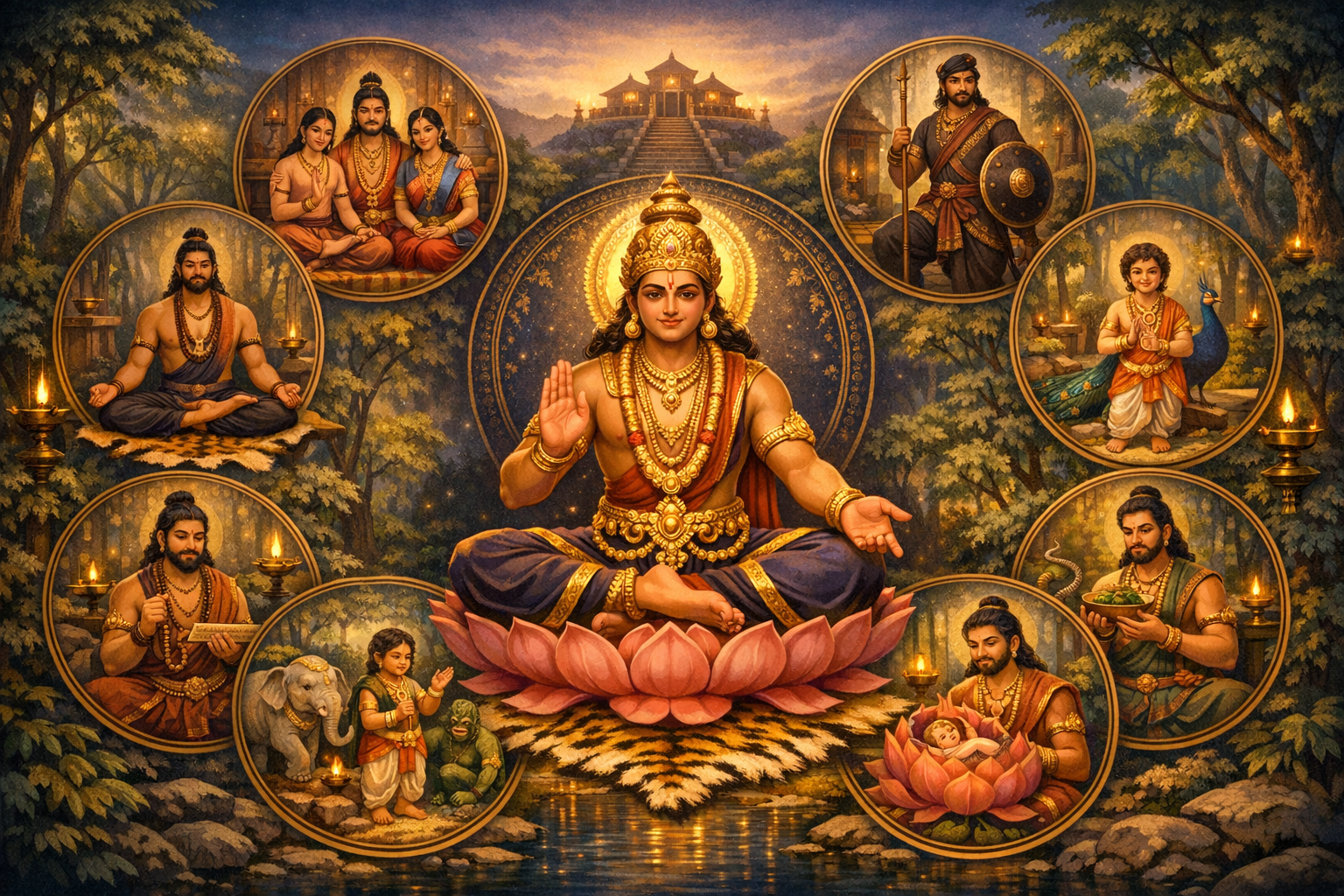
Ashta Sastha presents eight sacred modes of Lord Ayyappa (Dharma Śāstā) that together form a complete pedagogy of spiritual growth. Drawing on Puranic memory, regional sthala-purāṇas, and agamic iconography, the eight forms range from Yoga Śāstā’s meditative stillness to Gṛhastha Śāstā’s family ethics and Vīra Śāstā’s righteous guardianship. The account highlights living practices at Sabarimala,…
-
Judge by Their Ideals: Swami Vivekananda’s Transformative Call to Empathy and Dharmic Unity
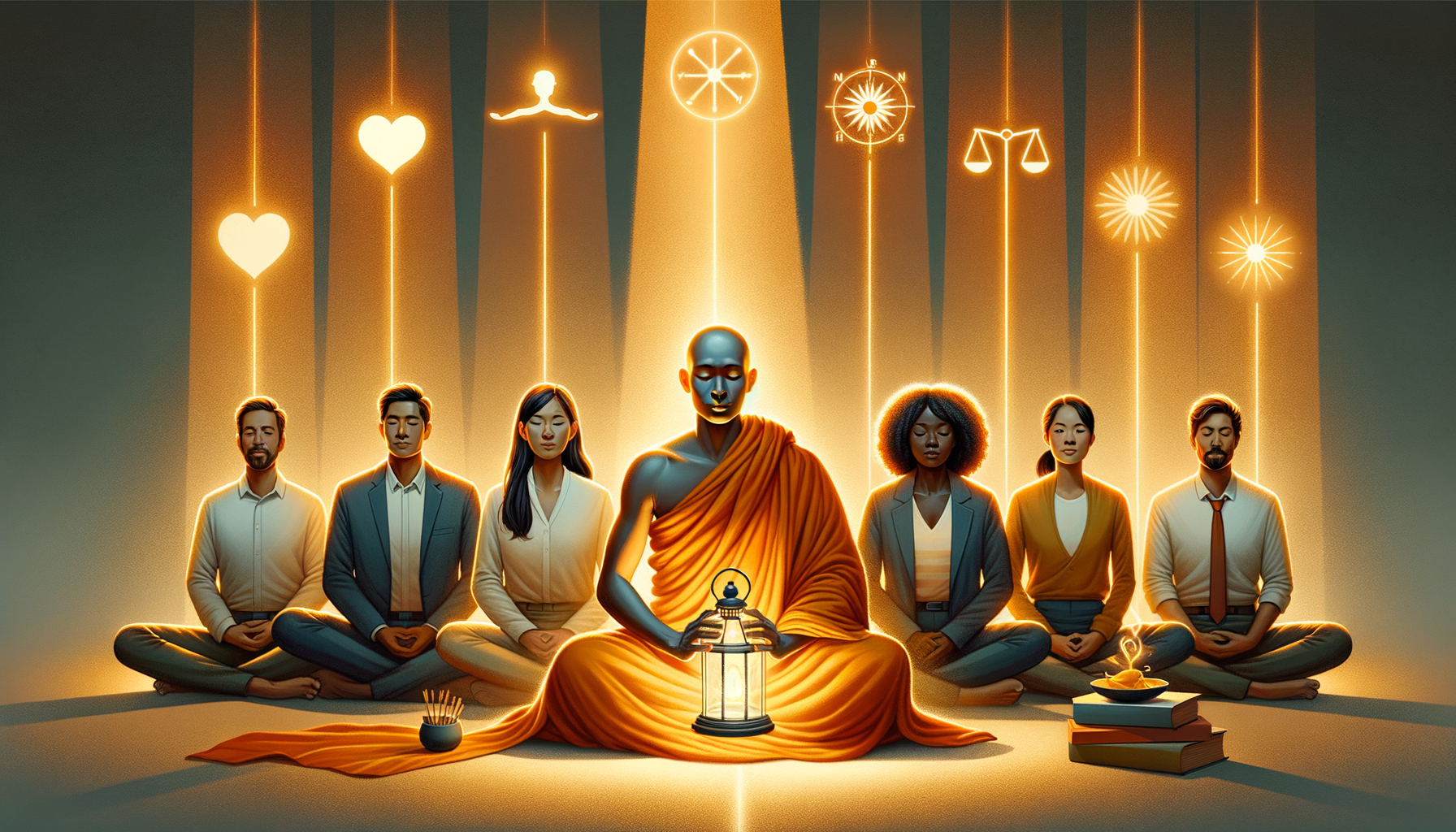
Swami Vivekananda’s teaching urges a shift from judging others by personal standards to understanding them by their own ideals, fostering empathy and fairness. Rooted in dharmic pluralism, this principle resonates with Ishta in Hinduism, compassion in Buddhism, Anekantavada in Jainism, and seva in Sikhism. Applied to work, family, and public discourse, it reduces polarization and…
-
Unlock Ishtadevta through Lagna: पंचमेश सूत्र, सरल उपासना, आंतरिक शांति और धर्मिक एकता

A concise, Lagna-based guideline from Jyotisha offers a practical way to contemplate one’s Ishtadevta by focusing on the fifth-house lord (Panchamesh). The maxim“आपकी लग्न कुंडली मैं पंचम भाव का स्वामी गृह (पंचमेश ) आपके इष्ट देव है !”frames a simple, accessible starting point that aligns devotion with the chart’s bhakti-oriented house. Even when doshas create…
-
Nirguna Nirakar and Sagun Sakar: Unlocking Hinduism’s Divine Paradox for Inner Unity

Hindu philosophy frames ultimate reality through two complementary modes: Nirguna Nirakar (formless and attributeless) and Sagun Sakar (manifest and form-bearing). Rather than competing doctrines, they function as integrative lenses that enrich meditation, devotion, and ethical living. Upanishadic insights and the Bhagavad-Gita affirm both paths, enabling seekers to approach realization through silence or loving worship. Vedantic…
-
Panchayatana Puja and the Five Elements: A Profound Path to Harmony and Unity

Panchayatana Puja unites devotion and philosophy by aligning multi-deity worship with the Panchabhutasthe five elements of nature. Through panchopachara offerings and a mandala arrangement, practitioners engage earth, water, fire, air, and space in a mindful, integrative ritual. This Smarta tradition, associated with Adi Sankara, honors an ishta-devata while equally revering other forms, modeling unity within…
-
Goddess Yellamma’s Black Head: Powerful Symbol of Unity Beyond Caste, Class, and Creed

The black head of Goddess Yellamma (Renuka Devi) functions as an aniconic focus for compassion and unity, revered across Karnataka, Maharashtra, and Telangana. Rooted in narratives of beheading and restoration, the motif dissolves rigid social boundaries and affirms dignity for all. The black hue symbolizes all-embracing grace and fierce protection, aligning with Shakta theology. Pilgrim…
-
Infinite Paths, One Truth: How Hinduism Empowers Personal Realization and Sacred Unity

Hinduism (Sanatana Dharma) teaches that no two individuals experience the Divine in the same wayand turns that insight into a strength. Drawing on the Upanishads and the Bhagavad Gita, it validates personal realization through concepts like Ishta and multiple yogic paths. This pluralism resonates across Dharmic traditions through Anekantavada in Jainism, upaya in Buddhism, and…
-
Invoking the Divine in Hinduism: Symbolism, Inner Awakening, and Inclusive Dharma Paths

Deity invocation in Hinduism aligns devotion with inner divinity while honoring inclusive, pluralistic practice. Through puja, mantra, meditation, and seva, practitioners cultivate clarity, compassion, and ethical steadiness. Symbolic offerings like light, water, and flowers transform everyday actions into sacred gestures. The Ishta-devata principle affirms unity in spiritual diversity, enabling practitioners to choose a path that…
-
Why Sanatana Dharma Endures: The Self-Correcting Wisdom Unifying Dharmic Traditions
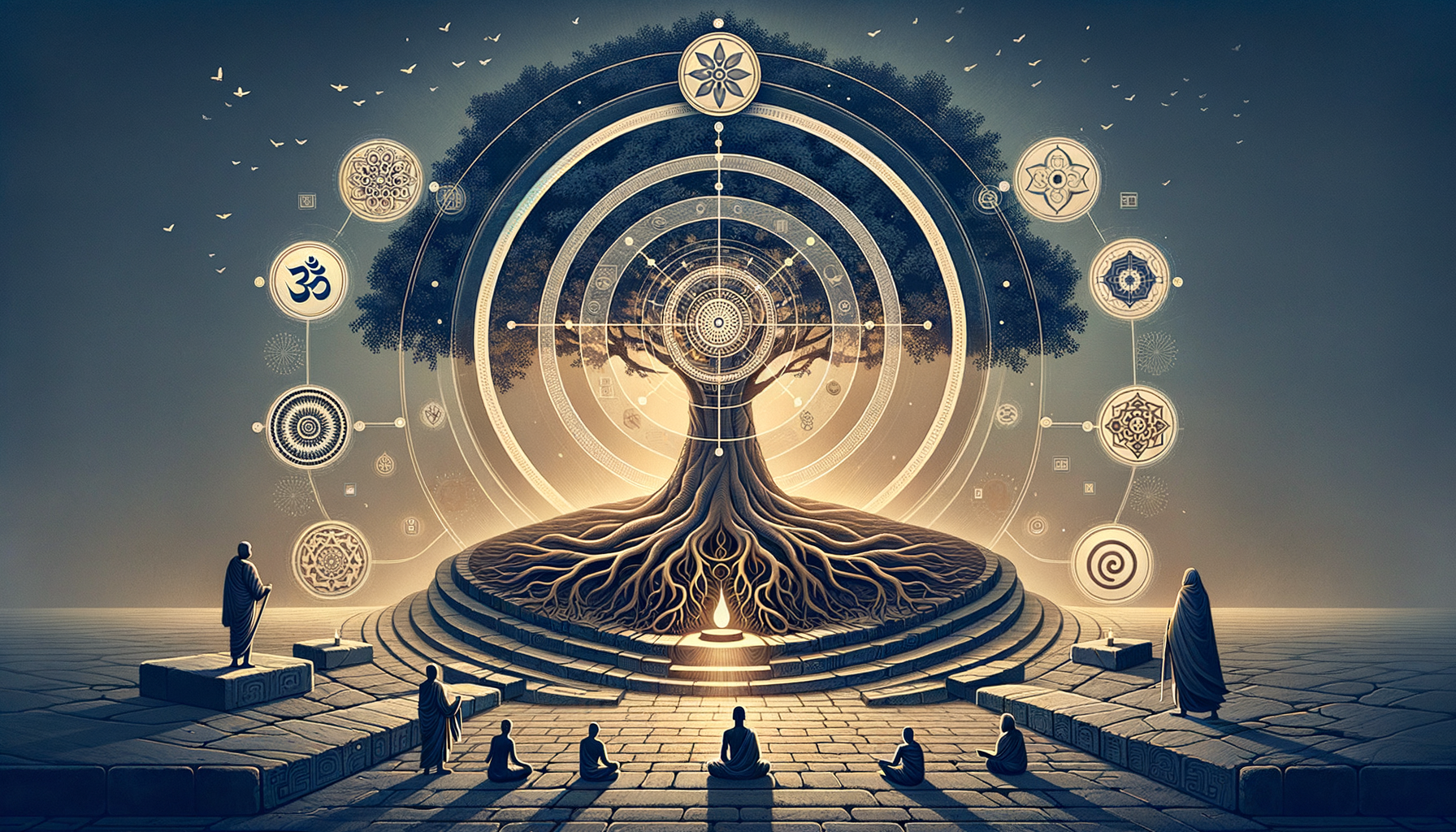
Sanatana Dharma endures because it carries a built-in, self-corrective system that updates practice without losing core principles. Hinduism’s framework of shruti, smriti, ācāra, and yukti enables context-aware refinement guided by reason and community debate. Buddhism, Jainism, and Sikhism share this ethos through councils, Anekantavada, and collective deliberation, demonstrating a broader dharmic commitment to internal reform.…
-
Whom to Worship? A Clear, Compassionate Guide to Ishta within Dharmic Unity
Many seekers encounter multiple deities on the home altar and wonder whom to worship. The dharmic traditions affirm unity with meaningful distinctions, where Ishta in Hinduism offers a focused, loving path without diminishing other forms. A team-photo analogy clarifies why context and study matter for understanding sacred diversity. Hindu philosophy encourages rigorous inquiry through texts…
-
‘Three Crore Gods’? A Scholarly, Respectful Reply Clarifying Hinduism’s Unity-in-Diversity

This article addresses the familiar question, “How many gods do Hindus believe in? Are there three crore?” with a calm, scholarly explanation. It clarifies that Hinduism centers on one ultimate reality (Brahman), while allowing many names and forms as legitimate approaches. The Ishta-devata principle explains personal choice in devotion, grounded in unity rather than fragmentation.…