-
Inside Sita Ram Goel’s Unanswered Challenge: Rethinking Marxist History for Dharmic Unity

In 1986, a public exchange over reports on Qutub Minar and Mathura exposed how labels can pre-empt historical inquiry. The debate intensified when Sita Ram Goel, in 1991, issued a precise, evidence-based questionnaire asking for proof of a supposed Hindu “tradition” of destroying Buddhist and Jain monuments. No comprehensive response addressed his eight empirical requests…
-
Discover R.C. Majumdar’s Unsparing, Evidence-Based Assessment of Gandhi’s Legacy

R.C. Majumdar’s authoritative study offers an unsparing, evidence-based assessment of Mohandas Gandhi’s legacy within the broader Indian freedom movement. Read alongside D.V. Gundappa’s Vruttapatrike, it illuminates how Gandhi’s rise reshaped public discourse and mass mobilization. The discussion balances admiration for moral leadership with a careful appraisal of practical outcomes and unintended effects. Readers gain a…
-
The Complete Inside Story: Ibādat Khāna, Secularism, and Academic Power Struggles

This analysis reconstructs K. K. Muhammed’s account of identifying the Ibādat Khāna at Fatehpur Sikri and the ensuing disputes with Prof. Irfan Habib at AMU, situating the episode within Indian historiography and academic power dynamics. It highlights how labels such as “secular” and “communal” have been deployed in institutional contexts, affecting careers, discourse, and public…
-
Complete Analysis of D.N. Jha’s Claims: Discover Facts, Context, and Dharmic Harmony

This academically balanced analysis explores the debates surrounding D.N. Jha, assessing his Marxist historiographical approach, its reception, and its impact on understanding Indian history. Readers discover how The Myth of the Holy Cow is interpreted both as source-critical scholarship and as insensitive to the cow’s sacred status in dharmic life. The discussion addresses concerns about…
-
From Troy to Kampilya: Discover the Proven, Unbroken Continuity of India’s Civilization

Why do some archaeological finds electrify the world while others feel quietly familiar to local communities? This essay explains how India’s living continuity of land, people, and story makes many “discoveries” corroborations of persistent memory rather than revelations. From Troy and Kampilya to Vedic Saraswati, Abhijit (Vega), and Dwaraka, it presents evidence for an accumulative…
-
Master the Politics of ‘Official’ History: A Complete Indic Guide to Transform Collective Memory

This essay examines how centralized, “official” history—whether colonial, Marxist, or nationalist—can erode India’s decentralized, living memory. It contrasts Western, top‑down historiography with Indic ethos, where society, not institutions, traditionally safeguarded memory across Hindu, Buddhist, Jain, and Sikh traditions. Citing the 1857 War of Independence and the Azamgarh Proclamation, it shows how living memory enabled coordinated…
-
From Petrified to Percipient: The Essential, Complete Guide to India’s Living History

This article explains why India’s civilizational past is best studied as a living continuum rather than a set of fossilized snapshots. It contrasts “petrified history,” suited to civilizations preserved mainly through archaeological remains, with “percipient history,” sustained by social memory across India’s dharmic traditions. Readers discover how folk narratives, ritual practices, sacred geography, and philosophical…
-
Discover Dispersive History: A Proven Indic Framework to Transform How We Learn from the Past

This article reframes Indian historiography through the lens of Dispersive History—a proven Indic framework that preserves practical lessons while upholding civility. It contrasts linear, institution-centric Western historiography with cyclical, ethos-driven memory anchored in the Kaalachakra. Readers discover how हितोपदेश, पंचतन्त्र, and सुभाषित encode historical intelligence through allegory, enabling learning without public flagellation. The approach celebrates…
-
Discover the Taj Mahal’s Hidden Past: A Complete, Evidence-Based Reexamination for Unity

A new film on the Taj Mahal invites an evidence-based reexamination of contested narratives without foreclosing mainstream scholarship. Presented within an academic framework, it highlights how archaeology, epigraphy, and architectural analysis can clarify complex claims such as “Tejo Mahalaya” or earlier temple hypotheses. The discussion foregrounds rigorous methods—provenance, peer review, and open archives—over rhetoric or…
-
The Complete Exposé: Discover How D.N. Jha’s Narratives Distort Indian History and Faith

I take you inside my personal investigation of D.N. Jha’s work and how, in my view, Marxist historians reshaped Indian history. I explain why The Myth of the Holy Cow felt like a direct affront to the Hindu Community and how such narratives influence public memory. You’ll see how I argue that Jha’s approach distorted…
-
What really happened to Bharat during the Islamic Invasions?

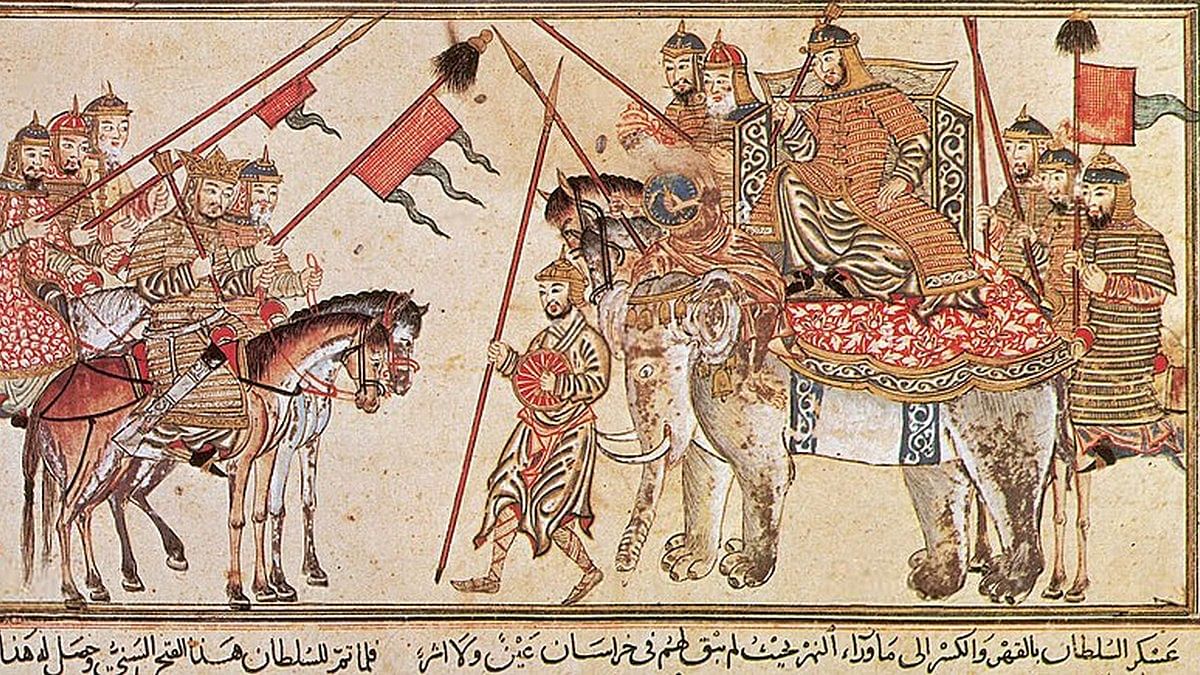
The following is a transcript of a speech by Vikram Sampat at the Jaipur Dialogues Conclave that discusses the Islamic conquest of India and its impact on Indian history. Sampat specializes in modern and early modern Indian history, as well as medieval history, which is highly relevant to the period being discussed. Sampat states that…