
-
Agneyas among the Gandharvas: Timeless Insights into Kubera’s Celestial Musicians
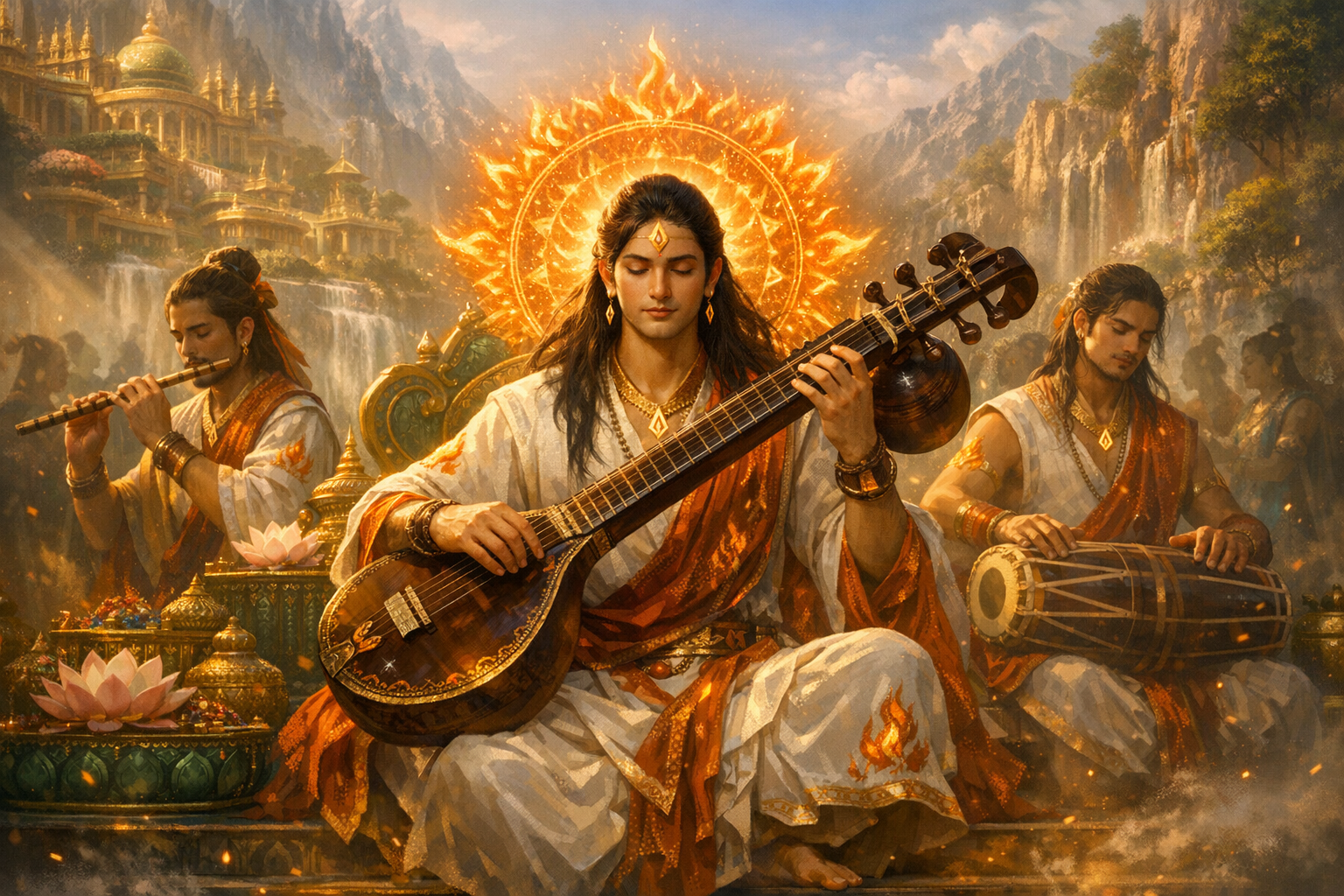
This article examines the Agneyas as a Gandharva collective in Hinduism, drawing on Puranic and allied textual traditions to clarify their identity as celestial musicians and attendants in divine courts. It explains how several narratives place the Agneyas in the orbit of Kubera (Vaiśravaṇa), the god of wealth and guardian of the northern direction, where…
-
Mahabharata Wisdom on the True Gift: Markandeya’s Guide to Nishkama Dāna and Seva
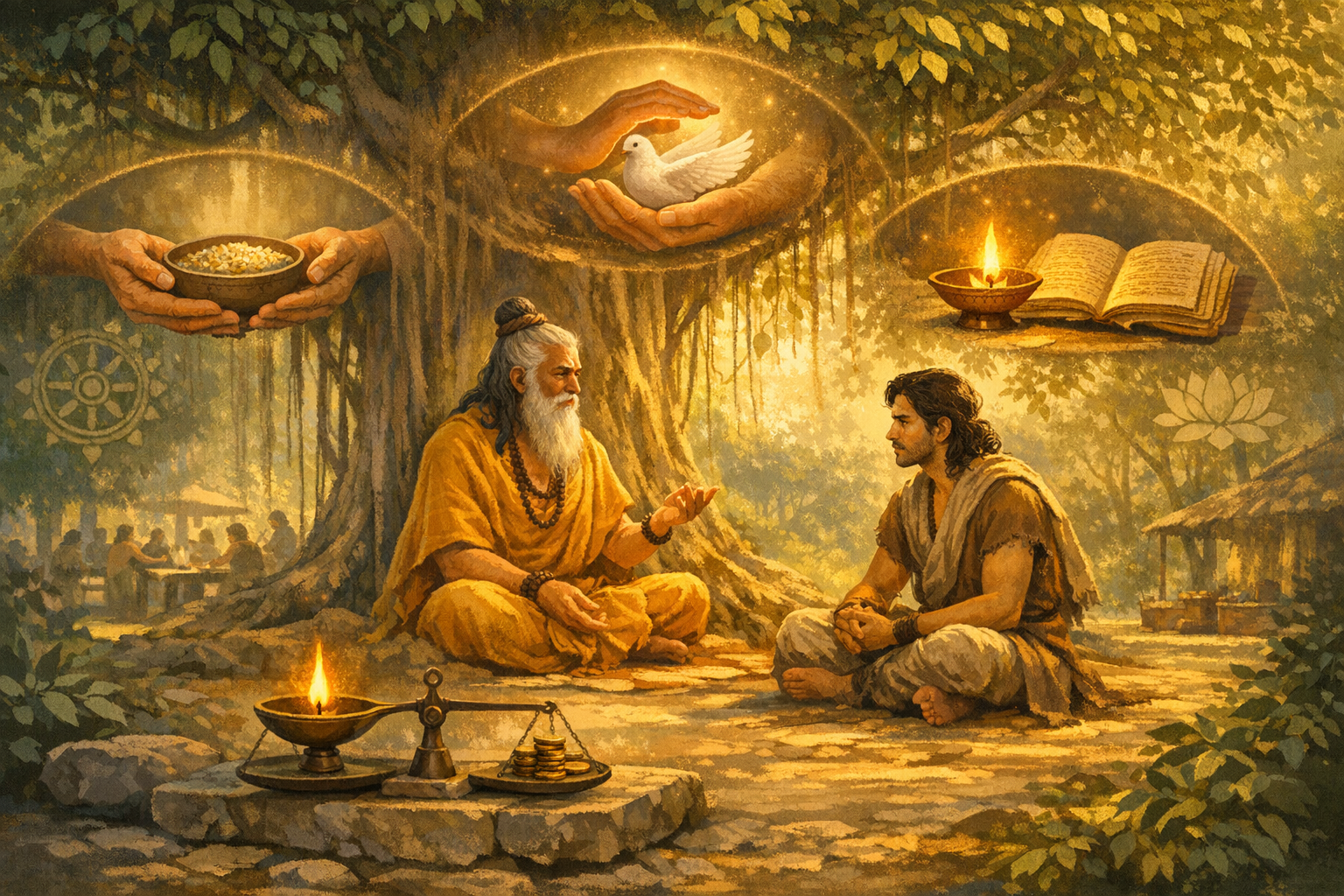
This long-form exploration distills Sage Markandeya’s Mahabharata teaching on the nature of the true gift (dāna) and explains why intention, not magnitude, confers ethical value. It maps dāna to the Bhagavad-Gita’s guṇa framework, clarifying the difference between sāttvika, rājasa, and tāmasa giving. Through the exemplar of King Śibi, it highlights abhayadāna (the gift of fearlessness)…
-
SB 4.9.37–53 Decoded: Dhruva’s Unshakable Devotion, Cosmic Boons, and Inner Renewal
Srimad-Bhagavatam Canto 4, Chapter 9, verses 37–53 narrate how Dhruva Maharaja’s devotion matures from personal austerity to public responsibility. The passage culminates in Dhruvalokasymbolizing unwavering devotionand a restored social order that validates rajadharma as service. Drawing on themes often highlighted by Kalakantha Prabhu, the analysis explains how bhakti integrates knowledge and action while transmuting anger…
-
Krishna and the Six Sons of Devaki: A Compassionate Jain Harivamsa vs Hindu Puranas

This long-form, comparative study examines how Hindu scriptures (Bhagavata Purana, Vishnu Purana) and the Jain Harivamsa Purana narrate the episode of Devaki’s six sons and Kamsa’s violence. It clarifies the difference between the Hindu Harivamsha and the Jain Harivamsa Purana, then maps their contrasting theological aims: divine descent and restoration of dharma versus karmic causality…
-
Unveiling Prishni: The Speckled Celestial Mother of the Maruts in Rigvedic Cosmology

Prishni, the “speckled” celestial mother of the Maruts in the Rigveda, illuminates how Hindu scriptures bind natural phenomena to sacred meaning. This analysis clarifies her etymology, traces her presence in Vedic hymnody, and examines her relationship to Indra, Rudra, and the storm-host. Readers gain a precise understanding of how “speckling” functions as Vedic symbolism for…
-
Decoding the Fiery Compassion: A Deep Dive into the Third Chapter of Nrisimha Tapaniya Upanishad

The third chapter of the Nrisimha Tapaniya Upanishad unifies mantra, meditation, and Vedanta into a coherent path of fierce compassion and fearless insight. This deep dive decodes the Nrisimha mantraraja, explicates the bija kṣrauṁ, and clarifies how nyasa sacralizes the body as a field of realization. Readers gain a rigorous yet accessible guide to practice…
-
Sringara Murti in Krishna: A Transformative Exploration of Divine Beauty, Rasa, and Bhakti

Sringara Murti presents a rigorous yet tender theology in which divine beauty becomes a disciplined means of knowing. Centered on Krishna and illuminated by the Bhagavata Purana, Gita Govinda, and Vaishnava aesthetics, it shows how śṛṅgāra transforms emotion into insight. The article details rasa theory, iconographic cues such as tribhaṅga and veṇu, and the ritual…
-
Decoding the First Khanda of Nrisimha Tapaniya: Cosmogony, Anustubh Metre, Fearless Mantra Power

The first khanda of the Nrisimha Tapaniya Upanishad fuses cosmogony with mantra science in the anustubh metre, presenting a disciplined pathway from fear to fearless compassion. Readers gain a clear sense of the text’s Atharvavedic affiliations, its layered pedagogy (phonetics, metre, and meaning), and its integrative practice model involving japa, nyasa, and contemplative visualization. The…
-
Maharshi Shukadeva (Shuka Muni): The Fearless Sage Who Voiced the Bhagavata Purana

Sage Śukaknown as Maharshi Shukadeva, Shuka Muni, and Shuka Brahmais celebrated as the realized narrator of the Bhagavata Purana and the son of Veda Vyasa. Classical sources, including the Mahabharata and Puranas, portray him as the archetypal paramahamsa who unites jñāna, bhakti, and vairāgya. His seven-day discourse (saptāha) to King Parikshit distills creation, avatāra theology,…
-
Shoola vs Trishul: Decoding Sacred Weapons, Iconography, and the Timeless Power of Dharma

Shoola (single-pointed spear) and Trishul (three-pronged trident) are often confused, yet they carry distinct forms and meanings in Hindu iconography. This article clarifies how a spear encodes one-pointed discernment while a trident integrates triadic powersiccha, jnana, kriya; the gunas; and the three dimensions of time. Readers learn to identify each implement swiftly at temples and…
-
Upashruti: The Luminous Goddess of Night, Oracular Wisdom, and Vedic Revelation

Upashruti is presented as a nuanced personification of sacred listening the contemplative capacity to ‘hear’ wisdom in the stillness of night. Grounded in Vedic philosophy, Puranas, and the logic of śabda-pramāṇa, the essay situates her alongside Rātri, Vāk, and Yoganidrā. It outlines practical, night-centered sādhanā (mauna, japa, nādānusandhāna) and explains how disciplined listening refines ethical…
-
From One Morsel of Mercy to Love of God: SB 1.5.25, Prasadam, and the Science of Bhakti

The discourse on SB 1.5.25 by HG Srutakirti Prabhu at ISKCON France presents a precise, practice-centered account of how honoring prasadam from pure devotees initiates purification and awakens spiritual attraction. Rooted in the Bhagavata Purana and the Bhakti Tradition, the talk maps a concrete actreceiving sanctified food with gratitudeto the classic stages of devotional growth…
-
When Agastya Drank the Ocean: The Cosmic Reset Behind Bhagiratha’s Ganga Avatara

This long-form exploration situates the startling image of Sage Agastya drinking the ocean within the Vedic–Puranic principle of rta (cosmic order) and reads it as the hidden prologue to Bhagiratha’s Ganga avatara. Drawing on references across the Ramayana, the Mahabharata, and Puranas such as the Skanda Purana, it explains how yogic containment (Agastya) and compassionate…
-
Unmatta Bhairava’s Divine Madness: Decoding Shiva’s Fearless Transcendence and Sacred Symbols

Unmatta Bhairava, one of the Ashta Bhairavas, encodes the paradox of divine madness as fearless, ethical clarity beyond the discursive mind. This long-form study unpacks the philology of unmatta and the theology of Bhairava, connects the icon’s weapons and emblems to Shaiva metaphysics, and locates Unmatta within living ritual, pilgrimage, and art-historical traditions. Readers gain…
-
Muni Shukadeva Jayanti 2026: Date, Amavasya Tithi, Puja Vidhi, and Bhagavata Wisdom
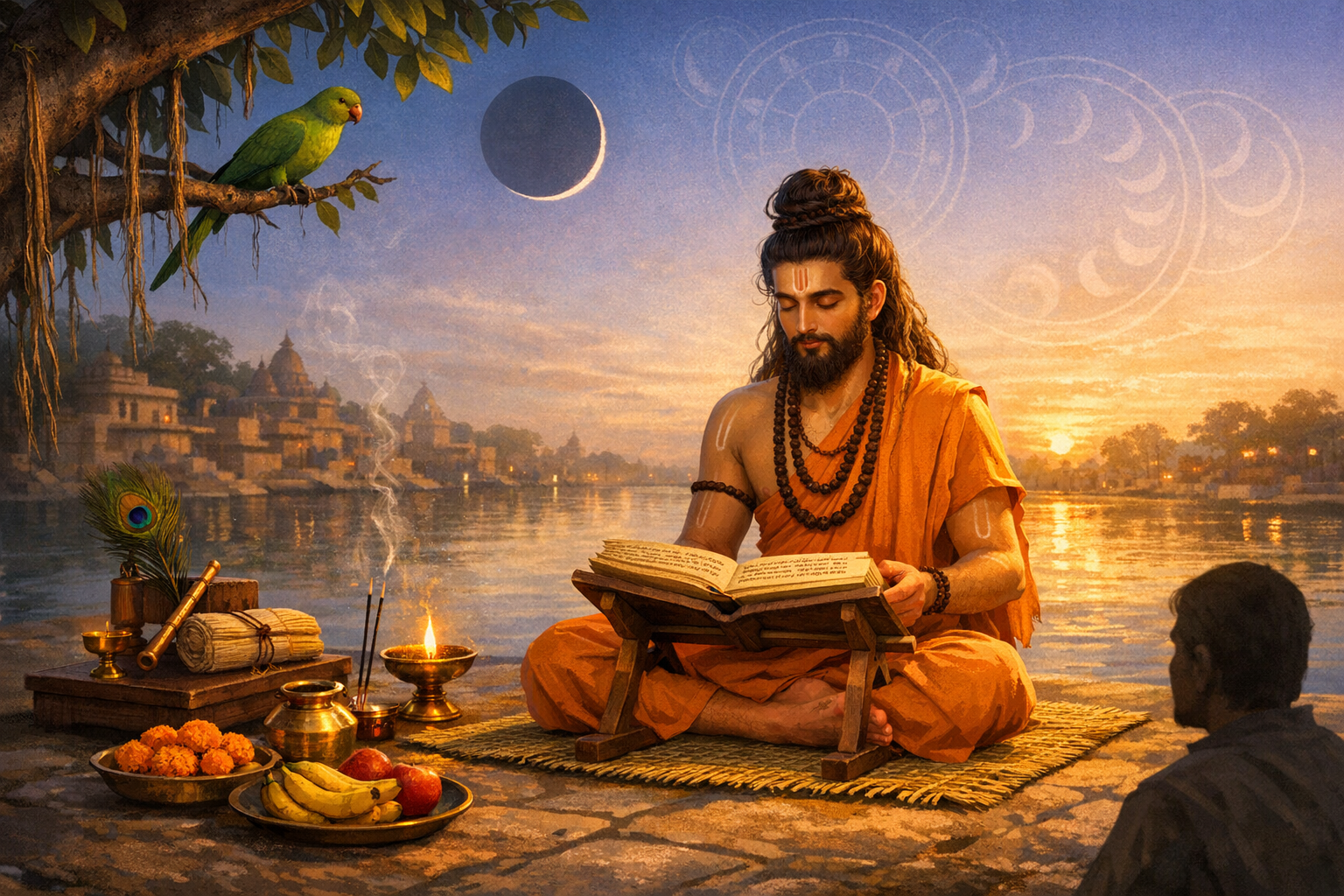
Muni Shukadeva Jayanti in 2026 is on Friday, 17 April, observed on Amavasya tithiVaishakh Amavasya in the North Indian Purnimant calendar and Chaitra Amavasya in Amavasyant regions. The day venerates Śukadeva Muni, son of Bhagavan Veda Vyasa, whose seven-day exposition of the Srimad Bhagavatham to King Parikshit shaped the Hindu katha tradition. Observances typically include…
-
Sita’s Sacred Resolve: Why Only Rama Could Rescue Herand What It Teaches About Dharma

Why did Sita insist that only Rama rescue her, even when Hanuman could have carried her to safety? This long-form analysis of Sundara Kanda shows how her decision unites maryada, kshatra-dharma, reputation, and tactical prudence into a single, coherent ethic. Drawing on Valmiki Ramayana and key regional traditions, it explains why justice in the Ramayana…
-
Nilasukta Unveiled: Nila Devi’s Compassionate Radiance in a Vedic Hymn of the Taittiriya Samhita

Nilasukta (Nila Sukta) is a Krishna Yajurveda hymn linked to the Taittiriya Samhita that venerates Nila Devi, the compassion-aspect of Vishnu’s shakti. Drawing on the cosmic symbolism of Surya, Chandra, and Agni, it frames compassion as ethical clarity, serene poise, and transformative warmth. The article clarifies its textual transmission, triadic theology (Sri–Bhu–Nila), and ritual use…
-
Curses and Redemption in Srimad Bhagavatam (SB 3.15.37): Jaya–Vijaya’s Return
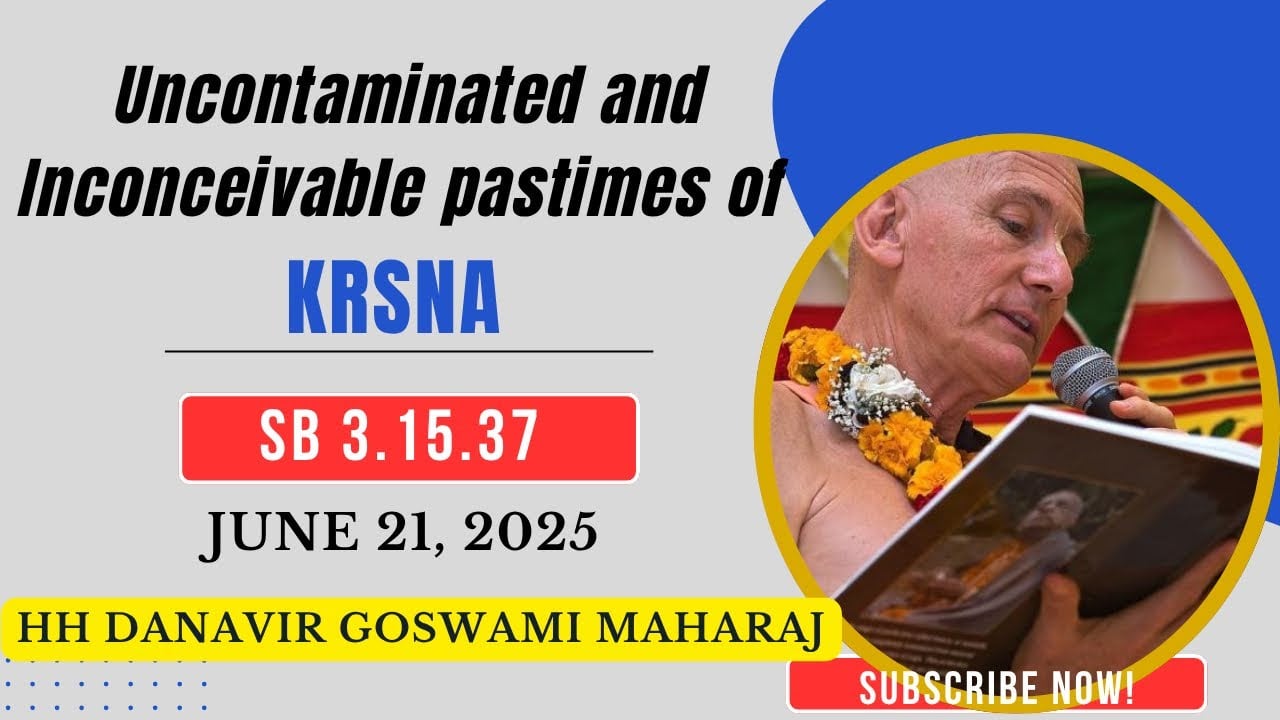
SB 3.15.37 shows how the words of Hindu sageswhether blessings or cursescarry real moral force yet can be redirected by sincere repentance and divine compassion. The Jaya–Vijaya narrative demonstrates that modified, not erased, consequences can accelerate liberation. Case studies such as Narada’s reform of Nalakūvara and Maṇigrīva, Durvasa Muni’s reconciliation with King Ambarisha, and Vṛtrāsura’s…
-
Unveiling the Fourteen Lokas: A Deep, Clarity-Driven Journey through Hindu Consciousness

This long-form, research-driven exploration clarifies the fourteen lokas (seven Urdhva and seven Adho) in Hindu cosmology as both cosmic regions and states of consciousness. Drawing on Hindu scriptures and Vedic philosophy, it explains each loka’s pedagogical role, distinguishes Adho lokas from Naraka, and shows how the “cosmic ladder” aligns with yogic practice. The piece emphasizes…
-
8 Powerful Steps for Prayerful Reading of Srila Prabhupada’s Books for Deep Bhakti Insight

This article presents a practical, eight-step method for prayerful reading of Srila Prabhupada’s books that unites devotion with rigorous study. It explains how intention, a sattvic setting, and a brief invocation prime attention and humility. Slow, structured reading, classical hermeneutic tools, and light Sanskrit awareness deepen comprehension of Bhagavad Gita, Srimad Bhagavatam, and Chaitanya Charitamrita.…