
-
Srimad Bhagavatam 10.29.18-22: The Gopis’ Sacred Call to Transformative Bhakti

Srimad Bhagavatam 10.29.18-22 presents one of the most profound moments in the Rasa-lila narrative, where the gopis respond to Sri Krishna’s flute with complete devotional absorption. These verses explore the tension between worldly duty and divine love without dismissing the importance of dharma. Krishna’s challenging words to the gopis reveal the depth, purity, and seriousness…
-
Srimad Bhagavatam 3.26.47-49: Powerful Sankhya Wisdom on Senses and Earth

Srimad Bhagavatam 3.26.47-49 offers a precise Sāṅkhya analysis of the senses, their objects, and the five gross elements. The passage explains hearing through sound, touch through air, sight through form, taste through water, and smell through earth. It also teaches that the effect carries the qualities of its cause, which is why earth is described…
-
Vaikuntha’s Seventh Gate: Powerful Lessons on Humility, Focus, and Sacred Vision

Śrīmad-Bhāgavatam 3.15.27 presents the four Kumāras passing through the gates of Vaikuṇṭha with unwavering focus before meeting the divine doorkeepers at the seventh gate. This reflection explains the verse through Vaishnava theology, scriptural context, and practical spiritual psychology. It highlights how sacred beauty should deepen devotion rather than distract from it. The discussion also examines…
-
Bhagavad Gita 15.20 Revealed: Powerful Wisdom for Completing Life’s Duty

Bhagavad Gita 15.20 concludes Purushottama Yoga with a profound teaching on the highest wisdom and the fulfillment of human life. The verse explains that one who understands Krishna’s confidential instruction becomes truly intelligent and spiritually complete. This reflection examines the Sanskrit terms guhyatamam, buddhiman, and krta-krtya with attention to their philosophical and devotional significance. It…
-
Powerful Bhagavad Gita Teachings: Lord Krishna’s Timeless Guide to Inner Clarity
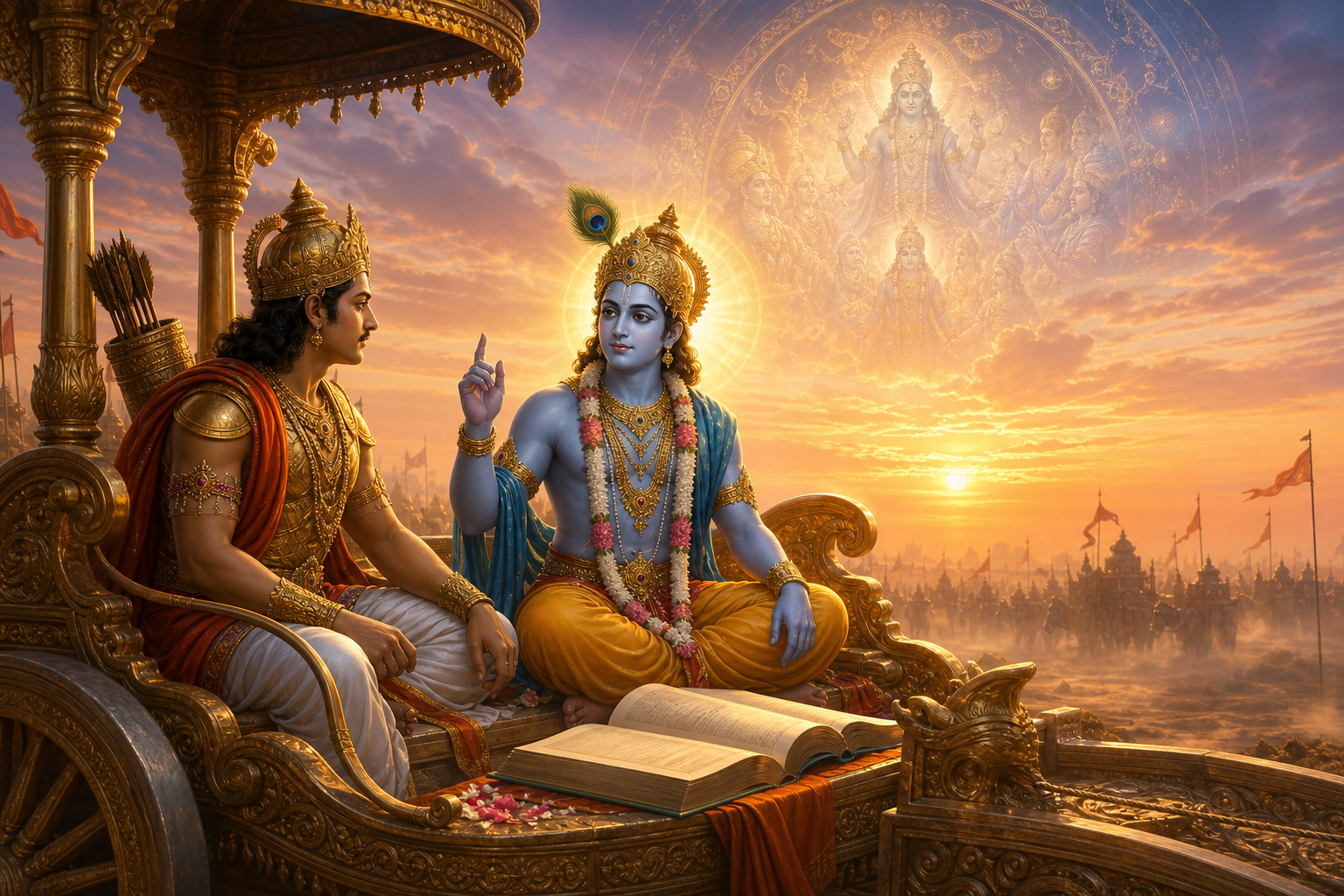
The Bhagavad Gita presents Lord Krishna’s teaching as a disciplined path from confusion to clarity, using Arjuna’s battlefield crisis as a universal model of moral struggle. Its central message is that sacred wisdom must be approached with humility, inquiry, and proper guidance, much like medicine must be taken according to sound instruction. The text explains…
-
Paushkara Samhita: Powerful Pancharatra Wisdom for Sacred Worship and Living Dharma
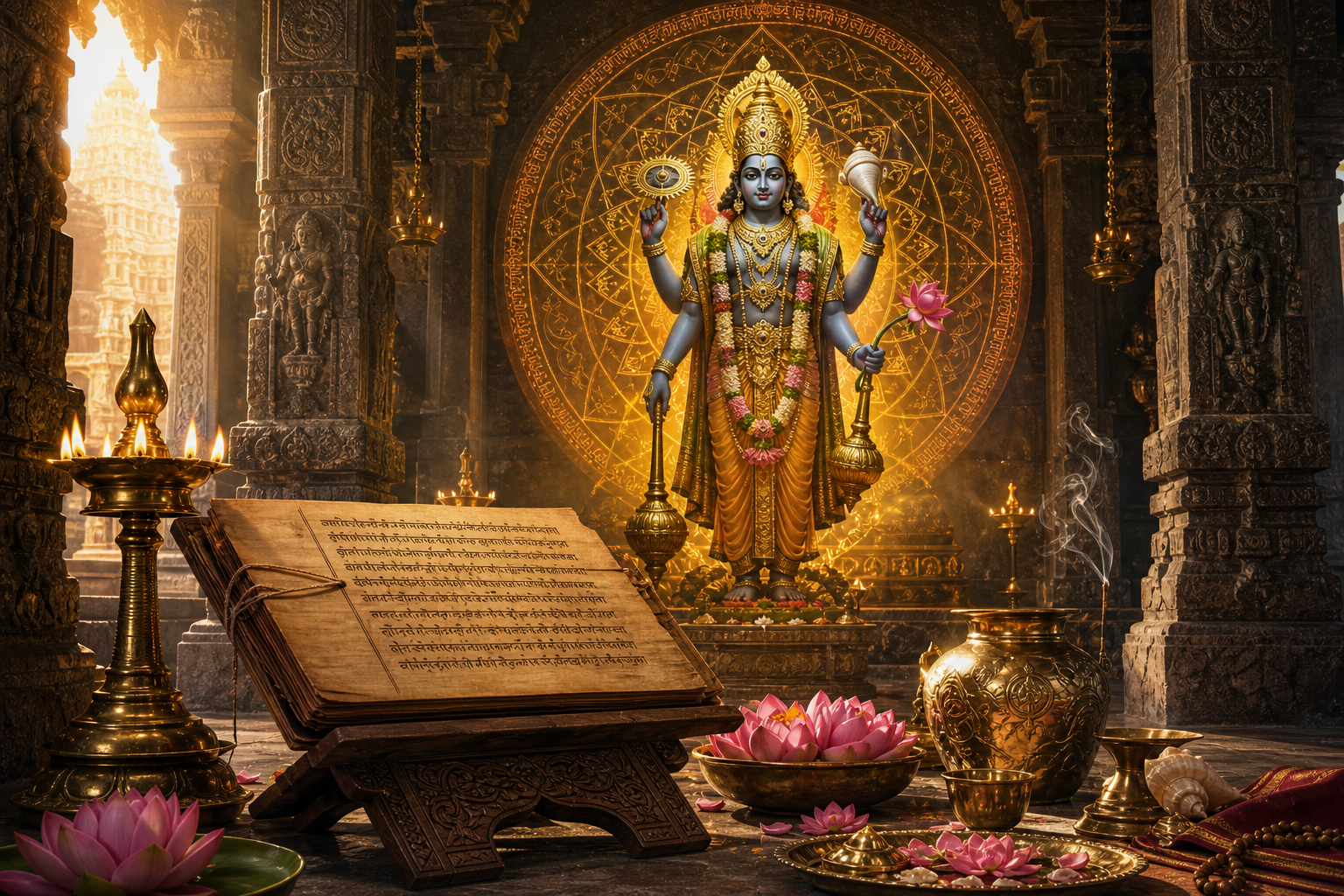
The Paushkara Samhita is one of the important sacred texts of the Pancharatra tradition, presenting Vaishnava worship as a disciplined union of philosophy, ritual, iconography, mantra, and devotion. This long-form study explains why the text matters within Hindu scriptures and how it illuminates the deeper structure of temple worship. It shows that Pancharatra practice is…
-
Ashtashta Bhairavas: The 64 Fierce Guardians of Shakta-Shaiva Tantra

The Ashtashta Bhairavas, or sixty-four Bhairavas, present one of the most profound mandala systems in Shakta-Shaiva Tantra. This article explains Bhairava as the fierce yet compassionate form of Lord Shiva who destroys ignorance, protects dharma, and guides seekers toward liberation. It explores the eight principal Bhairavas, their expansion into sixty-four forms, and the sacred geometry…
-
Makara in Hindu Scriptures: Powerful Seven-Animal Symbol of Water and Wisdom

Makara is one of the most fascinating composite creatures in Hindu scriptures, sacred art, and temple architecture. Traditionally associated with Varuna, Ganga, Narmada, Kamadeva, and Makara-kundala iconography, it represents water, fertility, protection, desire, and cosmic order. Its seven-animal form brings together the elephant, crocodile, boar, monkey, fish, lion, and peacock as a symbolic body of…
-
Kubja of Mathura: Krishna’s Powerful Lesson on Grace, Dignity, and Inner Beauty

Kubja of Mathura is a deeply moving figure in Krishna bhakti literature, remembered for her encounter with Sri Krishna in the streets of Mathura. Though often associated in popular titles with the Mahabharata tradition, her story is primarily narrated in the Bhagavata Purana, Brahma Vaivarta Purana, and devotional retellings such as the Sur Sagar. As…
-
Ardhanarishvara Shiva: Powerful Symbol of Divine Balance and Shakti Unity
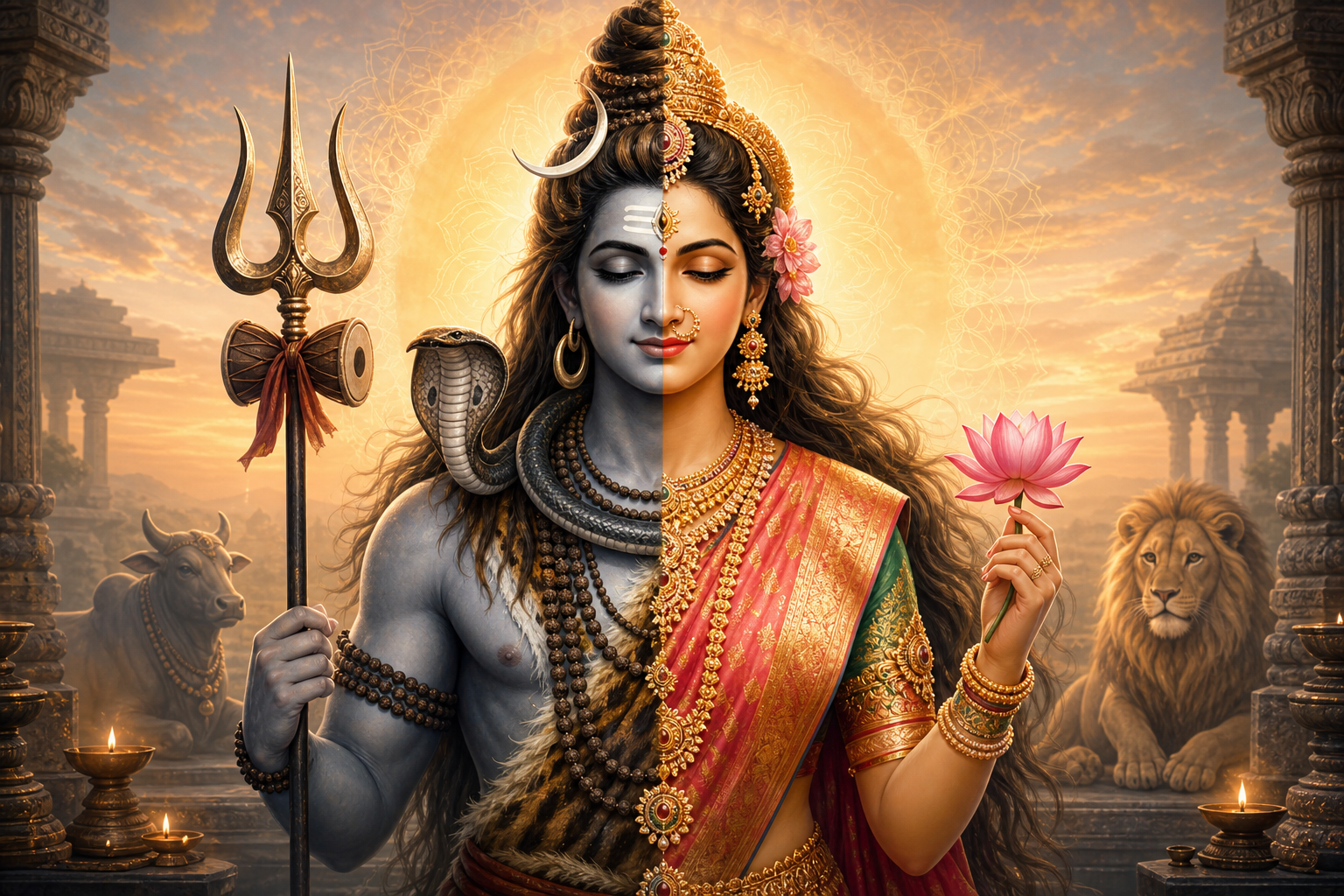
Ardhanarishvara Shiva is the sacred half-male and half-female form of Lord Shiva and Parvati Mata, expressing the inseparable unity of Shiva and Shakti. This form teaches that consciousness and energy, stillness and activity, ascetic discipline and creative abundance are not opposing forces but complementary aspects of one divine reality. The Puranas preserve several narratives explaining…
-
Decoding SB 1.16.5: Dharma‑Bull, Mother Earth, and Kali‑yuga in Srila Prabhupada’s Teachings

SB 1.16.5 presents the iconic tableau of the Dharma‑bull and Mother Earth to diagnose the onset of Kali‑yuga as both a moral and ecological crisis. Through Srila Prabhupada’s teachings, the verse becomes a practical framework: strengthen truthfulness, cleanliness, mercy, and austerity to restore social trust and environmental balance. The episode models just governance in the…
-
Brihaspati Smriti: Reconstructing a Lost Hindu Legal Classic on Law, State and Economy

Brihaspati Smriti, though no longer extant as a complete text, survives through fragments cited in medieval digests and remains a cornerstone for understanding Hindu jurisprudence. The work is renowned for its clear focus on legal procedure, evidence, commercial law, and proportionate punishment, aligning dharma with the practical imperatives of artha and dandaniti. It recognizes multiple…
-
Decoding ŚB 4.19.13: Prithu’s Sacrifices, Indra’s Envy, and the Power of Dharmic Unity
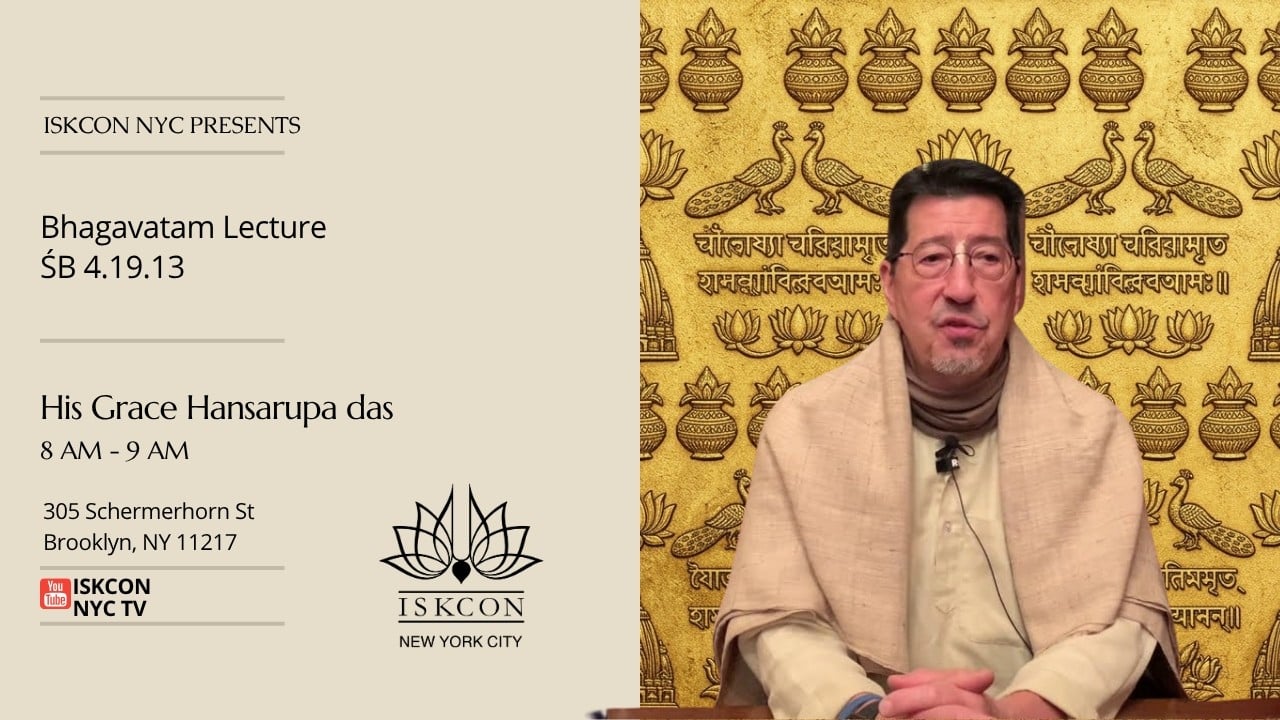
ŚB 4.19.13, discussed in a thoughtful NYC satsanga by HG Hansarupa das, anchors King Prithu’s sacrifices in the Srimad Bhagavatham as a model of ethical leadership and devotion-centered ritual. The verse sits within a chapter that warns against spiritual opportunism and reaffirms that yajña is meaningful only when guided by humility, integrity, and compassion. Framed…
-
Dharmaprapti Vrat (Dharmavapti): The Month-Long Sacred Fast to Attain Dharma and Fulfil Life Goals

Dharmaprapti Vrat (Dharmavapti Vrat) is a month-long Hindu observance designed to cultivate Dharma through sustained fasting, worship, study, and charity. Grounded in Hindu scriptures and aligned with Sanatan Dharma, it emphasizes a clear sankalpa, sattvic diet, daily japa, and yama‑niyama. The presiding deity varies by lineageoften Viṣṇu, Śiva, one’s iṣṭa‑devatā, or Dharma‑devatāensuring fidelity to living…
-
Madanaparijata Unveiled: The 14th‑Century Dharmashastra Digest That Shaped Hindu Law and Ritual

The Madanaparijata is a 14th‑century Dharmashastra digest by Vishveshvara Bhatta that unifies Hindu law, ethics, and ritual into a rigorous, accessible manual. Composed circa 1360–1390 CE, it harmonizes Smriti sources and authoritative commentaries through clear hermeneutic rules, while honoring local custom and the principle of desa–kala–patra. Its coverage spans family law (marriage, stridhana, adoption, inheritance),…
-
When a Wife Stilled the Sun: Shilavati’s Astonishing Pativrata in Brahmanda Purana

This study examines the Brahmanda Purana’s account of Shilavati (Sheelavati), the pativrata whose vow arrests the ascent of Surya, to illuminate the Dharmic logic of vow-power (vrata-shakti). It situates the episode within puranic cosmology and ethics, where truth-aligned resolve temporarily overrides causal sequence and is then responsibly relinquished. The analysis clarifies why the narrative is…
-
Krichchha–Atikrichha Vrata Explained: Extreme Hindu Fasting for Atonement and Renewal

Krichchha–Atikrichchha Vrata (Kṛcchrātikṛcchra) is among the strictest Hindu fasting vows for prāyaścitta (expiation), detailed in Manu Smṛti, Yājñavalkya Smṛti, and the Garuḍa Purāṇa. Classically structured over twelve days in escalating severity, it moves from tightly rationed intake to complete fasting and is paired with ethical repair, japa, svādhyāya, and seva. The vow’s purpose is to…
-
Srimad Bhagavatam Decoded: Profound Insights from His Grace Radheshyam Prabhu’s ISKCON Class
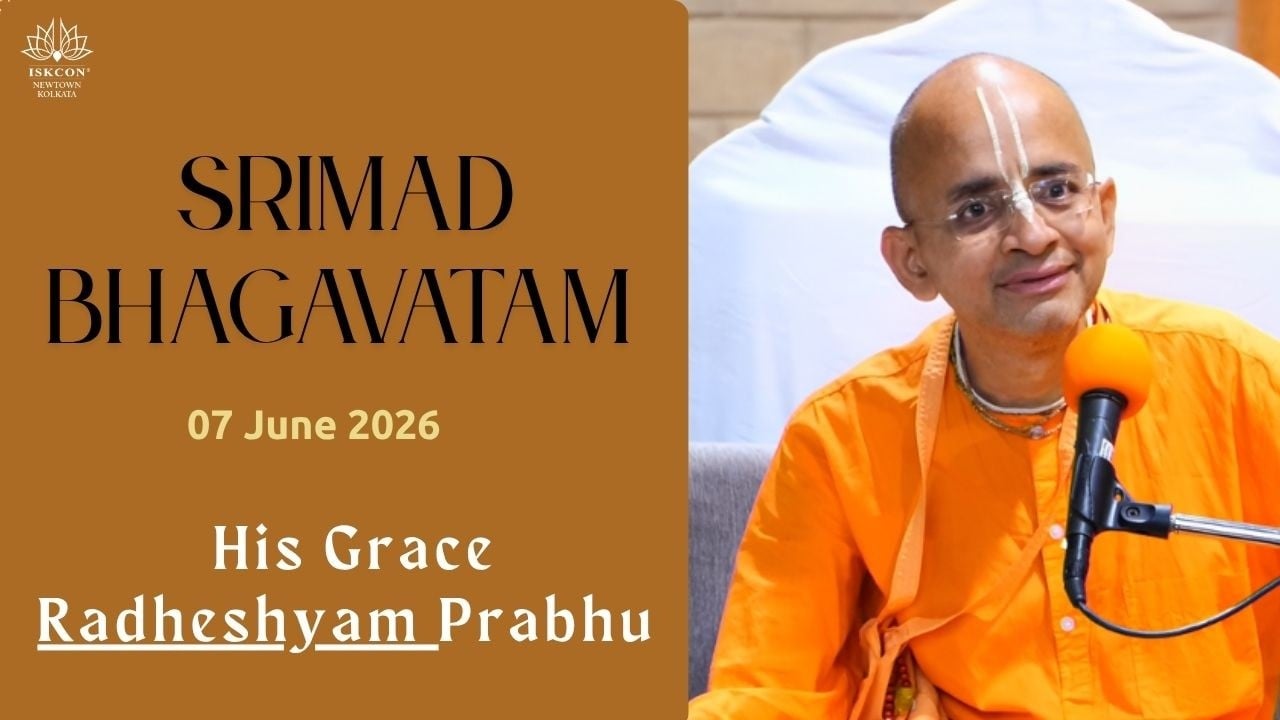
This in-depth overview distills the core insights from a Srimad Bhagavatam class by His Grace Radheshyam Prabhu, hosted by ISKCON New Town, Kolkata. It situates the Bhagavata Purana historically and theologically, outlines Gaudiya Vaishnava hermeneutics, and clarifies key bhakti-yoga processes. Readers gain a practical study routine, a clear map of spiritual progression, and research-informed reflections…
-
Transforming Campuses: TSP’s Scalable, Inclusive Installations of Srimad Bhagavatam Sets
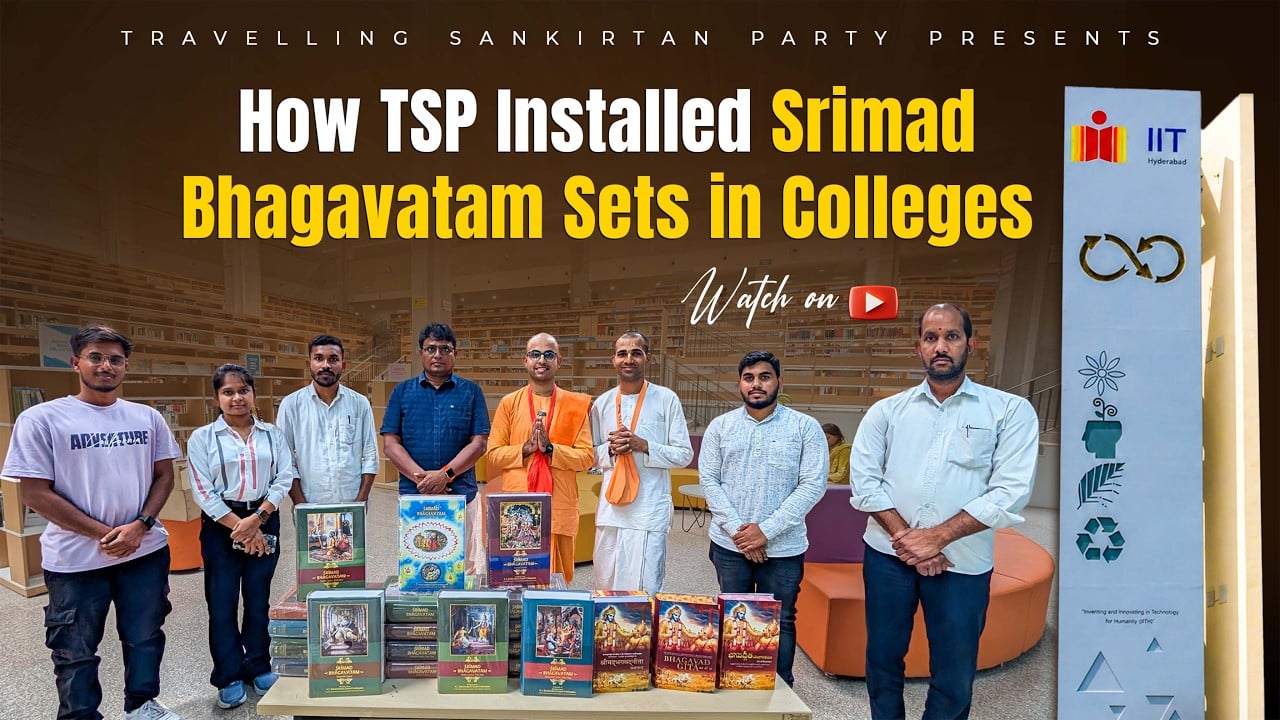
The Traveling Sankirtan Party (TSP) developed a policy-aligned, librarian-led model to install complete Srimad Bhagavatam sets in college libraries and campus lounges. The approach respects collection development standards, enhances discoverability through robust metadata, and situates the text within Hinduism’s broader intellectual heritage. Faculty and administrators welcomed the sets as primary sources that support ethics, philosophy,…
-
Vimanas in Hindu Scriptures: Technical Evidence, Meanings, and Types of Ancient Flying Craft

Vimanas in Hindu scriptures form a multi-layered tradition spanning divine aerial craft, tactical flying cities, cosmological mansions in Buddhist and Jain texts, and the soaring temple-towers of South Indian architecture. This long-form guide maps the philology of vimāna, compares epic and Puranic narratives, and contextualizes medieval and modern technical treatises such as the Samarangana Sutradhara…