
-
Transformative Bhakti: Śrīmad-Bhāgavatam 3.32.22–36 Reveals a Clear Roadmap to Moksha

This exploration of Śrīmad-Bhāgavatam 3.32.22–36 distills how faithful śravaṇa about Kṛṣṇa initiates and sustains bhakti-yoga as a clear pathway to moksha. It clarifies the Sāṅkhya distinction between the witnessing self and the body-mind, showing how devotion both utilizes and transcends analysis. Practical stepsdaily hearing, kīrtana or japa, seva, sat-saṅga, and reflective svādhyāyaare presented alongside minimalist…
-
Indra and Varuna’s Celestial Rivalry: Vedic Kingship, Cosmic Law, and the Battle for Order

Indra and Varuna frame a profound Vedic conversation about power, law, and legitimacy. Indra’s thunderous decisiveness (kṣatra) complements Varuna’s guardianship of ṛta, revealing why force must be answerable to truth and why law must be capable of protection. Rigvedic hymns, especially RV 1.32 and RV 7.86–7.89, ground this dialectic, while Brāhmaṇa and Upaniṣadic texts transform…
-
Srimad Bhagavatam 11.5.32 Decoded: Chaitanya’s Sankirtana as Kali Yuga’s Transformative Path

Srimad Bhagavatam 11.5.32 presents congregational chanting of the divine Name as Kali Yuga’s most intelligent path, a vision Gaudiya Vaishnavism reads as pointing to Sri Chaitanya Mahaprabhu. Drawing on classical commentaries by Jiva Goswami and Krishnadasa Kaviraja, and on expositions by H.H. Jayapataka Swami Maharaj, this analysis unpacks the verse’s grammar, theology, and praxis. The…
-
Kalki’s White Horse Devadatta: Profound Symbolism, Dharmic Unity, and Timeless Renewal

This article unpacks the symbolism of the Kalki Avatar’s white horse, Devadatta, drawing on the Vishnu Purana and the Bhagavata Purana to show how the motif encodes sattva, disciplined energy, and dharma-restoration at the end of Kali Yuga. It connects Vedic horse imagery (aśva) to prāṇa, time, and ethical action, and clarifies the distinction between…
-
Agastya as Asura Samhara Moorthy: Outwitting Ilvala–Vatapi with Spiritual Fire
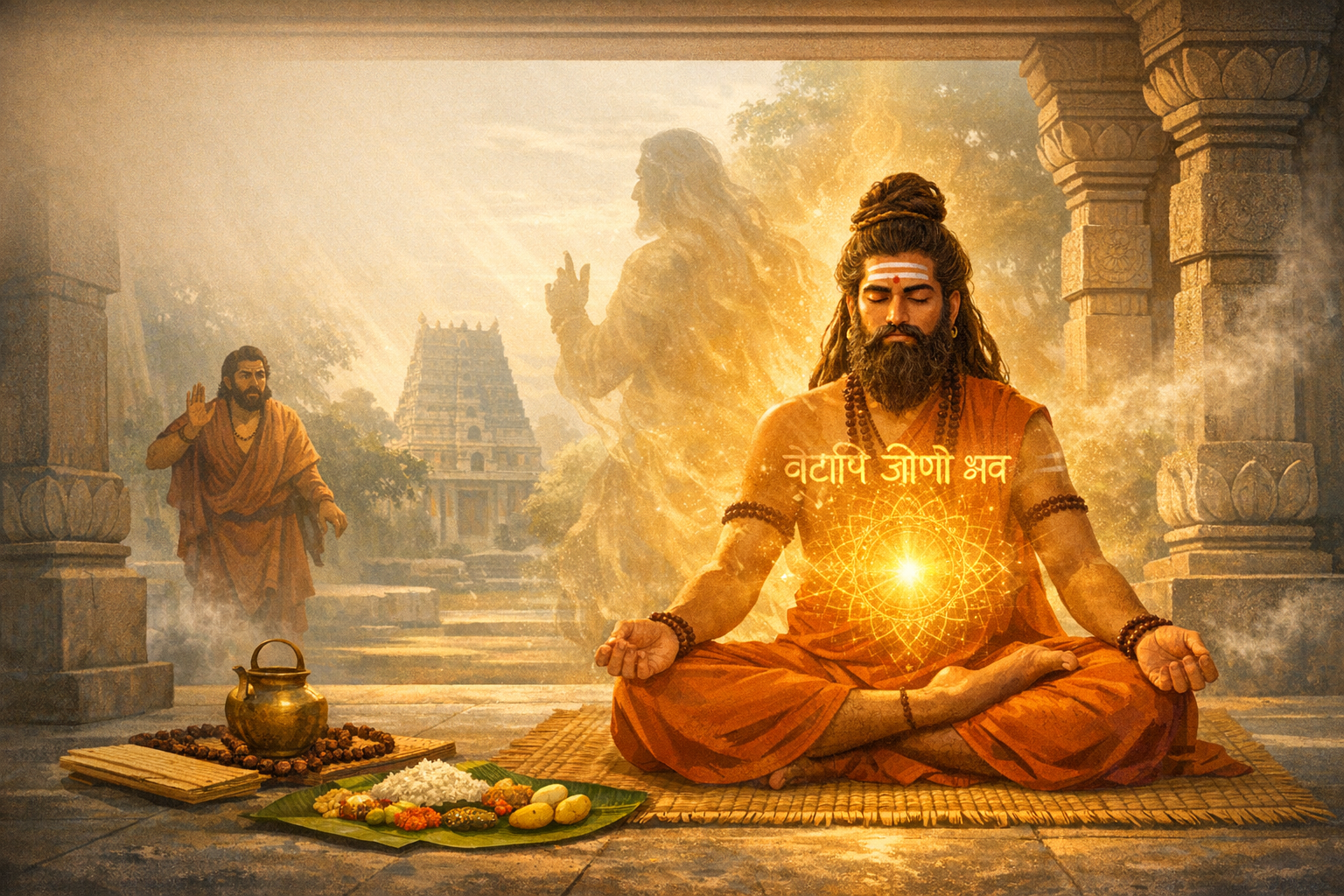
Rishi Agastya’s epithet Asura Samhara Moorthy comes alive in the famed Ilvala–Vatapi episode, where deception is neutralized by yogic insight rather than spectacle. The story upholds Dharma by safeguarding hospitality, demonstrating how spiritual fire (tapas) transmutes harm without amplifying violence. Yogic and Ayurvedic lenses deepen the teaching: jatharagni and disciplined breath digest not only food…
-
From Mortal Hero to Sacred Ideal: Rama’s Journey from Valmiki to the Bhakti Age

Rama’s image evolves from Valmiki’s ethically tested human king to the Bhakti movement’s compassionate divine, illuminating how dharma and devotion converge rather than compete. Valmiki Ramayana presents Maryada Purushottama as a ruler who chooses justice amid painful dilemmas; Bhakti-era RamayanasKamba Ramayanam, Adhyatma Ramayana, and Tulsidas’s Ramcharitmanasreframe those dilemmas through grace, interior devotion, and inclusive accessibility.…
-
Ashta Sastha Revealed: Eight Transformative Forms of Lord Ayyappa and Their Spiritual Power
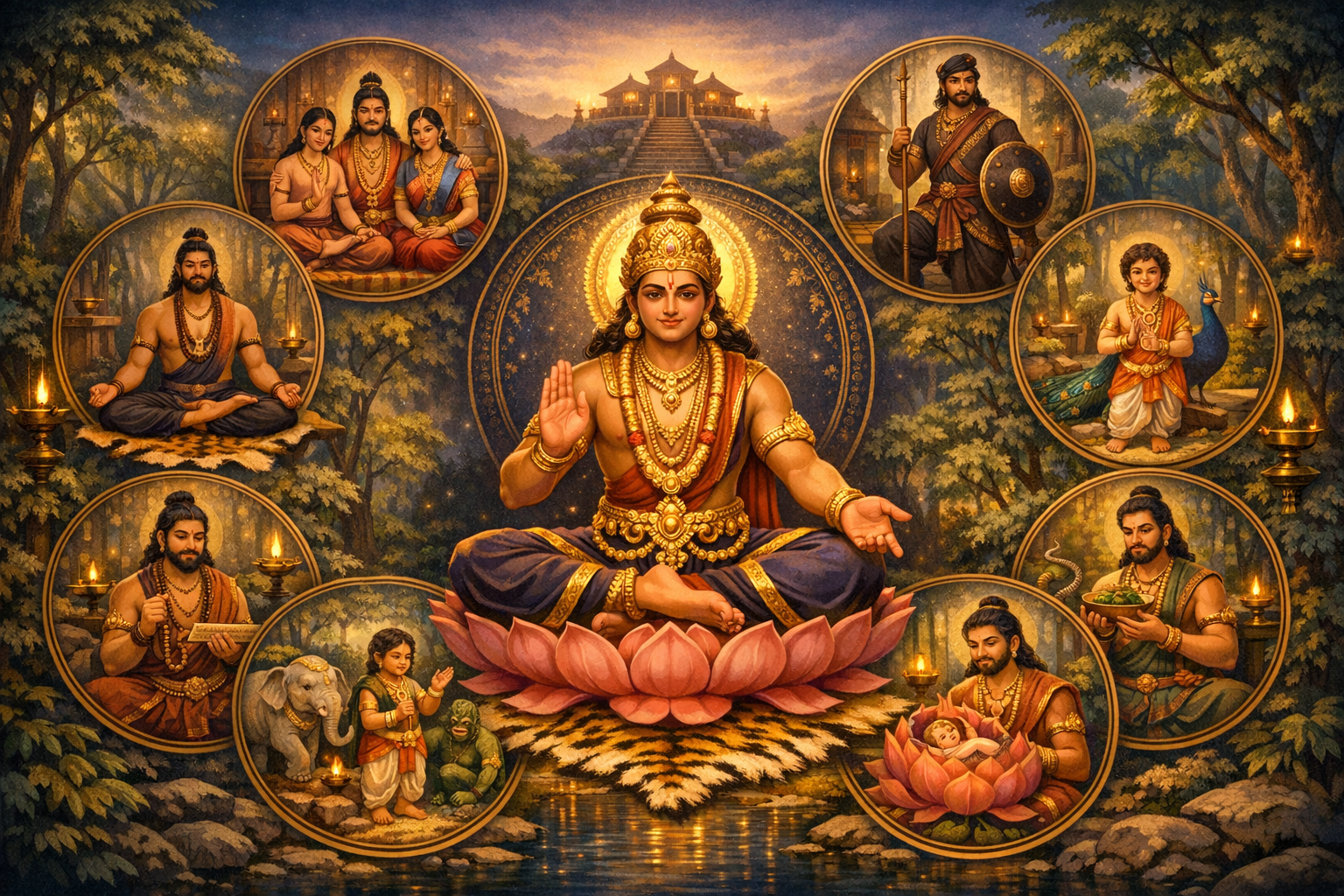
Ashta Sastha presents eight sacred modes of Lord Ayyappa (Dharma Śāstā) that together form a complete pedagogy of spiritual growth. Drawing on Puranic memory, regional sthala-purāṇas, and agamic iconography, the eight forms range from Yoga Śāstā’s meditative stillness to Gṛhastha Śāstā’s family ethics and Vīra Śāstā’s righteous guardianship. The account highlights living practices at Sabarimala,…
-
Why Madhya-līlā Reveals Antya-līlā: Hidden Logic of Chaitanya’s Transformative Final Years
This analysis explores why the Second Chapter of the Madhya-līlā previews pastimes from the Lord’s final twelve years, conventionally associated with the antya-līlā. It shows how this narrative choice aligns with classical Indian aesthetics and Gauḍīya theology to prepare readers for the culmination of bhakti-rasa. The piece highlights how early glimpses of the antya-līlā function…
-
Srimad-Bhagavatam 11.2.50: Conquer Desire and EgoInsights from H.G. Dinabandhu Prabhu
This analysis of Srimad-Bhagavatam 11.2.50 distills H.G. Dinabandhu Prabhu’s core insight: material desire and ego trap the mind in self-centric pursuit and conflict. It charts how deep vāsanā and samskāra patterns create chronic reactivity, then presents bhakti as the structured remedy that reorients consciousness toward service. Readers gain a practical blueprintsravana, kirtana, japa, mindful regulation,…
-
Shattering the Myth: Why Valmiki’s Ramayana Has No Maya SitaEvidence and Dharma
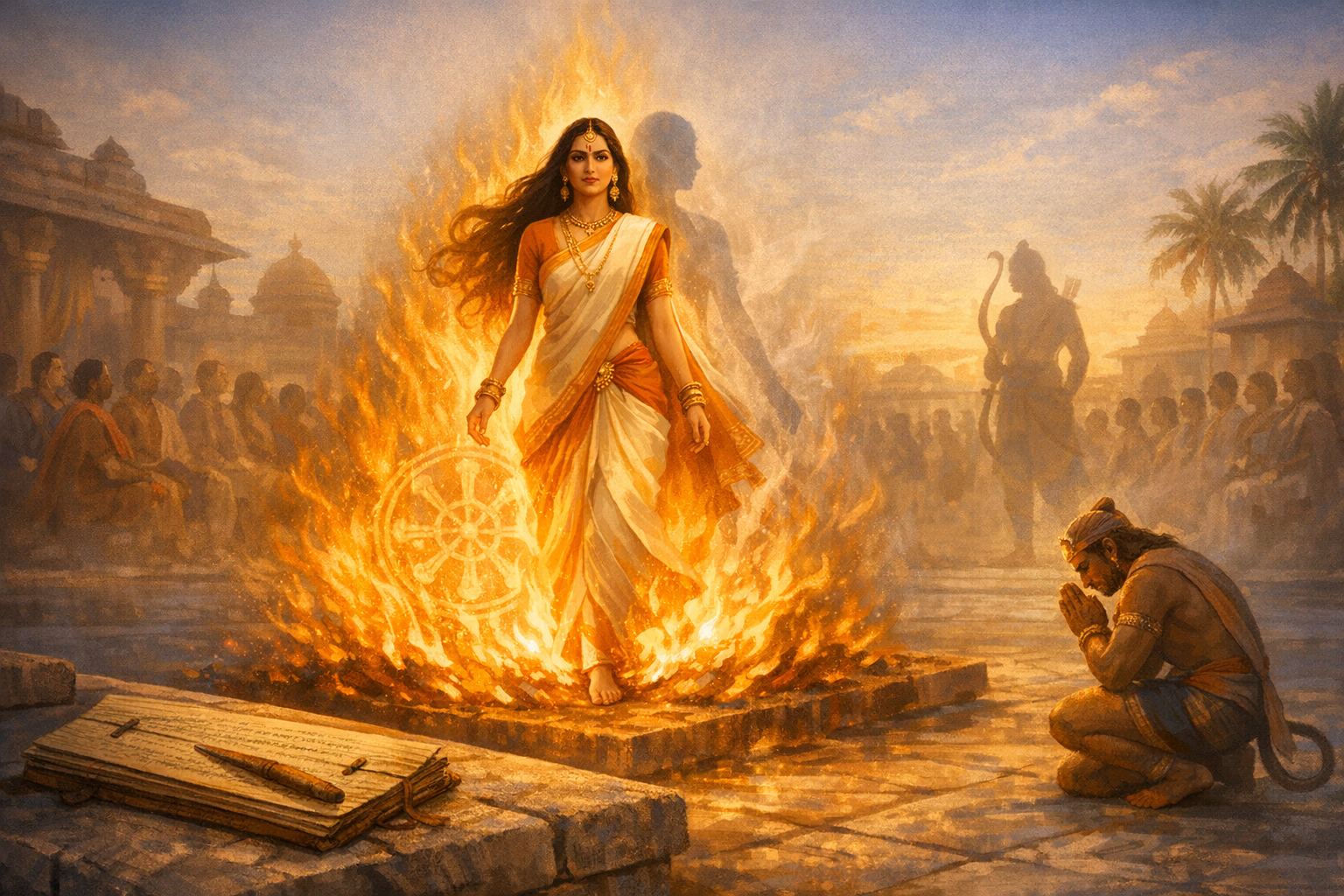
The Maya Sita motifan illusory duplicate of Sitadoes not appear in Valmiki’s Ramayana. Textual criticism across northern and southern manuscript families confirms its absence, especially in the Yuddha Kanda where Sita’s Agni-praveśa serves as public vindication. Later Puranic and bhakti-era tellings, such as the Adhyātma Rāmāyaṇa, introduce Maya Sita to offer a theologically protective reading…
-
Unshakable Equanimity in Srimad Bhagavatam 11.2.49: Suffering, Divine Memory, and Practice
Śrīmad-Bhāgavatam 11.2.49 offers a precise map of suffering across body, prāṇa, mind, intelligence, and senses, and pairs it with a single remedy: steady remembrance of the Divine. This analysis explains how that remembrance stabilizes attention, recalibrates desire, and transforms reactivity into equanimity. Practical guidance shows how to translate the verse into daily anchorsjapa, prāṇāyāma, curated…
-
Beyond Temple Worship: Kapila on Seeing the Supersoul in All (Bhagavatam 3.29.21–27)

Srimad-Bhagavatam 3.29.21–27 defines authentic devotion as seeing the Lord (Paramātman) in every being, not only in the temple Deity. The discussion clarifies why ritual worship, though essential, remains incomplete without ahiṃsā and dayā. Drawing on the Bhagavad-Gita and the Upanishads, it shows how arcā-vigraha trains perception to recognize the indwelling Lord everywhere. Practical guidance translates…
-
Hamsa Gita in the Mahabharata: A Timeless Swan-Song of Self-Knowledge and Liberation

The Hamsa Gita in the Mahabharata’s Shanti Parva distills Hindu philosophy into a lucid teaching on witness-consciousness, ethical living, and liberation. It clarifies how ātman stands apart from body and mind, and why steady contemplation and virtue are indispensable for moksha. Read alongside the Bhagavata Purana’s Hamsa avatāra, it reveals a complementary synthesis of jñāna,…
-
Srimad Bhagavatam 7.12.16: Bhakti Discipline and Inner Transformation at ISKCON GEV
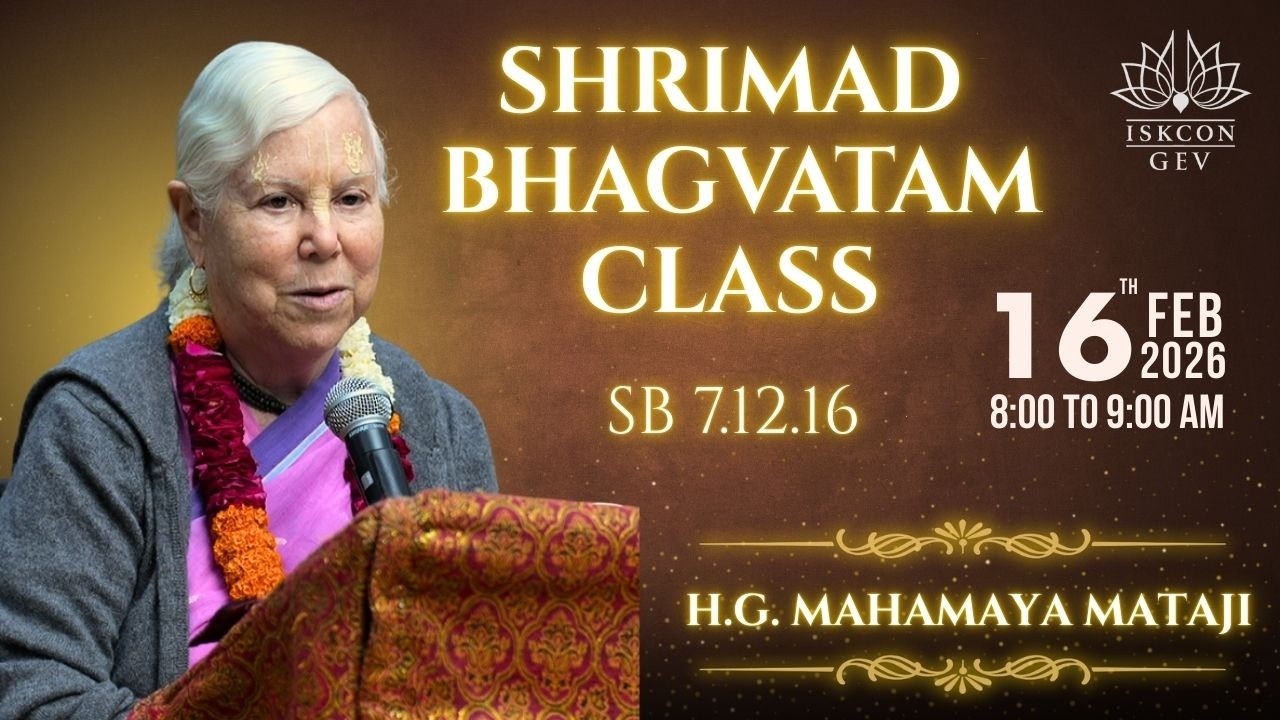
This in-depth summary of the Srimad Bhagavatam 7.12.16 class by H.G. Mahamaya Mataji at ISKCON GEV presents a clear, academically grounded pathway to devotional growth. It situates the verse within Canto Seven’s broader ethical and spiritual framework and explains how guru–shishya parampara safeguards scriptural integrity. Readers gain a practical map of sadhanafrom śraddhā to premasupported…
-
In Memoriam: HG Ekanatha Prabhu ACBSPGuardian of the Bhaktivedanta Archives and Vedabase

HG Ekanatha Prabhu ACBSP of The Bhaktivedanta Archives passed away on Vijay Ekadasi in Sandy Ridge, North Carolina, following sudden heart failure. He is remembered for exemplary stewardship of Srila Prabhupada’s books, tapes, photographs, and the Bhaktivedanta Vedabase. His work exemplified archival best practiceshigh-fidelity audio digitization, careful image capture, rigorous metadata, and OAIS-aligned long-term preservation.…
-
Unsung Heroes of the Mahabharata: Bahlika Raja’s Legacy, Dharma, and Living Lessons

This exploration spotlights Bahlika Raja, a lesser-known yet consequential figure in the Mahabharata. It outlines his lineage, regional associations with Bahlika (Balkh/Bactria), and his role and fall in the Kurukshetra War. The discussion presents the revered belief that he is the next birth of Bhakta Prahalada, highlighting themes of devotion and continuity of merit. Readers…
-
Mahabahu in Hinduism: Unveiling the Mighty-Armed Ideal of Strength, Dharma, and Service

Mahabahu, from the Sanskrit roots “maha” (great) and “bahu” (arms), is a profound ideal in Hindu scriptures that unites power with ethical responsibility. Found in the Ramayana, Mahabharata, and Bhagavad Gita, it signifies strength guided by self-mastery and compassion. The term illuminates how epic narrative encodes philosophical principles: arms symbolize disciplined action in the service…
-
Prahlada Gita: Timeless Lessons on Devotion, Fearless Faith, and Dharma for Everyday Life
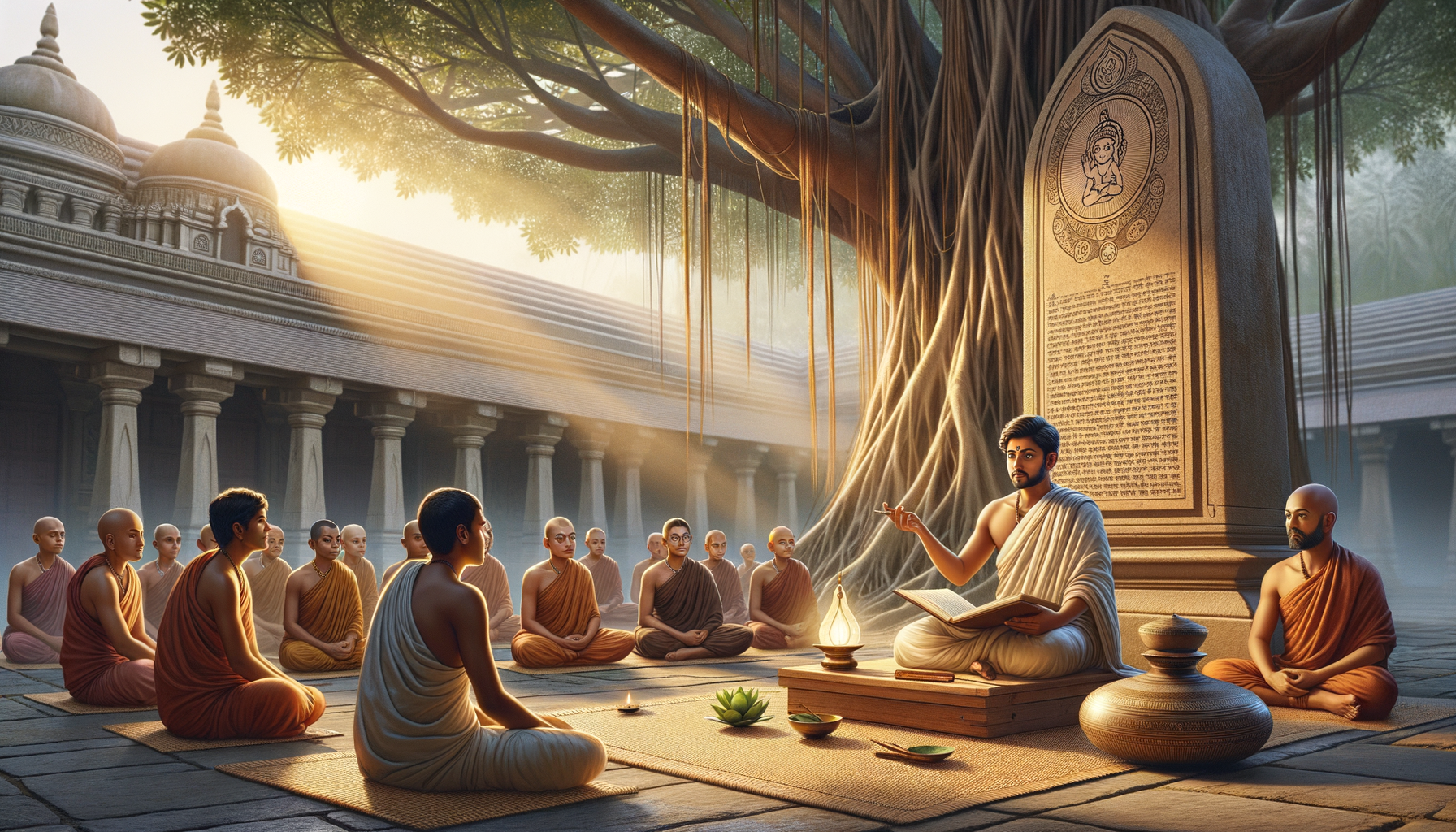
Prahlada Gita presents a clear, practice-centered pathway to devotion, ethical courage, and emotional steadiness grounded in Sanatan Dharma. Set within the Gurukulam context of Sri Shukracharya, Prahlada’s instruction guides peers toward fearless faith in Lord Vishnu and principled living. Its disciplinesśravaṇa, smaraṇa, seva, and ātma-nivedanatranslate readily into modern routines that foster clarity and resilience. Read…
-
Mooka Panchashati: Miraculous Hymn to Kamakshi and the Living Grace of Kanchipuram
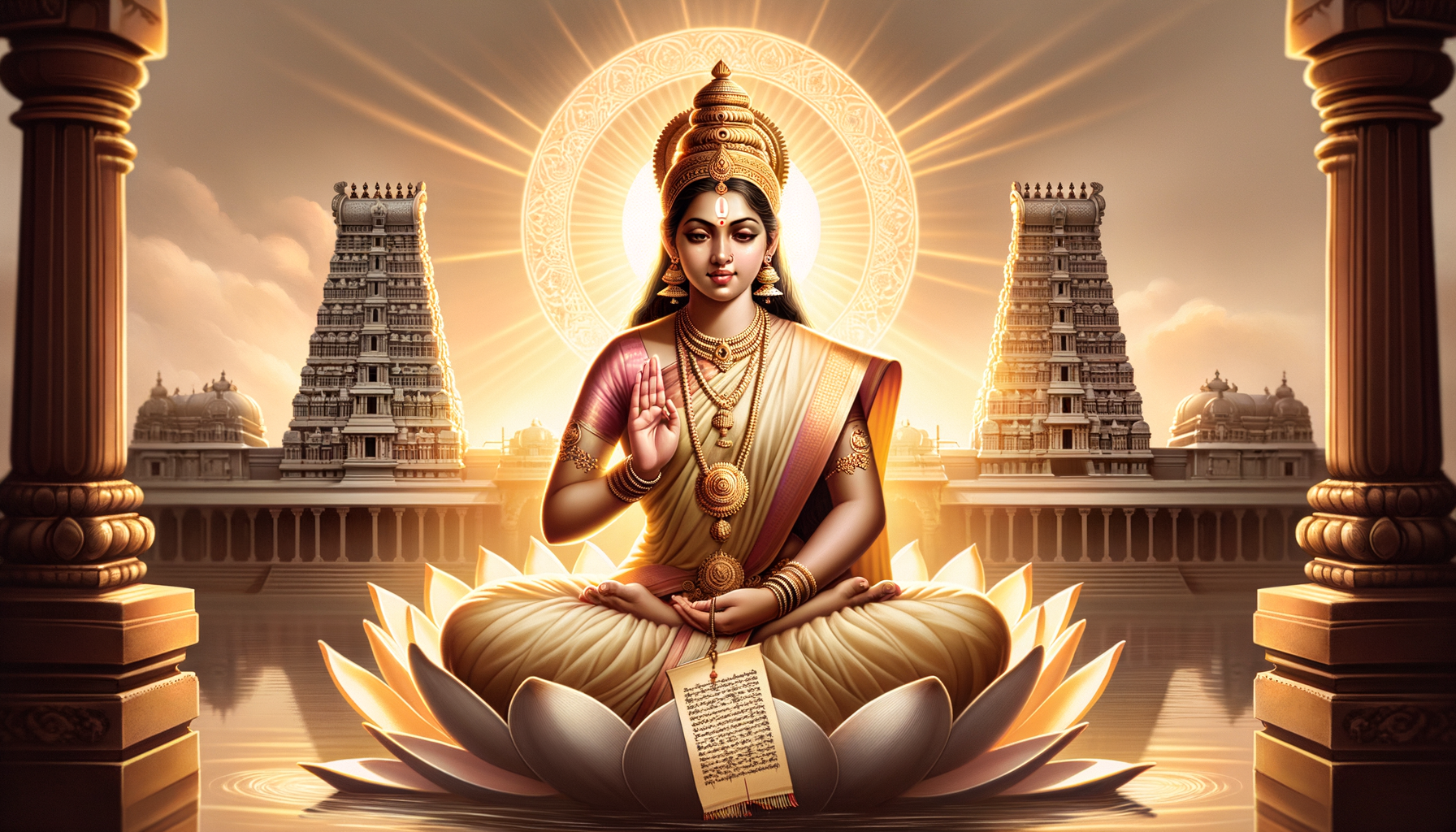
The Mooka Panchashati is a 500-verse Sanskrit hymn devoted to Goddess Kamakshi of Kanchipuram, attributed to Mooka Kavi, whose transformative devotion is central to its legacy. Rooted in the bhakti tradition, the hymn blends accessible prayer with philosophical depth, illuminating Kamakshi’s form, compassion, and power. The Kamakshi Amman Temple provides a living context for this…
-
Vinayaka Purana Mahatmyam: Timeless Ganesha Stories that Inspire Devotion and Unity
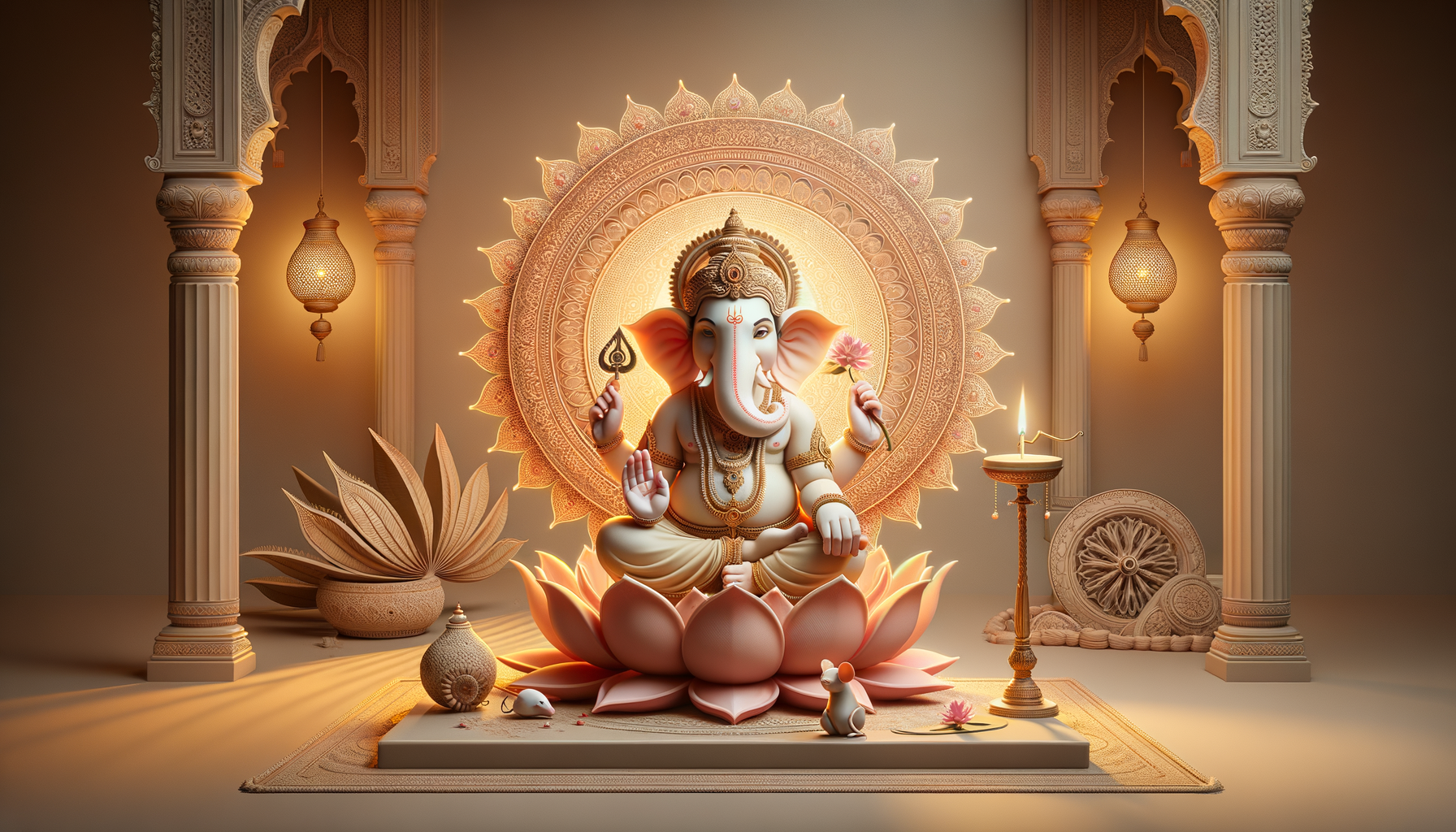
Vinayaka Purana Mahatmyam presents Lord Ganesha’s inspiring glory through accessible, ethically rich stories attributed in tradition to Veda Vyasa. These narratives illuminate Ganesha’s qualities as the remover of obstacles and patron of wisdom, linking miracle accounts to practical virtues such as patience, clarity, and compassion. Related texts like the Ganesha Purana and Mudgala Purana complement…