
-
Sarvatobhadra Chakra: Powerful Jyotisha Tool for Deeper Transit Insight

Sarvatobhadra Chakra is one of the most comprehensive tools in Jyotisha for studying planetary transits, known traditionally as Gochara. It uses a 9 by 9 grid of 81 divisions to integrate nakshatra, rashi, tithi, vara, and akshara into a single predictive framework. The method is especially known for the principle of vedha, which shows how…
-
Why Desire Became the Hidden Force Behind Creation in Hindu Thought
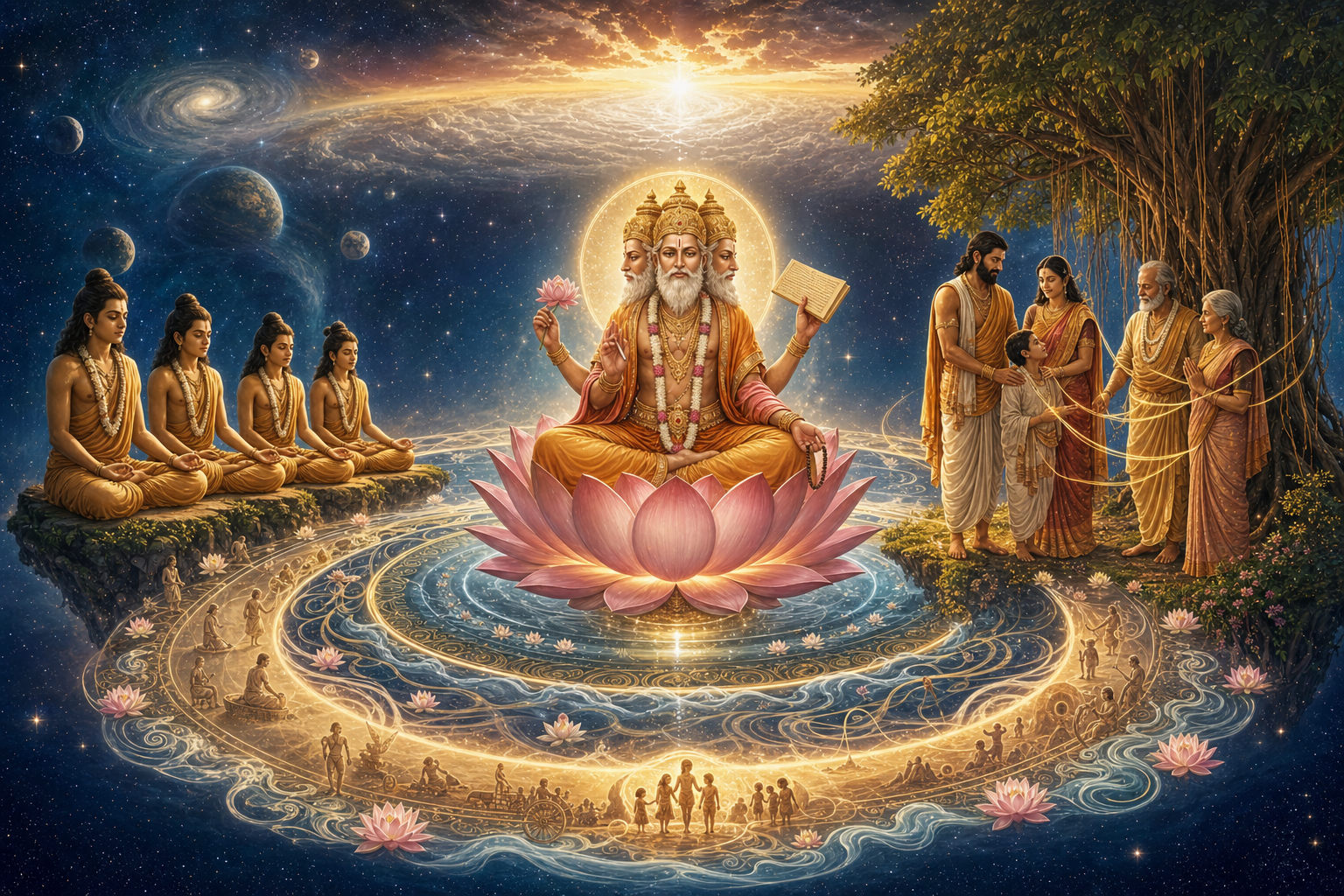
This article explores why Hindu scriptures treat sexual pleasure as more than a biological impulse. Through the story of Brahma, the mind-born sages, and the refusal of the Kumaras to procreate, it explains the tension between worldly continuity and spiritual liberation. The discussion shows how kama, dharma, samsara, and moksha form a sophisticated framework for…
-
Powerful Lessons from Śrīmad Bhāgavatam 3.26.56-57 on Body, Prāṇa and Death

Śrīmad Bhāgavatam 3.26.56-57 presents a profound meditation on the virāṭ-puruṣa, the universal form, through the manifestation of skin, herbs, reproductive power, water, apāna, and death. These verses show how the body and cosmos are interwoven in Vedic philosophy, making ordinary embodied life a field for spiritual reflection. The discussion highlights the sacred role of medicinal…
-
Reading the Bhagavad Gita Seriously: A Powerful Call to Live Its Wisdom
The Bhagavad Gita remains one of the most influential scriptures of Sanatana Dharma, but its true value is realized only when its teachings are respected and practiced. This rewritten essay explains why shastra must guide decisions about duty and non-duty, rather than personal opinion alone. It also examines the Gita’s own acknowledgment of the Vedas…
-
Powerful Truth: Why Mahabharata Was Not Simply Jaya Expanded into Bharata

The familiar claim that the Mahabharata evolved from an 8,800-verse Jaya into a 24,000-verse Bharata and then into the 100,000-verse Mahabharata is more complicated than it appears. A close reading of the Adi Parva suggests that the number 8,800 refers to difficult or knotty verses, not necessarily to a complete early text called Jaya. The…
-
Ami Ganatra’s Powerful Guide to Hindu Shastras and Living Knowledge Systems

Ami Ganatra’s Why are We This Way offers a serious and accessible guide to Hindu Shastras, Indian Knowledge Systems, and the living continuity of Sanatana Dharma. The book explains Shruti, Smriti, Vedas, Upanishads, Itihasas, Puranas, Darshanas, and related traditions without reducing them to a mere catalogue of texts. Its strongest contribution is showing how Hindu…
-
When Accidents Reveal Hidden Truth: Knowledge, Chance, Karma, and Divine Grace

This long-form philosophical essay examines whether accidents are truly random or simply events whose causes remain hidden from human understanding. Beginning with relatable examples from daily life and cricket, it moves into legal definitions, classical philosophy, science, and dharmic thought. The essay explains how Aristotle, Hume, Kautsky, Engels, Bradley, Merton, and Mill help distinguish accident,…
-
Sacred Power of Balarama’s Langala: Plough Symbolism in Hindu Sculpture
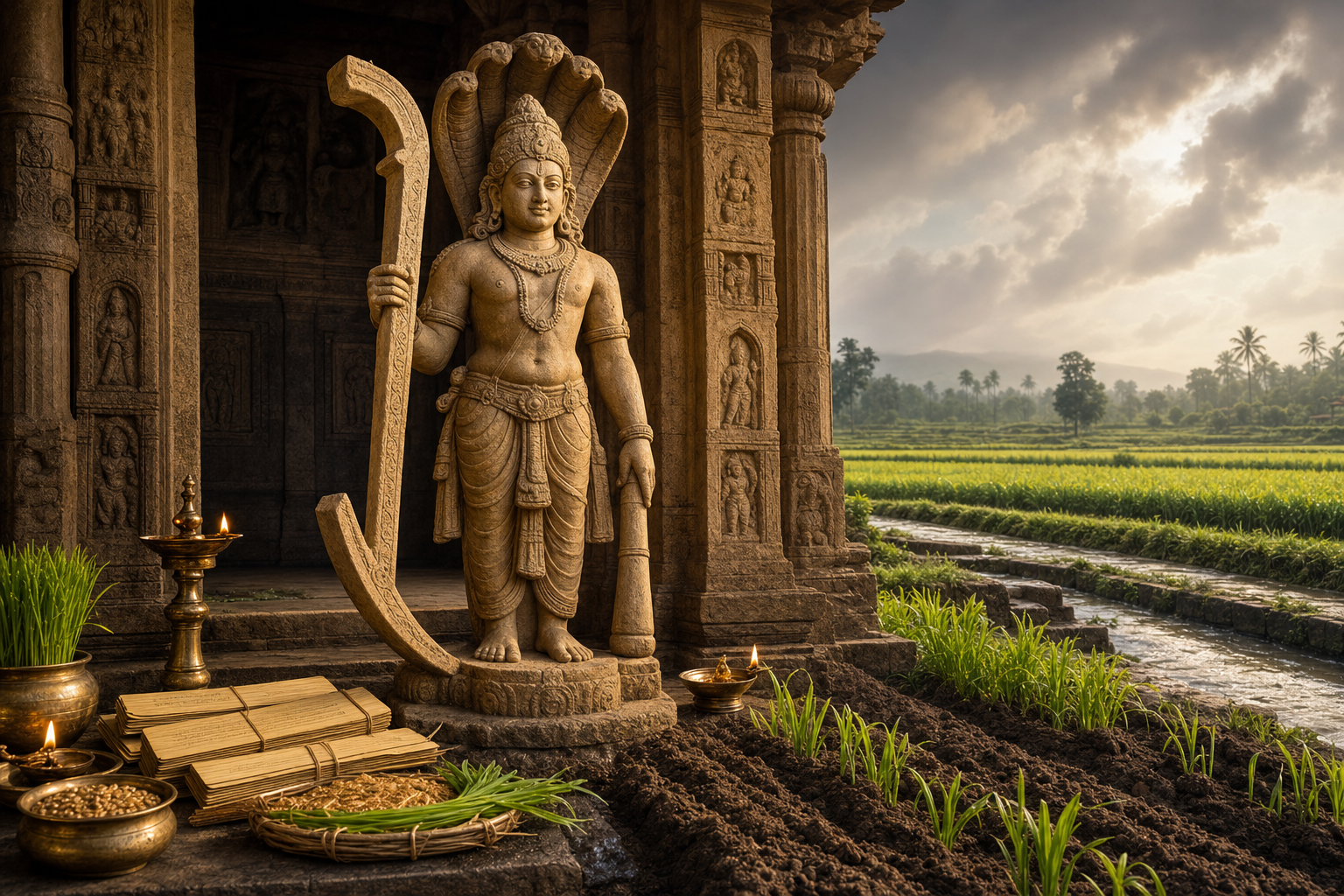
The Langala, or Hala, is the sacred plough associated with Balarama and one of the most meaningful agrarian symbols in Hindu sculpture. It represents fertility, strength, food, disciplined labor, and the sanctity of the earth. In Hindu iconography, the plough identifies Balarama as Halayudha and connects him with agriculture, protection, and cosmic support. The symbol…
-
Powerful Lessons from ŚB 4.19.24-25 on Dharma, Envy, and Sacred Restraint
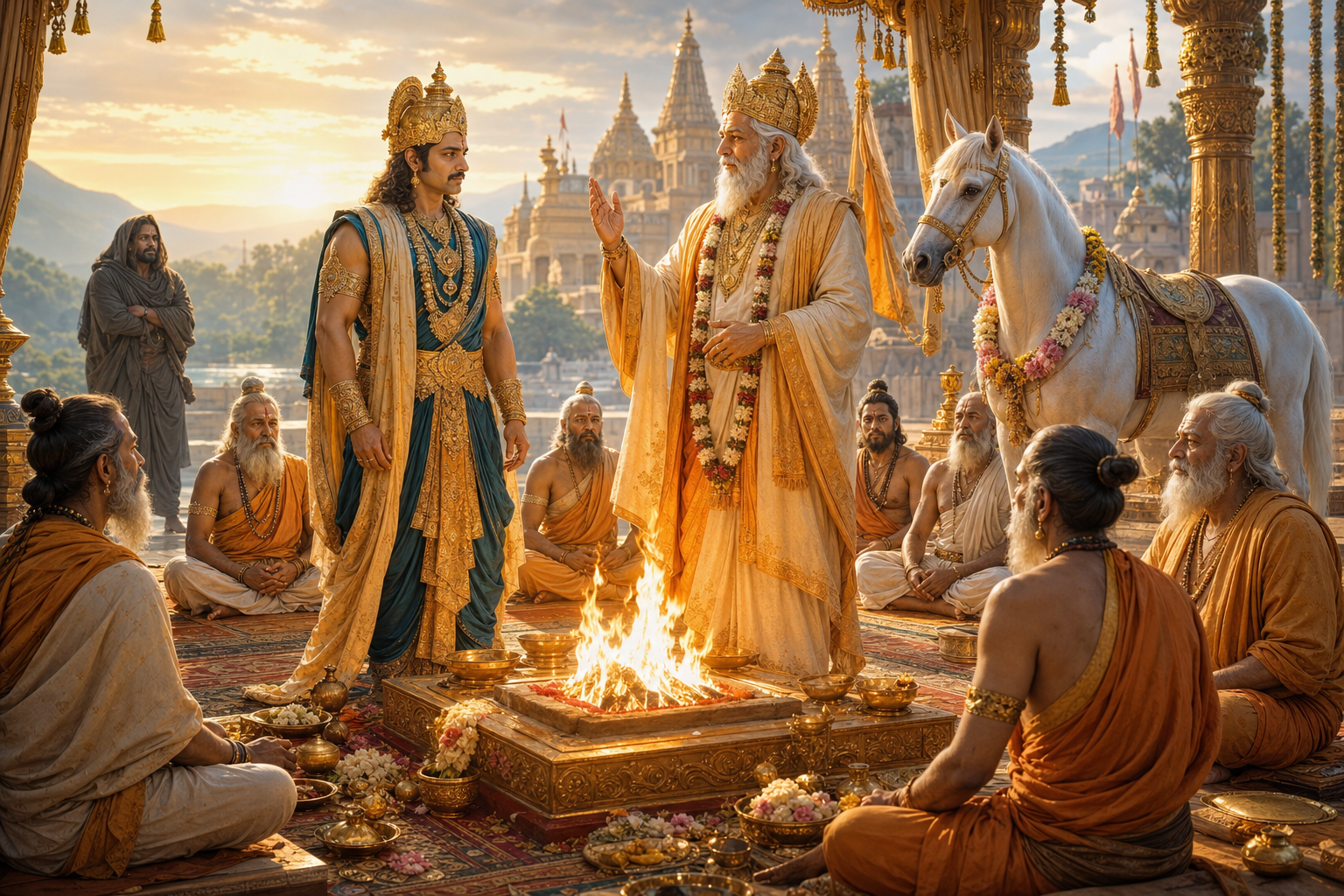
ŚB 4.19.24-25 presents a profound lesson on dharma, sacred restraint, and the dangers of religious externalism. The episode shows Lord Brahmā intervening when King Pṛthu’s sacrifice is threatened by Indra’s envy and misuse of renunciant symbols. Rather than excusing wrongdoing, the verses teach that even justified anger must remain governed by divine purpose and moral…
-
Powerful Lessons from SB 5.24.03: Rāhu, Sudarśana, and Divine Protection
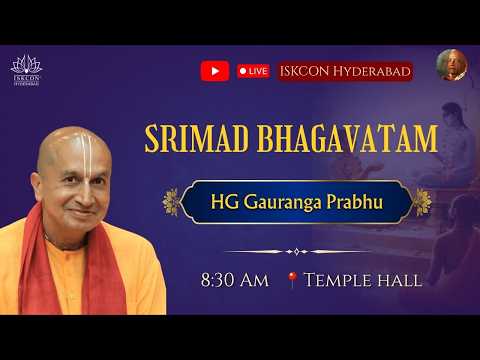
This reflection on the Srimad Bhagavatam class SB 5.24.03 explores the deeper meaning of Rāhu, the eclipse, and the protective power of the Sudarśana cakra. It presents the verse as more than a cosmological description, showing how the Bhagavata Purana uses sacred imagery to teach divine protection, purified vision, and resilience. The discussion highlights Lord…
-
Why Every Ramayana Is Incomplete: The Powerful Living Tradition of Rama
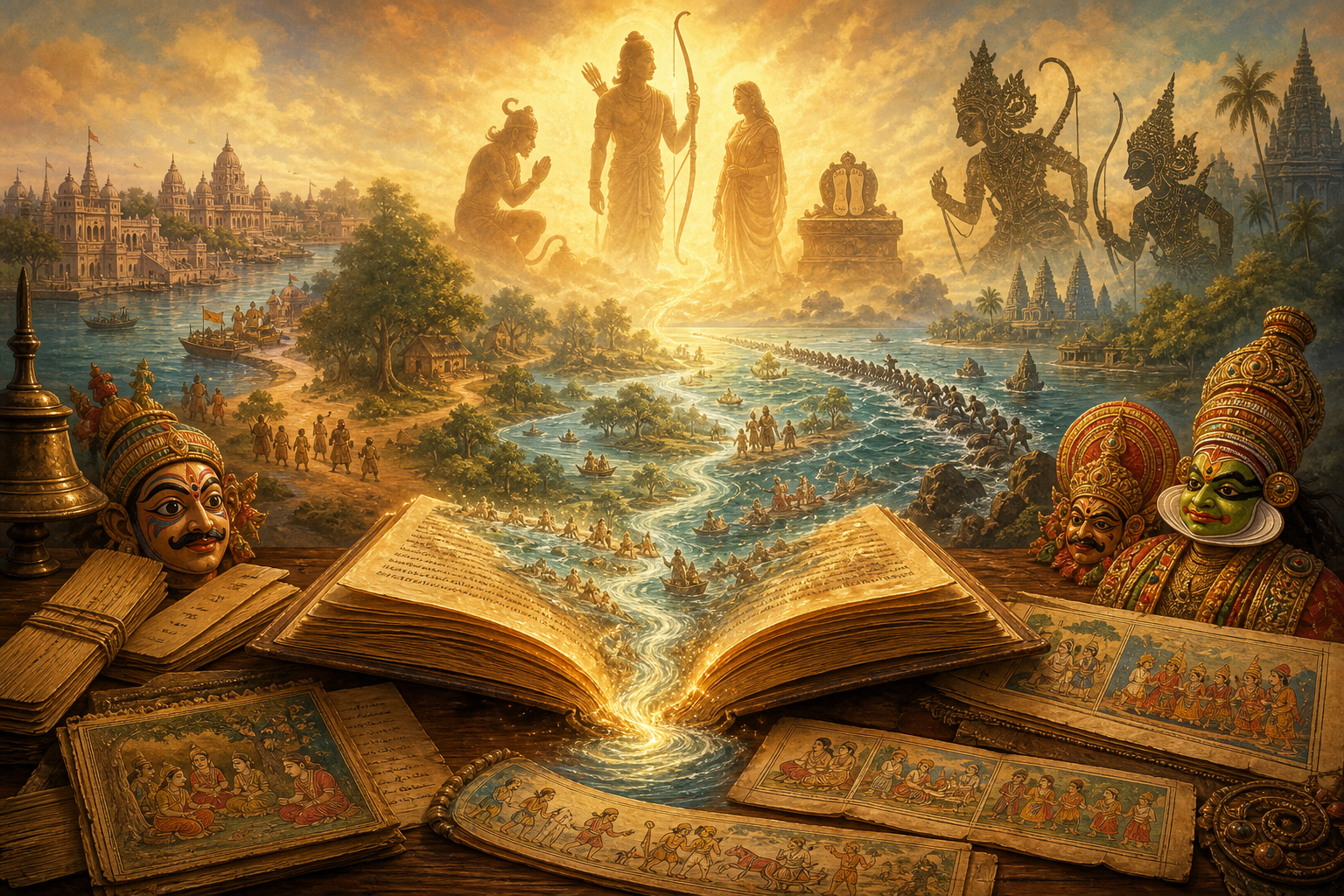
The Ramayana is often treated as a single familiar story, but its real tradition is far wider and deeper. Valmiki’s Sanskrit Ramayana, Tulsidas’s Ramcharitmanas, Kamban’s Tamil epic, Jain and Buddhist retellings, Southeast Asian adaptations, and folk performances all reveal different dimensions of Rama Katha. This article explains why every Ramayana is complete within its own…
-
Vyasa in the Mahabharata: The Sage Whose Choices Shaped an Epic Civilization
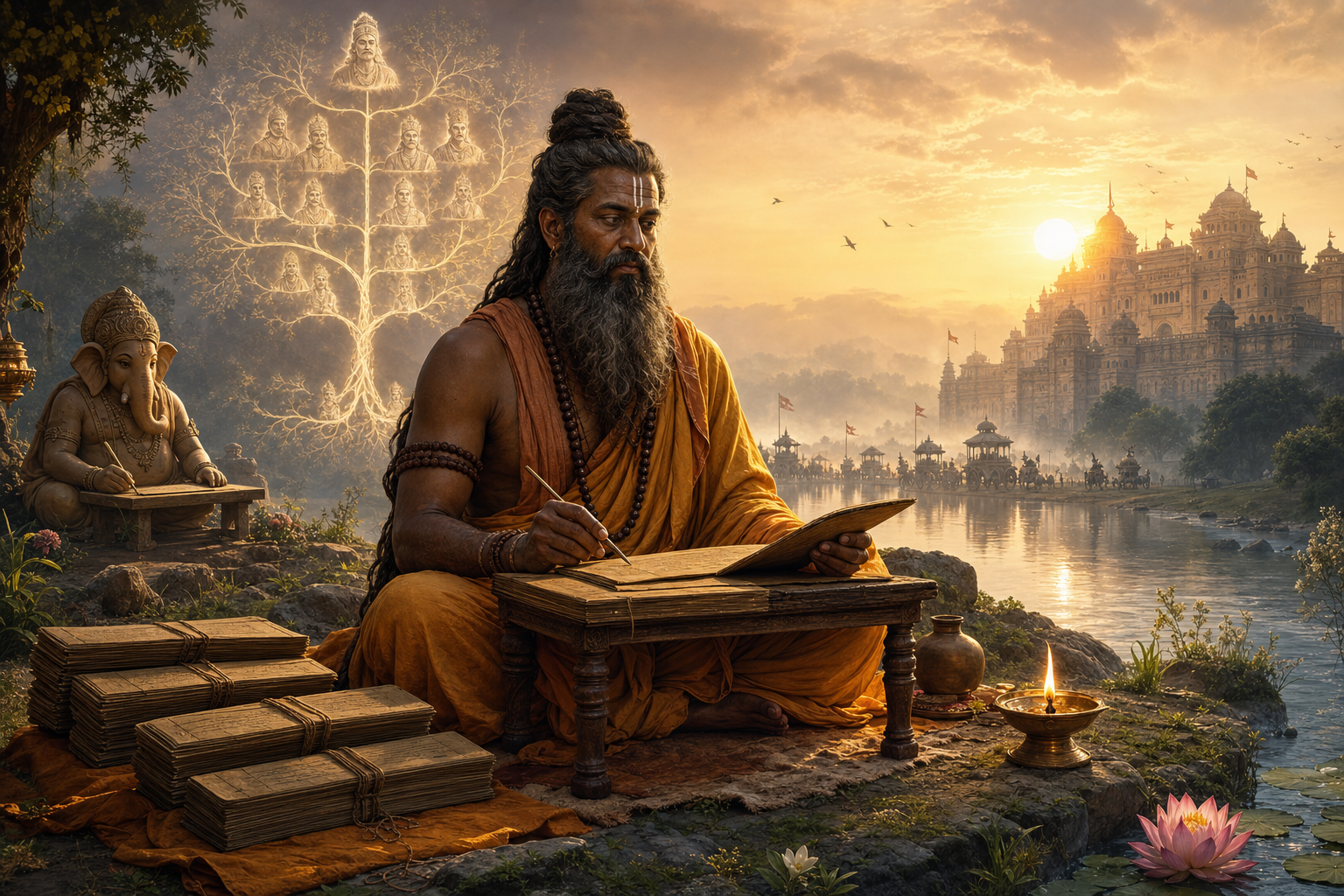
Vyasa holds a unique place in the Mahabharata as both the traditional composer of the epic and a decisive character within it. Born to Satyavati and Parashara, he becomes the sage whose intervention preserves the Kuru dynasty through Dhritarashtra, Pandu, and Vidura. This article explains how Vyasa’s role connects authorship, lineage, dharma, and sacred memory.…
-
Virata Kingdom in the Mahabharata: Powerful Lessons from the Matsya Refuge
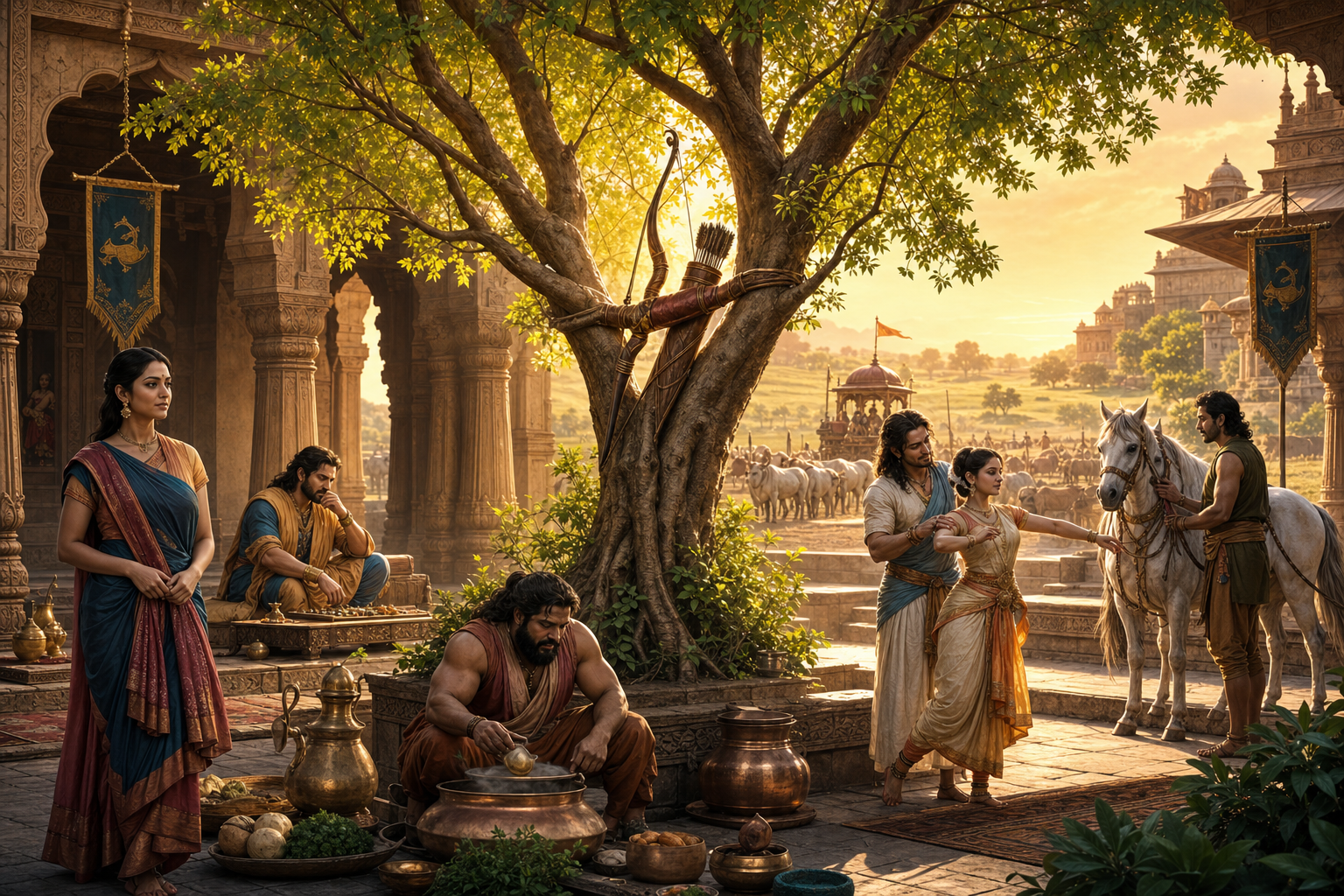
The Virata Kingdom, also known as the Matsya Kingdom, is one of the most meaningful settings in the Mahabharata because it marks the Pandavas’ final year of exile. This article explains how Virata became the place where hidden identity, humility, courage, and dharma were tested. It explores the roles of Yudhishthira, Bhima, Arjuna, Nakula, Sahadeva,…
-
Powerful Lesson from ŚB 4.19.23: Exposing False Spirituality with Dharma
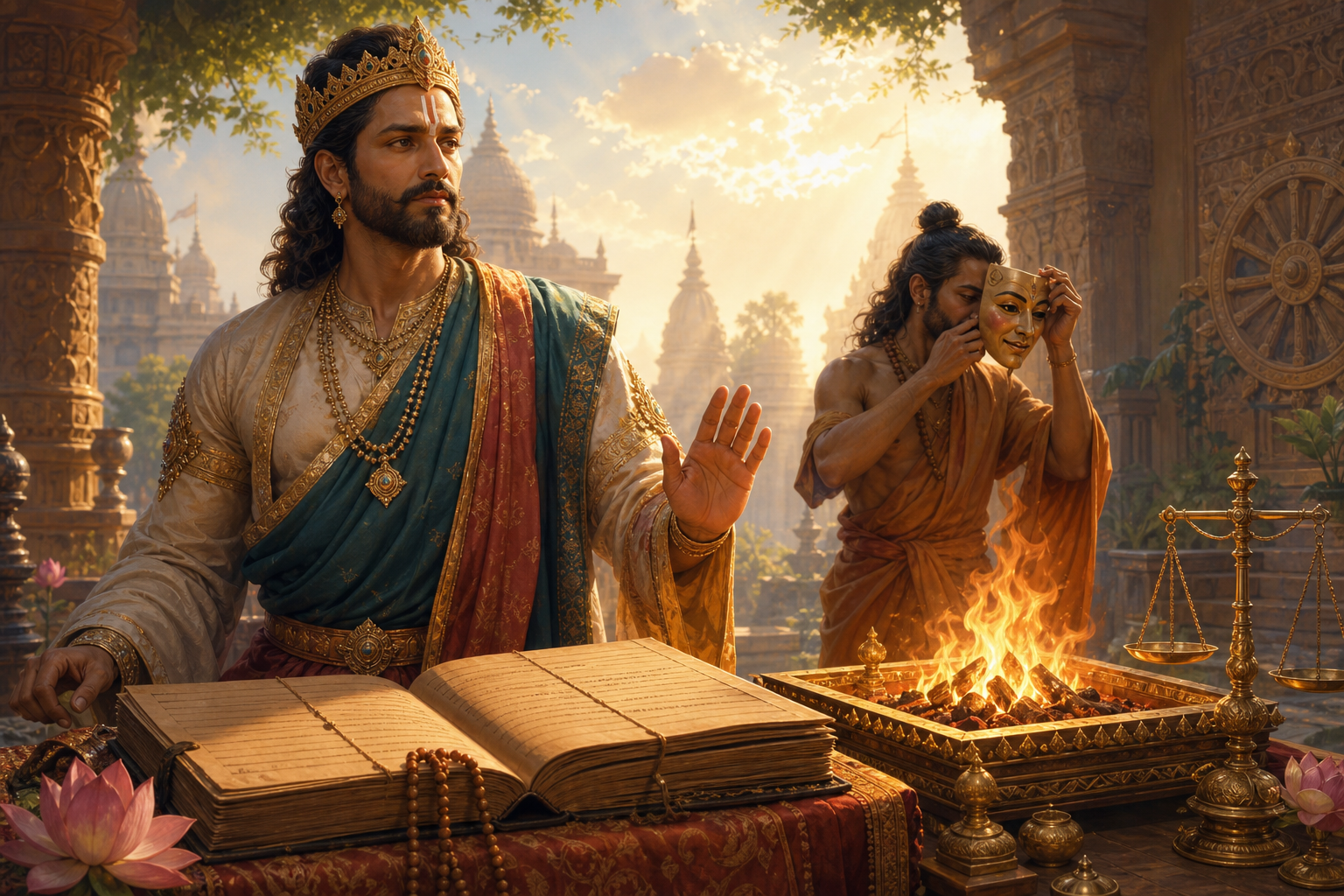
ŚB 4.19.23 offers a powerful reflection on the difference between authentic dharma and religious appearance without inner substance. Set within the episode of King Pṛthu and Indra, the verse examines how envy and insecurity can distort sacred symbols. Its central warning concerns pākhaṇḍa, or pseudo-spirituality, where outward signs are separated from humility, discipline, and truth.…
-
Powerful Lessons from Śrīmad-Bhāgavatam 3.26.53-55 on the Cosmic Body

Śrīmad-Bhāgavatam 3.26.53-55 presents a profound account of the virāṭ-puruṣa entering the golden cosmic egg and organizing creation into meaningful departments. These verses explain how speech, breath, smell, sight, hearing, and their presiding deities emerge within the universal form. The teaching offers a technical Vedic framework for understanding the senses as sacred instruments rather than isolated…
-
Ishvara Samhita: Powerful Vaishnava Wisdom for Sacred Worship and Inner Discipline
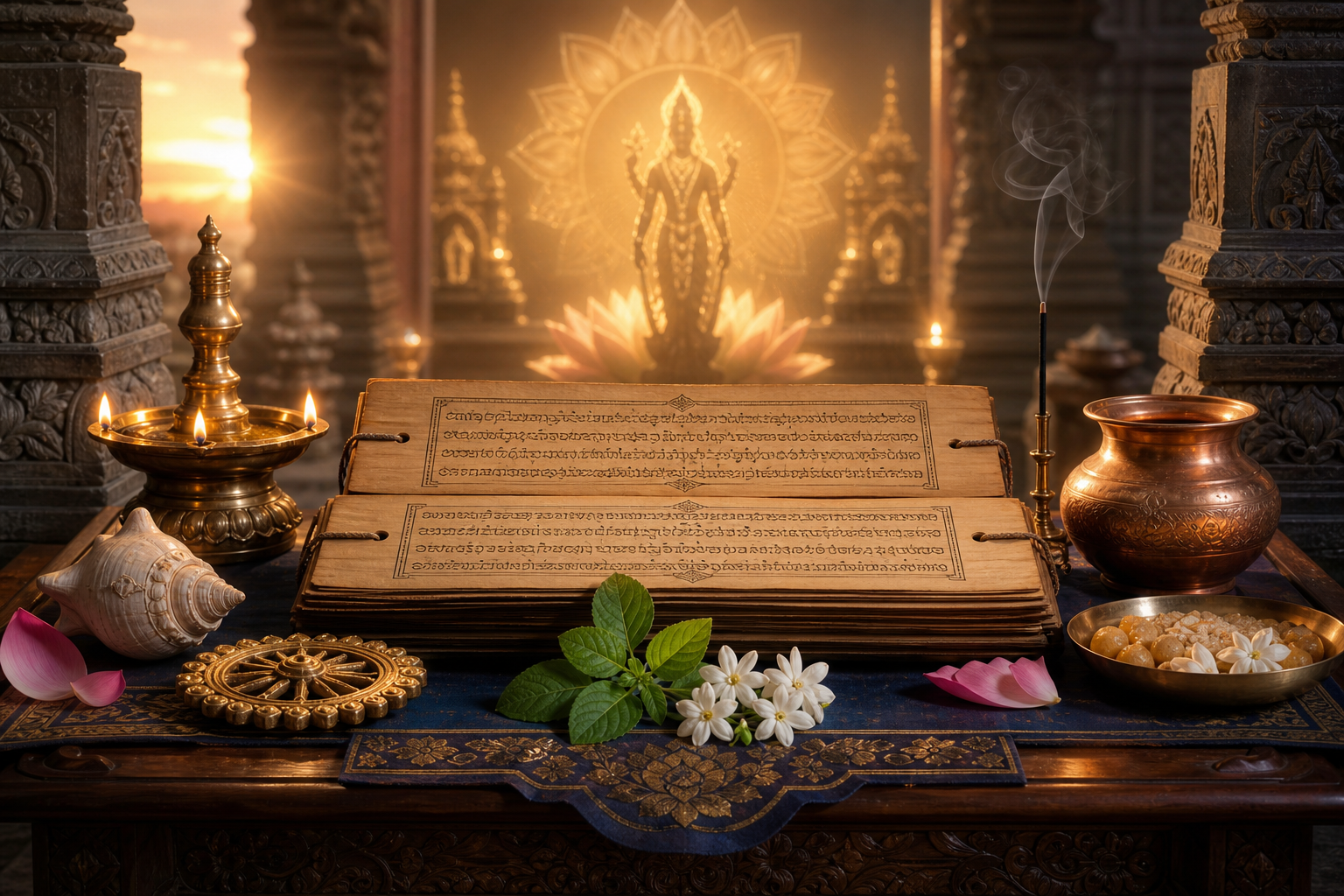
Ishvara Samhita is a significant Vaishnava text within the Pancharatra tradition, offering a disciplined approach to worship, initiation, mantra, temple practice, and inner realization. This rewritten study explains how the text connects ritual precision with devotional tenderness and philosophical depth. It highlights the role of Vishnu-Narayana, sacred sound, consecrated images, temple culture, and the transformation…
-
Manusmriti on Dharmayuddha: Powerful Ethical Rules for Righteous Warfare

Dharmayuddha, or righteous warfare, is one of the most demanding ethical ideas in ancient Indian thought. The Manusmriti presents war not as a space beyond morality, but as an arena where restraint, justice, and honor remain binding. Its rules prohibit cruel weapons and forbid attacks on the wounded, disarmed, surrendering, sleeping, frightened, or helpless. This…
-
Ravana’s Regenerating Heads: The Profound Wisdom Behind Rama’s Final Aim
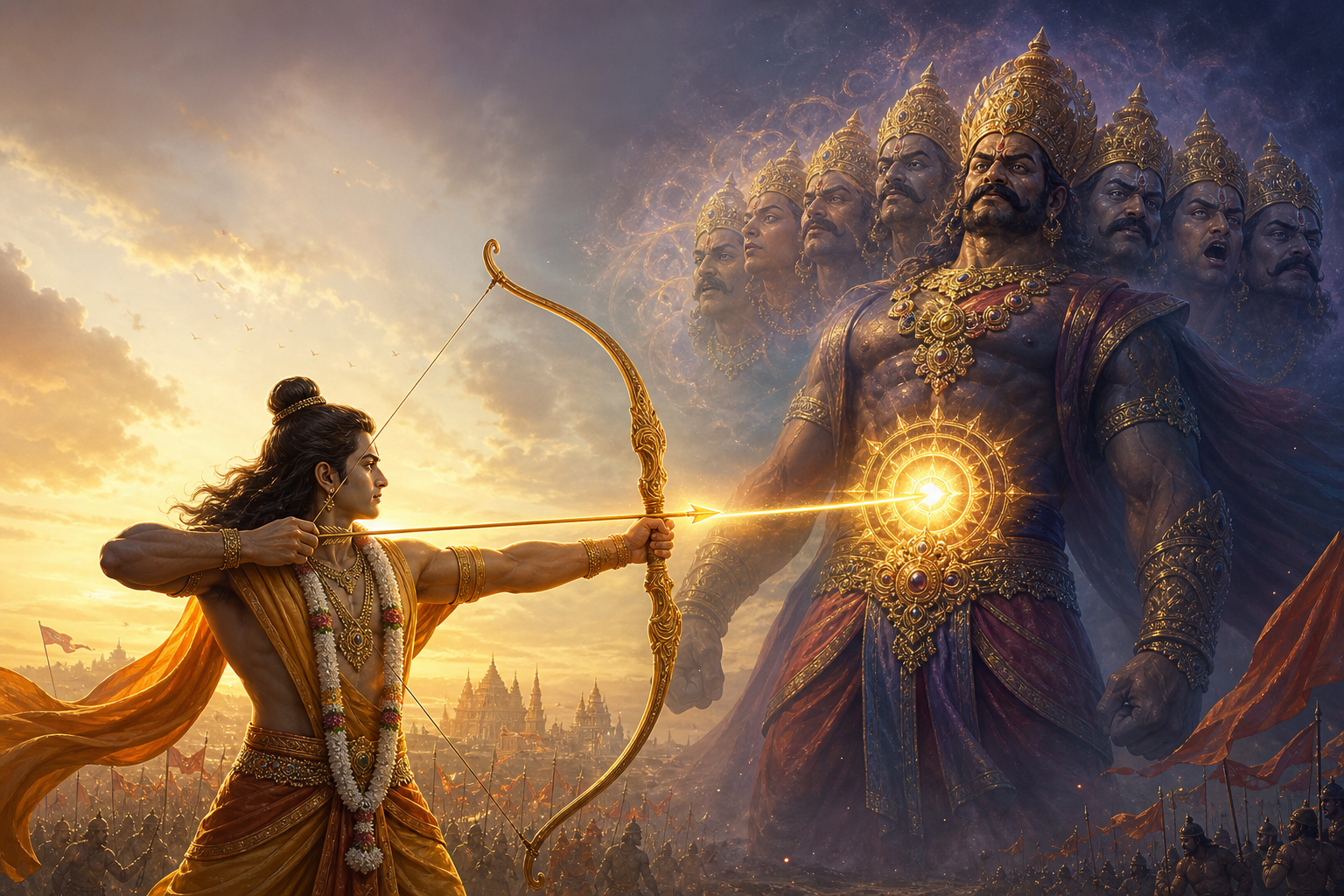
This article explores the symbolism of Ravana’s regenerating heads and the deeper meaning behind Rama’s final victory in the Ramayana. It explains that the repeated severing of Ravana’s heads represents the failure of treating symptoms while leaving the root of ego, desire, and adharma untouched. The piece distinguishes between Valmiki Ramayana and later traditional interpretations…
-
Ardhanarinaravapuh Revealed: Powerful Hindu Wisdom on Sacred Gender Unity
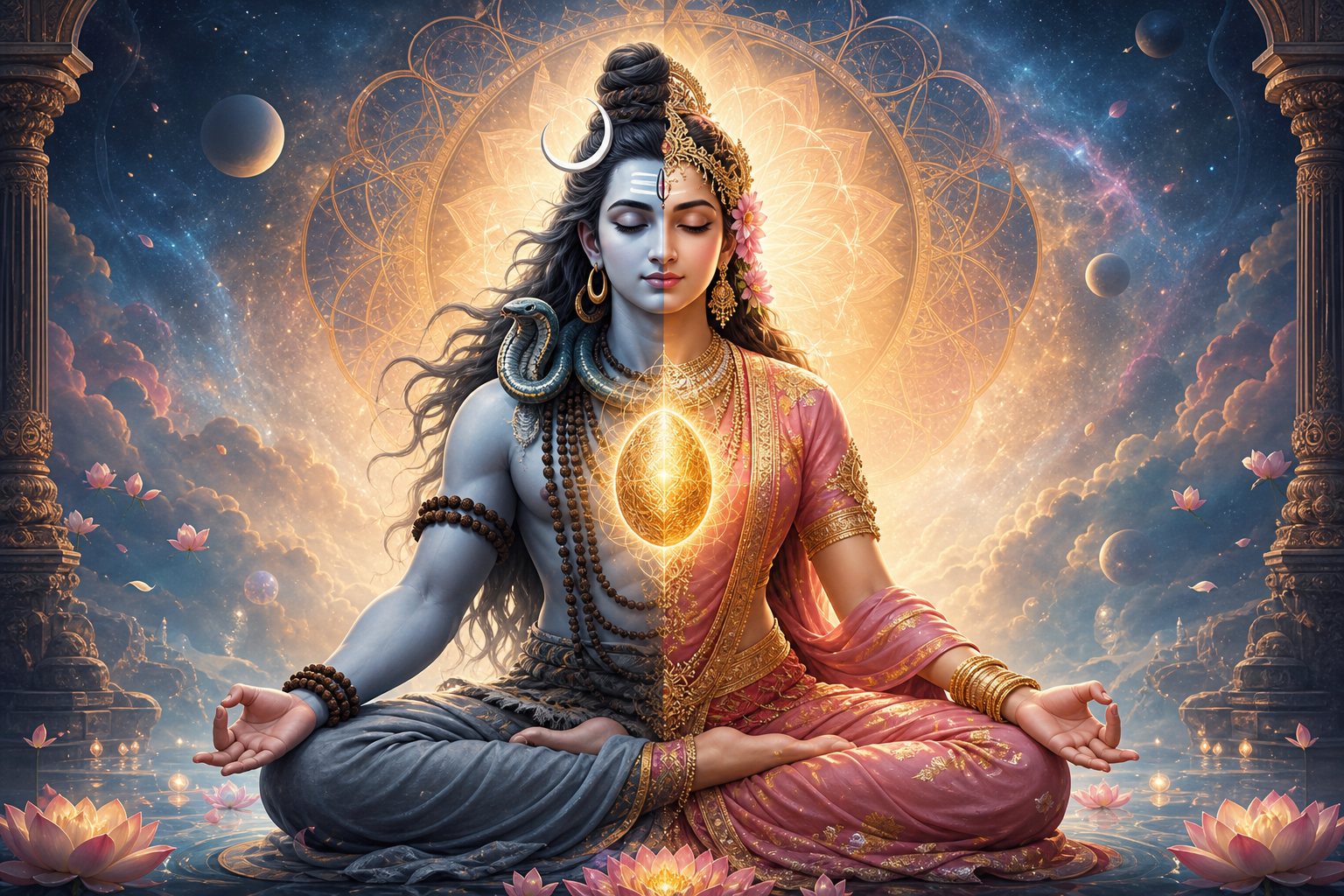
Ardhanarinaravapuh is a profound Hindu concept describing a sacred form that unites masculine and feminine principles in one indivisible body. Connected with Hiranyagarbha, the cosmic womb or golden egg, it points to the origin of creation as a state of luminous wholeness. The idea is closely related to Ardhanarishvara, the union of Shiva and Shakti,…
-
Srimad Bhagavatam 10.29.18-22: The Gopis’ Sacred Call to Transformative Bhakti
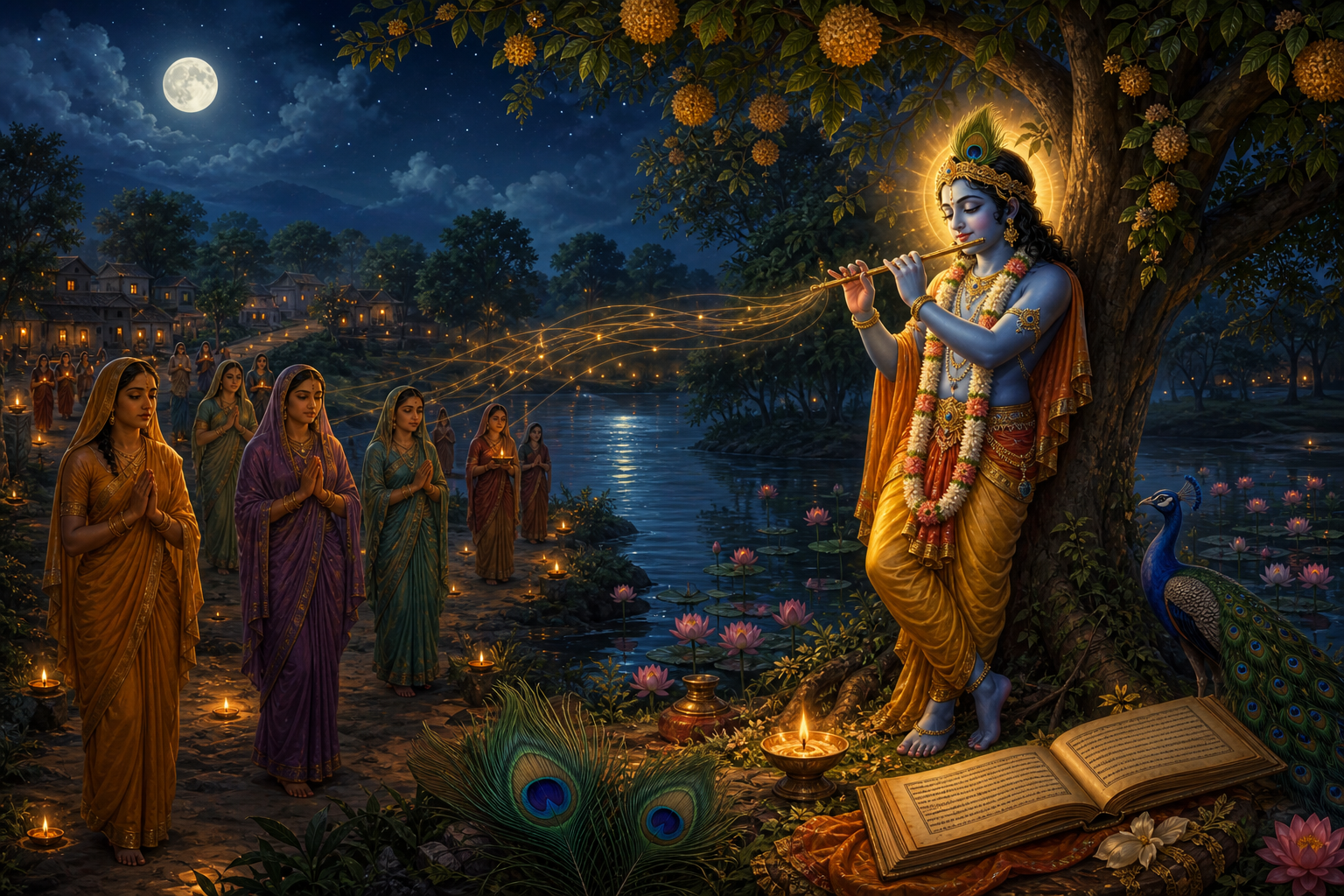
Srimad Bhagavatam 10.29.18-22 presents one of the most profound moments in the Rasa-lila narrative, where the gopis respond to Sri Krishna’s flute with complete devotional absorption. These verses explore the tension between worldly duty and divine love without dismissing the importance of dharma. Krishna’s challenging words to the gopis reveal the depth, purity, and seriousness…