
-
Sri Rama’s Virtue and Valor: A Timeless Dharma Blueprint for Courageous, Just Leadership
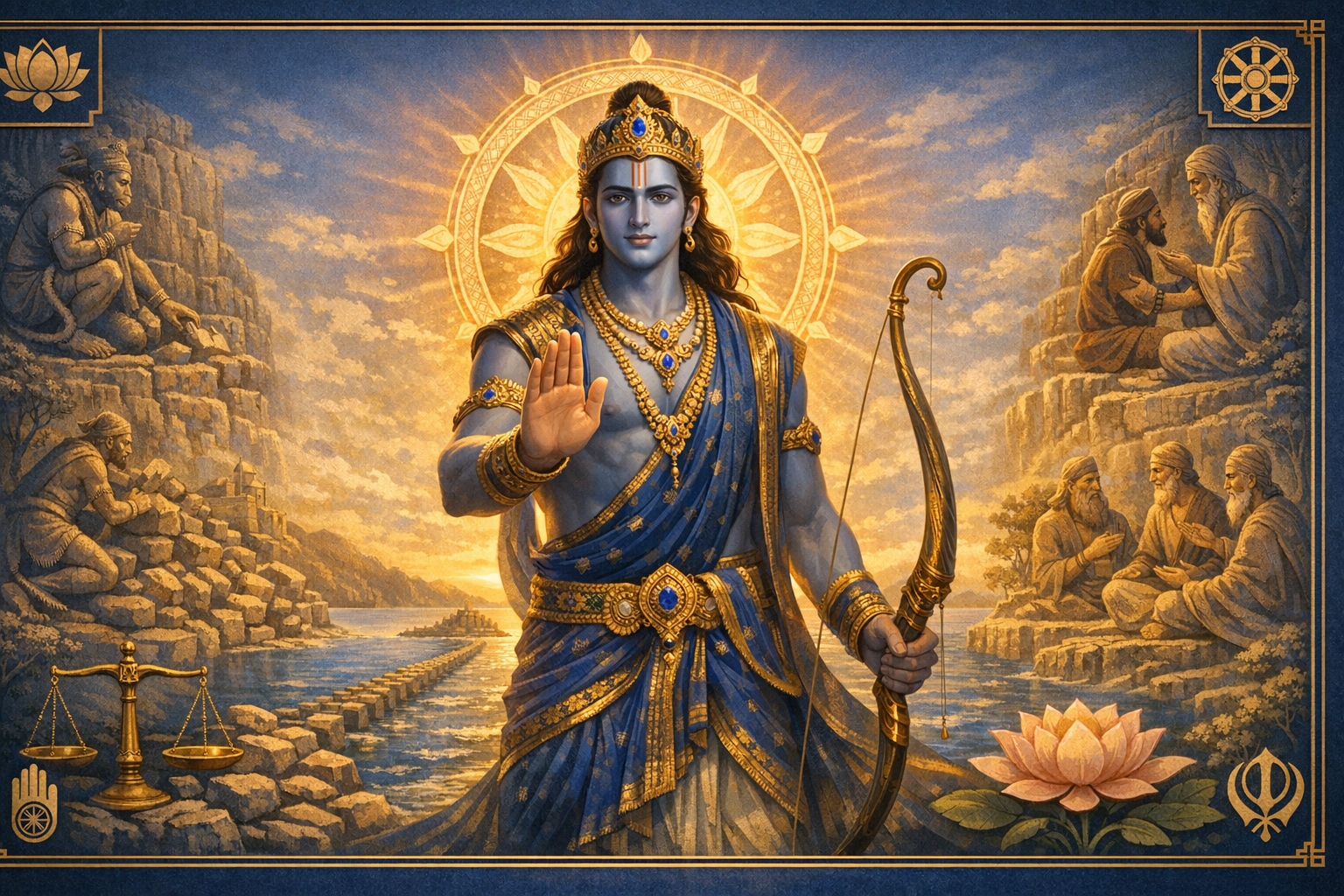
Sri Rama’s portrayal in the Ramayana unites virtue (dharma) with valor (kshatra), forming the ideal of Maryada Purushottama. This synthesis grounds strength in compassion and binds power to law, offering a reliable template for just leadership and community protection. The epic narratively encodes principles akin to just war ethics: just cause, right intention, last resort,…
-
Controversial Claims on Shri Ram and Shri Krishna: Evidence-Based Review and Dharmic Unity

A viral controversy over alleged disparaging remarks about Shri Ram and Shri Krishna has spotlighted the need for evidence-based reading of Hindu scriptures. This analysis explains how to verify claims using critical editions, Sanskrit philology, and respected commentaries. It clarifies commonly misread episodes from the Ramayana, Bhagavad Gita, and Bhagavata Purana without inflaming tensions. Readers…
-
Karma Yoga and a Son’s Devotion: The Transformative Redemption of Jada through Gita 3

This article examines the redemptive tale of Jada through the lens of Bhagavad Gita Chapter 3 (Karma Yoga), showing how a son’s devoted recitation becomes a catalyst for ethical clarity and transformation. It explains why Chapter 3niyatam karma, nishkāma-karma, and loka-saṅgrahaprecisely addresses moral confusion and social responsibility. Readers gain a clear map of Gita 3’s…
-
Laghima Siddhi in Hinduism: The Sacred Science of Lightness to Elevate Mind, Body, and Life

Laghima Siddhi, one of the classical ashta-siddhis in Hinduism, signifies far more than levitation; it encodes a holistic science of lightness spanning ethics, breath, posture, diet, and contemplation. Anchored in sources like the Bhagavata Purana and thematically aligned with Patanjali’s Yoga Sutra, Laghima relates to mastery of udana vayu and the cultivation of sattva. In…
-
Manasollasa Unveiled: A 12th‑Century Masterwork of Indian Statecraft, Arts, and Cuisine
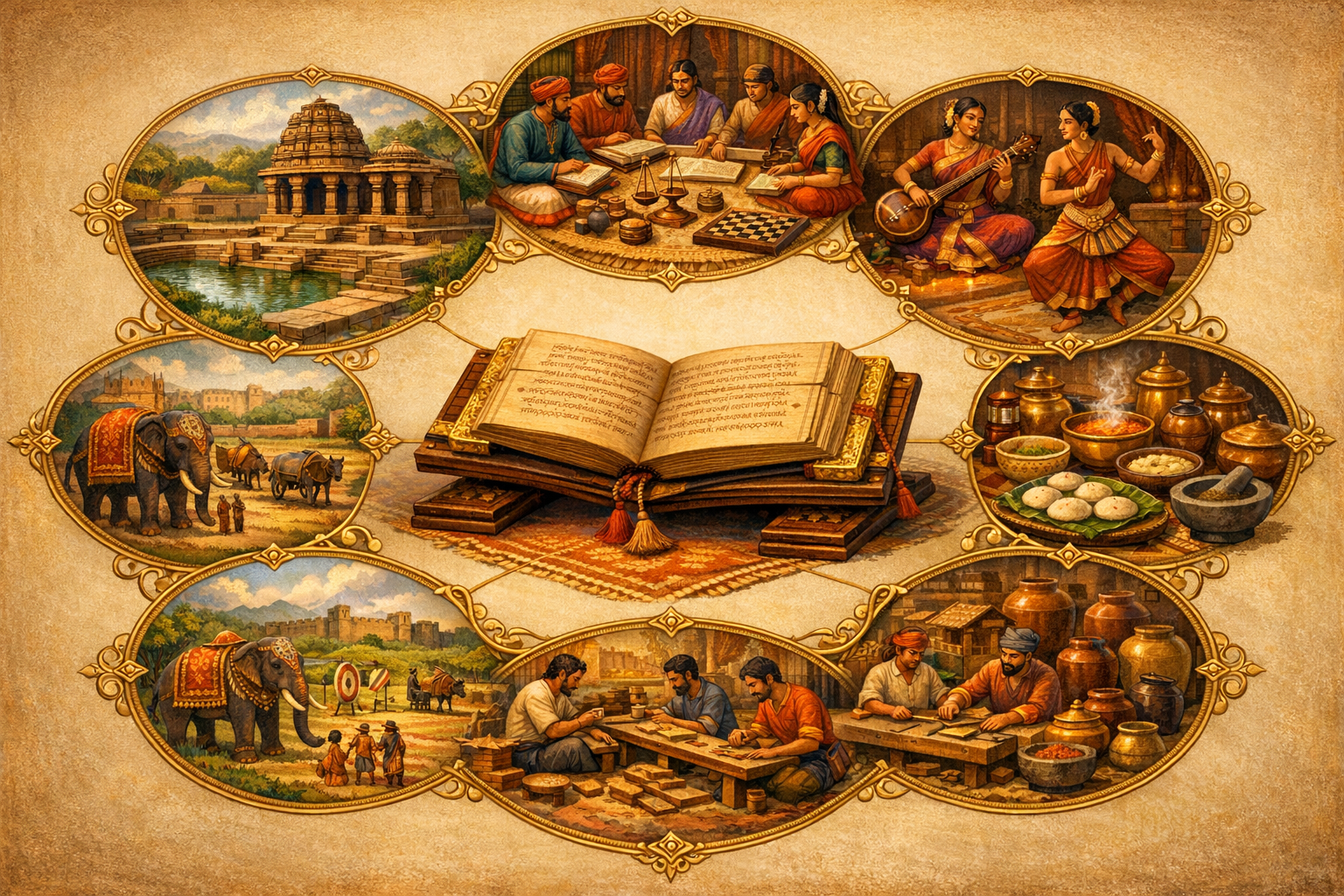
Manasollasa (Abhilashitartha Chintamani) is a 12th‑century Sanskrit encyclopedic treatise by King Someshvara III that integrates statecraft, justice, economy, arts, architecture, music, and culinary science into a single civilizational vision. It details rajadharma, due process, village administration, and fair markets alongside rigorous guidance on hydrology, architecture, and guild regulation. Musicology and dance are situated between Bharata’s…
-
Rajarshi Mudgala’s Timeless Legacy: The Mudgala Purana, Ganesha’s Eight Avatars, and Puja Vidhi

Rajarshi Mudgala is remembered as a Kshatriya sovereign who attained rishihood through intense tapas and is traditionally linked to the Mudgala Purana, a Ganesha-centered Upapurana. The text offers a lucid map of devotion to Vighneshwara, weaving myth, vrata guidance, mantra-vidhi, puja, and homam into a practical manual. Its hallmark is the teaching on Ganesha’s eight…
-
Beyond Indra’s Heaven: King Arishtanemi’s Bold Renunciation and Yoga Vasishta’s Vairagya
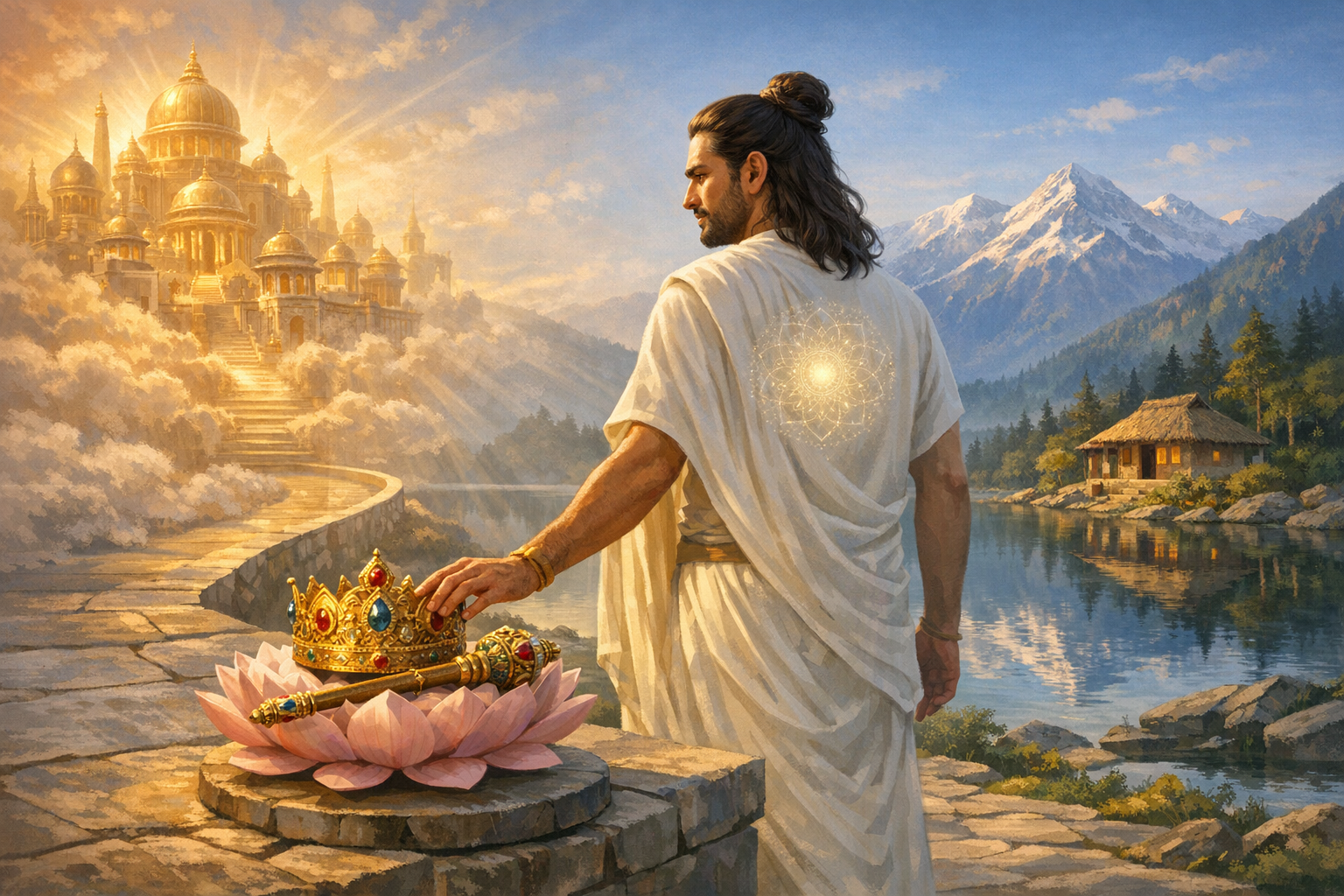
The opening narrative of the Yoga Vasishta, where King Arishtanemi declines Indra’s heaven, distills the text’s core teaching: lasting freedom arises from vairagya (renunciation) grounded in clear discrimination (viveka). Rather than reject joy, the king outgrows the promise of celestial pleasure by recognizing its impermanence and karmic limits. This analysis situates the story within Yoga…
-
From Ritual to Realization: Ending Barren Devotion with Dharmic Discipline and Insight

Modern worship often looks vibrant yet feels spiritually thin. This long-form, academic analysis explains why devotion turns barrentransactional aims, inattentive ritual, neglected ethics, and fragmented attentionand details what Hindu, Buddhist, Jain, and Sikh scriptures actually prescribe for transformation. It offers an integrated method grounded in yama–niyama or śīla, daily abhyasa of japa or dhyana, breath…
-
Srimad Bhagavatam 10.13.4–11: Kṛṣṇa as yajña-bhuk in a Dazzling Vraja-Līlā of Love and Wisdom
Srimad Bhagavatam 10.13.4–11 portrays Kṛṣṇa as yajña-bhukthe supreme enjoyer of offeringswhile sitting in the affectionate circle of Vraja’s cowherd boys, uniting transcendence with intimacy. The passage reframes ritual logic: the forest meal functions as a living yajña where bhāva (devotional intention) consecrates food into prasāda. Iconographic details (flute, horn bugle, and staff) are not ornaments…
-
Behind the Tree or Face to Face? Unmasking Vali’s Death and Dharma Across Ramayanas

The contested question of whether Rama slew Vali from concealment or in open combat reveals a spectrum of ethical reasoning across Hindu scriptures and regional Ramayanas. By tracing Valmiki’s Kishkindha narrative alongside the Adhyatma Ramayana, Kamba Ramayanam, Ramcharitmanas, and eastern and southern vernacular retellings, the episode emerges as a sustained inquiry into rajadharma, sharanagati, and…
-
From Curse to Cosmic Steward: Brahma’s Transformative Boons to Kubera, Lord of Wealth

This study traces Kubera’s ascent from a troubled birth to his installation by Lord Brahma as Dhanada and guardian of the North, showing how austerity and grace transform adversity into stewardship. It clarifies Kubera’s genealogy from Brahma through Pulastya and Vishravas, anchoring his status in a sacred lineage. The analysis synthesizes Puranic and epic motifsPushpaka…
-
Kiratamurti Unveiled: Shiva the Divine HunterIconography, Symbolism, and Temple Legacy
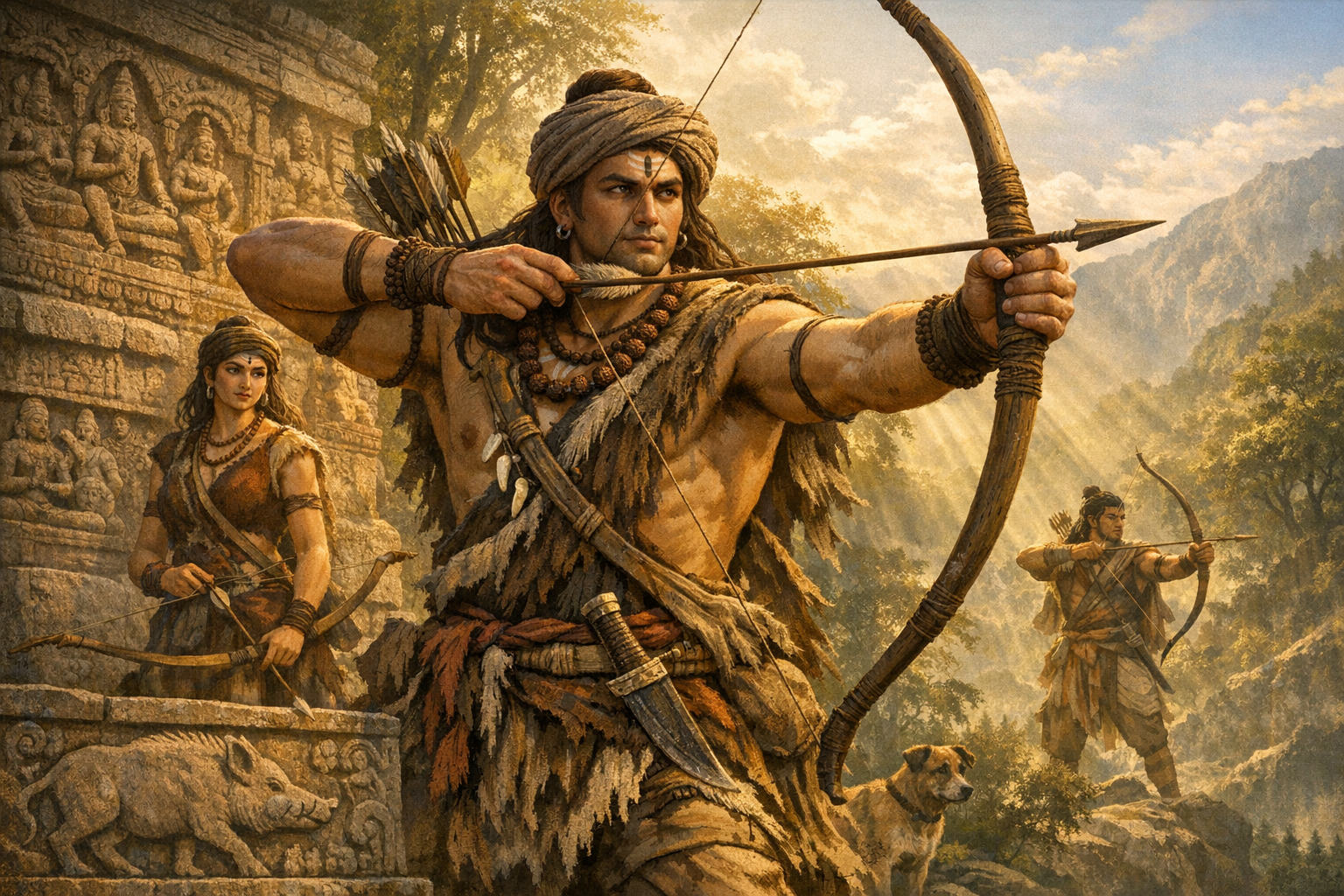
KiratamurtiShiva as the Divine Hunterunites textual authority, temple iconography, and living ritual into a single, resonant theology of focus and grace. This long-form study traces the Mahabharata’s Kiratarjuna episode, explains key iconographic features (hunter’s bow, forest attire, Kirāti companion, boar as symbol), and maps the motif across major sites from Kanchipuram and Ellora to Hoysala…
-
Lankapuri’s Golden Splendor: Ramayana’s City on Trikuta and a Timeless Warning on Greed

Lankapuri, the golden city of the Ramayana, unites mythic splendor with ethical instruction by showcasing how dharma tempers power and prosperity. Fashioned by Vishvakarma and set upon Mount Trikuta, Lanka’s luminous architecture, maritime horizons, and courtly spectacle are balanced by a sharp critique of lobhagreed. The narrative contrasts Kubera’s trusteeship of wealth with Ravana’s extractive…
-
Srimad Bhagavatham Explained: A Definitive Guide to the 12 Cantos of Bhagavata Purana
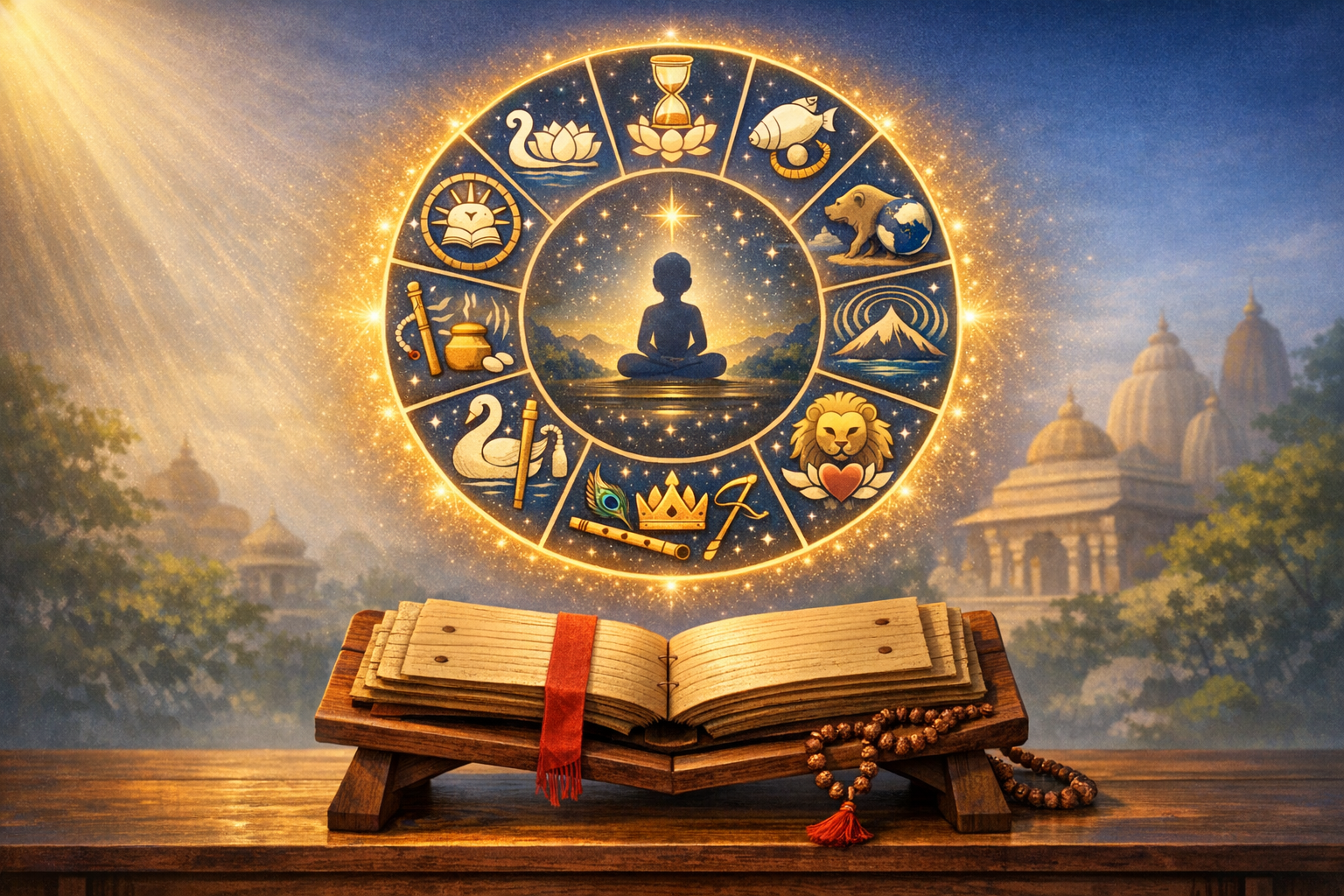
Srimad Bhagavatham (Bhagavata Purana) distills the heart of bhakti through twelve cantos and 18,000 verses within a compelling narrative of Parikshit’s seven-day dialogue with Shuka. This long-form guide clarifies the structure of the text and highlights major narratives such as Dhruva, Prahlada, Ajamila, and Gajendra, culminating in the Krishna-lila of Canto 10. It outlines core…
-
Ecstatic Love Unveiled: Sri Radha’s Luminous Eyes and Krishna’s Supreme Rasa Alchemy
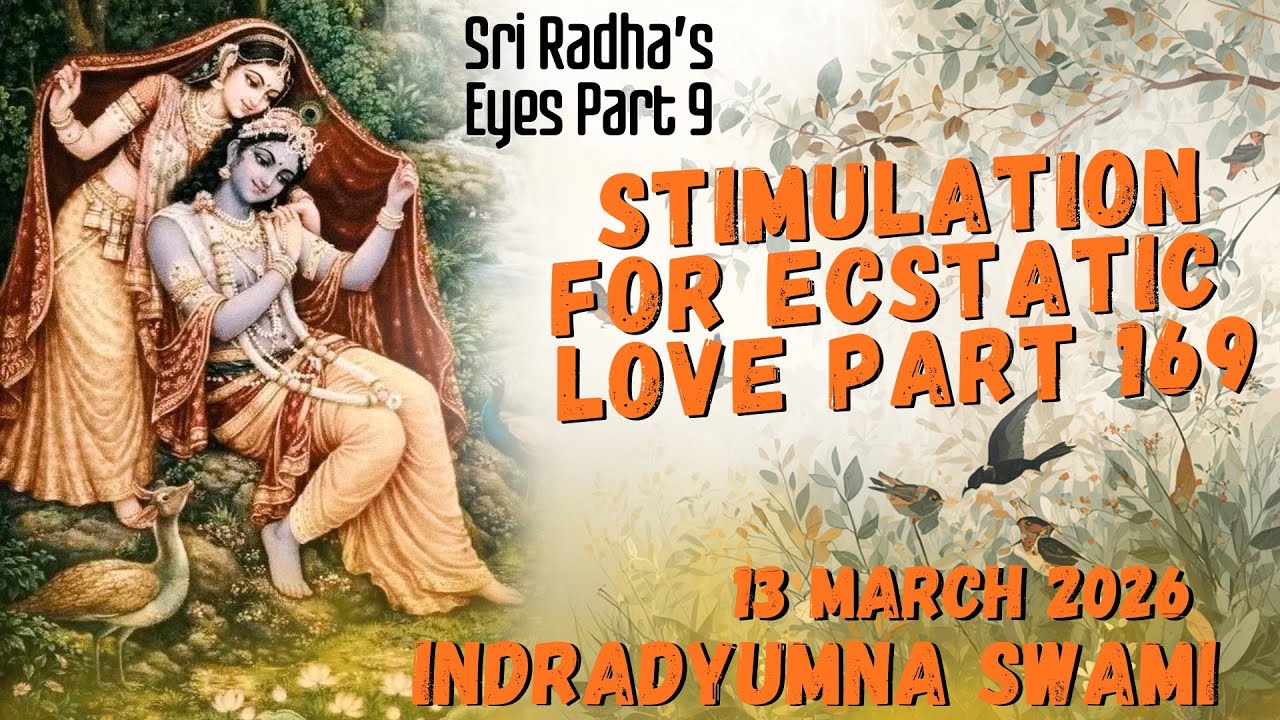
This concluding essay in a nine-part exploration of Sri Radha’s eyes situates Her gaze within the Gaudiya Vaiṣṇava theology of mahabhāva and Kṛṣṇa’s sovereignty over spiritual rasa. It explains how the classical elements of rasavibhāva, anubhāva, vyabhicāri-bhāvas, and sthāyī-bhāvailluminate the devotional and symbolic power of Rādhā’s eyes. Drawing on Hindu scriptures and devotional poetics, it…
-
Kamyakali Unveiled: The Desire-Fulfilling, Fierce-Compassionate Power of Goddess Kali

Kamyakali is venerated in Shakta traditions as a form of Goddess Kali who unites fierce protection with maternal compassion while fulfilling desires aligned with dharma. The discussion clarifies the Sanskrit root of kāmya, connecting it to ethical, purpose-driven worship rather than unexamined craving. It explores Kali’s core iconography and explains how Kamyakali highlights blessing gestures…
-
Lava and Kusha’s Divine Recital: How Valmiki’s Ramayana First Echoed Through Ayodhya
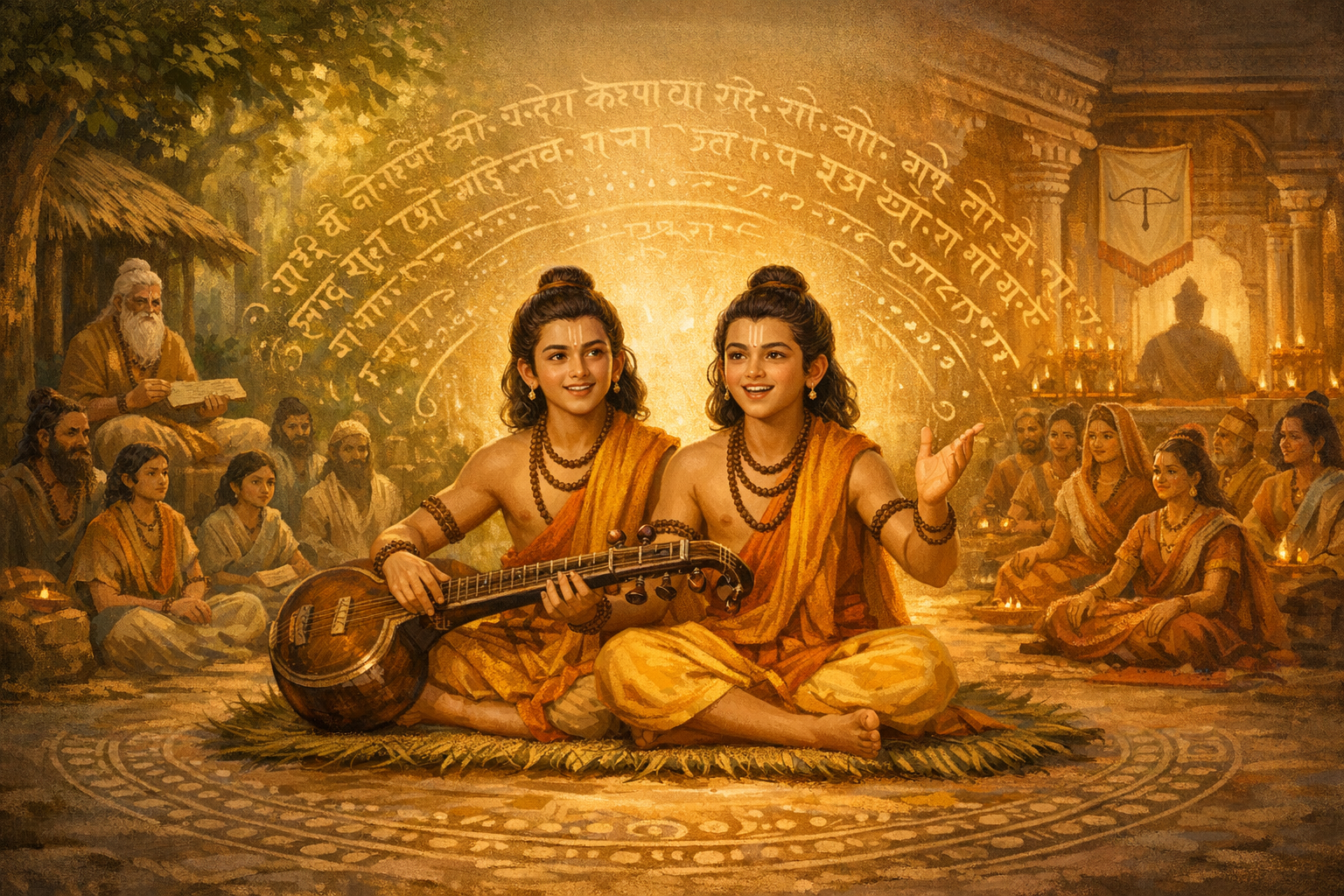
This essay explores the formative moment when Lava and Kusha first chanted Valmiki’s Ramayana, tracing how an ashram audience and a later royal performance shaped the epic’s authority as sung narrative. It explains the technical foundations of the recitalmetre, intonation, and emotive deliveryand shows why disciplined orality anchored the Ramayana’s cultural spread. The analysis situates…
-
Yudhishthira’s Search for Elders: Duty, Detachment, and Dharma in Srimad Bhagavatam 1.13.39
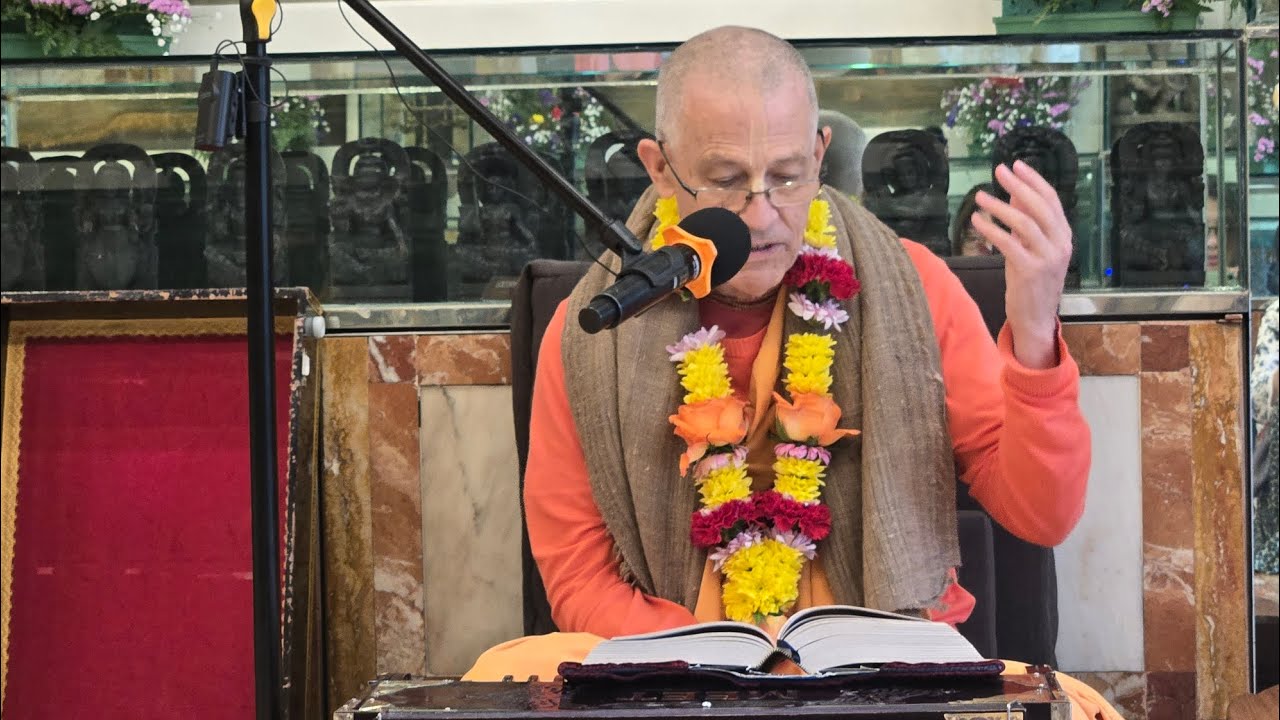
Srimad Bhagavatam 1.13.39 captures a defining moment in the Kuru court as Mahārāja Yudhiṣṭhira seeks the whereabouts of Dhṛtarāṣṭra, Vidura, and the ascetic Gāndhārī. The verse frames a profound ethical tension: how a ruler balances familial compassion with respect for elders who choose renunciation. Through Nārada’s guidance in subsequent verses, compassionate concern matures into wise…
-
Unveiling the Sacred Nāgas: Cosmic Serpents, Seven Realms, and Living Dharma

Serpents (Nāgas) in Hindu tradition are far more than reptiles; they are guardians of waters, thresholds, and cosmic order across the seven realms and seven netherworlds. Grounded in the Sarpa Suktam and extended through Purāṇic and Itihāsa narratives, Nāga lore unites temple iconography, regional festivals, yogic anatomy, and ecological stewardship. Key figures such as Ananta-Śeṣa…
-
Overcoming Envy (Matsarya) to Awaken Prema: A Dharmic, Nirmatsara Roadmap for Inner Freedom
This essay examines matsarya (envy) as a core spiritual impediment and explains why Vaisnava scriptures describe it as the competitor of divine love (prema). Anchored in the Srimad Bhagavatam’s “dharmah projjhita-kaitavo ‘tra paramo nirmatsaranam satam” (Bhag.1.1.2), it analyzes nirmatsarata as an ethical threshold for receiving the highest dharma. The discussion maps convergences across Hinduism, Buddhism,…