-
Srimad Bhagavatam 2.8.8 at ISKCON London: Timeless Answers, Clear Practice, Dharmic Unity

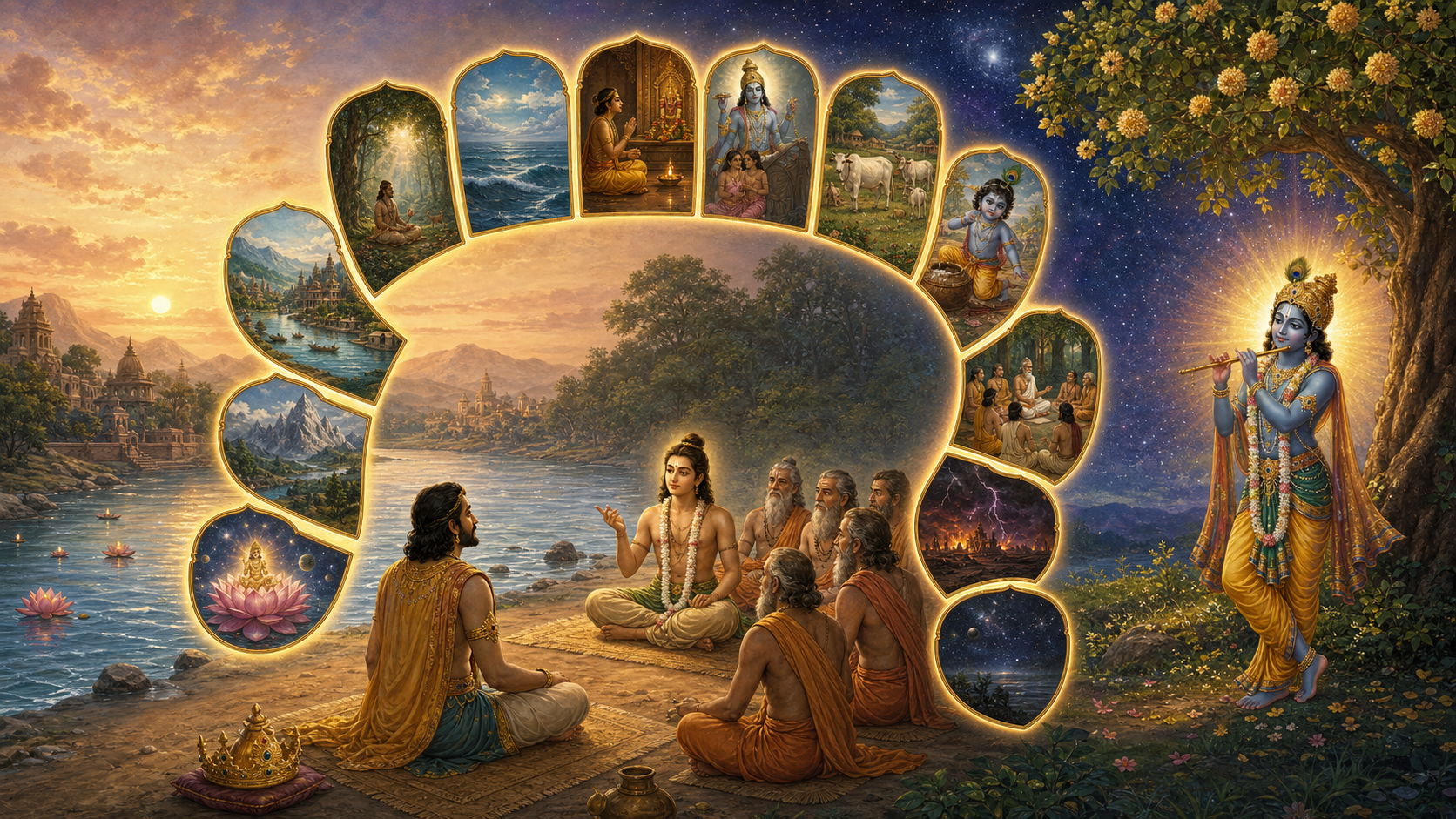
Hosted on 17 June 2026 at ISKCON London, this Srimad Bhagavatam 2.8.8 class by HG Dayal Mora Das situates a single verse within the architecture of Canto 2, Chapter 8. Readers gain a precise map of Parikshit’s questions, spanning cosmology, time, avatara-tattva, and the bhakti method of hearing and remembrance. The analysis clarifies key Sanskrit…
-
Not Feeling Bliss in Hare Krishna Chanting? A Research-Backed, Dharma-Uniting Cure

Many dedicated practitioners chant Hare Krishna for years without sensing the expected bliss. This academic, Dharma-uniting guide explains why dryness is common and how to remedy it through tradition-rooted and research-aligned methods. It maps the classical stages of bhakti, shows how steady taste typically follows purification and steadiness, and aligns these insights with parallel practices…
-
Anuttama Dasa’s Alachua Sunday Feast: Profound Bhakti-Yoga Insights and Dharmic Unity

On 31 May 2026, Anuttama Dasa spoke at the Hare Krishna Temple in Alachua, Florida, offering a clear, textually grounded presentation of bhakti-yoga. The Sunday Feast formatkirtan, śāstra-kathā, and prasadamwas shown as an integrated pedagogy that turns learning into lived practice. The lecture’s approach reflected classical Indian epistemology and hermeneutics, connecting scriptural authority with reason,…
-
Timeless Bhakti, Practical Wisdom: Key Insights from HH Guru Prasad Swami’s Special Class

This in-depth analysis of HH Guru Prasad Swami’s Special Class (ISKCON NYC TV) presents bhakti as a rigorous, integrative science of consciousness rooted in the Bhagavad Gita and Srimad Bhagavatham. It explains the sambandha–abhidheya–prayojana framework, unites karma-, jnana-, and bhakti-yoga, and shows how daily sadhana cultivates clarity, compassion, and courage. The discussion aligns inner practice…
-
What If This Is Our Last Day? Dharmic Pathways to Grace, Merit, Karma, and Moksha

What if today were the last day in this body? Drawing on Hinduism, Buddhism, Jainism, and Sikhism, this essay explains how blessings, merit, and grace work together with karma to cultivate virtues and lead toward moksha, nirvana, or union with the Divine. It maps shared dharmic practicesethics, meditation, service, and devotionand shows how each tradition’s…
-
Unbroken Bhakti: How Constant Devotion Transforms Life Through Triumphs and Trials

True devotion in Hinduismbhaktiis motive-free and constant, described as an unbroken stream of oil that flows steadily regardless of circumstances. Foundational texts like the Bhāgavata Purāṇa and the Bhagavad Gita frame this continuity as both psychological steadiness and ethical reliability. Rather than transactional appeals for favors, mature devotion integrates remembrance, service, and discernment into a…
-
Radha–Krishna, Bhakti, and Opera: Sir John Tavener’s Mantra Quest and the Cosmic Rasa-līlā

In 2005, Sir John Tavener and Ranchor Prime centered an ambitious Krishna opera on the theological and musical problem of choosing a mantra for Radha–Krishna’s love duet. This essay maps the devotional core of rāsā-līlā (Bhagavata Purāṇa 10.29–33) to operatic craft using Rūpa Gosvāmi’s rasa theory. It outlines why nāma is doctrine as much as…
-
Beyond Blood and Bond: Krishna’s Universal Love as Cosmic Law, Bhakti, and Living Dharma

This long-form exploration argues that in Krishna’s life and theology, love functions as a cosmic law that reorganizes reality beyond birth, contract, or duty. Drawing on the Bhagavad Gita, the Bhagavata Purana, the Narada Bhakti Sutra, and bhakti-rasa theory, it explains how diverse devotional relationshipsvatsalya, sakhya, dasya, and madhuryareveal universal paths to the Divine. The…
-
Srila Prabhupada Lilamrita Unveiled by HG Daivi Shakti Mataji: Bhakti, History, and Shared Dharma

Delivered at ISKCON Vrindavan on 07.06.2026, this analytical exploration of Srila Prabhupada Lilamrita by HG Daivi Shakti Mataji shows how devotional biography can serve as rigorous history, spiritual pedagogy, and leadership guide. Readers learn to distinguish inspiration from idealization and to apply guru–sadhu–shastra principles in daily practice. The piece demonstrates how bhakti-yoga integrates chanting, study,…
-
Ratha-yatra Unveiled: The Lord’s Journey to Vrindavan and the Path of Living Bhakti

This analysis distills the theological and cultural significance of “Lord’s Journey To Vrindavan,” as presented at ISKCON Berlin (Krishna Berlin – ɪsᴋᴄᴏɴ) by HG Bhanu Nandini devi dasi. It explains how Ratha-yatra embodies both an outward procession and an inward transformation grounded in the Bhagavad-Gita and the Bhagavata Purana. Readers learn how the chariot, ropes,…
-
HH Niranjan Swami in Boston: The Transformative Power of Kirtan, Sound, and Gaudiya Bhakti

On 6 June 2026, ISKCON Boston hosted a kirtan led by HH Niranjan Swami Maharaj, highlighting how Gaudiya Vaishnava congregational chanting fuses scripture, music, and community. The practice centered on the maha-mantra and the disciplined use of raga and tala, demonstrating how structure supports devotion. Participants experienced the psychosocial benefits of group singingentrainment, focus, and…
-
Awaken Intense Attraction to Sri Krishna: Two Transformative KeysLila Hearing and Seva

A clear pathway for rekindling attraction to Sri Krishna emerges from the bhakti tradition: center daily life on seva and sustain regular hearing of Krishna’s names, qualities, and lila. Together, these two keys nourish the heart and protect it from seeking false shelter in māyā. Drawing on Srila Visvanatha Cakravarti Thakur’s insightsamvardhanam samposanam laulyam dadati…
-
Sri Radha’s Tears and the Science of Bhakti Rasa: A Gaudiya Guide to Ecstatic Love

The theme of “Sri Radha’s Tears” in the Gaudiya Vaishnava tradition is not poetic excess but a carefully mapped feature of bhakti-rasa, where tears (aśru) belong to the eight sāttvika-bhāvas recognized by Rūpa Gosvāmi. This article explains how uddīpana (devotional stimulants), anubhāva (expressions), vyabhicārī-bhāva (transitory states), and the sthāyī-bhāva (enduring love) synthesize into tasted devotion…
-
Sant Kabir’s Enduring Bridge: How Nirgun Bhakti Shaped Sikh Thought and Dharmic Unity

Sant Kabir’s nirgun devotion offers a rigorous, unifying grammar for Bhakti and Sikh thought, anchoring spiritual life in naam, ethical conduct, and interior transformation. Set in fifteenth–sixteenth-century North India, his bani engages Vaishnava Bhakti, Sufi mysticism, and the Upanishadic, Jain, and Buddhist legacies without erasing real doctrinal distinctions. The Guru Granth Sahib’s inclusion of Kabir’s…
-
Watering the Tree of Love: Seeing Sri Krishna in Every Heart and Practicing Universal Compassion

True bhakti cannot be confined to temple walls; it must recognize Sri Krishna in every heart. Drawing on the Bhagavad-gita and the Bhagavata Purana, this article clarifies the famous “water the root, nourish the leaves” metaphor and its limits, showing why neglecting people while worshipping the Divine renders devotion spiritually ineffective. It integrates Lord Kapiladeva’s…
-
Parameshvara Samhita Revealed: Pancharatra Masterwork of Ritual, Devotion, and Temple Science

The Parameshvara Samhita is a Pancharatra masterwork that unites theology, ritual science, and sacred architecture into a coherent path of devotion. Across fifteen chapters, it presents precise protocols for prana-pratishtha, nitya-puja, abhishekam, and festival cycles while grounding every act in ethical cultivation and dharma. Its doctrinal core rests on the Vyuha doctrine and the arcavatara,…
-
Vatsalya Rasa: When God Becomes a ChildParental Love at the Heart of Bhakti

Vatsalya rasa, the bhakti mood of parental love, reveals a distinctive Hindu insight: the Divine can be cherished, protected, and served as a beloved child. Anchored in the Bhagavata Purana and refined by rasa theory, it replaces distance with intimacy and translates theology into daily care. Practices such as Bala Gopala sevā, Kartika worship with…
-
ISKCON Prison Ministry: Compassionate Bhakti-Yoga and Dharma-Based Healing Behind Bars

Prisons concentrate isolation, fear, and scarcity, yet they also present a profound opportunity for humane, evidence-aligned rehabilitation. The ISKCON Prison Ministry integrates Bhakti-Yoga practicesmantra meditation, kirtan, reflective study, and breathworkwith universal dharmic ethics to reduce stress, improve conduct, and foster dignity. Voluntary and non-coercive by design, the program welcomes participants of Hindu, Buddhist, Jain, and…