
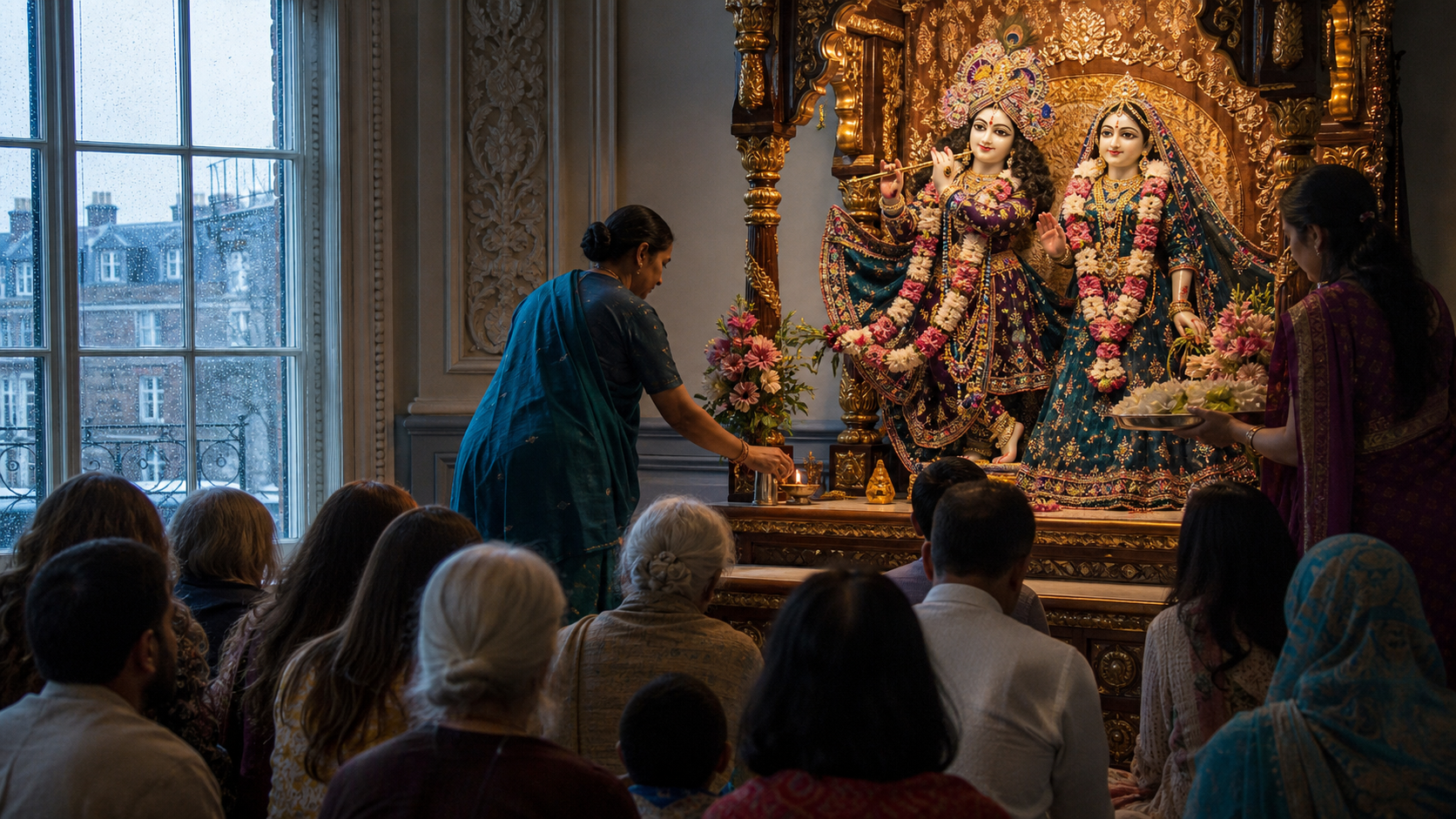
You may have come to the anniversary tribute expecting a commemorative music video. It asks a quieter and more demanding question: what has sustained Radha-Krishna worship in London for 56 years, and what part can you take in carrying that inheritance forward?
The answer isn’t nostalgia. It is remembrance that leads somewhere: toward attentive viewing, gratitude for earlier service, preservation of community memory and a concrete act of seva.
What the 56th anniversary actually commemorates
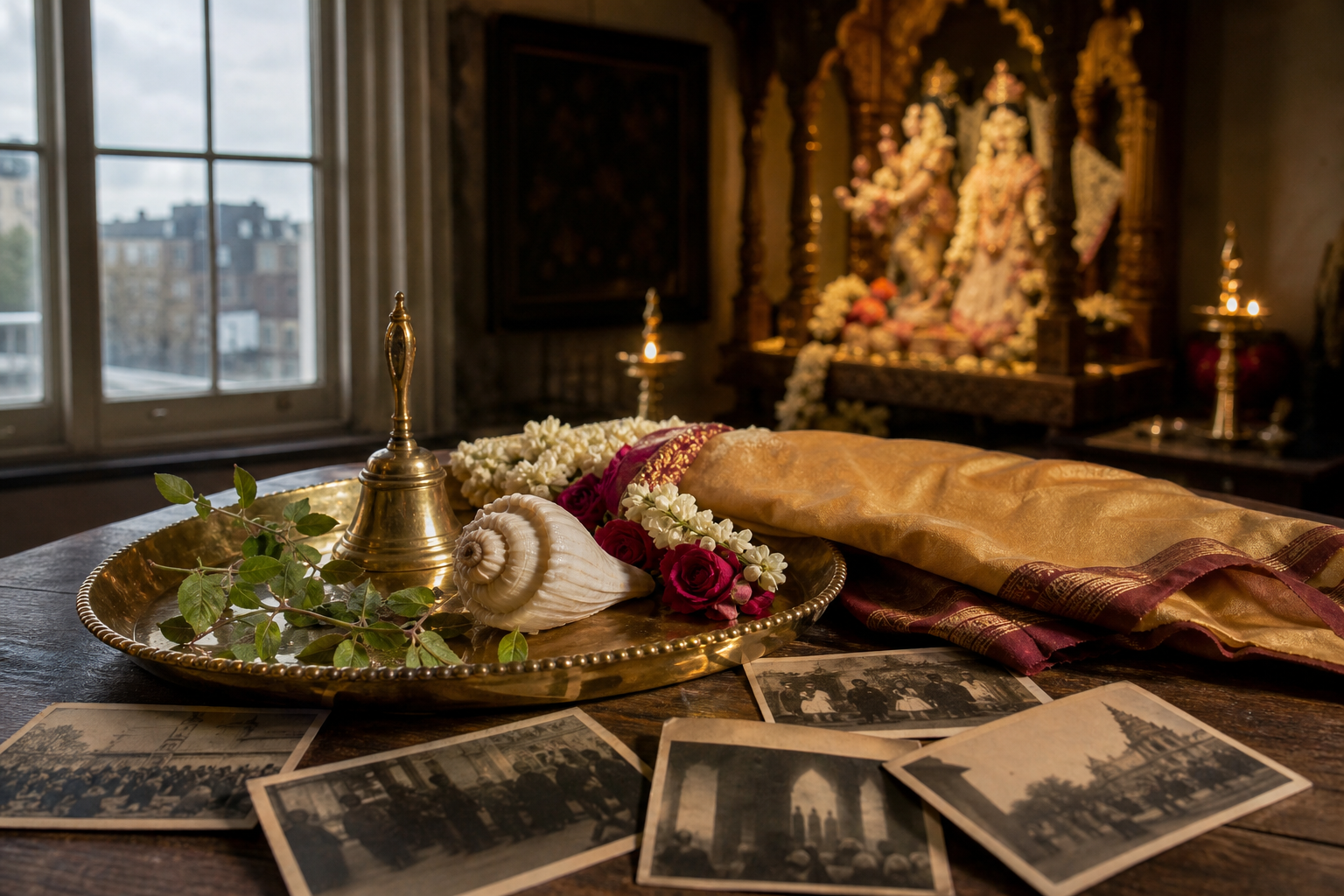
This anniversary marks the installation of Sri Sri Radha London Isvara at Bury Place. That installation became a landmark for bhakti in the United Kingdom and helped establish ISKCON London as a centre of kirtan, seva and community life.
That distinction matters. In Vaishnava practice, installing the Deities is not the ceremonial completion of a project. It is the beginning of an enduring relationship of worship and service. An anniversary therefore honours more than a date, a building or an institution. It remembers the continuing presence of Sri Sri Radha London Isvara and the generations of devotees and well-wishers whose service sustained the community around Them.
When you watch the tribute, keep that centre clear. The story isn’t simply that an Indian tradition found a place in a Western capital. The deeper story is that a living practice took root there. Worship gathered people; people offered service; repeated service formed a community; and community preserved a spiritual inheritance across decades.
This also corrects a common way of treating temple anniversaries. They are sometimes approached as institutional birthdays, complete with memories and congratulations but little inward participation. A Deity-installation anniversary calls for something more personal: remembrance of the object of worship, gratitude for the chain of service and a decision about how that service will continue.
Why a restrained musical offering belongs to bhakti
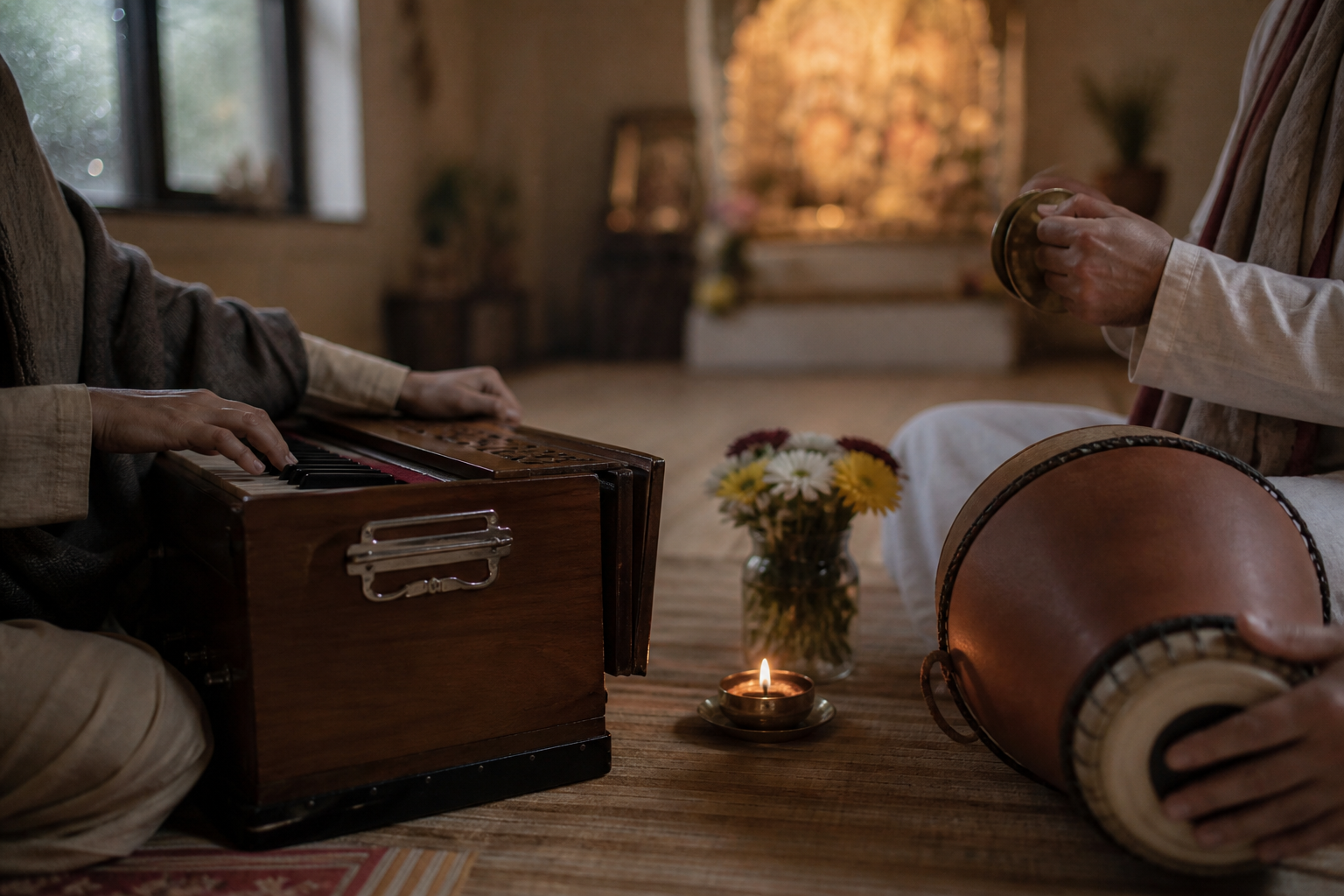
The tribute brings devotional art, music and collective memory together. It was shaped through the cooperation of many well-wishers, with Jayadeva Das describing how community support influenced its contemplative mood and musical cadence. That collaborative origin is not incidental background. It is part of the offering’s meaning.
Bhakti does not require artistry to compete for attention. Art can serve devotion by directing attention away from the performer and toward the worshipped. The video’s aesthetic restraint and meditative pace support that movement. If you expect spectacle, the quietness may initially seem understated. Stay with it. The space left by restraint gives gratitude and remembrance room to arise.
This changes what you should notice. Don’t judge the presentation only by whether a musical phrase, image or transition impresses you. Notice whether the elements work together to steady attention. Notice how communal memory becomes more than stored information when it is carried through sound and devotional imagery. Most importantly, notice whether the presentation leaves you merely informed or inwardly called to respond.
There was also a meaningful coincidence in the creative process: the tribute reached completion on the same day that Kavi Karnapura prabhu completed another video. Such synchronicity need not be turned into a supernatural claim. It can be received more simply, as evidence of a community in which devotional creativity is alive in more than one person at a time. When several offerings mature together, the culture surrounding worship becomes stronger.
How to receive the tribute as present-moment sadhana
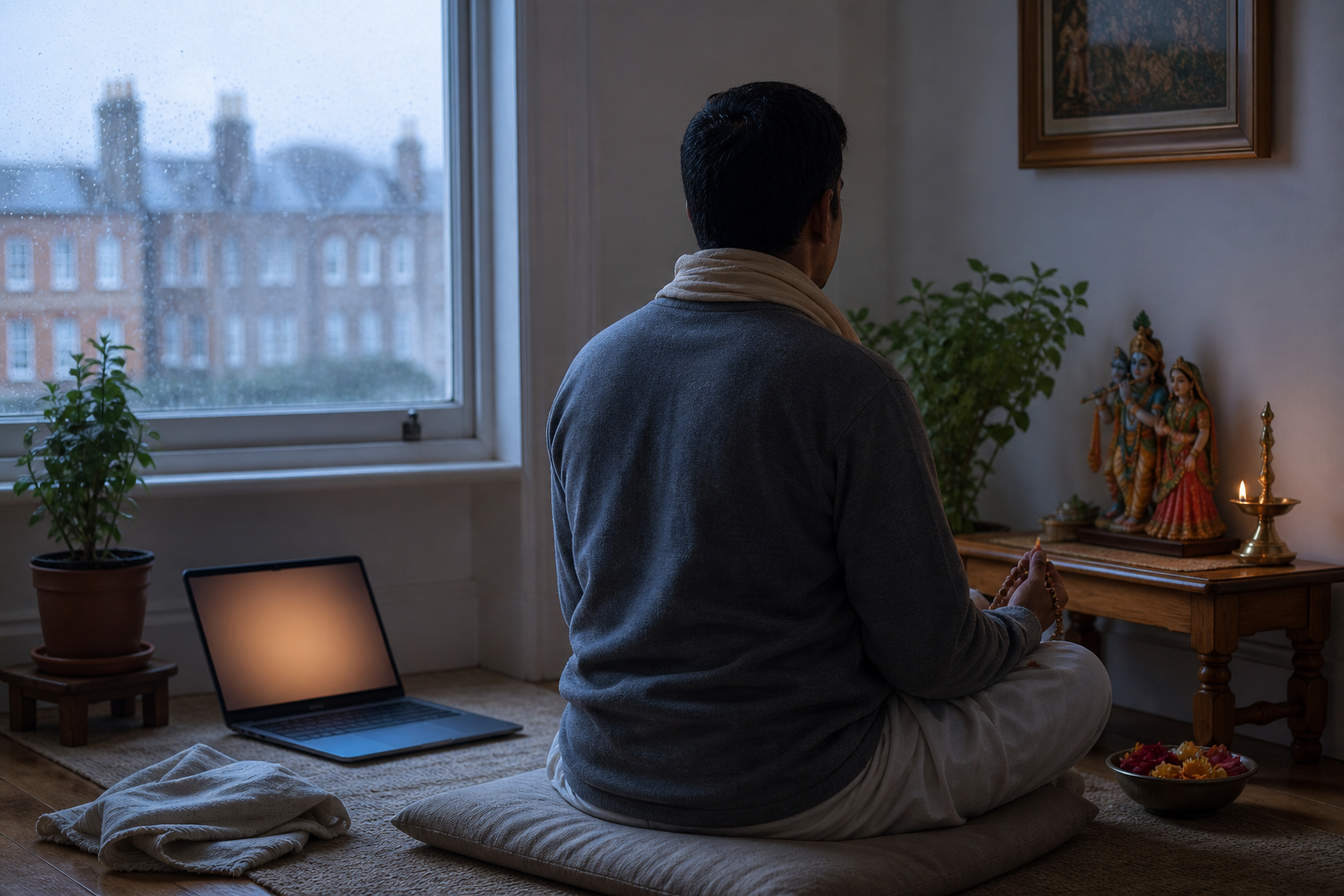
You don’t need to have lived in London, attended Bury Place or known the contributors to participate meaningfully. You do need to decide whether you are consuming devotional media or receiving an offering. Use this simple sequence:
- Set an intention before you press play. Take a brief pause and remember whom the anniversary honours. This keeps the Deities, rather than the production itself, at the centre.
- Watch without multitasking. The meditative pacing works through sustained attention. If the video becomes background sound while you answer messages, its restraint will register as emptiness rather than contemplation.
- Attend to the three layers together. Receive the devotional art, the music and the communal remembrance as one offering. Separating them into visual and technical categories can obscure the bhakti that joins them.
- Remain quiet when it ends. Give the final mood time to settle before moving to another screen or conversation. Use that pause for prayer, gratitude or remembrance of someone whose service helped preserve Dharma in your own community.
- Translate remembrance into one act of seva. Join a kirtan, assist with a temple responsibility, preserve an elder devotee’s memory, support a devotional creative effort or share the tribute with enough context for another person to understand why it matters.
The fifth step is decisive. Devotional media becomes sadhana when it changes your attention and then changes your conduct. The act need not be dramatic. A small responsibility performed reliably belongs more fully to the tradition of seva than a strong anniversary emotion that disappears the next day.
What Bury Place asks the Dharmic diaspora to preserve
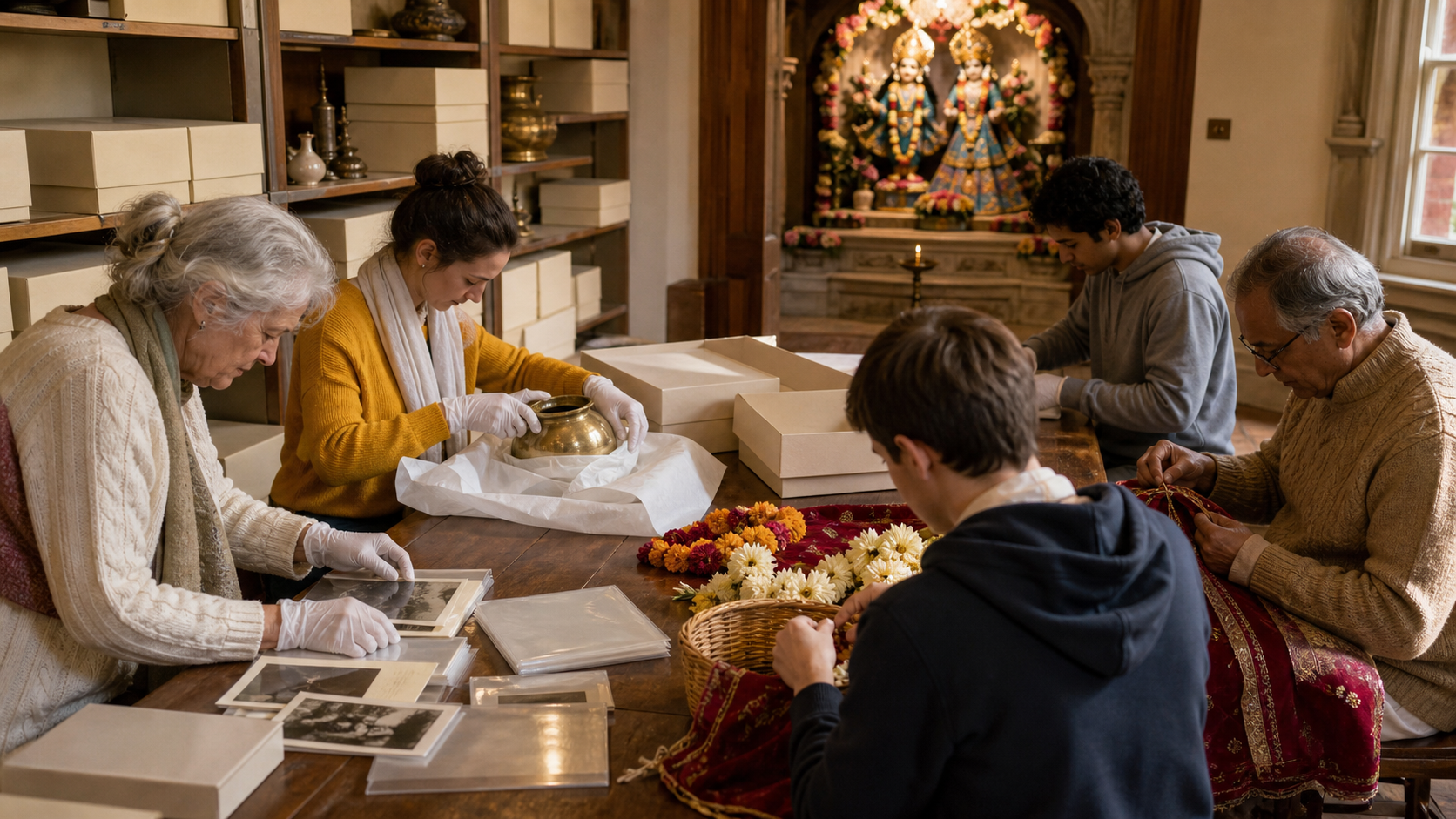
London is not merely the backdrop to this history. The installation at Bury Place made Radha-Krishna worship visible in the heart of the city and helped form an enduring spiritual community. Its significance lies in continuity: bhakti was not displayed as a cultural souvenir but practised through worship, kirtan, service and shared responsibility.
That is the practical lesson for any Dharmic community outside Bharat. A tradition does not remain alive merely because its symbols are admired. It remains alive when practices are repeated, responsibilities are transferred and memories retain enough context to guide the next generation.
If you help preserve community history, don’t save a video or photograph as an isolated file. Record the names, occasion, place and form of service connected with it. When you share anniversary material with a younger family member, explain why the installation mattered and what daily or communal practices grew around it. Better still, invite that person into a manageable responsibility. Participation transmits more than observation.
The tribute can also speak to Hindus, Buddhists, Jains and Sikhs through recognisable commitments to compassion, discipline, communal harmony and reverence for truth. Those resonances should build respect without erasing differences. Radha-Krishna worship is specifically Vaishnava; it does not become more inclusive by being described as generic spirituality.
When sharing the tribute with a mixed Dharmic audience, begin with its own identity: it is a Vaishnava offering honouring Sri Sri Radha London Isvara and the legacy formed around Their installation. Then point to the ethical and communal values others may recognise. Unity becomes more credible when distinct traditions meet honestly, not when their particular forms are blurred.
Key takeaways
- Remember the precise occasion: the 56th anniversary of the installation of Sri Sri Radha London Isvara at Bury Place.
- Receive the music, devotional art and communal memory as a unified offering rather than judging them only as media.
- Let the video’s restraint slow your attention; watching while multitasking defeats that contemplative purpose.
- Complete the experience with one definite act of seva, however modest.
- Preserve names, places, occasions and service histories alongside digital media so that cultural memory remains intelligible.
- Build Dharmic solidarity through shared values while speaking clearly about the tribute’s Vaishnava identity.
Your next step can be small and immediate. Watch the tribute with undivided attention, send it to one person with an explanation of the anniversary, or choose one community responsibility you can carry consistently. An anniversary does its deepest work when remembrance becomes service.
References
