

You may feel closest to Krishna while your family worships Devi, or repeat Shiva’s name while also finding peace in a formless understanding of the Divine. The difficulty is rarely devotion itself. It is the fear that choosing one form means declaring every other form mistaken.
Ishta offers a clear way through that tension. You can give your heart a definite centre without turning that centre into a boundary around the Divine. The task is to choose—or recognise—the form of worship that steadies you, practise it faithfully, and judge it by the kind of person it helps you become.
Ishta gives devotion a centre, not the Divine a limit
One human being may be addressed by a personal name, a family relationship, an affectionate nickname, or a professional title. Each address reveals a real relationship, but none contains the whole person. In a similar way, Rama, Krishna, Shiva, Devi, Ishvara and Bhagavan allow devotees to approach the Divine through different relationships and temperaments.
In this setting, Ishta is your cherished spiritual ideal: the name, form or formless focus through which worship becomes personal enough to practise. It answers a practical question—how should you approach the Divine?—without requiring you to settle every philosophical question about how all divine forms are ultimately related.
The Bhagavad-Gita expresses this reciprocity in the words ye yathā māṁ prapadyante tāṁs tathaiva bhajāmy aham: the devotee’s manner of approach is met by the Divine. Within bhakti, bhava—the quality and sincerity of devotion—takes priority over anxiety about labels and linguistic polish.
This does not make every deity an interchangeable decoration. Rama, Devi, Shiva and Krishna each carry particular stories, practices, relationships and theological meanings. You do not honour diversity by making those differences disappear. You honour it by refusing to turn love for one form into contempt for another.
That distinction matters. A centre helps you remember, learn and persevere. A boundary makes you suspicious of another person’s devotion. Ishta asks for the first, not the second.
How to recognise an Ishta you can actually live with
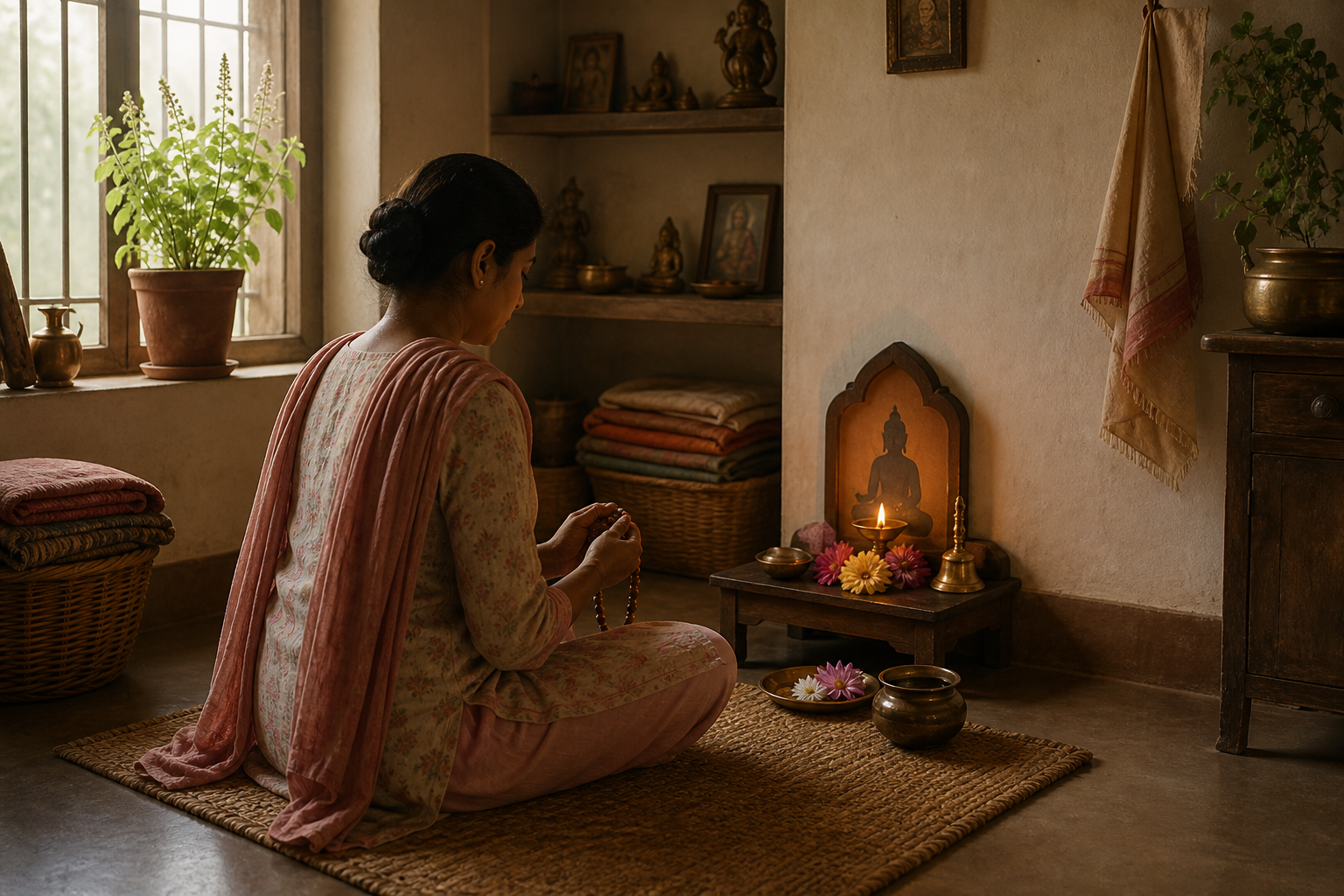
You do not need to manufacture a dramatic revelation before beginning. For many people, choosing an Ishta is less like selecting an option from a catalogue and more like noticing a relationship that has already begun. Use the following tests to separate a durable devotional pull from temporary fascination.
- Notice the name you return to without being prompted. Which form comes to mind in gratitude, uncertainty, remorse or wonder? Festival excitement can be brief; spontaneous remembrance during ordinary life is more revealing.
- Look for reverence, not merely attraction. Beauty, music and mythology may first catch your attention. Ask what remains after the novelty fades. A workable Ishta should invite humility, trust, courage or surrender rather than only aesthetic enjoyment.
- Choose one repeatable act. Attach the practice to a stable part of your day, such as after bathing, before the first phone check, or before sleep. Repeat one divine name, recite one prayer, contemplate one form, or sit with a formless ideal. Consistency will teach you more than collecting many practices.
- Test the ethical fruit. After worship, are you more truthful in a difficult conversation, kinder when nobody rewards you, and better able to restrain a harmful impulse? Devotion that never reaches conduct has not yet reached the whole of life.
- Stay long enough to pass through an ordinary day. Do not switch merely because a new image, hymn or teacher produces a stronger first impression. Let your chosen practice survive boredom, work pressure and distraction before deciding that it does not fit.
If you remain drawn to more than one form, you do not have to force an artificial rivalry. Give one form the central place in daily practice while honouring others during family worship, temple visits, festivals or study. Depth needs a centre, but respect does not need a fence.
A formless orientation can also be your chosen focus. Do not adopt an image only because you think devotion must look a particular way, and do not reject sacred forms merely to appear more philosophical. Choose the approach that makes sincere attention possible and disciplined living more likely.
Pronunciation deserves care, but not devotional anxiety
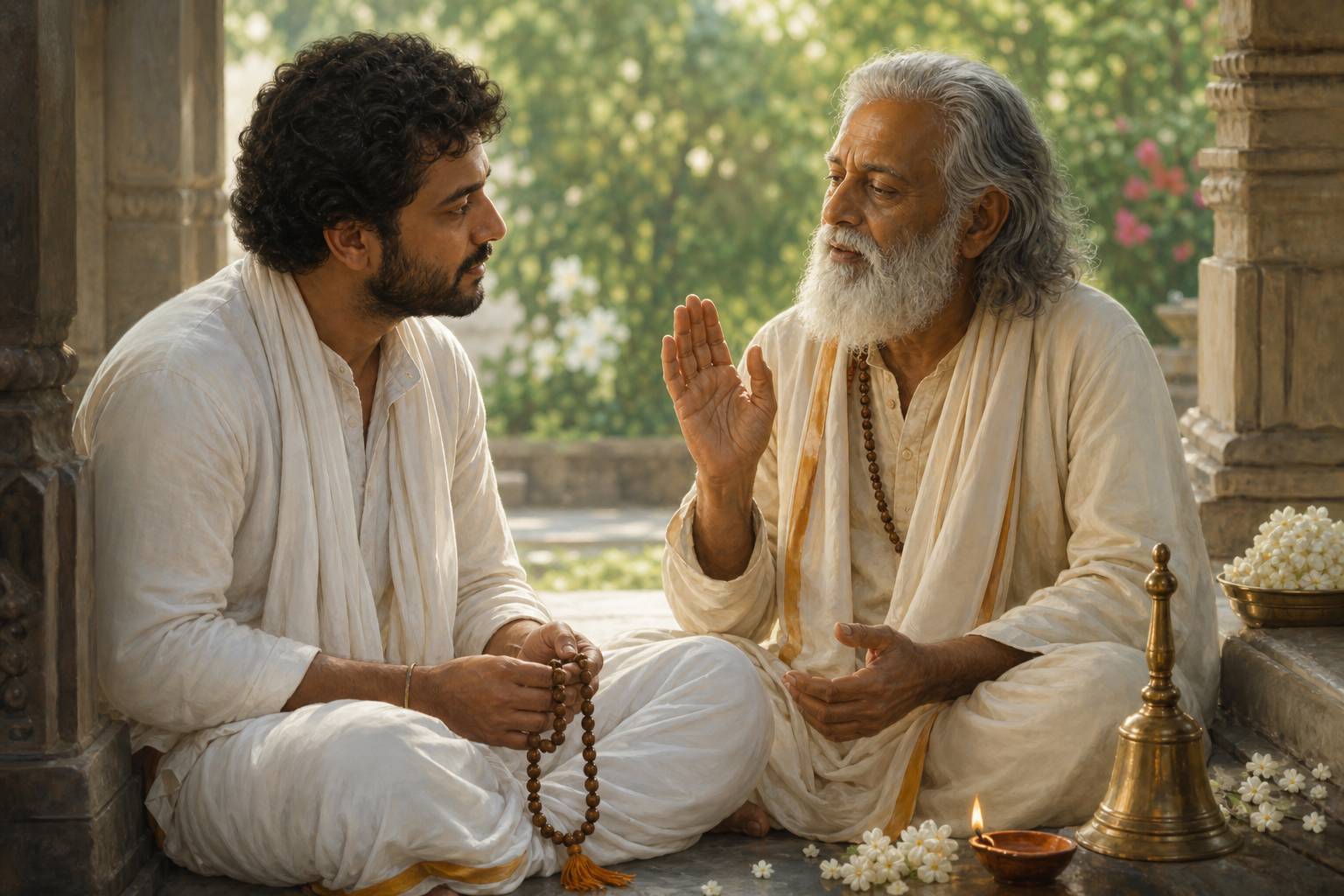
A common obstacle appears when you inherit one language, worship in another and encounter sacred words in a third. You may wonder whether the Divine hears a Sanskrit name pronounced with a regional or foreign accent, whether a Tamil or Bengali hymn is somehow less direct, or whether you should remain silent until every syllable is perfect.
Do not let that anxiety prevent remembrance. Devotion can be expressed through Sanskrit, Tamil, Bengali, Hindi and the imperfect speech of a child. The language carries your prayer; it does not imprison the Divine. Honest effort and inward attention matter more than performing sophistication.
At the same time, bhava is not an excuse for carelessness. Personal remembrance and a formally received mantra are different situations. If a teacher, temple or community has given you a particular recitation, preserve its words and learn its pronunciation as carefully as you can. That care is part of disciplined listening, not evidence that the Divine rejects an honest learner.
- If you know the accepted pronunciation, use it rather than deliberately altering the words.
- If you are learning, slow the recitation down, mark the syllables you confuse, and ask someone responsible for that practice to demonstrate them.
- If your accent remains audible, continue practising without shame. An accent is not the same as indifference.
- If unfamiliar words make personal prayer impossible, begin with a divine name or prayer in a language you understand while you learn the traditional form.
- If you make a mistake, correct it calmly and continue. Repeatedly restarting out of fear can make the error more important than the remembrance.
The useful balance is simple: be teachable about form and fearless about beginning. Pronunciation can become more accurate through practice; devotion cannot mature if anxiety keeps postponing practice altogether.
Pluralism works when it preserves both hospitality and difference
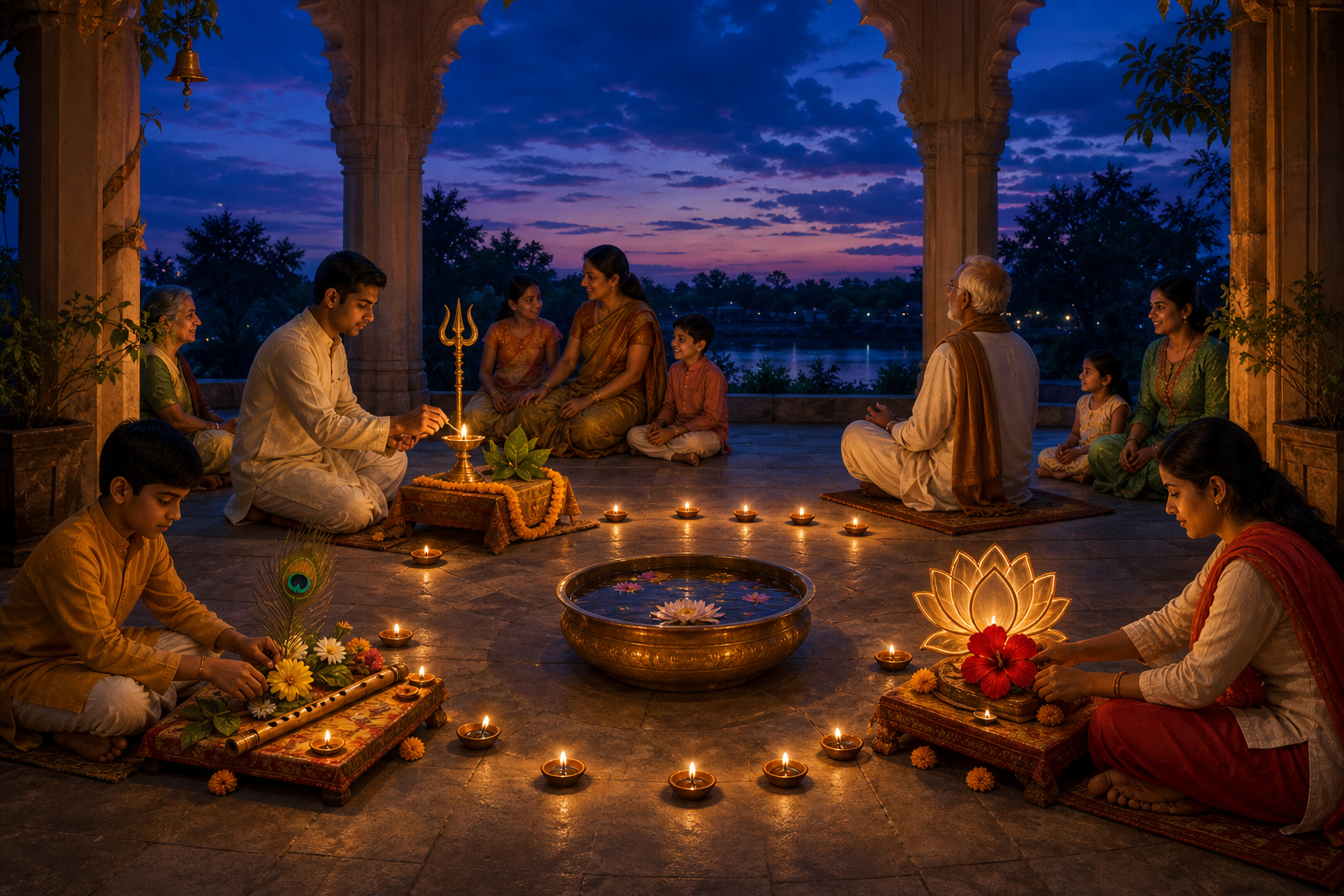
Within a Hindu household
A household does not need identical preferences to possess a shared dharmic life. One member may invoke Rama, another Devi, and another Shiva. The practical challenge is to create enough common practice for the home to feel united without demanding that everyone imitate one person’s inner relationship.
Use two layers. Keep a simple shared layer—a lamp, a short period of silence, a familiar prayer, gratitude before food, or participation in major family observances. Then protect a personal layer in which each person can repeat a chosen name, read a preferred text, sing a particular hymn, or contemplate quietly.
Set one firm household rule: no divine form becomes a target of mockery, and no family member must prove that their devotion is superior. When children ask why relatives worship differently, describe the relationship rather than staging a contest: this is the name through which your grandmother prays; this is the form your father remembers; this is the practice that helps your mother become still.
Correct behaviour when necessary, but do not police affection. Noise during another person’s prayer can be addressed. Disrespect toward a sacred image can be addressed. A sincere preference for another divine name does not need correction.
Across the wider dharmic family
Ishta belongs to Hindu philosophical and devotional vocabulary. It should not be pasted over Sikhism, Jainism or Buddhism as though these traditions were simply using different labels for an identical practice. Respect becomes more credible when you let each tradition describe itself.
Sikh remembrance of Waheguru centres the One. Jain reverence for the Arihantas accompanies the discipline of ahimsa. Buddhist cultivation of maitri and karuna directs attention toward loving-kindness and compassion. These practices can meet Hindu devotion on a shared moral horizon of inner transformation and compassionate conduct without being reduced to versions of Ishta.
This gives you a better rule for dharmic dialogue: identify a genuine resonance, name the real difference, and do neither with hostility. Saying that traditions share an ethical concern is not the same as claiming that their doctrines, spiritual goals and practices are interchangeable. Unity does not require annexation.
The same discipline applies within Hindu sampradayas. You can listen to another devotee’s theology without pretending to hold it. You can receive prasada, join a respectful observance, or appreciate a hymn without abandoning your own centre. Hospitality is an act of confidence when it is joined to clarity.
Key takeaways and your next step
- An Ishta gives your devotion a stable centre; it does not confine the Divine to one name.
- Choose by sustained remembrance, reverence, repeatability and ethical fruit—not by novelty alone.
- Care about pronunciation without treating an honest accent or beginner’s mistake as a spiritual disqualification.
- Distinguish informal personal prayer from a mantra whose words and pronunciation have been taught within a particular discipline.
- In a mixed Hindu household, maintain a small shared practice and leave room for each person’s chosen form.
- Across Hinduism, Sikhism, Jainism and Buddhism, recognise shared values without erasing each tradition’s own vocabulary and commitments.
Before adding another prayer or image, write down the one divine name, form or formless ideal to which you already return. Give it one fixed place in your day and connect it to one visible ethical resolve—truthfulness, kindness, restraint or compassion. Continue until the practice has met you on busy and unremarkable days. Then judge it by the life growing around it.
References
