
When a famous business leader dies, public memory quickly becomes a list of wealth, offices, and influence. If you came here asking what made Gopichand Hinduja’s Hindu legacy worth remembering, do not begin with the scale of his business life. Begin with what he repeatedly did before the working day could claim him.
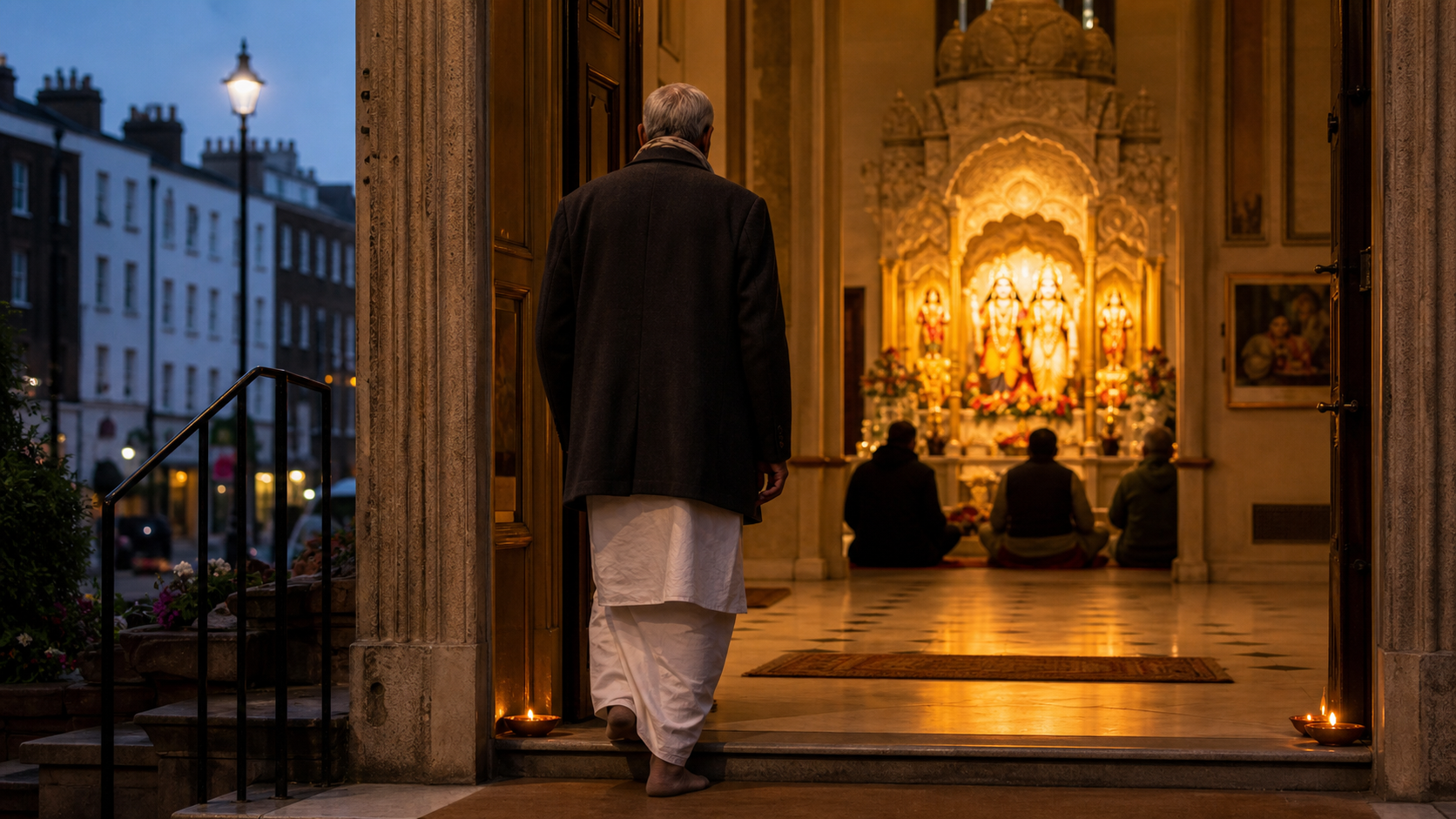
Within London’s Vaishnava community, Hinduja was remembered for going to ISKCON’s Radha-Krishna Temple each morning before breakfast for kirtan and darshan. That habit offers a more useful measure of his devotional legacy than any ranking: he gave bhakti a definite place, a dependable sequence, and an early claim on his attention.
A protected morning reveals the real hierarchy

The phrase before breakfast matters. It identifies a boundary. Temple attendance was not left for whatever time remained after meetings, messages, travel, and social obligations. It came before the ordinary machinery of the day gathered momentum.
This is what turns a good intention into sadhana. An intention says that devotion is important. A discipline gives devotion an appointment that competing demands are not allowed to renegotiate every morning. Repetition removes the daily argument over whether there is enough time or whether the mood is right.
The practices themselves were concrete. Kirtan engages the voice and hearing through the chanting of divine names. Darshan brings the devotee before the Deity in reverential seeing. Going to the temple adds movement, place, and association. Bhakti is therefore not held as a private opinion; it is enacted through the body and within a worshipping community.
The form of Hinduja’s practice was distinctly Vaishnava: Radha-Krishna worship, kirtan, darshan, and association with ISKCON. Its wider dharmic resonance does not require us to pretend that Hindu, Buddhist, Jain, and Sikh practices are interchangeable. The common lesson lies in disciplined remembrance, humility before something higher than social position, service, and participation in a community of practice.
Do not turn his schedule into a rule that devotion at another hour is inferior. The useful principle is protection, not clock worship. Ask which ordinary event marks the last dependable moment before your day fragments. Attach your practice to that event instead of promising yourself that it will happen later.
The temple turned personal discipline into community life
For a Hindu living in the diaspora, religious identity can easily become occasional: a festival visit, a family ceremony, or an inherited label brought out when circumstances demand it. A recurring temple habit does something different. It keeps worship in ordinary life, where identity is formed through repetition rather than nostalgia.
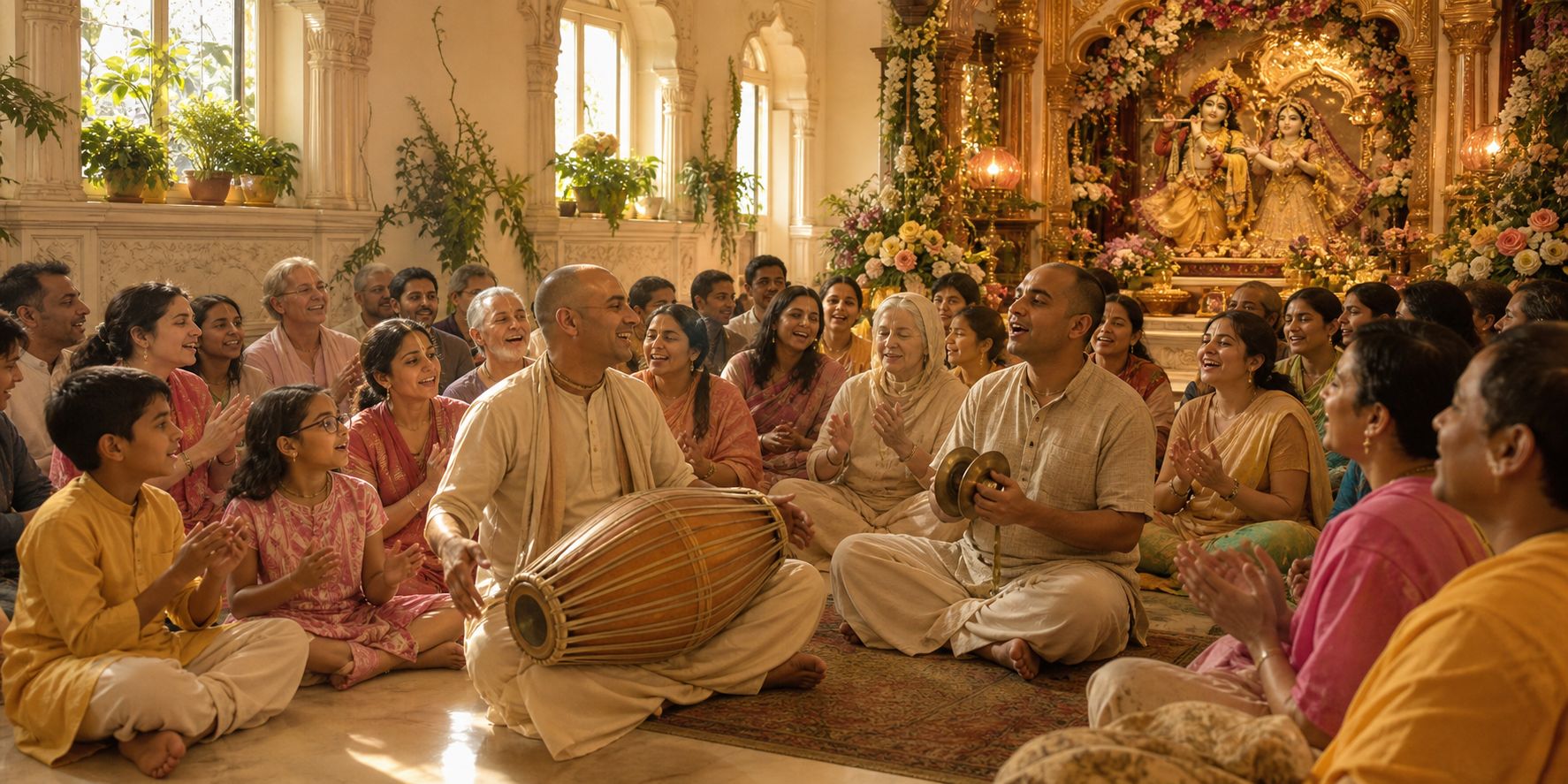
London’s Radha-Krishna Temple functions as a spiritual and cultural anchor for the Hindu diaspora. Kirtan is congregational. Darshan is received within an inherited ritual setting. Association brings people of different ages, occupations, and degrees of public prominence into the same devotional rhythm. The prominent visitor does not need a custom-made spirituality; he enters practices that were already sustaining the community.
This matters because a temple is not maintained by major celebrations alone. It becomes a living institution when devotees appear on unremarkable mornings, learn its rhythms, accept manageable seva, and remain present after novelty has disappeared. A respected person’s regular attendance may be visible, but the same principle applies to the person whom almost nobody notices.
If you want to strengthen your local mandir, begin with reliability. Choose a recurring pattern you can sustain. Join congregational worship instead of attending only as a spectator. Ask for a modest, repeatable seva rather than waiting for a prestigious role. If distance makes frequent attendance unrealistic, maintain a home practice and establish an honest rhythm of temple association. A modest commitment kept is more useful to a community than an impressive promise abandoned.
Wealth is the contrast, not the measure of devotion
Hinduja died at the age of 85 and was widely known as a global business magnate, even being described as Britain’s richest man. That reputation explains why his morning discipline attracts attention. It does not explain the spiritual value of the discipline.
Bhakti does not become more authentic because a wealthy person practises it. Wealth is not proof of divine favour, and worldly achievement is not a substitute for character. Nor should a tribute turn one admirable habit into a complete moral verdict on every decision in a public person’s life. A devotional routine can reveal a real priority without answering every possible question about the person who maintained it.
The sharper lesson is that status did not remove the need to show up. Business responsibilities can be delegated. Darshan cannot be outsourced. No assistant can remember Krishna on your behalf, and no public reputation can perform your sadhana after you have neglected it. Personal presence remains part of the offering.
This corrects two common mistakes. The first is postponing spiritual discipline until work becomes less demanding. Work has a way of expanding into any space left undefended. The second is assuming that a crowded life makes practice meaningless unless it can be elaborate. Hinduja’s example points instead to a stable devotional appointment held within a demanding life.
Admire the ordering of priorities, not the social rank surrounding it. The standard available to you is not wealth. It is whether remembrance receives a real place in your day.
Build a devotional anchor you can actually keep

You do not honour a devotional legacy merely by agreeing that daily practice is admirable. Translate the principle into a routine that can survive pressure.
- Name the devotional act. Decide whether your anchor is mantra-japa, kirtan, home darshan, temple darshan, prayer, or recitation from a chosen scripture. A general wish to be more spiritual is too vague to schedule or keep.
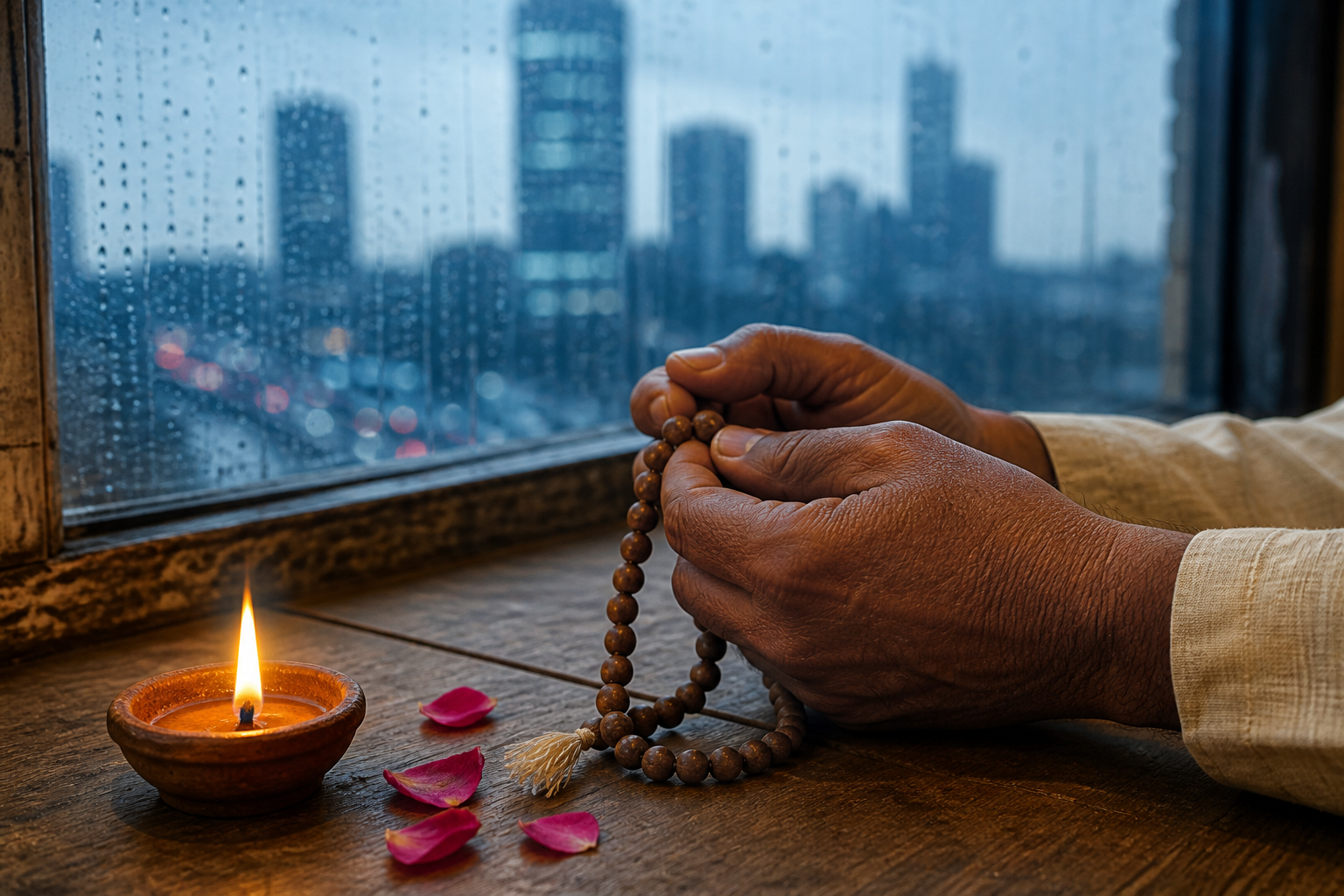
- Bind it to an event. Before breakfast was the cue in Hinduja’s remembered routine. Yours might begin after bathing, before opening work messages, or when the local temple opens. Use an event that visibly occurs, not a promise to practise later.
- Define the pressured-day form. Decide in advance what an honest minimum looks like when the morning is disrupted: a fixed portion of japa, a brief home darshan, or attentive participation in a familiar kirtan. This is not permission to shrink the practice permanently. It prevents one difficult day from becoming silent abandonment.
- Preserve association. Put temple attendance into the ordinary calendar, join congregational practice, and accept seva suited to your actual capacity. If you cannot attend as often as you would like, choose a sustainable rhythm instead of making a performative promise.
- Track fidelity rather than emotion. Mark whether you kept the devotional appointment and notice what displaced it when you did not. Do not decide that a session failed because it felt distracted or uneventful. Steadiness develops through returning.
Keep the purpose clear. Sadhana is not a productivity technique designed to make you more efficient at work. Its purpose is remembrance, worship, and service. Calm or clarity may accompany it, but those benefits should not replace the Divine as the centre of the practice.
Also resist making the routine into a performance. Public declarations can create the appearance of commitment before the habit exists. Prepare the place, set the cue, attend the temple when you have committed to attend, and let consistency speak more quietly than self-description.
Key takeaways
- Gopichand Hinduja’s defining devotional memory is not his economic standing but his regular, before-breakfast attendance at London’s Radha-Krishna Temple.
- Kirtan and darshan gave bhakti a concrete form involving attention, bodily presence, sacred place, and association.
- His practice was specifically Vaishnava, while its discipline, humility, service, and steadiness carry wider dharmic significance.
- A diaspora temple becomes a durable cultural anchor through predictable participation on ordinary days, not festivals alone.
- Wealth provides the contrast in Hinduja’s story, not the standard. Devotion is measured by sincerity and fidelity, not worldly rank.
- The part you can copy is the protected boundary: choose a devotional act, attach it to a dependable cue, and keep returning when the routine is disrupted.
Do something plain with this remembrance. Before you sleep, decide which devotional act will come before tomorrow’s competing demands, where it will happen, and what event will start it. Then keep the appointment without needing to announce it. That is closer to honouring a devotional legacy than admiring it from a distance.
References
