
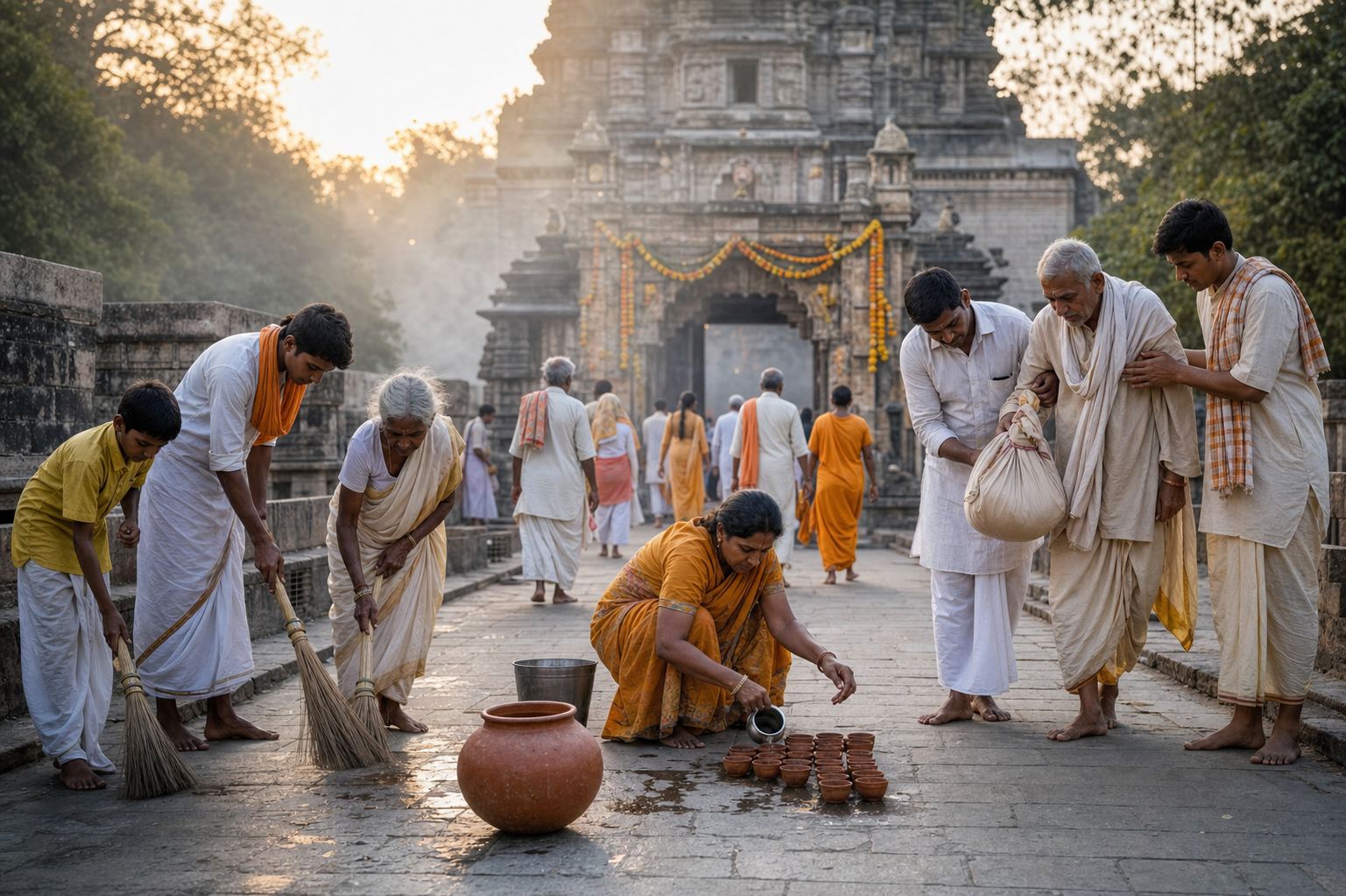
You may be preparing for a yatra and wondering how to keep it from becoming religious tourism: a hurried sequence of darshan, photographs, purchases, and departures. The clearest answer is to decide, before you travel, whom your presence will serve.
Seva turns pilgrimage from sacred consumption into sacred participation. You still walk, chant, bow, listen, and receive. But you also protect the place, lighten another pilgrim’s burden, support the community receiving you, and carry the discipline home.
Seva changes the question you bring to a sacred place
A consumer asks, “What experience will I get here?” A pilgrim asks, “How should I approach what is sacred here?” A pilgrim formed by seva goes further: “What can I offer without making myself the centre?”
This distinction matters because pilgrimage can quietly feed the same habits it is meant to loosen. You can compete for a better view, resent a slow queue, treat residents as scenery, measure devotion by the number of sites covered, or expect discomfort to be removed because your purpose is spiritual. None of that is corrected merely by reaching a holy geography.
Bhakti supplies the correction. Love of the Divine is not only a feeling enjoyed within the heart; it is an orientation expressed through action. In the Gaudiya Vaishnava understanding, the gopis exemplify love that relinquishes self-centred gratification and aligns action, speech, and thought with the will of Krishna. Applied carefully, this does not require abandoning ordinary responsibilities. It means treating your abilities, relationships, and duties as fields of offering.
Other Dharmic paths preserve their own theology and discipline, so their differences should not be blurred. Yet a family resemblance is visible in Buddhist karuna and non-attachment, Jain ahimsa and aparigraha, and the Sikh union of remembrance and seva. Across these paths, spiritual maturity is tested by how attachment, cruelty, pride, and indifference are reduced in conduct.
That gives you a practical measure for pilgrimage. Do not ask only whether the journey felt powerful. Notice whether it made you more patient in inconvenience, more careful with shared resources, less hungry for recognition, and more willing to serve when the work is unglamorous.
Make a sankalpa that will survive inconvenience
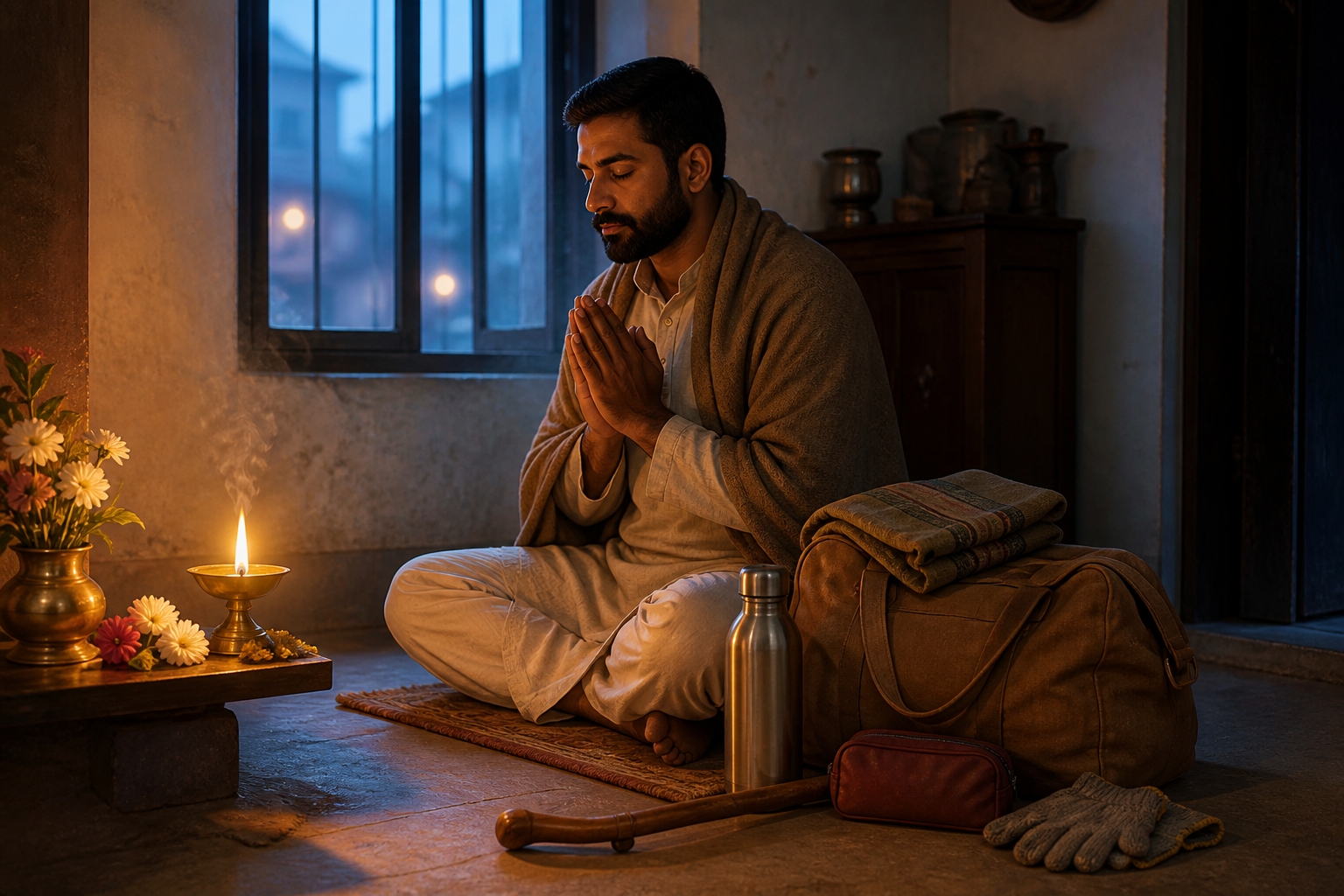
A vague intention such as “I want a spiritual experience” is easily displaced by fatigue, crowds, weather, and changing plans. Make a sankalpa concrete enough to govern your behaviour when the journey stops feeling elevated.
Before leaving, write brief answers to these prompts:
- What am I seeking? Name the relationship, teaching, or discipline you want to deepen rather than the sensation you hope to collect.
- What practice will steady me? Choose the japa, prayer, scriptural reading, silence, kirtan, or reflection you can actually maintain along the route.
- Whom will I serve? Identify an organiser, temple, pilgrim group, host community, or continuing service effort whose real needs you can ask about.
- What behaviour will I renounce? Examples include littering, queue-cutting, angry speech, intrusive photography, bargaining that humiliates a vulnerable seller, or treating volunteers as personal staff.
- What will continue after I return? Select a duty close enough to your ordinary life that the pilgrimage cannot remain an isolated memory.
Prepare the inner journey before expecting the outer journey to transform you. Regular japa, study of the Bhagavad-gita, and respectful familiarity with the places you will visit give attention somewhere to return when novelty fades. Pilgrims preparing for the Kartik Navadvipa Mandal Parikrama, for example, are encouraged to combine spiritual practice with simplicity, respect for local guidance, and care for the environment.
Ask organisers what is needed before carrying donations or designing your own service project. An unsolicited gift can create storage, sorting, transport, or disposal work for the very people you intended to help. A requested task performed reliably is usually more useful than a dramatic gesture chosen for its emotional appeal.
Serve the place, the pilgrims, and the practice
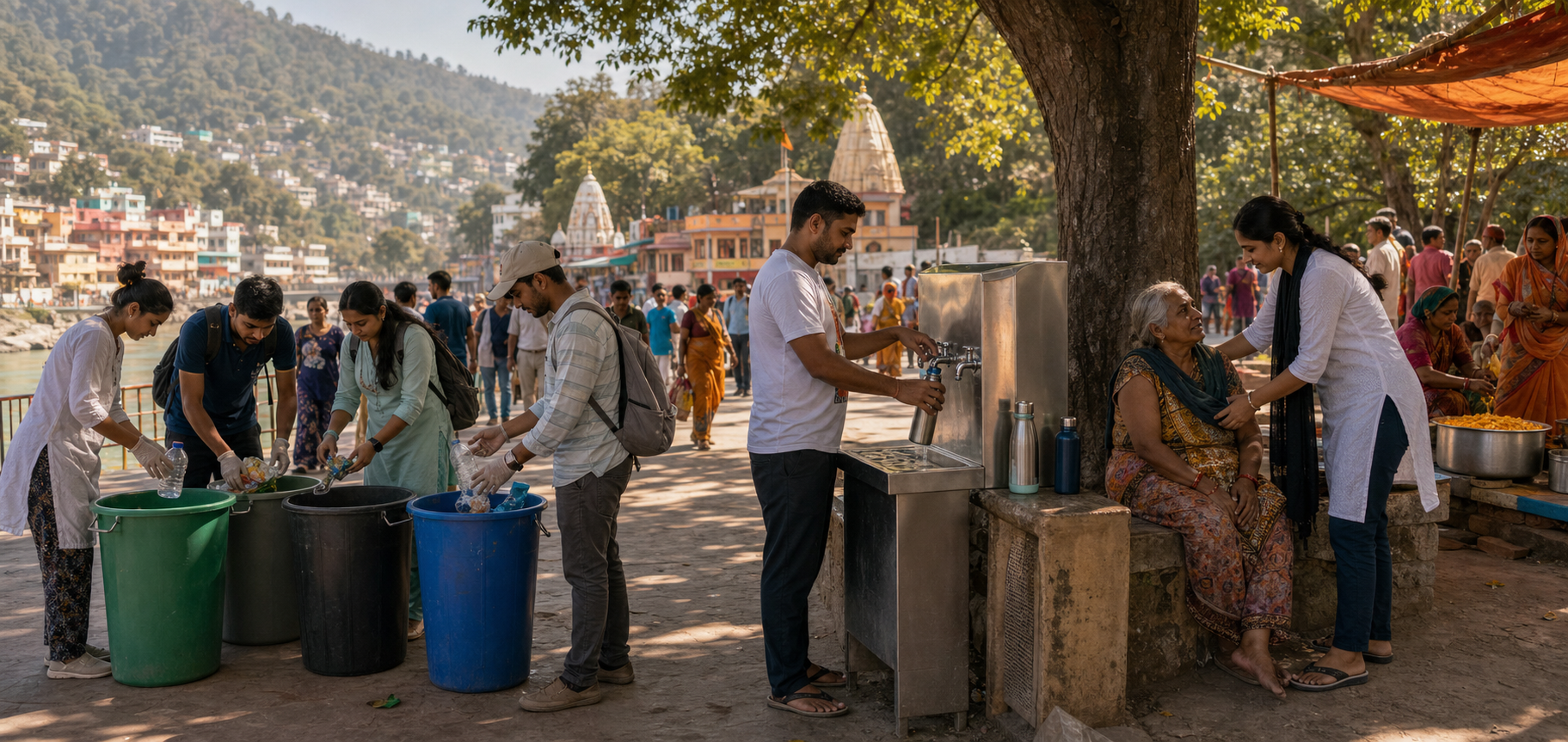
Seva during pilgrimage moves in three directions. Keeping all three in view prevents service from shrinking into a single public activity.
Serve the sacred place
A tirtha is not an empty backdrop waiting for visitors. It is a living sacred environment held by worshippers, residents, workers, renunciants, animals, inherited customs, and physical limits. Serving it begins with restraint.
- Follow designated routes, temple rules, dress expectations, and instructions about photography.
- Carry out what you carry in wherever local arrangements require it, and never leave offerings, packaging, or food waste merely because an object had a devotional use.
- Join cleaning, cooking, distribution, or crowd-support work only with permission and instruction.
- Buy and use resources with awareness that residents must live with the pressure created by pilgrim traffic after you leave.
- Protect quiet where prayer or meditation requires it; enthusiasm does not give you ownership of the soundscape.
The central discipline is to let the place set the terms of your presence. Cleaning a visible area for a photograph is performance. Completing the assigned work, including the unnoticed portion, is service.
Serve fellow pilgrims without controlling them
Look for burdens you can reduce: a confusing direction, a heavy shared load, a disorderly queue, a meal that needs serving, or a person being excluded from information. Ask before physically assisting someone. Respect a refusal. Help should preserve another person’s agency rather than turn that person into evidence of your compassion.
Patience is also seva. The elderly pilgrim moving slowly, the child who is overwhelmed, the visitor unfamiliar with a custom, and the volunteer answering the same question repeatedly are not interruptions to your pilgrimage. Your response to them is part of it.
Serve the devotional practice itself
Kirtan, walking, listening, and remembrance can all become offerings when they are undertaken with discipline. In the Navadvipa parikrama ethos, Krishna-kirtana is approached as dynamic seva rather than entertainment or a means of livelihood. That distinction asks something concrete of you: participate attentively, support the shared rhythm, and resist turning congregational devotion into a stage for personal display.
Walking can serve the practice in the same way. Let its repetition collect the mind instead of filling every quiet interval with conversation, recording, or checking a device. You do not need to manufacture an extraordinary mood. Return attention to the name, teaching, prayer, or sacred presence for which you came.
Let competence and dignity govern compassionate service
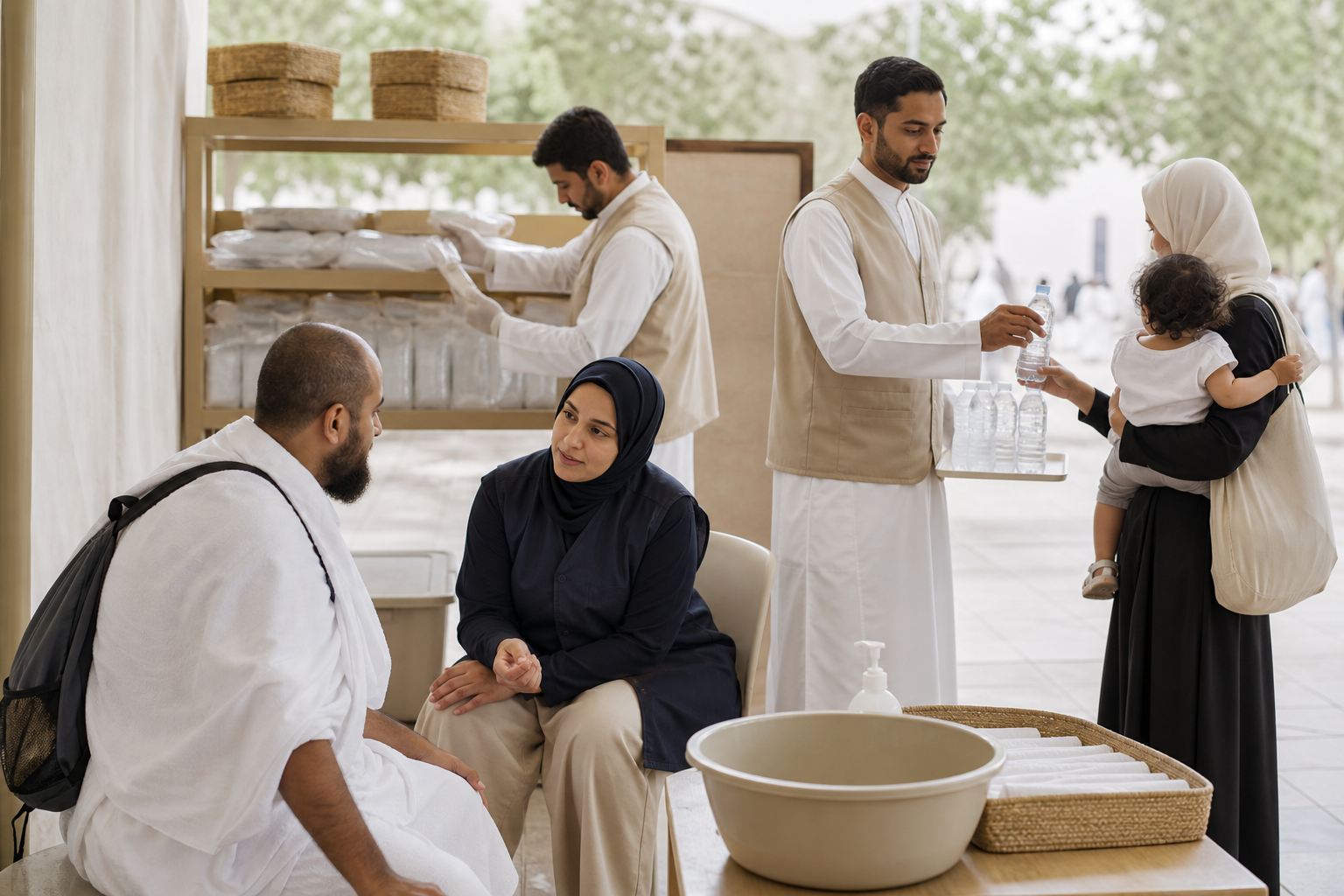
Good intention is the beginning of seva, not proof that a chosen action is helpful. The more vulnerable the recipient, the more disciplined the service must become.
Food distribution makes this especially clear. A compassionate response after the Bogo, Cebu earthquake combined vegetarian nourishment with community kitchens, food safety, hygiene, clean water, local coordination, and equitable distribution. The spiritual principle did not replace operational care. It required it.
The same standard belongs in pilgrimage seva. If you help prepare or distribute food, work under the responsible team’s hygiene and safety procedures. If you lack the required skill, take a supporting task such as carrying approved supplies, cleaning as directed, organising a queue, or relaying accurate information. Do not improvise medical care, rescue work, food handling, or crowd control beyond your competence. A devotional motive does not remove the harm caused by an unsafe action.
Before joining a service effort, test it with practical questions:
- Is it requested? Local leadership should be able to identify the need.
- Is it safe? The work should have appropriate supervision, sanitation, equipment, or role boundaries.
- Is it dignified? Recipients should not have to display gratitude, accept preaching, or surrender privacy in exchange for help.
- Is it equitable? Need, not social closeness or religious identity, should govern distribution.
- Is it sustainable? The service should not leave waste, unfinished obligations, or avoidable costs with the host community.
This is where ahimsa gives seva its moral edge. It is not enough to mean well. You must reduce the chance that your haste, pride, waste, or lack of preparation harms another being.
Carry the sacred place home: key takeaways for daily practice
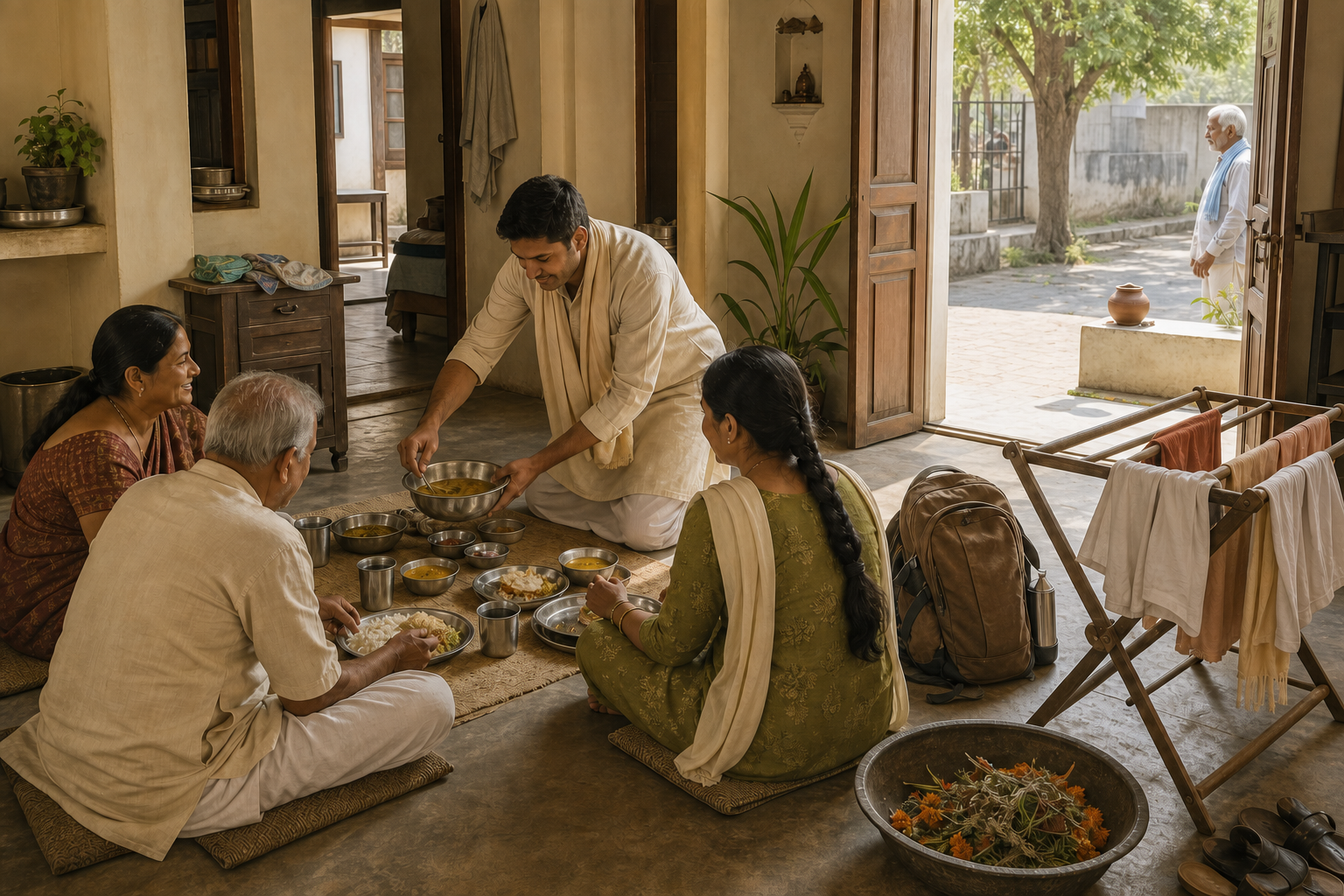
The return journey is the decisive stage. Sacred geography can awaken attention, but ordinary duty reveals whether the awakening has altered your habits. Choose a continuing act before the intensity of pilgrimage fades: cook for someone who depends on you, join a temple rota, support a community kitchen, listen without reaching for your device, care for an elder, or perform neglected household work without announcing the sacrifice.
A simple daily pattern can keep the offering conscious. Name inwardly whom the work serves. Perform it as carefully as you can. Then notice whether resentment, haste, superiority, or a demand for recognition entered the action. This review is not a reason for self-display or self-condemnation. It tells you where bhakti has yet to shape conduct.
- Pilgrimage becomes bhakti when receiving darshan is joined to offering attention, restraint, labour, and care.
- A useful sankalpa specifies your practice, your service, the behaviour you will renounce, and what will continue at home.
- Serve in three directions: protect the sacred place, reduce burdens for fellow pilgrims, and participate in devotional practice without turning it into performance.
- Ask local organisers what is needed; requested, supervised work is more reliable than an unsolicited gesture.
- Compassion must remain safe, dignified, non-discriminatory, and appropriate to your actual competence.
- Judge the journey by its effect on ordinary conduct, especially when service is inconvenient and no one is watching.
On your next yatra, arrive with one sincere practice and one requested service you are prepared to complete quietly. When you return, place that same spirit inside the duty already waiting at your door. That is how pilgrimage stops being an escape from daily life and becomes training for a life of bhakti.
References
- Dandavats — ISKCON Food For Life Cebu: Compassionate Earthquake Relief and the Spirit of Bayanihan
- Dandavats — Selfless Love Like the Gopis: Adi 4.170 and Bhagavad-gita’s Call at ISKCON Vrindavan
- Dandavats — Mayapur’s Kartik Navadvipa Mandal Parikrama 2025: A Soul-Stirring Pilgrimage of Seva and Kirtan
