-
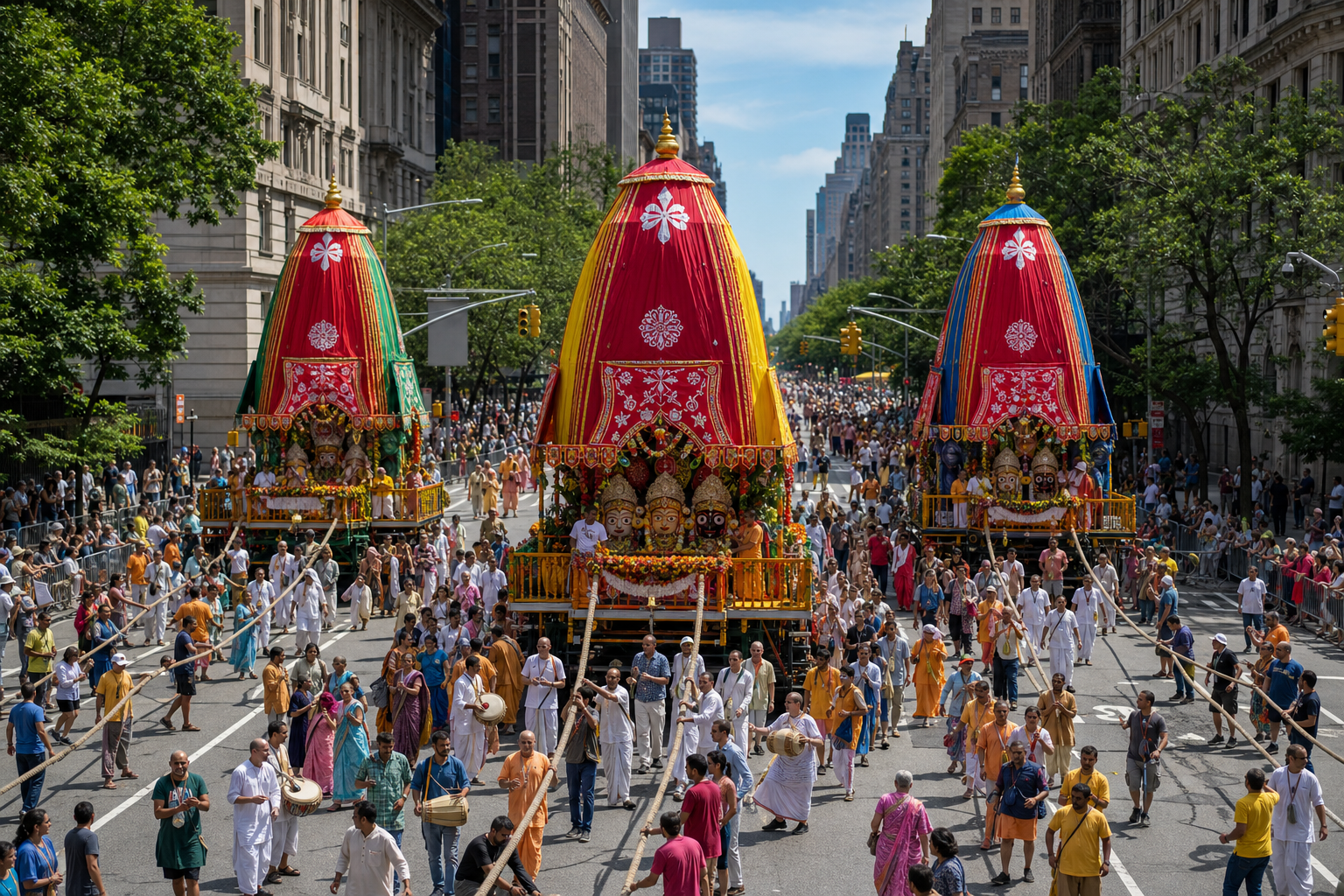
Rishikesh Kirtan Fest: A Powerful Celebration of Bhakti, Seva, and Sacred Unity

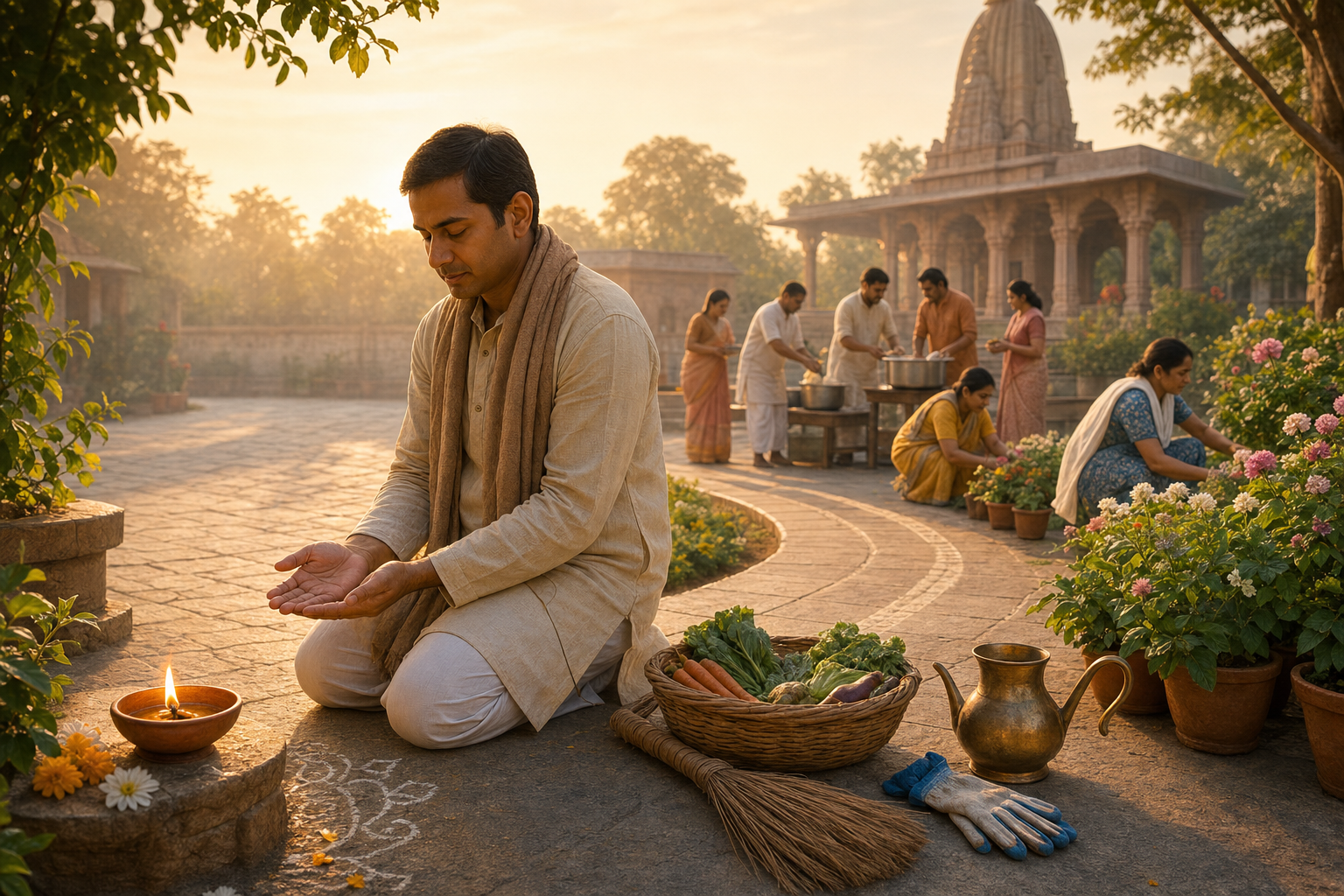
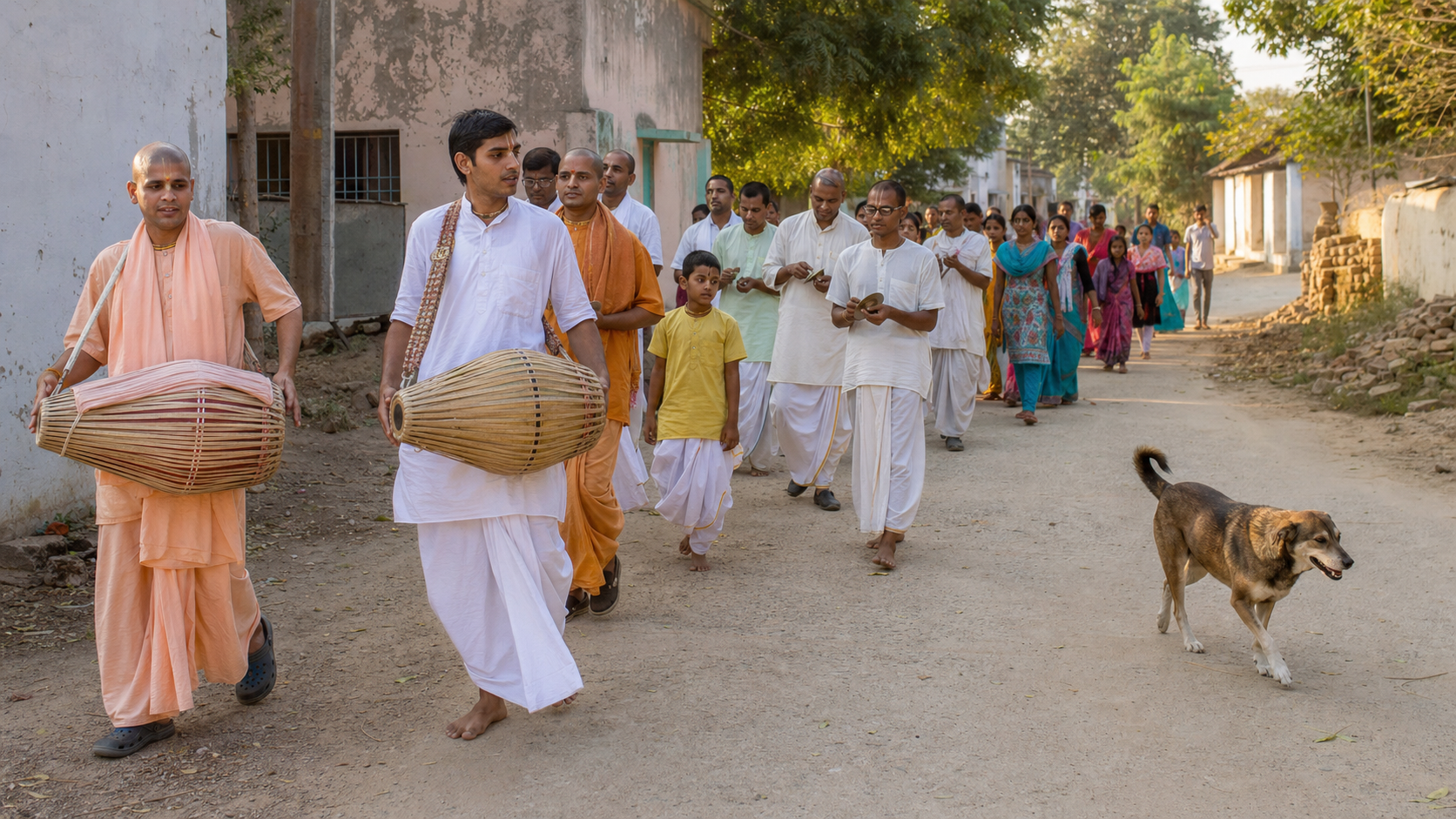
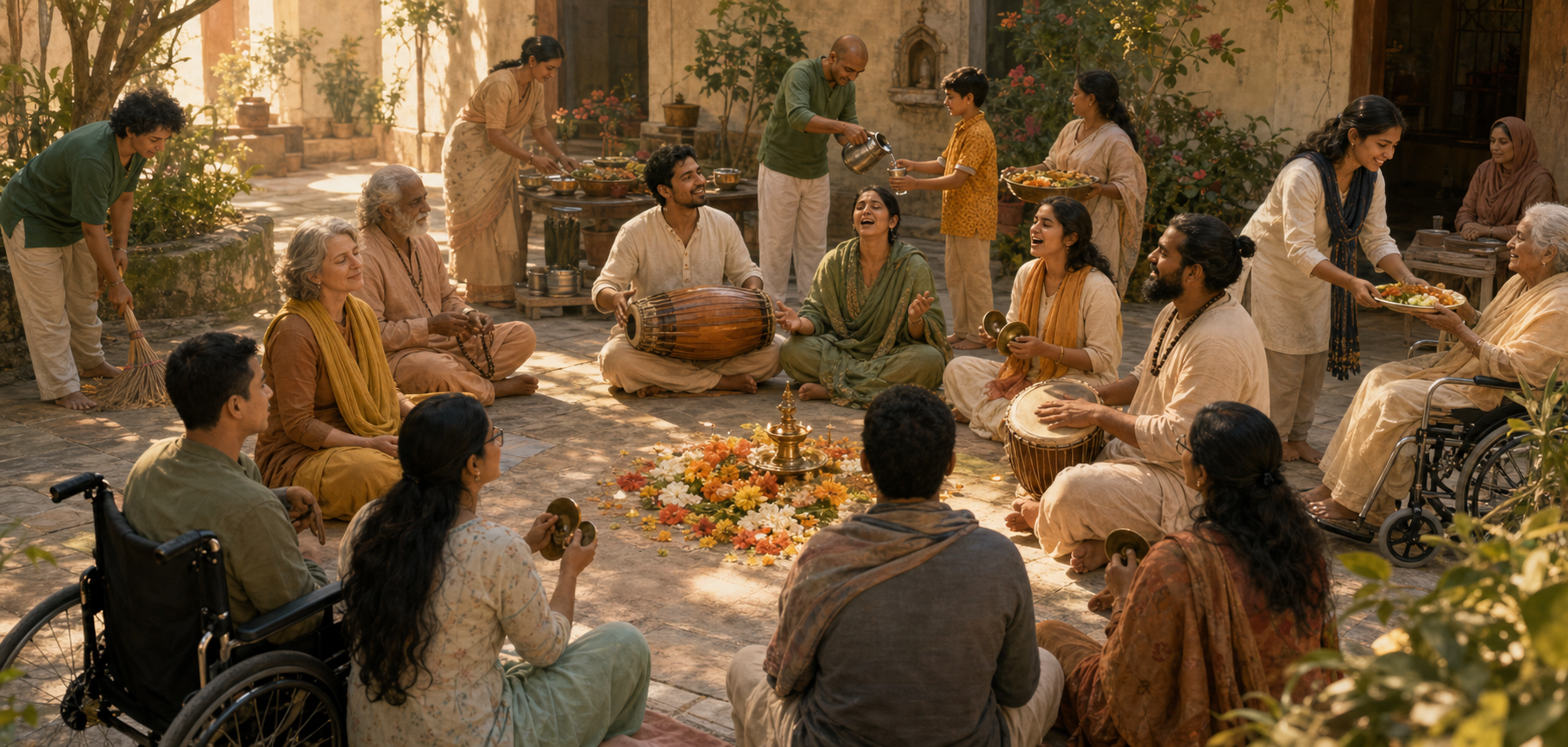
The fifth Rishikesh Kirtan Festival is a devotional gathering on the banks of the sacred Ganges, centered on chanting, dancing, prasadam, and service. Offered in remembrance of His Divine Grace Srila A.C. Bhaktivedanta Swami Prabhupada, it reflects the living power of the guru-shishya tradition and the global spread of Krishna bhakti. The festival demonstrates how…
-
Kubja of Mathura: Krishna’s Powerful Lesson on Grace, Dignity, and Inner Beauty

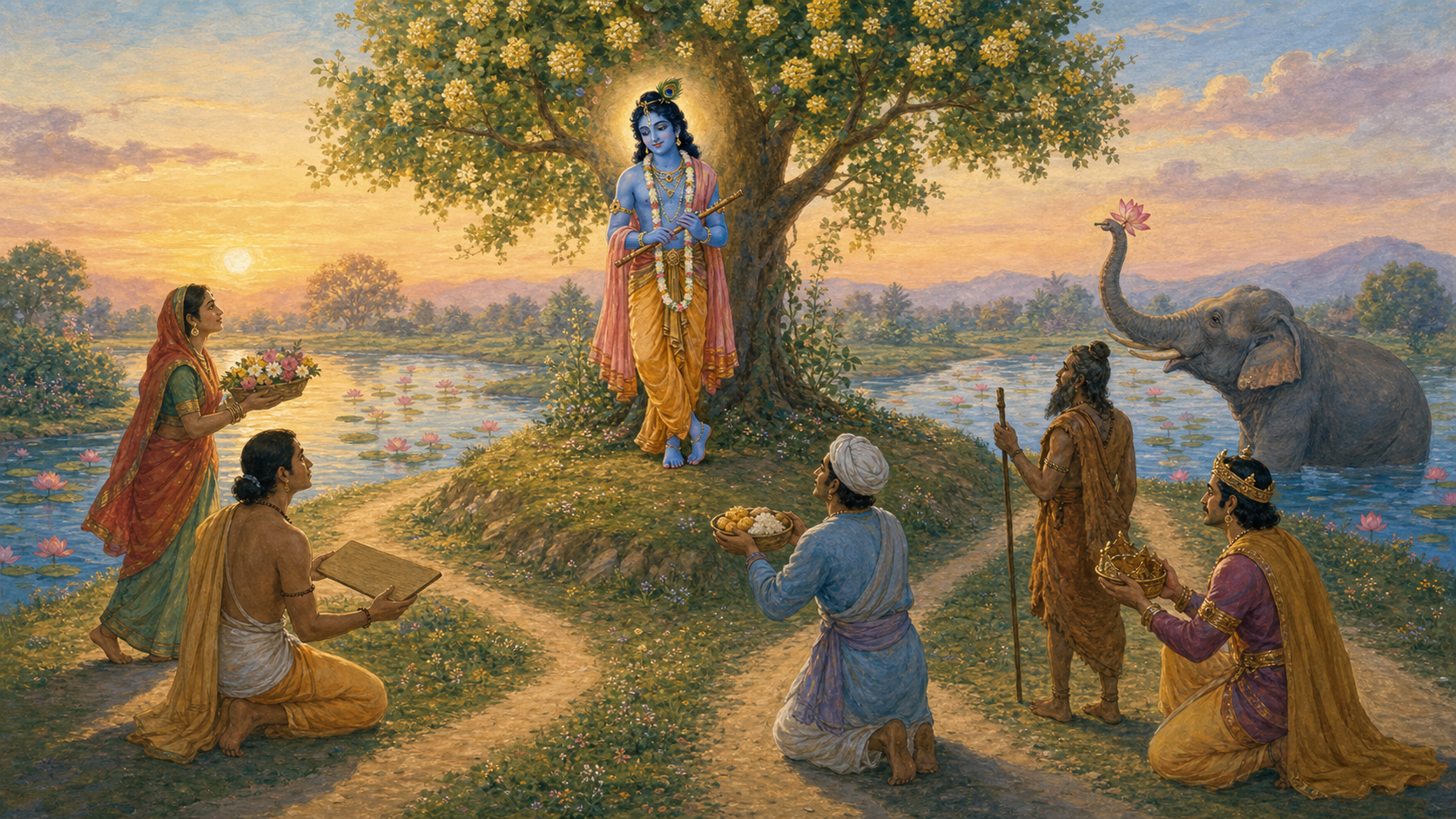
Kubja of Mathura is a deeply moving figure in Krishna bhakti literature, remembered for her encounter with Sri Krishna in the streets of Mathura. Though often associated in popular titles with the Mahabharata tradition, her story is primarily narrated in the Bhagavata Purana, Brahma Vaivarta Purana, and devotional retellings such as the Sur Sagar. As…
-
Panihati Chida Dahi: Powerful Lessons in Bhakti, Mercy, and Sacred Community

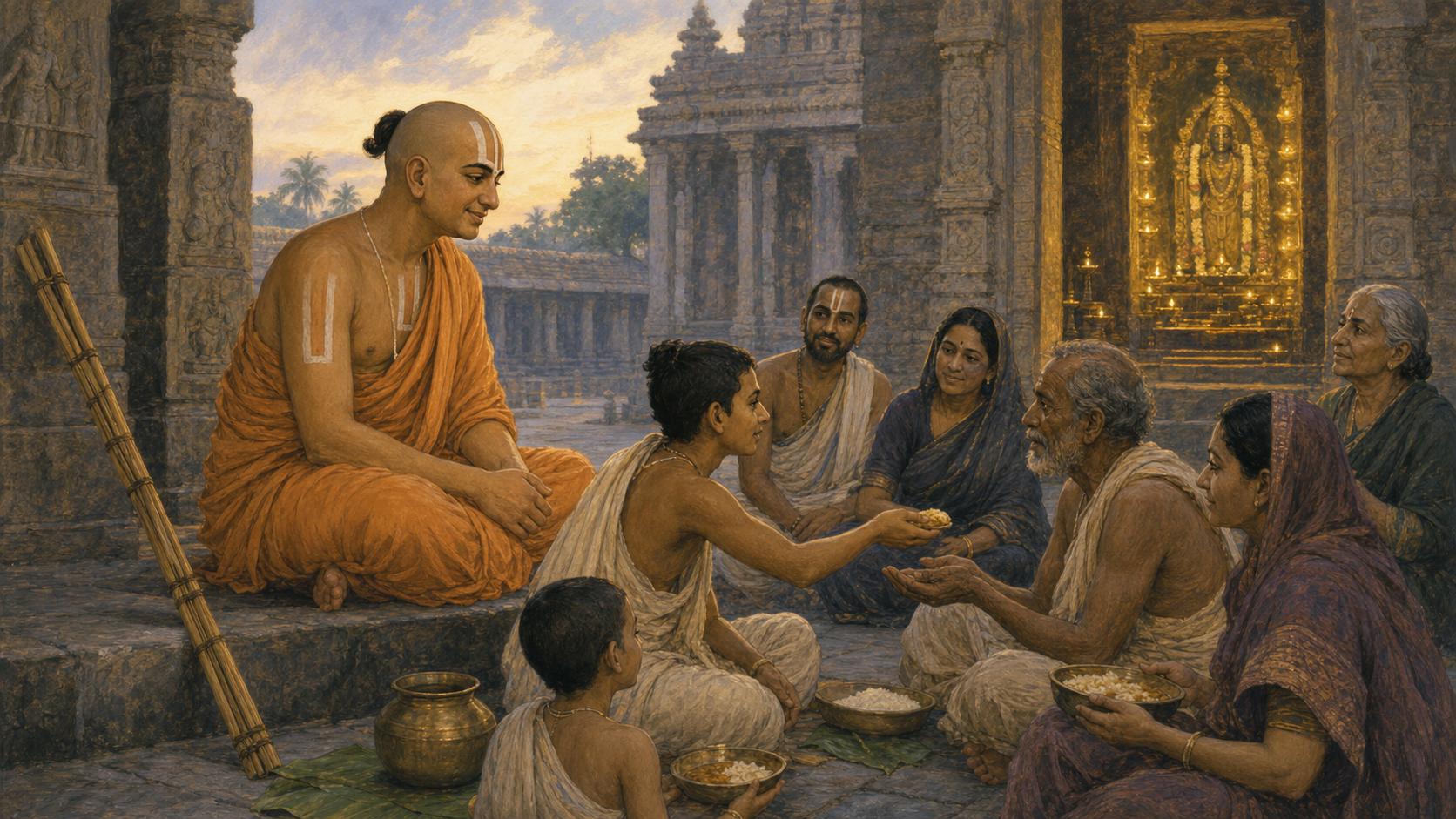
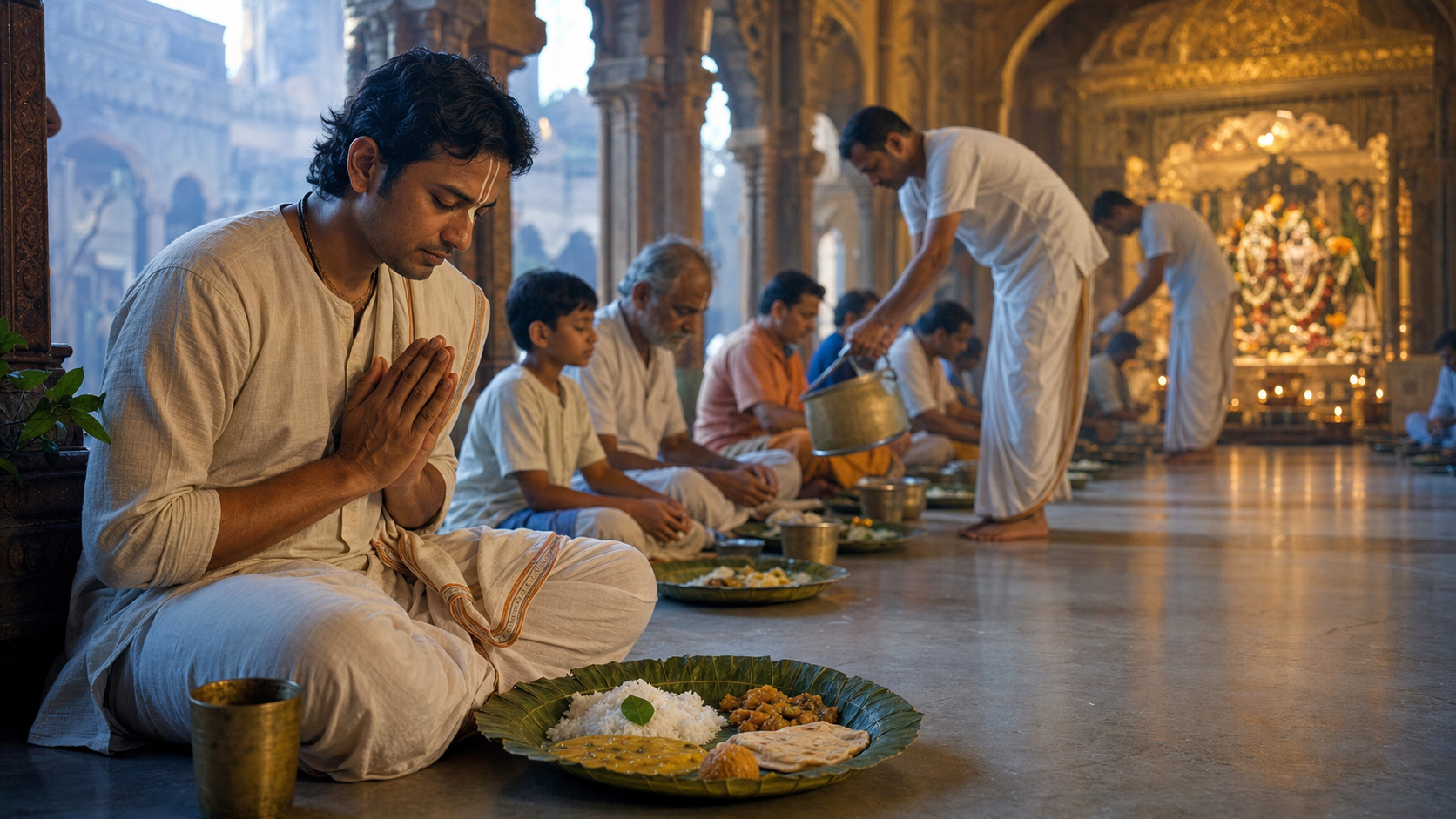
Panihati Chida Dahi, also known as Chida-dadhi Mahotsava, commemorates the sacred meeting of Srila Raghunatha dasa Goswami and Lord Nityananda Prabhu on the bank of the Ganges at Panihati. The festival teaches that bhakti matures through humility, seva, and shared prasada rather than private aspiration alone. Its central episode, the instruction to feed devotees chipped…
-
George Harrison’s Powerful ISKCON Legacy: How The Beatles Opened a Dharmic Door

Global Beatles Day is more than a celebration of music; it is a doorway into the spiritual influence The Beatles helped carry into modern culture. George Harrison’s relationship with Krishna consciousness gave the Hare Krishna Movement unusual visibility in the West through recordings, public advocacy, and institutional support. His production of the Radha Krishna Temple’s…
-
Bhagavatam 4.21.37–52: Maharaja Prithu’s Transformative Dharma of Leadership, Bhakti, and Unity

Srimad-Bhagavatam 4.21.37–52 closes Maharaja Prithu’s instructions with a rare integration of rajadharma (ethical governance) and bhakti-yoga (devotional practice). The verses argue that just leadership, social cooperation, and personal sadhana are mutually reinforcing and teleologically ordered toward pleasing the Supreme. Framed through the Paramātman perspective, the text grounds nonviolence, truthfulness, and compassion in the recognition of…
-
Conquering Pride with Humility: SB 11.3.13 and HH Guru Prasad Swami’s ISKCON Guidance

Pride undermines devotion, learning, and relationships; SB 11.3.13 situates humility as a practical method for transformation within the Nimi–Navayogendra teachings. Drawing on HH Guru Prasad Swami Maharaj’s ISKCON guidance, this analysis shows how precise sādhana, collaborative seva, and accountable satsaṅga systematically disarm ego. It distinguishes healthy self-respect from egoic inflation and offers clear behavioral metrics…
-
Decoding SB 1.16.5: Dharma‑Bull, Mother Earth, and Kali‑yuga in Srila Prabhupada’s Teachings

SB 1.16.5 presents the iconic tableau of the Dharma‑bull and Mother Earth to diagnose the onset of Kali‑yuga as both a moral and ecological crisis. Through Srila Prabhupada’s teachings, the verse becomes a practical framework: strengthen truthfulness, cleanliness, mercy, and austerity to restore social trust and environmental balance. The episode models just governance in the…
-
Srimad Bhagavatam 2.2.27 Decoded: Transformative Focus, Paramatma Realization, and Bhakti Yoga

Srimad Bhagavatam 2.2.27 synthesizes Chapter Two’s yogic arcpratyahara, dharana, and dhyanainto steadfast remembrance of the Paramatma in the heart. Read alongside community practice in settings such as ISV BYS, the verse frames technique as servant to bhakti, where breath, attention, and sacred sound converge. The result is a stable, tender clarity that supports both inner…
-
Unveiling Gauni Bhakti: Harness the Heart’s Innate Devotion in Hinduism for Dharmic Unity

Gauni Bhakti names the heart’s innate devotionan unforced, everyday reverence that precedes argument or ritualand shows how natural feeling can mature into steady spiritual practice. By clarifying the philological sense of gauna (secondary) alongside its experiential sense (everyday and natural), the piece reconciles textual theology with lived devotion. Drawing on the Bhagavad Gita, the Bhagavata…
-
Preeti Vrata in Chaturmasya: A Disciplined Path to Universal Love, Seva, and Inner Clarity

Preeti Vrata in Chaturmasya is a structured vow observed from Devshayani Ekadashi to Prabodhini Ekadashi, aligning personal discipline with bhakti, ahimsa, and seva while Lord Vishnu is in Yoga Nidra. Grounded in Puranic tradition and guided by the Panchang, it combines sankalpa, daily puja, mantra-japa, scriptural study, and a clearly defined sattvic diet. Monthly guidelines…
-
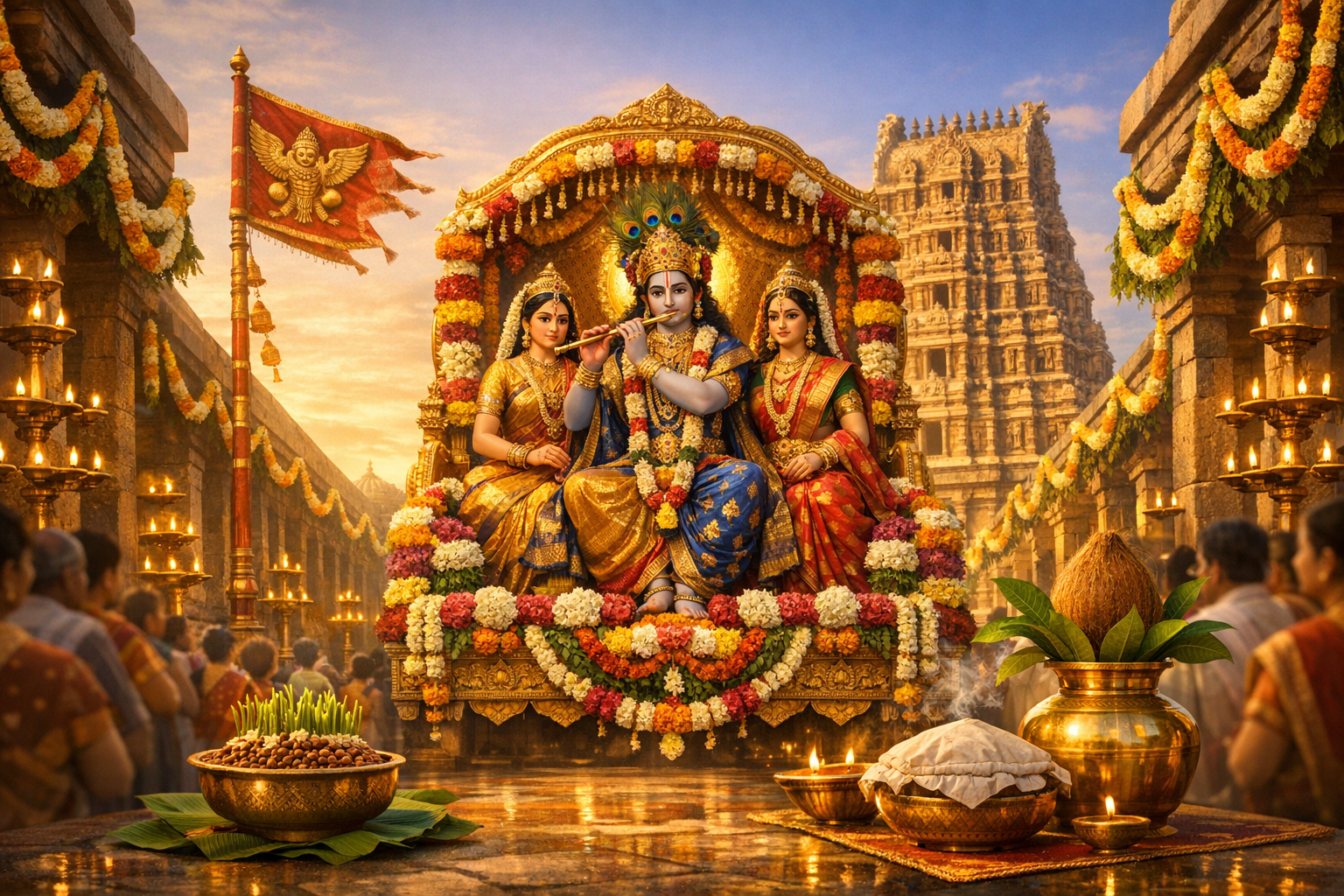
When Vishnu Left Garuda Behind: Two Bhakti Legends Where Love Outran the Vahana

This essay explores two celebrated Vaishnava narrativesGajendra Moksha and the Pandharpur Vithoba–Pundalik traditionto show how bhakti can “outpace” even Garuda, Vishnu’s exalted vahana. It clarifies textual foundations in the Bhagavata Purana while distinguishing poetic temple lore that stresses the immediacy of compassion. It explains why the idiom that Vishnu “left Garuda behind” functions as a…
-
Bhakti Beyond Ritual: Renunciation and Absorption in the Gopalapurvatapani Upanishad

The Gopalapurvatapani Upanishad defines bhakti with striking precision as two inseparable movements: renunciation of both this world and the next, and unwavering absorption in the Supreme Self. This account goes beyond ritual and emotion, aligning devotion with the Upanishadic quest for liberation while integrating knowledge, meditation, and ethical clarity. By rejecting reward-seekingworldly or heavenlyit grounds…
-
6-Hour Kirtan in London: Commemorating 60 Years of ISKCON with Soul-Stirring Sankirtan (21 June 2026)

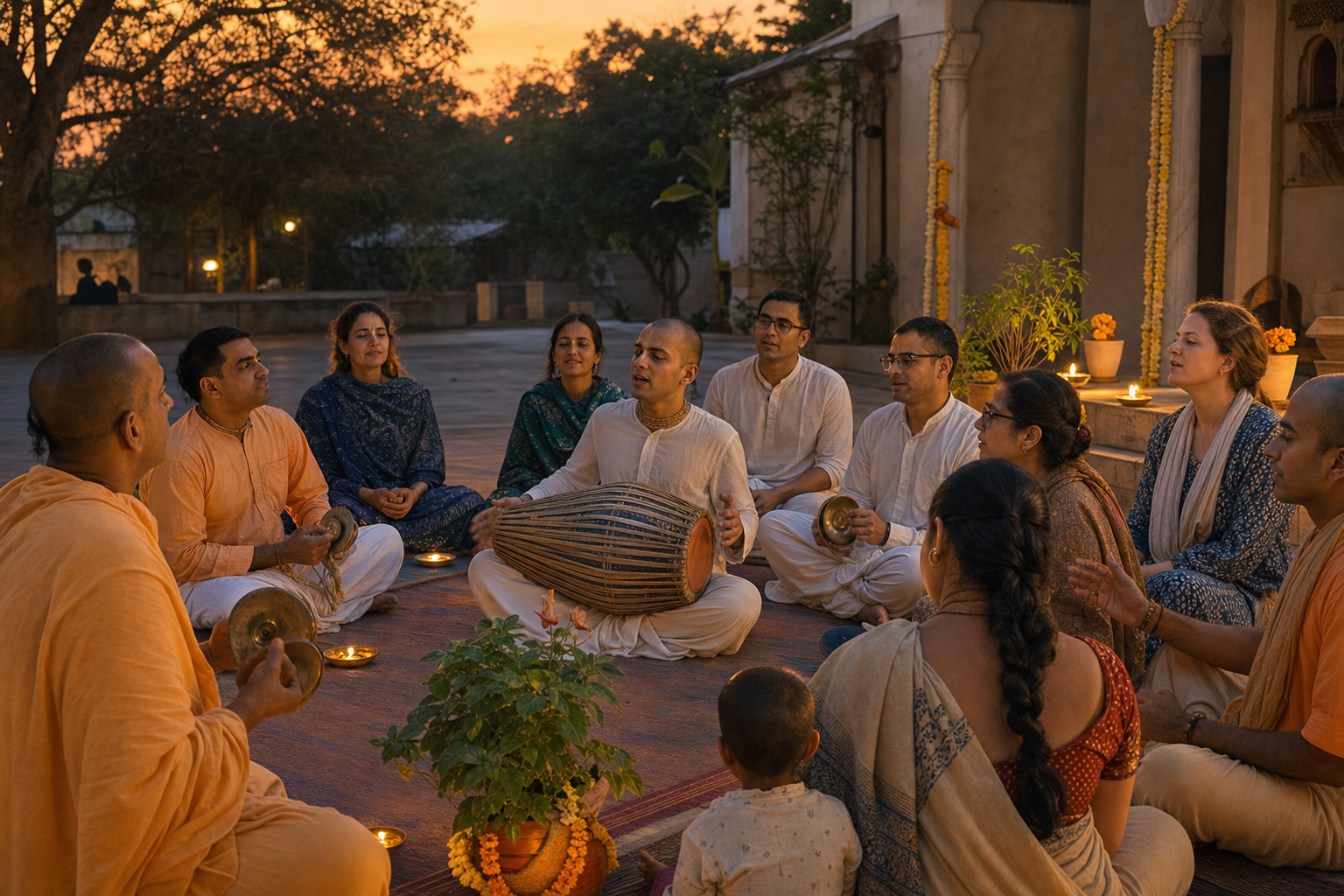
On Sunday, 21 June 2026, ISKCON London Radha-Krishna Temple hosts a 6-Hour Kirtan to commemorate 60 years of ISKCON (1966–2026). The event aligns with International Yoga Day, underscoring the shared aims of yoga and kirtan: inner clarity, compassion, and collective well-being. Rooted in Gaudiya Vaishnavism and praised in the Bhagavata Purana, sankirtana leverages the maha-mantra…
-
Hari Kirtana for the Modern Age: A Scientific and Transformative Guide to Bhakti-Yoga

Hari Kirtanacongregational chanting of the divine names of Hariunites the aims of yoga, jñāna, and meditation into a single, accessible practice grounded in Dharmic unity. Scriptural anchors from the Bhagavad Gita and the Srimad Bhagavatham align with modern research on sound, breath, and attention, showing how mantra-synchronized breathing can calm the nervous system and deepen…
-
1,000+ Newly Curated Gurbani Tracks on SikhNet Play: Deep Listening, Rich Metadata, Seamless Search

SikhNet Play has expanded its archive with more than 1,000 newly curated Gurbani tracks, significantly enriching access to Shabad Kirtan for Nitnem, research, and reflective listening. The collection spans core raags and taals, highlights diverse raagi jathas, and preserves traditional performance practice with harmonium, tabla, and jori. Enhanced metadata pairs Gurmukhi text with transliteration and…
-
Devotion as Calling and Choice: A Transformative Cross-Dharmic Framework for Daily Sadhana

This article reframes devotion as both a calling and a deliberate, daily choice, drawing on the Bhagavad Gita, Yoga philosophy, and the living disciplines of Buddhism, Jainism, and Sikhism. It explains how steady abhyasa, supported by nairantarya abhyase, transforms fleeting inspiration into reliable sadhana. Readers gain a practical framework that integrates aspiration, repetition, and accountability,…
-
Srila Prabhupada on Sleep: Timeless Humility, Disciplined Rest, and the Sacred Economy of Time

Srila Prabhupada’s two candid remarks on sleepone affirming a short post-lunch nap due to age, the other lamenting time lost when going to bedreveal a rigorous, compassionate ethic of rest. The article situates these reflections within the Bhagavad Gita’s moderation, Ayurveda’s nuanced view of divasvapna, and contemporary sleep science on restorative napping. It shows how…
-
From Skepticism to Insight: Srila Prabhupada’s 1971 Mumbai Pandal and Real Knowledge

A 1971 public pandal in central Mumbaifeaturing Srila Prabhupada and the Hare Krishna movementdemonstrated how real knowledge is identified not by rhetoric but by lineage, clarity, and ethical fruit. The event’s pedagogical elementskirtana, lucid exposition, and open dialoguereflected Sanatana Dharma’s emphasis on hearing, inquiry, and practice. Read through a dharmic epistemology of pramāṇa (pratyakṣa, anumāna,…
-
Beyond the Battlefield: KarunamayiWhy the Mother Goddess Is the Ocean of Compassion

Hindu tradition venerates the Mother Goddess as Karunamayishe who is suffused with compassionrevealing that even fierce forms like Durga and Kali arise from a deeper commitment to heal, nourish, and restore dharma. This long-form exploration clarifies the name’s Sanskrit roots and traces its scriptural foundations across the Devi Sukta, the Devi Upanishad, and the Devi…