Category: Temples

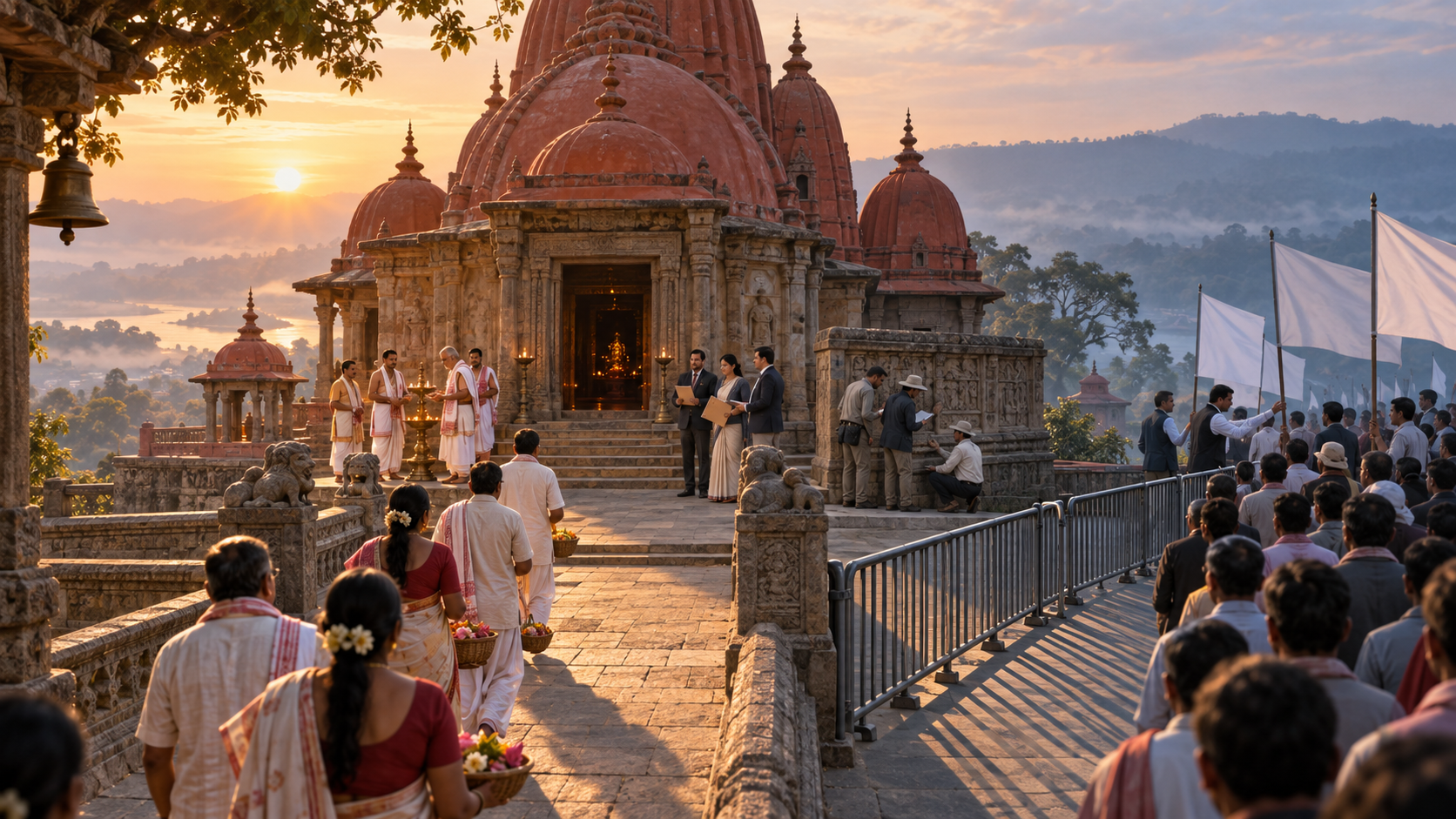
  • Bhojshala at a crossroads: Saraswati idol reportedly installed; entry rules tighten after court

    Bhojshala at a crossroads: Saraswati idol reportedly installed; entry rules tighten after court

    Reports from Dhar, Madhya Pradesh suggest that a consecrated idol of Mata Saraswati has been installed at Bhojshala with daily worship commencing, and that entry protocols have tightened following a court directive. This analysis explains the legal frameworks (Articles 25–26, AMASR Act, and the Places of Worship Act) that shape permissible action. It outlines how…

  • Revealing the Sacred Beauty of Imperfection: Why Authentic Hindu Bronzes Aren’t Flawless

    Revealing the Sacred Beauty of Imperfection: Why Authentic Hindu Bronzes Aren’t Flawless

    Authentic Hindu bronze sculptures are often misjudged by a modern expectation of machine-like perfection. This essay explains, in academic yet accessible terms, how lost-wax casting and panchaloha metallurgy naturally produce subtle surface variations that signal authenticity. It decodes sprue scars, chasing marks, porosity pinholes, and asymmetry as the normal fingerprints of traditional workmanship rather than…

  • Dama in Hindu Iconography: Unveiling the Sacred Neck Chain of Restraint, Grace, and Power

    Dama in Hindu Iconography: Unveiling the Sacred Neck Chain of Restraint, Grace, and Power

    This article decodes the dama—the sacred neck chain—in Hindu iconography as a short, structured collar that balances longer necklaces while signaling restraint, protection, and grace. It clearly distinguishes dama/graiveyaka from kanthika (choker), muktavali (pearl strings), and hara (long necklace) using the taxonomy preserved in Shilpa Shastras. Readers learn how major treatises (Vishnudharmottara Purana, Shilparatna, Manasara,…

  • Yamuna Pushkaralu 2026: Definitive Pilgrim’s Guide to Sacred Ghats, Temples, and Cities

    Yamuna Pushkaralu 2026: Definitive Pilgrim’s Guide to Sacred Ghats, Temples, and Cities

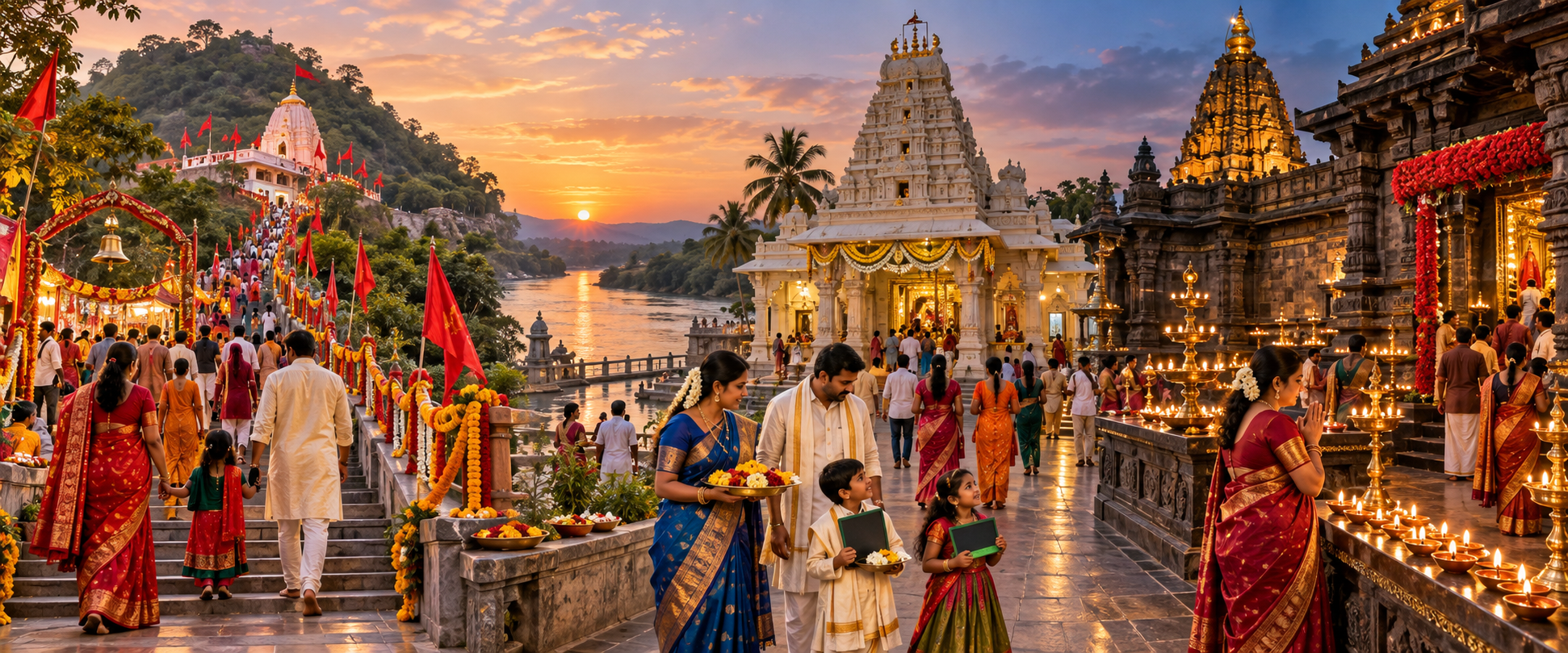
    Yamuna Pushkaralu 2026 aligns with Jupiter’s transit through Mithuna (Gemini), culminating in an especially auspicious Antya Pushkaram window in late May–early June 2026. This guide traces the river from its Himalayan source at Yamunotri to the Triveni Sangam at Prayagraj, detailing prominent ghats and temples across Uttarakhand, Himachal–Haryana, Delhi, Braj (Mathura–Vrindavan–Gokul), Agra–Bateshwar, Etawah–Pachnada, Kalpi, Hamirpur,…

  • Oppiliappan Temple’s Sacred Vow: Vishnu’s Marriage to Bhumi Devi and the Saltless Offering

    Oppiliappan Temple’s Sacred Vow: Vishnu’s Marriage to Bhumi Devi and the Saltless Offering

    Oppiliappan Temple at Thiruvinnagar near Kumbakonam enshrines Vishnu’s sacred marriage to Bhumi Devi and preserves a distinctive liturgical vow: all offerings are prepared without salt. This long-form study situates the temple among the 108 Divya Desams, explains the Markandeya-based sthala-purāṇa, and interprets the saltless naivedyam as a pedagogy of grace, humility, and ecological restraint. It…

  • May 2026 ISKCON TV Diary: Sridhama Mayapur’s Sacred Pulse, Gaura Purnima, and TOVP’s Promise

    May 2026 ISKCON TV Diary: Sridhama Mayapur’s Sacred Pulse, Gaura Purnima, and TOVP’s Promise

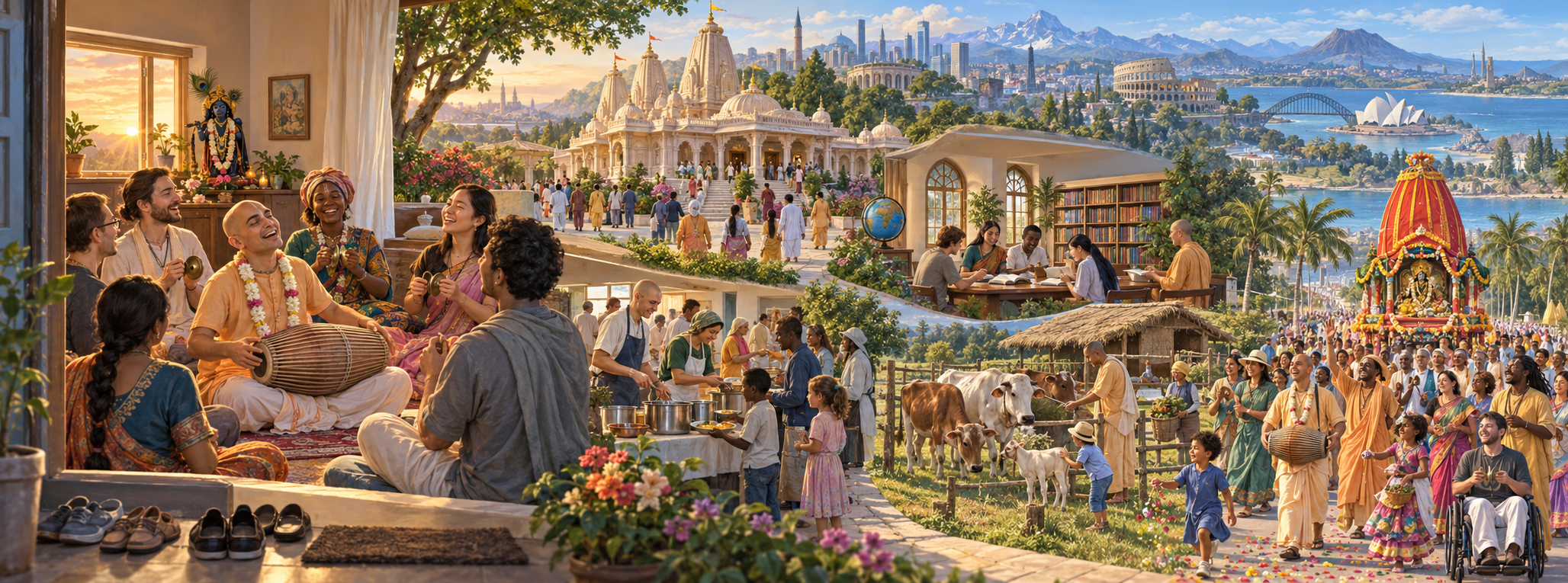
    The May 2026 ISKCON TV English Video Diary presents a clear, documentary-style portrait of Sridhama Mayapur and the global Hare Krishna Movement. It highlights Gaura Purnima celebrations, congregational kirtans, yajnas, pilgrimages, and temple festivals, offering an accessible primer on bhakti-yoga in practice. Viewers gain context on the Temple of the Vedic Planetarium and its educational…

  • Antariya Unveiled: The Sacred Lower Garment Shaping Hindu Sculpture and Symbolism

    Antariya Unveiled: The Sacred Lower Garment Shaping Hindu Sculpture and Symbolism

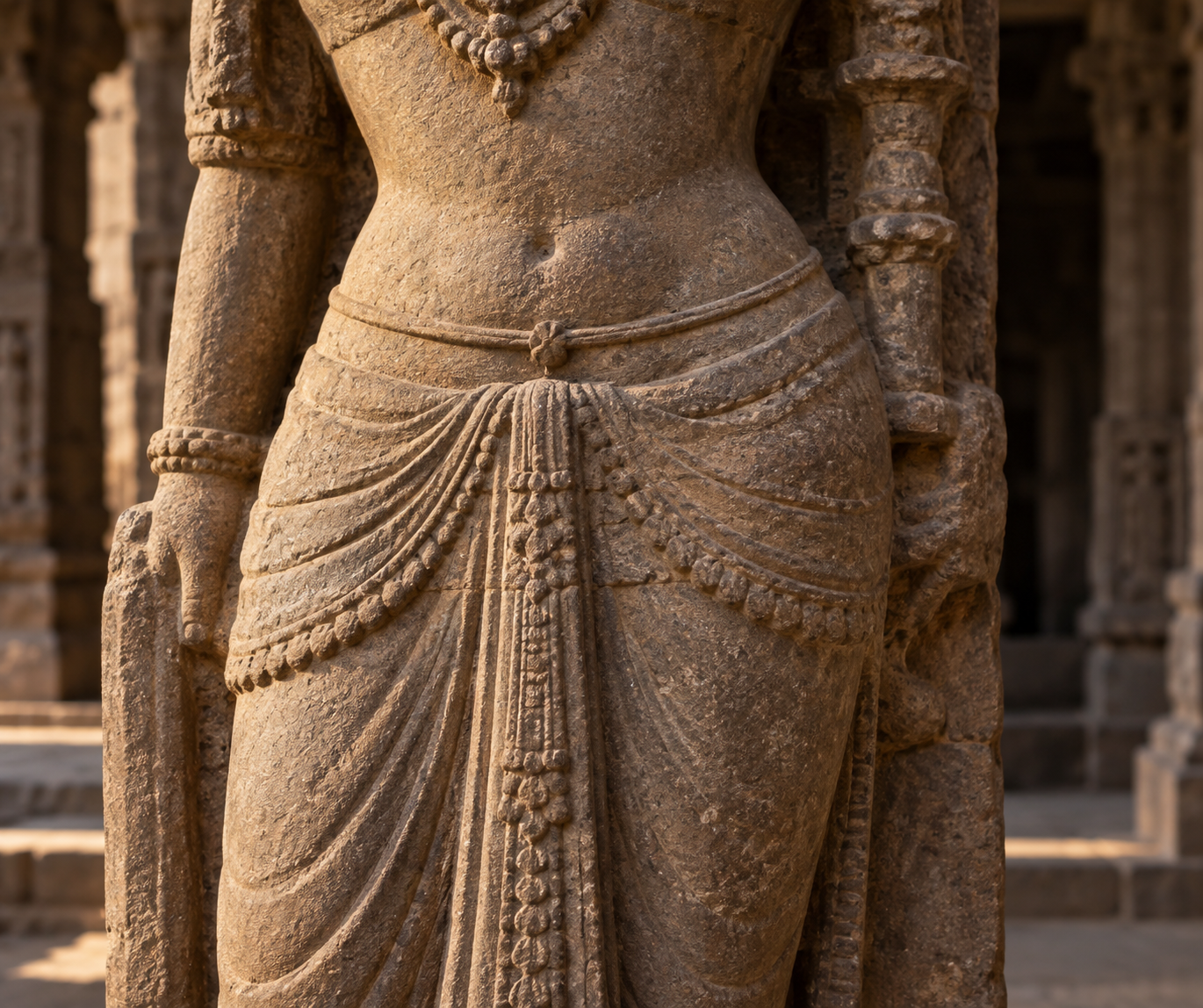
    Antariya—the unstitched lower garment secured by a mekhala—is the foundational drape of Hindu sculpture and iconography, predating later dhoti forms. This long-form guide explains how to identify antariya in stone and bronze through pleat geometry, knots, and belt types, and how these features assist in dating and attributing works from Bharhut and Sanchi to Gupta…

  • Seated Andal at Thiru Anbil: Chola Bronze Mastery, Iconography, and Living Devotion

    Seated Andal at Thiru Anbil: Chola Bronze Mastery, Iconography, and Living Devotion

    The seated Andal at Thiru Anbil’s Sundararaja Perumal Temple is a rare Chola-era bronze that redefines Andal’s familiar standing iconography through a contemplative enthroned posture. This long-form study situates the image within Sri Vaishnava theology, Shilpa Shastra canons, and lost-wax panchaloha craftsmanship. Readers gain a framework to decode attributes such as the Andal Kondai, gesture,…

  • Historic MP High Court Verdict Affirms Bhojshala as Saraswati Temple: Devotees Pray Peacefully

    Historic MP High Court Verdict Affirms Bhojshala as Saraswati Temple: Devotees Pray Peacefully

    A day after the Madhya Pradesh High Court affirmed Bhojshala as the Mata Saraswati temple, Hindu devotees in Dhar offered prayers peacefully under a robust security plan. The verdict clarifies the site’s religious character while embedding worship within heritage protection norms and public-order protocols. Historical and archaeological evidence—documented by the Archaeological Survey of India—underpins the…

  • Sura Linga Revealed: Celestial Shivalingas of the Devas, Cosmic Order, Ritual Science, Protection

    Sura Linga Revealed: Celestial Shivalingas of the Devas, Cosmic Order, Ritual Science, Protection

    Sura Lingas—Shivalingas believed to be installed by Devas—embody a sophisticated synthesis of metaphysics, temple architecture, and ritual science in Hinduism. This long-form guide explains how Sura Lingas anchor cosmic order (ṛta) and provide a protective axis for communities, drawing on Puranic, Agamic, and śilpa-śāstra perspectives. Readers gain clarity on consecration (prāṇa-pratiṣṭhā), canonical Linga morphology, vastu-aligned…

  • MP High Court Recognizes Dhar’s Bhojshala as a Hindu Temple: Evidence, Law, and Legacy

    MP High Court Recognizes Dhar’s Bhojshala as a Hindu Temple: Evidence, Law, and Legacy

    The Madhya Pradesh High Court has recognized Dhar’s Bhojshala complex as a Hindu temple, grounding its decision in corroborated archaeological, epigraphic, and archival evidence. The ruling operates within India’s constitutional guarantees under Articles 25 and 26 and aligns with heritage conservation duties under the AMASR framework. Readers will gain a clear view of how courts…

  • Mandir Mahasangh’s Statewide Drive Challenges Maharashtra Devasthan Inam Abolition Draft 2026

    Mandir Mahasangh’s Statewide Drive Challenges Maharashtra Devasthan Inam Abolition Draft 2026

    Mandir Mahasangh has launched a statewide memorandum campaign opposing the Maharashtra Devasthan Inam Abolition Draft Act 2026, bringing temple autonomy and dharmic heritage to the forefront of policy debate. This analysis explains what Devasthan inams are, why abolition frameworks can affect core religious and charitable functions, and how Articles 25 and 26 shape constitutional limits…

  • Divine Fury, Compassionate Shelter: Nakhayudha—Sacred Claws of Narasimha in Hindu Iconography

    Divine Fury, Compassionate Shelter: Nakhayudha—Sacred Claws of Narasimha in Hindu Iconography

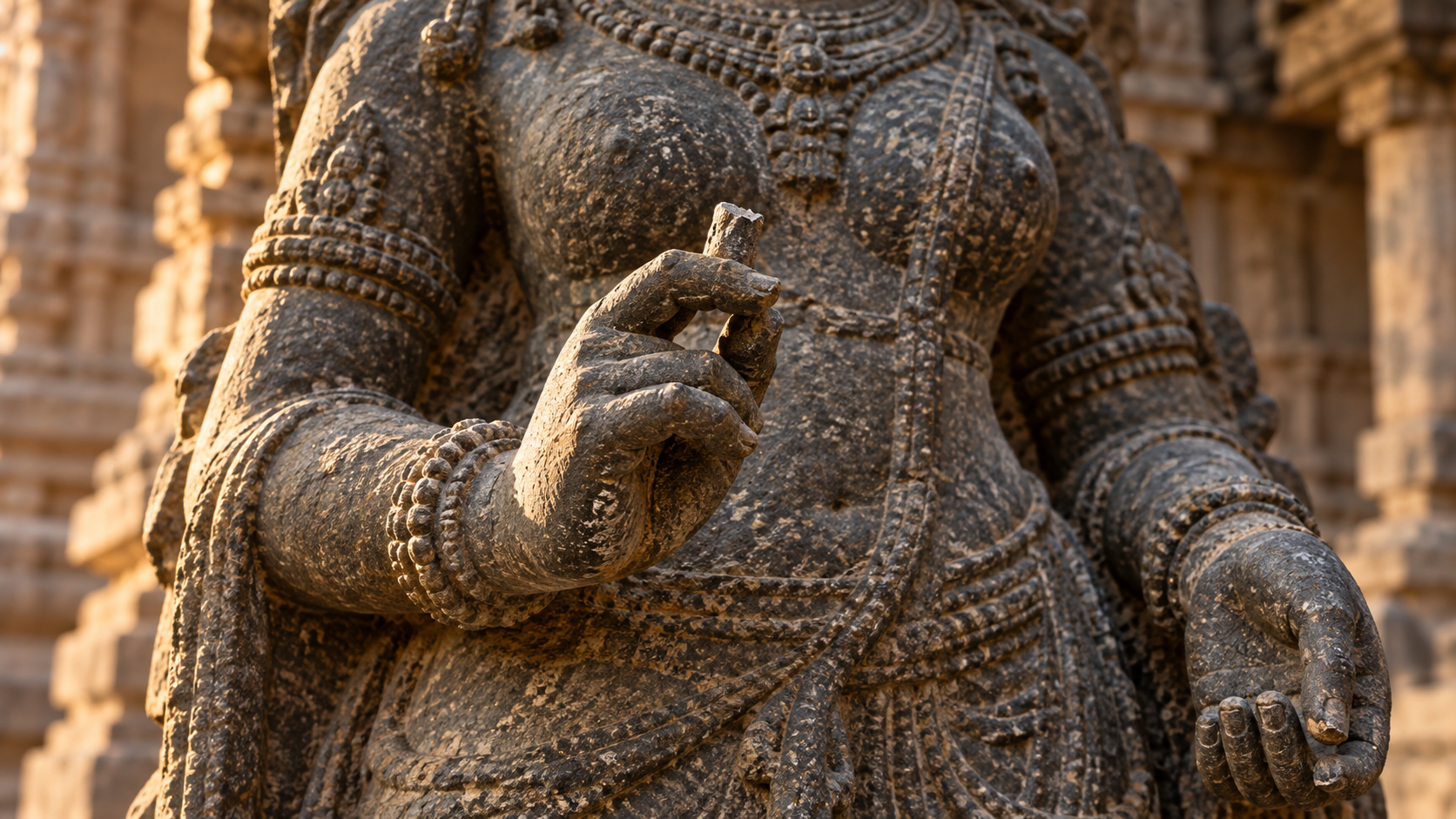
    Nakhayudha—the sacred claws of Narasimha—embodies a unique class of natural, non-forged weaponry in Hindu iconography, expressing spontaneous divine protection without reliance on manufactured arms. This long-form exploration clarifies the mythic logic behind Hiranyakashipu’s boon and shows how Narasimha’s claws resolve each clause through liminality. It decodes the visual grammar defined by Shilpa Shastra and Vaishnava…

  • Why Red Rules Hindu Temples: Shakti, Auspiciousness, Ritual Power, and Color Science

    Why Red Rules Hindu Temples: Shakti, Auspiciousness, Ritual Power, and Color Science

    Red in Hindu temples is far more than ornament; it is the visual pulse of Shakti, auspiciousness, and energized devotion. This article explains how scriptures, Agamic traditions, and Shakta Tantras align red with rajas and protective grace, while temple practices translate meaning into materials such as kumkum, sindoor, and red flowers. It examines the role…

  • MP High Court Declares Bhojshala a Hindu Temple: Landmark Ruling, Ayodhya Principles, ASI Proof

    MP High Court Declares Bhojshala a Hindu Temple: Landmark Ruling, Ayodhya Principles, ASI Proof

    The Madhya Pradesh High Court has declared the disputed precinct within the Bhojshala complex a Hindu temple, expressly invoking the Supreme Court’s Ayodhya principles. This long-form analysis explains what the ruling means in constitutional and heritage law, how courts distinguish historical “religious character” from mere possession, and why archaeology and epigraphy matter. It unpacks the…

  • Thanjai Mamani Koil: Unraveling Thanjavur’s Sacred Triple Divya Desam and Living Heritage

    Thanjai Mamani Koil: Unraveling Thanjavur’s Sacred Triple Divya Desam and Living Heritage

    Thanjai Mamani Koil in Thanjavur is a rare triadic Divya Desam where three adjacent Vishnu sanctums share a single sacred precinct. Celebrated in the Naalayira Divya Prabandham, the complex embodies a living synthesis of theology, architecture, and ritual practice in the Kaveri delta. The three deities—Neelamegha Perumal, Manikundra Perumal, and Veera Narasimha Perumal—offer complementary experiences…

  • Jwarahareshwara Shiva: Rare Three-Headed Healer Guarding Humanity from Disease and Fear

    Jwarahareshwara Shiva: Rare Three-Headed Healer Guarding Humanity from Disease and Fear

    Jwarahareshwara Shiva is a rare and powerful healing manifestation of Lord Shiva, envisioned with three heads, three legs, and six arms to symbolize balance, fearlessness, and compassionate protection. The form integrates Vedic portrayals of Rudra as the supreme healer with Puranic narratives that dramatize the pacification of disease and dread. Its triadic symbolism aligns closely…

  • Thirukozhi Nachiyar Koil, Uraiyur: Azhagiya Manavala Perumal’s Sacred Wedding to Kamalavalli

    Thirukozhi Nachiyar Koil, Uraiyur: Azhagiya Manavala Perumal’s Sacred Wedding to Kamalavalli

    Thirukozhi (Uraiyur) Nachiyar Koil in Tiruchirappalli honors the divine marriage of Azhagiya Manavala Perumal (Vishnu) and Kamalavalli Nachiyar (Lakshmi), making it a preeminent kalyana-sthalam among Tamil Nadu’s Divya Desams. The temple’s Dravida architecture, ritual precedence for Nachiyar, and festival calendar—especially Panguni Uthiram—express a living theology of compassion and auspicious union. Alvar hymns from the Nalayira…

  • Maharashtra’s Devasthan Land Draft: Legal, Economic, and Cultural Risks for Temples

    Maharashtra’s Devasthan Land Draft: Legal, Economic, and Cultural Risks for Temples

    Maharashtra’s draft policy to transfer Devasthan lands to occupants and tenants raises constitutional, economic, and cultural red flags. Under Articles 26 and 300A, religious endowments enjoy property protections that demand a compelling public purpose and non-illusory compensation, while the Bombay Public Trusts Act requires Charity Commissioner oversight of alienations. Economically, endowment lands are the perpetual…

  • Srirangam’s Divine Design: How Lord Ranganatha Chose Kaveri as His Eternal Abode

    Srirangam’s Divine Design: How Lord Ranganatha Chose Kaveri as His Eternal Abode

    Sri Ranganathaswamy Temple at Srirangam is celebrated as Bhooloka Vaikuntham, where architecture, theology, and ritual converge around Lord Ranganatha’s divine choice to reside by the Kaveri. Drawing on Skanda Purana’s Sriranga Mahatmyam, temple chronicles, and Alvar hymns, this comprehensive account explains how the murti traveled from Vaikuntha to Ayodhya and, through Vibhishana, found a permanent…