
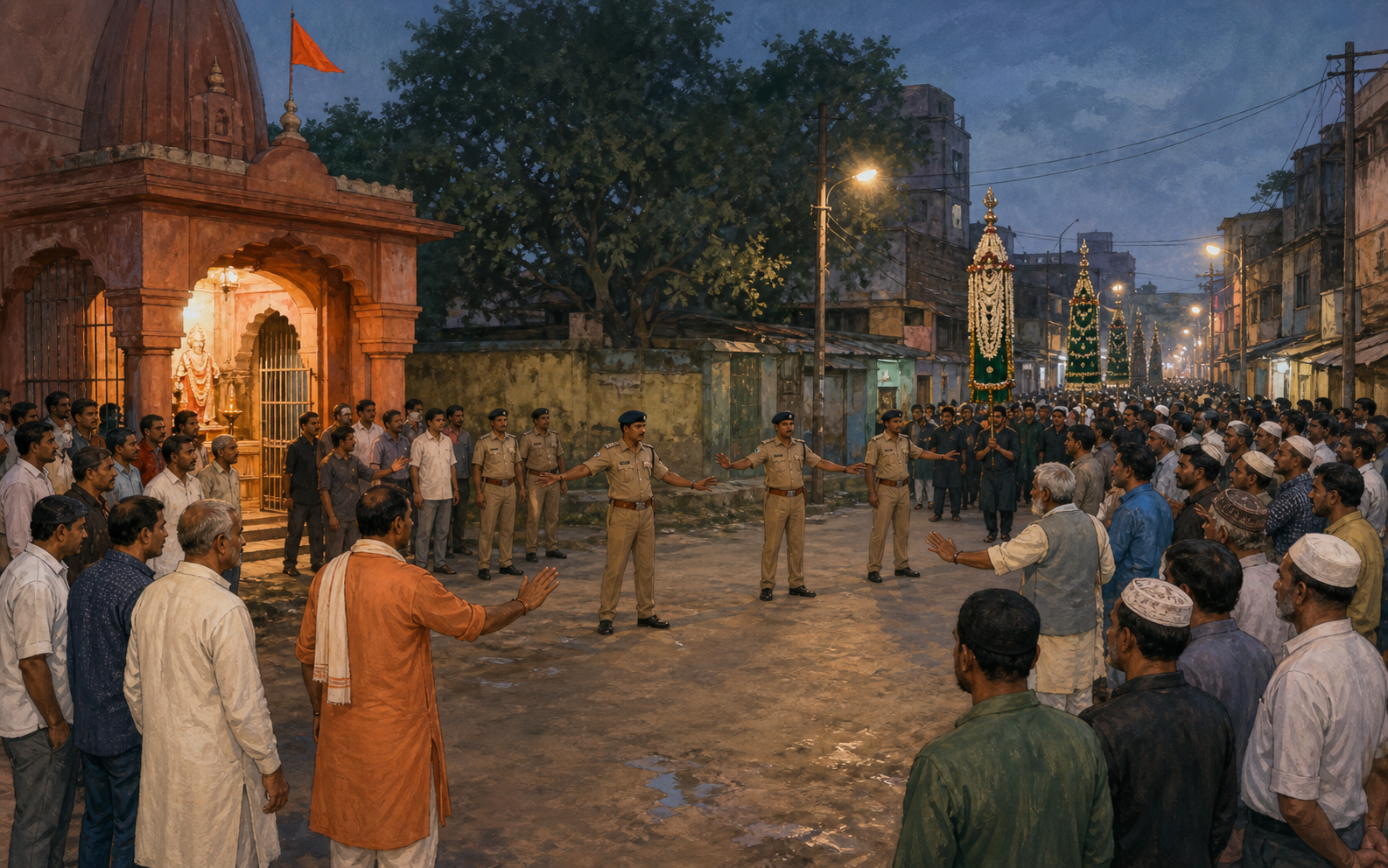
If you have just encountered claims about the Berhampore confrontation, the useful question is not which side’s slogan to repeat. It is what you can honestly say, what still needs verification, and how Hindu communities can defend worship without feeding a wider communal confrontation.
A confrontation outside the Hanuman temple in Berhampore during a Muharram Challisha procession ended after police intervention, with 28 detentions. The accusation that individuals tried to disrupt a Hanuman Chalisa recital and provoke communal violence remains an allegation, not an established finding.
That distinction is not a concession. It is how you protect the credibility of a genuine anti-Hindu intimidation complaint. A strong response defends the freedom to recite the Hanuman Chalisa, preserves evidence, demands neutral policing, and refuses to convert unverified motive into collective guilt.
Key takeaways
- Police intervened in the Berhampore confrontation, calm was restored, and 28 detentions followed.
- An attempt to disrupt the Hanuman Chalisa recital and incite communal violence has been alleged; the motive and precise sequence have not been independently established here.
- A detention records police action. It does not establish guilt, prove a conspiracy, or show that every detained person played the same role.
- When you share the incident, separate the confrontation itself from the allegation about intent and from the facts that remain unknown.
- Devotees and temple organisers should prioritise safe exits, a designated police liaison, unedited evidence, precise witness notes, and a clear rule against retaliation.
Separate the incident, the allegation and the gaps
The first discipline is to place each claim in the right category. This prevents a real concern from being weakened by details that cannot yet be proved.
- The incident: A Hanuman Chalisa recital and a Muharram Challisha procession were connected to a confrontation outside the Berhampore Hanuman temple. Police intervened, calm returned, and 28 detentions followed.
- The allegation: Individuals are accused of trying to interrupt the recital and create communal violence. That is a serious accusation, but seriousness does not remove the need for corroboration.
- The unresolved questions: The precise sequence, the conduct of each person, the basis and later status of the detentions, and any eventual legal findings have not been established here.
Bharat Raksha Manch activists have been credited with thwarting the alleged attempt. Treat that as a claimed role pending corroboration, not as permission to infer what every activist or procession participant did.
The number 28 must also be handled carefully. Detention is not the same as conviction, and it does not necessarily mean that all 28 people were accused of identical conduct. Do not silently replace “detained” with “arrested,” “charged,” or “guilty.” Each word makes a different claim.
Evidence that would materially clarify the event includes continuous video from before the confrontation, CCTV footage where it exists, first-hand statements with a time and viewing position, route or coordination records, and a police clarification about the reason and status of the detentions. Until such material is available, certainty about who initiated or planned what goes beyond the verified facts.
Share the claim without turning allegation into verdict
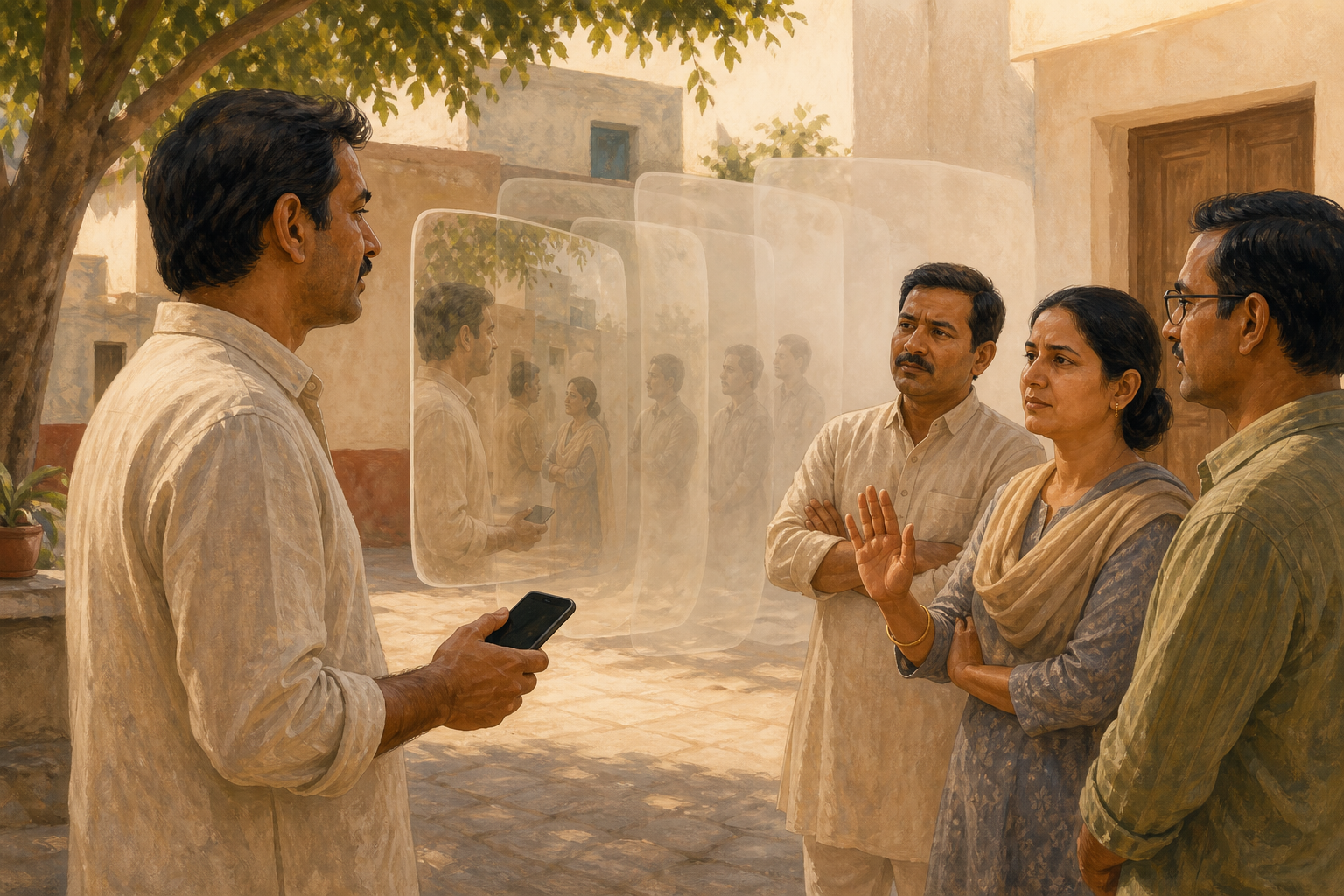
Every repost either preserves the distinction between fact and allegation or erases it. If you want people to take anti-Hindu intimidation seriously, use language that can survive scrutiny.
- Name the location and event precisely. Say Berhampore Hanuman temple, Hanuman Chalisa recital, and Muharram Challisha procession. Do not broaden one local confrontation into a claim about every temple or every Muharram observance.
- Keep verbs accurate. Use “confrontation” and “detentions” unless reliable evidence supports stronger terms. Do not add “riot,” “attack,” “planned assault,” or “arrests” merely because those words attract attention.
- Attribute intention as an allegation. You may say that an attempt to disrupt the recital and provoke communal violence has been alleged. Do not state that intention as a proven fact.
- Identify conduct, not communities. If evidence shows an individual blocking access, issuing a threat, or initiating violence, describe that person’s conduct. Do not assign it to all procession participants.
- Protect uninvolved people. Do not publish phone numbers, home addresses, or identifying images of minors. Avoid displaying a bystander’s face as though presence alone proves participation.
- Correct with the same visibility. If a name, detention status, sequence, or allegation changes, amend the original post rather than placing a quiet correction where few readers will see it.
A responsible short update would read: Police intervened after a confrontation outside the Hanuman temple in Berhampore, and 28 detentions followed. An attempt to disrupt a Hanuman Chalisa recital and incite communal violence has been alleged. The identity, sequence and legal outcome still require verification.
This wording does not minimise the allegation. It tells the reader exactly which part requires investigation and prevents an opponent from dismissing the entire concern because one unsupported detail was presented as fact.
Protect worship and preserve evidence without escalation
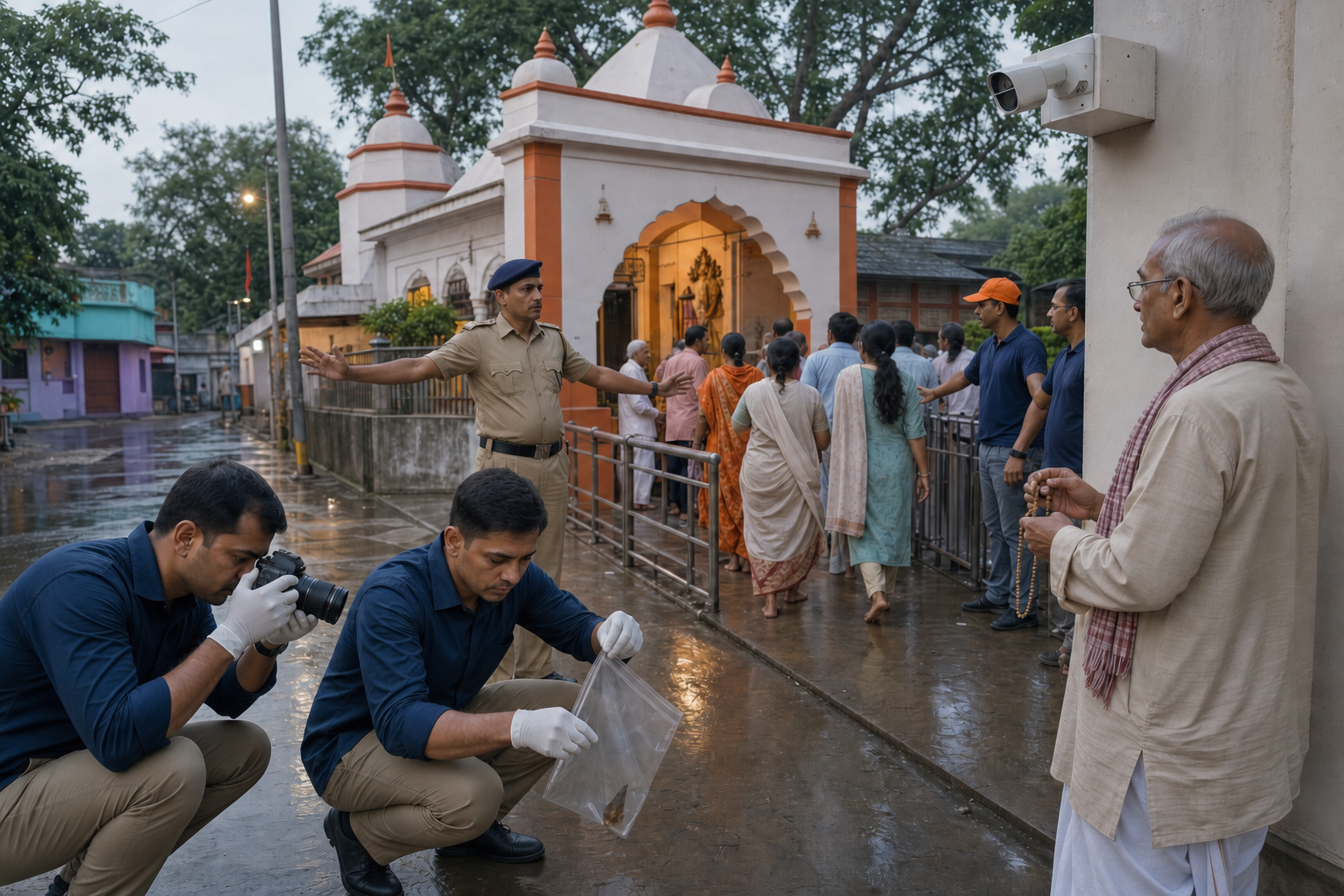
At a tense religious gathering, safety and evidence preservation are the same job only up to a point. Recording is useful; moving toward danger to obtain a dramatic angle is not. No image is worth creating another casualty or confrontation.
If you are present during a confrontation
- Create distance first. Move children, elders and anyone with limited mobility toward a known exit. Do not pursue people who are withdrawing, and do not form a crowd around a detained person.
- Give police observable facts. State the exact landmark, where the crowd is moving, whether an entrance is blocked, and any injury you can actually see. Do not present a guessed motive as an emergency fact.
- Record only from a safe and lawful position. When possible, capture continuous context rather than a few seconds after tempers have risen. Keep the original file with its date and metadata; make a copy before cropping, annotating or forwarding it.
- Write a witness note promptly. Record where you stood, what you personally saw, the order of events, and the words you directly heard. Put second-hand information in a separate section labelled as such.
- Preserve injury records. Anyone physically harmed should obtain appropriate medical care. Photographs and medical documents should be retained privately for counsel or investigators, not turned into uncontrolled social-media material.
- Verify detentions through responsible channels. A family member or organiser should confirm the person’s location and status through police contact or legal counsel. Group-chat speculation is not a substitute for confirmation.
Before the next temple gathering
- Appoint one police liaison and one backup. Give them the programme timing, expected entrances, exit routes and the phone numbers of responsible organisers.
- Ask for route and timing coordination in writing when another large procession may pass the temple. Keep a dated copy of any directions received.
- Brief volunteers on narrow roles: guide devotees, keep access lanes open, call for help, and record instructions. Volunteers should not chase, threaten, surround or physically punish anyone.
- Choose an evidence custodian who will collect original files without repeatedly compressing or editing them. Maintain a simple log showing who supplied each file and when.
- Position responsible adults near children, elders and congested entrances. Decide the safe assembly point before the programme begins, not after movement becomes difficult.
- After the gathering, produce a factual chronology while memories are fresh. Separate confirmed actions, witness claims and unresolved points before issuing a public statement.
Preparation does not mean surrendering a temple’s religious practice. It means ensuring that a peaceful recital cannot easily be converted into chaos, selective clips, or conflicting stories.
A dharmic standard for public accountability
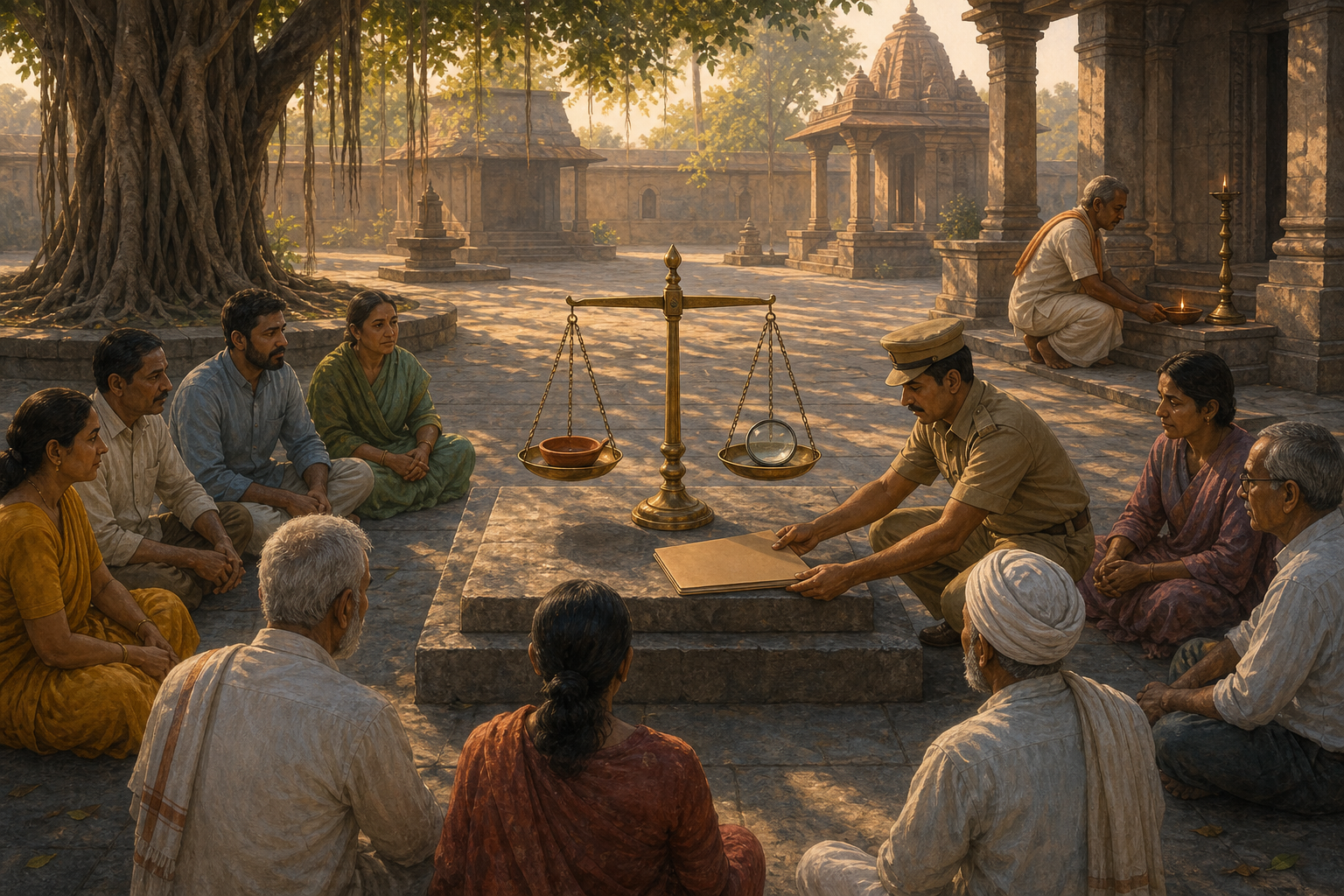
A pro-Hindu response should be firm about the dignity and safety of worship. It should also be governed by satya and ahimsa. Ahimsa does not require devotees to accept intimidation, and satya does not require silence about a credible threat. They require a proportionate response aimed at conduct and evidence rather than communal retaliation.
Public accountability in Berhampore should therefore focus on specific, answerable demands:
- A clear police chronology of the confrontation and intervention.
- Clarification of the basis and current status of the 28 detentions.
- Preservation and review of relevant footage, including temple or nearby CCTV if it exists.
- Protection arrangements for future temple recitals and for the safe passage of religious processions.
- Evidence-based action against identified individuals, without assigning guilt to an entire religious community.
- A visible correction if any widely circulated name, image or allegation proves inaccurate.
Collective blame is not only adharmic; it makes accountability harder. It allows an identifiable act to disappear into accusations against whole communities, exposes uninvolved people to retaliation, and gives authorities an excuse to treat the matter as competing propaganda rather than conduct that can be investigated.
Before you share the Berhampore claim, use the three-sentence formulation above. Before your next local gathering, assign the liaison, exits, volunteer roles and evidence custodian. Defend the Hanuman Chalisa without diluting the truth: disciplined documentation is more durable than outrage, and it gives actual wrongdoing fewer places to hide.
References
