
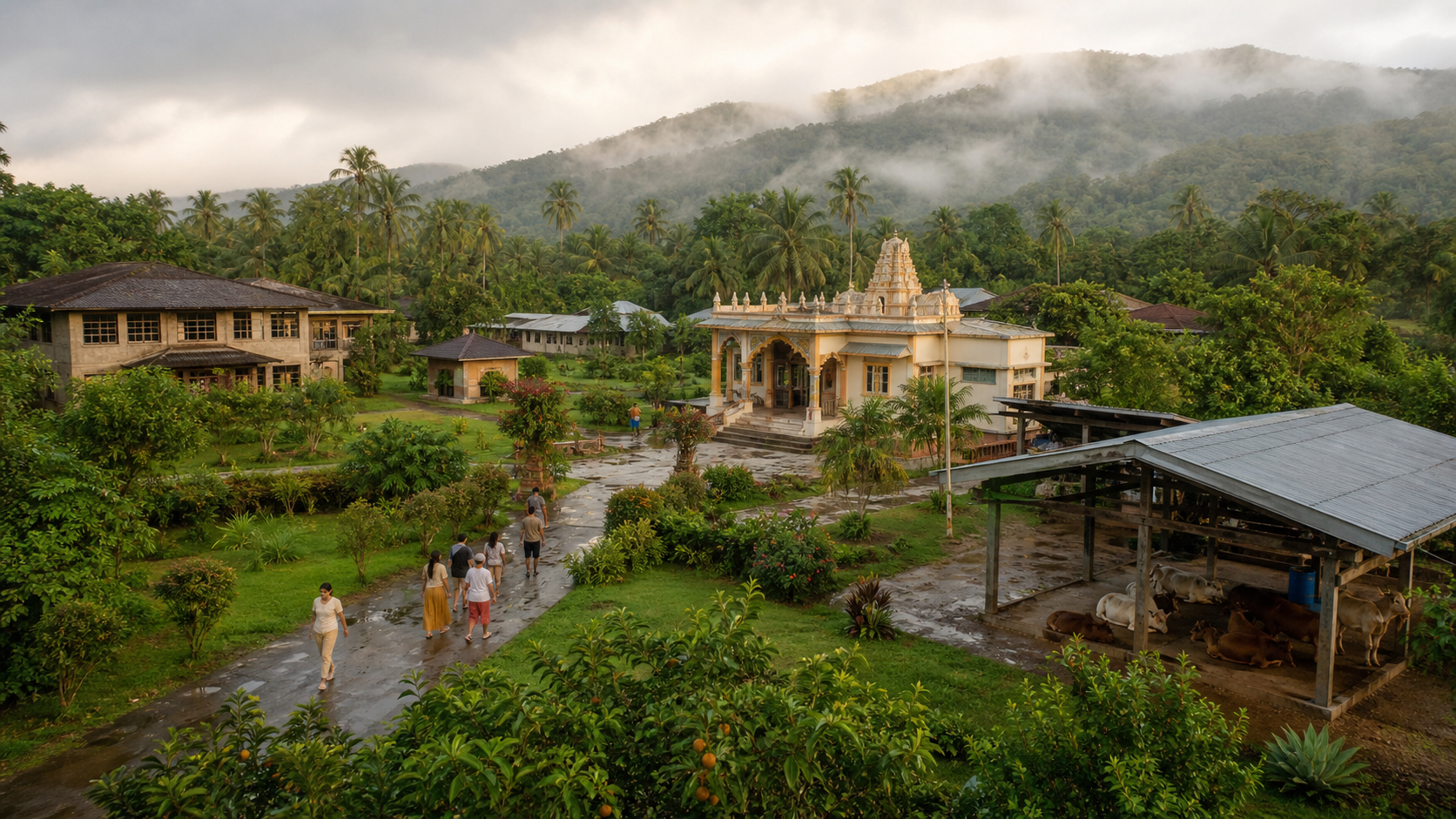
If you are deciding whether Vraja Eco Village deserves a separate trip while you are near Manila, look beyond the scenery. The reason to go is the way the place is assembled. Located in Laguna, outside Manila, the centre brings together a temple and deities, landscaped gardens, guest houses, a goshala, ashramas, conference halls, a school and a reception building.
That combination offers something a stand-alone shrine cannot: a chance to examine how worship might sit alongside cow protection, education, residence, hospitality and care for the land. Facilities, however, are not the same as guaranteed visitor access. Plan around what is known, then confirm the current arrangements before setting out.
Why this is more than a temple stop
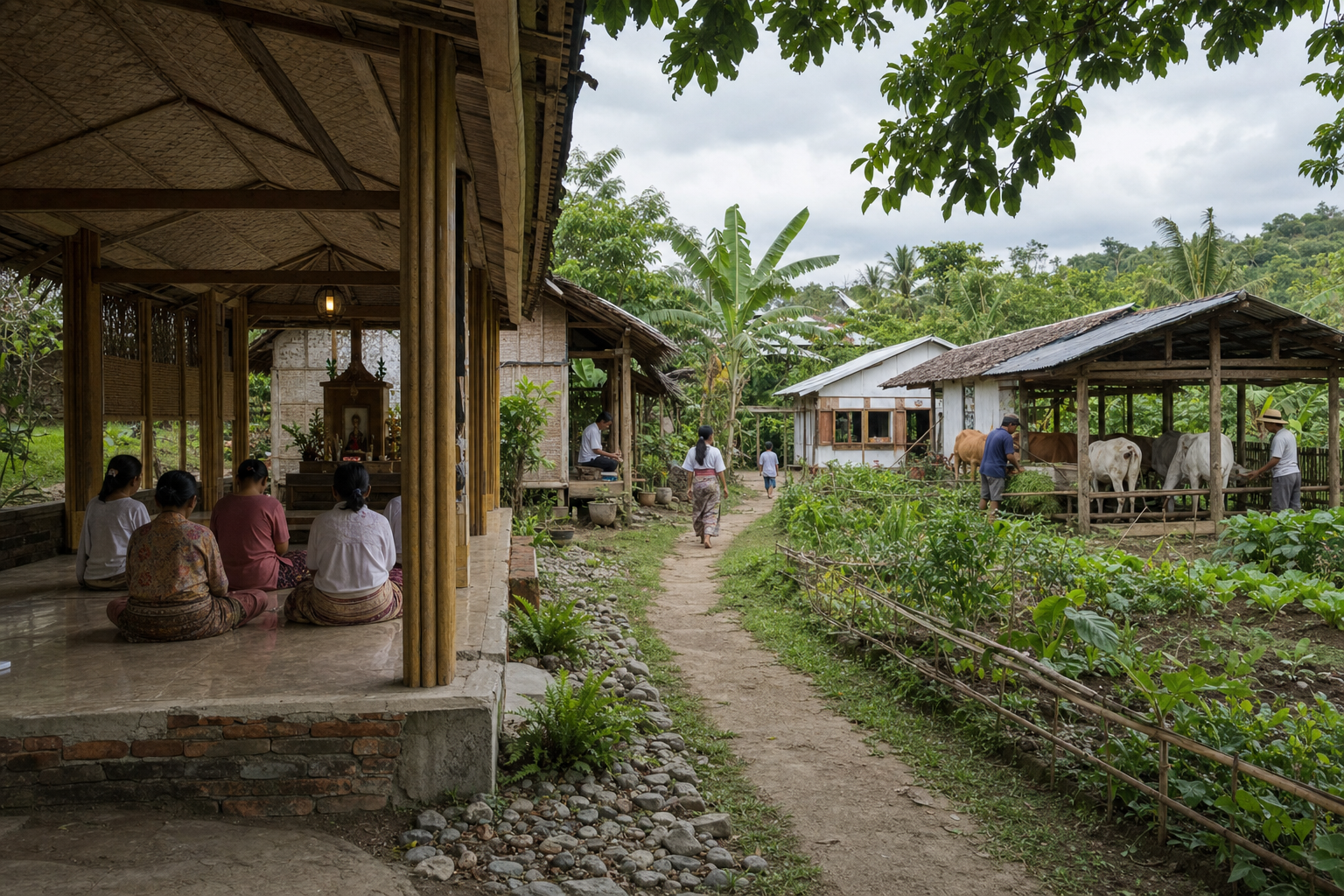
Vraja is the sacred pastoral homeland associated with Sri Krishna. Its memory is carried through relationships: Krishna and the cows, the cowherd community, family life, worship and the natural world. When a community in the Philippines adopts that name, it sets itself a demanding aspiration. Reproducing Vraja cannot mean copying the geography of Bharat. It must mean cultivating a devotional way of living.
The campus layout gives you a practical way to evaluate that aspiration. A temple provides the devotional focus. A goshala places responsibility for cows within the community’s physical world. A school and conference halls create room for learning. Ashramas and guest houses acknowledge that spiritual culture is formed through sustained residence and hospitality, not only through occasional attendance.
This is an interpretation of the centre’s arrangement, not proof that every facility operates every day or that every visitor may enter it. When you arrive, notice how the parts actually relate:
- Does the worship schedule shape the rhythm of the wider campus, or is the temple largely separate from everything around it?
- Is cow care connected with education and community service, or is the goshala treated only as something to view?
- Are the gardens ornamental, used for worship, involved in food production or serving several purposes? Ask rather than assume.
- Do the school and gathering spaces teach visitors how devotional principles become daily responsibilities?
- Does the reception process help newcomers understand etiquette, movement through the grounds and the purpose of each area?
These questions help you see whether you are visiting a collection of attractive amenities or a community whose parts reinforce one another. They also reveal something larger about Bharat’s influence abroad. Dharmic culture travels most convincingly when practices, duties and relationships travel with its sacred names.
Confirm the visit before you leave Manila
The phrase outside Manila is useful orientation, but it is not an itinerary. It does not tell you the exact map location, journey time, road conditions or available transport. Laguna is also not precise enough for a driver or navigation app. Obtain a current map pin and arrival instructions directly from the centre before committing to the journey.
Send one concise message containing all the questions that could change your decision:
- Are day visitors currently accepted, and is advance permission required?
- What are the reception and temple hours on the date you intend to come?
- Which worship service or community program is appropriate for a first-time visitor?
- Are the guest houses available to visitors, and what booking, identification, meal or donation arrangements apply?
- May visitors enter the goshala, school, ashramas and conference areas, or are some spaces restricted?
- What rules apply to clothing, footwear, photography, offerings and bringing children?
- Is the route accessible for an elderly visitor or a person with limited mobility?
- What is the safest transport plan for arriving and leaving at the relevant hours?
Do not build a schedule around an unconfirmed guest-house stay. The presence of accommodation does not establish availability, eligibility or a public booking system. The same caution applies to meals and programs. Ask for a written confirmation that names your date and party size.
Weather deserves the same attention. During one rainy-season stay, heavy rain fell every day. One visit is not a forecast for yours, but it shows why an outdoor campus needs a wet-weather plan. Check conditions near your travel date, ask whether vehicles can reach the reception area, and find out which paths are covered or become difficult in rain. Carry rain protection, footwear with reliable grip and a dry place for your phone and travel papers. Leave some schedule margin before any fixed onward connection.
Judge the eco commitment by practices, not scenery
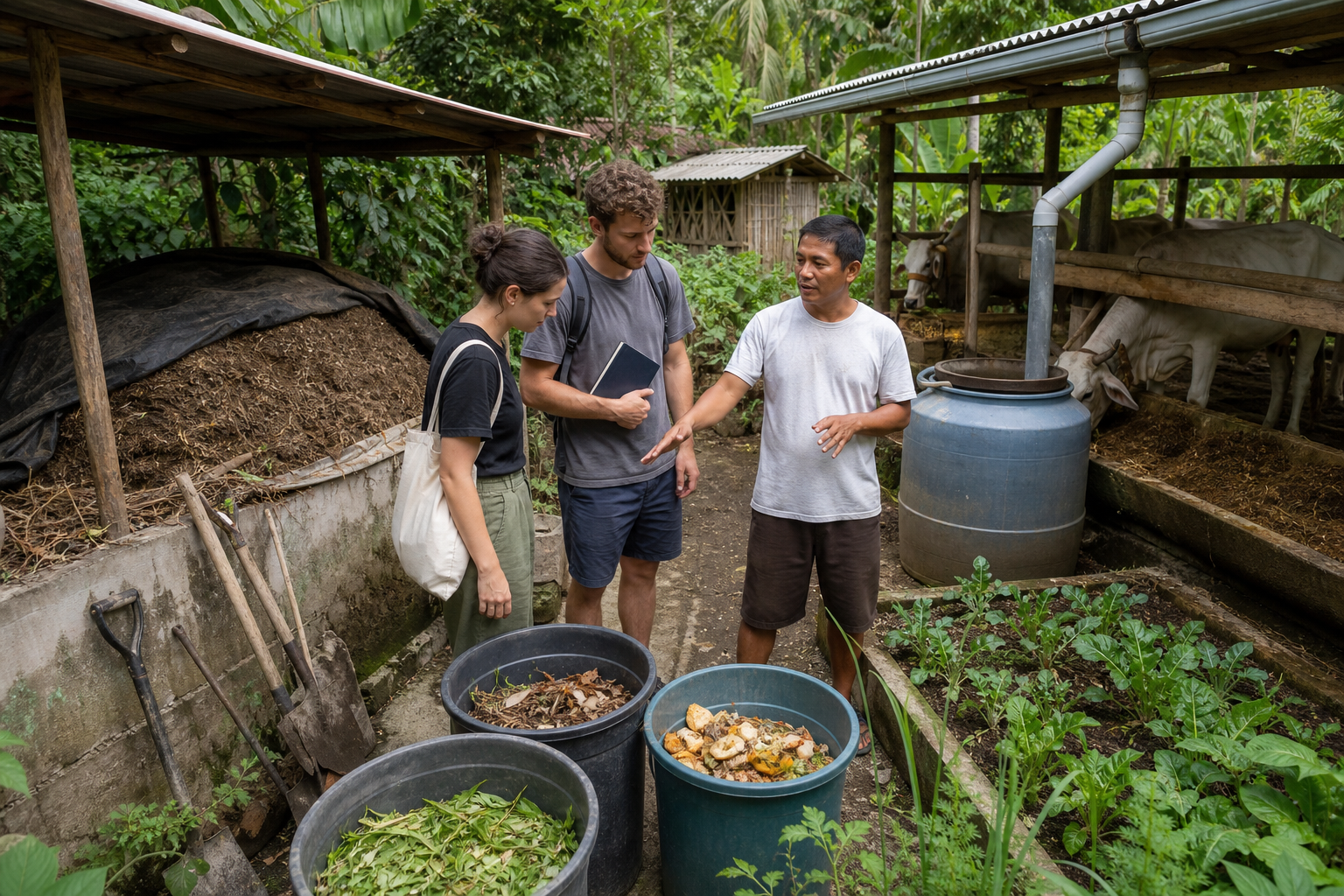
The known physical elements include gardens and a goshala. They make an ecological purpose plausible, but they do not establish how the centre manages water, energy, food, waste or animal welfare. The label eco village should begin your inquiry, not end it.
If ecological practice matters to your visit, volunteering or support, ask concrete questions:
- How is water obtained, conserved, drained and treated during both wet and dry conditions?
- Does the centre separate waste, compost organic material or reduce disposable items?
- Are any foods, flowers or ritual materials grown on the property? If so, by what methods?
- How do the gardens support worship, food production, shade, habitat or soil care?
- What energy sources are used, and what steps reduce unnecessary consumption?
- How are the cows fed, housed and cared for through illness and old age?
- How do the school and community programs turn ecological principles into regular work?
You do not need polished statistics from a small spiritual community. You do need clear examples of routine practice. A useful answer names who does the work, how often it happens and what happens when conditions become difficult. A vague statement about living naturally tells you much less.
For a Dharmic reader, this is not merely a technical audit. Ecological responsibility should express non-harm, restraint, service and gratitude. A goshala is spiritually meaningful when affection for cows becomes durable responsibility. A garden matters when beauty is joined to care for soil, water, plants and the people doing the labour. Appreciate what is visible, but reserve judgment about systems you have not verified.
Make your visit an inquiry rather than a photo stop
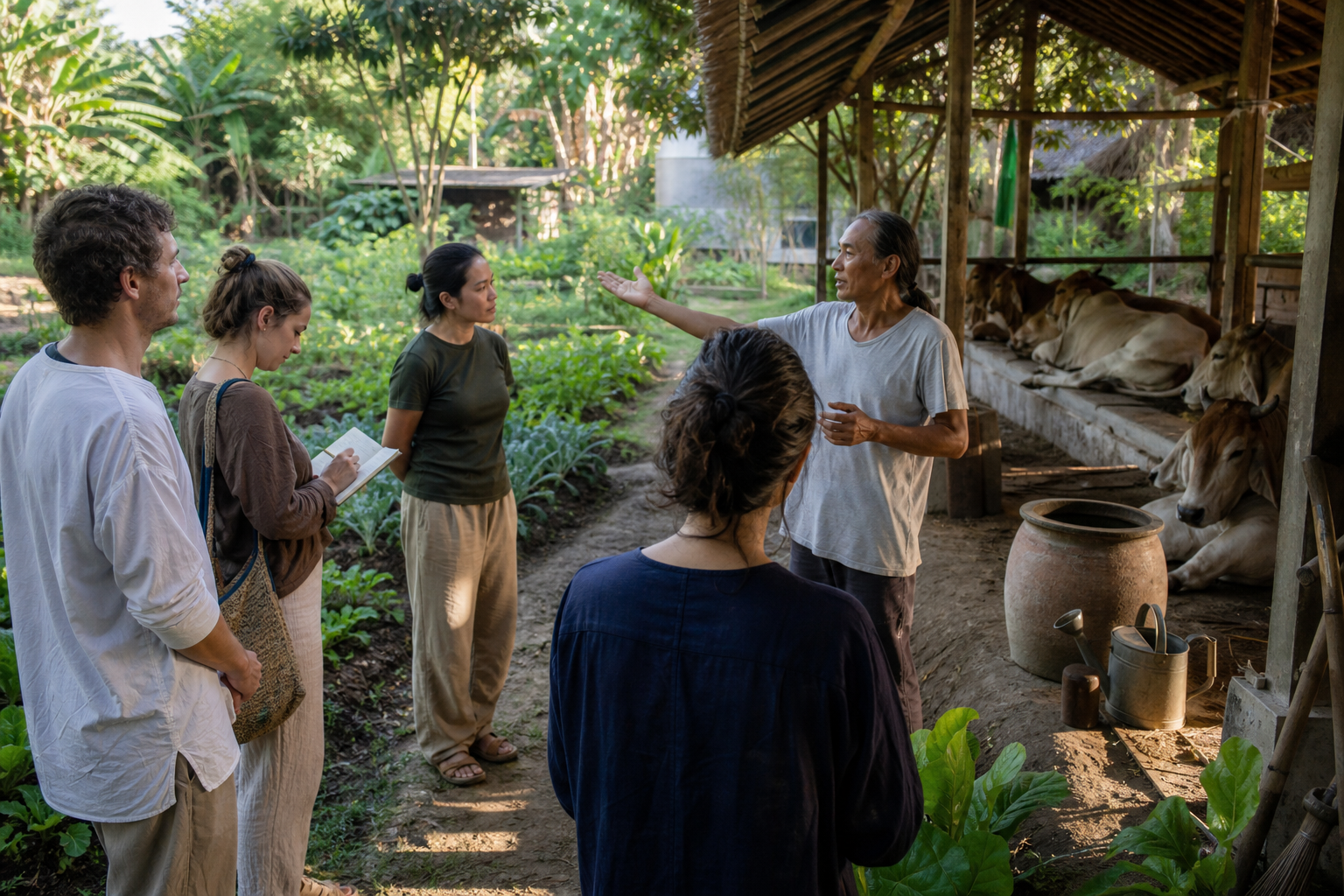
A multi-part campus can become a rushed tour unless you arrive with a purpose. Choose one thread that matters to you, then follow it across the visit. Cow care, devotional education, temple-centred community life, hospitality and ecological practice are all possible threads.
- Choose one question before going. For example: How does the goshala participate in spiritual education? One good question produces a more useful visit than a long list of photographs.
- Begin at reception. Ask for the correct visitor route, the day’s permitted activities and any etiquette that is not obvious. Do not wander into residential or school spaces without permission.
- Place worship first. If visitors may attend a temple service, let that establish the centre’s devotional context before examining the other facilities.
- Follow one connection. After worship, explore one related area with permission. Ask how it contributes to the community rather than merely what the building is called.
- Ask about recurring work. Daily and weekly duties reveal more than special events. Find out who cares for the cows, maintains the gardens, teaches or receives guests, and whether visitors can assist appropriately.
- Verify any support channel. If you want to volunteer, stay or donate, request the centre’s current authorized process. Do not send money using unverified details copied from a repost or an old message.
This approach is especially valuable if you hope to learn from the project for another temple or community. Buildings can be copied quickly. The harder knowledge lies in schedules, responsibilities, training, maintenance and the relationship between spiritual ideals and repetitive work. Ask about those things.
Key takeaways
- Vraja Eco Village is presented as a wider devotional campus, not only a temple.
- Its temple, goshala, gardens, educational spaces, residences and hospitality facilities give you a framework for observing integrated Dharmic community life.
- The existence of a facility does not guarantee public access, accommodation or a program on your chosen date.
- Obtain a current map pin, visitor permission, schedule and transport guidance before travelling from Manila.
- Prepare for rain when conditions warrant it, and ask about covered access through the grounds.
- Evaluate the eco commitment through specific operating practices rather than the name or appearance alone.
Your next step is simple: contact the centre with your intended date, party size and the practical questions above. Once the route, access and program are confirmed, choose the one aspect of Vraja’s community life you most want to understand. That will turn the journey from sightseeing into a purposeful Dharmic visit.
References
