
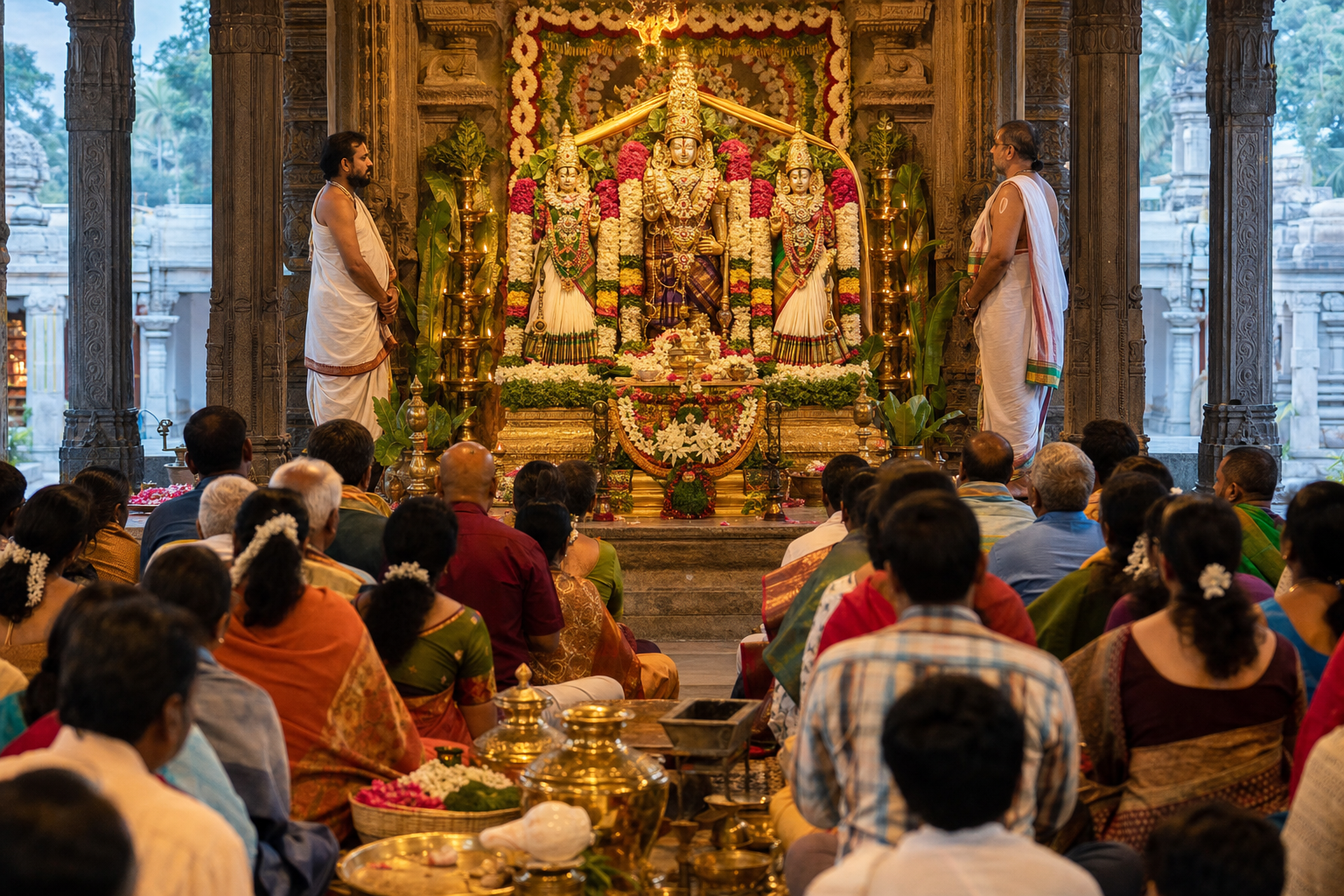
If your mandir has announced Patotsav and you are unsure whether it is a temple birthday, a second installation, or simply a larger-than-usual festival, hold on to one distinction: Patotsav returns the community to the vow of consecration without repeating the original consecration in full.
You do not need specialist knowledge to participate meaningfully. Once you understand the movement from purification to sankalpa, abhisheka, homa, alankara, darshan, and prasada, the day stops looking like a collection of elaborate ceremonies. It becomes a disciplined renewal of the relationship among the deity, the mandir, and the community that serves there.
What Patotsav renews, and what it does not repeat
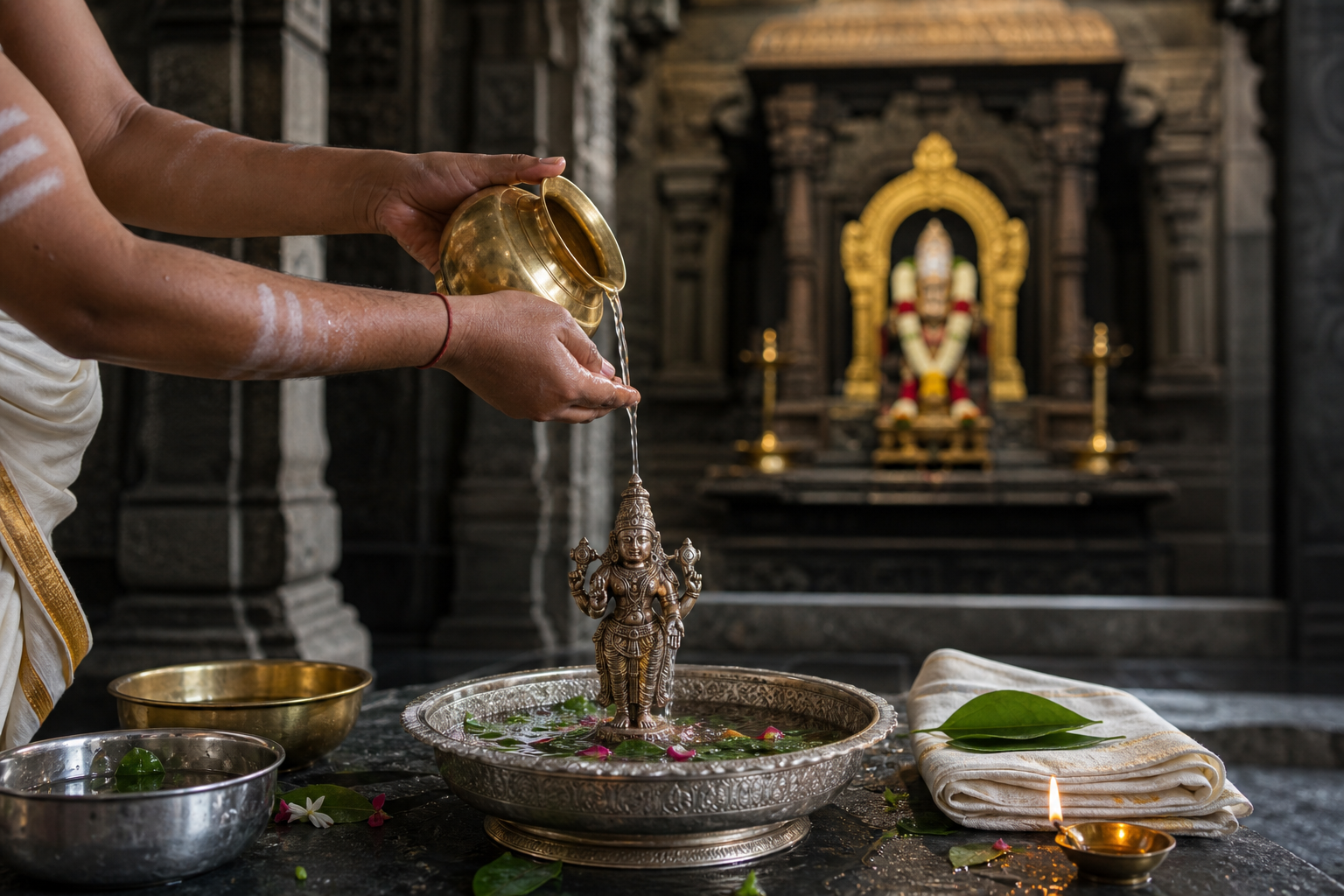
Patotsav, also written Patotsava, is observed on the lunar anniversary of a mandir’s original Prana Pratishtha. Prana Pratishtha is the foundational act through which divine presence is ritually invited into the murti. Patotsav is a periodic punar-adhivasa, or re-sanctification, that reaffirms and refreshes that consecrated sacred field.
The familiar phrase annual re-consecration can therefore mislead if it is heard as a complete restart. Patotsav does not imply that the first Prana Pratishtha failed or that divine presence has an expiry date. It renews the community’s attention to the conditions of temple life: purity of place, accuracy of mantra, continuity of seva, and the devotional disposition in which worship is offered.
This distinction also prevents Patotsav from being confused with other temple observances:
| Observance | Typical occasion | Primary purpose |
|---|---|---|
| Patotsav | Annual tithi of the original Prana Pratishtha | Reaffirm and renew the mandir’s consecrated life |
| Pavitrotsav | A purification festival, commonly associated with Shravan in many Vaishnava traditions | Address ritual purification within its own prescribed festival cycle |
| Kumbhabhishekam or Samprokshana | After substantial renovation or at a lineage-prescribed multi-year interval | Conduct a large-scale re-consecration of the temple |
If a notice uses more than one of these terms, do not assume that they are interchangeable. Ask the mandir which rite is actually being performed and which sampradaya’s procedure governs it.
Read the ritual as a sequence, not as a spectacle
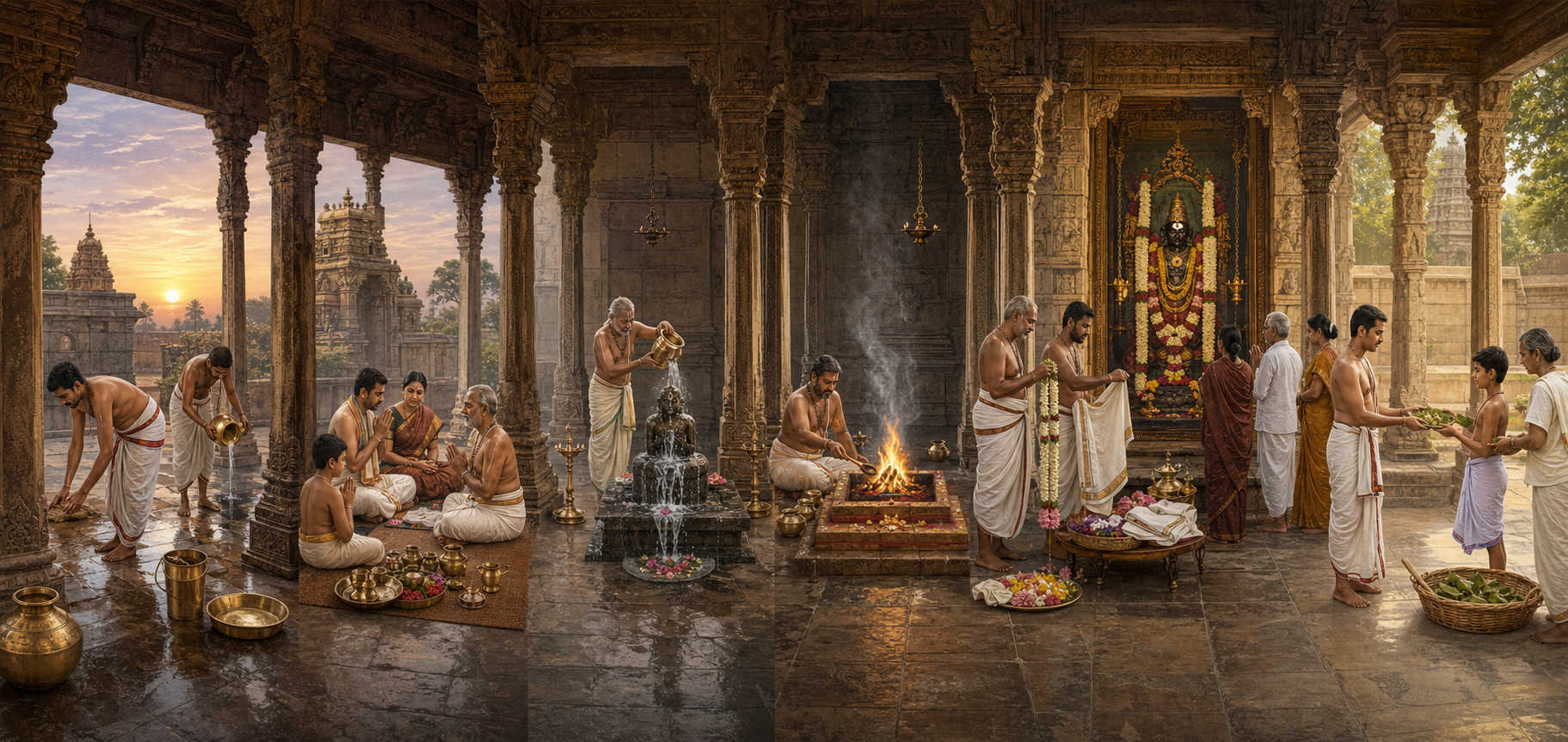
The most visible moment may be a many-vessel abhisheka or richly ornamented darshan, but Patotsav begins before either appears. Preparation can begin several days in advance, and each later rite depends on what came before it.
- The mandir is prepared. Alaya-shuddhi includes careful cleansing of the garbhagriha and surrounding precincts. Metalwork is polished, textiles are refreshed, and entrances may be marked with toran and rangoli. This is not merely event decoration. It makes the physical temple ready for renewed ritual attention.
- Sankalpa establishes the purpose. The formal observance commonly opens with achamana and sankalpa. The sankalpa identifies what is being undertaken and connects the worship to the mandir’s original consecration. Punyahavachana then sanctifies water through Vedic recitation.
- Sacred waters gather the larger geography of dharma. Tirtha-jala may include Ganga-jal and water representing regional rivers. The kalasha vessels are prepared with sanctified water, herbs, and grains, then completed with coconut and mango leaves. The combination joins the mandir’s local setting to a wider Indic sacred landscape.
- The ritual field is secured. Kalasha-sthapana, devata-avarana, nyasa, and protective invocations establish and guard the space in which the central worship will unfold. A large mandir may arrange a shata-kalasha abhisheka with one hundred vessels. A smaller mandir may use fewer vessels while retaining the prescribed liturgical sequence.
- Abhisheka offers essence back to the divine. Panchamrita traditionally combines milk, curd, ghee, honey, and sugar. The accompanying recitations depend on the deity and lineage. Vaishnava worship may include Purusha Sukta, Narayana Sukta, Sri Sukta, Vishnu-sahasranama, or lineage mantras. Shaiva observance may centre Mahanyasa-purvaka Rudrabhisheka, Rudram, and Chamakam. The officiating tradition, not a generic festival checklist, determines the exact substances and mantras.
- Homa carries the offering through fire. Sudarshana homa may be used in a Vaishnava setting, Rudra homa in a Shaiva setting, while Navagraha or composite Agamic fire rites may also appear. Ghee and samidha are offered with mantra and svaha. The visible fire places personal and communal offerings within the larger order represented by rta.
- Alankara prepares the renewed darshan. After the ablutions, the murti is dressed and ornamented with vastra, garlands, jewellery, flowers, and lineage-specific visual forms. Shodashopachara, the sixteen-fold worship, completes the liturgical arc before maha-arati and the distribution of prasada. Annadana, fruit, sweets, rajbhog, or a special chhappan bhog may extend that worship as sacred hospitality.
Dhwaja-arohana, a shobha yatra, nagara-sankirtan, bhajan, or regional forms such as garba may carry the celebration outside the sanctum. These public elements matter because the mandir belongs to a community, but they do not replace the priest-led ritual centre. If your time is limited, consult the schedule and make room for the consecration rites and final darshan rather than treating the procession or meal as the entire Patotsav.
How to participate with attention and ritual humility
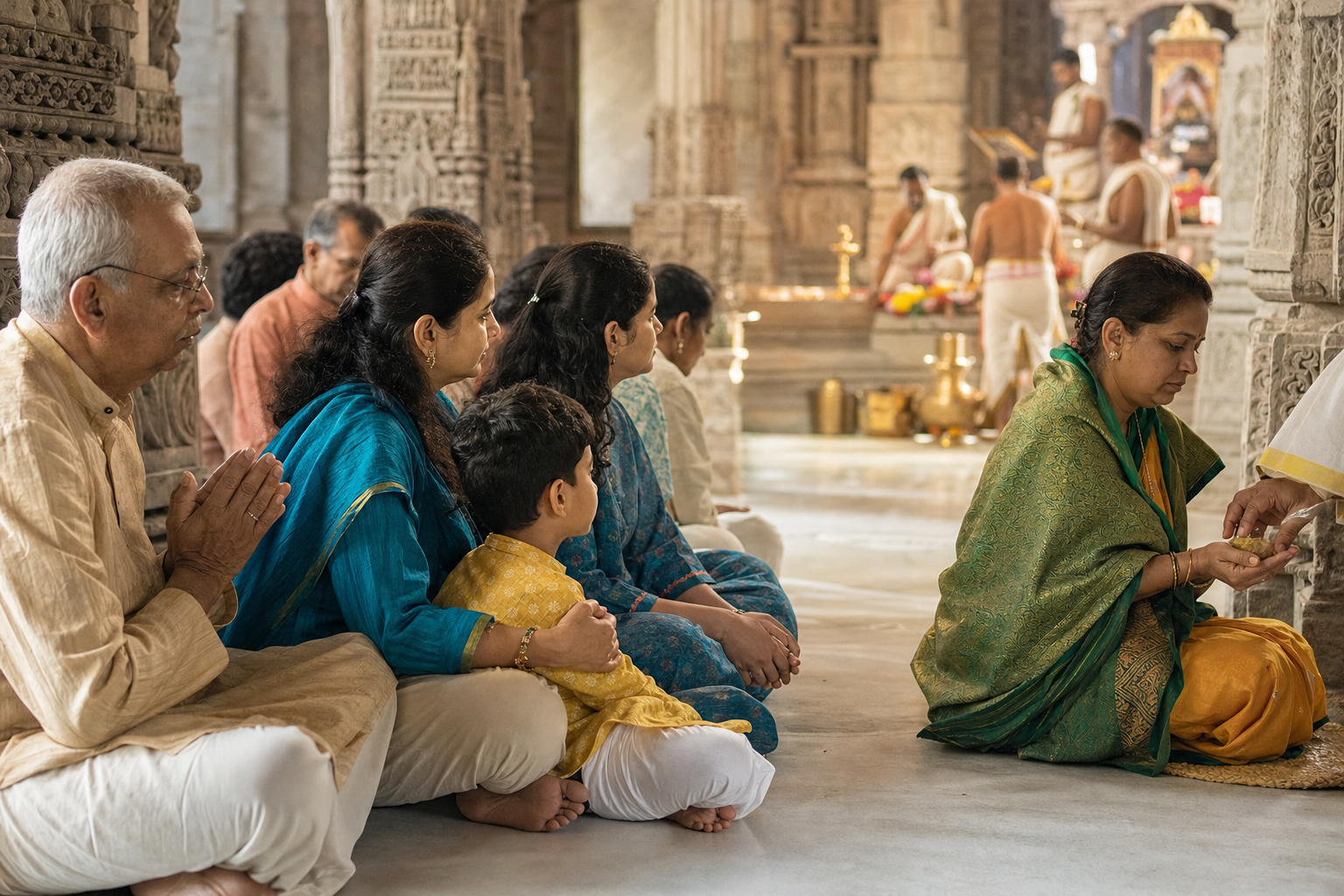
If you are attending
- Confirm the date from the current mandir announcement. Patotsav follows the original consecration tithi, not a fixed Gregorian date. Because the lunar anniversary moves across the civil calendar, last year’s date is not a safe guide.
- Notice whether the tithi and public programme fall on different days. Diaspora mandirs sometimes place the main public gathering on the nearest weekend. A sankalpa can preserve the connection to the original tithi and muhurta according to the lineage’s direction.
- Identify the sampradaya before judging the form. A Swaminarayan mandir, a Pushtimarg haveli, another Vaishnava shrine, and a Shaiva temple will not necessarily use the same recitations, alankara, homa, or public programme. Difference does not by itself mean incompleteness.
- Offer only what the mandir requests. The archakas determine which substances enter the abhisheka and which offerings belong in the homa. Bringing an unrequested item or copying a procedure from another lineage can create difficulty rather than seva.
- Take an assigned seva seriously. Cleaning, preparing toran or rangoli, arranging textiles, managing queues, supporting prasada distribution, and helping with annadana all serve the same observance. Proximity to the murti is not the measure of a contribution.
- Give children a small vocabulary before the programme. Teach them four words: sankalpa is the declared ritual intention; kalasha is the sanctified vessel; abhisheka is the ceremonial bathing; alankara is the deity’s adornment. They can then follow the day by noticing when each stage occurs.
Above all, do not measure devotion by the number of vessels, the quantity of food, or the cost of decoration. Patotsav can be expansive, but a smaller observance is not spiritually lesser merely because it lacks a hundred kalashas or a chhappan bhog. Scale follows resources and custom; ritual integrity depends on prescribed sequence, authorized leadership, and purity of intention.
If you are helping organize
A temple committee can improve access and coordination, but it should not improvise the liturgy. Keep authority and logistics in their proper places:
- Establish the date from the mandir’s own record. Retrieve the archival patrika or register containing the original Prana Pratishtha tithi, then have the date finalized through the appropriate panchang and priestly authority.
- Confirm the authorized ritual form. Record the archaka lineage, the Agamic or sampradaya procedure being followed, and any variations approved by the relevant acharya or trust. This protects continuity when office-bearers or locations change.
- Separate the liturgical plan from the public timetable. Identify which rites must occur at a precise time and which activities can be scheduled for broad participation. If the public celebration moves to a weekend, make the relationship between that programme, the tithi, and the sankalpa clear.
- Explain what people will see. A short bilingual programme can identify punyahavachana, kalasha-sthapana, abhisheka, homa, alankara, maha-arati, and prasada. First-time visitors can then follow the ritual without interrupting it for explanations.
- Choose scale only after preserving sequence. Decide the number of kalashas, size of annadana, procession route, decorations, and cultural programme according to available space, volunteers, and resources. Do not let a large public feature displace a required ritual stage.
- Document the completed observance. Keep the confirmed tithi, officiating priests, approved variations, public schedule, volunteer responsibilities, and practical lessons with the mandir’s records. Clear documentation carries ritual memory across generations and migrations.
This division of responsibility is especially useful in the diaspora. Priests protect the ritual grammar; organizers make participation possible within local constraints of time, language, and space. Neither role can substitute for the other.
One consecration vow can have several regional expressions
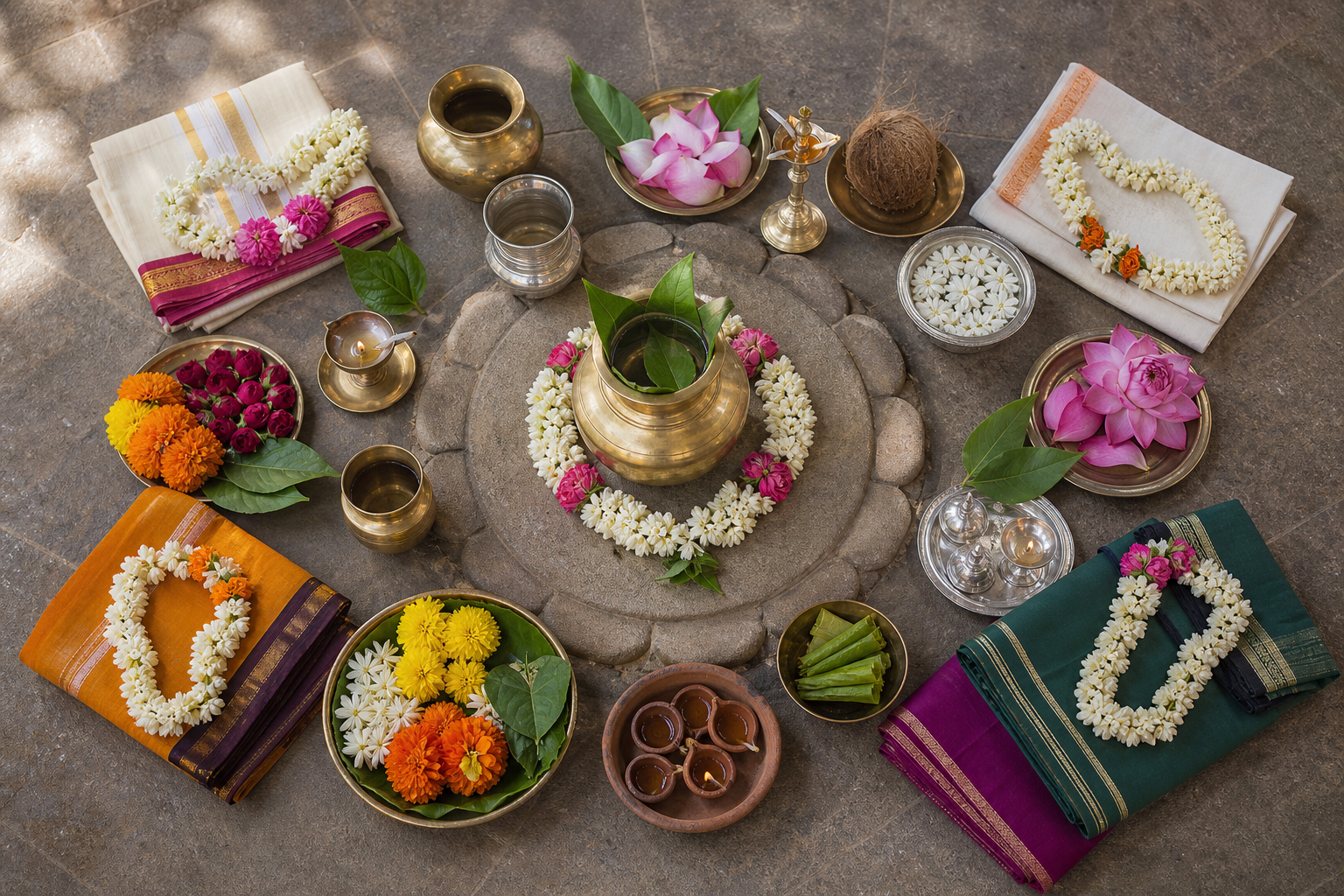
Patotsav is particularly prominent in Gujarati and Rajasthani temple cultures, but it does not wear one uniform aesthetic. Recurring regional patterns help you understand what you are seeing without turning those patterns into rigid rules.
In many Gujarati settings, Mahapuja under priestly guidance, scriptural pravachan, extended bhajan, and organized satsang participation are prominent. Swaminarayan mandirs have carried structured Patotsav observance widely into the diaspora, often combining Vedic liturgy with accessible explanations, youth participation, and carefully coordinated seva. The emphasis is not only on preserving a ceremony but on teaching a community how to sustain it.
In Rajasthan’s Pushtimarg haveli tradition, Patotsav enters the rhythm of ashtayam-seva, the eight daily darshans. Seasonal pichwai, detailed vastra-seva, madhurya-bhava, and a specially emphasized rajbhog give the day its distinctive devotional texture. Nagar-sankirtan or other public celebration may accompany that intimate rhythm of service.
Outside Bharat, a mandir may use the nearest weekend, bilingual explanations, child-friendly learning stations, and volunteer teams adapted to local buildings and regulations. These accommodations need not dilute Patotsav. The useful test is whether the adaptation improves access while the tithi, sankalpa, authorized liturgy, and ritual leadership remain intelligible and intact.
The wider Dharmic resonance is also worth noticing without collapsing distinct traditions into one. Jain derasars in Western India mark installation anniversaries as Patotsav through forms including Snatra Puja, Kalasha abhisheka, and Vaskep. Buddhist rabne periodically re-sanctifies images and sacred spaces. Sikh theology and worship are different, yet Nishan Sahib seva and langar likewise make communal rededication visible through service. The shared civilizational thread is continuity sustained by disciplined action, not doctrinal sameness.
Key takeaways for the next Patotsav you attend
- Patotsav annually renews the mandir’s consecrated life; it is not a complete repetition of Prana Pratishtha.
- The governing date is the original consecration tithi, so verify it through the mandir rather than copying a Gregorian date from an earlier year.
- The ritual has an intelligible movement: purification, sankalpa and sanctified water, kalasha-sthapana, abhisheka and homa, alankara and darshan, then maha-arati and prasada.
- Vaishnava, Shaiva, Swaminarayan, Pushtimarg, Gujarati, Rajasthani, and diaspora expressions can differ while serving the same annual purpose.
- Meaningful participation is measured through attentive darshan and responsible seva, not through access, display, or abundance.
When your mandir next announces Patotsav, ask three concrete questions: Which original tithi is being observed? Which lineage governs the worship? Where is your seva actually needed? Those answers will move you from watching a festival to helping sustain a living mandir.