
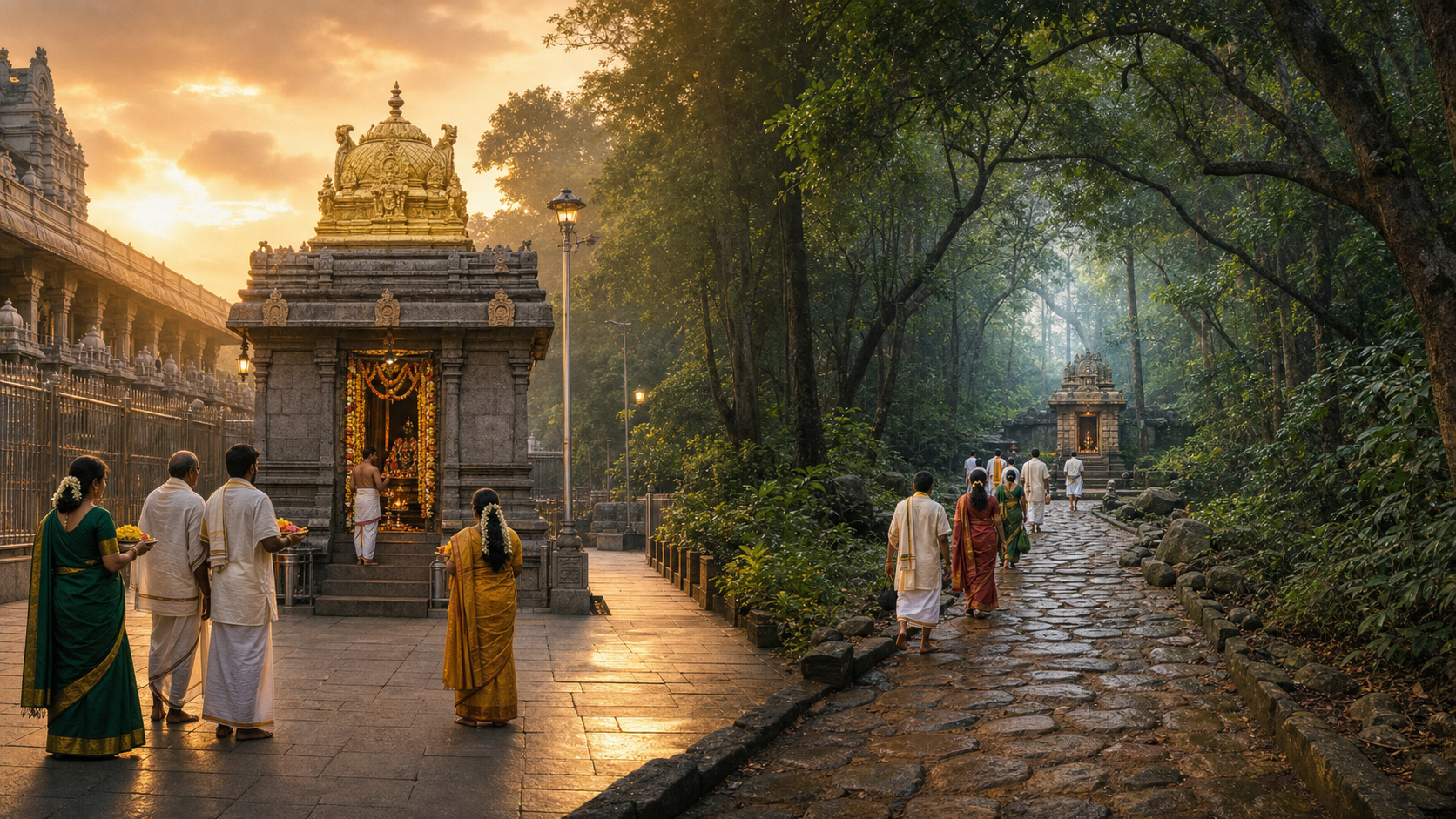
If you are deciding how to spend Hanuman Jayanti at Tirumala, begin with one important distinction: this is not a single ceremony at a single shrine. The observance connects Sri Bedi Anjaneya near the Srivari Temple with Sri Japali Hanuman in the forested setting of Japali Teertham.
That difference should shape your pilgrimage. Decide which worship is essential to you, give the Japali route its own time, and verify the applicable year’s temple schedule before arranging the rest of your day. You will then approach Hanuman Jayanti as a disciplined act of seva rather than a hurried attempt to collect several darshans.
Know what happens at each Hanuman shrine
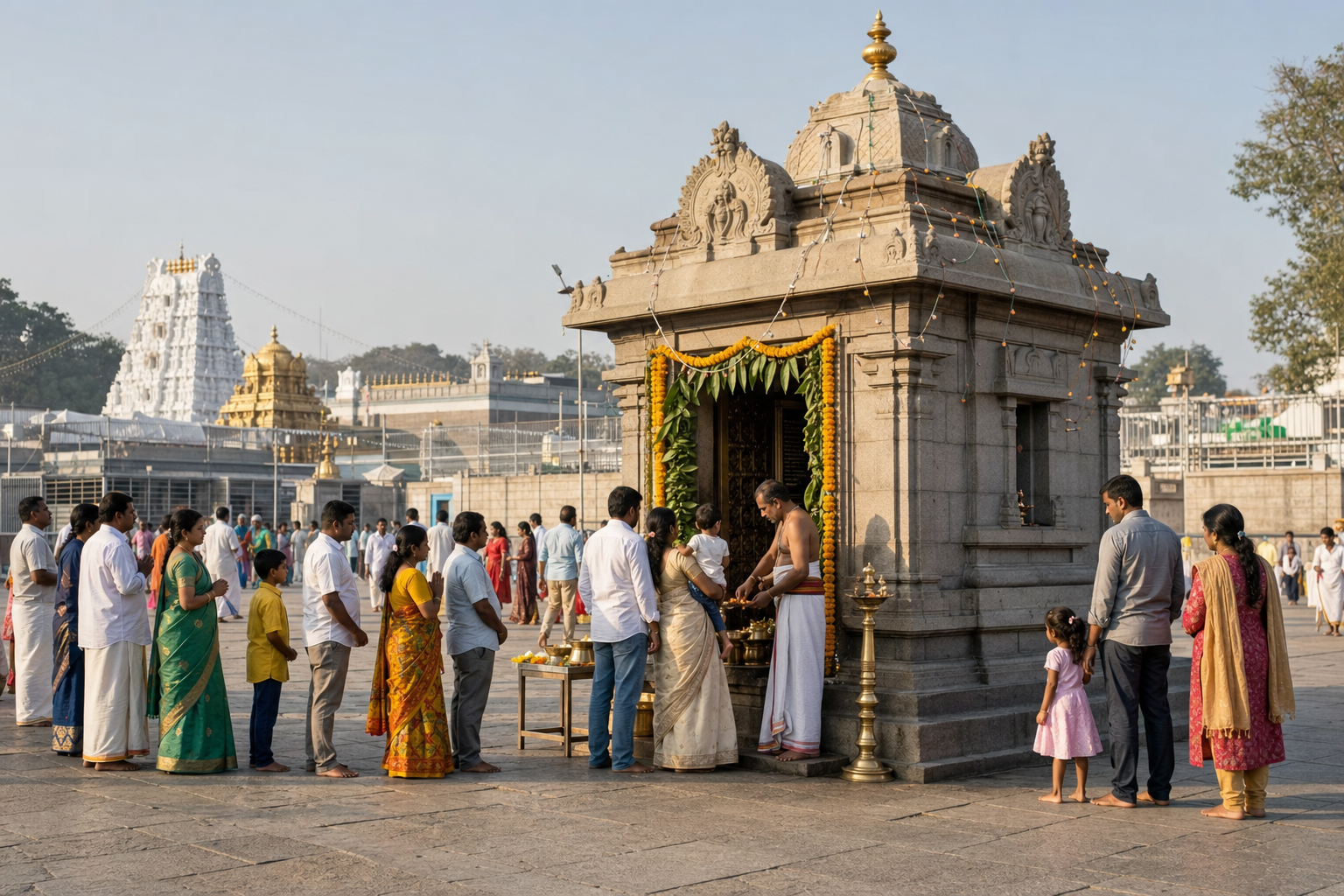
Tirumala’s Hanuman Jayanti observance has two complementary centres. At Sri Japali Hanuman, the defining institutional offering is the presentation of silk garments, or Pattu Vastrams. At Sri Bedi Anjaneya, special pujas are conducted near the main Srivari Temple precincts. For 2026, these observances were scheduled for 12 May in accordance with the Telugu Panchangam and Tirumala custom.
- Sri Japali Hanuman: Choose this shrine when you want the forest approach, the contemplative atmosphere of Japali Teertham, and the observance centred on TTD’s Pattu Vastram offering.
- Sri Bedi Anjaneya: Choose this shrine when you want to remain close to the Srivari Temple precincts and participate in, or receive darshan during, the special puja observance.
- Both shrines: Keep them as two distinct movements in your plan. Their spiritual relationship does not make them one logistical stop.
The silk offering is not merely festive decoration. Vastra-samarpana belongs to an established sequence of temple honour in which the murti is clothed and adorned on an auspicious occasion. Silk carries associations of ritual purity and sattva, while the act of offering it expresses reverence, humility, and service. Archana, naivedyam, alankara, and deepa-harati place that visible offering within a larger rhythm of worship.
Bedi Anjaneya presents a different but related lesson. “Bedi” refers to shackles, and the murti is traditionally understood through the symbolism of self-binding discipline: Hanuman remains under a vow of service to the Lord. Because the shrine faces the Srivari Temple, the physical orientation reinforces the theological one. Strength is present, but it is strength placed willingly at the service of dharma.
Use Tirumala’s calendar before making travel decisions
Hanuman Jayanti is not observed on one uniform date throughout Bharat. Regional panchangams and inherited temple customs can produce different festival dates without implying disagreement about Hanuman or his place in Hindu life. Tirumala follows its own sacred calendar, so a date circulated for another region should not be used automatically for a Tirumala pilgrimage.
The useful rule is simple: distinguish the festival date from the detailed programme. TTD’s date establishes when the Tirumala observance belongs in the calendar, but precise ritual timings are ordinarily communicated closer to the occasion. Do not build a tightly timed route around an assumed puja hour.
- Confirm the applicable year. The 12 May date applied to the announced 2026 observance. For any later pilgrimage, check that year’s Tirumala calendar rather than copying an old festival listing.
- Separate the date from the clock. After confirming the day, look for the latest TTD almanac entry, festival notice, or office circular containing the actual programme.
- Identify your non-negotiable worship. Decide whether the Pattu Vastram observance at Japali, puja at Bedi Anjaneya, or Srivari darshan is the anchor of your day.
- Arrange the other visits around that anchor. A plan with one clear priority is more resilient to queues, security procedures, and local movement than a minute-by-minute itinerary with no margin.
This calendrical diversity is a practical expression of unity without uniformity. You do not have to collapse every local observance into one date to recognise the same Hanuman: the devoted servant of Sri Rama, the courageous emissary of dharma, and the master of strength governed by humility.
Give the Japali Teertham approach enough time and attention
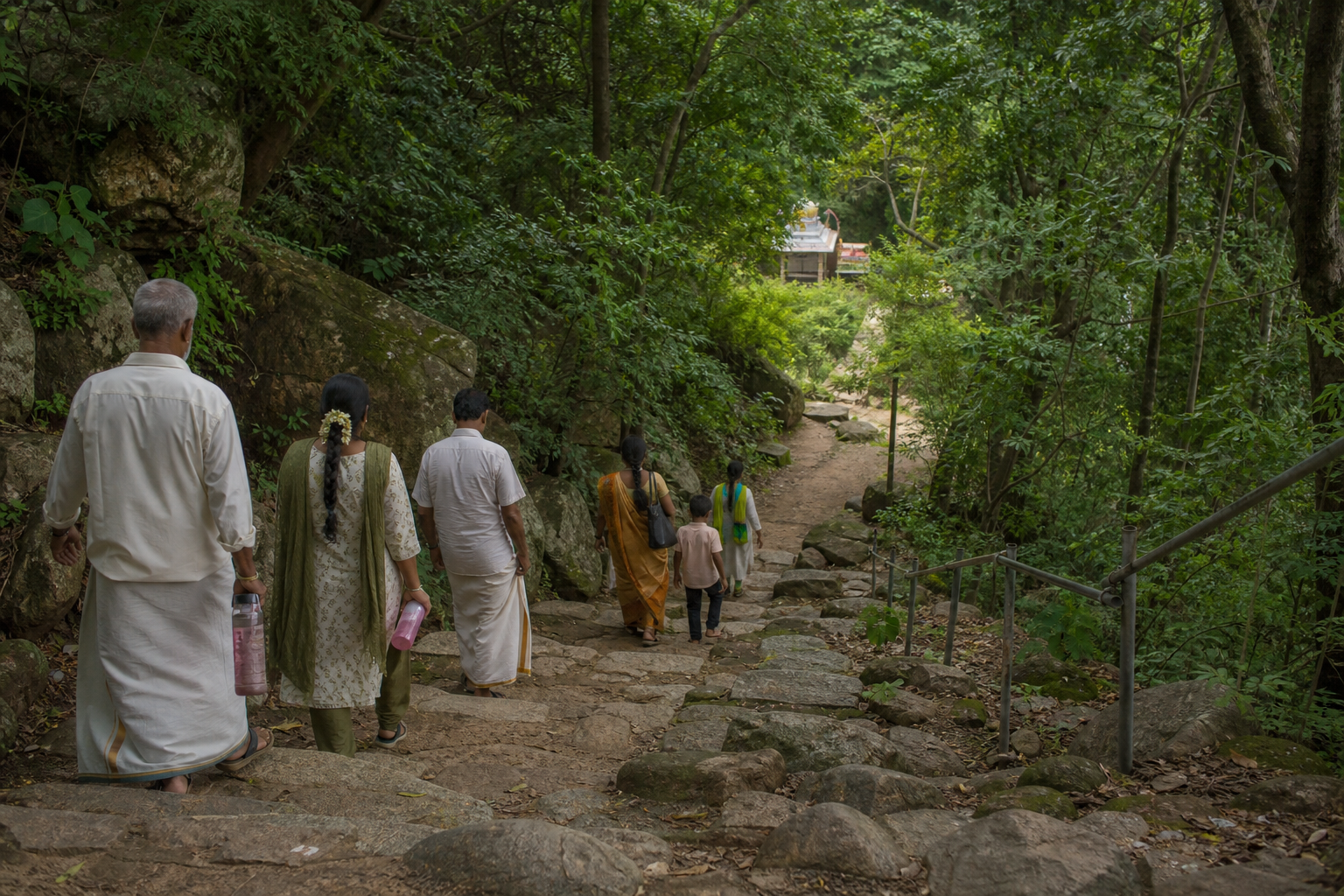
Sri Japali Hanuman lies along the verdant approach to Japali Teertham in the Seshachalam forests. The setting is part of the pilgrimage rather than an inconvenience between you and the shrine. Local sthala-purana associates the place with tapas and the presence of Anjaneya, so the movement from the busier temple environment into the sacred grove can itself become a transition from activity to attention.
The approach is described as a moderate forest walk, with early-day visits generally offering milder conditions and a quieter atmosphere. No dependable walking duration or distance is provided here, so do not build your plan around an invented estimate. Your pace, the day’s conditions, and the needs of your group matter more than an unsupported number.
- Carry water. Hydration is a basic preparation for the approach, even when the walk feels manageable at the beginning.
- Wear suitable footwear for the route. Choose something secure enough for the approach while remaining attentive to footwear rules at the shrine itself.
- Prefer an early visit when possible. This reduces exposure to stronger daytime heat and preserves more quiet for japa or contemplation.
- Keep the forest clean. Minimise disposable plastic, carry waste until it can be discarded correctly, and do not disturb vegetation or wildlife.
- Respect temple discipline. Follow dress expectations, security screening, queue arrangements, and instructions from temple personnel.
- Do not force the walk on every member of your party. If a moderate forest approach is unsuitable for someone, Bedi Anjaneya and personal sadhana remain meaningful ways to observe the day. Physical strain is not a test of bhakti.
On a crowded festival day, trying to combine the forest visit, special pujas, Srivari darshan, meals, and local transit without any margin can turn the pilgrimage into constant clock-watching. If you must simplify, remove an optional stop rather than rushing the Japali path or disregarding queue and security instructions.
Make Hanuman’s discipline visible in your own observance
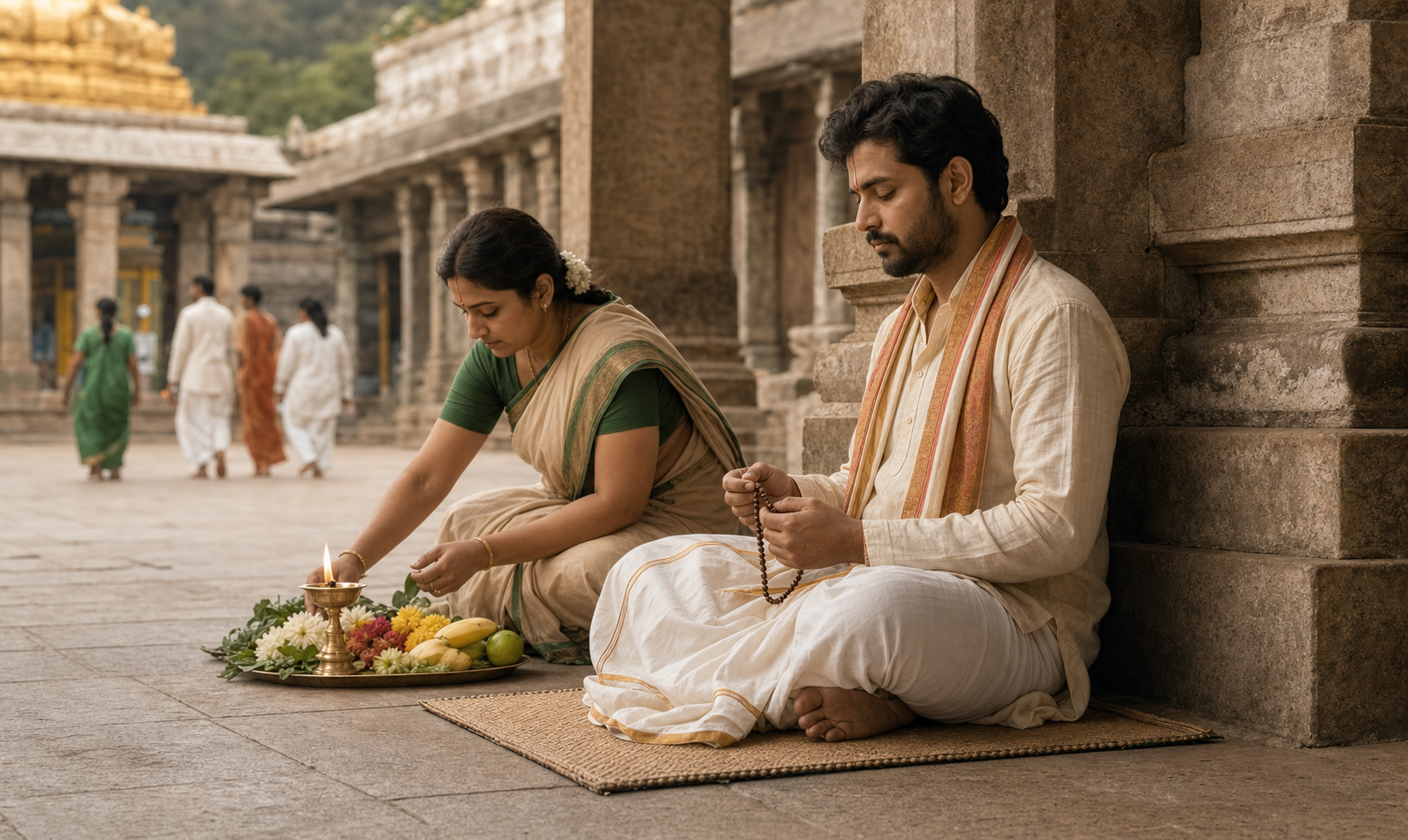
The temple programme gives the day its public form, but your sankalpa gives it personal direction. Hanuman does not represent power pursued for its own sake. His courage is inseparable from devotion, his learning from humility, and his action from service to Sri Rama. A useful observance therefore asks not only what you will see, but what discipline you will accept.
Choose one practice that you can complete with steadiness. Devotees commonly align their sadhana with the festival through Hanuman Chalisa recitation, Sundara Kanda reading, japa, vrata, lamp offerings, and dana such as annadanam through legitimate channels. There is no need to attempt every practice in a single day.
- State a narrow sankalpa. Name the recitation, act of seva, or restraint you will undertake instead of making a vague promise to “be more disciplined.”
- Place it in your itinerary. Reserve a quiet period before departure, during the Japali visit, or after returning from darshan. A practice without a place in the day is easily displaced by travel.
- Connect it to conduct. Patience in a queue, care for the forest, courtesy toward other pilgrims, and cooperation with temple staff are not separate from worship. They are immediate forms of self-command and seva.
- Give through a legitimate channel. If annadanam or another donation is part of your observance, use an established institutional route rather than responding impulsively to an unverified request.
- Carry one discipline beyond Jayanti. Continue a manageable recitation, service commitment, or ethical restraint after the festival. Hanuman’s defining quality is steadfastness, not intensity for one day.
This is also where the symbolism of Bedi Anjaneya becomes practical. Self-binding need not mean harshness. It means willingly placing a boundary around distraction, anger, carelessness, or self-importance so that your energy remains available for dharma.
Seva, disciplined attention, truthfulness, compassion, and courageous ethical action also make the occasion intelligible across the wider Dharmic family. Hindu, Buddhist, Jain, and Sikh traditions are not interchangeable, but each recognises that spiritual strength must be governed by ethical purpose. Hanuman Jayanti can deepen that shared understanding without erasing the specifically Rama-centred bhakti that gives Hanuman’s life its form.
Key takeaways for your Tirumala pilgrimage
- Tirumala’s observance connects two distinct settings: Pattu Vastrams for Sri Japali Hanuman and special pujas for Sri Bedi Anjaneya.
- The announced Tirumala date for 2026 was 12 May; never reuse that date for another year without checking the applicable Telugu Panchangam and TTD programme.
- Exact ritual timings may be issued closer to the festival, so anchor your itinerary to one priority and retain a margin for queues and local movement.
- Treat the Japali Teertham approach as a moderate forest walk: go earlier when possible, carry water, wear appropriate footwear, and protect the sacred landscape.
- Choose one concrete sadhana—recitation, japa, vrata, lamp offering, or verified dana—and practise it with steadiness rather than accumulating activities.
- Let your conduct carry the worship: patience, cleanliness, restraint, and service are direct expressions of Hanuman’s example.
Before your next Hanuman Jayanti visit, confirm the current Tirumala date and timings, choose the shrine or ritual that will anchor your day, and write down one discipline you intend to keep afterward. That small act of preparation will do more for your pilgrimage than an overfilled schedule.