-
Kamyakali Unveiled: The Desire-Fulfilling, Fierce-Compassionate Power of Goddess Kali

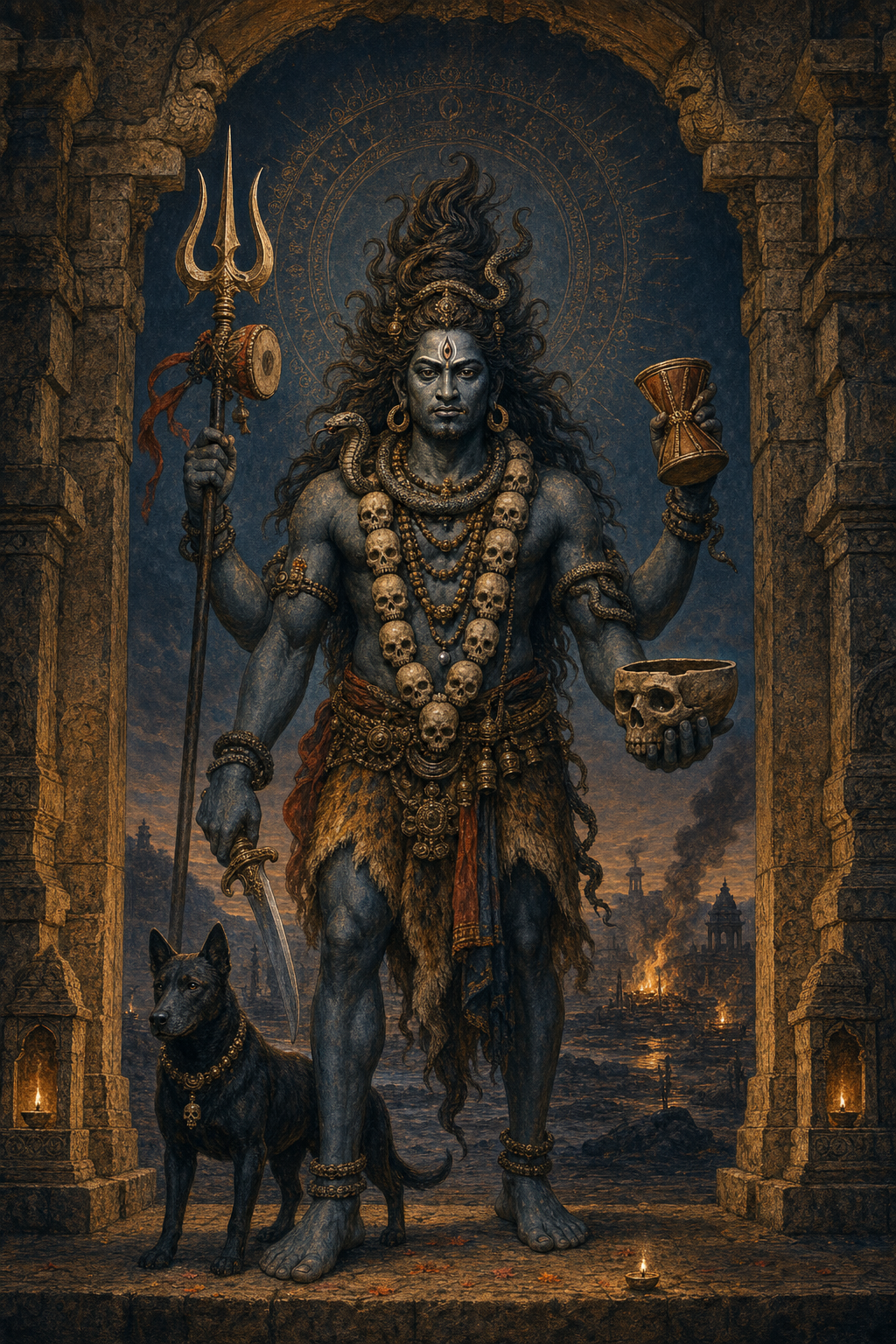
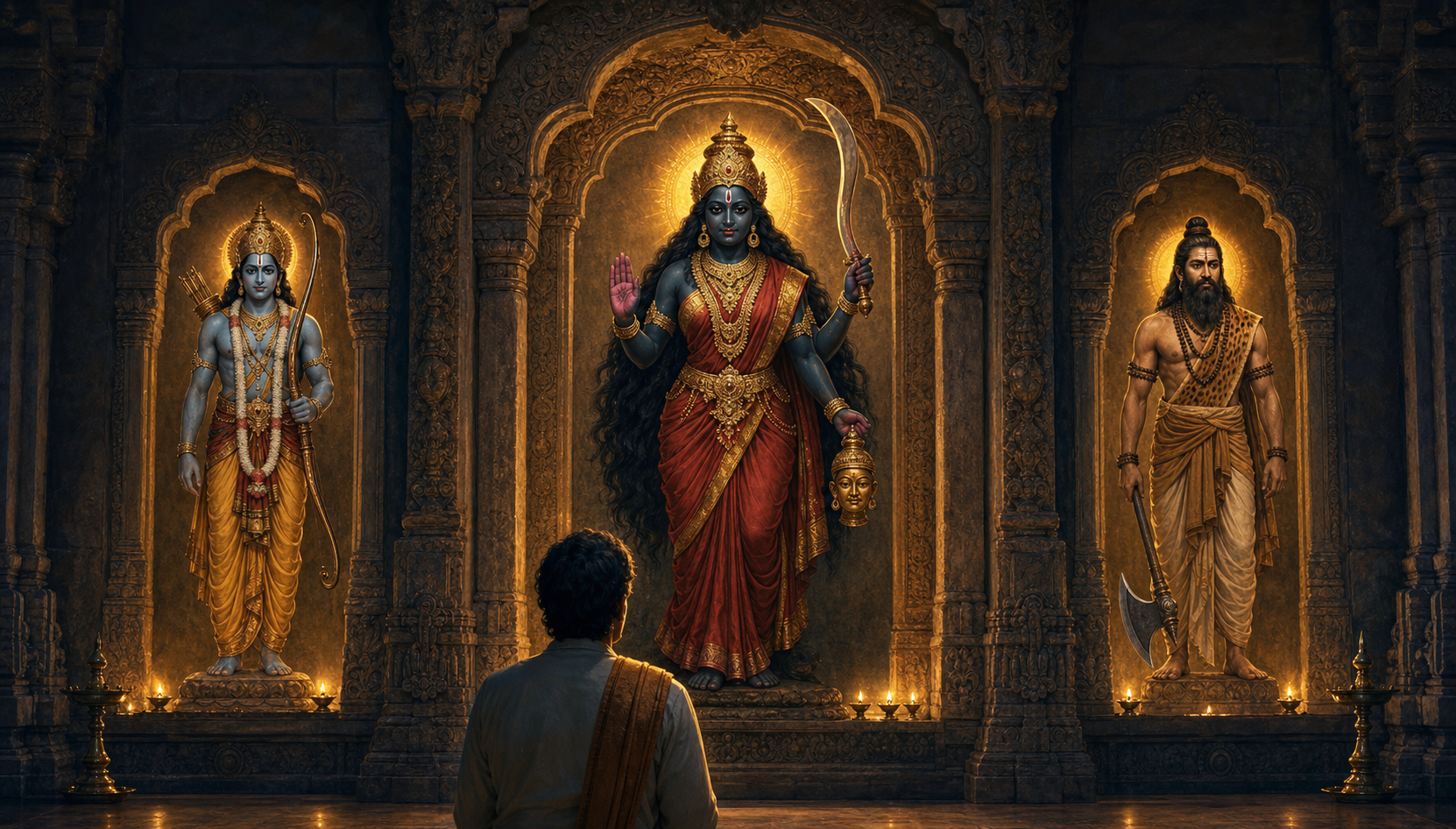
Kamyakali is venerated in Shakta traditions as a form of Goddess Kali who unites fierce protection with maternal compassion while fulfilling desires aligned with dharma. The discussion clarifies the Sanskrit root of kāmya, connecting it to ethical, purpose-driven worship rather than unexamined craving. It explores Kali’s core iconography and explains how Kamyakali highlights blessing gestures…
-
Unlocking Complete Knowledge: Krishna and the Five Realities in a Dharmic, Unified Perspective

This long-form reflection presents an academic, integrative reading of Krishna-centered wisdom in the Bhagavad Gita, showing how devotion and disciplined inquiry reinforce one another. It frames the Gita’s promise—yaj jñatva—as a call to meta-knowledge that orders facts, clarifies purpose, and unifies the sciences with spiritual realization. The five realities—Ishvara, Jiva, Prakriti, Kala, and Karma—are explained…
-
Wealth, Karma, and Krishna: Evidence‑Based Dharmic Guidance to Earn, Spend, and Give with Peace

This long-form analysis explains how money reflects inner consciousness and how Krishna’s sanction, karma, and purushartha interact to shape financial outcomes. It integrates Hindu philosophy with Buddhist Right Livelihood, Jain aparigraha, and Sikh principles of kirat karo, vand chhako, and seva to offer a unified ethic. Drawing on Srila Prabhupada’s reminders about destiny and greed,…
-
Kalatita Unveiled: A Rigorous Guide to the Timeless Self and Eternal Truth in Hinduism

This article presents a rigorous, accessible exploration of Kalatita—’beyond time’—in Hindu philosophy, anchored in the Upanishads, Bhagavad Gita, and Yoga Sutra. It clarifies how cyclical time (yuga, kalpa) coexists with the timeless ground of Brahman, using Advaita Vedanta, Sāṅkhya, and Bhakti perspectives. The discussion bridges theory and practice with concrete contemplations, showing how presence, fearlessness,…
-
Beyond Temples: Experiencing Vishnu’s All‑Pervading Presence in Nature, Mind, and Cosmos

This essay explores how Vaishnava scriptures and practice reveal Vishnu as all-pervading in elements, ecosystems, and consciousness, expanding devotion beyond temple walls. Drawing on the Upanishads, Bhagavad Gita, Pancharatra tradition, and living ritual, it outlines how daily acts—drinking water, mindful breath, lamp-lighting, and service—become universal worship. The discussion situates iconic and aniconic forms (including Śāligrāma)…
-
12 Evidence‑Backed Advantages of Spirituality for Resilience, Clarity, and Inner Peace

Spirituality, practiced within the plural dharmic streams of Hinduism, Buddhism, Jainism, and Sikhism, offers reliable advantages during life’s hardest moments. Evidence from contemplative science shows that meditation, pranayama, and compassion training calm the nervous system, improve heart rate variability, and sharpen decision-making. Ethical frameworks like dharma, ahimsa, and seva provide clarity under moral pressure while…
-
Relativity, Interconnectedness, and Impermanence in Sikh Philosophy: Clarity for Dharmic Unity

This long-form exploration clarifies how Sikh philosophy integrates relativity, interconnectedness, and impermanence under Ik Oankar and hukam. It explains why perspective-awareness enhances, rather than weakens, commitment to Truth, and how interconnectedness turns metaphysics into concrete seva for sarbat da bhala. It shows how impermanence frees the heart from clinging without collapsing into nihilism, orienting life…
-
The Thirst That Remains: A Transformative Journey Across Hindu, Buddhist, Jain, and Sikh Wisdom

This long-form reflection reads the “thirst that remains” as a unifying metaphor across Hindu, Buddhist, Jain, and Sikh wisdom, showing how diverse practices meet a common aspiration for freedom and compassion. It maps core goals—moksha, nirvana, kevala-jñāna, and mukti—while explaining shared ethics like ahimsa, satya, dana/dasvandh, and aparigraha. It outlines practical contemplative methods—Aṣṭāṅga Yoga, ānāpānasati…
-
Unlocking Truth: Six Pramāṇas in Hindu Philosophy and How They Strengthen Modern Thinking

This long-form guide explains the six pramāṇas of Hindu philosophy—pratyakṣa, anumāna, upamāna, arthāpatti, anupalabdhi, and śabda—and shows how they collaborate to produce reliable knowledge. It clarifies acceptance across Nyāya, Mīmāṃsā, Vedānta, Sāṃkhya-Yoga, Carvāka, and connects these insights with Buddhist, Jain, and Sikh approaches. Readers learn concrete criteria for perceptual reliability, how to build and test…
-
Sri Siksastakam Unveiled: How Krishna Sankirtana Cleanses the Heart and Heals Suffering

An in-depth ISKCON Hong Kong seminar led by HG Bhurijana Prabhu unpacked the first verse of Sri Siksastakam with philological precision and practical guidance. The discussion mapped the verse’s eightfold arc—from cleansing the mirror of consciousness to bathing the entire self—showing how sankirtana systematically heals inner turbulence. By contextualizing Sri Caitanya Mahaprabhu’s theology of the…
-
Yudhishthira’s Search for Elders: Duty, Detachment, and Dharma in Srimad Bhagavatam 1.13.39

Srimad Bhagavatam 1.13.39 captures a defining moment in the Kuru court as Mahārāja Yudhiṣṭhira seeks the whereabouts of Dhṛtarāṣṭra, Vidura, and the ascetic Gāndhārī. The verse frames a profound ethical tension: how a ruler balances familial compassion with respect for elders who choose renunciation. Through Nārada’s guidance in subsequent verses, compassionate concern matures into wise…
-
Healthy Jiva Seminar Insights: Harnessing Vedic Wisdom for Body–Mind–Atma Harmony and Resilience

The “Healthy Jiva” seminar by HH Bhanu Swami (Fri 06 Mar 2026) distilled a Vedic, evidence-aligned model of health that integrates the gross body, the subtle body, and the atma. It explained how imbalances propagate across layers, clarifying why mind-body practices such as asana, pranayama, meditation, and bhakti stabilize well-being. Drawing on tri-sharira, pancha-kosha, and…
-
Symbolism of Kalachakra’s Five Wheels: Timeless Hindu Cosmology, Panchakritya, and Unity

Kalachakra, the wheel of time, reveals a fivefold grammar of creation, preservation, dissolution, veiling, and grace that unites Hindu cosmology, ritual, and yogic practice. This article explains how the five wheels, grounded in the classical doctrine of Pañcakṛtya, operate across cosmic cycles, daily rhythms, and inner transformation. Readers gain a technical yet accessible framework that…
-
When Meditation Feels Impossible: A Science-Backed Path to Presence Through Nature

When formal meditation amplifies restlessness or exposure, a gentler doorway often works better. This piece outlines a science-backed, nature-based approach to presence that leverages bottom-up attention, polyvagal-informed safety, and environmental psychology to reduce cognitive load and ease the nervous system. It explains why soft fascination in natural settings restores attention, how gentle movement and texture…
-
Duryodhana’s Poison Plot, Bhima’s Naglok Descent, and King Aryak’s Divine Empowerment

This long-form analysis explores the Mahabharata’s Naglok episode, where Duryodhana’s poison plot leads unexpectedly to Bhima’s empowerment under Naga King Aryak. It traces how treachery is transformed into destiny through kinship recognition, rasāyana-like rejuvenation, and Dharmic ethics. The essay situates Aryak within pan-Dharmic serpent symbolism—paralleling motifs in Hindu, Buddhist, and Jain traditions—highlighting unity through shared…
-
Freedom from the Senses: A Dharmic Pathway to Moksha, Mastery, and Inner Sovereignty

This essay explores the Hindu philosophical insight that freedom from the slavery of the senses constitutes liberation and shows how it converges with parallel teachings in Buddhism, Jainism, and Sikhism. It clarifies how indriyas, raga-dvesha, and samskaras generate compulsion, and how mastery—not repression—unlocks moksha. Drawing from the Bhagavad Gita, the Upanishads, and Yoga philosophy, it…
-
March 16, 2026 Panchang: Som Pradosh, Accurate Tithi, Nakshatra–Rashi, and Auspicious Timings

March 16, 2026 features a significant tithi shift: Krishna Paksha Dwadashi lasts until 7:40 AM (IST), and Krishna Paksha Trayodashi covers the remainder of the day, positioning the evening for Som Pradosh. Those who observed Ekadashi should perform paran during the brief Dwadashi morning window. The Moon is expected in Mesha (Aries), commonly under Ashwini…
-
Beholding Vishnu’s Virat Purusha: A Scholarly, Step-by-Step Guide to Transformative Dhyana Practice

This comprehensive guide outlines a rigorous, step-by-step approach to meditating on the Virat Purusha, the cosmic form of Bhagavan Vishnu. It situates practice within scriptural sources like the Purusha Sukta, the Bhagavad Gita’s Vishvarupa, and Puranic correspondences, while clarifying the Vedantic triad of Virat–Hiranyagarbha–Ishvara. Readers gain precise, accessible methods for posture, breath regulation, mantra, and…
-
Hare Krishna in Ireland: Vedic Wisdom Transforming Lives and Nurturing Dharmic Unity

This academically grounded portrait of Hare Krishna practice in Ireland follows three devotees whose lives are reshaped by Vedic philosophy as taught in the Bhagavad-gita. It explains how Srila Prabhupada’s teachings address birth, old age, disease, and death in ways that are both doctrinally rigorous and practically actionable. The narrative shows how bhakti-yoga—japa, kirtan, study,…
-
Overcoming Envy (Matsarya) to Awaken Prema: A Dharmic, Nirmatsara Roadmap for Inner Freedom

This essay examines matsarya (envy) as a core spiritual impediment and explains why Vaisnava scriptures describe it as the competitor of divine love (prema). Anchored in the Srimad Bhagavatam’s “dharmah projjhita-kaitavo ‘tra paramo nirmatsaranam satam” (Bhag.1.1.2), it analyzes nirmatsarata as an ethical threshold for receiving the highest dharma. The discussion maps convergences across Hinduism, Buddhism,…