-
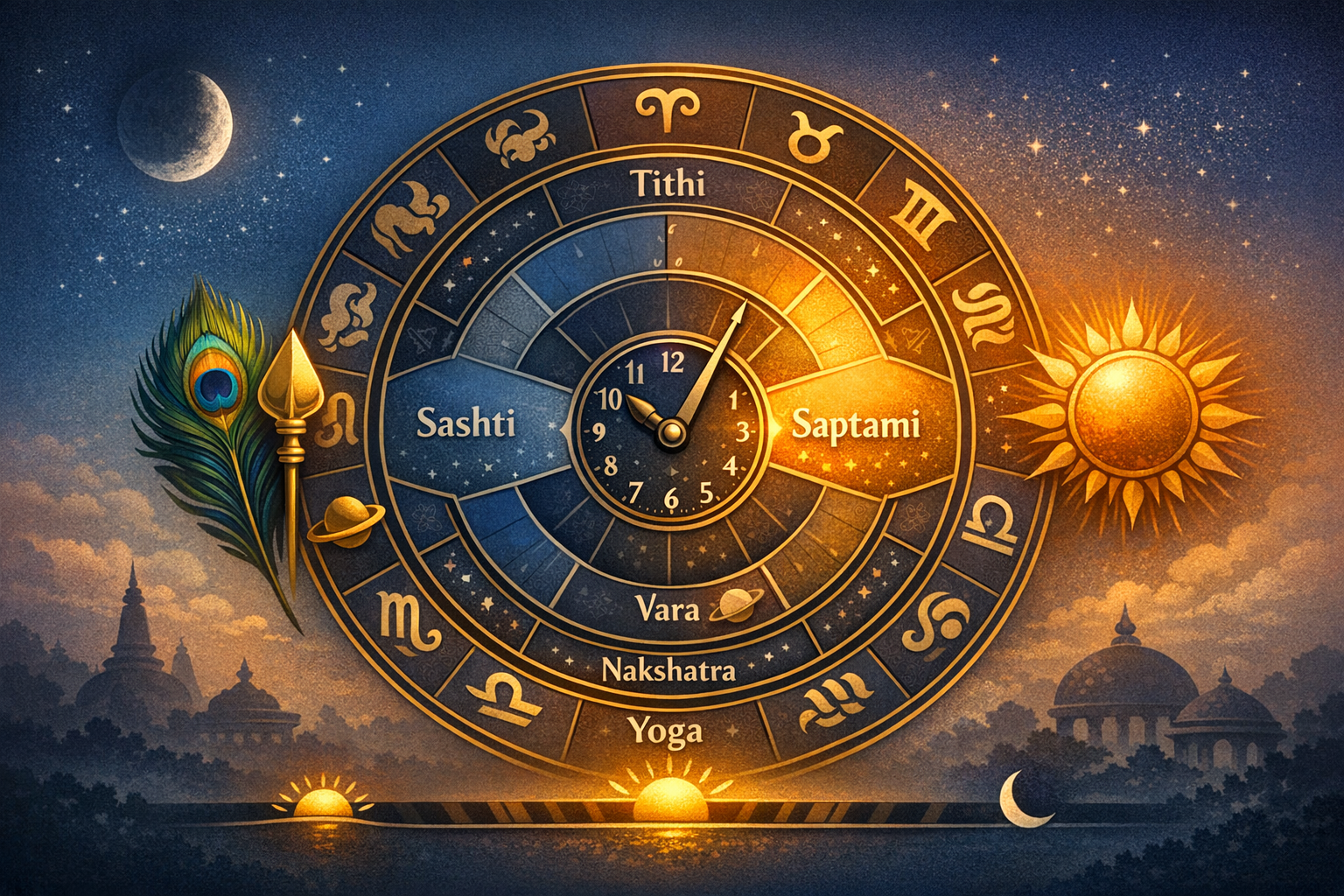
Swami Samarth Prakat Din 2026: Sacred Date, Living Legacy, and Akkalkot Observances

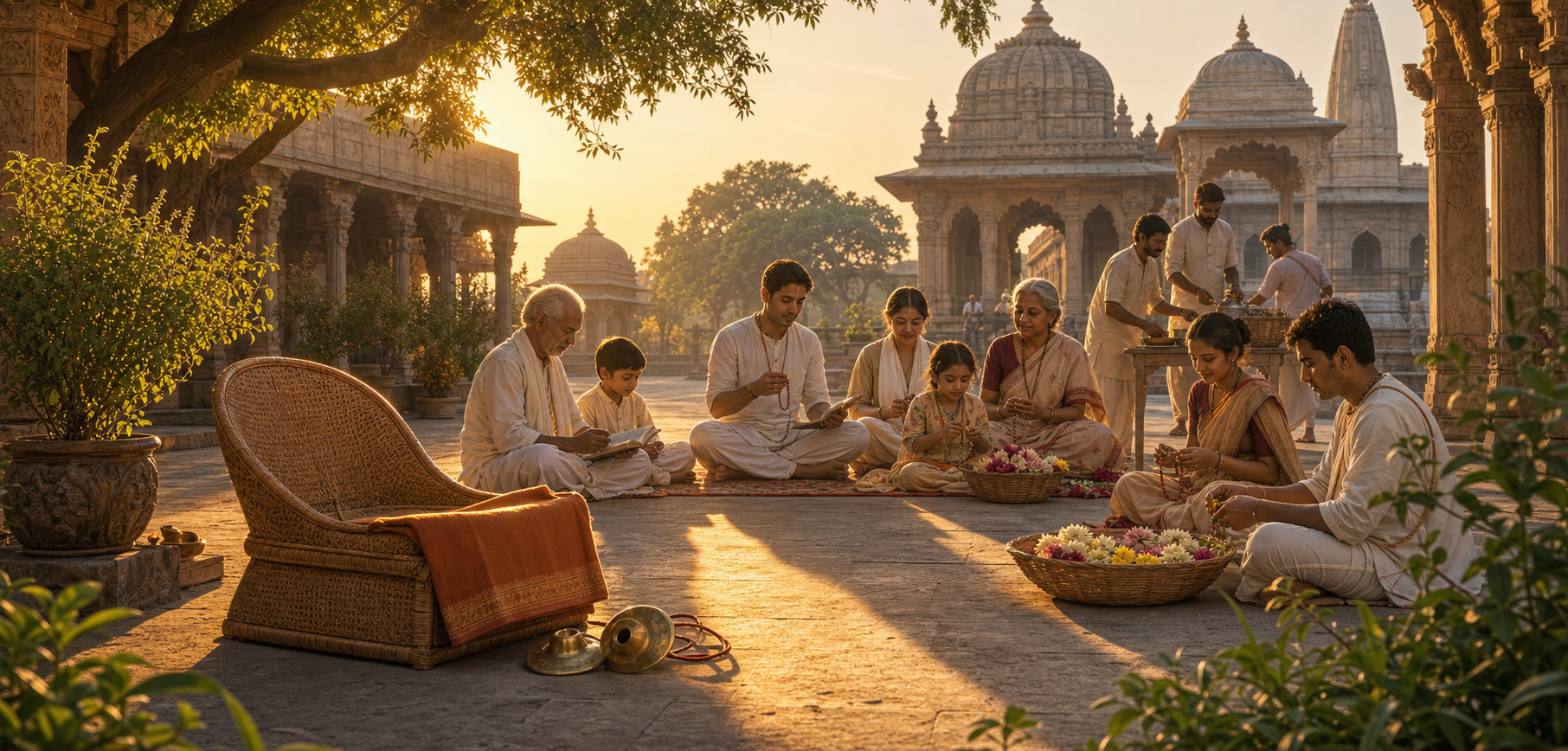
Swami Samarth Prakat Din 2026 falls on March 20 and honors the sacred appearance of Swami Samarth Maharaj of Akkalkot in the Dattatreya Tradition. The observance highlights guru-tattva through puja, parayan, and seva in temples and homes. Akkalkot hosts abhisheka, aarti, kirtan, and anna-dana, while devotees worldwide engage in simple home rituals, mantra-japa, and charitable…
-
Goddess Kali’s Fearless Paradox: Creator, Destroyer, and Tantric Symbolism of Transformation

Goddess Kali unites the roles of creator, destroyer, and transformer, encoding a precise Śākta metaphysics within striking iconography. Readers gain a clear, research-informed guide to her symbols—from the muṇḍamālā and cremation ground to abhaya and varada mudrās—and how each maps to ethical action and psychological resilience. The narrative situates Kali within scripture (Devī Māhātmya, Kālīkā…
-
Gazelle of Vayu: Unlocking the Wind God’s Vahana—Swiftness, Prana, and Spiritual Freedom

In Hindu iconography, the gazelle (mriga) as Vayu’s vahana is a precise spiritual diagram of swiftness, subtlety, and liberation. This long-form analysis decodes the symbol across scriptures, Puranic iconography, yogic physiology (the five vayus), and classical astrology (Mrigashira Nakshatra). It explains how breath—prana—transforms restlessness into poised readiness, turning speed into clarity and clarity into freedom.…
-
Ecstatic Love Unveiled: Sri Radha’s Luminous Eyes and Krishna’s Supreme Rasa Alchemy

This concluding essay in a nine-part exploration of Sri Radha’s eyes situates Her gaze within the Gaudiya Vaiṣṇava theology of mahabhāva and Kṛṣṇa’s sovereignty over spiritual rasa. It explains how the classical elements of rasa—vibhāva, anubhāva, vyabhicāri-bhāvas, and sthāyī-bhāva—illuminate the devotional and symbolic power of Rādhā’s eyes. Drawing on Hindu scriptures and devotional poetics, it…
-
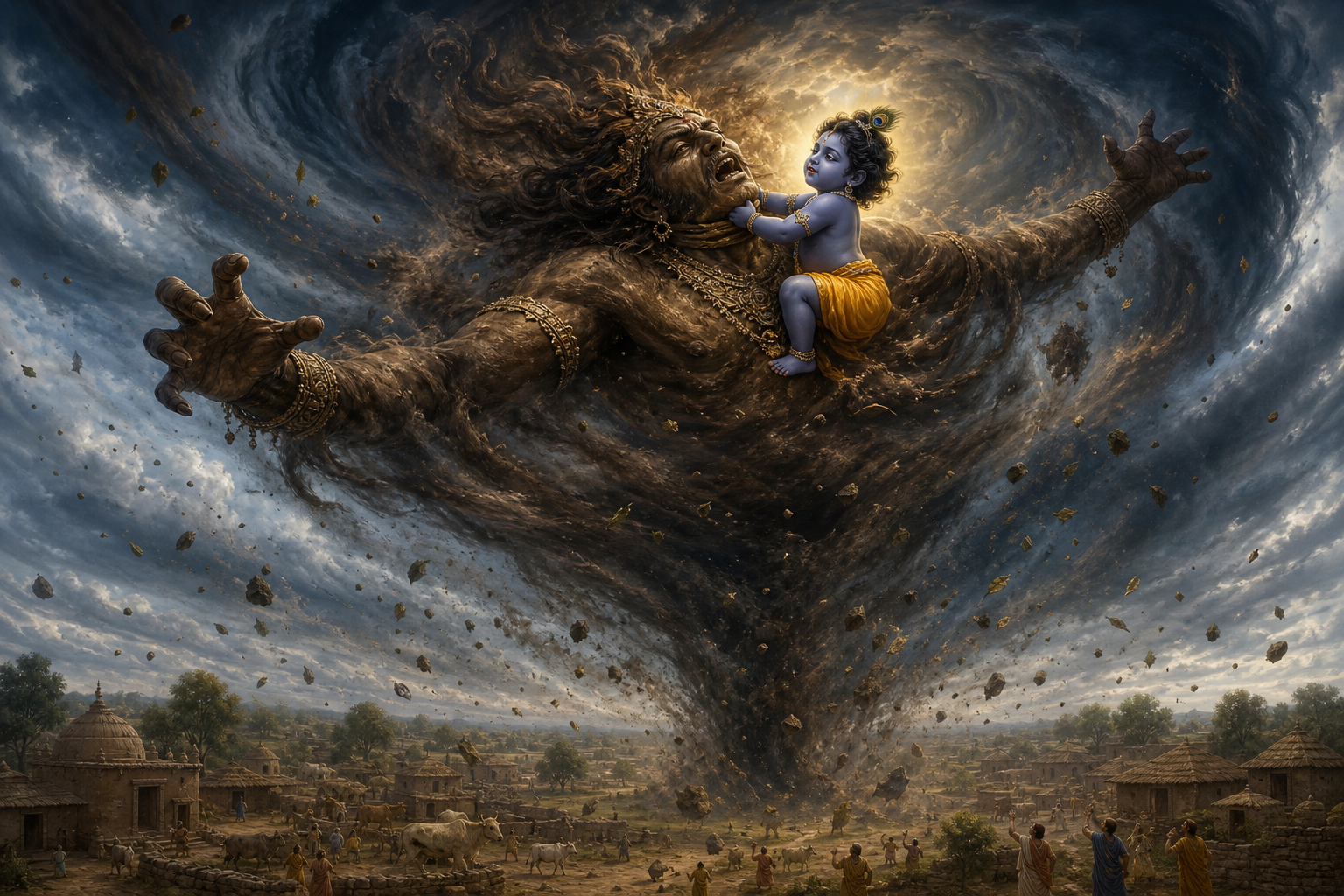
Krishna’s Transformative Grace: From Nigranta to Devotional Service (SB 1.7.10)

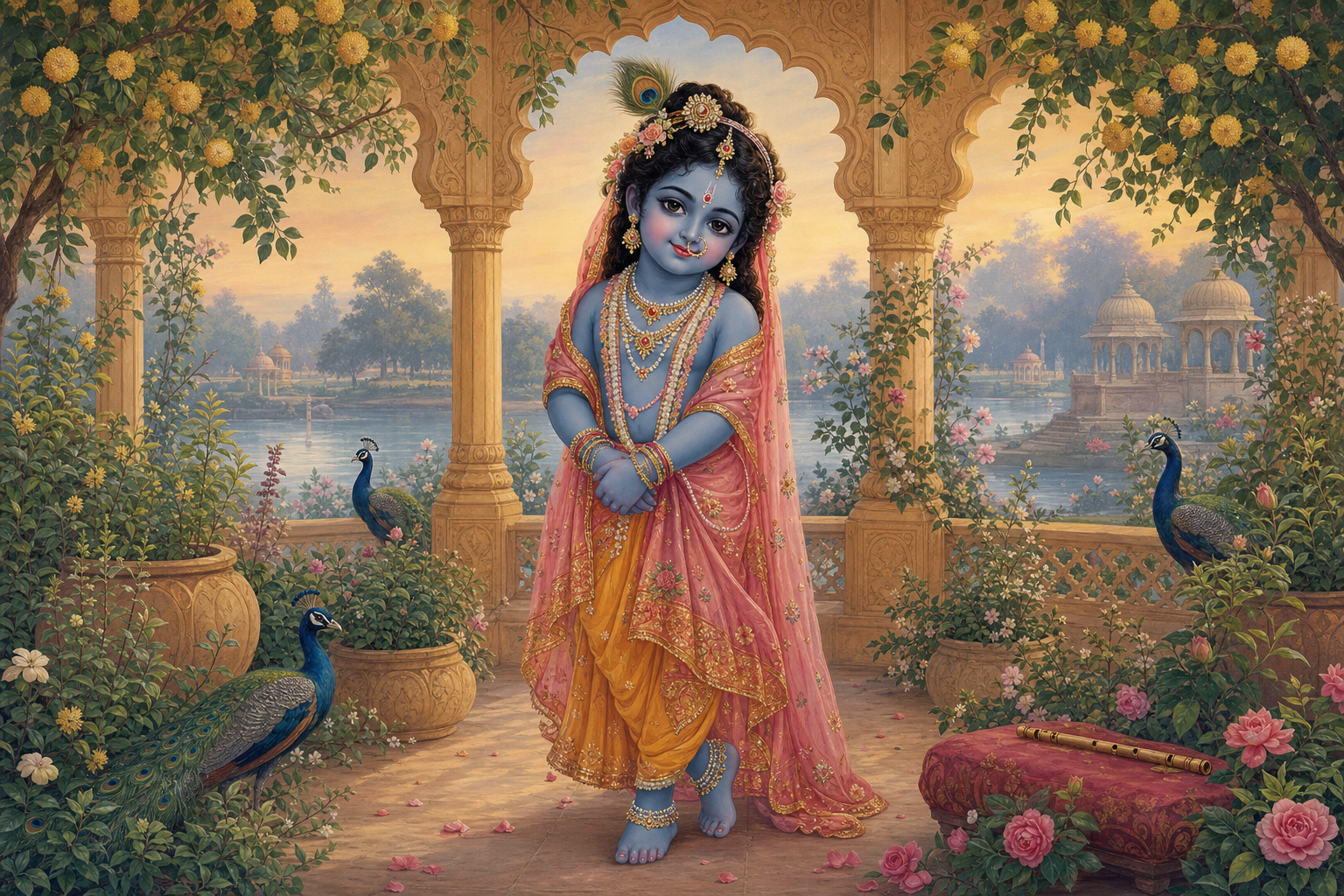
This article explores how attraction to Krishna, as discussed in commentarial treatments of SB 1.7.10, draws any soul—regardless of birth, wealth, or education—into devotional service. It clarifies the analytical use of the term nigranta and reframes it inclusively, showing that spiritual eligibility in bhakti depends on sincerity rather than status. The transformation of Mṛgāri the…
-
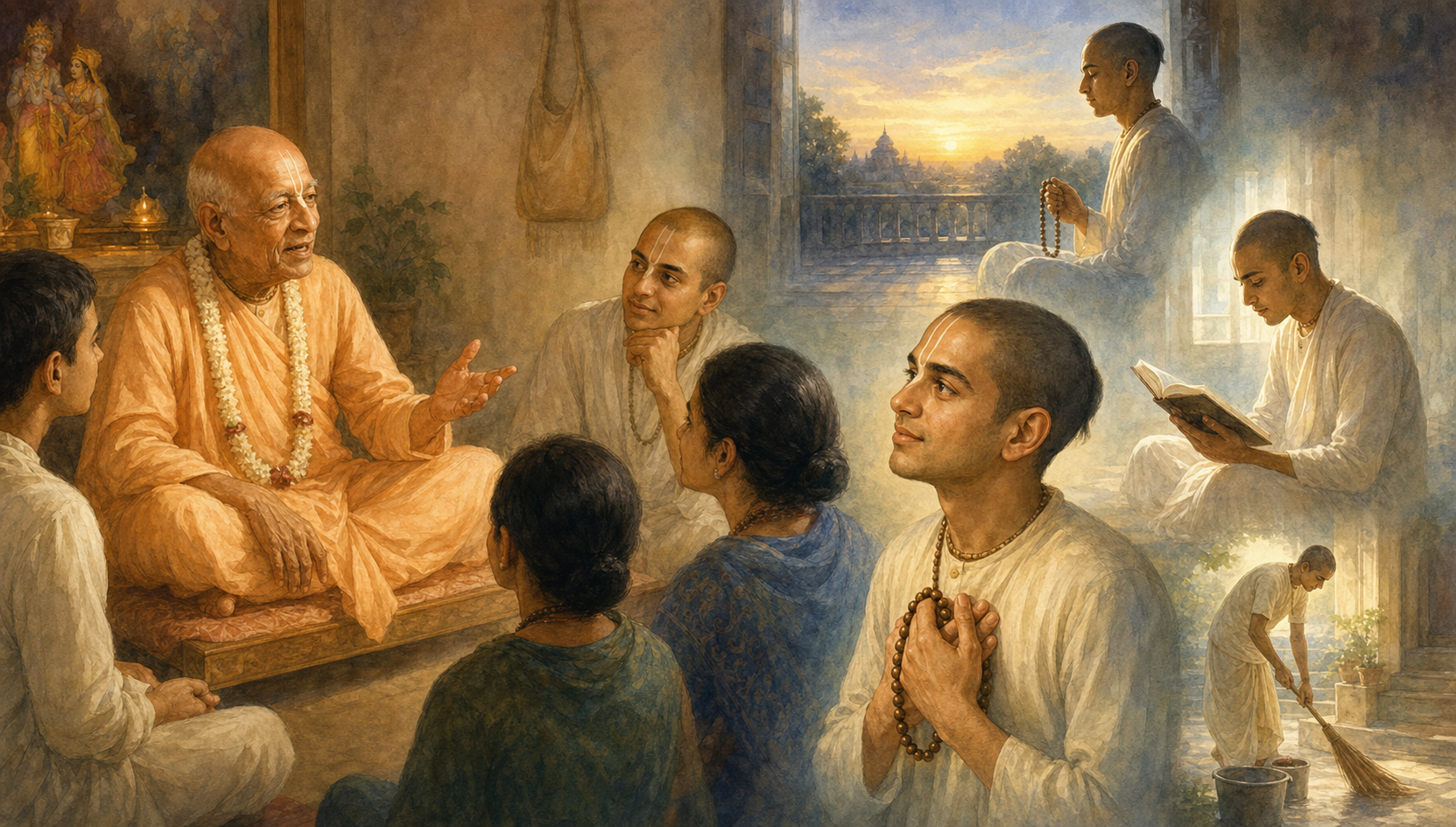
Profound Insights from Srimad-Bhagavatam 11.9.15: Avadhuta’s 24 Gurus for Inner Unity

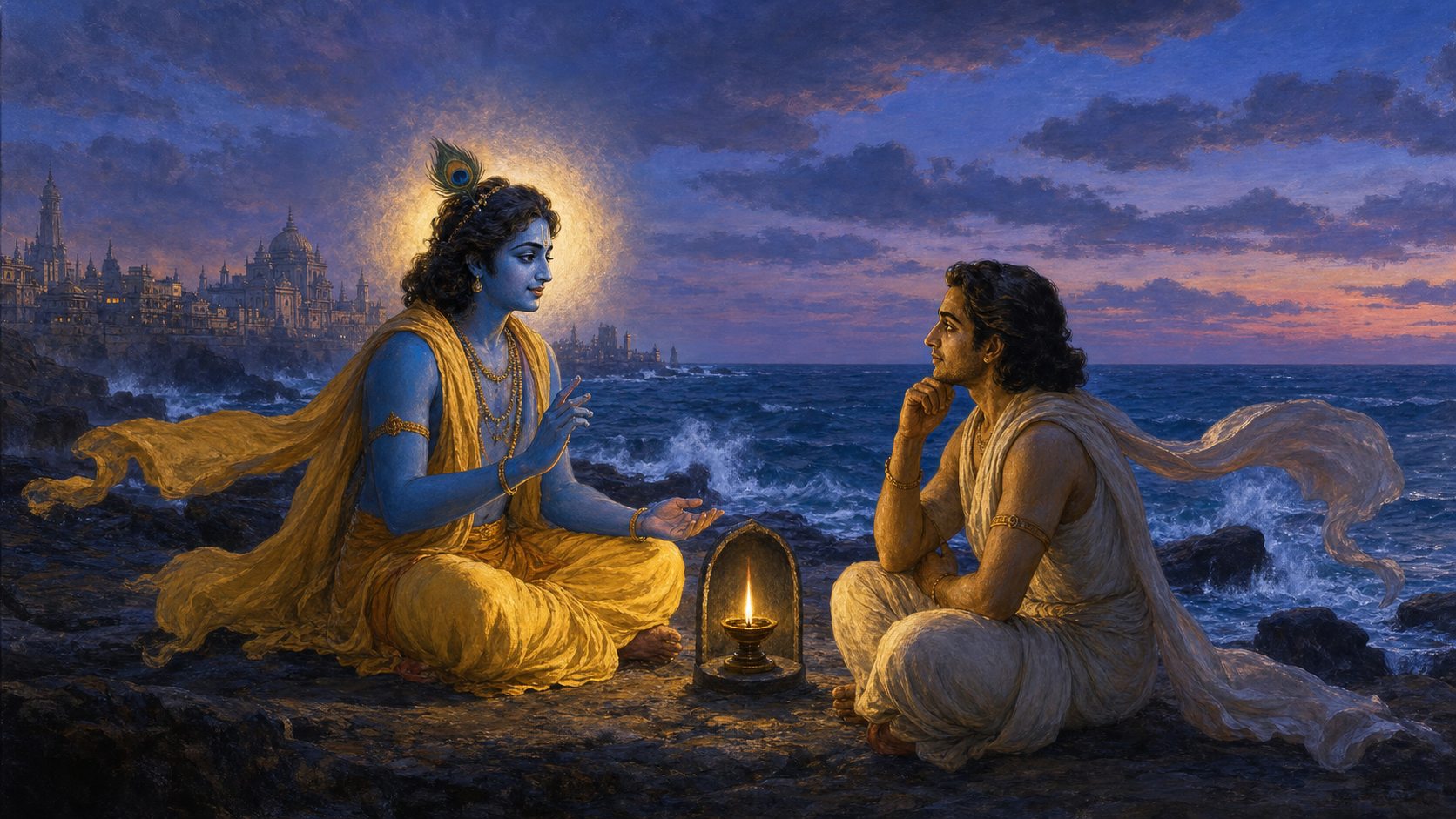
Srimad-Bhagavatam 11.9.15 sits inside the Avadhuta brāhmaṇa’s curriculum of twenty-four teachers, showing how equanimity, detachment, and devotion are cultivated by learning directly from nature and human experience. This analysis, informed by the class of HH Bhakti Vighna Vinasa Narasimha Swami Maharaj, explains the verse’s role in stabilizing attention, refining ethical judgment, and anchoring spiritual practice…
-
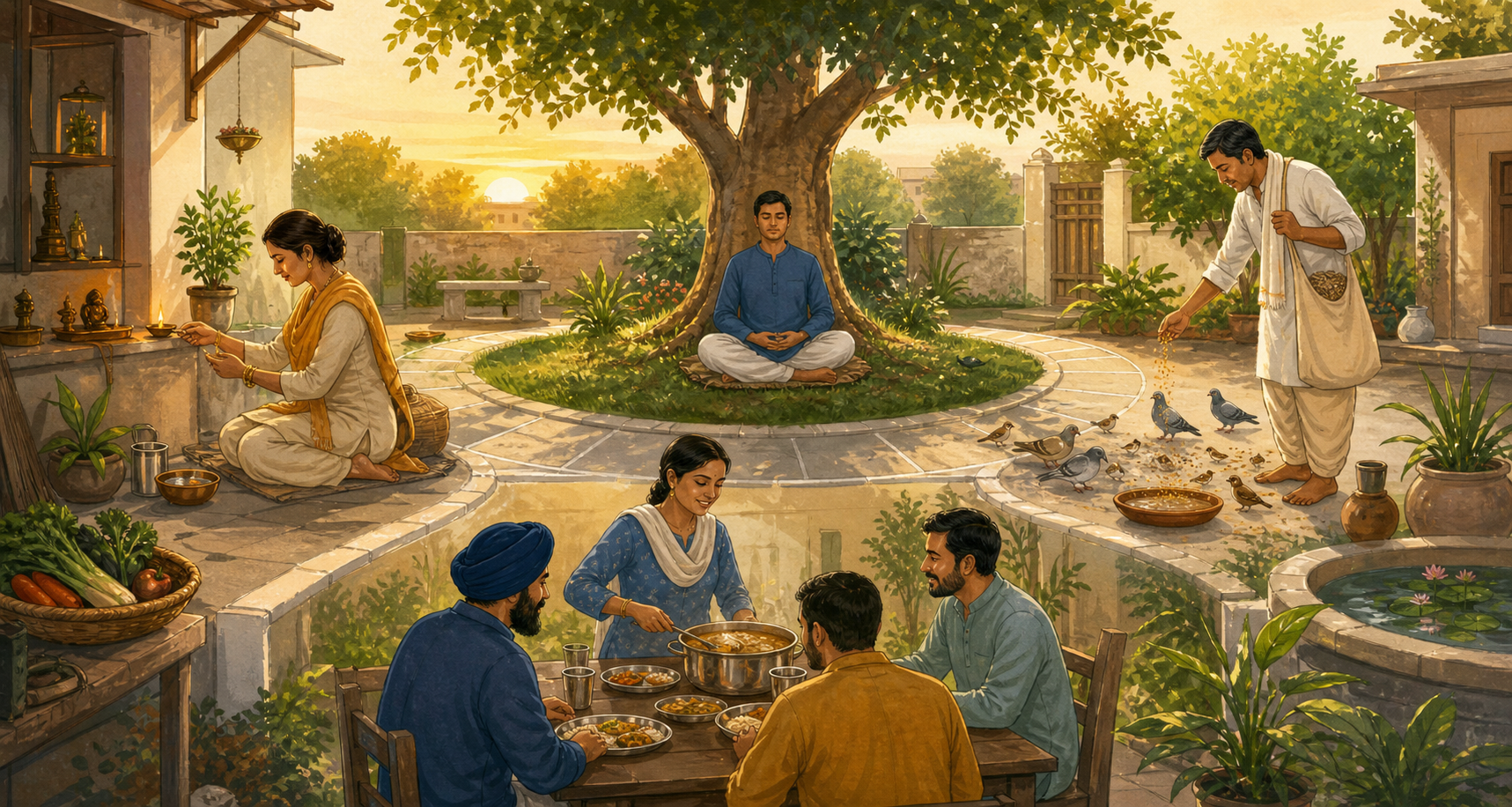
Dharma in Action: 10 evidence-based daily practices for a transformative Hindu New Year

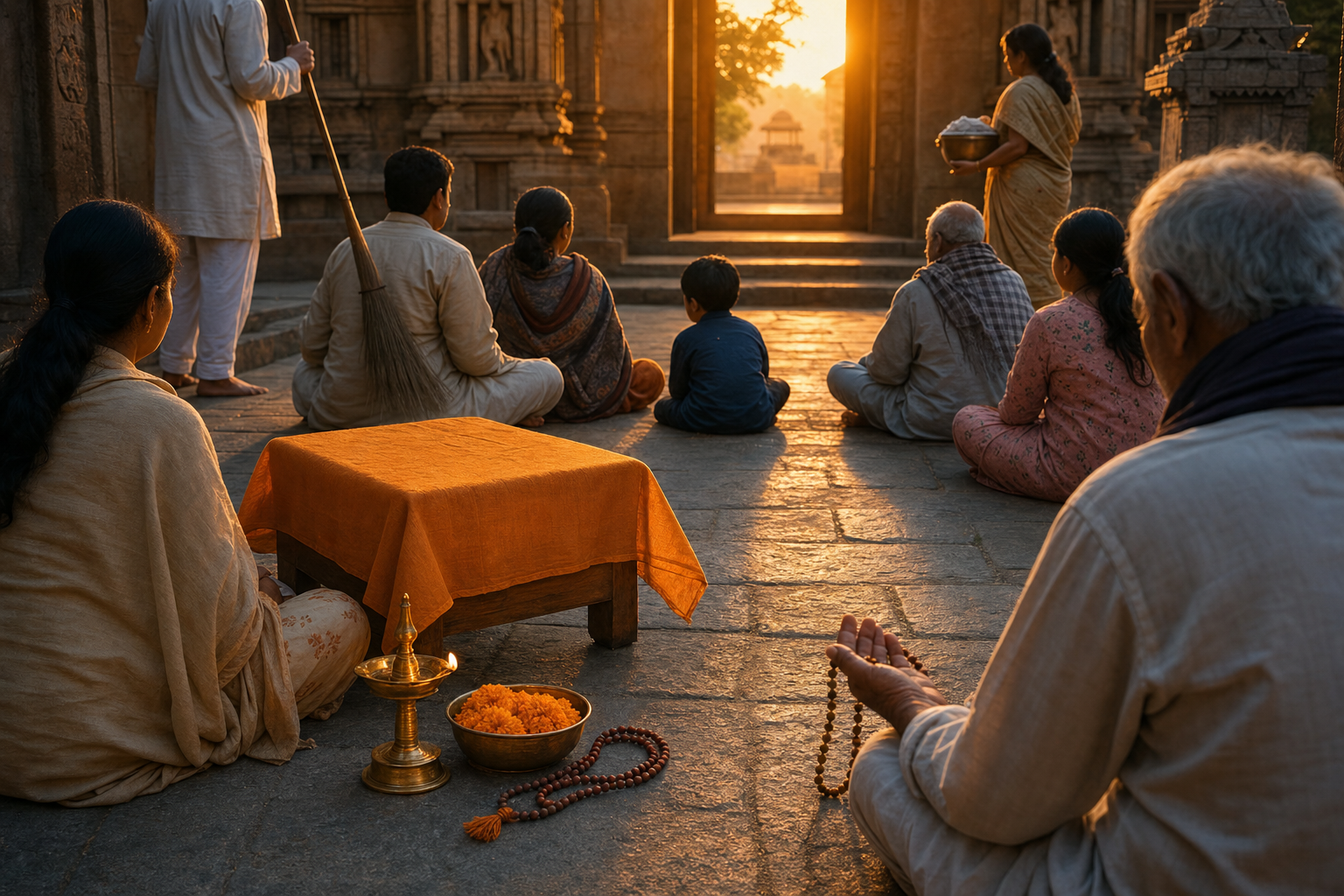
The Hindu New Year—marked as Ugadi, Mesha Sankranti, Vishu, and Puthandu—offers a clear opportunity to align daily life with Dharma. This guide presents ten practical, evidence-informed resolutions grounded in yama and niyama and harmonized with Buddhist, Jain, and Sikh ethics. Each practice includes simple action cues for modern schedules, from mindful speech and ethical consumption…
-
Goat Horns in Hinduism: Fearless Strength, Agni’s Fire, and the Sacred Path of Inner Ascent

Goat horns serve as a compact teaching in Hindu symbolism, fusing Agni’s purifying fire, Kshatra-dharma’s disciplined courage, and yoga’s inner ascent. Philological nuances (ajā, chāga, meṣa, śṛṅga) and Vedic references frame the motif’s depth and legitimacy. Iconography, temple architecture, and ritual soundscapes reinforce an upward vector from density to clarity, akin to kundalinī rising along…
-
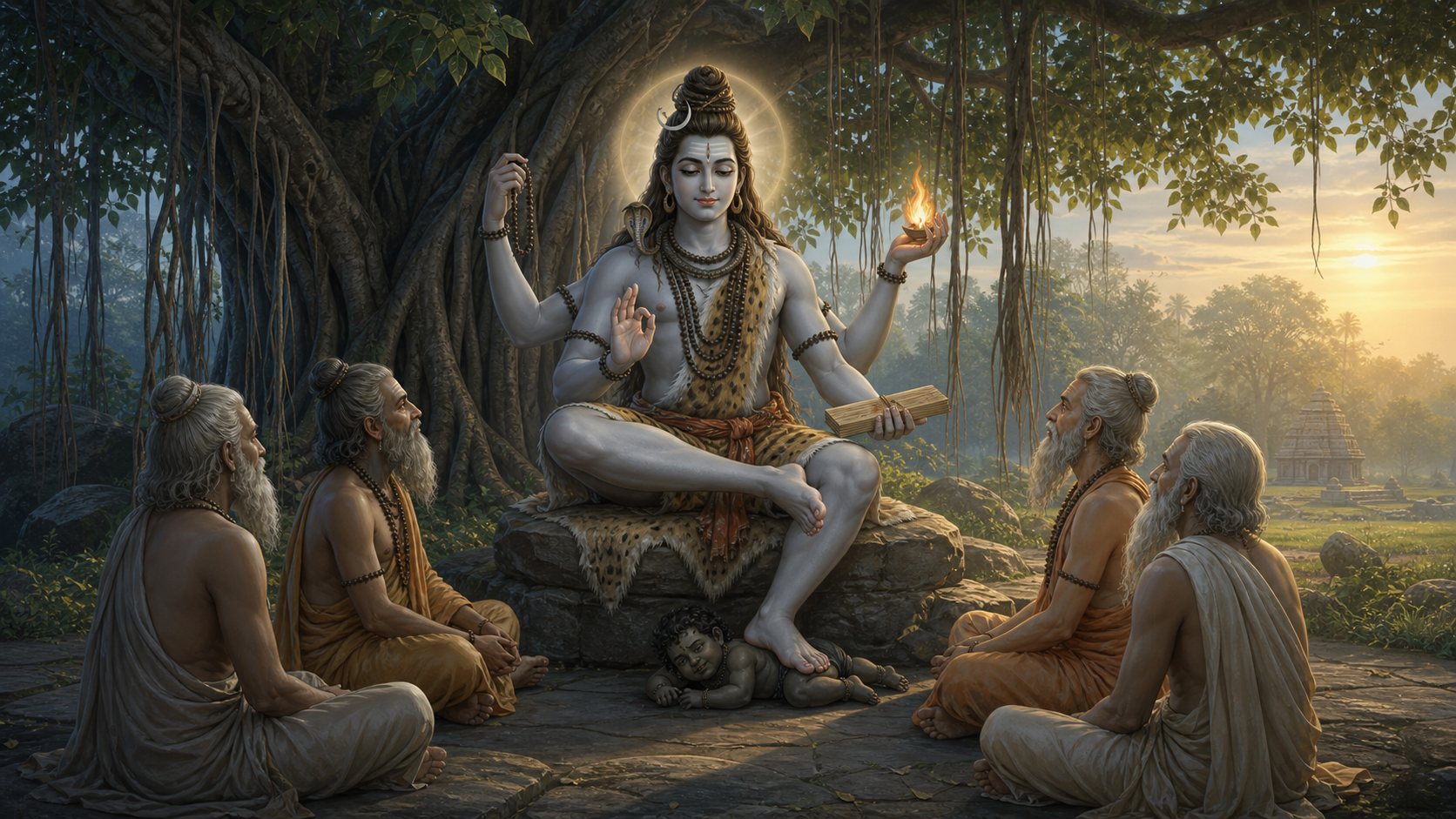
Unveiling Lingasthala: Shiva as Infinite Brahman in Virashaiva Philosophy and Lived Practice

This essay explores how Virashaiva (Lingayat) philosophy recognizes Shiva as the infinite Brahman and makes that insight tangible through linga-centered practice. It clarifies Lingasthala as the field of realization anchored in the Shatsthala path, the Panchacharas, and the Ashtavaranas. It links Upanishadic non-duality with Shaiva devotion, explains the Lingodbhava narrative, and shows how saguna worship…
-
Kailash Giri Pradakshina: Definitive, Soul-Stirring Guide to Manasarovar Yatra and Parikrama

Mount Kailash, beside Lake Manasarovar and Lake Rakshastal, is revered across Hinduism, Buddhism, Jainism, and Bon, making the Kailash Manasarovar Yatra a living emblem of dharmic unity. This comprehensive guide explains the spiritual grammar of circumambulation—pradakshina, parikrama, Girivalam, and kora—while detailing the three-day, ~52 km Outer Kora from Darchen over Drolma La Pass. Practical sections…
-
Rajapujyam–Avamanam 2026–2027: Comprehensive Honor–Dishonor Guide for Every Rashi

This in-depth guide explains Rajapujyam and Avamanam—the annual honor–dishonor ratio presented for each Janma Rashi—within the 2026–2027 Parabhava Nama Samvatsaram context. It outlines how the 1–7 scale is interpreted, why figures vary by Panchangam tradition, and how to combine the ratio with Aaya–Vyaya 2026–2027, Tarabalam, and key transits for practical decisions. Jupiter’s shift into exalted…
-
Shiva–Shakti Raasa Leela: Unveiling the Cosmic Dance of Love, Consciousness, and Creation

Shivashakti Raasa Leela—also known as Sri ShivShakti Rasalila—presents the union of Śiva and Śakti as a continuous dance and embrace that render Shaiva metaphysics visible and livable. Anchored in Natyashastra aesthetics, Shaiva Āgamas, and Kashmir Shaivism’s rasa theory, it interprets creation as spanda (vibration) and devotion as aesthetic savoring (rasa). Iconography of Śiva Naṭarāja, Somāskanda,…
-
Sri Aurobindo’s Inner Yajna: How Heart-Centered Worship Outshines Outer Rituals

Sri Aurobindo distinguishes outer ritual from inner yajna and shows why inner worship transforms consciousness more reliably than external observance. Drawing on Vedic philosophy, the Bhagavad Gita, and integral methods from Karma Yoga, Bhakti, Jnana, and Raja Yoga, the discussion explains how sacrifice progresses from the gross to the subtle, purifying manas, buddhi, and chitta.…
-
Nature Is Pure: Sacred Dharmic Ecology, Waste Ethics, and Human Responsibility in Hindu Thought

This article presents a rigorous Dharmic ecology framework: nature is inherently pure and self-regulating, while stagnation and filth arise when human systems block ecological flows. Drawing on Hindu philosophy (ṛta, pañca-mahābhūtas, śauca, aparigraha, ahimsa) and allied insights from Buddhism, Jainism, and Sikhism, it maps timeless ethics to contemporary tools like life cycle assessment, material flow…
-
Friday, March 20, 2026 Panchang: Pratipada to Dwitiya Transition, Auspicious Timings, and Ritual Guidance

Friday, March 20, 2026 spans a tithi transition: Shukla Paksha Pratipada lasts until 5:24 AM, after which Shukla Paksha Dwitiya prevails in most regions. The Panchang day label follows the tithi at sunrise, so many localities will observe Dwitiya for the civil day. A technical overview explains how a tithi is defined by the Moon–Sun…
-
Mahabharata’s Fierce Reckoning: Jayadratha, Kichaka, and Dharma’s Unforgiving Verdict

This analysis examines how the Mahabharata adjudicates unrestrained desire through the intertwined fates of Jayadratha and Kichaka. It shows how Dharma calibrates justice—humiliation when restraint advances stability, and decisive force when protection of the vulnerable demands it. Readers gain a clear view of Rajadharma, Dandaniti, Apaddharma, and the atatayin doctrine, applied to real narrative crises.…
-
Outgrowing Longstanding Friendships with Grace: A Clear, Compassionate Guide to Change

Friendships forged through intense proximity can feel permanent, yet adult bonds depend more on reciprocity, values, and deliberate care than on shared corridors. This article offers a research-informed, dharmic-aligned framework for recognizing when a friendship has been outgrown and how to respond with clarity and compassion. Readers learn to assess post-interaction feelings as reliable data,…
-
Lingadharana in Virashaivism: The Sacred Wearable of Shiva-Bhakti Shaping Identity and Unity

Virashaivism distinguishes itself within Shaivism through Lingadharana, the uninterrupted wearing of the Ishtalinga as a living emblem of devotion and ethical accountability. Grounded in the Ashtavarana and Panchachara, this practice fuses Shaiva metaphysics with daily discipline, ensuring that remembrance of Shiva accompanies every action. Historically prominent in 12th-century Karnataka and associated with Basava and the…
-
Rethinking Death and Consciousness: Rigorous Evidence for Reincarnation and Dharmic Convergence

Modern neuroscience commonly assumes that consciousness ends at death, yet decades of rigorous field research—initiated by Ian Stevenson at the University of Virginia—has documented hundreds of cross-cultural cases suggestive of reincarnation. The strongest reports involve young children who spontaneously recount verifiable details of a previous life, exhibit phobias or behaviors matching the prior death, and…