-
March 13, 2026 Panchang Guide: Krishna Paksha Dashami Timing, Good Time, Nakshatra & Rashi

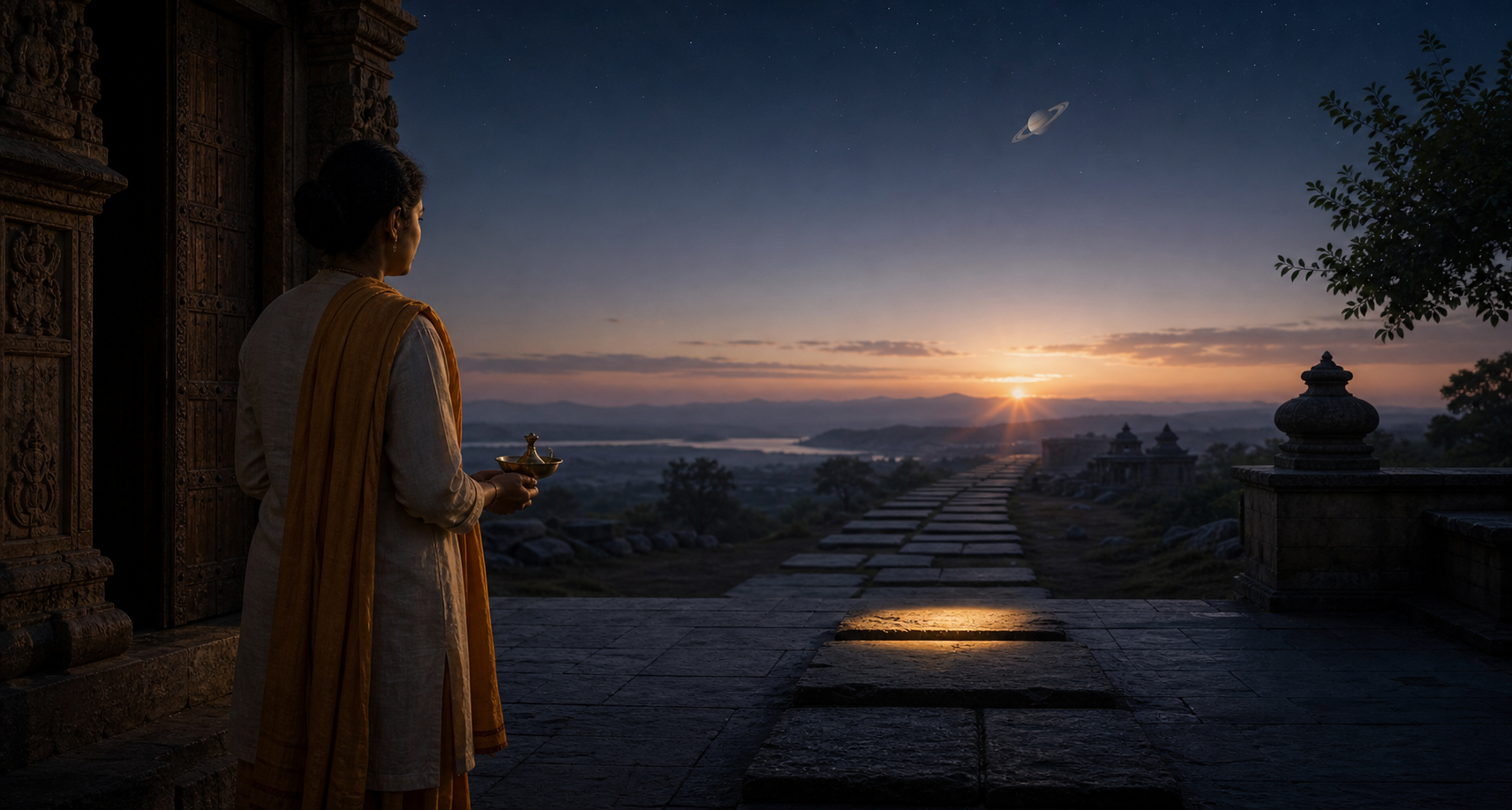
Friday, March 13, 2026 marks a transition in the Hindu calendar from Krishna Paksha Navami (until 4:12 AM in most regions) to Krishna Paksha Dashami for the remainder of the day. The Panchang’s tithi system is explained with its astronomical basis—12-degree Sun–Moon separations—and the role of nirayana calculations. Practical guidance highlights Brahma Muhurta, Abhijit Muhurta,…
-
Overwhelmed? An Evidence‑Based, Dharmic Guide to Pause, Deep Rest, and Recenter Your Life

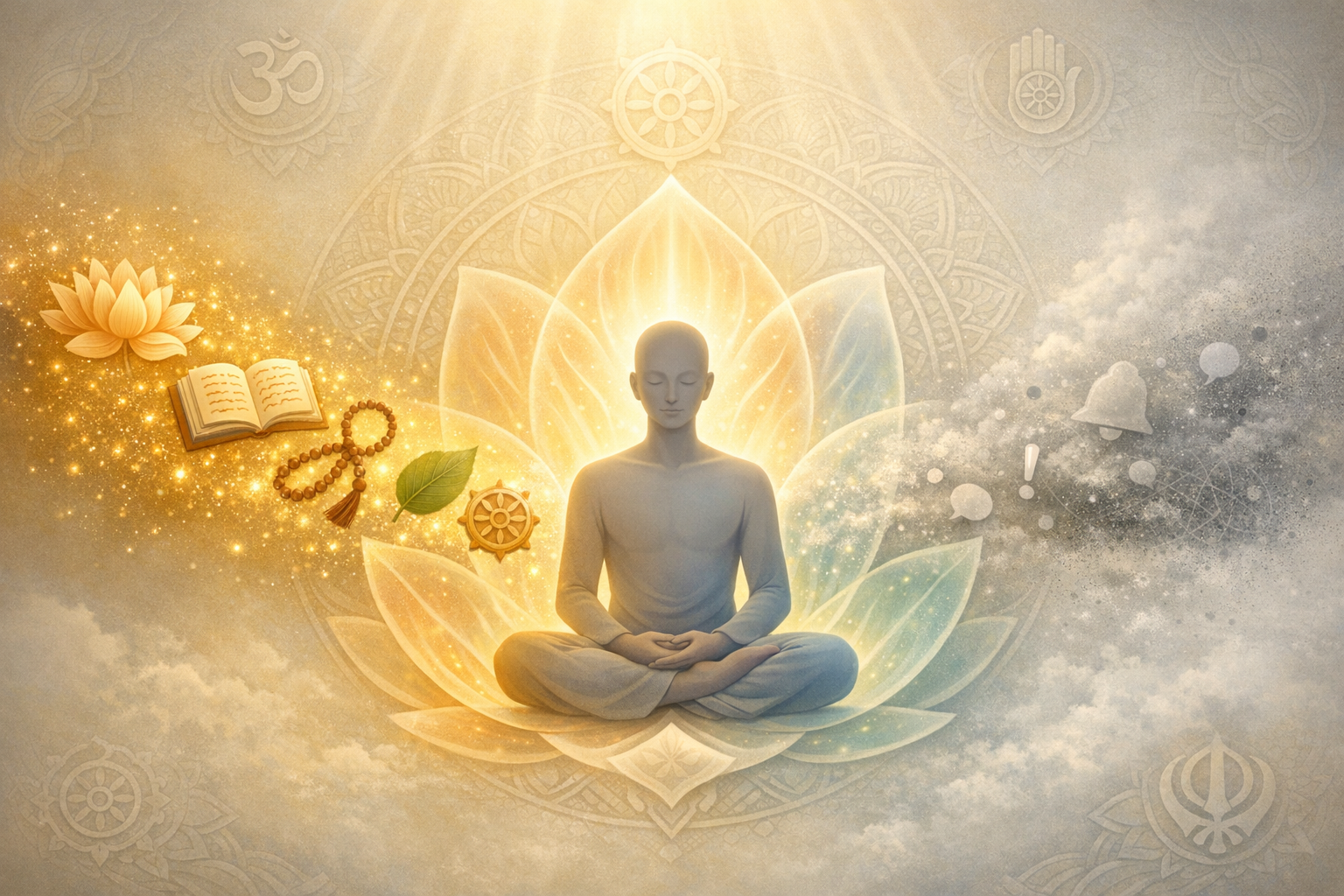
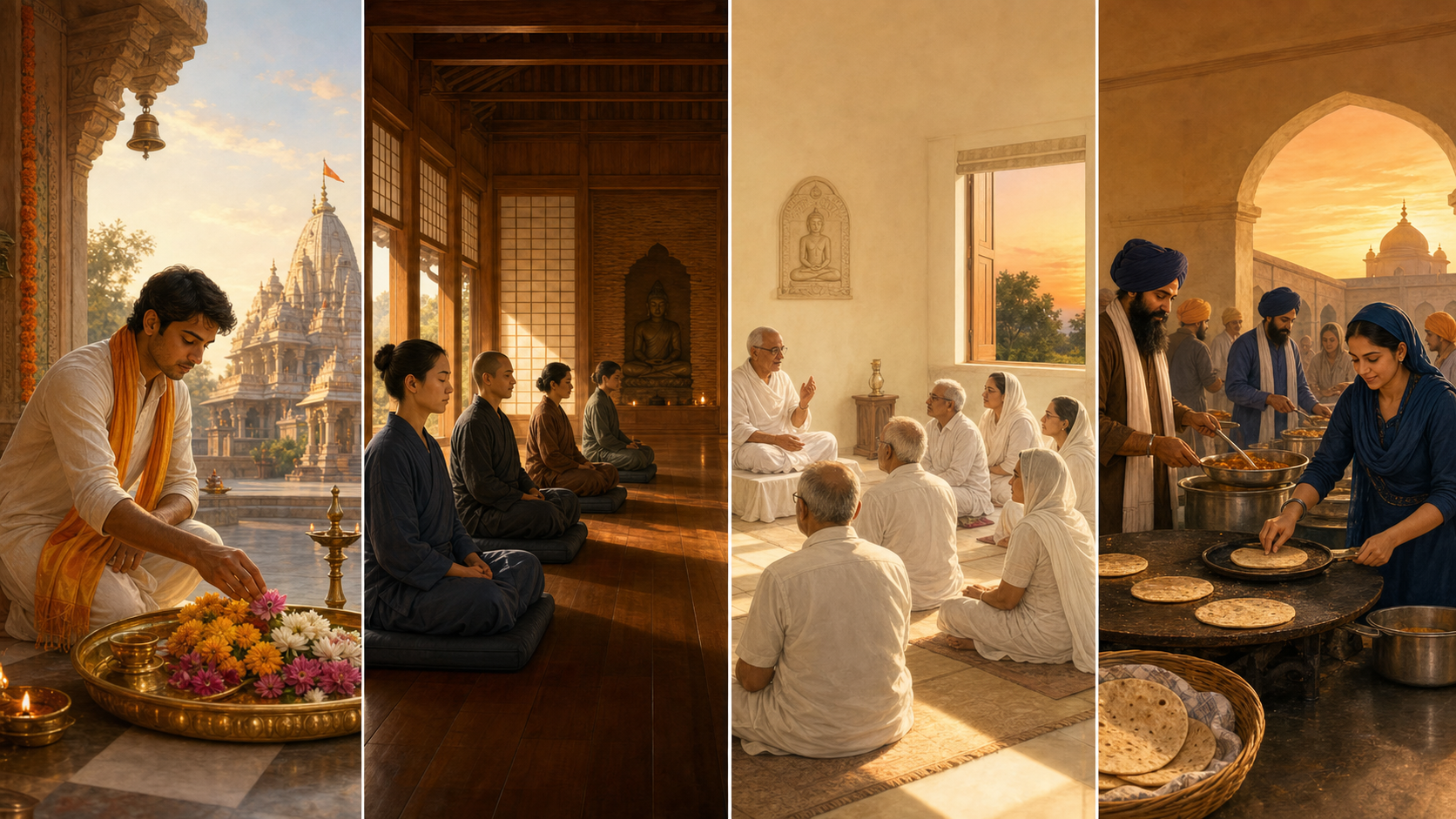
Many people today live in survival mode—short breath, scattered focus, and chronic exhaustion—due to nonstop demands and digital noise. This evidence-based, dharmic guide explains how to create restorative space that lowers allostatic load, improves sleep, and strengthens emotional resilience. It distills accessible practices from Hinduism, Buddhism, Jainism, and Sikhism—breathwork, mindful movement, attention training, compassion, and…
-
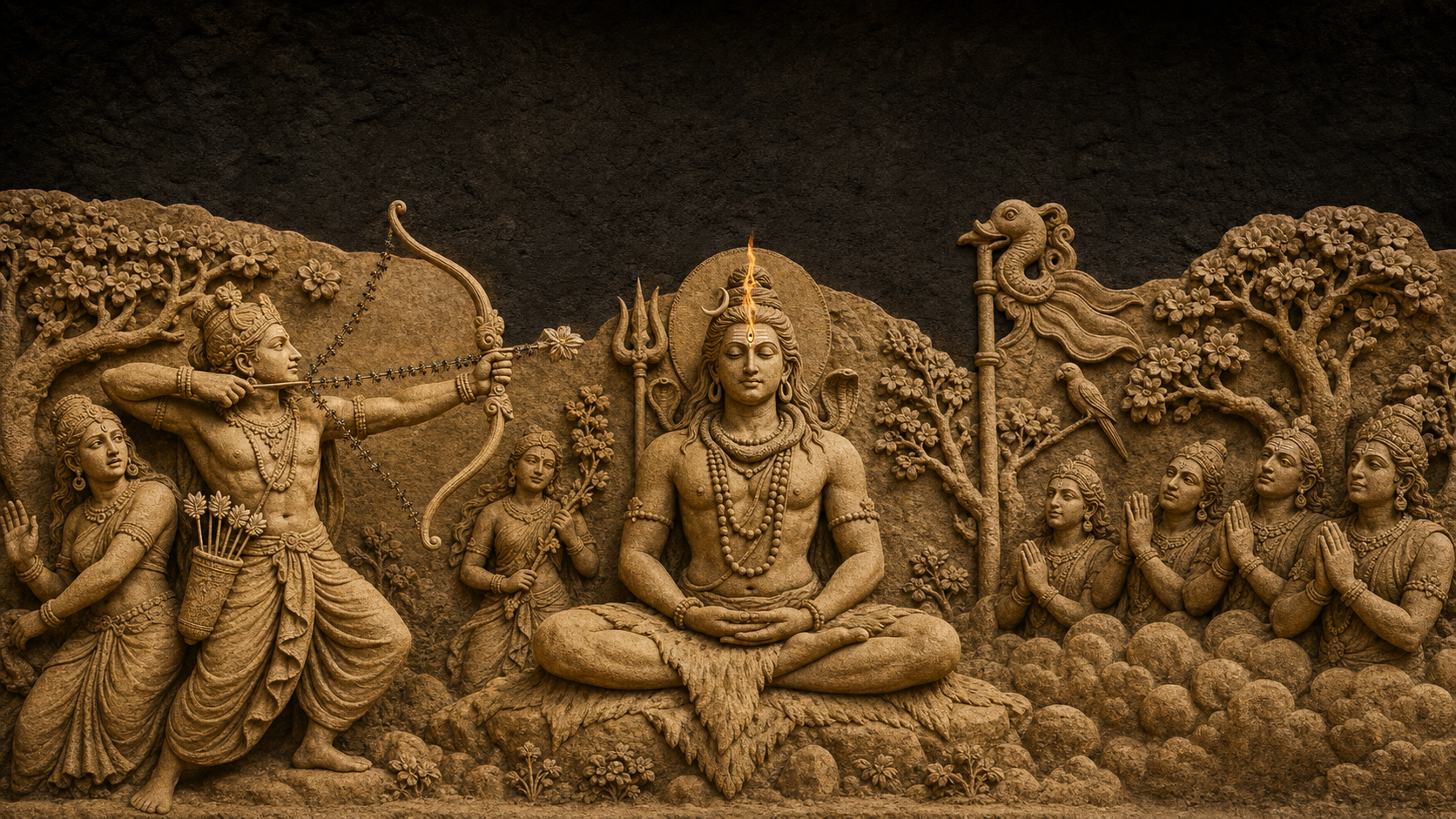
Kalantaka Shiva Unveiled: Tantric Iconography and the Fearless Conquest of Death and Time

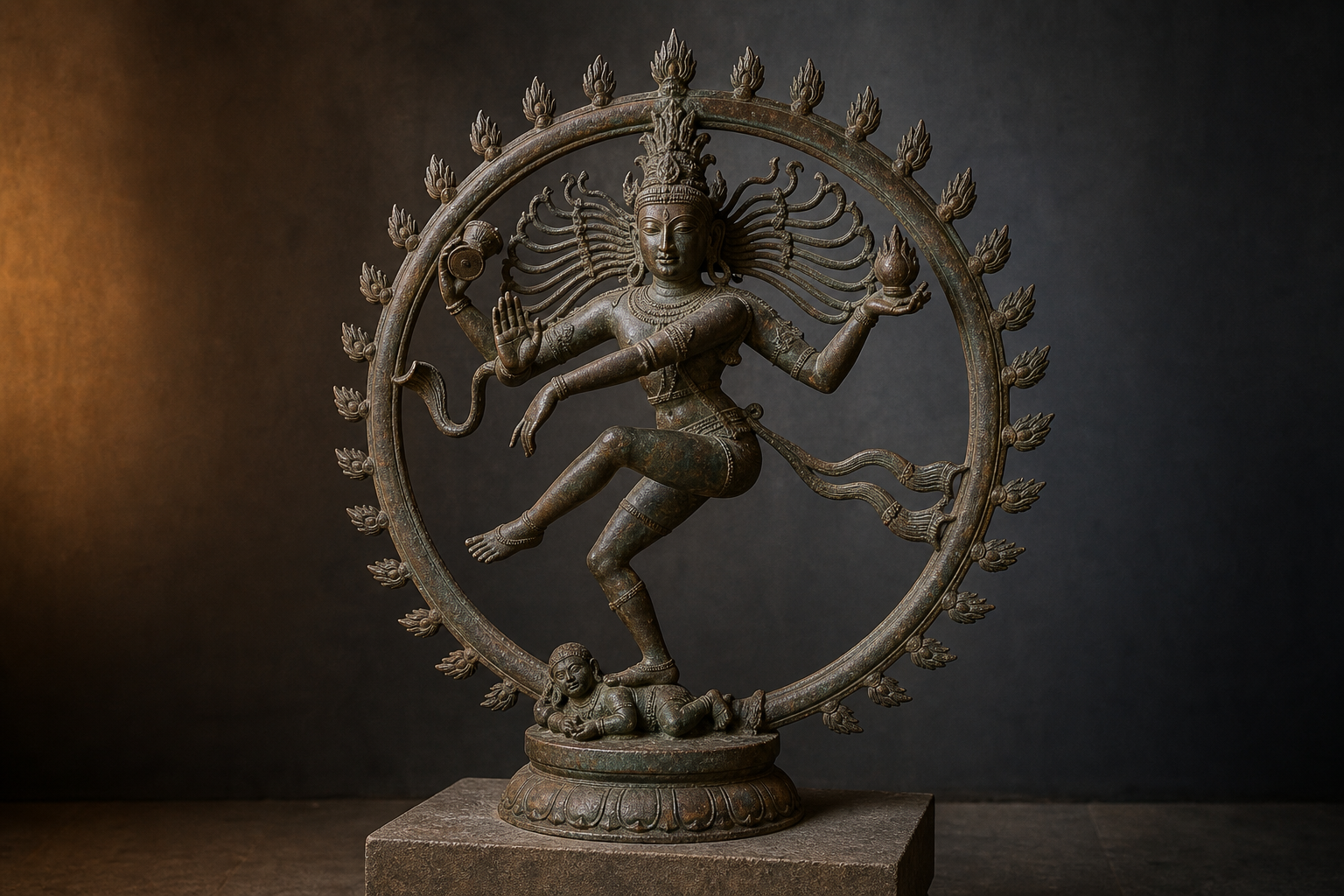
Kalantaka Shiva embodies Lord Shiva’s sovereignty over death and time, uniting narrative, ritual, and art into a coherent path of fearlessness. Drawing on Puranic sources—especially the Markandeya episode—this study unpacks the icon’s ugra yet compassionate character and explains how the trishula, damaru, and noose operate as precise Tantric symbols. Readers gain a field guide to…
-
Seeing the Banyan in a Seed: Profound Hindu Wisdom on Infinite Potential and Dharmic Unity

Hindu wisdom describes spiritual vision as the ability to perceive wholeness within the smallest fragment of reality, symbolized by seeing a vast banyan in a tiny seed. Drawing on the Chandogya and Mundaka Upanishads, the discussion clarifies how potentiality unfolds lawfully into form and how this insight aligns with Vedanta, Sankhya-Yoga, and systems science. Convergences…
-
Gaura Pūrṇimā 2026: Varsana Swami on Mahāprabhu’s Childhood, Mission, and ‘Blood Moon’ Myths

Gaura Pūrṇimā 2026 marks 540 years since Śrī Caitanya Mahāprabhu’s advent and offers a precise, practice-centered approach to devotion. Drawing on Śrī Caitanya-caritāmṛta and Śrī Caitanya-bhāgavata, Varsana Swami (Maharaja) explores Mahāprabhu’s childhood pastimes and the theological reasons for His descent. The class clarifies that He appeared to broadcast prema-bhakti through saṅkīrtana while relishing Śrī Rādhā’s…
-
Decoding Nidhana in Somayaga: The Timeless Musical Finale and Ritual Precision of Agnistoma

Nidhana in Somayaga—especially within Agnistoma—holds a precise dual meaning: it is both the final, crafted cadence of Sama Veda chanting and a procedural marker that closes a ritual segment. This exploration clarifies how the five-part saman structure (prastava, udgitha, pratihara, upadrava, nidhana) coordinates priests, offerings, and timing across the three Soma pressings. Readers learn why…
-
Bhavani Jayanti 2026: Chaitra Ashtami’s Sacred Navratri Rituals, Traditions, and Significance

Bhavani Jayanti (Bhavani Ashtami) in 2026 falls on Thursday, 26 March, during Chaitra Navratri and is widely observed as Durgashtami; in some regions it coincides with Ashokashtami. This comprehensive guide explains the tithi-based timing in the Hindu calendar and why local Panchang consultation is essential. It outlines core home rituals—sankalpa, Durga Saptashati recitation, Kumari Puja,…
-
Chaitra Masam Unveiled: Sacred New Year Significance, Comprehensive Puja Guide, and Spring Festivals

Chaitra Masam marks the Hindu New Year in many regions and is revered as the day of cosmic creation, aligning households with an auspicious cycle of renewal. This long-form guide explains the calendrical science behind Chaitra, including tithi-based computation, amanta and purnimanta month systems, and the Indian National Calendar’s Śaka Samvat. It maps the rich…
-
Chandika Navami 2026: Powerful Chandi Puja on Krishna Paksha Navami—Meaning, Vidhi, Benefits

Chandika Navami in 2026 falls on 11 April, observed on Krishna Paksha Navami in Chaitra by Amanta calendars and in Bhadrapada by certain Purnimanta traditions. This comprehensive guide explains the festival’s Vedic-Puranic basis, the meaning of Chandika as the integrated Shakti of Mahakali, Mahalakshmi, and Mahasaraswati, and why tithi timing on Navami is central. Readers…
-
Decoding the Black Bee: Bhramari Devi and the Dark Radiance of Shakti in Hinduism

This essay decodes the Hindu symbolism of black bees through Bhramari Devi, a form of Shakti whose dark radiance signifies protection, interdependence, and transformative power. It traces Puranic and regional narratives where the Goddess overcomes adversaries as a coordinated swarm, embodying distributed Shakti. Drawing on Upanishadic Madhu-Vidyā, the Bhagavata Purana’s Bhramara-gītā, and allied motifs in…
-
Timeless Lila: Exploring the Divine Play of Being and Becoming Across Dharmic Paths

This long-form exploration presents Lila—the eternal divine play—as a framework for understanding how being and becoming interrelate across Hinduism, Buddhism, Jainism, and Sikhism. Drawing on the Upanishads, Vedanta (Advaita, Vishishtadvaita, Dvaita), the Bhagavad Gita, and Shaiva–Shakta thought, it clarifies how creation, preservation, and dissolution express a living unity. It maps key concepts like dharma, karma,…
-
Compassionate Seva in ISKCON: Ethics, Competencies, and Dharmic Unity at Almviks gård

This analysis reframes a humble Vaishnava greeting from the ISKCON community at Almviks gård into a comprehensive exploration of personal seva within the Guru–Shishya Tradition. It outlines the role’s core domains—scheduling, sadhana facilitation, health support, travel logistics, and documentation—while emphasizing ethical pillars of consent, boundaries, accountability, and privacy. Practical guidance addresses competencies, intercultural communication in…
-
Replace ‘What’s Wrong with Me?’ with a Science-Backed, Compassionate Question that Heals

This article examines a practical and science-backed reframing that replaces the deficit-based question “What’s wrong with me?” with the context-seeking “What happened to me?” The analysis explains how deficit framing recruits threat physiology and fuels the inner critic, whereas compassionate inquiry engages the ventral vagal system, broadens perspective, and supports mental health. Drawing on self-compassion…
-
Varuna in the Vedas: Majestic Sovereign of rta, Waters, and Nature’s Vital Powers

Varuna, among the oldest deities in the Rigveda, stands as sovereign of rta (cosmic order), guardian of the waters, and witness to truth. The Vedic hymns credit him with distributing nature’s vital powers—strength in horses, milk in cows, vitality in the heart, and even fire concealed within the waters—expressing a grand ecology of interdependence. His…
-
Beyond Shadows: Plato’s Cave, Dharmic Wisdom, and the Mind’s Illusion of Reality

Plato’s allegory of the cave explains why humans often mistake partial images for complete reality; Dharmic philosophies show how to correct that error through disciplined practice. This article integrates Plato’s ascent with Hindu, Buddhist, Jain, and Sikh frameworks—avidya and maya, the two truths, anekantavada, and Naam—demonstrating how perception can be retrained. Readers gain a rigorous…
-
Mayapur as a Living Dham: A Sadhu’s Lens on Navadvipa, Bhakti, and Sacred Geography

This long-form exploration presents Mayapur as a living dham, observed through the disciplined perspective of a sadhu. It situates Mayapur within the fluvial geography of the Bhagirathi-Ganga and Jalangi rivers and recounts its historic role in Gaudiya Vaishnavism and the saṅkīrtana movement of Śrī Caitanya Mahāprabhu. The sacred mapping of Navadvipa’s nine islands is explained…
-
Unlocking Sacred Meaning in Hindu Philosophy: Vācya, Lakṣaṇā, and Vyañjanā Demystified

Language in Hindu philosophy operates through three layered modes of meaning—vācya (literal), lakṣaṇā (indicated), and vyañjanā (suggested)—that guide readers from clear denotation to transformative insight. This long-form, research-driven exploration clarifies each mode with classical examples, links them to Nyāya, Mīmāṁsā, Vedānta, and Alaṅkāra-śāstra, and highlights the contributions of Ānandavardhana, Abhinavagupta, and Bhartṛhari. It demonstrates how…
-
40 ਮੁਕਤੇ: From ਬੇਦਾਵਾ to Blessing—Muktsar’s Chali Mukte and Guru Gobind Singh’s Grace

This long-form study traces how the 40 ਮੁਕਤੇ journeyed from ਬੇਦਾਵਾ (disavowal) at Anandpur Sahib to ਬਖ਼ਸ਼ਿਸ਼ (grace) at Muktsar Sahib under Guru Gobind Singh’s compassionate leadership. It situates the Battle of Khidrana (Muktsar) within Sikh history, highlighting terrain, tactics, and morale alongside the moral recovery catalyzed by Mai Bhago. The analysis clarifies how Sikh…