-
Beyond Heaven and Hell: Karma, Consciousness, and Self-Reward in Dharmic Philosophy

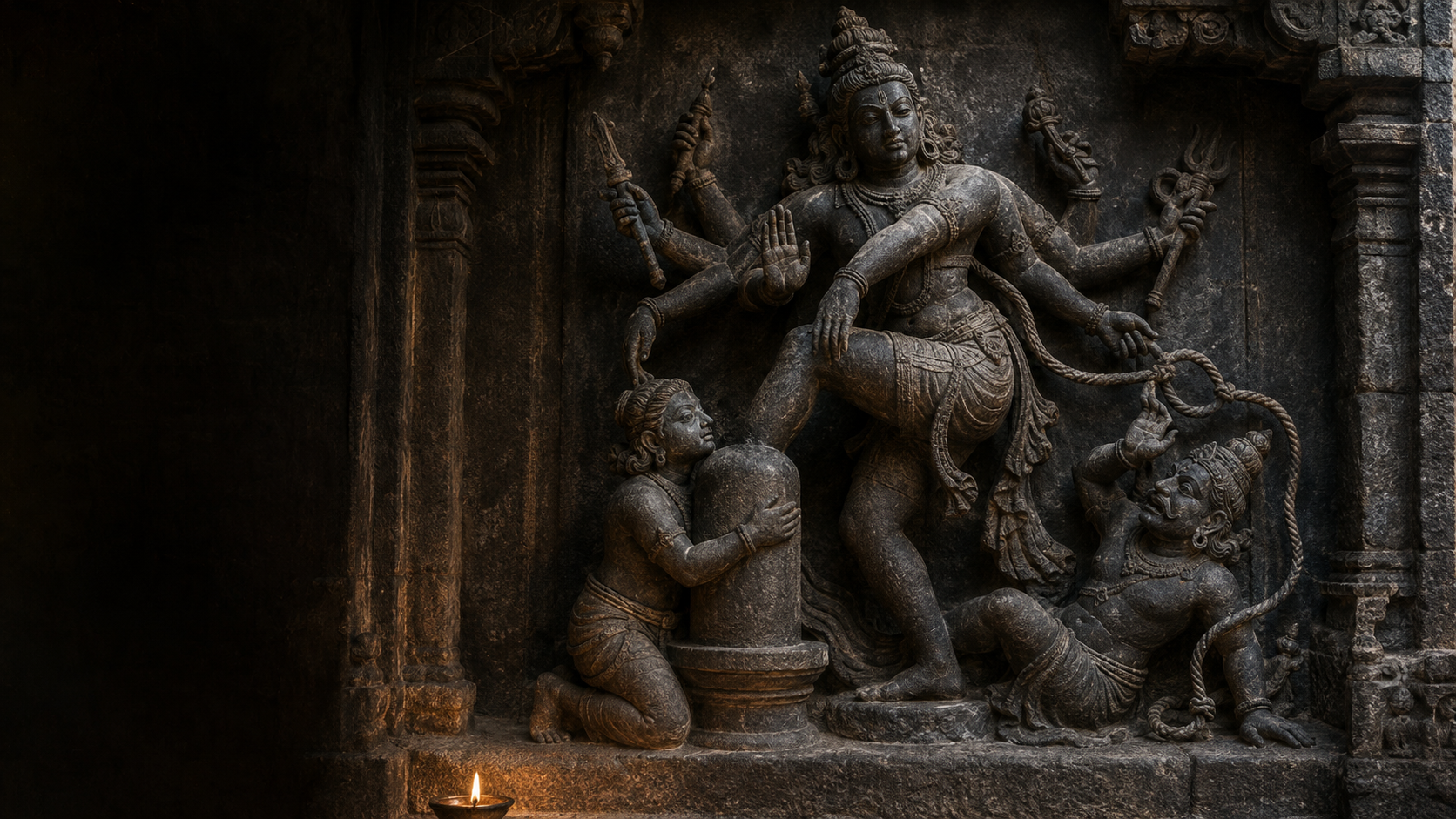
This essay explains, in clear academic terms, why Dharmic traditions reject an externalized reward-and-punishment model after death while affirming a rigorous moral universe. It clarifies karma-phala using concepts like sanchita, prarabdha, and agami, and links Mimamsa’s apurva and Nyaya–Vaisheshika’s adrishta to a self-executing moral order. Hindu philosophy, Buddhism, Jainism, and Sikhism are presented in harmony:…
-
Vasudhaiva Kutumbakam and Dharma: A Powerful Blueprint for Shared Global Peace

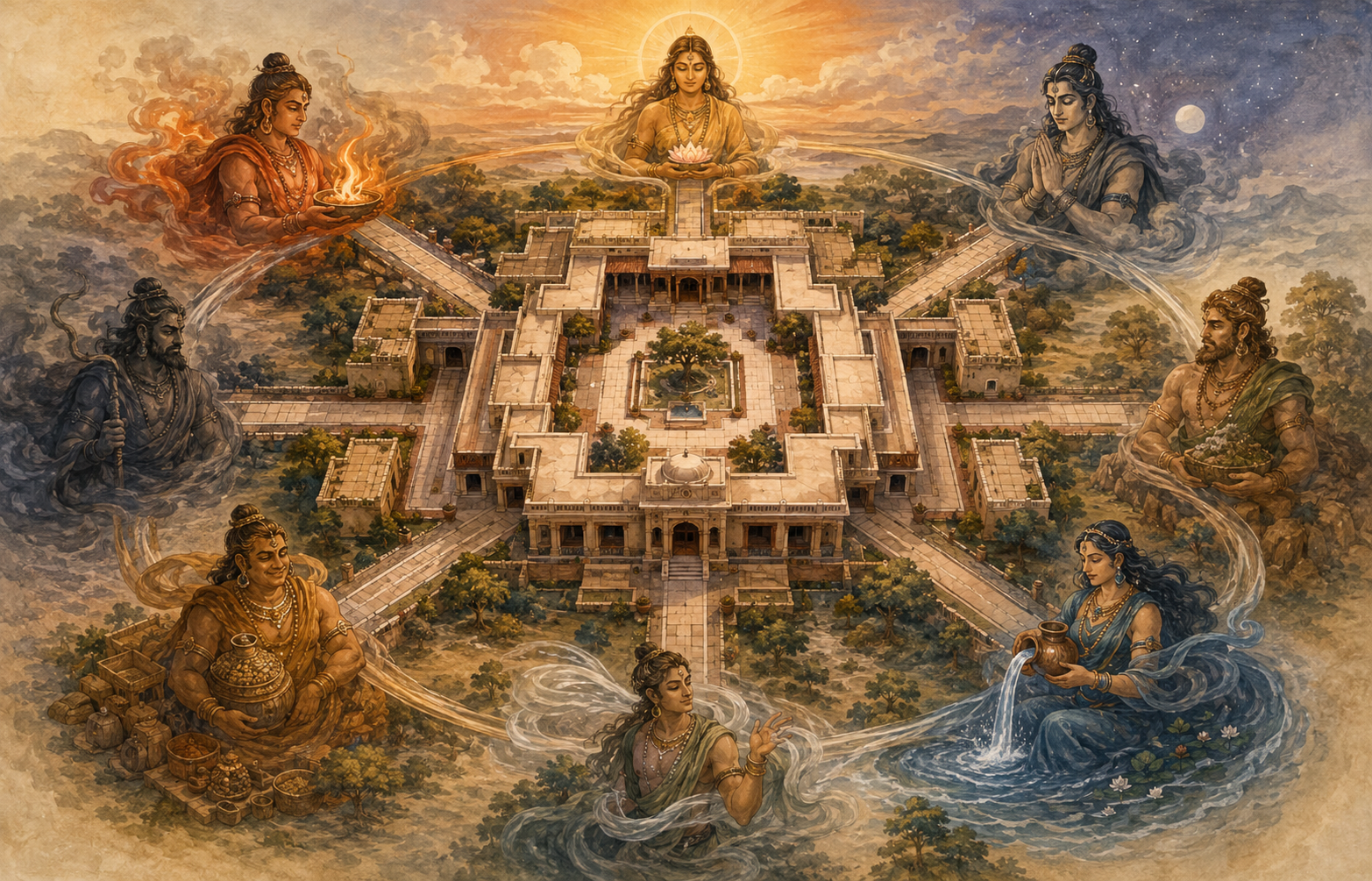
Vasudhaiva Kutumbakam frames global peace as a disciplined practice of shared responsibility rooted in Rta, Dharma, and the ethics of ahimsa and karuna. The essay explains how loka-samgraha in the Bhagavad Gita links personal virtue to social welfare through reciprocal duty. It outlines pluralism across Hinduism, Buddhism, Jainism, and Sikhism as a practical foundation for…
-
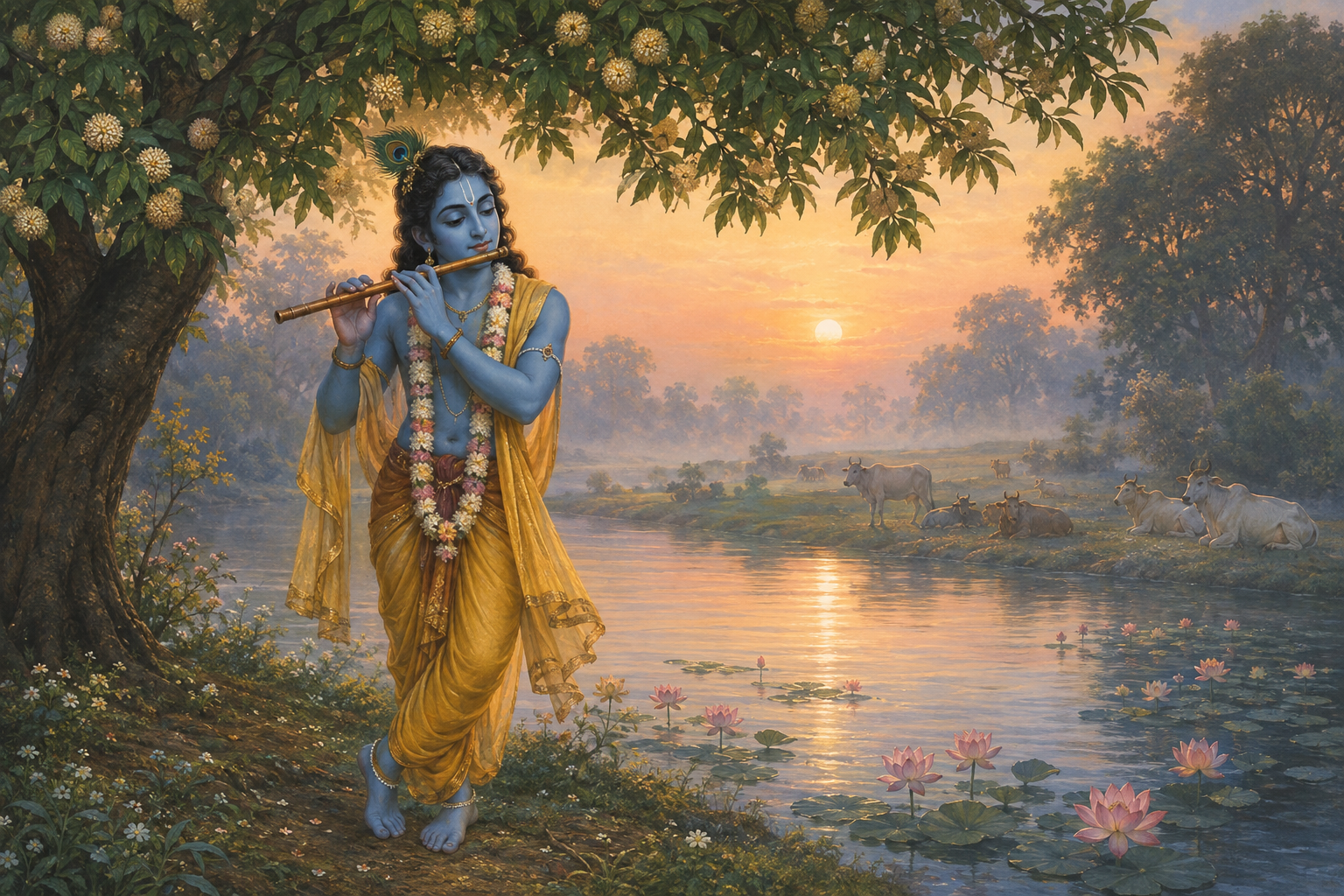
Sringara Murti in Krishna: A Transformative Exploration of Divine Beauty, Rasa, and Bhakti

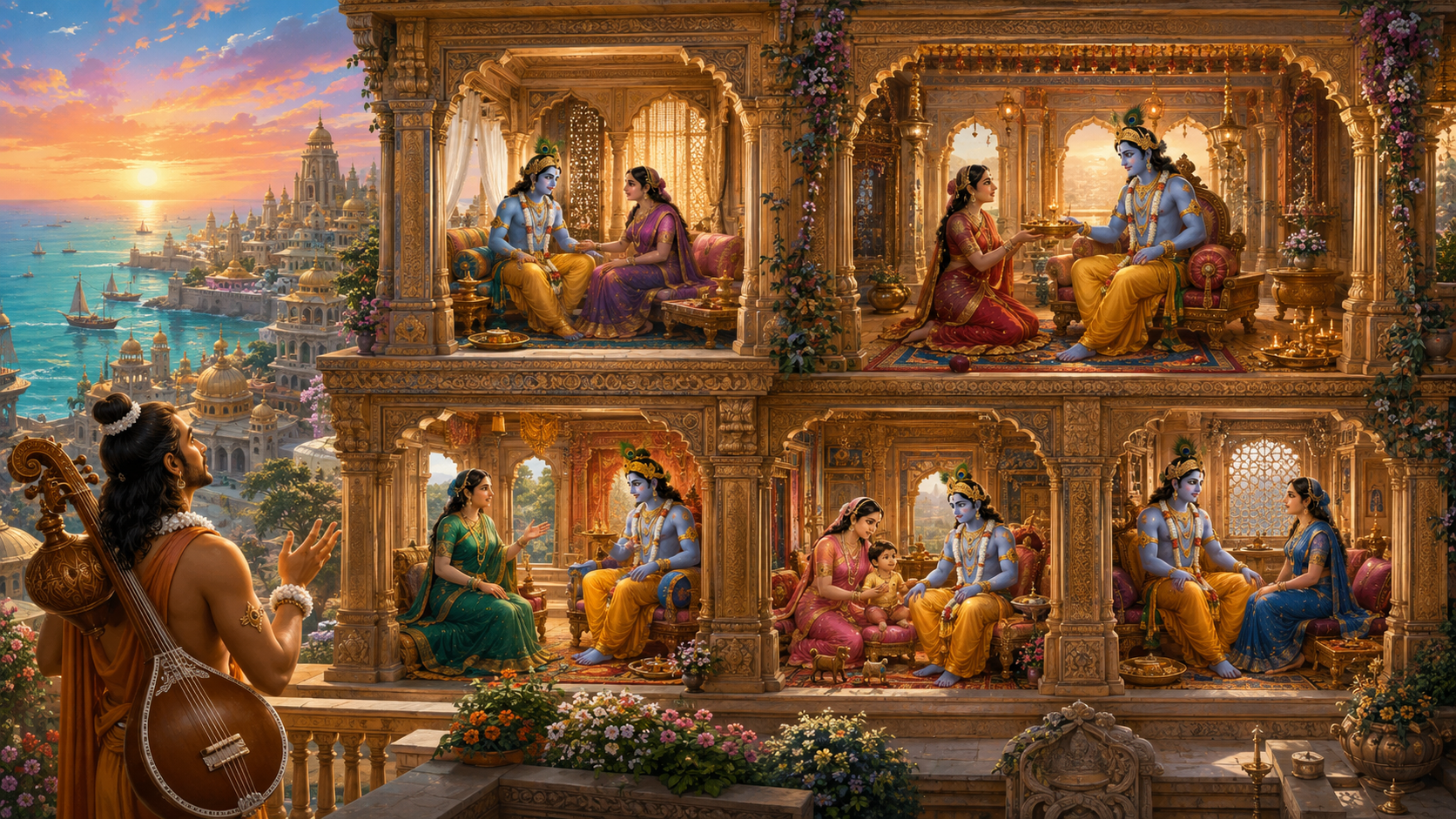
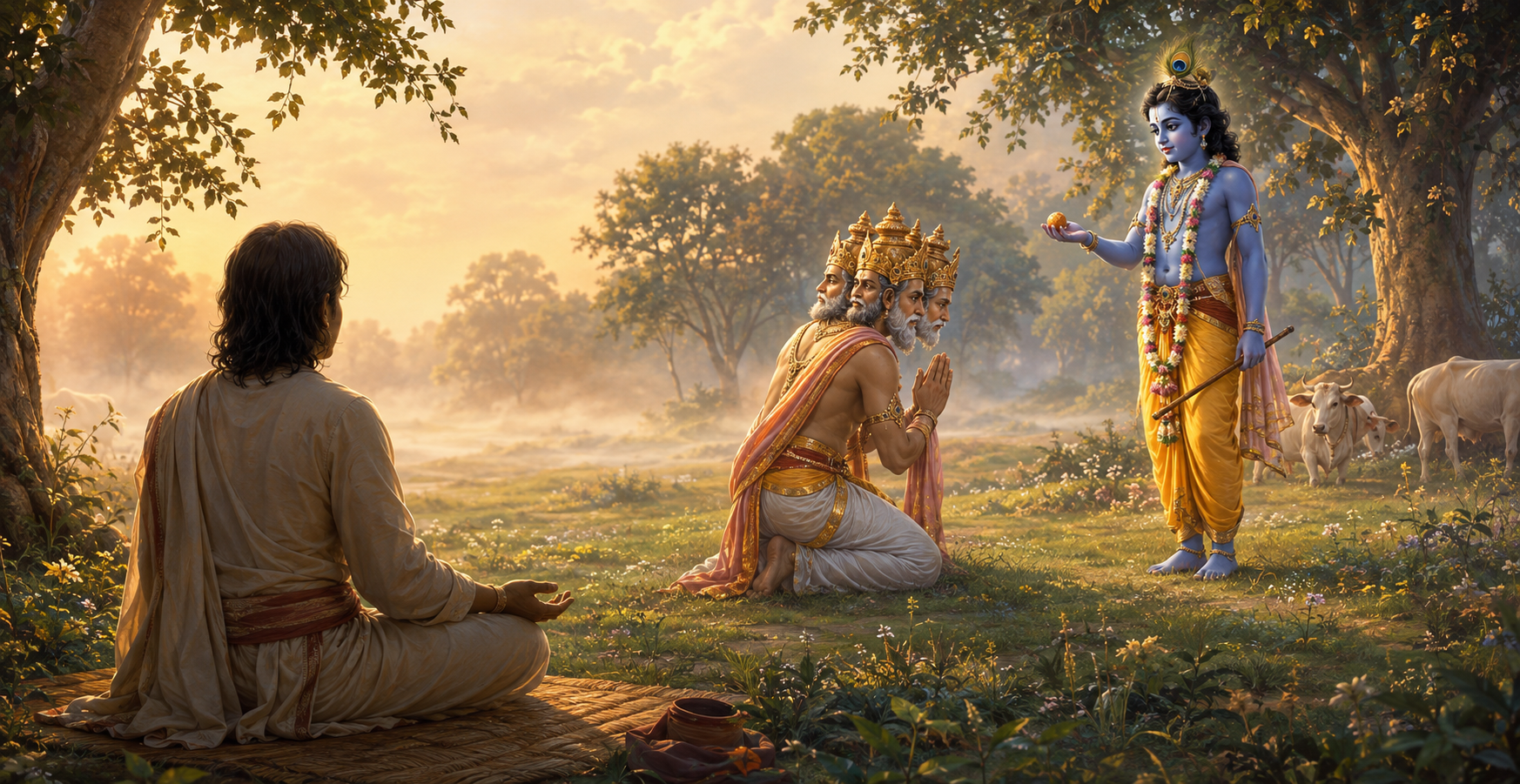
Sringara Murti presents a rigorous yet tender theology in which divine beauty becomes a disciplined means of knowing. Centered on Krishna and illuminated by the Bhagavata Purana, Gita Govinda, and Vaishnava aesthetics, it shows how śṛṅgāra transforms emotion into insight. The article details rasa theory, iconographic cues such as tribhaṅga and veṇu, and the ritual…
-
May 13, 2026 Panchang: Complete Guide to Krishna Paksha Ekadashi, Muhurats, Nakshatra, Rashi

Wednesday, May 13, 2026 begins with Krishna Paksha Ekadashi and transitions to Dwadashi at 08:53 AM IST. The overview explains how Tithi works astronomically, why timings vary by location, and how to observe Ekadashi and perform parana accurately—most devotees will break fast on Thursday morning, May 14, 2026. It outlines Good Time windows methodically: Brahma…
-
Quieting an Overwhelmed Mind: Science of Sound Baths and Dharmic Wisdom for Resilience

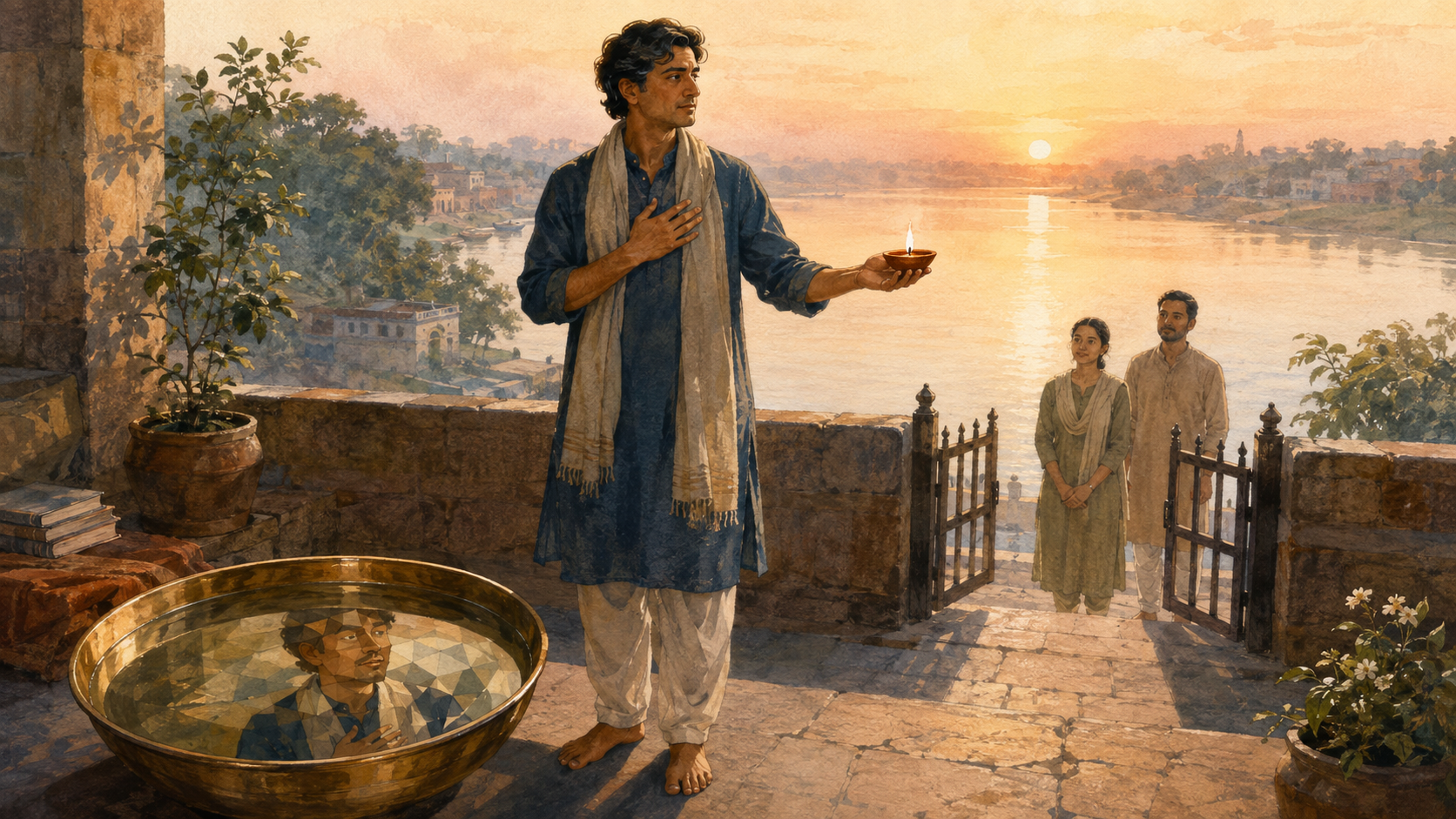
A recent Sound as Medicine session demonstrates how contemplative sound can ease overwhelm, calm the nervous system, and restore clarity. The experience paired soothing overtones with mindful breathing and journaling, yielding a post-session state described by release, peace, spaciousness, ease, clarity, calmness, and gratitude. Emerging research suggests plausible mechanisms: HPA-axis downregulation, increased heart rate variability,…
-
Gifting the Shaligram Stone: Profound Punya and the Sacred Dharma Ban on Selling

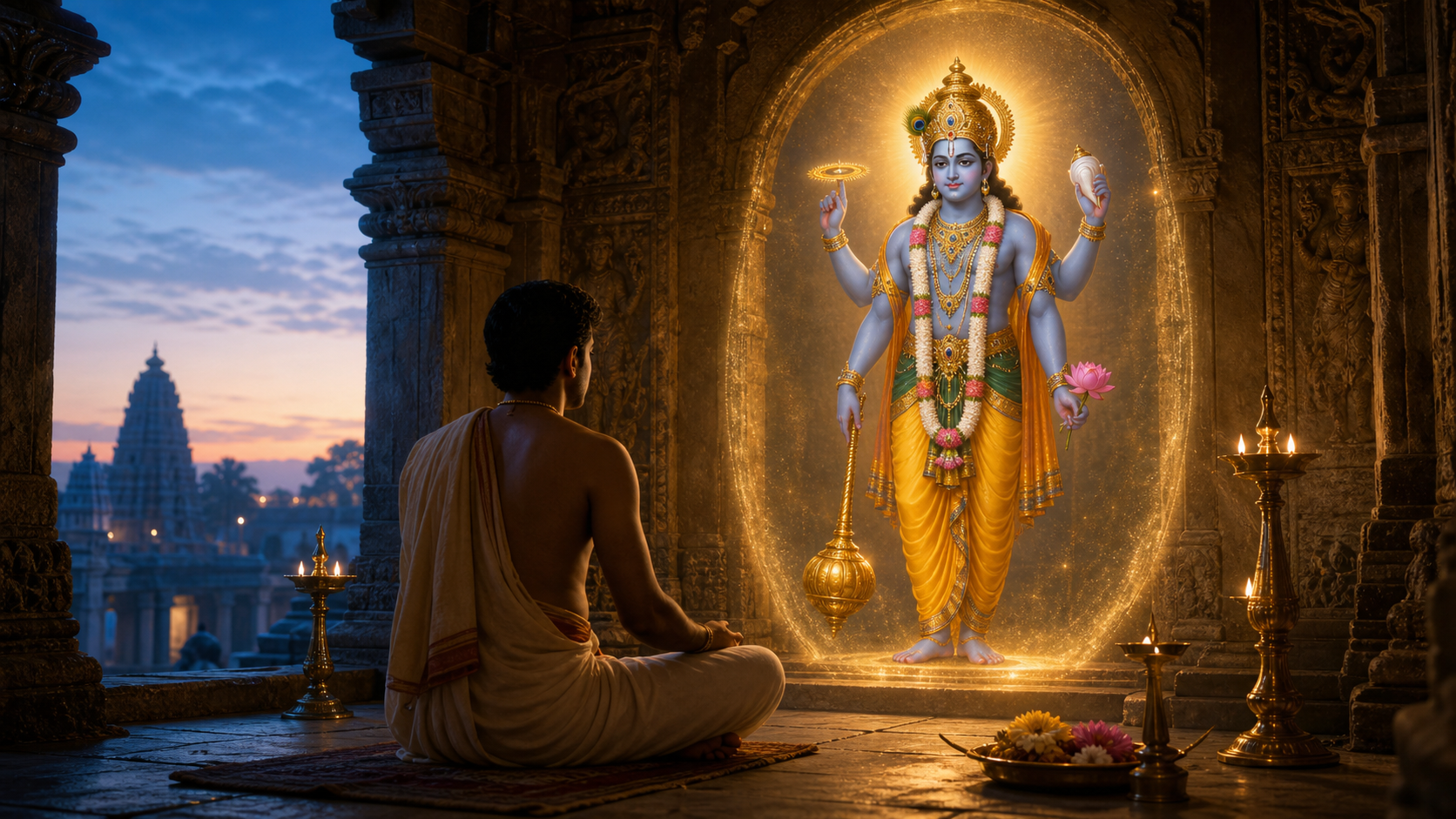
Dāna—sacred giving—is celebrated across the dharmic traditions, and nowhere is its meaning more vivid than in gifting the Shaligram stone, the Śāligrāma-śilā revered as a svayambhū form of Viṣṇu. Puranic literature associates this act with boundless puṇya while insisting that a Shaligram must never be sold. The prohibition is not mere formality; it preserves the…
-
How Free Are We, Truly? Karma, Neuroscience, and Moral Choice across Dharmic Paths

Are human choices truly free or fixed by forces beyond control? This analysis surveys determinism, libertarianism, and compatibilism; integrates current neuroscience on readiness potentials, predictive decoding, and conscious veto; and then synthesizes insights from Hinduism, Buddhism, Jainism, and Sikhism. Readers gain a clear, practical model of bounded freedom grounded in karma, dependent origination, Anekantavada, and…
-
Caitanya Caritamrta: The Transformative ‘Magic Book’ Behind Global Kirtan and Seva

Caitanya Caritamrta blends luminous biography and rigorous theology to show how Caitanya Mahaprabhu’s Bhakti project became a living method—hear, chant, reflect, serve—capable of transforming daily life. It explains achintya-bheda-abheda, the doctrine of simultaneous oneness and difference, and anchors practice in nama-sankirtana centered on the Hare Krsna Maha Mantra. The text’s inclusive ethos appears in hospitality…
-
Decoding Nrisimha Tapaniya Upanishad: The Transformative Power of the Second Khanda Mantra

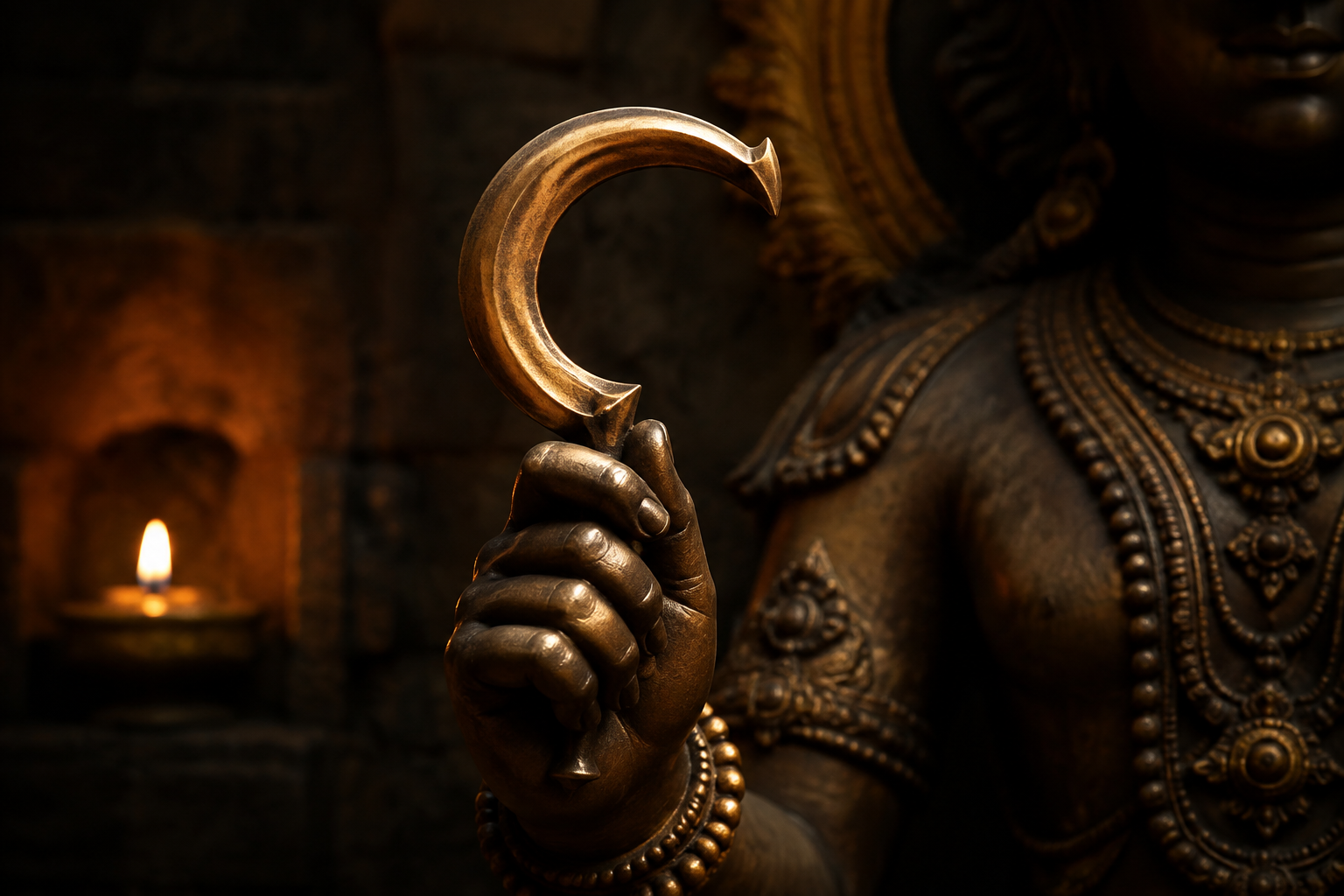
The second khanda of the Nrisimha Tapaniya Upanishad offers a rigorous account of mantra potency in the Tantric Vaishnava tradition. It presents the Nrisimha bija kṣrauṁ as the energetic heart of protective wisdom and details how dhyana, nyasa, and japa integrate to transform attention and behavior. Readers gain historical and philological context for the Upanishad’s…
-
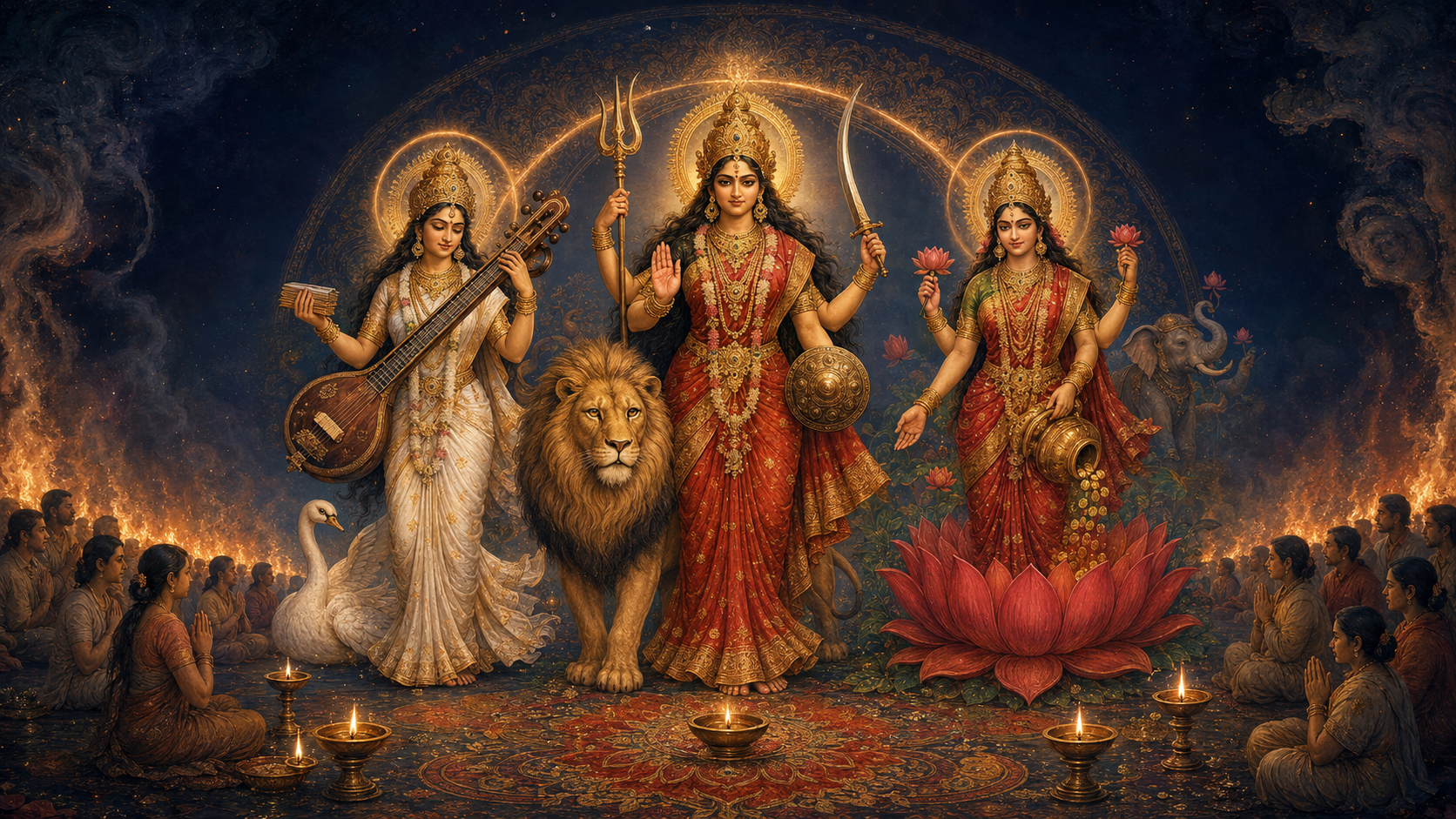
Laghu Shyamala: The Enigmatic Dark Goddess of Shakti, Speech, and Fertile Creation in Hinduism

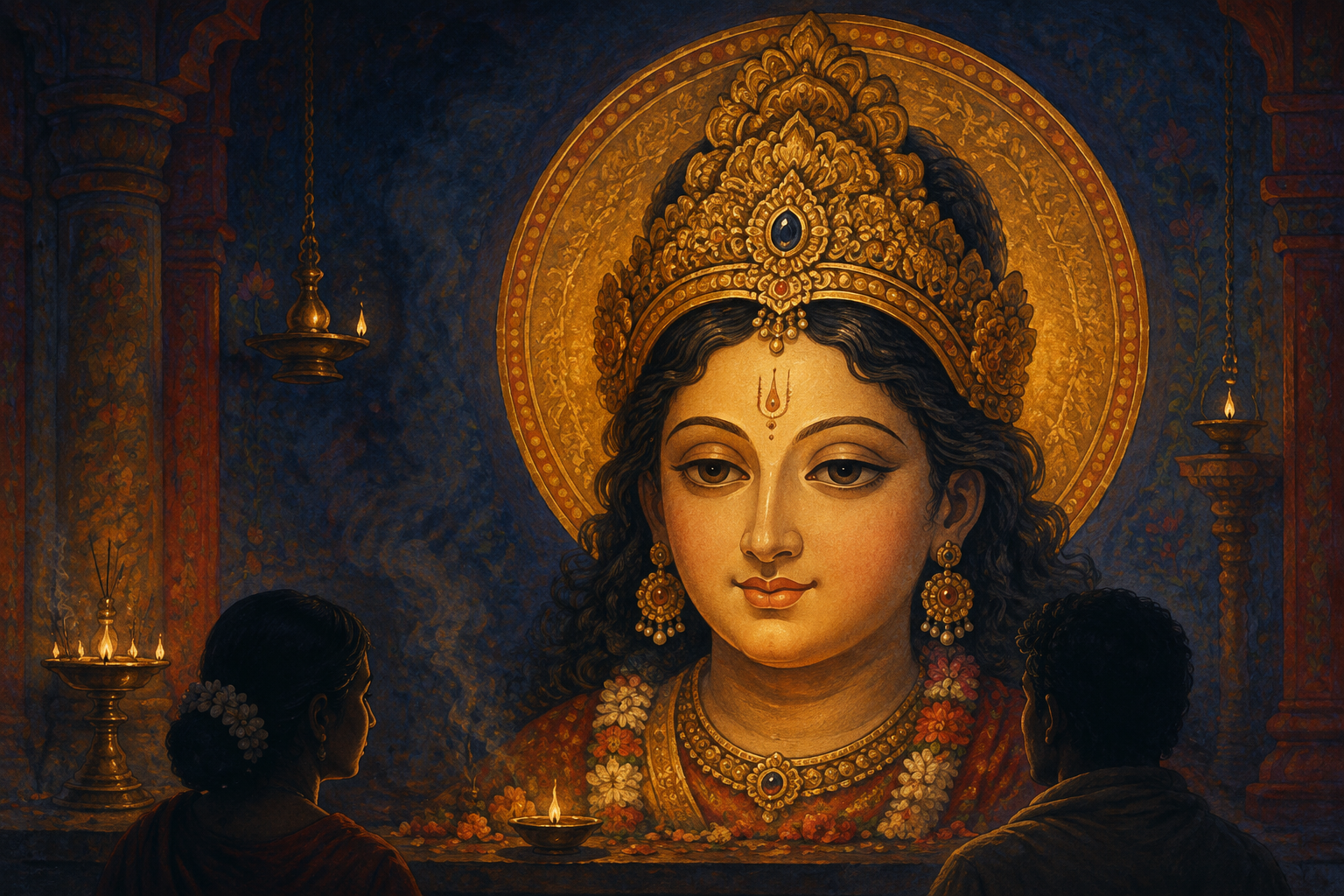
Laghu Shyamala is honored as a dark-hued, esoteric form of the Divine Mother whose power concentrates knowledge, speech, creativity, and fertility. The name reveals an accessible pathway to Shakti, pairing the generative symbolism of “Shyamala” with the concise, practical emphasis of “Laghu.” Iconography—veena, parrot, book, and japa-mala—maps a theology of cultured eloquence and compassionate learning.…
-
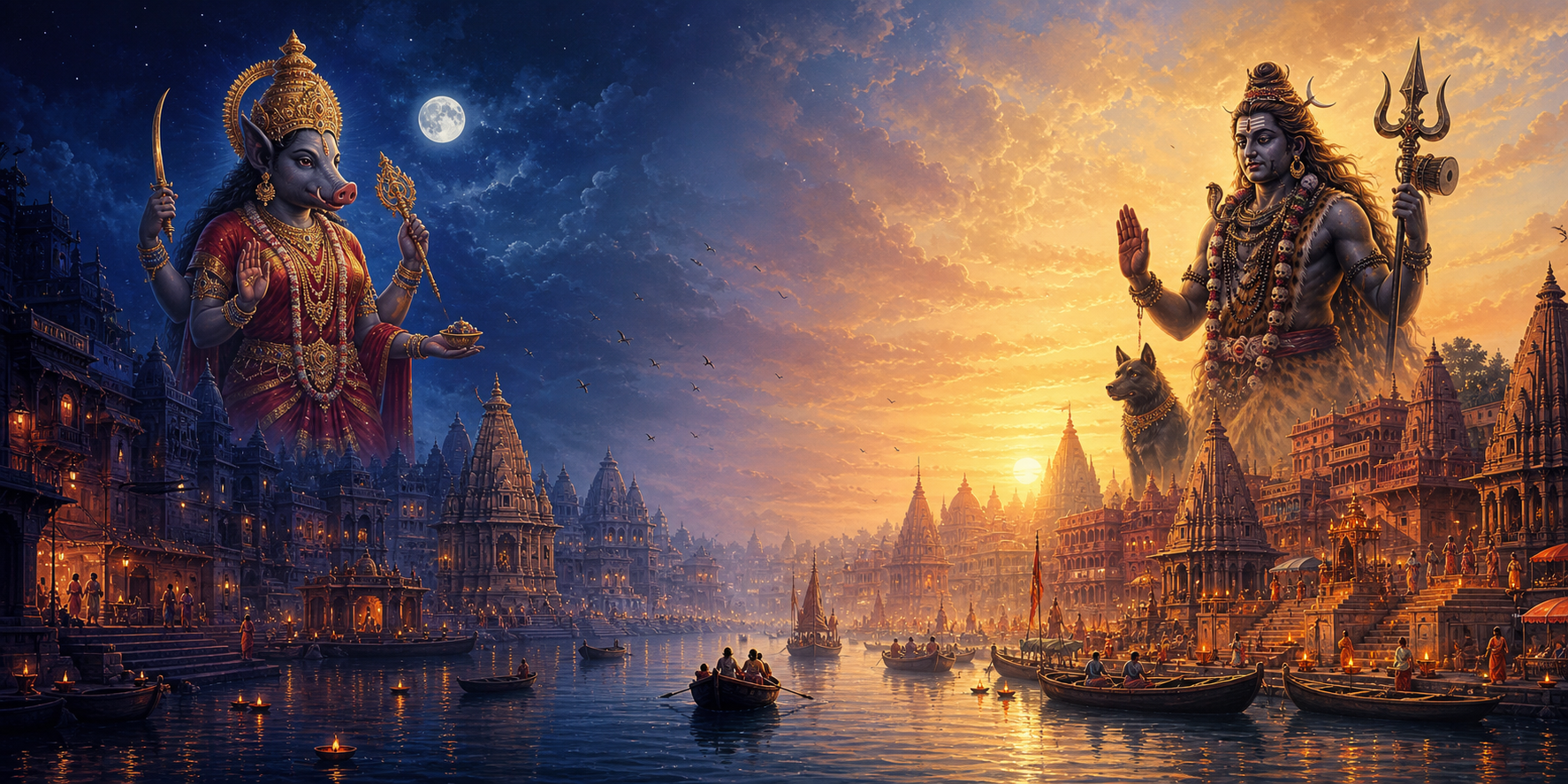
Bhagavan and Ishvara, One Truth: Why Vishnu and Shiva Bear These Timeless Honorifics

The titles Bhagavan and Ishvara carry precise theological weight in Hindu philosophy without enforcing hierarchy. Bhagavan highlights the plenary, relational fullness of the Divine, while Ishvara emphasizes sovereign lordship and cosmic governance. Scriptures apply both titles across deities—Vishnu is called Ishvara, and Shiva is addressed as Bhagavan—signaling complementarity rather than exclusivity. Vedantic schools, Shaiva traditions,…
-
Break Free from Maya: Transcending Superimpositions for God‑Realization in Advaita Vedanta

This long-form exploration clarifies why Advaita Vedanta insists that God-Realization demands freedom from limiting superimpositions (adhyāsa, upādhi), and shows how to remove them with rigor and compassion. It unpacks core methods—Pañca Kośa Viveka, Drg-Drśya Viveka, neti neti, śravaṇa–manana–nididhyāsana—while honoring the supportive roles of Karma Yoga and bhakti. Drawing parallels with Yoga’s kleshas, Buddhism’s deconstruction of…
-
Avatar vs Prophet: Decoding Sacred Roles, Divine Presence, and Dharma Across Faiths

This in-depth analysis explains the core difference between a Hindu avatāra and an Abrahamic prophet by examining ontology, revelation, soteriology, and ritual life. It shows how the avatāra is the Divine Presence entering the world to restore dharma, while the prophet is a human messenger who conveys God’s guidance. The piece nuances the comparison by…
-
Dharma Unveiled: The Living Code of Virtue Guiding Daily Life Across Dharmic Traditions

Dharma is presented as a living, context-sensitive code of virtue shared across Hinduism, Buddhism, Jainism, and Sikhism. The article clarifies its scope—from universal virtues like ahiṃsā and satya to role-specific duties—and shows how it governs the pursuit of prosperity and well-being without compromising conscience. It draws on classical sources (Dharmashastras, the Bhagavad Gita, Buddhist canons,…
-
Decoding Panchamukhi Ganapati: Five Faces that Harmonize Elements, Senses, and Self

This in-depth exploration decodes Panchamukhi Ganapati as a five-faced synthesis of the five senses and the five great elements. It clarifies the classical mapping of indriyas to pancha mahabhuta and shows how the image guides pratyahara and allied yogic practices. Readers encounter multiple scholarly interpretations, from pancha prana and Pancha Kosha Viveka to the fivefold…
-
May 12, 2026 Panchang: Precise Dashami–Ekadashi (9:47 AM) Shift, Auspicious Times Guide

On Tuesday, May 12, 2026, most regions observe Krishna Paksha Dashami until 9:47 AM, after which Krishna Paksha Ekadashi begins. This guide explains what a tithi is and why its start and end times vary by location. It outlines the spiritual focus of Dashami as preparation for Ekadashi, along with fasting rules, Smarta–Vaiṣṇava nuances, and…
-
Decoding the First Khanda of Nrisimha Tapaniya: Cosmogony, Anustubh Metre, Fearless Mantra Power

The first khanda of the Nrisimha Tapaniya Upanishad fuses cosmogony with mantra science in the anustubh metre, presenting a disciplined pathway from fear to fearless compassion. Readers gain a clear sense of the text’s Atharvavedic affiliations, its layered pedagogy (phonetics, metre, and meaning), and its integrative practice model involving japa, nyasa, and contemplative visualization. The…
-
HG Daivi Shakti Mataji on Srila Prabhupada Lilamrita: Unveiling a Transformative Gaudiya Legacy

This analysis situates HG Daivi Shakti Mataji’s focus on Srila Prabhupada Lilamrita within a rigorous, source-aware approach to Gaudiya Vaishnavism. It explains how the biography blends archival research, oral histories, and textual study to illuminate Srila Prabhupada’s life, teachings, and institution-building. Readers gain a clear framework for study—triangulating letters, interviews, and BBT records while appreciating…
-
Srila Prabhupada in Living Memory: HG Pancharatna Das on Bhakti and ISKCON Sunday Feast (03 May 2026)

This long-form analysis of “Moments with Srila Prabhupada,” a Sunday Feast talk by HG Pancharatna Das on 03 May 2026, examines how living memory functions as a disciplined pedagogical tool in the Bhakti Tradition. It explains the ISKCON Sunday Feast as a triadic pedagogy—kirtan, philosophy, and prasadam—that translates scripture into embodied practice. The piece situates…