-
May 16, 2026 Amavasya Panchang: Timings, Shubh Muhurat, Rituals, and Nakshatra–Rashi Guide

Saturday, May 16, 2026 features Krishna Paksha Chaturdashi until 03:51 AM IST, followed by Amavasya until 01:37 AM IST on May 17. The Panchang framing makes this a contemplative, service-oriented day ideal for pitru-kārya, quiet puja, and satvika charity. Because much of Amavasya spans the daylight hours, families can schedule Darsha Shraddha and tarpan with…
-
The Day Anger Lost Its Grip: Choosing Restraint Turned a Road Crisis into Clarity

A real-world traffic incident shows how choosing restraint over confrontation can neutralize road rage, protect safety, and salvage an otherwise derailed day. The analysis unpacks anger management through physiology (amygdala–prefrontal dynamics), breath awareness that enhances vagal tone, and cognitive reappraisal that opens better choices. It demonstrates naturalistic decision-making under pressure and why a satisficing, safety-first…
-
Sandhya Tandava at Dusk: Decoding Shiva Nataraja’s Twilight Dance and Its Living Wisdom

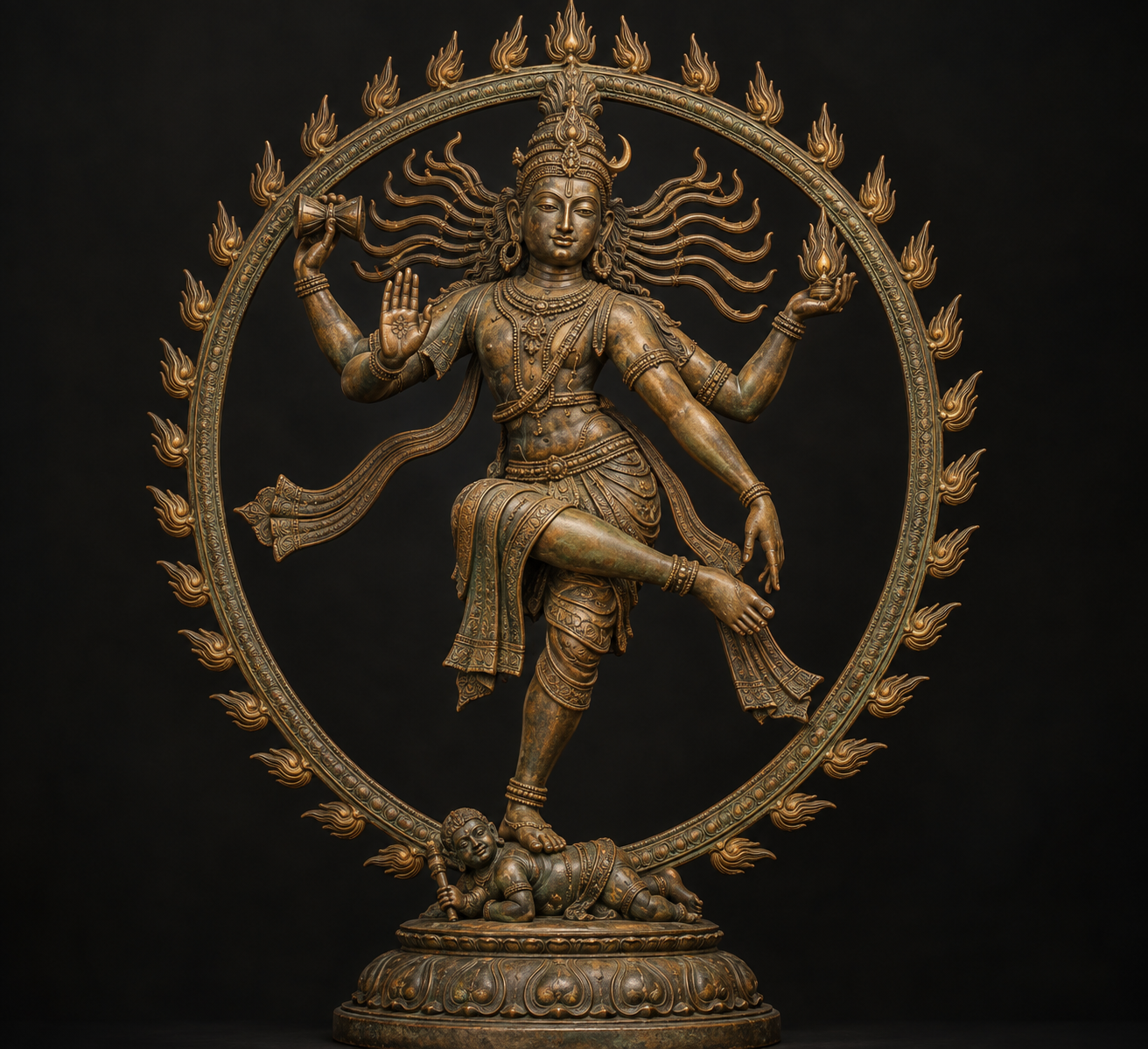
Sandhya Tandava is the twilight expression of Shiva Nataraja’s cosmic dance, performed before an illustrious assembly with Goddess Parvati as witness. It ritualizes the liminal hour when day turns to night, aligning personal worship with cosmic rhythm. Iconography—damaru, flame, abhaya mudra, and Apasmara—maps directly to the five divine acts and becomes especially evocative at dusk.…
-
Krishna’s Heart in Kali Yuga: How Jagannath Puri Safeguards Compassion and Unity

This article explores the Jagannath tradition at Puri as the living repository of Bhagavan Sri Krishna’s heart, identified in temple lore as the Brahma Padartha. Drawing on the Skanda Purana (Purushottama-khanda), it explains how Purushottama-kshetra was destined to anchor compassion and accessibility in Kali Yuga. Readers will learn the technical contours of Nabakalebara, the secret…
-
Bhagavad Gita at New Govardhana: Profound Bhakti-Yoga Insights by HG Caitanya Caran das

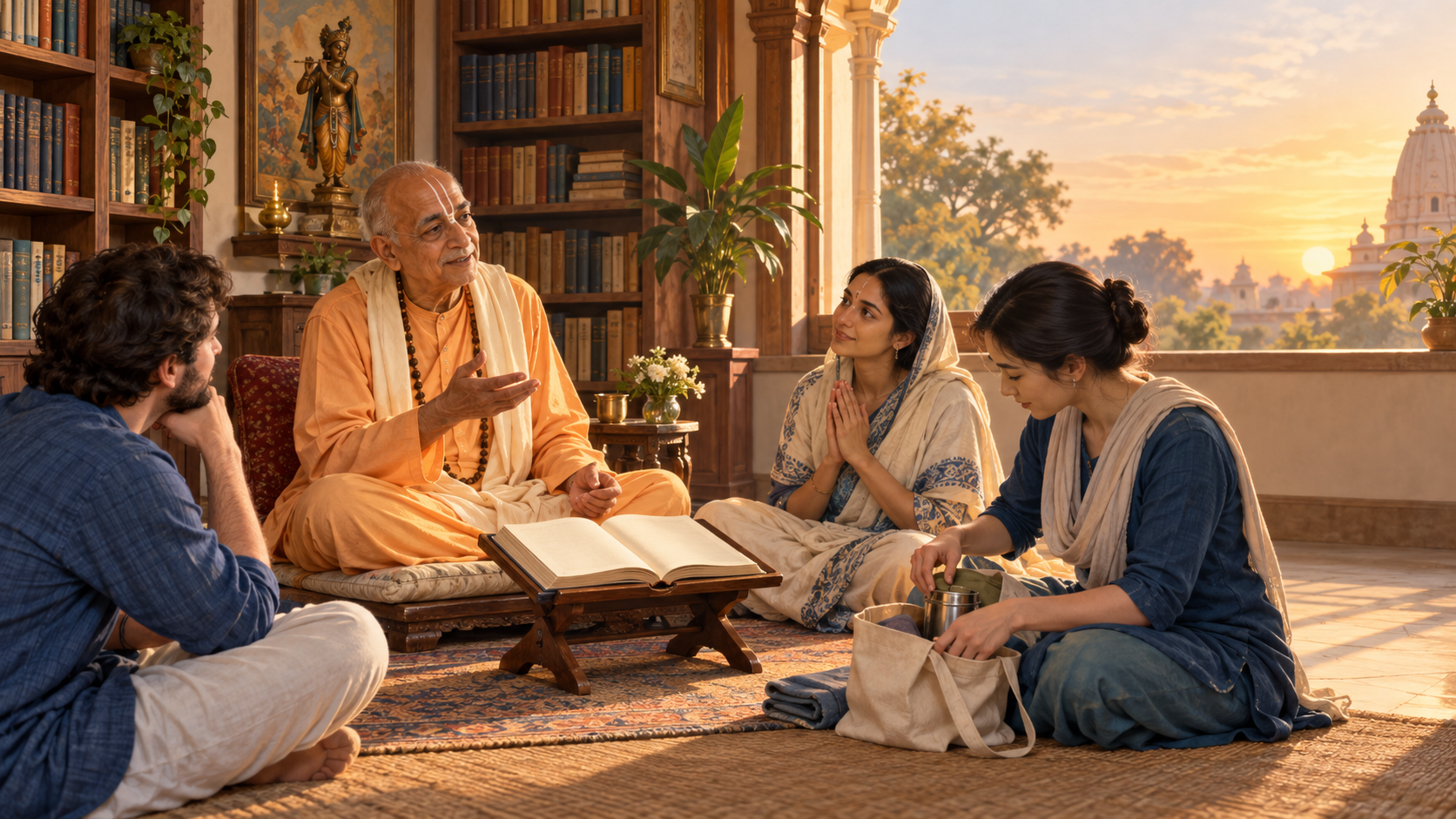
On 05 May 2026, ISKCON New Govardhana Temple hosted a Bhagavad Gita class by HG Caitanya Caran das that united rigorous exegesis with practical Bhakti-Yoga. The session mapped Karma, Jnana, and Bhakti as an integrated pathway, grounding ethical action in devotion and clear discernment. Attendees received a concise practice blueprint: daily japa, structured reading, reflective…
-
SB 3.28.29 Unpacked: Kapila’s Powerful Dhyana Blueprint and Devamrita Swami’s Transformative Insights

This in-depth analysis of Śrīmad-Bhāgavatam 3.28.29—highlighted in a 08 May 2026 discourse by HH Devamrita Swami—clarifies Kapila Muni’s precise blueprint for meditation within a bhakti-yoga framework. It explains how ethical grounding, breath regulation, attentional training, and sacred sound combine to steady the mind and soften the heart. Readers gain a practical 30-minute protocol, neurophysiological context…
-
Trust in Krishna’s Protection and the Dharma of Duty: Srila Prabhupada on Nrsimhadeva

This article analyzes the Vaishnava synthesis of divine protection and human duty through Srila Prabhupada’s assurance regarding prayers to Nrsimhadeva. It explains how confidence in Krishna’s guardianship aligns with the Bhagavad Gita’s ethics of disciplined action without attachment to results. It clarifies that surrender is not fatalism but a stance that deepens responsibility, courage, and…
-
Surajkund Hanuman Temple, Mandla: Experience Hanuman’s Three Timeless Forms Revealed Daily

Surajkund Hanuman Temple in Mandla, Madhya Pradesh, is famed for a living tradition in which devotees perceive Hanuman’s murti in three forms across a single day—Bala (child), Yuva (youth), and Vriddha (elder). Set near a ritual water body and open sky, the temple’s environment lets sunlight, reflection, and lamp glow shape a uniquely dynamic darshan.…
-
Beyond Guru Worship: Living Sanatana Dharma through Practice, Pluralism, and Service

Public celebrations of guru anniversaries have grown spectacular, but the risk of drifting from teachings to personality worship is real. This essay reframes devotion through a Dharmic lens shared by Hinduism, Buddhism, Jainism, and Sikhism: live the message, not the messenger. It maps classical yardsticks of authentic progress—yamas and niyamas, lokasangraha, simran and seva, sīla…
-
Unlock the Ocean Within: Dharmic Pathways to Atman, Timeless Wisdom, and Resilient Strength

This essay examines the statement “You know little of that which is within you. Within you is the ocean of infinite power” through the shared frameworks of Hinduism, Buddhism, Jainism, and Sikhism. It explains the Upanishadic vision of ātman and Brahman, the yogic map of prāṇa and kundalinī, and the ethical preconditions that make inner…
-
Beyond Moving On: Evidence-Based Strategies for Trauma Integration and Nervous System Healing

Many people “move on” from painful relationships yet remain vulnerable to old triggers because the nervous system retains unintegrated memories. This evidence-based guide explains why familiar dysregulation can feel like “home,” how naming patterns such as gaslighting and trauma bonding restores clarity, and why daily regulation practices matter. Drawing on neuroscience and dharmic wisdom (yoga,…
-
Bhuridakshinaya Bhairava: Guardian of Dharma, Southern Direction, and Sacred Abundance

Bhuridakshinaya Bhairava unites fierce guardianship with ethical generosity, drawing on the multiple meanings of dakshina as offering, right-hand propriety, and the southern direction. The epithet’s Vedic resonance with bhuri-dakshina illuminates a moral economy in which right giving completes right worship. In Shaiva Tantra, Bhairava’s role as Kshetrapala aligns with directional theology, temple architecture, and observances…
-
From Riyadh to Tehran: How Srila Prabhupada’s Vedic Wisdom Inspires Unity and Hope

Interest in India’s ancient knowledge has expanded across Arab and Persian cultural spheres, especially during periods of uncertainty. This article examines why Srila Prabhupada’s books resonate in these contexts: philosophical clarity, rigorous translation, and accessible practice. It explains how Arabic and Persian editions preserve Vedic nuance while remaining readable for university courses and interfaith study…
-
Nitya in Hinduism: Timeless Truths and Daily Duties for Transformative Dharmic Clarity

Nitya in Hindu thought unites two powerful ideas: the eternal ground of being and the disciplined regularity of daily practice. Classical sources such as the Upanishads and Bhagavad Gītā affirm the ātman as nitya, while Mīmāṃsā and Dharmaśāstra define nitya-karma as obligatory daily duties that stabilize conduct and clarity. Agamic and Vaiṣṇava traditions embed nitya…
-
Beyond Chant and Dance: The Transformative Science of Nama, Naam Simran, and Scriptural Hearing

Chanting the Holy Name stands supreme in Sri Caitanya Mahaprabhu’s teaching, yet it flourishes when supported by hearing, reflection, and ethical alignment. Drawing on Srimad-Bhagavatam’s ninefold path of devotion, this article explains why sravana (hearing) provides the sambandha-jnana that turns sound into a living relationship with Krishna (Krsna). It clarifies the difference between mere “shadow…
-
Srila Prabhupada’s Anga-Raga Masterclass: Painting Radha‑Krishna Deities, Meaning, and Mudra

This analysis distills a rare episode in ISKCON history where Srila Prabhupada personally demonstrated Anga-Raga, the liturgical “painting of the body” for Radha‑Krishna Deities bound for Hamburg. It explains the method’s theological foundation within Gaudiya Vaishnavism, the disciplined use of black, white, and red pigments, and the devotional perception of form as presence. The discussion…
-
Decoding the Fiery Compassion: A Deep Dive into the Third Chapter of Nrisimha Tapaniya Upanishad

The third chapter of the Nrisimha Tapaniya Upanishad unifies mantra, meditation, and Vedanta into a coherent path of fierce compassion and fearless insight. This deep dive decodes the Nrisimha mantraraja, explicates the bija kṣrauṁ, and clarifies how nyasa sacralizes the body as a field of realization. Readers gain a rigorous yet accessible guide to practice…
-
Dhumavati and Shiva Unveiled: Origin Myths, Smoke-Clad Symbolism, and Transformative Wisdom

Dhumavati, the smoke-clad Mahavidya, teaches how endings and absence become gateways to discernment across the Dharmic family. This in-depth essay clarifies her origin myths, including the Sati–Shiva narratives and the Daksha yajna smoke motif, and interprets their philosophical stakes. It decodes her iconography—crow, broom, winnowing basket, cremation ground—as a curriculum in viveka and vairagya. Readers…