-
Beyond Maya: Dharmic Wisdom on Materialism, Ethical Wealth, and Lasting Fulfilment

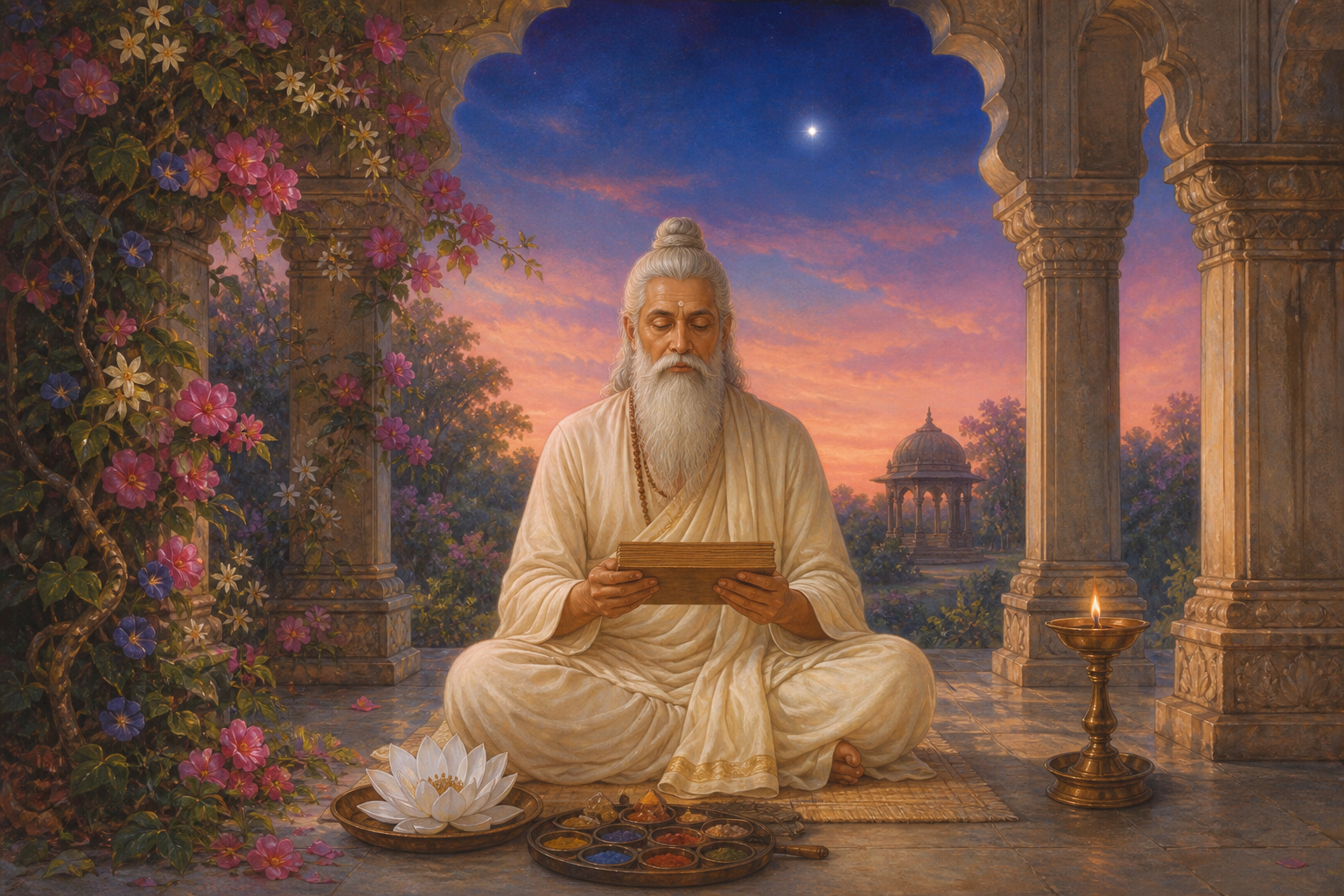
Hindu philosophy and its sister Dharmic traditions view wealth as a legitimate aim governed by ethics, moderation, and service. The puruṣārthas align Artha with Dharma and Moksha, while the Bhagavad Gita’s Karma Yoga reframes success as disciplined action without fixation on results. Upanishadic counsel, Yoga’s aparigraha, Buddhism’s Right Livelihood, Jain vows of limitation, and Sikh…
-
May 10, 2026 Panchang: Definitive Guide to Tithi Shift, Shubh Muhurat, Nakshatra & Rashi

On Sunday, May 10, 2026, Krishna Paksha Ashtami lasts until 10:06 AM and is followed by Krishna Paksha Navami. This academic guide explains how to align daily practice with the tithi shift, including Kala Ashtami observances in the morning and steady routines under Navami thereafter. It outlines how to choose a Shubh Muhurat using Abhijit…
-
Shukla Devi Puja 2026 on Jyeshta Shukla Ashtami: Sacred Timings, Kheer Bhavani, Complete Vidhi

Shukla Devi Puja (Shukla Devi Aradhana) in 2026 falls on 22 June, coinciding with Jyeshta Shukla Ashtami in the Hindu calendar. The day venerates the luminous, sattvika dimension of the Divine Mother and aligns with the Khir Bhavani Mela in Kashmir, where devotees traditionally offer kheer. The article explains how Ashtami tithi is computed, why…
-
Bhairava Unveiled: Symbolism, Meaning, Kala-Time Mastery, and Fearless Liberation

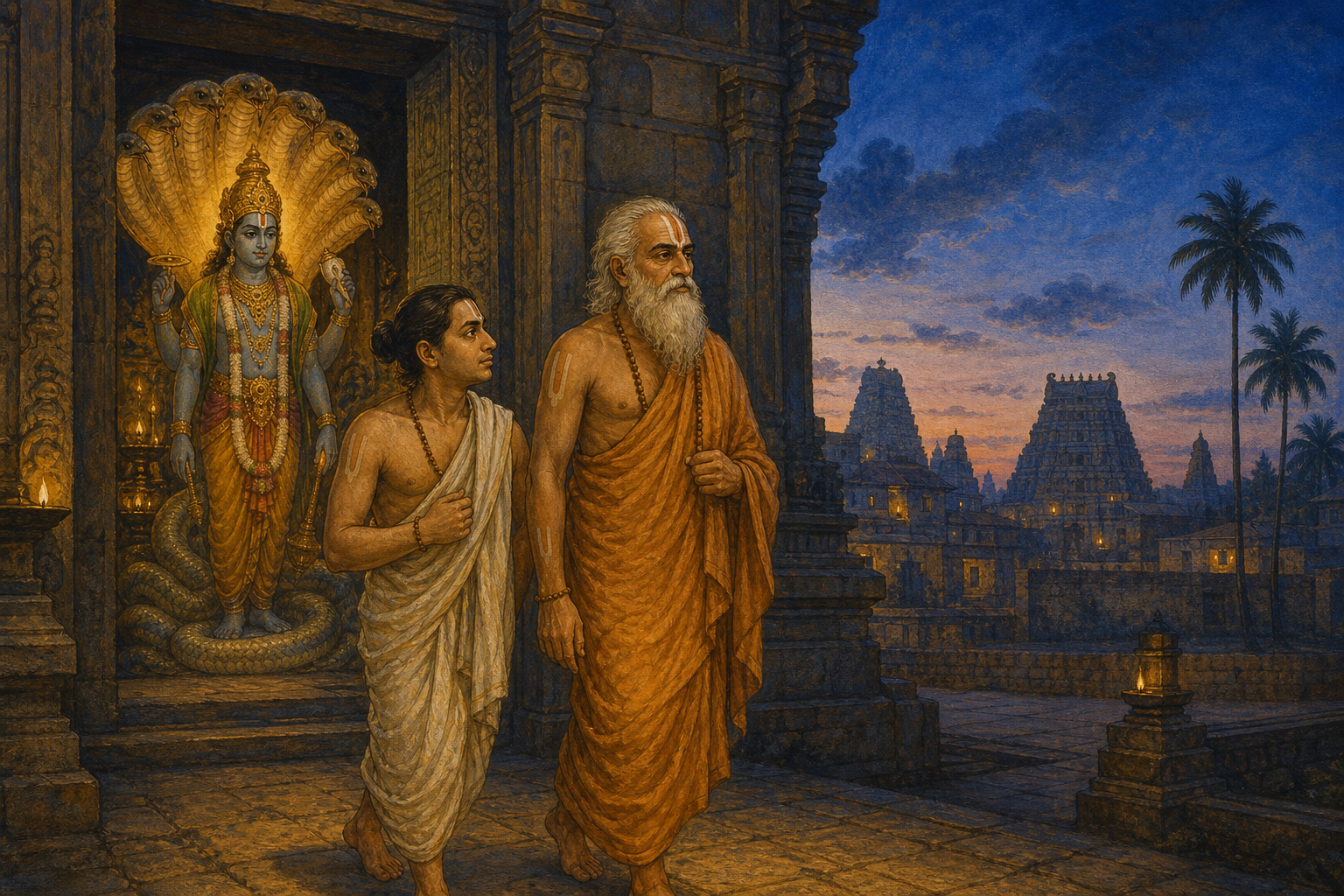
Bhairava Roopaya—named first in the Bhairava Sahasranama—presents Bhairava as the omnipresent intelligence of Shiva that creates, sustains, dissolves, conceals, and liberates. This long-form exploration decodes the name’s etymology (bhaya + rava and Bha–Ra–Va), connects it to the Shaiva pañcakṛtya, and situates it within Kashmir Shaivism’s non-dual vision and Vijnana Bhairava Tantra’s contemplative methods. Readers gain…
-
Success Sadhana: Shatter Illusions, Master Attention, and Live Aligned with Higher Purpose

This Success Sadhana reflection presents a precise, practice-centered way to move beyond illusion and distraction toward a life aligned with higher purpose. It explains how bhakti practices—sravanam, kirtanam, and smaranam—converge with mindfulness, simran, and samayik across Hinduism, Buddhism, Jainism, and Sikhism. Readers gain a clear daily cadence for breath-centered attention training, scripture study, and reflective…
-
Do Our Words Convey Our Heart? HG Caitanya Charan Das on Dharmic Speech at ISKCON Adelaide

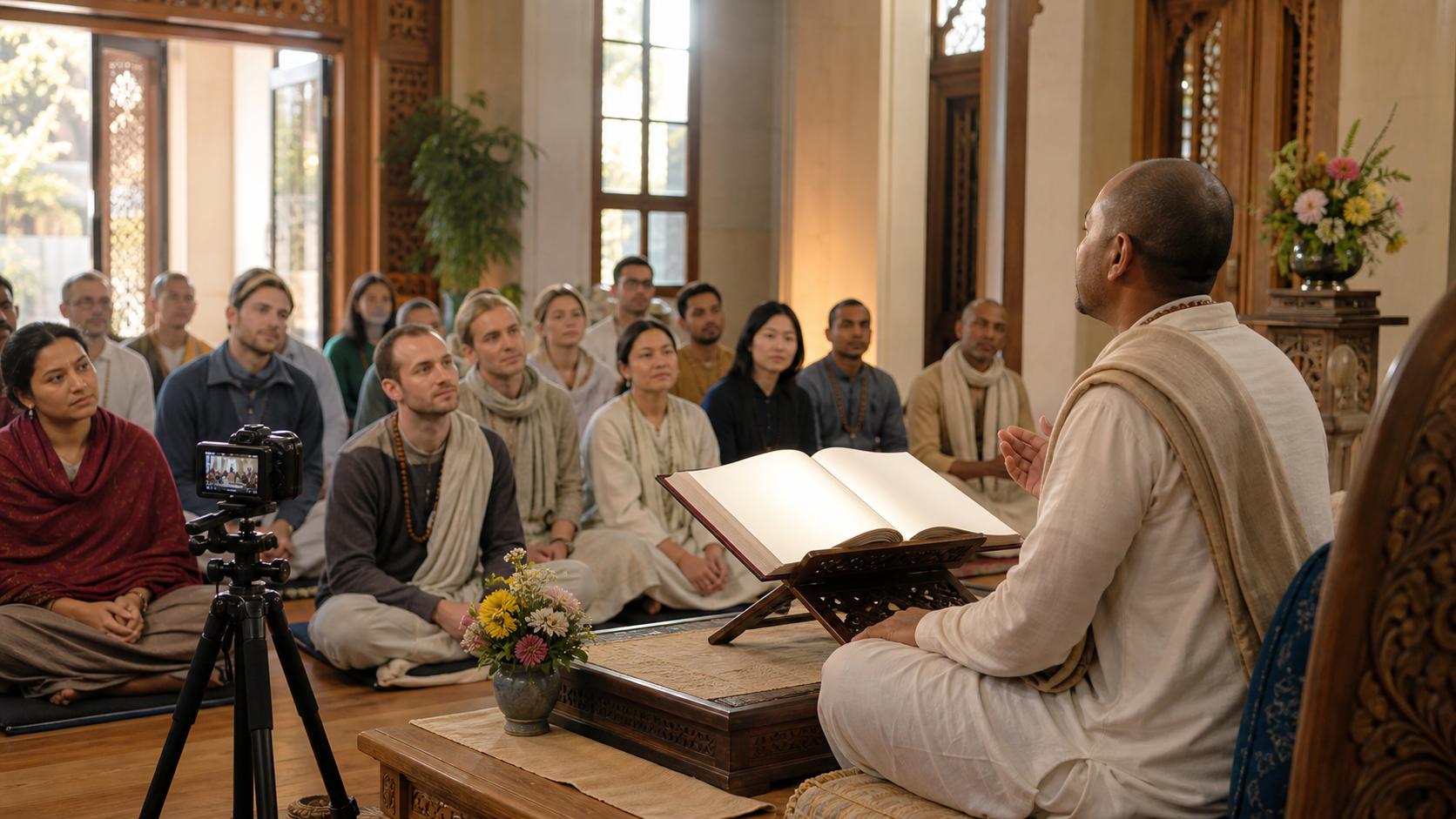
At ISKCON Adelaide on 01.05.26, HG Caitanya Charan Das explored how speech reflects inner consciousness and why language, refined through sādhana, is central to bhakti and community harmony. Grounded in Bhagavad Gita 17.15, the essay outlines a composite ethic for speech—truthful, kind, beneficial, and non-agitating—that resonates across Hinduism, Buddhism, Jainism, and Sikhism. It translates classical…
-
Manidweepa Unveiled: Inside the Jeweled Island of the Mother Goddess and Cosmic Consciousness

Manidweepa (Mañidvīpa) is portrayed in the Devi Bhagavatam Purana as the jeweled island of the Mother Goddess, a sacred geography beyond the fourteen worlds and the Ocean of Nectar. This analysis explains how Śrī Nagara, the Chintāmaṇi gṛha, and the Pañcabrāhmāsana encode Hindu cosmology and Śrīvidyā practice. It maps Manidweepa to the nine āvaraṇas of…
-
Rohita in the Atharva Veda: The Crimson Sun-Fire as Supreme Principle of Creation and Order

Rohita in the Atharva Veda is presented as a crimson, world-sustaining principle that unites fire (Agni), the sun (Sūrya), and cosmic order (Ṛta). The Book 13 hymns of the Śaunaka recension elevate Rohita beyond any single deity by identifying this power with Prajāpati, Skambha, and Prāṇa, offering a unifying metaphysical vision. Color symbolism (rohita/lohita) reveals…
-
Tapasya in Hinduism: Transformative Austerity for Self-Realization, Clarity, and Inner Power

Tapasya in Hinduism is a disciplined, life-affirming austerity that refines body, speech, and mind to foster Self-Realization and ethical clarity. Drawing on the Upanishads, Bhagavad Gita, and Yoga philosophy, it is defined as a transformative heat that burns impurities and ripens insight. The Gita’s typology (sāttvika, rājasika, tāmasika) and Patañjali’s Kriyā Yoga supply practical guardrails…
-
Shiva’s Vibhuti Unveiled: Sacred Ash, the Fire of Transformation, and the Path to Liberation

Vibhuti, or consecrated sacred ash, condenses Shaiva philosophy into a simple, daily practice that is both contemplative and transformative. In Hindu thought, fire is a purifier rather than a destroyer, and ash is the final, stable state that reveals what endures after illusion burns away. The tripuṇḍra’s three lines encapsulate key Shaiva triads—impurities, guṇas, and…
-
Know the Infinite Within: A Dharmic Guide to Self-Realization and Mindful Speech

This essay unpacks the teaching Know the Infinite within and give up all vain words as a unified, practical discipline shared across Hinduism, Buddhism, Jainism, and Sikhism. It grounds Self-Realization in the Upanishadic identity of Ātman and Brahman while noting convergences with Buddhist insight, Jain anekāntavāda, and Sikh remembrance of Ik Oṅkār. It translates metaphysics…
-
May 9, 2026 Panchang: Saptami to Ashtami Timing, Shubh Muhurat Cues and Ritual Guidance
On Saturday, May 9, 2026, the Panchang shows Krishna Paksha Saptami prevailing until 9:28 AM, when it transitions to Krishna Paksha Ashtami in most regions. The timing reflects the exact astronomical shift in Moon–Sun elongation from 84°, moving the day from Saptami to Ashtami. The guidance explains how to apply udaya-tithi rules for civil observance…
-
Beyond 330 Million Gods: How Hinduism Unites Many Deities into One Supreme Reality

The familiar claim that Hinduism has 33 crores (330 million) gods is a popular misreading; classical sources enumerate thirty-three devas—eight Vasus, eleven Rudras, twelve Adityas, plus Indra and Prajapati. By clarifying the Sanskrit term koṭi (class/category vs. crore), the article shows how Vedic and Upanishadic texts integrate divine plurality within a single metaphysical reality. It…
-
When Do Our Actions Bear Fruit? Unraveling Karma’s Timing with Profound Dharmic Insights

A perennial dharmic question asks when the actions of this lifetime truly bear fruit. Drawing on Hindu sources such as the Bhagavad Gita, Upanishadic thought, the Yoga Sutras, and dharmashastra, this analysis explains how outcomes may manifest immediately, over time, or in future births through the interplay of sanchita, prarabdha, and agami karma. It integrates…
-
Why Karthikeya Has Six Heads: Puranic Origins, Iconographic Meaning, and Dharmic Unity

Karthikeya’s six heads—Shanmukha—are not an artistic flourish but a layered pedagogy rooted in scripture, philosophy, yoga, and living festival practice. Puranic narratives explain the six-faced form through the Krittikas and Parvati’s embrace, while martial symbolism emphasizes omnidirectional awareness for a divine commander. Liturgical traditions map the six faces to the Saravana-bhava mantra; philosophers read them…
-
Stop People-Pleasing for Good: Neuroscience-Based Boundaries, Healing, and Dharmic Wisdom

People-pleasing is less a personality trait than a trauma-shaped survival response that the nervous system automates to keep relationships feeling safe. This article reframes people-pleasing through neuroscience and dharmic ethics, explaining how unconscious patterns become entrenched “brain ruts” and why willpower alone rarely works. A practical, four-step protocol combines self-regulation, targeted visualization, consistent repetition, and…
-
Aparajita, the Invincible: Ancient Hindu War Rites, Dharma-Yuddha Ethics, and Strategy

Aparajita—“the unconquered”—was venerated by kings, commanders, and communities as the victory-bestowing face of the Goddess in ancient India. The worship synchronized statecraft and spirituality, binding warfare to Dharma-Yuddha and Kshatra Dharma. Textual traditions linked Aparajita with Durga and embedded victory hymns from the Devi Mahatmya into pre-campaign rites. Rituals integrated muhurta selection, sankalpa, weapon consecration,…
-
‘Gavyapataye’ Bhairava: Tantric Guardian of Cows, Compassion, and Sacred Ecology

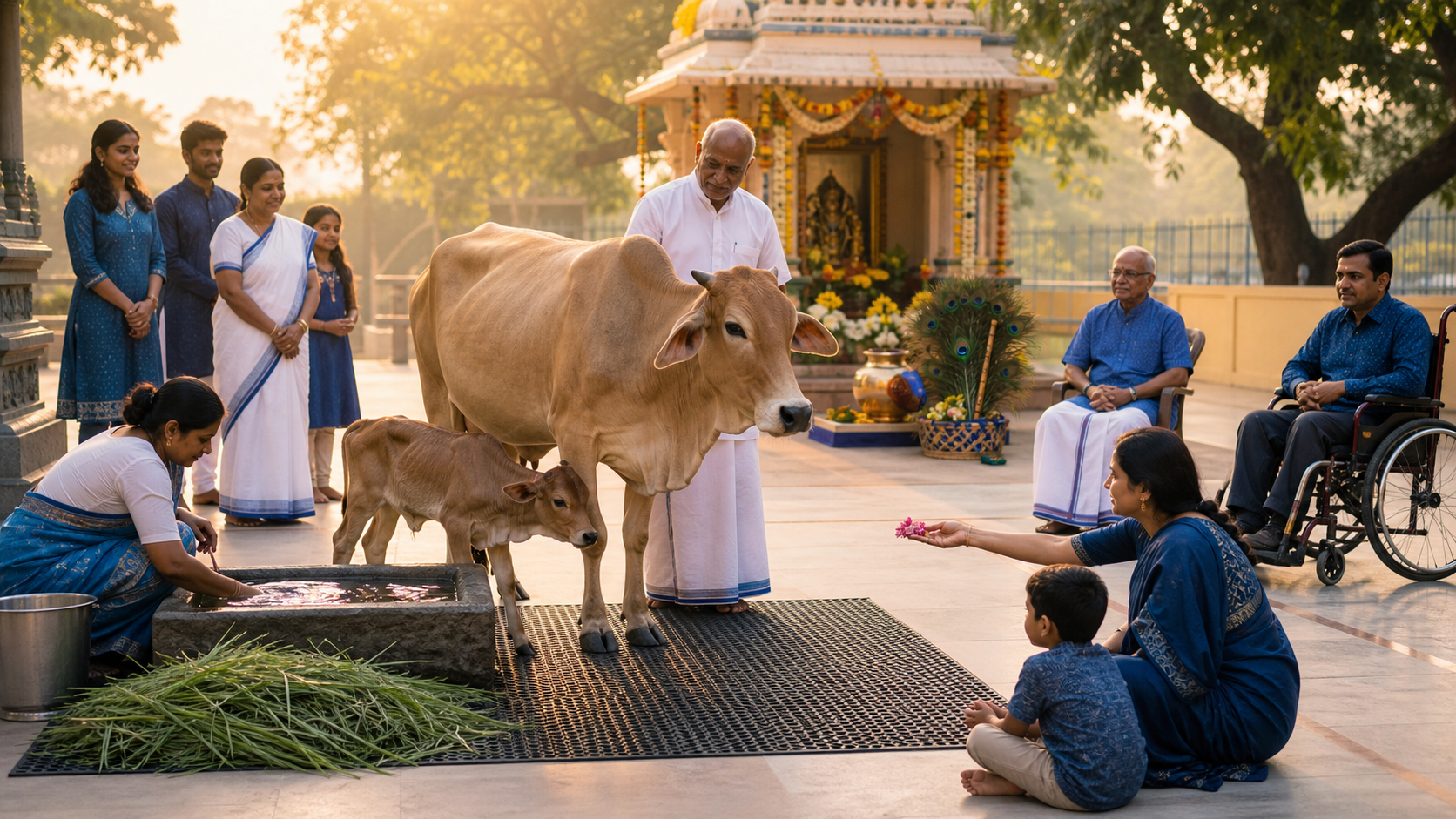
Gavyapataye Bhairava reveals Bhairava’s Tantric role as guardian of cattle, food purity, and sacred ecology. The epithet’s Sanskrit morphology (gavya + pati) ties devotion directly to agrarian life and ritual substrates like pañcagavya. Set within Bhairava-sahasranāma practice, it unites vigilant protection with compassionate stewardship. Textual, iconographic, and ethnographic threads—spanning Skanda Purāṇa references, temple sub-shrines, and…
-
Facing Impermanence Now: Urgent, Courageous Surrender to Krishna—and Dharma’s Unifying Path

Srila Prabhupada’s call for urgent surrender to Krishna, echoed by Radhanath Swami, is best understood as a clear-eyed response to life’s impermanence rather than as fear or fatalism. This essay situates sharanagati within a unifying dharmic framework shared by Hinduism, Buddhism, Jainism, and Sikhism, highlighting convergences around anitya/anicca, aparigraha, Hukam, and refuge. It explains maya…
-
Beyond Ashes: Dharmic Wisdom on Death, Rebirth, and Why Restraint Sustains Our World

Modern discourse often assumes that death ends consciousness. Dharmic traditions—Hinduism, Buddhism, Jainism, and Sikhism—offer a rigorous alternative: the body returns to elements while awareness continues in accordance with karma. This article explains the classical Vedic framework (sthula, sukshma, and karana sharira), unpacks the memorable triad of the body’s material end—stool, ashes, or earth—and situates it…