
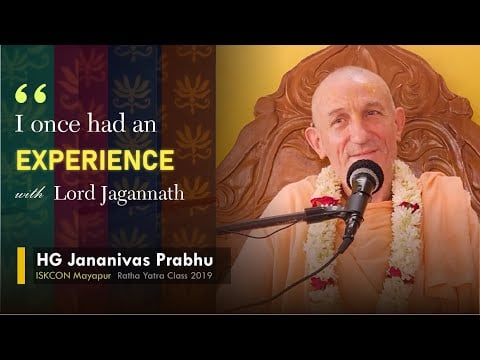
A brief item from Dandavats introduces a video about Jananivas Prabhu’s arrival at Jagannath Puri, where he witnessed Ratha Yatra and met devotees. Its written description is sparse, but the journey it outlines raises a valuable question: how can visiting sacred places and spiritual communities deepen an understanding of dharma?
This account is best approached as personal devotional testimony rather than a comprehensive record of the festival. The available source establishes only the broad setting, so the most useful reading is one that distinguishes what Dandavats reports from the wider spiritual meaning a pilgrim may draw from such an encounter.
What the source actually tells us
According to Dandavats, Jananivas Prabhu traveled through the sacred landscape of India and visited various religious groups before reaching Jagannath Puri. There, he saw the Ratha Yatra festival and encountered devotees. The source presents the video as the telling of that experience.
The short description does not identify the other groups he visited, provide an itinerary, date the journey, or summarize the particular incidents described in the recording. Those details should therefore be learned from the video itself rather than inferred from the promotional text. What the blurb does establish is a movement from observation across different communities to participation in a living Vaishnava setting.
Ratha Yatra as lived devotion
Ratha Yatra is associated with the public procession of Lord Jagannath and expresses bhakti through movement, collective worship, and shared presence. A festival of this kind is not experienced only as an idea. Its meaning is carried through the deity, the assembled devotees, the atmosphere of service, and the bonds formed among participants.
That helps explain why the source’s final detail – that Jananivas Prabhu met the devotees – matters. Sacred geography provides the setting, but a tradition becomes tangible through the people who practice it. Pilgrimage can therefore join darshan with human fellowship: the pilgrim approaches the sacred while also encountering a community shaped by remembrance, discipline, and seva.
A journey through India’s Dharmic plurality
The reference to visits among various religious groups invites a broader Dharmic reading, even though the source does not name those groups or describe Jananivas Prabhu’s conclusions about them. India has long provided space for multiple Hindu sampradayas as well as Buddhist, Jain, and Sikh paths. Their doctrines and forms of worship are not identical, yet they share a civilizational environment in which disciplined practice, sacred places, teachers, community, and the transformation of conduct carry deep importance.
Unity need not erase these distinctions. A confident Hindu civilizational outlook can affirm Jagannath-centered bhakti in its fullness while recognizing kinship among traditions that seek liberation, ethical self-mastery, compassion, or service through different disciplines. Such an outlook strengthens Dharmic solidarity because it treats diversity as an inheritance to understand, not a weakness to overcome.
Key takeaways
- Dandavats presents the video as Jananivas Prabhu’s account of traveling in India, reaching Jagannath Puri, witnessing Ratha Yatra, and meeting devotees.
- The written source is an introduction, not a transcript, so it does not support claims about the journey’s dates, route, conversations, or specific spiritual experiences.
- The encounter highlights how pilgrimage brings sacred geography, public worship, and devotional community together.
- Its wider value lies in approaching India’s varied Dharmic paths with conviction in one’s own tradition and respect for a shared civilizational inheritance.
Viewed with these limits in mind, the recording can serve as an invitation to listen carefully: first to Jananivas Prabhu’s own account, and then to the larger question of how pilgrimage and fellowship keep Dharmic traditions alive across generations.
Inspired by this post on Dandavats.
