-
Servant of a Glorious Master: The Transformative Power of Seva and Guru-Tattva Across Dharmic Paths

This long-form reflection reframes ‘Servant of a Glorious Master’ as a disciplined path of seva, wisdom, and devotion shared across Hindu Dharma, Buddhism, Jainism, and Sikhism. It clarifies how dasya-bhava, prapatti, nam-simran, refuge, ahimsa, and anekantavada converge as a common grammar of service. Drawing on the Bhagavad Gita and classical Bhakti theory, it distinguishes service…
-
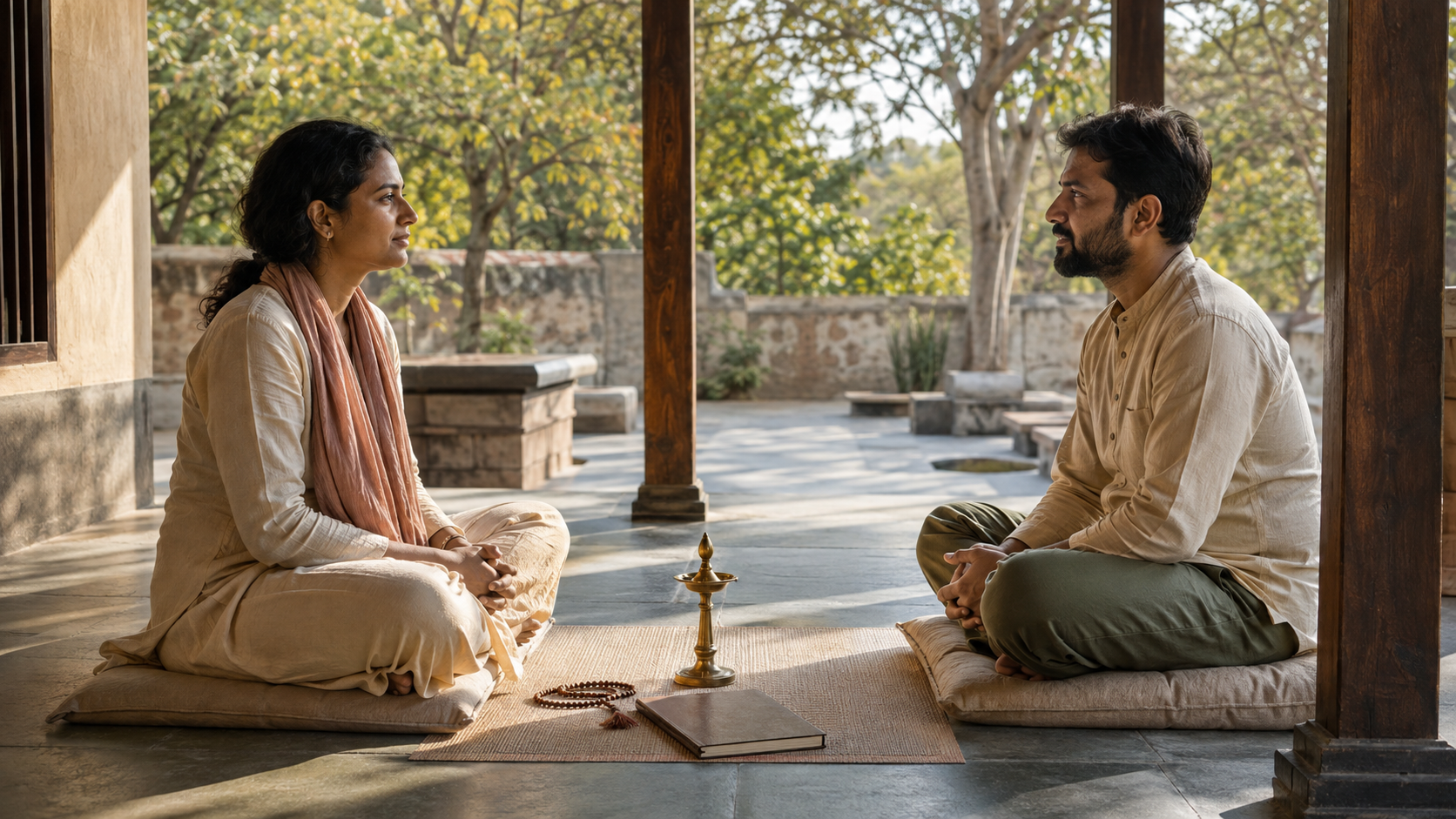
Introspection to Self-Realization: A Rigorous Dharmic Blueprint for Knowing the Divine

This long-form analysis explains why disciplined self-analysis is a direct, repeatable path to self-realization and knowing the Divine across Hinduism, Buddhism, Jainism, and Sikhism. It integrates the Upanishads, the Bhagavad Gita, Patanjali’s Yoga Sutra, the Satipaṭṭhāna Sutta, Jain Anekāntavāda with Samayik and Pratikraman, and Sikh Naam-centered living under hukam. A rigorous seven-phase practice cycle—intention, observation,…
-
Why Hindu Gods Ride Animals: The Profound Symbolism Behind Ganesha’s Mouse and Skanda’s Peacock

Why do Hindu gods ride animals such as Ganesha’s mouse and Skanda’s peacock? In Hindu iconography, vāhanas are a precise symbolic language codified in Purāṇas, Āgamas, and śilpa-śāstra that maps each deity’s ethical and cosmological function. Animals personify instincts and forces that the deity harmonizes, teaching that spiritual mastery begins with taming subtle habits. Case…
-
Parashurama: The Saint-Warrior Avatar Who Reset Kshatra Dharma and Reclaimed the Land

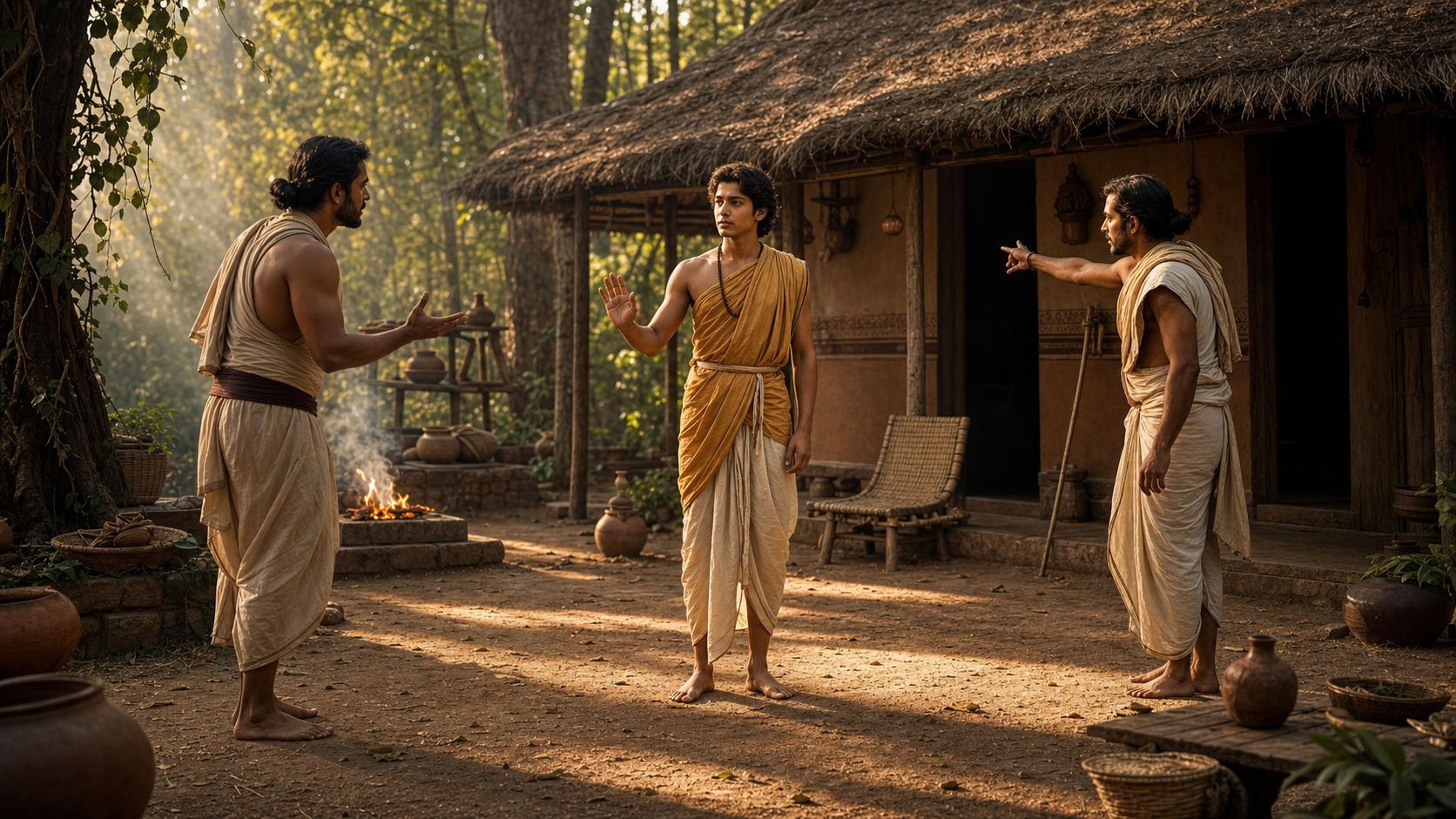
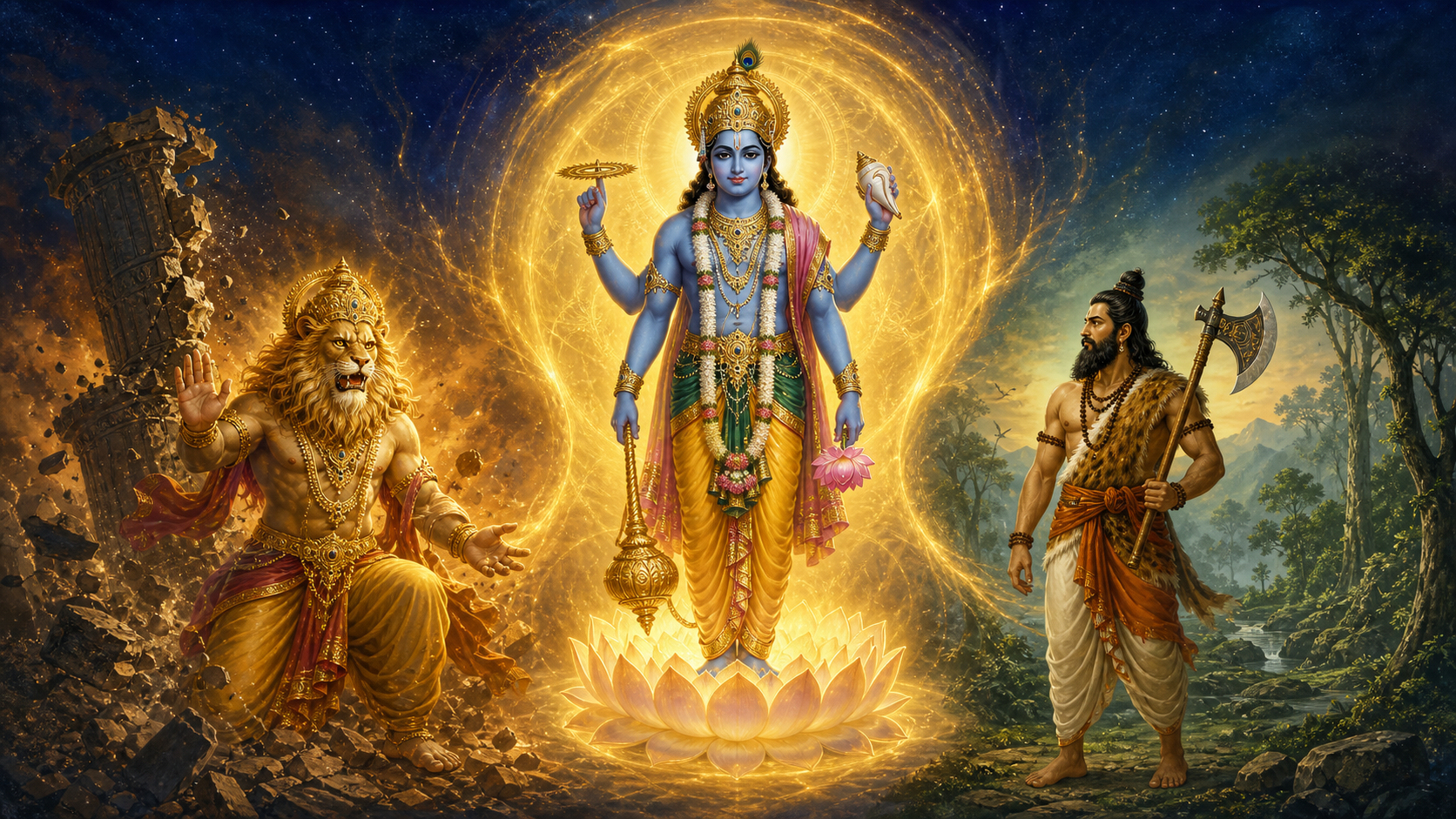
Parashurama, the sixth avatar of Lord Vishnu and a devoted bhakta of Lord Shiva, embodies the union of spiritual austerity and disciplined strength to restore dharma. Scriptural accounts from the Bhagavata Purana, Vishnu Purana, Ramayana, and Mahabharata portray his mission as a principled reform of Kshatriya power when it strays into adharma. The narrative explores…
-
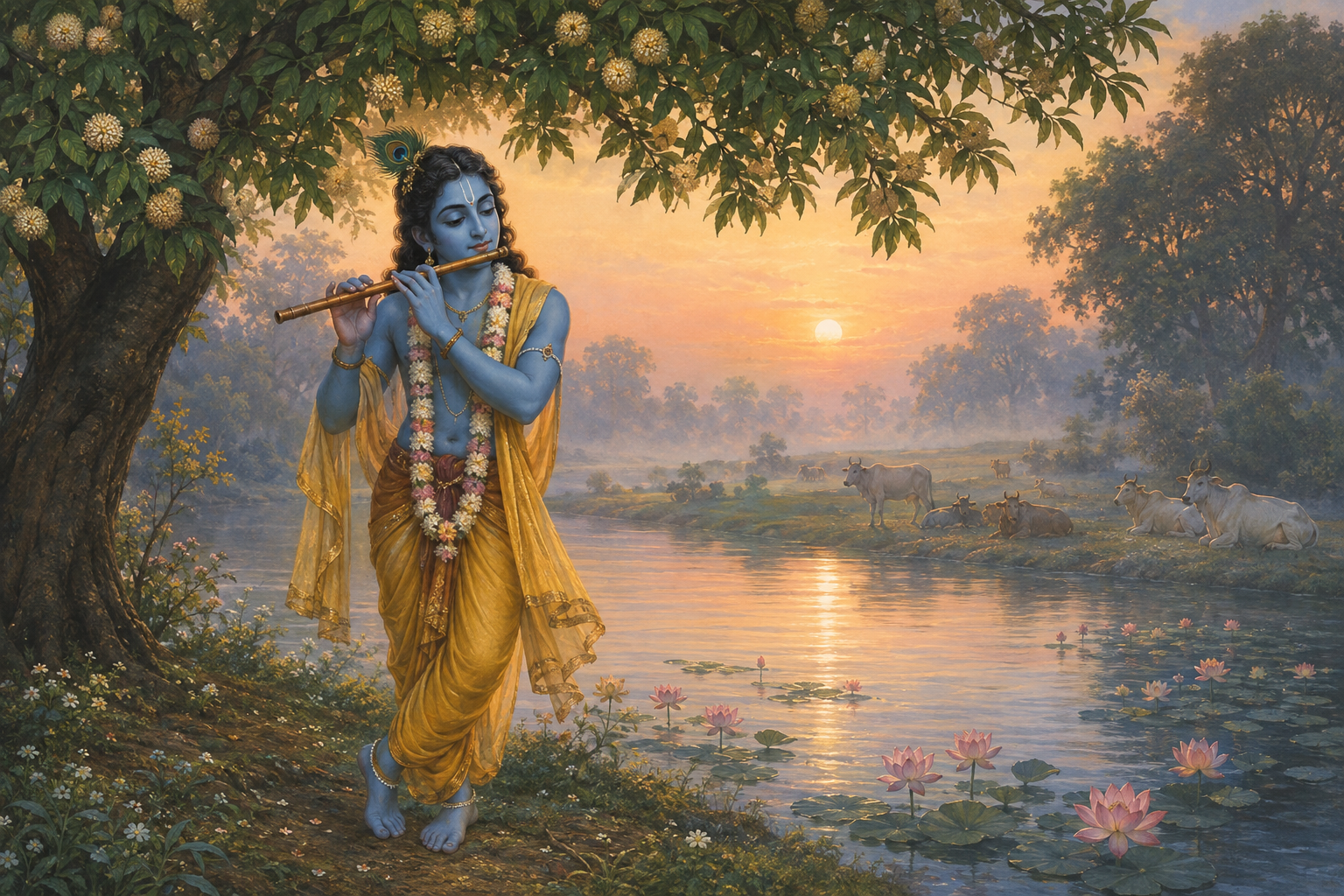
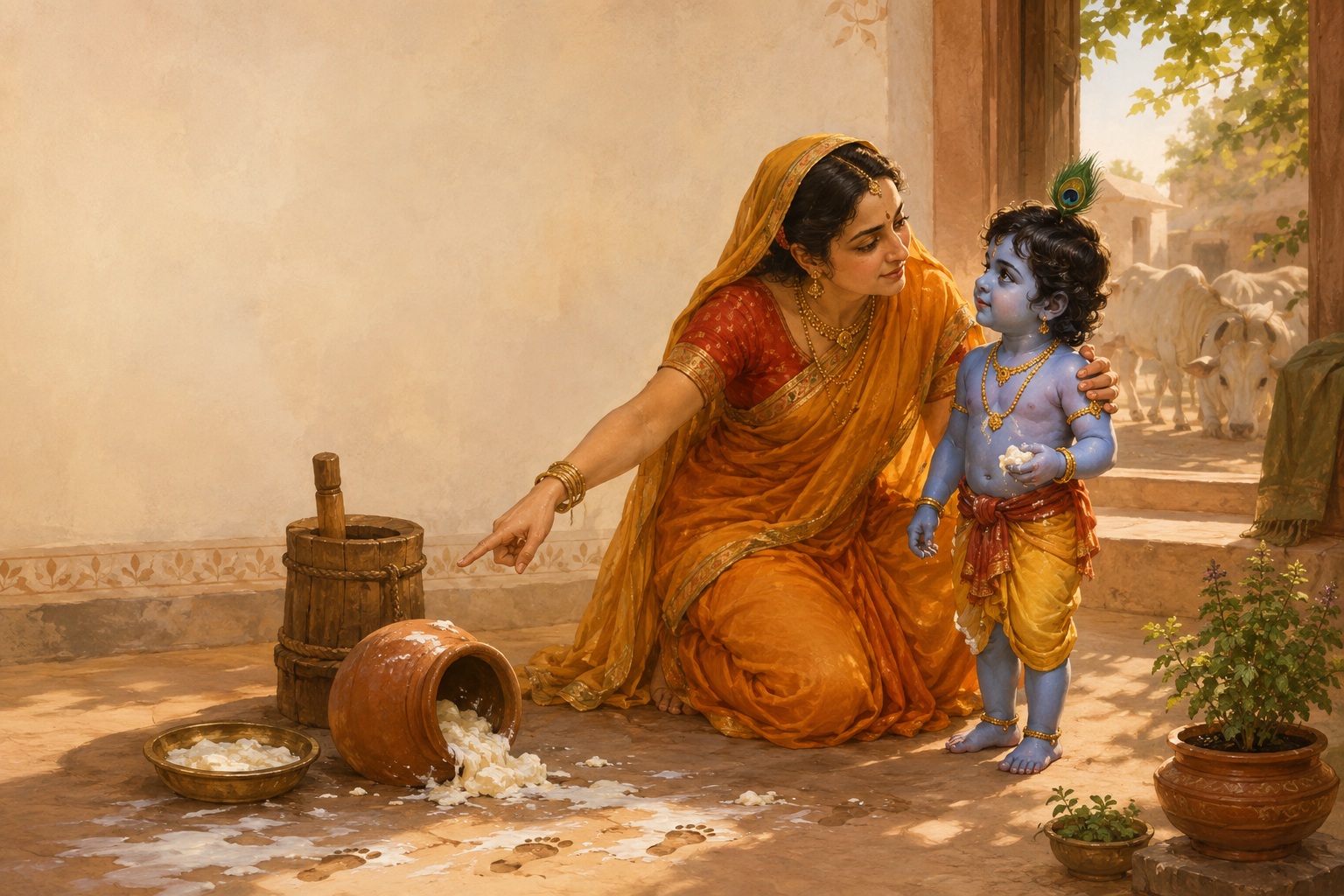
Krishna’s Omnipotence Explained: Why Name, Mantra, and Scripture Offer Direct, Daily Companionship

This article explains, in clear Vedic and Bhakti terms, why Krishna’s omnipotence means His words, names, and teachings are non-different from Him, offering direct companionship at any moment. It shows how the concept of shabda as an efficacious, self-revealing medium makes scriptural hearing and mantra recitation a living encounter rather than mere symbolism. Drawing on…
-
May 11, 2026 Panchang: Krishna Paksha Navami to Dashami, Good Times and Ritual Guidance

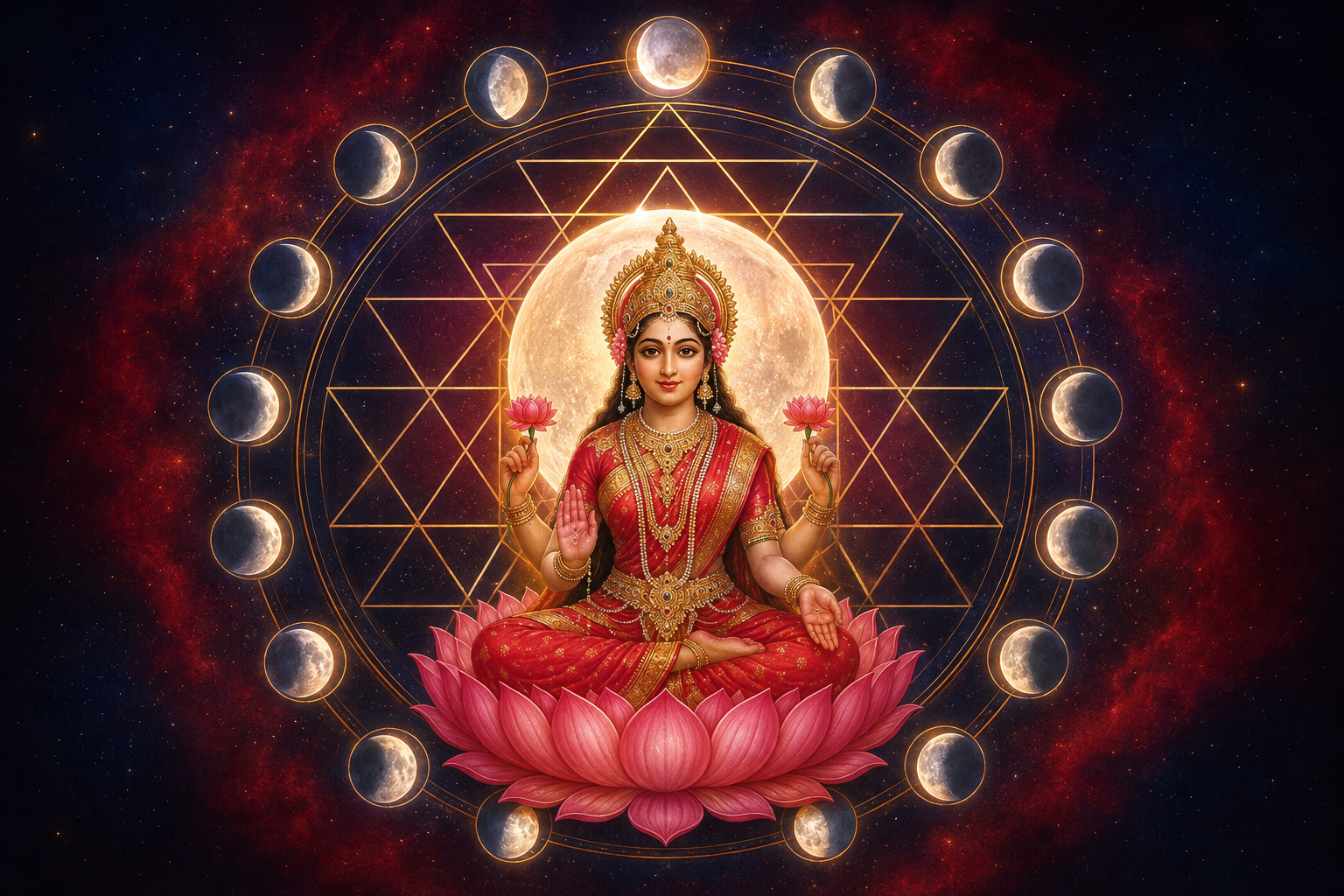
May 11, 2026 spans Krishna Paksha Navami until 10:12 AM, then transitions to Dashami for the remainder of the day in most regions. The post explains what a tithi is in precise astronomical terms, why the sunrise rule matters for observance, and how to use Abhijit and Vijay muhurta alongside proportional Rahu Kalam, Yamaganda, and…
-
Bageshwar Dham’s Bold Challenge: Dhirendra Krishna Shastri Invites Critics to Witness ‘Divine Knowledge’

Pandit Dhirendra Krishna Shastri’s open challenge at Bageshwar Dham invites critics to witness ‘divine knowledge’ firsthand, creating an unusual opportunity for transparent observation in a public darbar. This analysis frames the event through Dharmic epistemology—pratyaksha, anumana, and shabda—while drawing on Anekantavada and Sikh Gurmat to promote interpretive humility and ethical evaluation. It outlines practical, consent-driven…
-
Seeking the Supreme: An Academic Exploration of Hindu Pluralism, Ishta, and One Reality

Many seekers raised in temple-centered Hindu life wrestle with two enduring questions: Why so many gods, and who is the Supreme? Hindu philosophy answers with a precise synthesis: the One Reality (Brahman) is accessible both without attributes (nirguna) and with attributes (saguna), and Ishta-devata personalizes that access without denying unity. Rig Veda’s “Ekam sat vipra…
-
Liberating the Householder’s Heart: Aparigraha via Dana, Seva, and Guru-centered Living

This essay examines possessiveness in the grihastha ashrama and presents aparigraha, practiced through dāna and seva, as the shastric antidote. It outlines a give-first discipline—prioritizing Guru, Ishta, and dharmic service before personal consumption—that steadily dissolves attachment. The discussion contextualizes the aspirational fifty-percent ideal found in certain Vaishnava teachings while advocating progressive, capacity-based steps. Cross-dharmic parallels…
-
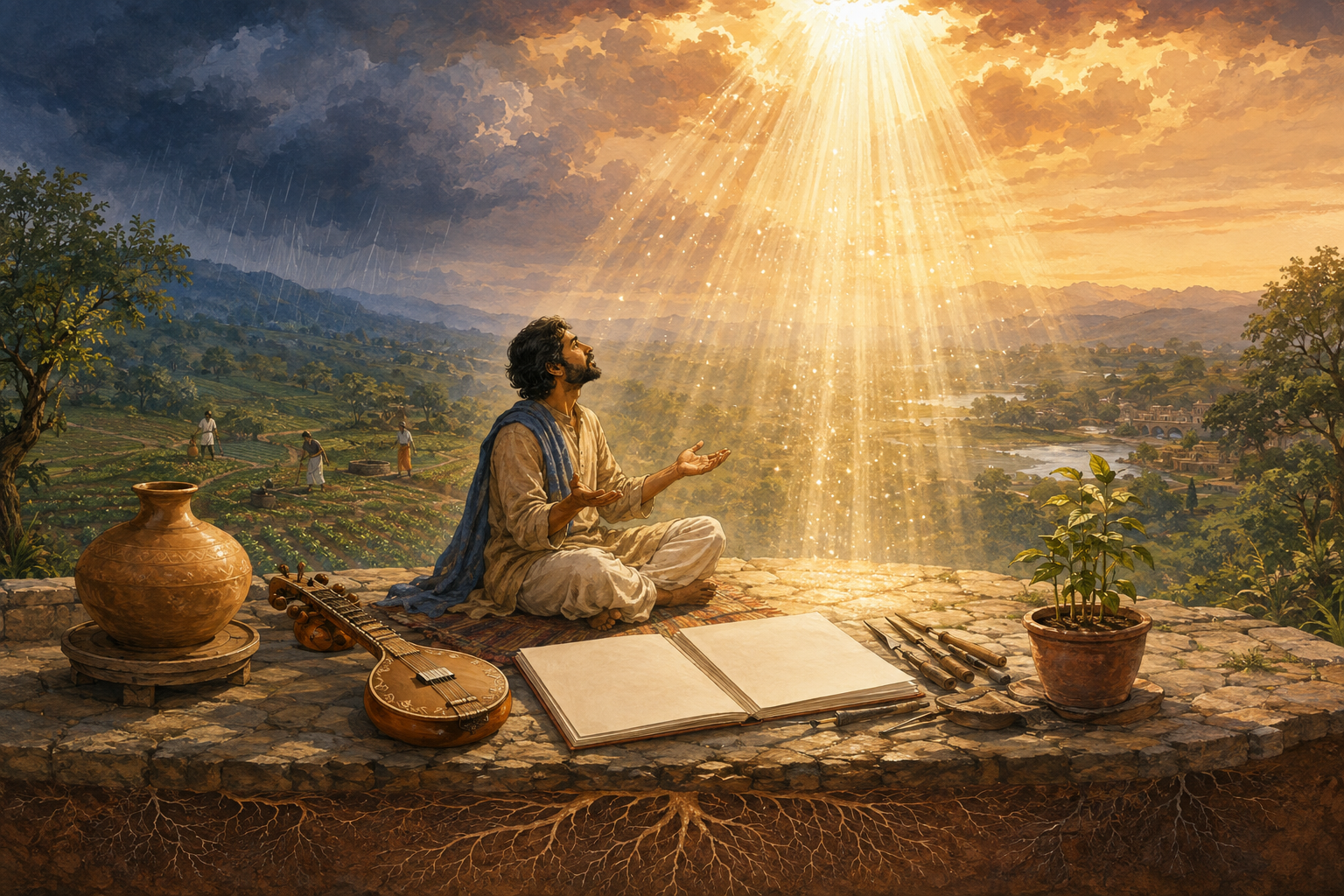
From Sensory Illusion to Self‑Realization: A Dharmic Guide to Serving the Supreme

This essay unpacks the Dharmic insight “I am not these senses” and shows how a life changes when the stance shifts from unconsciously receiving to consciously serving the Ultimate Reality. Drawing on the Upanishads, Bhagavad Gita, Yoga Sutra, Buddhist mindfulness, Jain ethics, and Sikh seva, it explains how sense-identification loosens through ethical restraint, pratyahara, meditation,…
-
At the Goddess’s Gate: Manidwipa’s Iron Enclosure and the Discipline of Sacred Choice

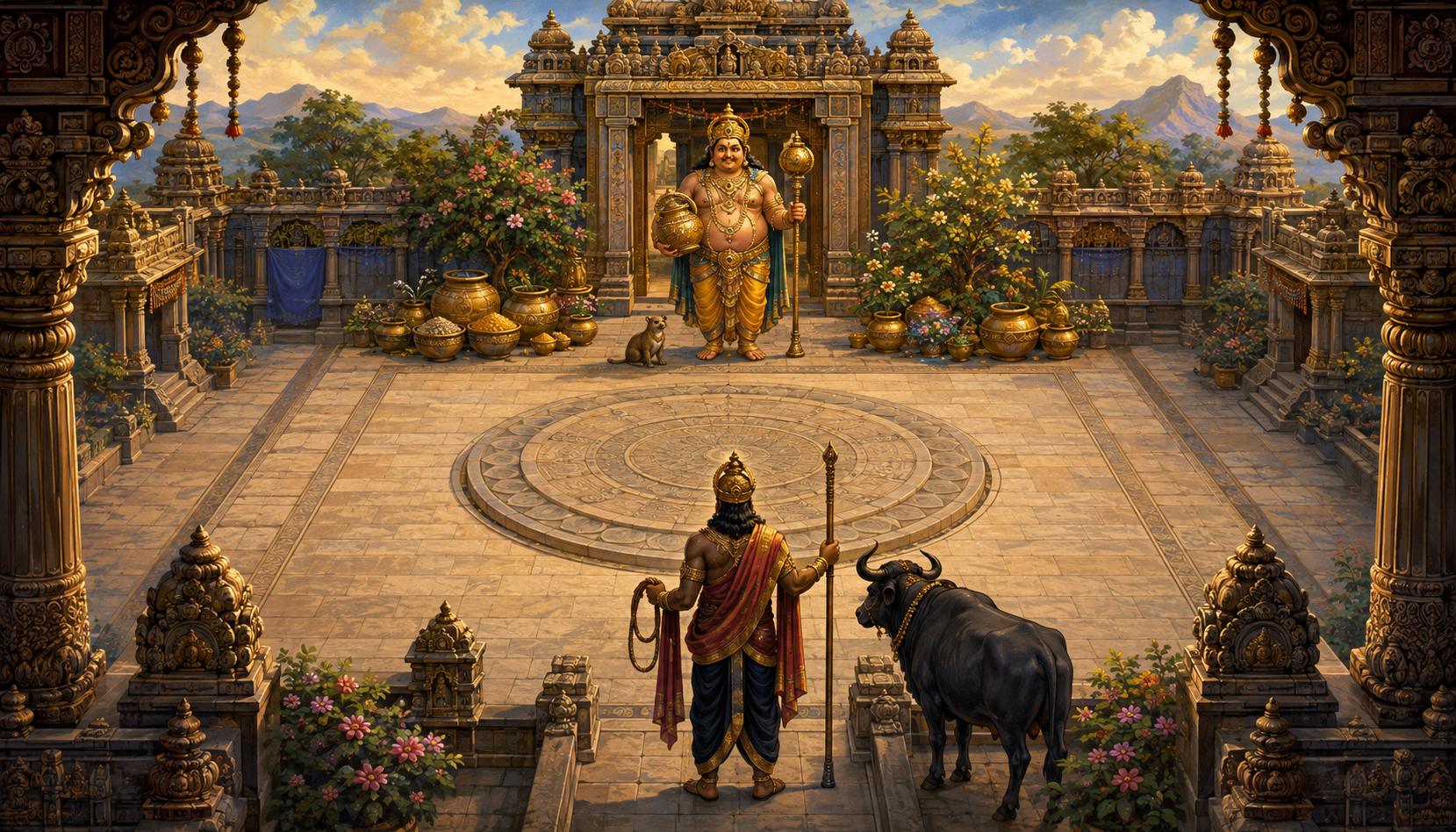
The Devi Bhagavatam describes Manidwipa’s Chintamani Griha encircled by progressively subtler enclosures. This essay examines the outermost Iron Enclosure (loha-prakara) as a Hindu symbol of sacred choice and disciplined detachment. It shows how the first threshold functions ethically (yamas–niyamas), psychologically (pratyahara and boundary hygiene), and ritually (temple prakara as didactic space). Readers learn to map…
-
Saranyū, Daughter of Tvaṣṭṛ: The Swift Vedic Goddess of Transformation and ṛta

Saranyū, the swift goddess of the Vedas, unites movement, light, and craftsmanship into a single principle: transformation governed by ṛta. Positioned as daughter of Tvaṣṭṛ and wife of the solar Vivasvat, her narrative encodes lawful speed and timely transition. The Aśvins embody her swiftness in service of healing, while the Chāyā motif distinguishes authentic presence…
-
Mahant Yati Maa Chetananand Saraswati attains samadhi: enduring Dharma at Shivshakti Dham

Mahant Yati Maa Chetananand Saraswati of Siddhpeeth Shivshakti Dham has attained samadhi, inviting thoughtful reflection on the meaning of mahasamadhi in living Hindu traditions. The article explains samadhi in the Yoga Sutra framework, clarifying samprajnata and asamprajnata states and the role of samyama. It situates the Mahant within the Dashanami Saraswati lineage, outlining the responsibilities…
-
Tapasya in Kali Yuga: Powerful, Scripture-Sourced and Science-Backed Austerities for Modern Life

Tapasya in Kali Yuga is not self-mortification but an intelligent discipline that purifies body, speech, and mind for clarity and resilient living. Drawing on the Bhagavad Gita, Yoga Sutras, the Bhagavatam, and the Kali-Santarana Upanishad, it reframes penance as preparatory purification rather than an attempt to please the divine or force realization. Practical śarīra-, vāk-,…
-
Paada Puja Explained: The Timeless, Transformative Ritual of Reverence and Dharmic Unity

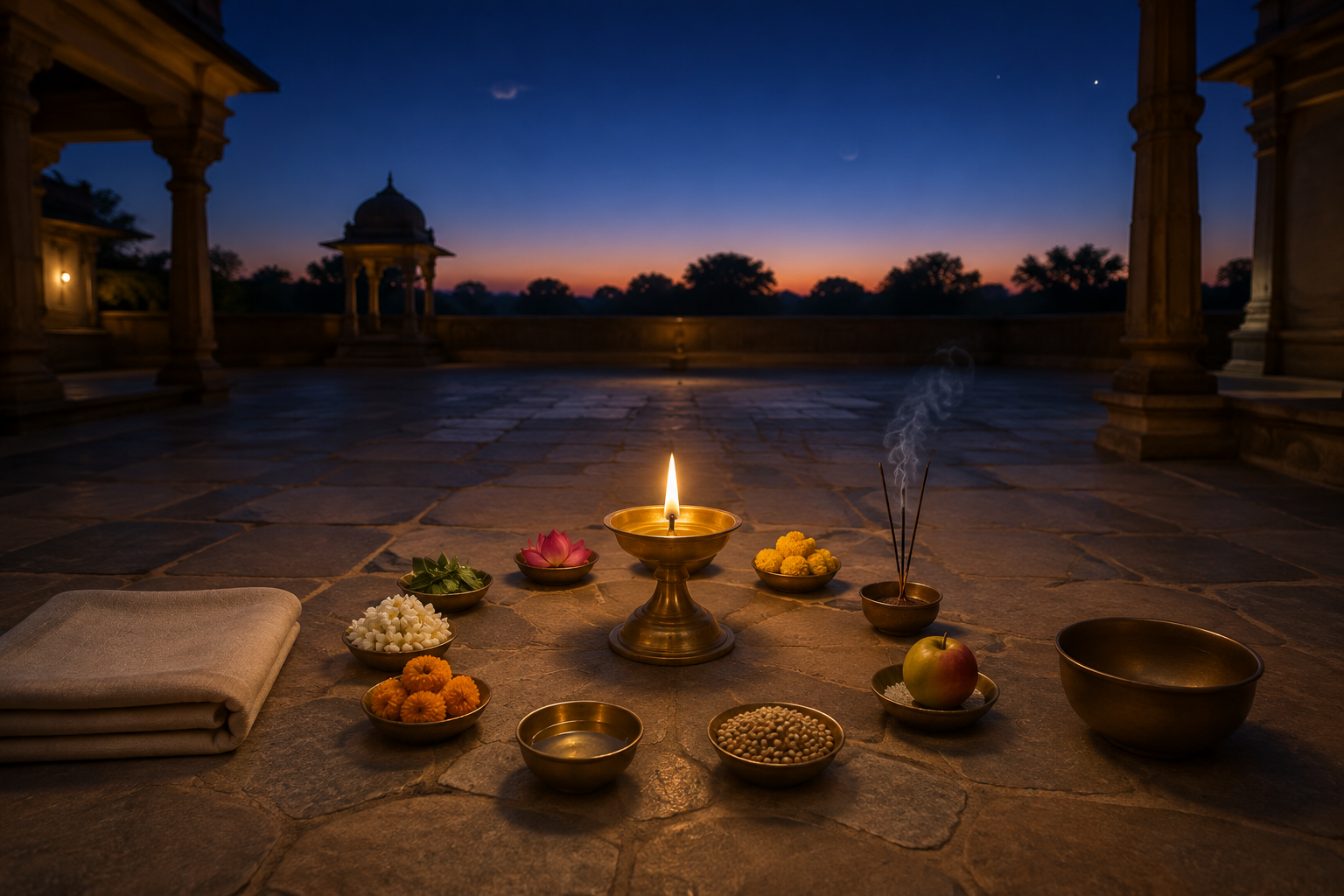
Paada Puja (Paada Pooja) is a timeless Dharmic ritual that elevates hospitality into sacred practice, honors the guru–shishya relationship, and completes Hindu worship through the upachara of washing and adorning the feet. Rooted in the ideal Atithi Devo Bhava, it appears across sampradayas and Dharmic traditions, from Vaishnava padukas and śāṭāri customs to Buddhist Buddhapada…
-
Hinduism’s ‘330 Million Gods’ Demystified: Unity, Ishta, and the Logic of Many Paths

Why Hindus follow many gods is not a contradiction but a cornerstone of Sanatan Dharma. This essay clarifies the famous “330 million gods” as a later linguistic and devotional interpretation of the Vedic 33 categories (koti) of deities, grounding the discussion in the Vedas, Upanishads, and the Bhagavad Gita. It explains Ishta-devata as a rigorous,…
-
When Do Our Karmas Ripen? A Dharmic, Evidence‑Based Guide to Prarabdha, Agami, Sanchita

This article addresses a common spiritual question: if current experiences reflect past-life karma, when do the karmas of this life bear fruit? Drawing on the clarification by Sri Sri Ravi Shankar—”That is not how it is!”—it explains why karmic results arise on multiple horizons: immediate, near-term within this life, and across future births. It provides…
-
Shanmukha’s Six Heads: Mythic Origins, Deep Symbolism, and Dharmic Philosophical Unity

Why does Shanmukha (Kartikeya) have six heads? This in-depth exploration traces the six-faced form across Purana narratives, Agamic iconography, and philosophical interpretations. It explains how the motif honors the six Krittikas, maps the six directions, and invites a mature reading through the Shad Darshanas. Psychological and yogic lenses show how the image addresses the six…
-
Why India Reveres Its Rivers: Sacred Geography, Living Heritage, and Dharmic Unity

This in-depth exploration explains why India venerates its rivers as living presences that sustain ecology, economy, and ethics. It traces scriptural roots from the Rigveda to the Puranas, highlights major rivers such as Ganga, Yamuna, Saraswati, Godavari, Narmada, and Kaveri, and shows how sacred geography shapes towns, festivals, and civic infrastructure. It demonstrates unity among…
-
Beyond Abundance: Why Modest Expectations Foster Lasting Happiness in Dharmic Wisdom

Modern abundance has not eliminated dissatisfaction because expectations often outrun reality. Dharmic wisdom—Hindu, Buddhist, Jain, and Sikh—offers a unifying solution: cultivate santosha (contentment) and aparigraha (non-hoarding) while acting with clarity and purpose. The Bhagavad Gita’s karma-yoga and the Yoga Sutra’s abhyāsa–vairāgya framework train steadiness without suppressing healthy ambition. Contemporary psychology aligns with these teachings: lower,…