-
Bhishma’s Birth and Vow: Ganga’s Son Devavrata and the Timeless Dharma of the Mahabharata

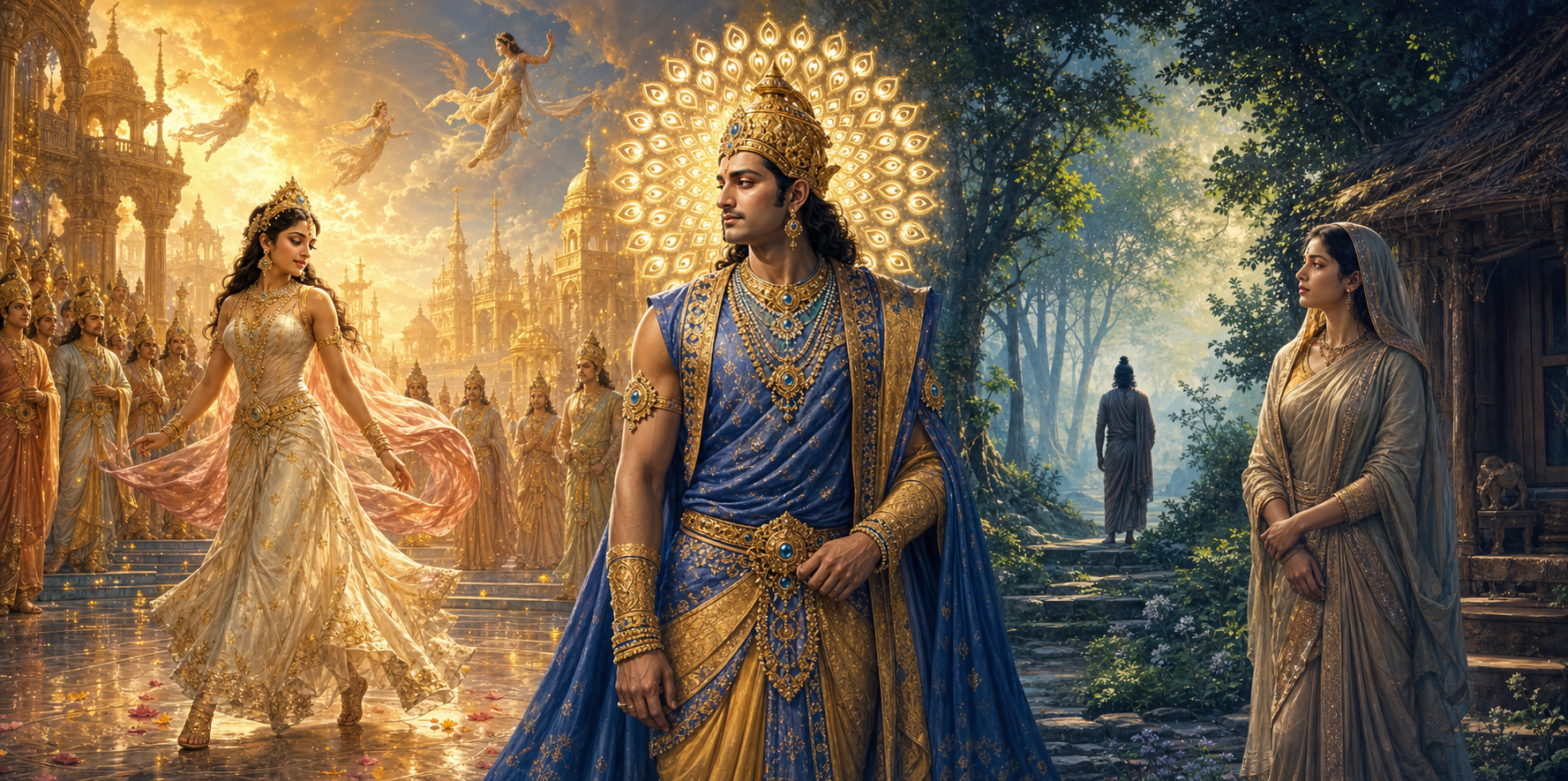
Bhishma’s birth as Devavrata—eighth son of King Shantanu and the goddess Ganga—introduces a life shaped by destiny, discipline, and dharma. The Mahabharata explains the early tragedies of his siblings through the Ashta Vasus’ curse, while Ganga ensures Devavrata’s unmatched education before returning him to Hastinapura. The pivotal moment arrives with his vow of brahmacharya to…
-
Goddess Karindrasuranisudini: Awe-Inspiring Slayer of the Elephant Demon and its Symbolism
Karindrasuranisudini, an epithet from the Devi Mahatmya, captures Durga’s subjugation of the elephant-form assumed by Mahishasura. The image fuses narrative drama with theological depth, presenting Shakti as the force that transforms power into protection and insight. Readers learn the name’s meaning, the key scene in the Markandeya Purana, and the layered symbolism of the severed…
-
Decoding the Bhagavad-gita’s Timeless Architecture: Dharma, Yoga, and Moksha Unveiled

This reading of the Bhagavad-gita reveals a clear three-tiered architecture—dharma, yoga, and moksha—that unifies ethical life, disciplined practice, and ultimate liberation. Understanding dharma as the finite, yoga as the bridge, and moksha as the infinite preserves the text’s internal coherence. The framework offers practical guidance for modern responsibilities while pointing beyond them to lasting freedom.…
-
Krishna, Fountainhead of All Avatars: Profound, Unifying Wisdom for Dharmic Paths

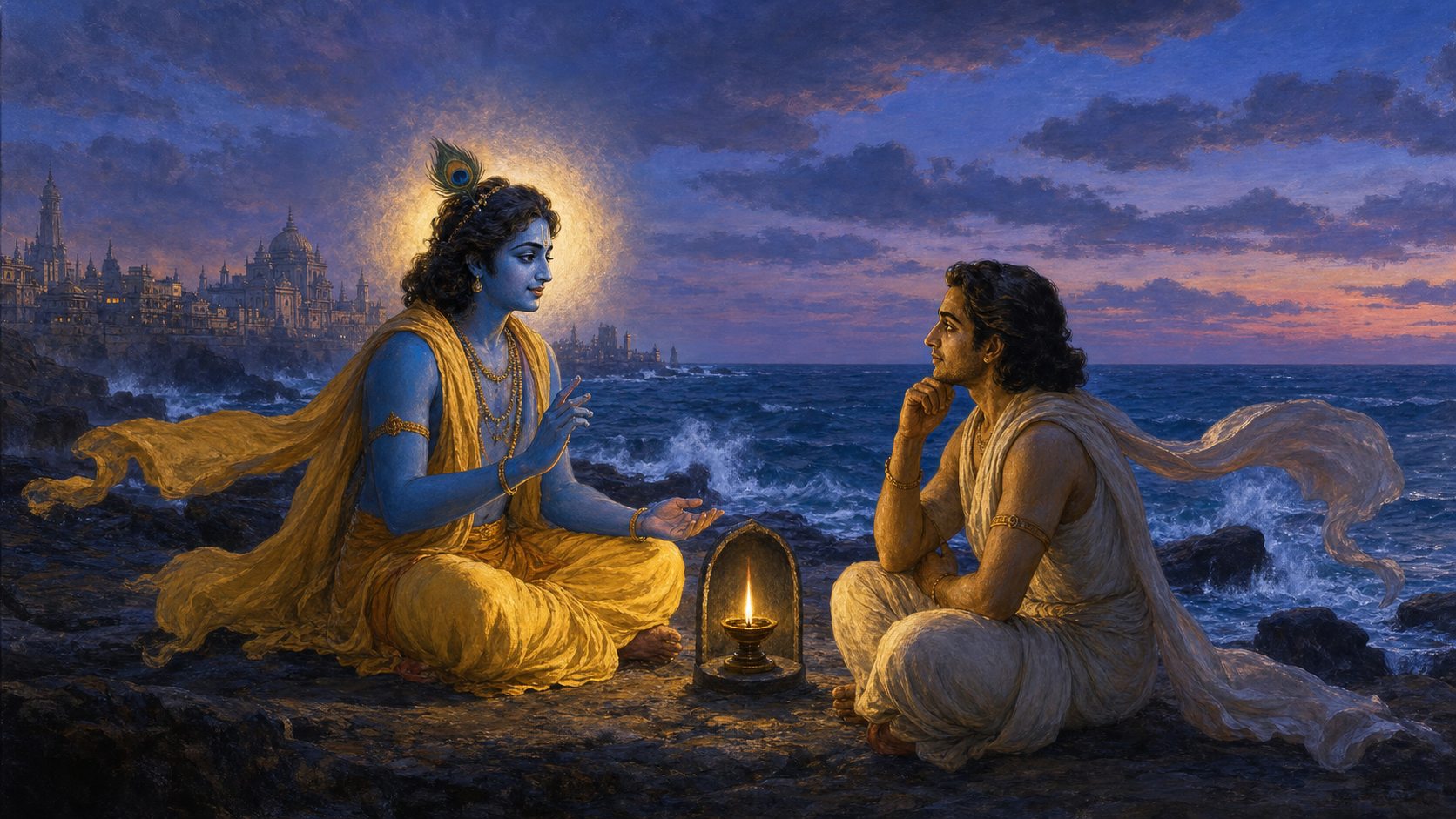
Sanatana Dharma describes Krishna as the primeval Lord from whom all avatars emerge, preserving divine transcendence while engaging the world through plenary expansions. This framework, grounded in the Puranas and Bhagavad-Gita, explains how the Supreme remains untouched by material activity and continues eternal lila with devotees. Recognizing Balarama as the first expansion illustrates the cooperative…
-
Srimad Bhagavatam 3.23.42: The Life-Changing Refuge at the Lotus Feet of the Divine

Srimad Bhagavatam 3.23.42 teaches that determined refuge at the Divine lotus feet turns difficult goals into attainable realities. The verse’s image of sacred rivers like the Ganga flowing from those feet signals purification and release from worldly danger. The phrase yair āśritas tīrtha-padaś caraṇaḥ highlights a shared dharmic metaphor: the holy ford that carries seekers…
-
Dattatreya Upanishad: Timeless Vaishnava Wisdom on Jnana, Bhakti, and Inner Liberation

The Dattatreya Upanishad, a concise Atharva Veda text of the Vaishnava tradition, unites devotion (bhakti) and wisdom (jnana) around Dattatreya as an incarnation of Narayana. Its three khandas and nine mantras—mostly in prose—offer a distilled path to inner liberation grounded in Vedic wisdom. Readers benefit from its clarity, accessible length, and practical orientation toward meditation,…
-
Unveiling Yogini Tantra: Why Kali Stands on Shiva—and the Sacred Union It Reveals

The image of Goddess Kali standing on Lord Shiva is often misunderstood as mere fury subdued. Read through the Yogini Tantra and related Tantric traditions, it teaches the sacred union of Shakti and Shiva—dynamic energy resting on pure consciousness. This interpretation reframes the posture as reciprocity, not hierarchy, and as transformation, not violence. The symbolism…
-
Sundara Kanda Unveiled: Hanuman’s Epic Journey to Lanka and the Hope it Inspires

Sundara Kanda, the fifth book of the Ramayana by Valmiki, chronicles Hanuman’s mission to find Sita and transform uncertainty into hope. The narrative highlights the ocean leap, encounters with Mainaka, Surasa, and Simhika, the discovery of Sita in Ashoka Vatika, and the powerful audience with Ravana. Hanuman’s burning of Lanka is framed as disciplined, ethical…
-
Ramayana’s Defining Episodes: Dharma, Devotion, and the Journey Uniting Dharmic Traditions

This structured overview of the Valmiki Ramayana highlights the epic’s defining episodes—from Ahalya’s redemption and Sita’s swayamvara to the exile, Sundara Kanda, and the battle of Lanka—explaining how each advances dharma, devotion, and ethical leadership. Readers gain a clear framework for understanding the narrative arc and its moral significance. The account emphasizes unity across dharmic…
-
Ayodhya Kanda’s Defining Moments: Duty, Exile, and Timeless Dharma in the Ramayana

Ayodhya Kanda, the second book of Valmiki’s Ramayana, presents a rigorous exploration of duty, vows, and righteous leadership centered in Ayodhya. It follows King Dasharatha’s plan to crown Rama, Kaikeyi’s boons, and Rama’s voluntary exile (vanvas), with Sita and Lakshmana choosing to accompany him. The grief of Ayodhya, the sanctity of Chitrakoot, and Bharata’s principled…
-
Unlocking Sanskrit Mastery: Patanjali’s Mahabhashya on Panini’s Ashtadhyayi, Explained

Panini’s Ashtadhyayi (5th century BCE), with its eight chapters and 3,996 sutras, offers a precise formal system for Sanskrit grammar that has influenced linguistic thought for millennia. Patanjali’s Mahabhashya deepens this precision through dialectical analysis, clarifying rule interactions and interpretive principles across phonology, morphology, and syntax. Together, they provide a shared scholarly foundation for Hindu,…
-
Jivo Brahmaiva Naparah: Unveiling Advaita’s Transformative Non‑Dual Truth for Daily Life

“Jivo Brahmaiva Naparah” expresses the Advaita Vedanta insight that the individual self is not separate from Brahman. Grounded in the Upanishads and the Bhagavad Gita, the teaching distinguishes empirical experience from absolute truth and guides seekers to Moksha through disciplined self-knowledge. It cultivates ethical clarity, compassion, and steadiness in daily life without denying personal responsibilities.…
-
Fierce Grace on Kurukshetra: Goddess Kalaratri’s Sacred Role and Soul-Carrying Symbolism

Goddess Kalaratri emerges in the Mahabharata War as a profound symbol of Time, moral consequence, and fierce compassion. Read as a cosmic witness and soul-carrier, she reframes Kurukshetra not as mere carnage, but as a rite of ethical passage aligned with Dharma-Yuddha. This lens clarifies how endings in the epic serve renewal within a larger…
-
Arjuna and Kirata Shiva vs. Demon Mook: Powerful Spiritual Lessons on Inner Courage

This analysis situates the Kirata episode—where Arjuna and Shiva (as Kirata) slay the demon Mook—within the Mahabharata’s spiritual arc. It clarifies the narrative sequence, from Arjuna’s rigorous tapasya to Shiva’s revelation and the bestowal of the Pashupatastra. It interprets Mook as the symbolic “inner demon” of delusion and tamasic impulse that arises at the threshold…
-
Srimad Bhagavatam 11.2.32: Inspiring Dharmic Leadership and Devotion Lessons at ISKCON Juhu

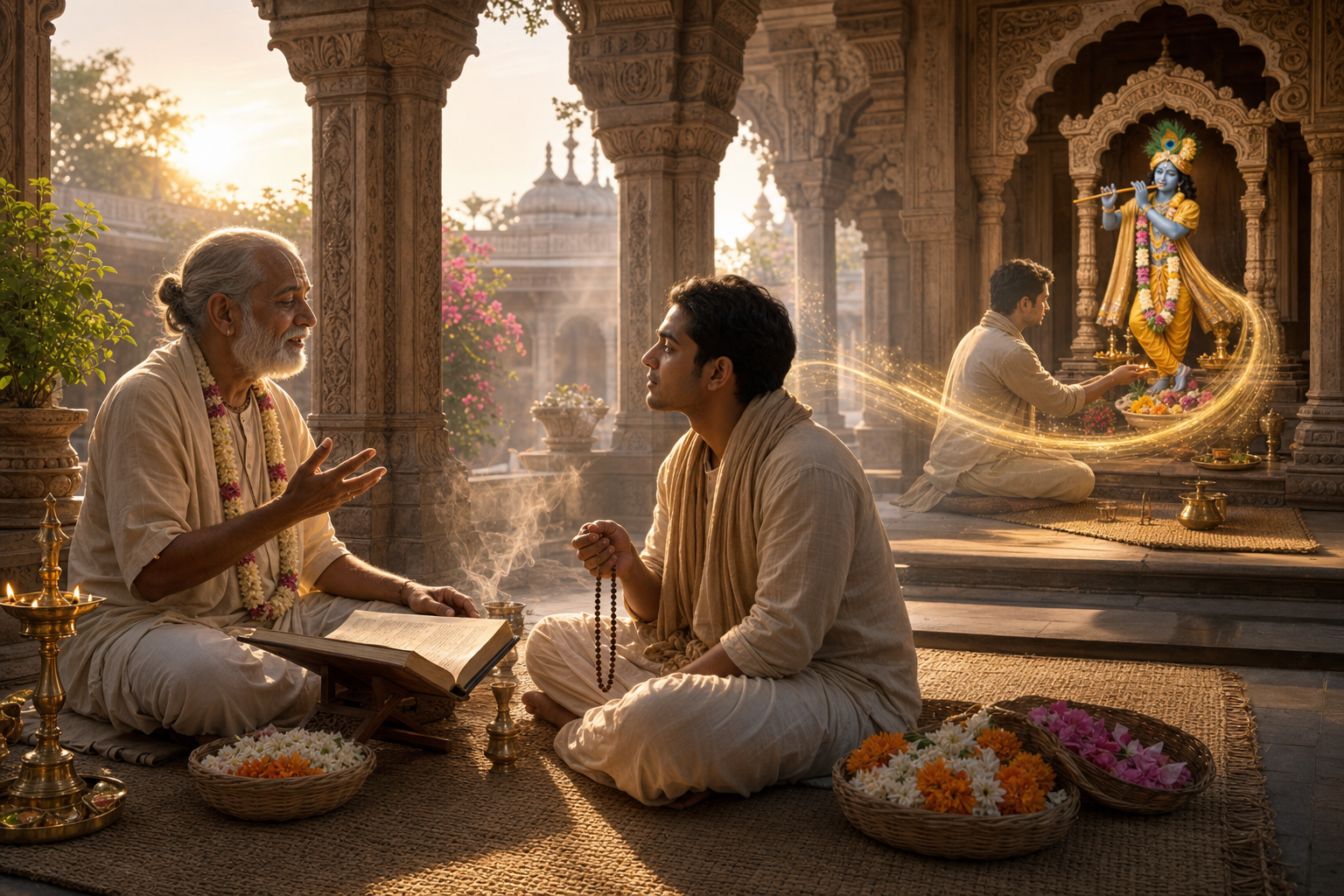
This discourse from ISKCON Juhu on Srimad Bhagavatam 11.2.32 presents a clear, actionable model of dharmic leadership grounded in humility, accountability, and devotion. Drawing on the dialogue between Maharaja Nimi and the Nine Yogendras, it shows why rulers and decision-makers benefit from saintly counsel and ethical review. The analysis connects inner practices—sadhana, study, and satsanga—to…
-
Beyond Ritual: ISKCON Adelaide on Pilgrimage, Eclipses, and Kurukshetra’s Purifying Power

This reflection on ISKCON Adelaide’s Srimad-Bhagavatam class explains why pilgrimage yields its deepest results through śravaṇa, kīrtana, and sādhu-saṅga rather than ritual bathing alone. It clarifies how eclipses, approached as disciplined windows for practice, amplify remembrance and compassion across dharmic traditions. Kurukshetra’s connection to Krishna’s pastimes illustrates sacred geography as a living classroom for devotion…
-
Why Sri Rama Is Priyadarshan: A Transformative Vision of Compassion and Dharma

Priyadarshan, a revered epithet of Sri Rama, signifies a disciplined, compassionate vision that recognizes the good in others and remembers acts of kindness while releasing grievances. Rooted in the Ramayana and resonant with the Vishnu Sahasranama, it blends devotional beauty with ethical clarity. Scriptural episodes—from honoring Jatayu to welcoming Vibhishana—demonstrate how this outlook transforms power…