-
From Trickster to Kingmaker: Maricha to Shakuni and the Karmic Echoes Across the Yugas

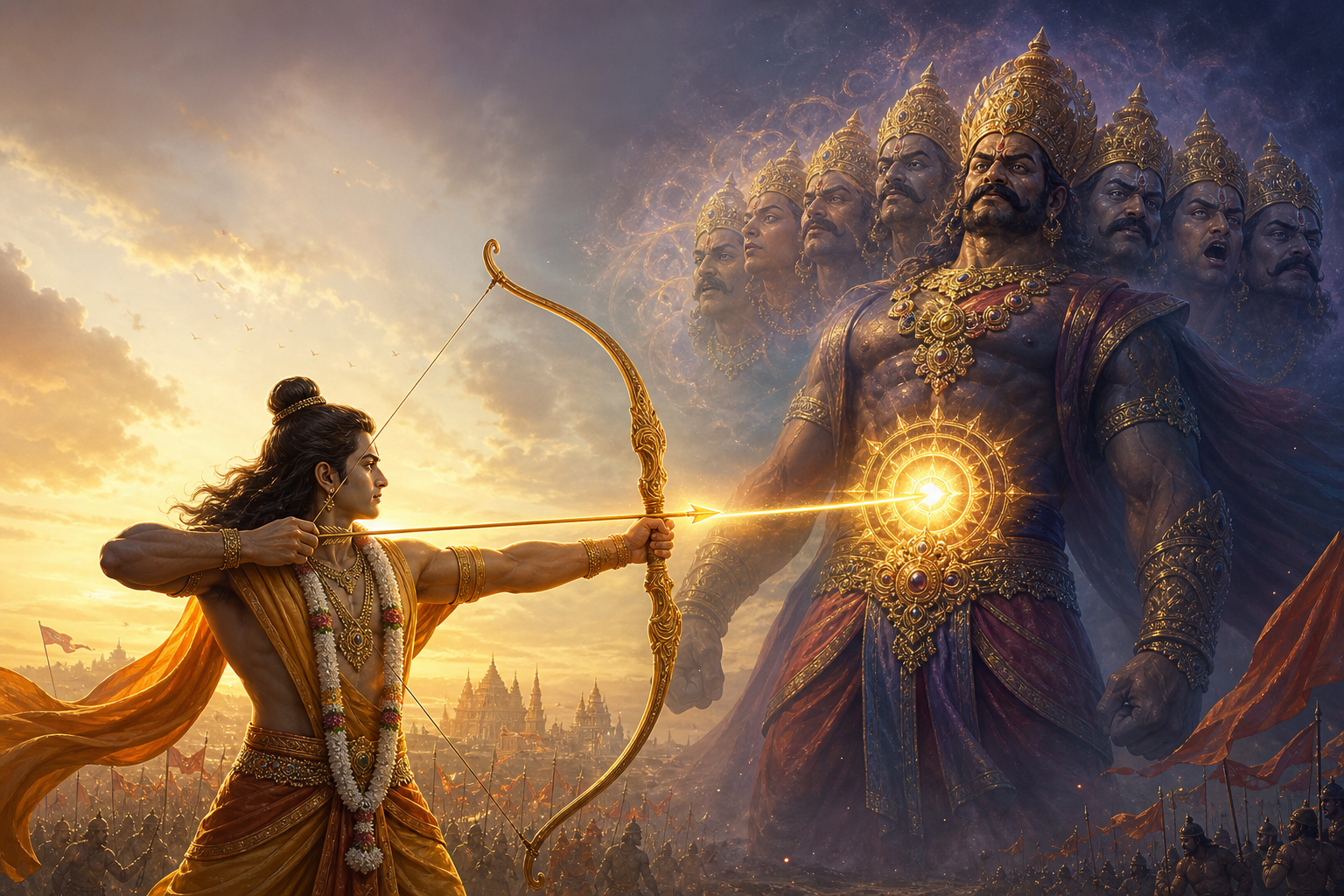
This piece examines the thematic linkage between Maricha in the Ramayana and Shakuni in the Mahabharata as a teaching device about karma, samsara, and moral causality across the yugas. It clarifies that core texts do not attest a direct rebirth but shows how the comparison illuminates the evolution of deception from personal illusion to systemic…
-
Brotherhood in the Ramayana: Sacred Bonds of Duty, Sacrifice, and Enduring Unity

Brotherhood in the Ramayana is portrayed as a disciplined ethic of love, respect, sacrifice, and dharma that stabilizes families and strengthens kingdoms. Rama and Lakshman exemplify vigilant companionship in adversity, while Bharata’s renunciation models humility in leadership. Shatrughna’s quiet service shows how consistent responsibility sustains the common good. In contrast, Ravana’s rejection of counsel and…
-
Karna and Kumbhakarna: Tragic Titans of Dharma, Loyalty, and Sacrifice Over Power

Karna and Kumbhakarna exemplify sacrificial dharma in the Mahabharata and the Ramayana, choosing honor and loyalty over the pursuit of power. Their lives illuminate how gratitude, promise-keeping, and moral courage can coexist with tragic outcomes, enriching the ethical complexity of Indian epics. Readers gain a nuanced perspective on kshatra dharma, where strength is tempered by…
-
Conquering the Fear of Death through Krishna Consciousness: Lessons from Maharaja Parikshit

This reflection on Srimad Bhagavatam presents how Krishna consciousness transforms the fear of death into composure and clarity. Using Maharaja Parikshit’s fearless surrender as a living example, it explains that consistent remembrance of Vishnu/Krishna dissolves anxiety by anchoring awareness in the eternal nature of the soul. Practical disciplines—scriptural study, japa, kirtan, and ethical service—build daily…
-
Sukhmani Sahib: A Timeless Pathway to Inner Peace, Compassion, and Dharmic Unity

Sukhmani Sahib, a revered composition in the Guru Granth Sahib, offers a structured path to inner peace through Naam, Simran, humility, and Seva. Organized in 24 ashtapadis, it marries clear doctrine with musical cadence to aid contemplation and practice. The scripture translates spiritual insight into actionable ethics—truthfulness, compassion, and community service—that improve emotional balance and…
-
Advaita Acarya’s Sacred Role: Mapping Sri Caitanya’s Tree and Dharmic Unity in Bhakti

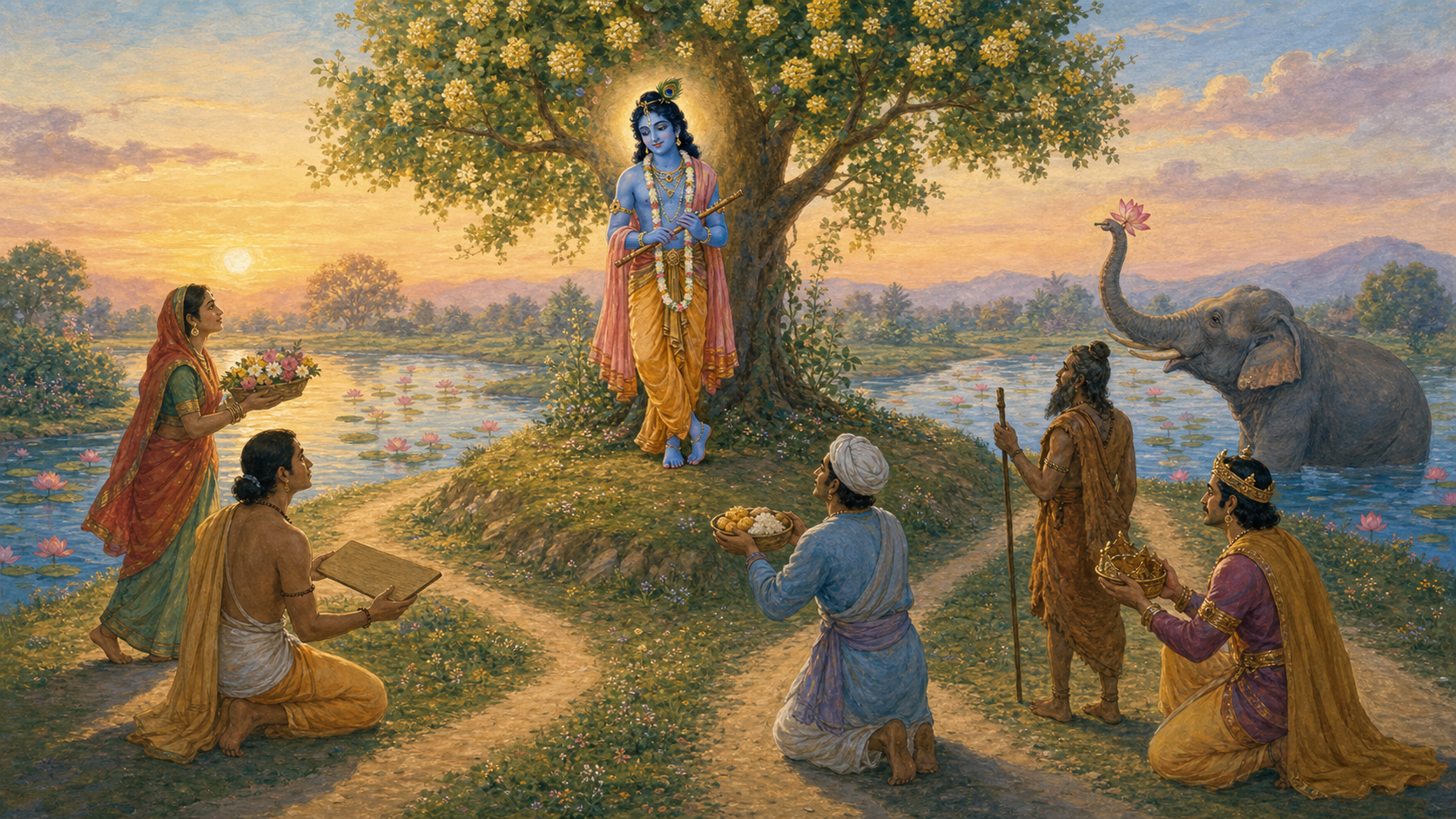
Caitanya-caritamrta introduces Advaita Acarya through two foundational verses that illuminate the structure of the Bhakti Tradition. The text’s spiritual tree—Sri Caitanya Mahaprabhu as trunk, Lord Nityananda as first branch, and Advaita Acarya as second—clarifies how guidance and grace flow through lineage. This metaphor resonates with lived practice, where mentors and communities sustain discipline and insight.…
-
Honoring Parampara: The Sastric Case for Advaita Acarya’s Beardless Deity and Dharmic Unity

This analysis explores the sastric reasoning behind depicting Sri Advaita Acarya’s deity—particularly the beardless form—through the lens of parampara and the Guru-Shishya Tradition. Drawing on Srila Prabhupada’s guidance (SB 5.1.20 purport) and the Skanda Purana (as cited in NOD Ch. 7), it shows why following past acaryas preserves devotional integrity and prevents confusion. The discussion…
-
Majestic Legacy of Kubera: Guardian of the North and Lord of Wealth Revealed

Kubera—Lord of Wealth, King of the Yakshas, and guardian of the northern direction—embodies prosperity grounded in dharma. Rooted in Hindu scriptures and echoed across Buddhist and Jain traditions (as Vaisravana and through Yaksha guardianship), his story aligns material abundance with ethical responsibility. The Mahabharata acclaims him as radiant and exemplary, while Puranic lineages present a…
-
Timeless Foundations of Dharma: Gautama’s Dharmasutra on Law, Ethics, and Daily Life
Gautama’s Dharmasutra is among the earliest and most influential Hindu scriptures on law, ethics, and social order, dated to roughly 600–400 BCE. It systematically codifies duties, rites, legal procedures, and penances, shaping the foundations of the Hindu legal system. Its ethical core—non-violence, truthfulness, generosity, and self-restraint—resonates across Buddhism, Jainism, and Sikhism, reinforcing unity among dharmic…
-
Virat Purusha Awakens: Srimad Bhagavatam 3.26 Reveals the Power of the Supersoul

Srimad Bhagavatam 3.26.62–71 presents a clear philosophical insight: the senses, mind, and intelligence remain inert until the Supersoul (Paramatma) enters and animates the Virat Purusha. Mukunda Goswami’s exposition clarifies that all faculties are instruments requiring the integrative power of consciousness to become meaningful. Readers gain a practical framework for aligning speech, thought, and action through…
-
From Sadhu-Sanga to Perfection: SB 3.25.25-37’s Transformative Map of Krishna Bhakti

This analysis of SB 3.25.25–37 with Kalakantha Prabhu presents a precise roadmap of Krishna consciousness grounded in the Srimad-Bhagavatam. It explains why sadhu-sanga is the essential catalyst that turns knowledge into lived devotion. The discussion clarifies how śravaṇa and kīrtana function as the heart’s medicine, steadily cultivating śraddhā, rati, and bhakti. Listeners will recognize the…
-
Nine Sacred Powers of Goddess Lakshmi: A Profound Guide to Prosperity and Inner Grace

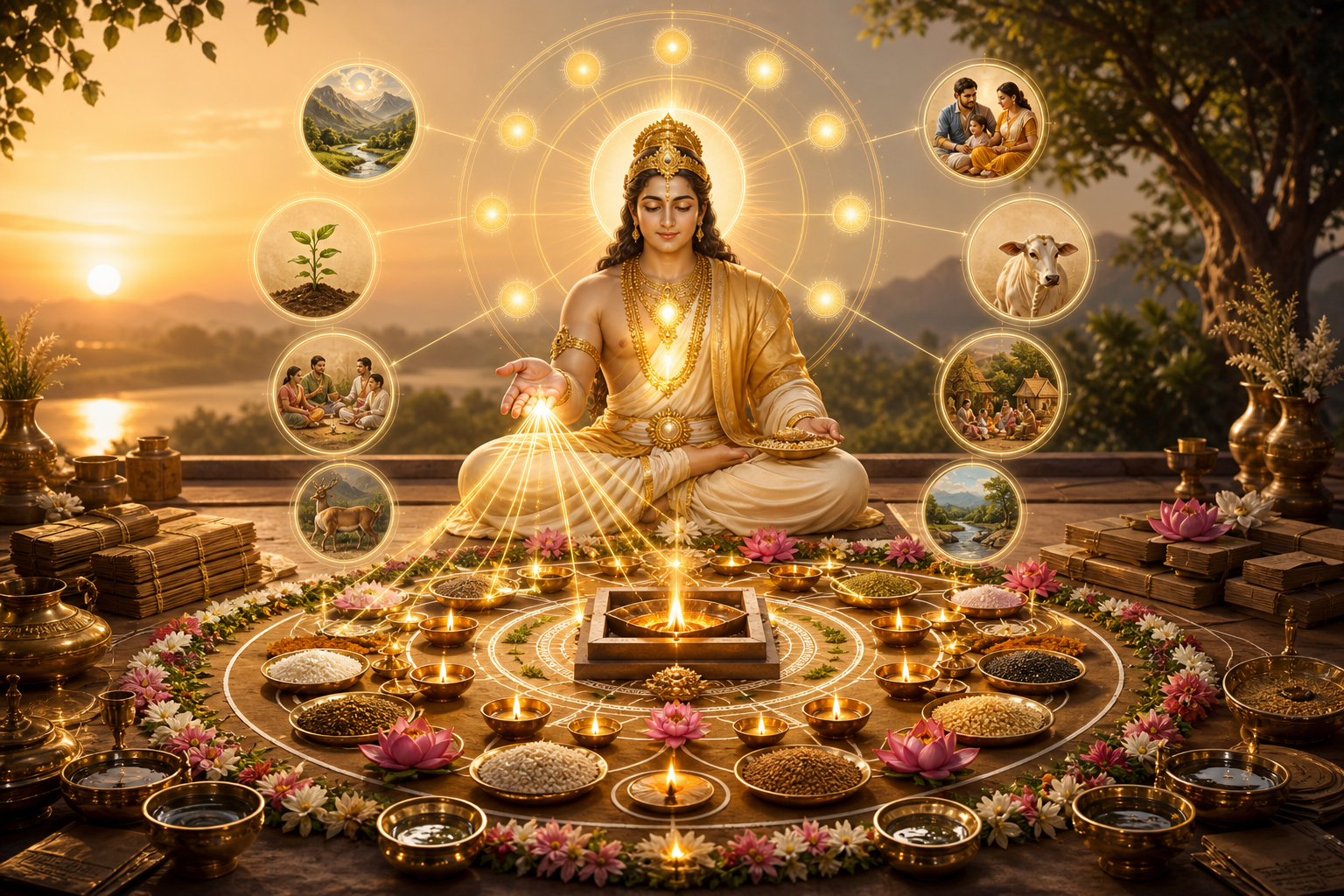
Goddess Lakshmi is revered not only as the deity of prosperity but as the source of nine sacred powers that integrate material abundance with inner grace. This guide presents a concise, academically grounded overview of a widely referenced enumeration—the Ashta Lakshmi plus Aishwarya Lakshmi—while honoring regional and textual diversity. Each manifestation illuminates a virtue: from…
-
Jishnu: Krishna’s Ever-Victorious Name — Sanskrit Meaning, Origins, and Living Significance

Jishnu, a sacred epithet of Bhagavan Sri Krishna, means the ever-victorious and derives from the Sanskrit root √ji, “to conquer.” Classical sources, including the Vishnu Sahasranama, affirm its scope as the triumph of dharma rather than mere domination. In the Mahabharata and Bhagavad Gita, Krishna’s counsel frames victory as dharma-yuddha—ethical struggle grounded in inner mastery…
-
Ghanapatha: The Brilliant Oral Science That Preserved the Vedas with Unmatched Precision

Ghanapatha is an advanced Vedic recitation method that preserved the Vedas with exceptional precision through patterned repetition and reversal. Situated within the Shiksha Vedanga, it crowns a structured pedagogy—Samhita, Pada, Krama, Jata, and Ghana—that builds redundancy and error-checking into every line. By guarding phonetics and pitch accents (udātta, anudātta, svarita), it retains exact meaning and…
-
Thirteen Radiant Forms of Goddess Kali in Tantraloka: Abhinava Gupta’s Kashmiri Vision

This exploration presents the thirteen forms of Goddess Kali in Abhinava Gupta’s Tantraloka as a living contemplative map within Kashmir Shaivism. Rather than a fixed list, these forms serve as dynamic lenses that refine attention, transmute fear, and reveal the liberating vastness of Shakti. The discussion situates Kali within Trika and Kaula streams while acknowledging…
-
Vṛkāsura at Kedāranātha: Śiva’s Saving Compassion and the Ethics of Despair (SB 10.88.17–26)

Srimad-Bhāgavatam (SB 10.88.17–26) depicts Vṛkāsura at Kedāranātha, poised for self-harm after severe austerities, when Lord Śiva intervenes with decisive compassion. The episode distinguishes steadfast tapasya from destructive extremity, re-centering devotion within the life-affirming ethics of Sanatana Dharma. Read alongside the Puranas and the Bhakti Tradition, it reveals how grace protects the devotee from inner turmoil…