
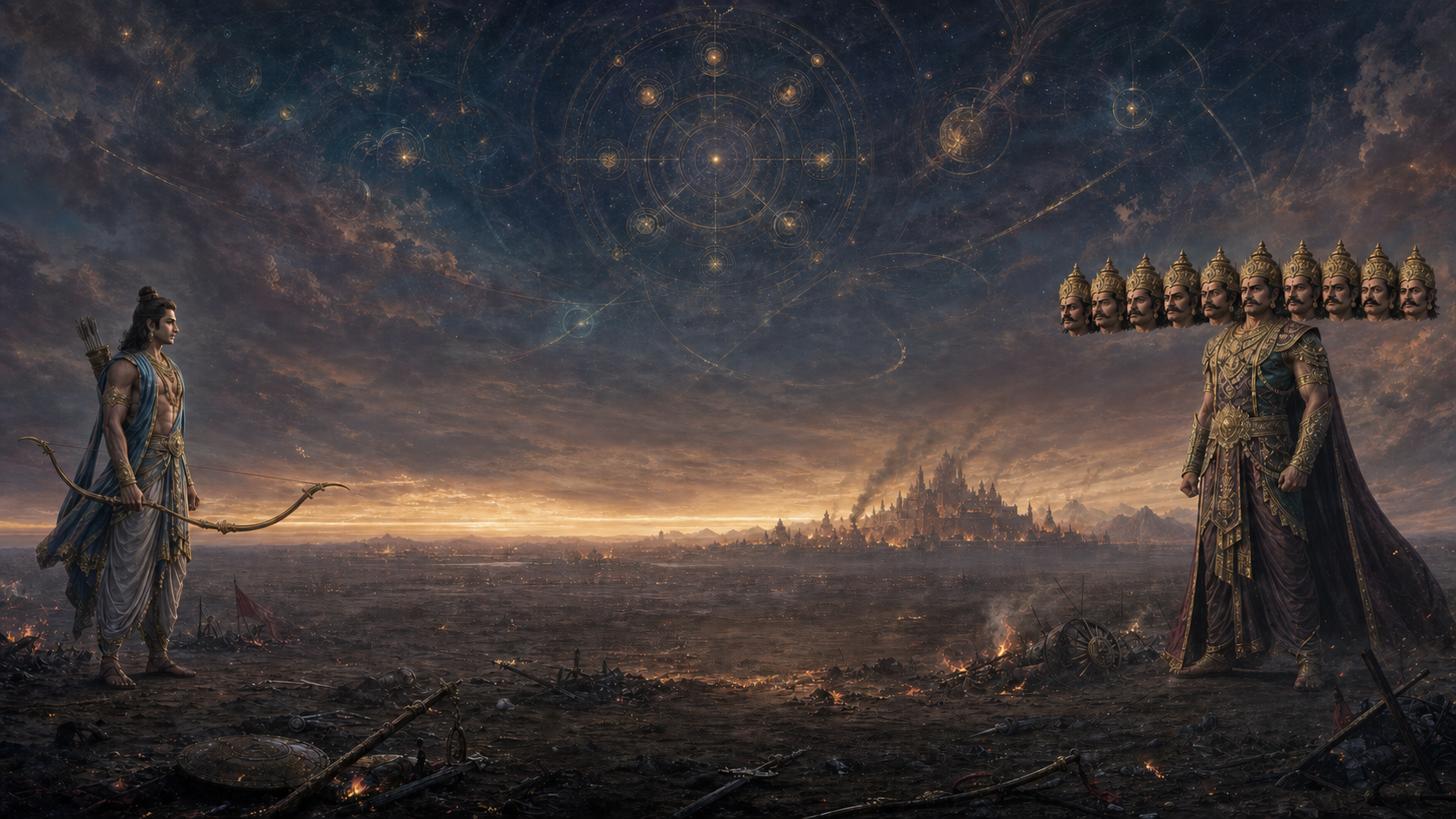
If you have been told that Ravana abducted Sita so Rama would kill him and grant him moksha, you are facing a real interpretive problem. Is this a profound teaching about divine grace, or an excuse that turns a grave act of adharma into secret devotion?
The clean answer is that cosmic purpose can work through Ravana’s fall without making his abduction of Sita a spiritual practice. Valmiki presents a ruler driven by kama, pride, and defiance. Later bhakti traditions place his death inside a much larger design of return to Vishnu. One concerns Ravana’s apparent motive; the other concerns the ultimate meaning of his defeat. You need both distinctions to read the episode responsibly.
Start with the distinction that resolves the debate
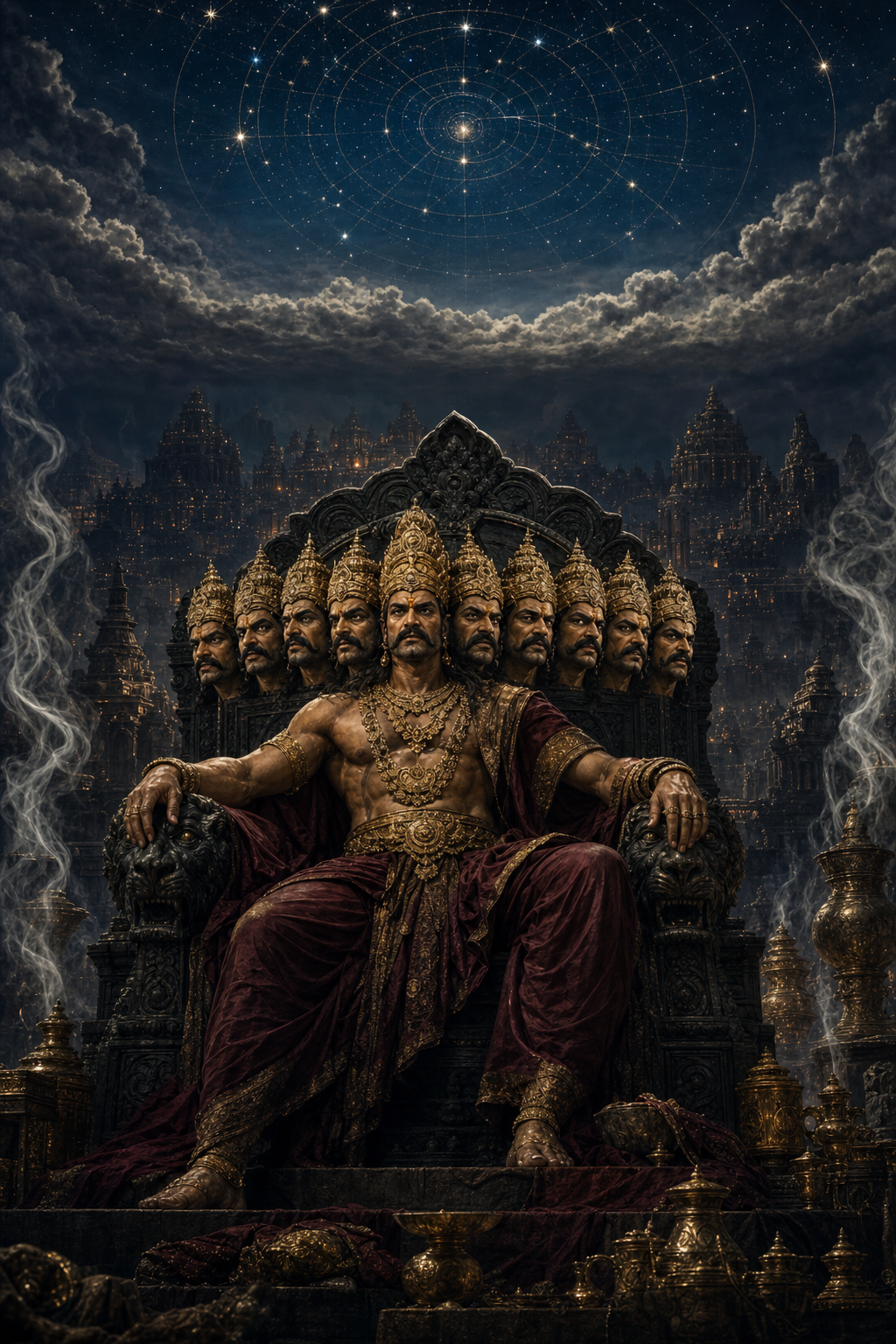
Four different questions are often compressed into the sentence “Ravana wanted moksha.” Separating them prevents a theological possibility from becoming a false claim about the plot.
| Question | Careful answer | What you should not infer |
|---|---|---|
| What motive does Valmiki give Ravana? | Desire, wounded pride, calculation, and refusal of moral counsel; no explicit declaration that he abducts Sita to obtain moksha. | That every later theological meaning is already Ravana’s conscious plan. |
| Why must Rama confront Ravana? | Rama’s avatara restores dharma and relieves the world of Ravana’s tyranny. | That Ravana becomes morally innocent because his defeat serves a divine purpose. |
| Can death at Rama’s hands have a liberating result? | Later Vaishnava traditions answer yes, especially through the Jaya-Vijaya cycle and the theology of transformative contact with the Divine. | That abduction or hostility is an advisable route to liberation. |
| Does a cosmic outcome change the nature of the act? | No. Grace may transform the actor’s final condition without turning adharma into dharma. | That a good ultimate result retroactively sanctifies wrongful means. |
The decisive distinction is between subjective intention and objective place in the lila. Ravana can remain responsible for choices arising from kama and abhimana while those choices are incorporated into an order larger than he understands. Divine sovereignty does not require moral innocence from every person whose actions eventually serve restoration.
This protects you from two equal mistakes. The first is reducing the Ramayana to a worldly conflict and excluding every devotional interpretation. The second is using devotional interpretation to erase the epic’s moral clarity. A plural Dharmic reading can recognize providence without calling coercion sacred.
Cosmic design explains why Rama and Ravana must meet
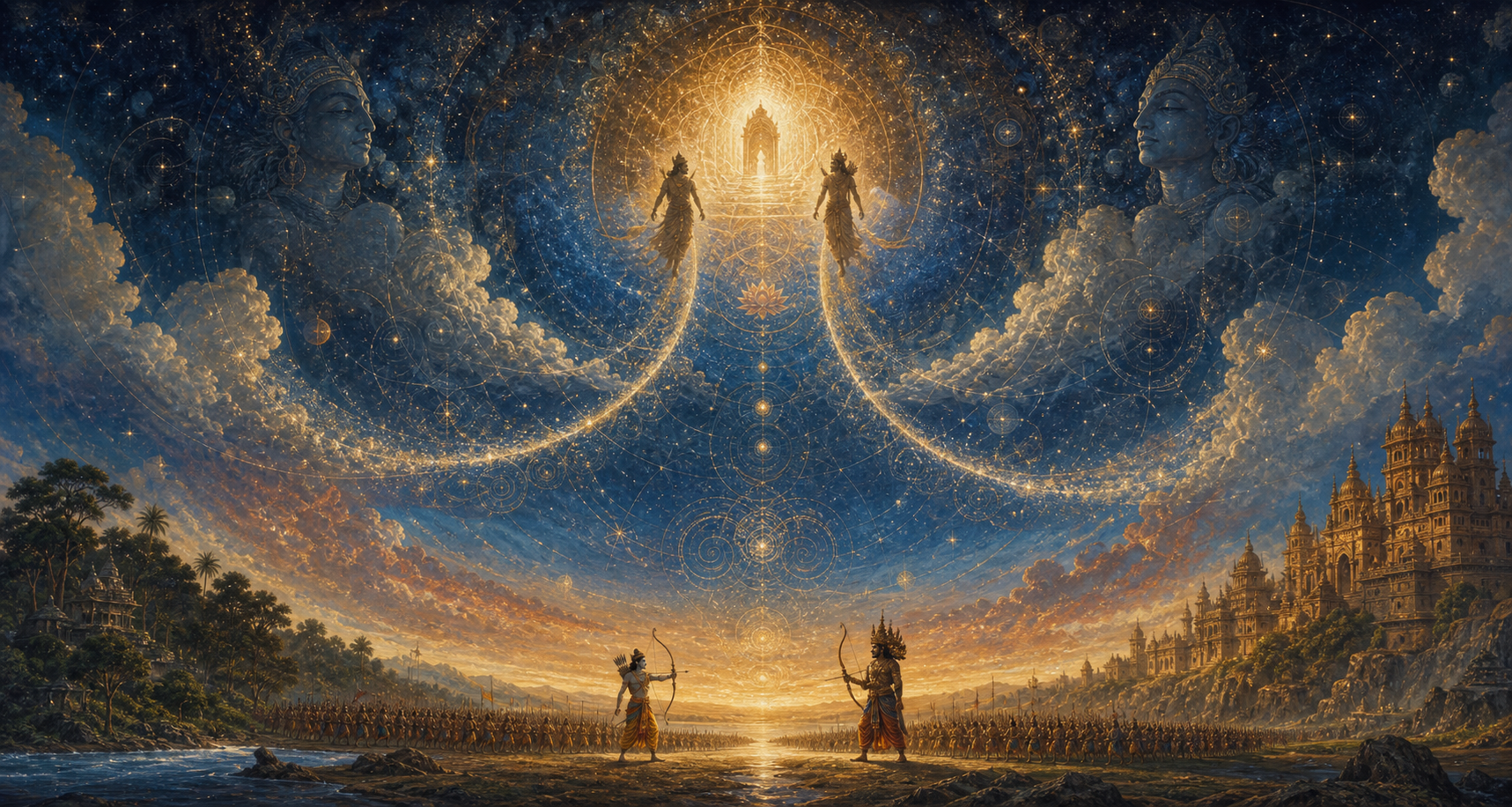
The strongest basis for a cosmic reading is not a hidden confession from Ravana. It is the Vaishnava account of Jaya and Vijaya, the gatekeepers of Vaikuntha who are cursed to take three births as opponents of Vishnu. They accept intense enmity and a quicker return rather than a longer separation. Their second birth is identified with Ravana and Kumbhakarna, while their third is identified with Sisupala and Dantavakra, who are defeated by Krishna.
This framework gives Ravana’s death a theological destination: return. It does not establish that Ravana, acting within the Ramayana, remembers his identity as a gatekeeper and deliberately designs each transgression as a shortcut to liberation. A soul’s place in a cosmic cycle and a character’s expressed psychological motive are related claims, but they are not interchangeable.
The avatara framework supplies the other half of the design. The gods seek relief from Ravana’s tyranny, Vishnu descends as Rama, and Lanka’s ruin is repeatedly foreshadowed. Ravana is therefore not an accidental opponent who happens to cross Rama’s path. His accumulated power, pride, and abuse have created the crisis that the avatara resolves.
Traditions concerning curses make that accumulated causality more concrete. Nandi’s curse, Vedavati’s vow, and Nalakuvara’s curse connect Ravana’s eventual downfall to earlier acts of arrogance and harassment. Nalakuvara’s curse also helps explain why Ravana does not force himself physically upon Sita: such a violation would bring his death. These traditions do not absolve him. They portray a moral universe in which repeated abuses narrow his future until judgment becomes unavoidable.
You can therefore understand “cosmic design” without imagining that every participant acts like a fully informed actor reading a divine script. The design operates through karma, warnings, freely chosen responses, and consequences. Ravana still receives counsel. He still has opportunities to return Sita and avert destruction. His refusal matters precisely because fate in this narrative is not a substitute for character.
Moksha through enmity is grace, not a method to imitate
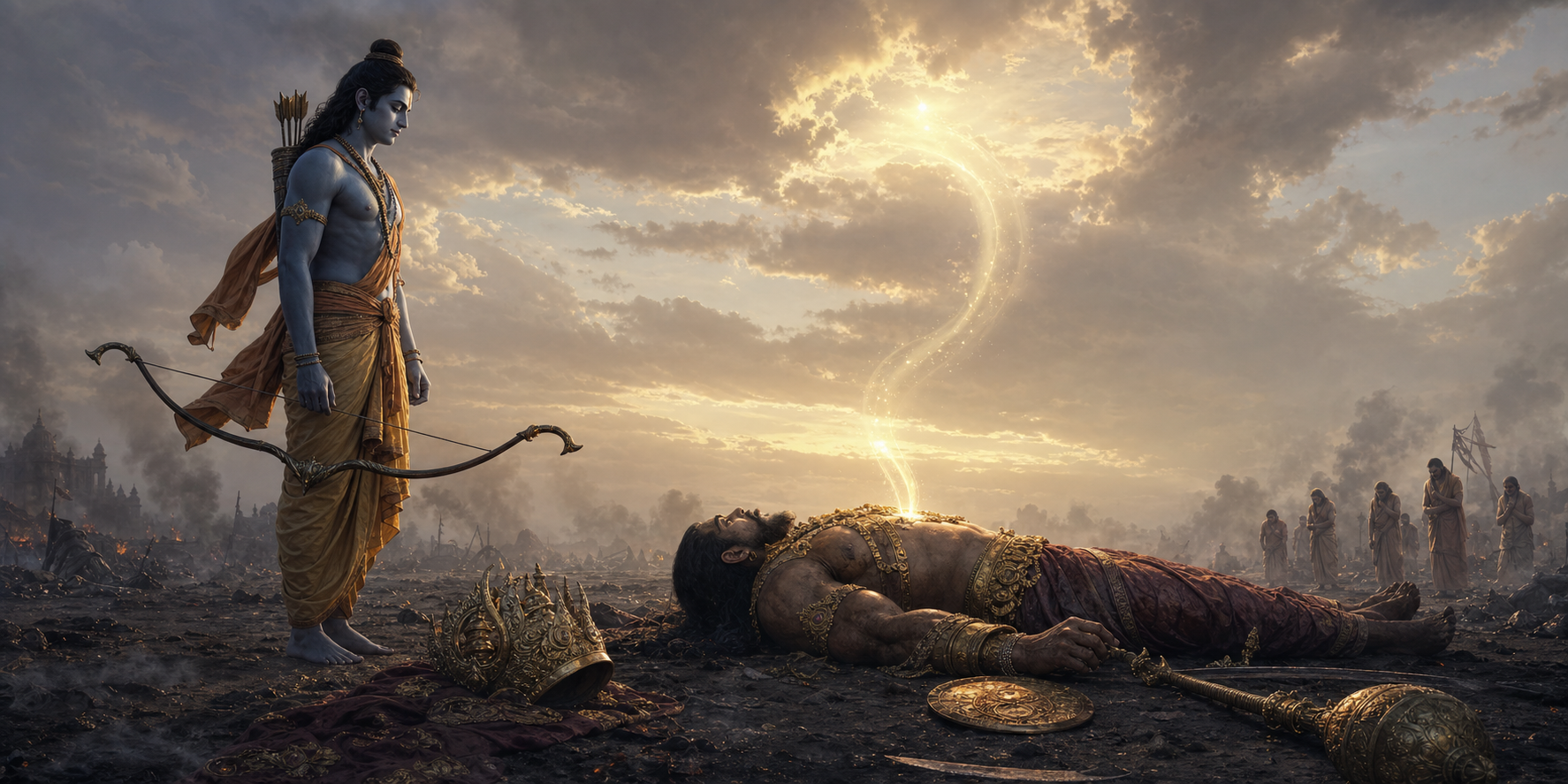
Later bhakti theology sometimes describes hostile absorption in God as vaira-bhakti. An enemy may think of the Divine with extraordinary intensity, even when fear, hatred, or rivalry distorts that attention. The Bhagavata tradition allows such fixation to draw an antagonist into the transforming presence of the Lord. In the Jaya-Vijaya cycle, defeat by Vishnu’s avatar becomes the opening through which estrangement finally ends.
The useful distinction here is between description and prescription. Vaira-bhakti describes an exceptional way divine grace can overtake a hostile being. It does not prescribe hostility as sadhana. You are not being invited to cultivate hatred, violate dharma, or manufacture a confrontation with God. Ordinary spiritual discipline proceeds through remembrance, restraint, humility, service, insight, and devotion – not through imitation of an asura’s downfall.
Three principles must remain active at once:
- Karma: Ravana’s voluntary acts bear consequences. His learning, tapas, power, and devotion to Shiva do not cancel the fruit of pride and coercion.
- Dharma: Means retain their moral character. Abducting Sita remains adharma even if the resulting war ends Ravana’s tyranny.
- Grace: Divine contact can break bondage at the decisive moment. Liberation need not mean that the liberated being’s earlier conduct was secretly righteous.
Moksha is not the same as historical acquittal. A tradition may hold that Rama’s presence ultimately liberates Ravana while also insisting that Rama’s victory is the just consequence of Ravana’s conduct. If grace were available only to beings whose conduct was already pure, it would merely duplicate reward. If grace made every prior act good, it would dissolve moral law. The Ramayana’s devotional depth lies in refusing both reductions.
This distinction also keeps Sita from being treated as a prop in Ravana’s supposed spiritual strategy. Her abduction, confinement, and coercion retain their ethical gravity. No claim about the antagonist’s eventual liberation should make the person he wronged disappear from moral view.
The later Maya Sita teaching protects this point in a particular theological way. In versions associated with later Puranic, Tantric, and Ramayana traditions, Agni shelters the real Sita while a shadow form enters Lanka; the Agni Pariksha then restores the real Sita. This protective doctrine preserves Sita’s inviolability, but it does not turn Ravana’s intention into virtue. Dharmic responsibility attaches to what a person wills and attempts, not only to what cosmic protection permits him to complete.
Read the different Ramayana worlds without flattening them

The apparent contradiction becomes manageable once you stop forcing every telling to answer the same question in the same voice. Use the following reading discipline whenever someone makes a sweeping claim about Ravana and moksha.
- Ask which narrative layer is being invoked. If the claim concerns Ravana’s stated motive, begin with the Valmiki Ramayana. Its narrative sequence emphasizes desire, pride, deception, warnings, and refusal of counsel. It does not explicitly tell you that the abduction is a conscious moksha plan.
- Identify when the claim has become theological. The Adhyatma Ramayana foregrounds Rama as Saguna Brahman and reads the action as divine lila. Within that frame, the defeat of adharma and the bestowal of spiritual benefit can occur in the same encounter.
- Treat later motifs as interpretive additions, not missing Valmiki verses. Jaya-Vijaya, vaira-bhakti, the interlocking curses, and Maya Sita offer coherent answers to devotional questions. They should illuminate Valmiki’s account without being misrepresented as explicit statements made by Valmiki’s Ravana.
- Do not stack distinct Dharmic retellings as though they were one continuous edition. The Jain Paumacariya reshapes the story around ahimsa, self-mastery, and karmic responsibility. The Buddhist Dasaratha Jataka changes relationships and outcomes to teach renunciation and virtue. They are valuable interpretive worlds, not spare pieces to insert indiscriminately into a single plot.
- Use intertradition parallels with precision. Sikh teaching on detachment, remembrance of the One, and the defeat of pride can deepen the ethical reading, but the Sikh canon is not a commentary resolving the Ramayana’s narrative details.
- Return every metaphysical claim to its ethical test. Does the interpretation strengthen restraint, accountability, and remembrance, or does it excuse domination? A reading that makes Ravana’s pride safe to imitate has misunderstood the function of his fall.
This method lets you honor Hindu plurality without treating all versions as interchangeable. Valmiki supplies the primary ethical and dramatic account. Later bhakti traditions disclose a cosmic horizon around it. Jain and Buddhist retellings test the story through distinctive disciplines of karma, ahimsa, and renunciation. Sikh wisdom offers a resonant grammar of remembrance and freedom from ego. Their details differ, but they repeatedly expose the same danger: knowledge and power cannot save a person who refuses self-mastery.
Key takeaways
- The Valmiki Ramayana does not explicitly say that Ravana abducted Sita because he wanted moksha.
- Later Vaishnava traditions can coherently place Ravana’s death within the Jaya-Vijaya cycle and a cosmic design of return to Vishnu.
- Ravana’s role in that design does not make his embodied choices innocent or his abduction of Sita dharmic.
- Vaira-bhakti explains how hostile fixation may be transformed by exceptional grace; it is not a spiritual discipline for an aspirant to imitate.
- Moksha describes release from bondage, not retroactive approval of every act committed before release.
- The safest reading names its textual layer, distinguishes motive from outcome, and refuses to use grace as an excuse for harm.
The next time you hear that “Ravana planned everything for moksha,” ask one question before accepting or rejecting it: does “planned” refer to Ravana’s conscious motive or to the Divine’s larger design? The first claim outruns what Valmiki explicitly gives us. The second has a coherent place in later Vaishnava theology. Then bring the discussion back to practice: judge your means by dharma, listen before pride hardens, and never borrow the promise of grace to justify an act you already know is wrong.
References
