-
Virat Hindu Sammelan in Saharanpur: HJS joins a powerful unifying call to safeguard Sanatan Dharma

The Virat Hindu Sammelan in Saharanpur convened a diverse gathering to pledge the protection and promotion of Sanatan culture, with the presence of Pujya Swami Raghavendra and Sadguru Dr. Charudatta Pingale and the participation of Hindu Janajagruti Samiti (HJS). Framed as a civilizational forum, the event highlighted Hindu unity while articulating values—ahimsa, satya, seva—that resonate…
-
Phullara Devi at Attahasa Shakti Peetha: Bengal’s Blooming Goddess of Renewal and Vāk

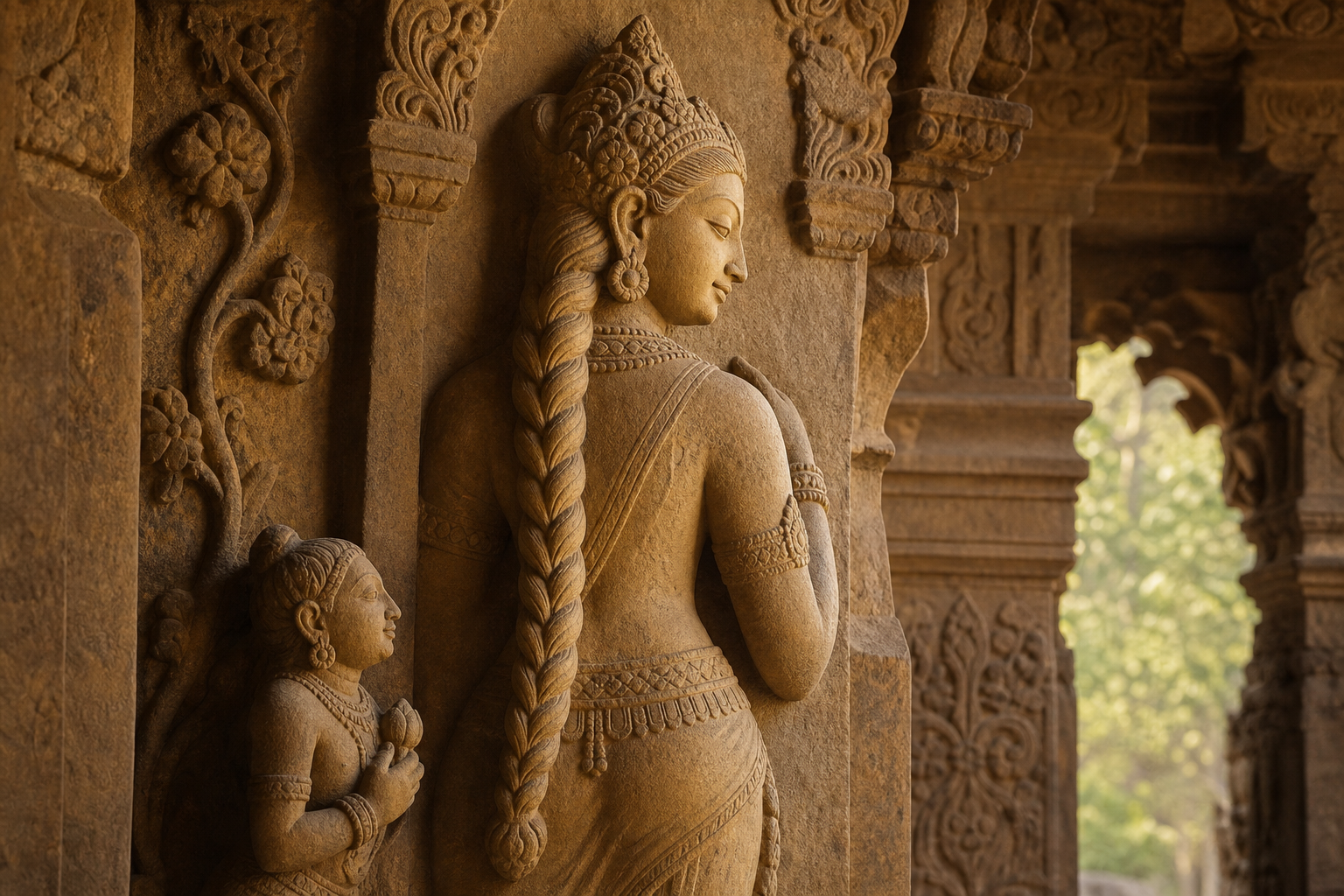
Phullara Devi at Attahasa Shakti Peetha in Birbhum, Bengal, is venerated as the Blooming Goddess of renewal and sacred speech. Rooted in the Shakti Peetha tradition that links the land to Sati’s dispersed body, Attahasa is associated with the fallen lip—symbolizing vāk and ethical communication. The shrine’s aniconic murti, paired with Bhairava as Vishvesh, preserves…
-
Honoring Sikh Women: Trailblazing Courage, Seva, and Scholarship for International Women’s Week

International Women’s Week highlights the enduring leadership of Sikh women in seva, scholarship, and public life. Grounded in Gurbani’s affirmation of equality—“ਸੋ ਕਿਉ ਮੰਦਾ ਆਖੀਐ ਜਿਤੁ ਜੰਮੇ ਰਾਜਾਨ॥”—their contributions span the langar tradition of Mata Khivi, the martial resolve of Mai Bhago, and the statecraft of Rani Sada Kaur. From heritage stewardship to humanitarian response,…
-
Unlocking Susunia’s Sudarshana Secret: Chakrasvamin, Gupta Power, and Bengal’s Living Dharma

Susunia Hill’s fourth-century rock inscription offers a compact yet sweeping window into Bengal’s Vaishnava heritage under the Gupta Empire. Three Sanskrit lines in northern Brahmi, carved beneath a blazing Sudarshana Chakra, identify Maharaja Chandravarman as dāsāgreṇa of Cakrasvāmin and connect Vanga-deśa directly to Āryāvarta through the Prayaga Prasasti. This essay traces the Cakrasvāmin sect’s spread…
-
Mayiladuthurai’s Vadaranyeswarar: Nandi’s Redemption under Dakshinamurti’s Timeless Grace

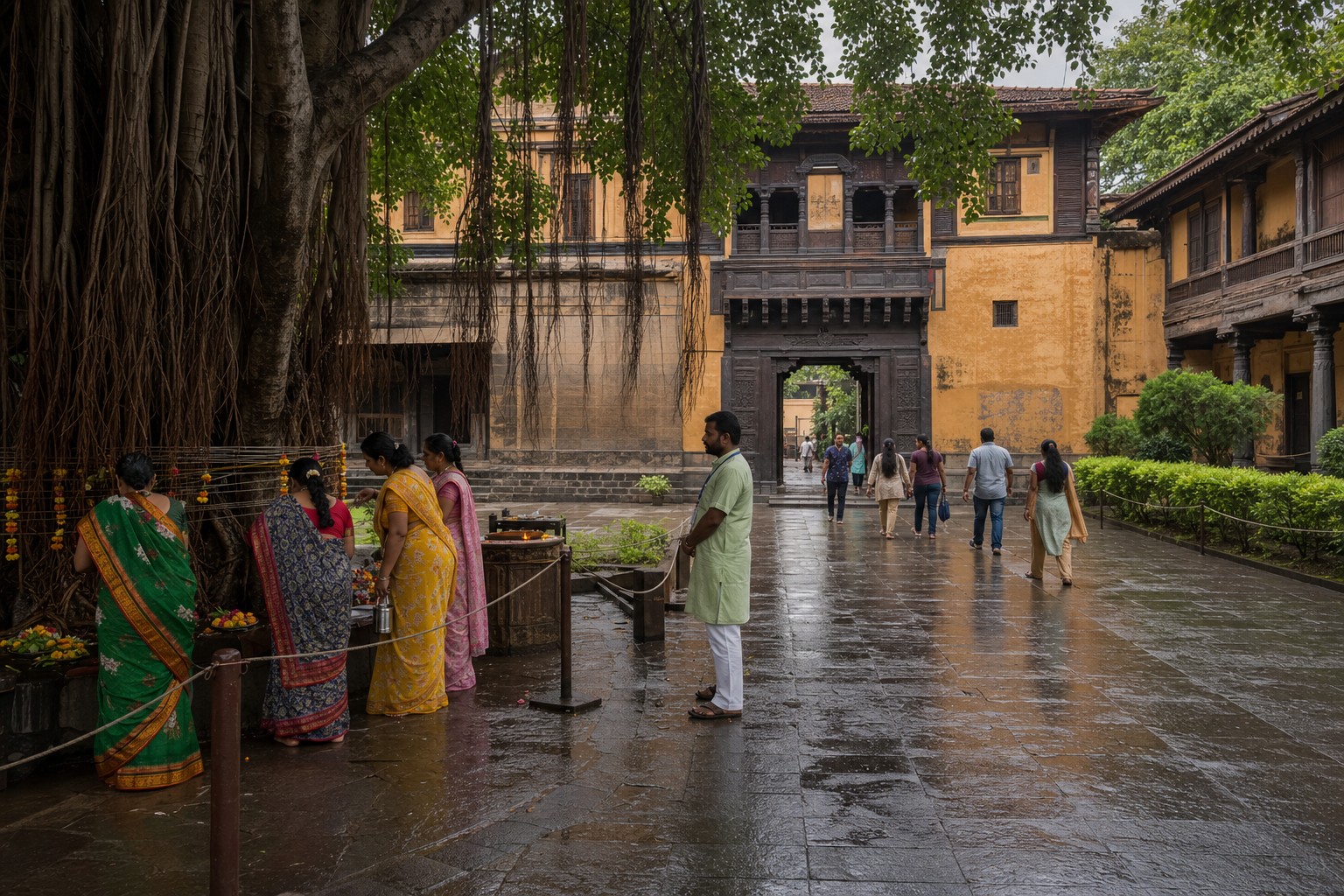
Set on the Kaveri’s banks in Mayiladuthurai, the Vadaranyeswarar Temple preserves a luminous legend in which Nandi’s unintended pride dissolves under Dakshinamurti’s silent, southward teaching. The narrative is embodied in space—clear sight-lines, pedagogic iconography, and the banyan’s contemplative presence—turning architecture into spiritual practice. Readers discover how Dravidian temple grammar, Shaiva-Agamic iconography, and Thevaram recitation integrate…
-
When Sankirtana Met State Power: Lord Caitanya, Chand Kazi, and Enduring Harmony

Set in sixteenth-century Navadvipa, the well-attested episode of Lord Caitanya and the Chand Kazi demonstrates how devotional courage, nonviolence, and respectful dialogue can resolve public religious disputes. Drawing from Sri Navadvipa Dhama Mahatmya and Gaudiya sources such as Chaitanya Charitamrita, the narrative shows sankirtana’s harmonizing role alongside lawful civic administration. The sacred mapping of the…
-
Gilaharaj Ji Maharaj at Achal Taal: Hanuman’s Rare Squirrel Form and Timeless Ramayana Legacy

Gilaharaj Ji Maharaj Temple at Achal Taal in Aligarh, Uttar Pradesh, preserves a rare devotional focus: Hanuman is venerated in the form of a gilahari (squirrel), recalling the Ramayana story of Rama Setu and the power of humble seva. Set beside a historic waterbody, the shrine binds narrative memory to sacred geography in a living,…
-
Alidha Stance in Hindu Iconography: Embodied Power, Dharma Readiness, and Sacred Motion

Alidha (ālīḍha) is the forward-striding stance in Hindu iconography where the right leg advances and the left draws back, fusing motion with stability to signal dharma-ready power. Rooted in the Nāṭyaśāstra and Dhanurveda and codified in Śilpa-śāstra, it recurs across Shaiva, Shakta, and Vaishnava imagery and in classical dance such as Bharatanatyam. The stance animates…
-
Charak Puja at Charak Sankranti: A Soul-Stirring Folk Heritage of Bengal, Tripura, and Assam

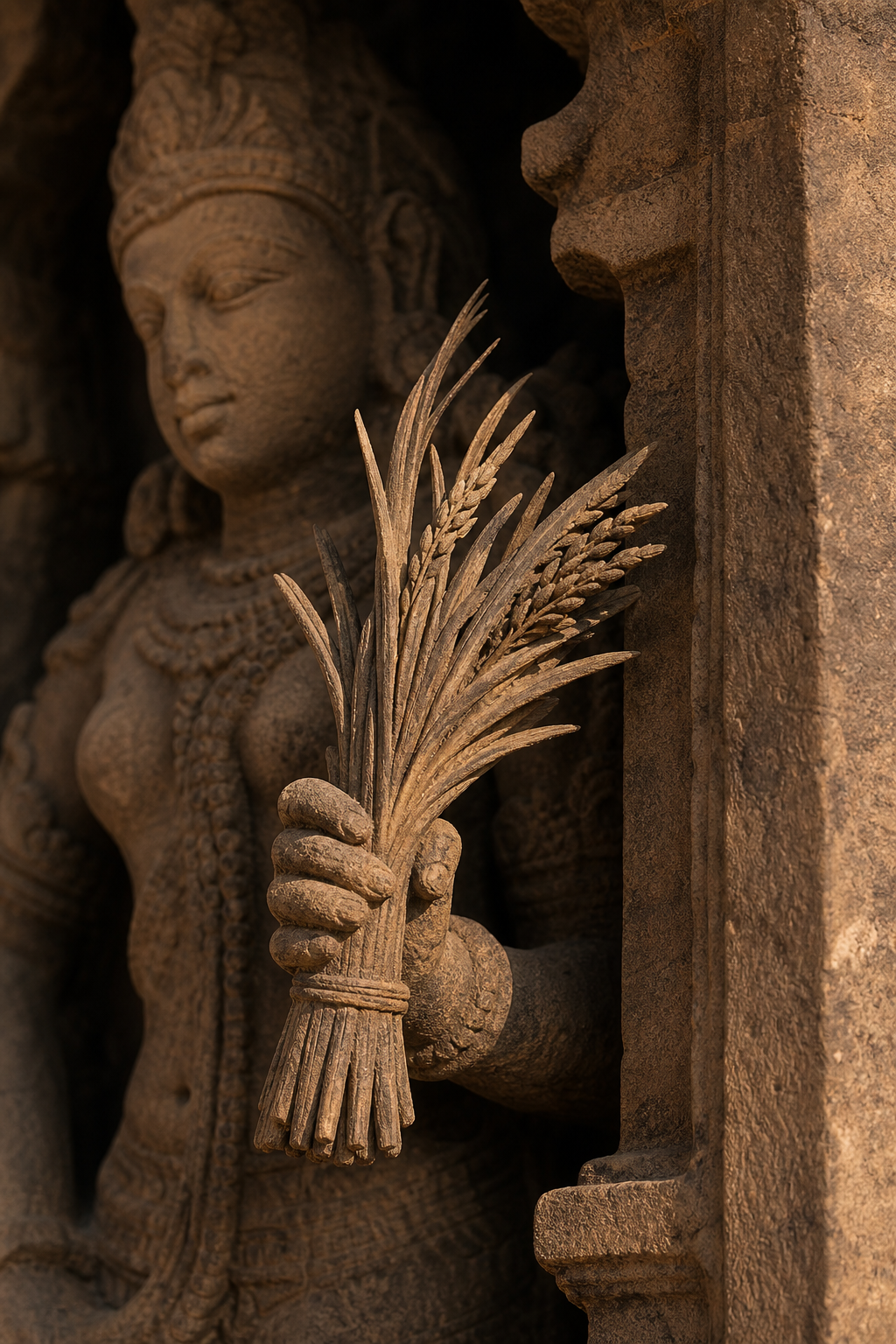
Charak Puja (Nil Puja or Hajra Puja) crowns the Bengali month of Chaitra with a powerful blend of devotion, folk art, and agrarian hope. Observed on Charak Sankranti—the sidereal solar transition into Mesha (Aries)—it typically falls on 13 or 14 April across West Bengal, Tripura, and Assamese regions shaped by Bengali and tribal traditions. The…
-
Unveiling Venkateswara’s Nagabharana: Sacred Serpent Ornaments and Timeless Symbolism at Tirumala

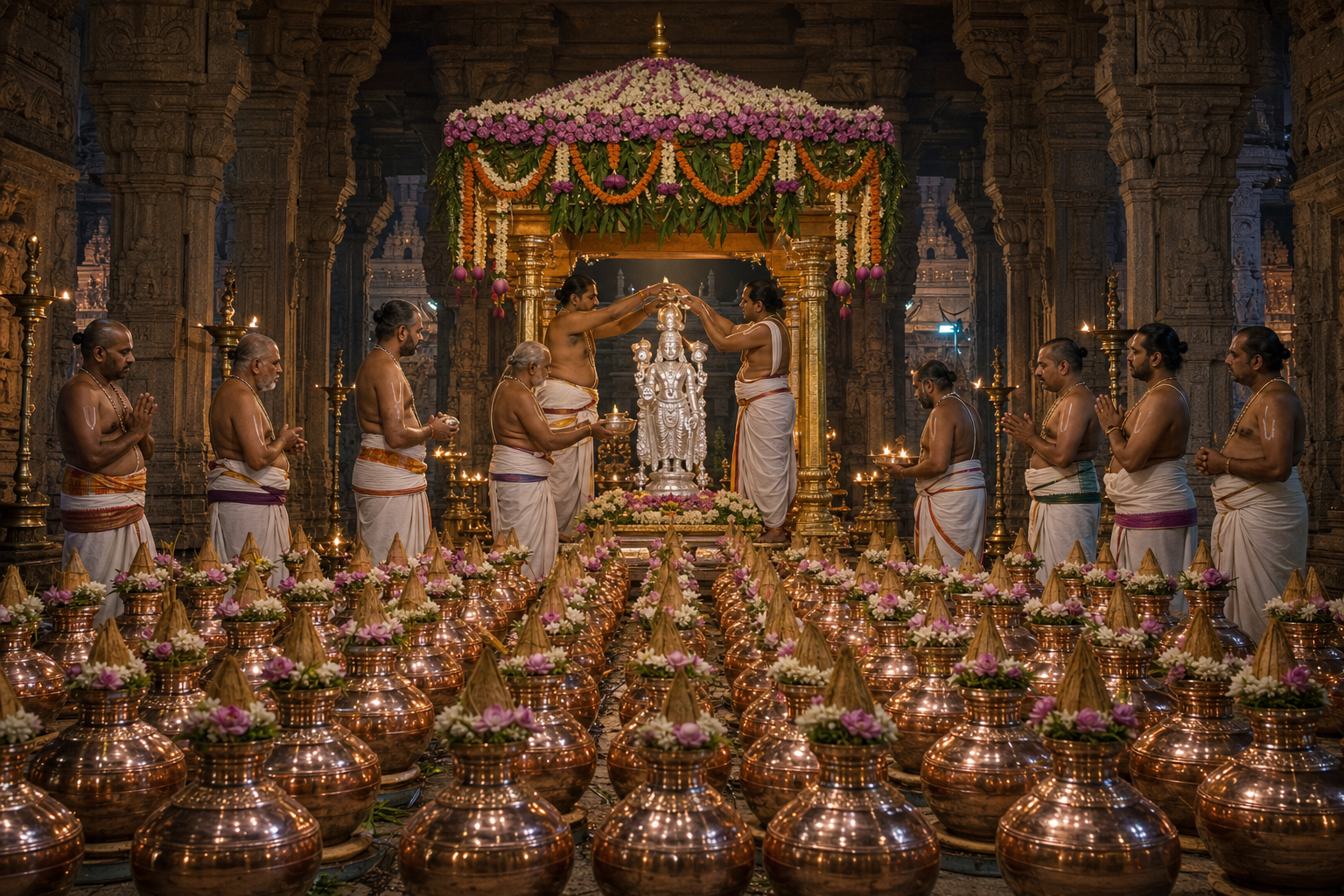
The Nagabharana—paired golden serpent emblems on the shoulders of Lord Venkateswara at Tirumala—embody a sophisticated synthesis of theology, iconography, and craft. Rooted in the Skanda Purana’s Venkatachala Mahatmya, they recall Adisesha’s guardianship and the Seshachalam hills while aligning with Vaikhanasa Agama norms for sacred ornamentation. Their symmetrical design and goldwork techniques ensure both visual clarity…
-
Gyaraspur’s Timeless Legacy: Ekadashi Devotion and the Jain–Hindu Temple Heritage of Vidisha

Gyaraspur in Madhya Pradesh unites Ekadashi devotion with a remarkable ensemble of Jain–Hindu temples, offering an exemplary study in sacred geography and cultural continuity. The village’s name is locally linked to gyaras (the eleventh lunar day), reflecting how fasting traditions shape communal identity. Architectural treasures—Maladevi Temple, Bajramath, and the Hindola Torana with Athkhamba—showcase Gurjara–Pratihara and…
-
Decoding Nagapadma Kalam: Sacred Serpent Geometry and Rituals in Kerala Snake Temples

Nagapadma Kalam is Kerala’s sacred serpent-ritual painting where art, geometry, music, and ecology converge. Rooted in Kalamezhuthu, it frames the Naga upon a lotus padma and is enacted with natural pigments, mantra, and Pulluvan Pattu. The rite unfolds in snake temples and Sarpa Kavu, aligning spiritual protection, fertility, and environmental stewardship. Its padma-based geometry, multi-hooded…
-
Kubera’s Jewel‑Spitting Mongoose: Decoding a Dharmic Icon of Wealth, Generosity, and Grace

Kubera’s mongoose—often shown resting on his lap or spitting jewels—encodes a complete dharmic ethic of wealth: fearless guardianship, disciplined stewardship, and compassionate distribution. This long-form analysis decodes the iconography across Hinduism, Buddhism, and Jainism and shows how it resonates with Sikh ethics of seva. It explains why the mongoose signifies victory over hoarding and the…
-
Guardians at the Village Edge: Ayyanar’s Terracotta Horses—History, Ritual, Symbolism

Across rural Tamil Nadu, monumental terracotta horses stand guard as votive offerings to Ayyanar, the village boundary-keeper whose protection encircles fields, groves, and water. This long-form, research-driven overview explains the history, iconography, and ritual ecology of Ayyanar worship, showing how art, craft, and community cohere into a living heritage system. Readers will learn how Velar/Kuyavar…
-
Landmark ASI survey at Dhar Bhojshala reveals extensive temple spolia in Kamal Maula Masjid

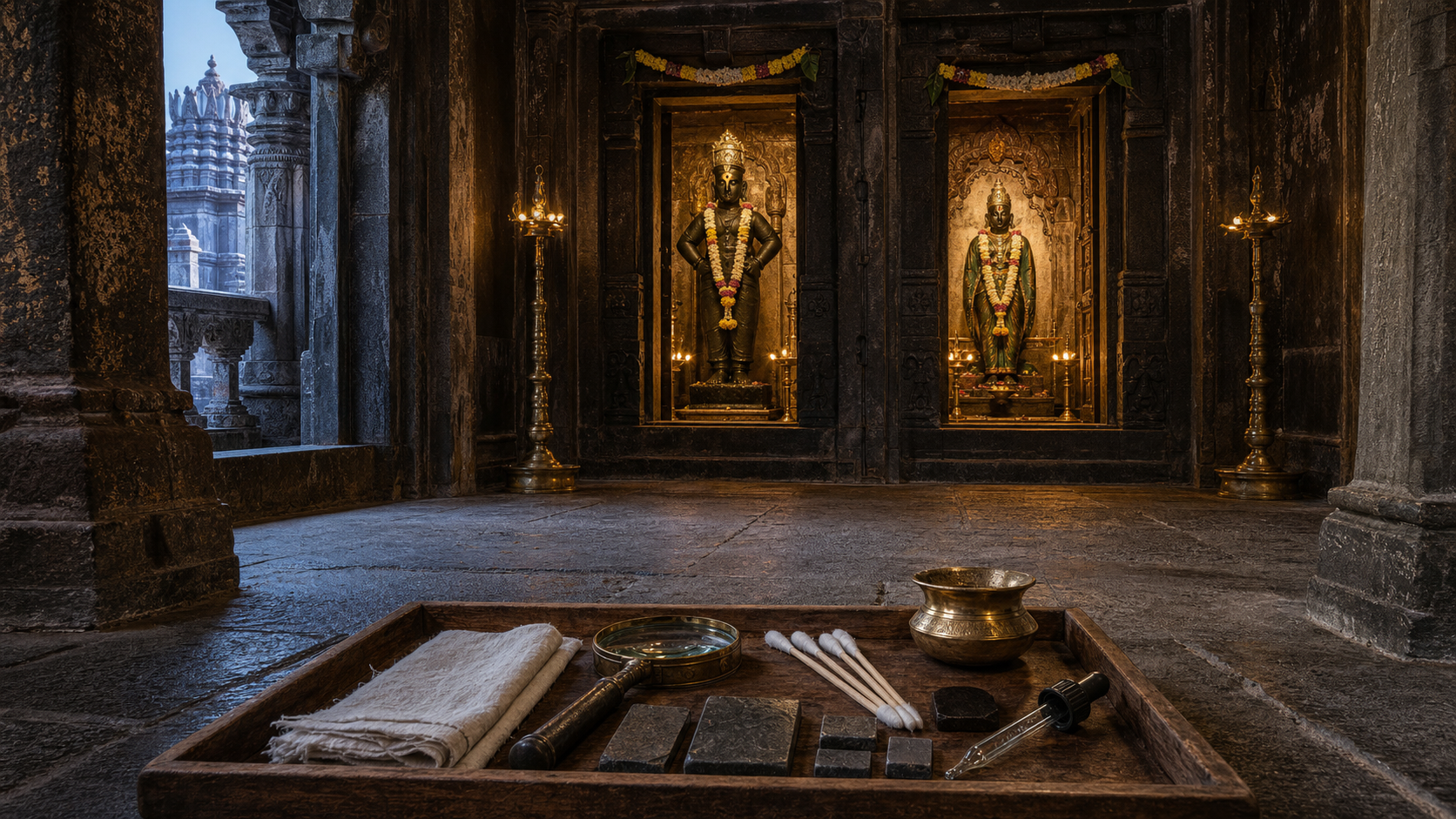
The Archaeological Survey of India informed the Indore Bench of the Madhya Pradesh High Court that Kamal Maula Masjid at Dhar Bhojshala incorporates reused temple materials—architectural members, sculptural fragments, and inscriptions—revealing a stratified building history. This evidence of spolia, identified through standard archaeological methods including architectural typology and epigraphic analysis, places the complex within well-known…
-
Porcupine Quills in Hindu Samskaras: Forgotten Symbolism, Gentle Power, and Ethical Revival

This article explores the little-known place of porcupine quills within Hindu samskaras, situating the implement in the broader material culture of Ancient India. It clarifies that explicit scriptural references are scarce, while regional and oral recollections describe occasional, optional use for delicate ritual contact. The analysis offers a technical reading of the quill’s symbolic grammar—protection,…
-
Chamunda’s Mysterious ‘Anteater’: Tantric Power, Cosmic Cycles, and Sacred Ecology Explained

Chamunda’s enigmatic ‘anteater’ is not a New World mammal but, in most Indian contexts, a carefully carved Indian pangolin—an attendant that encodes Śākta ideas of dissolution, protection, and renewal. By tracing zoological details (scales, tail, snout) and correlating them with śilpa-śāstra traditions, the essay corrects common cataloguing errors and restores ecological specificity to Hindu temple…
-
Shocking Misuse of Icons: Shivaji Maharaj and Maharani Padmini as Toilet Signs in Haryana

Reports from Sikri, Haryana, indicate that portraits of Chhatrapati Shivaji Maharaj and Maharani Padmini were used as toilet signage in a banquet hall—an act widely perceived as disrespectful. This analysis explains why such placement violates heritage ethics, drawing on semiotics, constitutional duties, and best-practice design standards. It situates Shivaji Maharaj and Maharani Padmini within India’s…
-
Why Chamunda’s Severed, Smiling Head Signifies Bliss: Decoding Ego-Death and Moksha

Chamunda’s severed head is not an emblem of violence but a precise symbol of liberation: the serene face represents ego-death and the bliss of moksha. By situating the image within Shakta tantra, cremation-ground sadhana, and the mundamala/kapala vocabulary, the analysis shows how fear is transmuted into insight. Panchamundi Asana symbolism and comparisons with Kali and…
-
Nava Narasimha Kshetra of Ahobilam: The Ultimate Guide to Nine Sacred Temples and Yatra

This guide presents a clear, research-grounded overview of the Nava Narasimha Kshetra at Ahobilam, where nine distinct shrines of Narasimha are venerated in a forested, cave-studded landscape. It explains how Narasimha’s awe-inspiring form ultimately signifies compassionate protection, supported by scriptural narratives from the Bhagavata Purana and Vishnu Purana. Each of the nine temples is described…