-
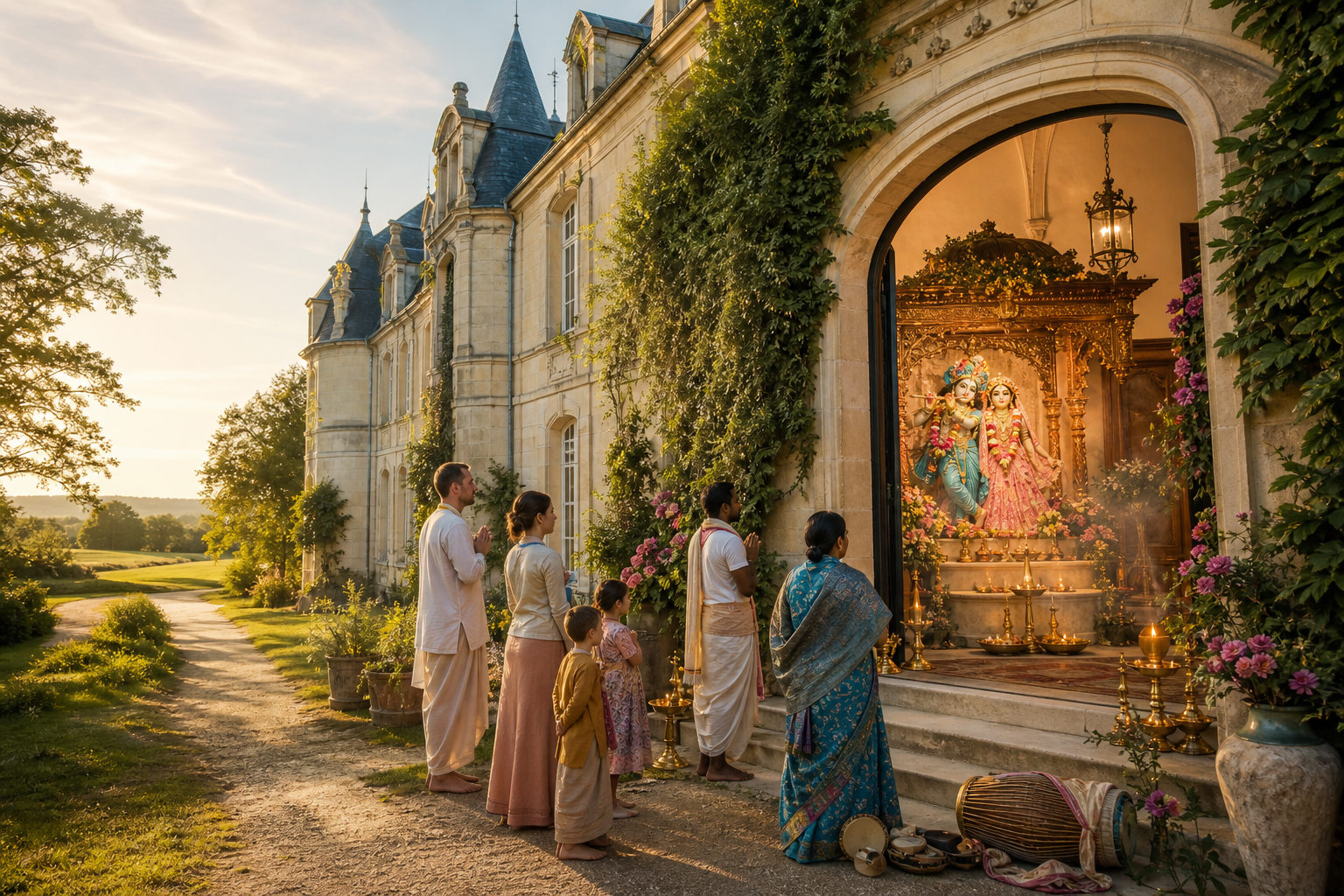
ISKCON’s Ramayana at Prabhupada’s Palace of Gold: An Immersive 78‑Minute Devotional Epic

Captured inside Prabhupada’s Palace of Gold, this 78‑minute ISKCON Ramayana offers a lucid, devotional retelling of the epic in a single sitting. The performance blends narrative clarity with bhakti aesthetics—kirtan, traditional instrumentation, and expressive movement—to make the ethical architecture of the Ramayana emotionally intelligible. Staged within an iconic Gaudiya Vaishnava shrine, it functions as cultural…
-
Matrisadbhava of Kerala: Authoritative Guide to Shakta Tantra and Bhadrakali (Rurujit)

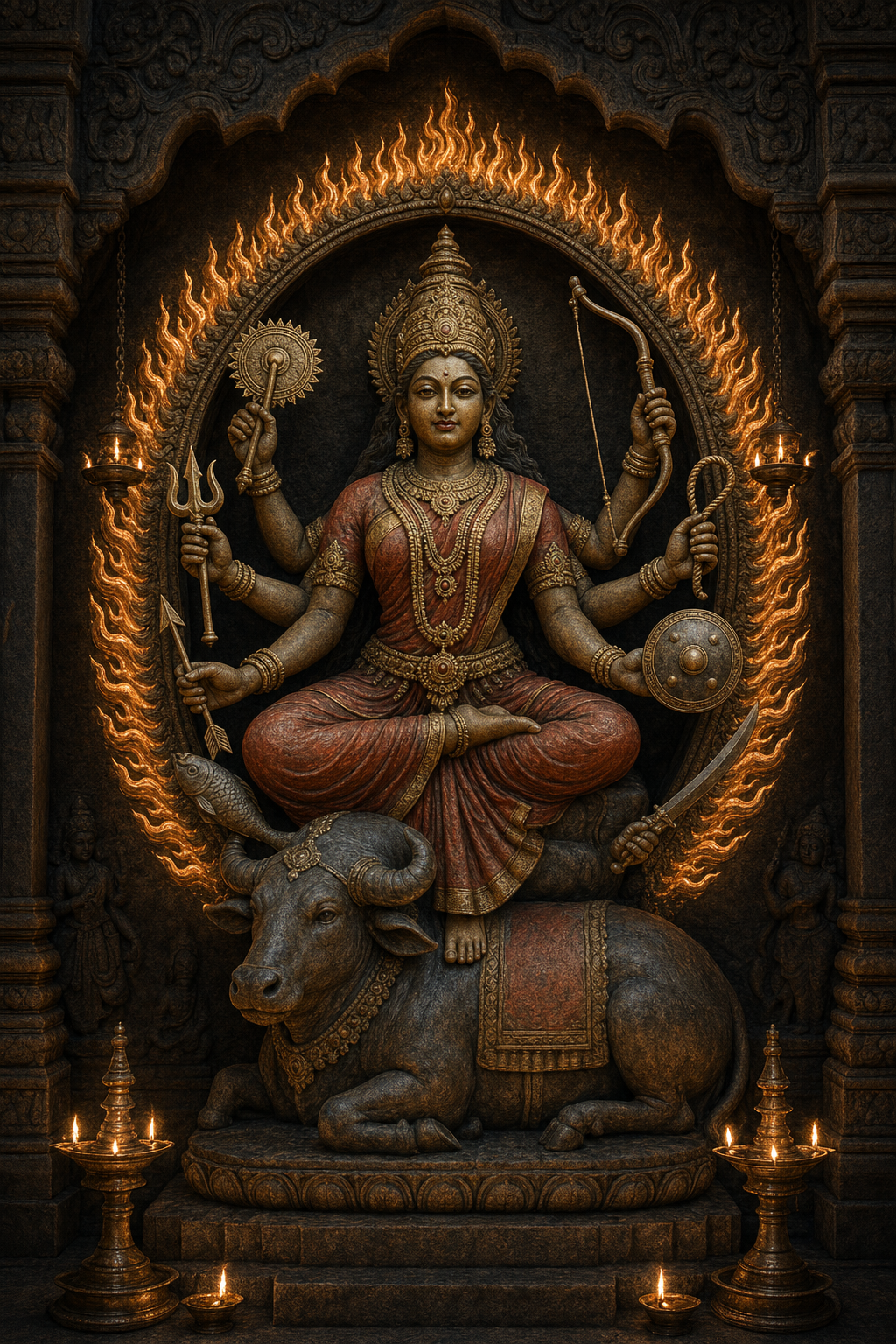
Matrisadbhava stands out in Hindu scriptures as a Kerala-centered Shakta Tantra that systematically encodes the worship of Goddess Bhadrakali, also revered as Rurujit. It unites doctrinal depth with Kerala’s temple pragmatics—nyāsa, mantra, yantra, homa, and bali—while foregrounding an ethic of care and precision. The text’s maternal vision affirms unity in diversity across Dharmic traditions, highlighting…
-
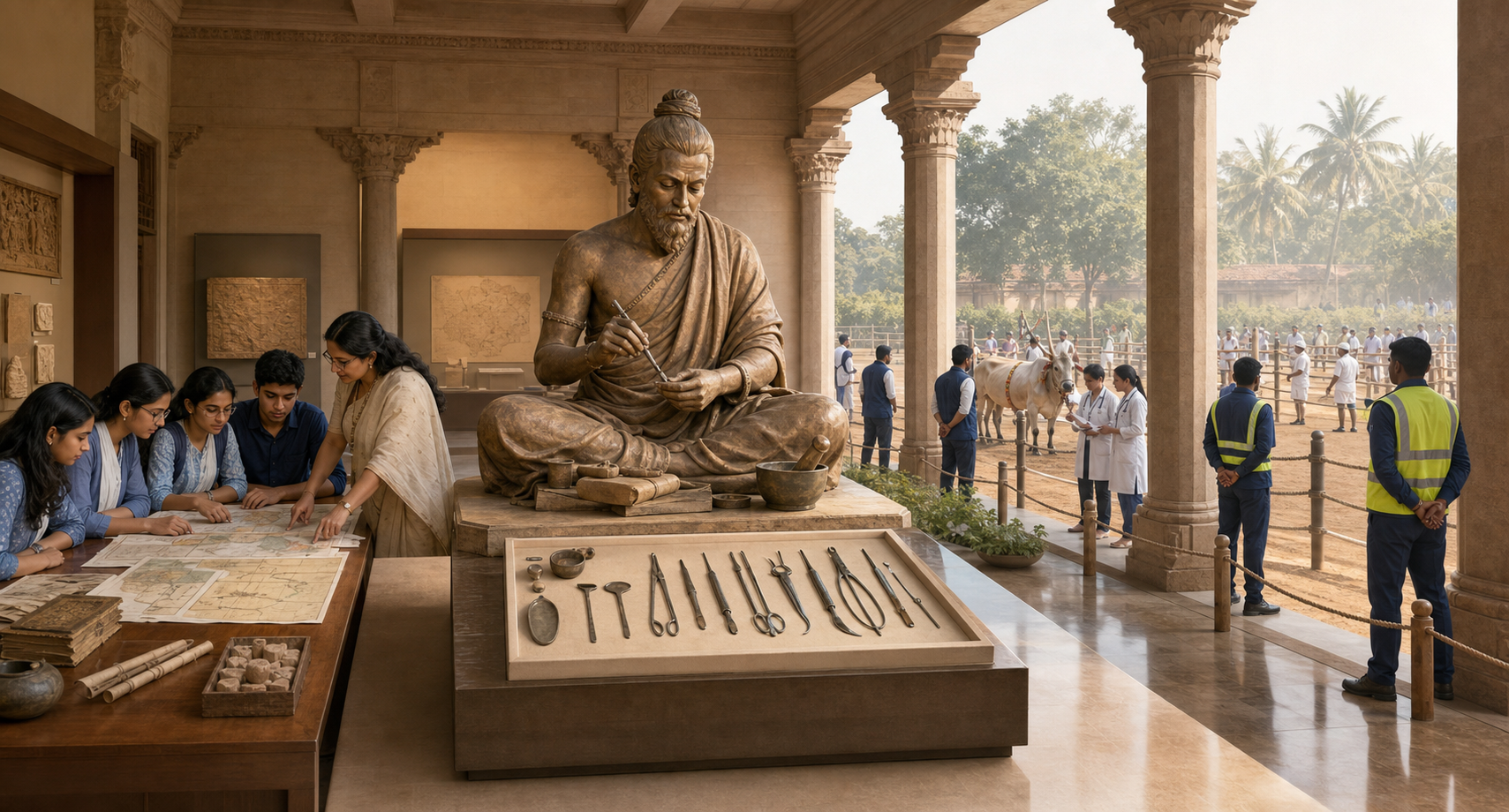
Historic Opening After 48 Years: Puri Ratna Bhandar Inventory to Protect Sacred Heritage

After 48 years, the Ratna Bhandar inventory at Puri Jagannath Temple begins as a carefully choreographed effort to protect sacred heritage while honoring ritual sanctity. The process integrates SJTA administration, ASI conservation practice, servitor participation, and multi-agency oversight to ensure chain-of-custody and transparency. High-resolution imaging, meticulous metadata, and read-only digital ledgers anchor the documentation, while…
-
Yog Dhyan Badri, Pandukeshwar: Pandavas’ Legacy and Vishnu’s Winter Worship in Uttarakhand

Yog Dhyan Badri at Pandukeshwar (Chamoli, Uttarakhand) is a key Panch/Sapt Badri shrine where Vishnu is revered in a rare meditative form. Tradition links the site to King Pandu’s penance and the Pandavas’ birth, embedding the temple in the moral landscape of the Mahabharata. During Badrinath’s winter closure, Yog Dhyan Badri serves as a principal…
-
Haddinakallu Hanumantharaya at Eagle Stone Hill: Awe-Inspiring 8th‑Century Temple in Karnataka

Sri Kshetra Haddinakallu Hanumantharaya Temple, the Eagle Stone Hill Temple in Mandya district, Karnataka, harmonizes sacred geography, early medieval heritage, and living devotion. Local tradition places its origins in the 8th century CE, with subsequent renovations reflecting a continuous culture of stewardship. The modest hilltop plan, intimate sanctum, and elemental setting exemplify a Karnataka kshetra…
-
Chengalvaraya Swami Temple, Thiruthani: History, Architecture, and Darshan Guide

Arulmigu Sri Chengalvaraya Swami Temple in Thiruthani is a serene hill-side sanctuary located behind the renowned Thiruthani Murugan Temple in Tamil Nadu’s Tiruvallur district. The address is Sri Chengalvaraya-Sengashuneer Vinayagar Sannidhi Temple, Kasthuribai St, KK Nagar, Thiruthani Hill, Tamil Nadu 631209, enabling an easy combination of darshans in one ascent. The precinct includes Sri Sengashuneer…
-
Thiruloki Sundareswara Swamy: Akhilandeswari’s Timeless Grace, History, Rituals, Travel

The Sri Akhilandeswari Samedha Sri Sundareswara Swamy Temple at Tiruloki in the Thanjavur region presents a living synthesis of Shaiva theology, Dravidian temple architecture, and community ritual. This guide explains the paired deities—Akhilandeswari and Sundareswara—their iconography, and the Agamic framework that shapes daily worship. It outlines major festivals such as Maha Shivaratri, Pradosham, Arudra Darshan,…
-
Tiruloki Sundareswara–Akhilandeswari: Timeless Shaiva-Shakta Rituals and Architecture

Thiruloki Akhilandeswari Samedha Sundareswara Swamy Temple is a Shaiva–Shakta sanctum where devotion, philosophy, and Temple Architecture converge within the living stream of Sanatana Dharma. This long-form guide explains the meaning of the deities’ names, outlines the Agamic framework of worship, and describes daily puja, Pradosha, Karthika masam celebrations, Arudra Darshan, Navaratri, and Maha Shivaratri. Readers…
-
Chhinnamasta Unveiled: The Mahavidya of Sacred Paradox, Kundalini, and Fearless Compassion

Chhinnamasta, one of the ten Mahavidyas, distills the paradox of creation and destruction into a single, coherent symbol. Her iconography—self-severed head, three streams of blood, and stance atop Kama and Rati—teaches sublimation of desire, mastery over ego, and the redistribution of life-energy as compassion. Read through the lenses of Shakta-Tantra and kundalini yoga, the triple…
-
Haddinakallu Hanumantharaya Temple: A Timeless Ascent to Eagle Stone Hill’s Sacred Heritage

Sri Kshetra Haddinakallu Hanumantharaya Temple, the Eagle Stone Hill Temple in Karnataka, is a hill shrine dedicated to Lord Hanuman (Anjaneya) that unites sacred geography with living ritual. Local tradition attributes its origin to the 8th century CE under a regional ruler, a dating that aligns with broader early-medieval patterns though it awaits epigraphic confirmation.…
-
Sadashiva Unveiled: Decoding the Five Faces and Ten Arms of the Pancha Brahma Icon

This in-depth guide decodes Sadashiva as Panchamukha (five-faced) and daśa-bāhu (ten-armed), uniting art history with Shaiva metaphysics for a complete, reader-friendly understanding. It clarifies the Pancha Brahma faces, their orientations, and the pañcakṛtya functions they embody. It details the attribute vocabulary (triśūla, ḍamaru, mṛga, pāśa, aṅkuśa, agni, kapāla, akṣamālā) and explains how variations across Agamic…
-
Goddess Jogadya Durga of Bengal: Unveiling Adya Shakti, Yoga, and a Timeless Shakta Legacy

Goddess Jogadya (Yogadya) is Bengal’s intimate manifestation of Durga, uniting the yogic discipline of attention with the primordial Adya Shakti. This in-depth guide explains her theology, iconography, and ritual grammar, situating Jogadya within Bengal’s sacred geography and festival calendar—from Charak Sankranti in Chaitra to Sharadiya Navaratri in Ashwin. Readers learn how daily worship follows Panchopachara…
-
Angada Abharana Unveiled: The Divine Armlet’s Symbolism, Craft, and Cross‑Dharmic Legacy
Angada Abharana, the divine armlet worn on the upper arm at the bahu desha, is far more than ornament in Hindu iconography—it binds strength to service and sovereignty to compassion. This long-form exploration distinguishes the angada from the wrist-worn keyura, traces typologies like the vanki and sarpa-angada, and decodes motifs such as makara and kirtimukha.…
-
Mudgara Ayudha Unveiled: The Divine Hammer’s Power of Sacred Protection and Renewal

Mudgara Ayudha, the divine hammer or mallet in Hindu iconography, condenses a profound union of sacred destruction and protective guardianship. This long-form study explains how its blunt geometry, short reach, and workmanlike profile distinguish it from the gada, musala, vajra, and ankusa. Readers learn where and why the hammer appears in Hindu sculptures—especially with Vishvakarma,…
-
Chaitra Navratri 2026 in Kashmir: Sacred Navreh Traditions, Dates, and Time‑Honored Rituals

Chaitra Navratri 2026 in Kashmir runs from March 19 to March 27 and opens with Navreh, the Kashmiri Pandit New Year on Chaitra Shukla Pratipada. The festival blends precise Hindu calendar observances with living cultural traditions such as the Navreh thaal and darshan at Sharika Bhagwati on Hari Parbat. Daily worship honors the Navadurga in…
-
Navreh 2026 (Laukika 5102): Sacred Kashmiri New Year Date, Rituals, Meaning, and Unity

Navreh, the Kashmiri Hindu New Year, falls on 19 March 2026 (IST), aligned with Chaitra Shukla Paksha Pratipada and the first day of Chaitra Navratri. The festival inaugurates Laukika (Saptarishi) year 5102 (2026–2027), rooting contemporary practice in an ancient Kashmiri time-reckoning tradition. Observance centers on the Navreh thaal—rice, mirror, flowers, coins, curd, salt, walnuts, a…
-
Goa Declares Mardangad Fort and Hath Katro Khamb Protected: A Landmark Heritage Win

Goa has designated Mardangad Fort (Ponda) and Hath Katro Khamb (Old Goa) as protected monuments under the Goa Ancient Monuments and Archaeological Sites and Remains Act, 1978, earning praise from civil society, including HJS. This decision strengthens a values-based conservation approach that treats forts, civic artifacts, temples, and urban precincts as part of a single,…
-
Adi, Madhya & Anthya Subramanya: A Scholarly Pilgrimage Across Karnataka’s Sacred Triad

Karnataka’s revered Subramanya triad—Adi (Kukke), Madhya (Nagamangala), and Anthya (Ghati)—offers a unified pilgrimage that blends sacred geography, living ritual, and regional heritage. This guide maps the three kshetras across Dakshina Kannada, Mandya, and Bengaluru Rural, explaining their theological significance, signature sevas, and festival highlights. It details naga-centric observances at Kukke, the contemplative balance of Nagamangala,…
-
Devi Damanotsav 2026: Damana Leaf Adornment, Durga Navami Rites, and Deeper Meanings

Devi Damanotsav (Durga Damanaropanam) is observed on Chaitra Shukla Navami and, in 2026, falls on March 27. The festival marks the culmination of Vasant Navratri by adorning the Goddess with fragrant damana (dhavanam) leaves, a practice that unites botanical symbolism with Shakta devotion. This long-form guide explains the festival’s names, dates, calendrical nuances, and regional…