
-
How Goddess Bagalamukhi Stilled the Cosmic Storm: A Powerful Shakta Insight
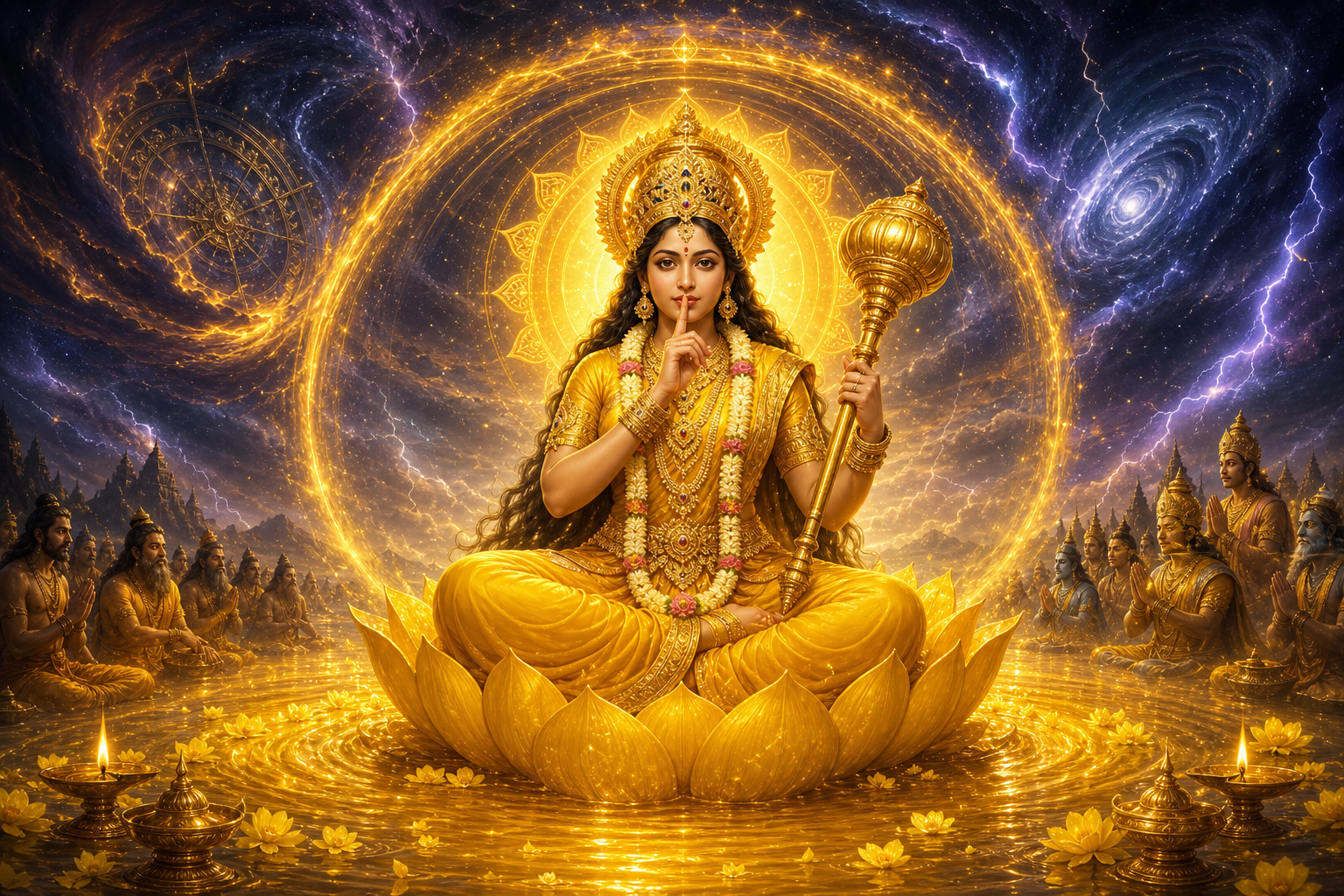
This article explores the Shakta and Tantric significance of Goddess Bagalamukhi, the Mahavidya who manifests to still a violent universal storm. It explains the cosmic crisis of the Satya Yuga as both a sacred narrative and a symbolic teaching on restraint, speech, and dharmic order. The discussion highlights Bagalamukhi’s connection with stambhana, the power to…
-
Sanghata Shraddha Explained: A Sacred Collective Rite for Healing Ancestral Grief
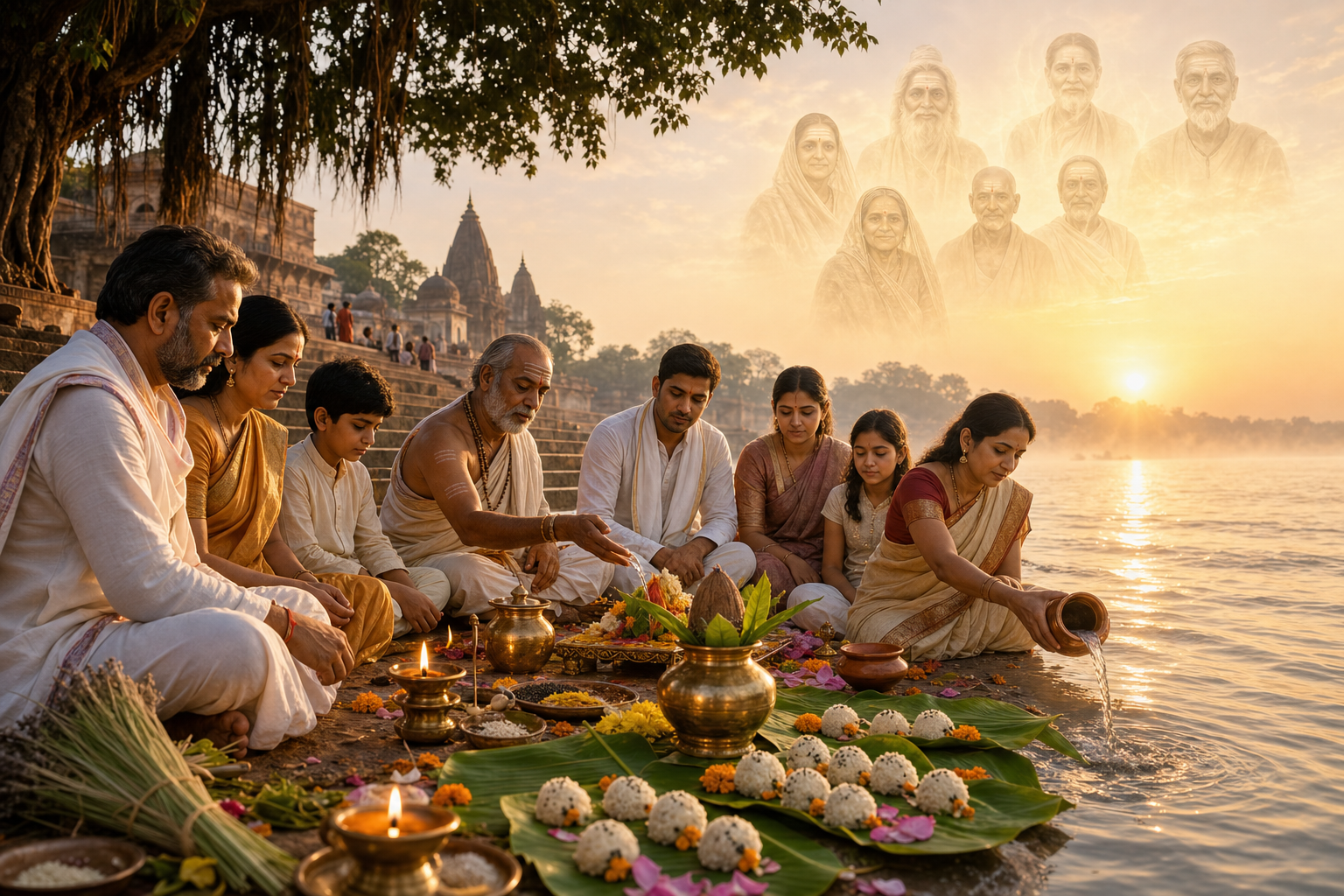
Sanghata Shraddha is the Hindu rite of collective remembrance performed when many departed beings are honored together. Rooted in Pitru Rina, Shraddha, tarpana, pindadana, and dharmic responsibility, it transforms grief into disciplined reverence. The rite is especially meaningful after collective tragedy, disaster, epidemic, war, or family loss involving several departed persons. It affirms that no…
-
Nadabindu Upanishad: Powerful Om Syllables, Deities, and Inner Sound

The Nadabindu Upanishad presents Omkara as a profound map of sound, meditation, deity symbolism, and spiritual realization. Its four elements, “a,” “u,” “m,” and the subtle ardhamātra, are treated as living principles rather than ordinary sounds. The text links these elements with cosmic powers such as Agni, Vayu, solar radiance, and Varuna, while also expanding…
-
Tantra’s Sacred Science of Body, Mind, and Soul: A Powerful Path to Wholeness
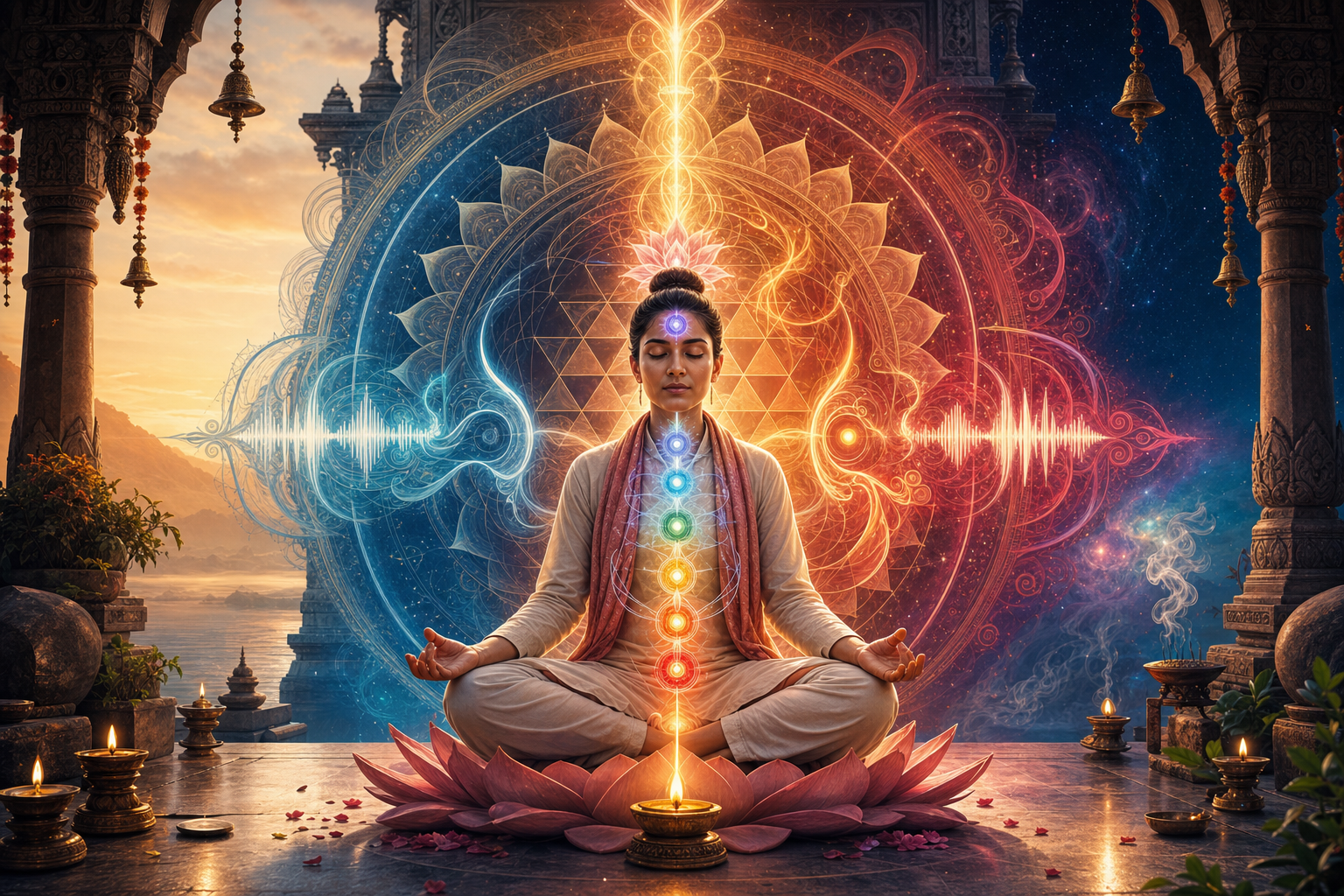
Tantra gives equal importance to body, mind, and soul because it views the human being as an integrated expression of consciousness and energy. Rather than treating the body as an obstacle, Tantra regards it as a sacred instrument for sadhana, mantra, breath, ritual, and meditation. The mind is trained through concentration, visualization, mantra, and disciplined…
-
Spanda Explained: The Powerful Divine Pulse Behind Kashmir Shaivism’s Living Cosmos

Spanda is one of the central insights of Kashmir Shaivism, presenting the universe as a living pulsation of consciousness rather than a completed event in the distant past. This article explains Spanda as the dynamic power of Śiva-Śakti, clarifying why it should not be reduced to ordinary physical vibration. It explores the doctrine’s textual foundations…
-
Powerful Chakra Bija Mantras: Sacred Sound, Kundalini, and Inner Awakening

This article explains how Tantric Hinduism understands sacred sound, bija mantras, chakras, and Kundalini as parts of one integrated spiritual system. It shows why sound is treated not merely as vibration, but as a subtle force linked to consciousness, prana, and inner transformation. The piece clarifies the role of major chakra centers such as muladhara,…
-
Becoming Krishna’s Bamboo Flute: A Powerful Path of Surrender and Devotion
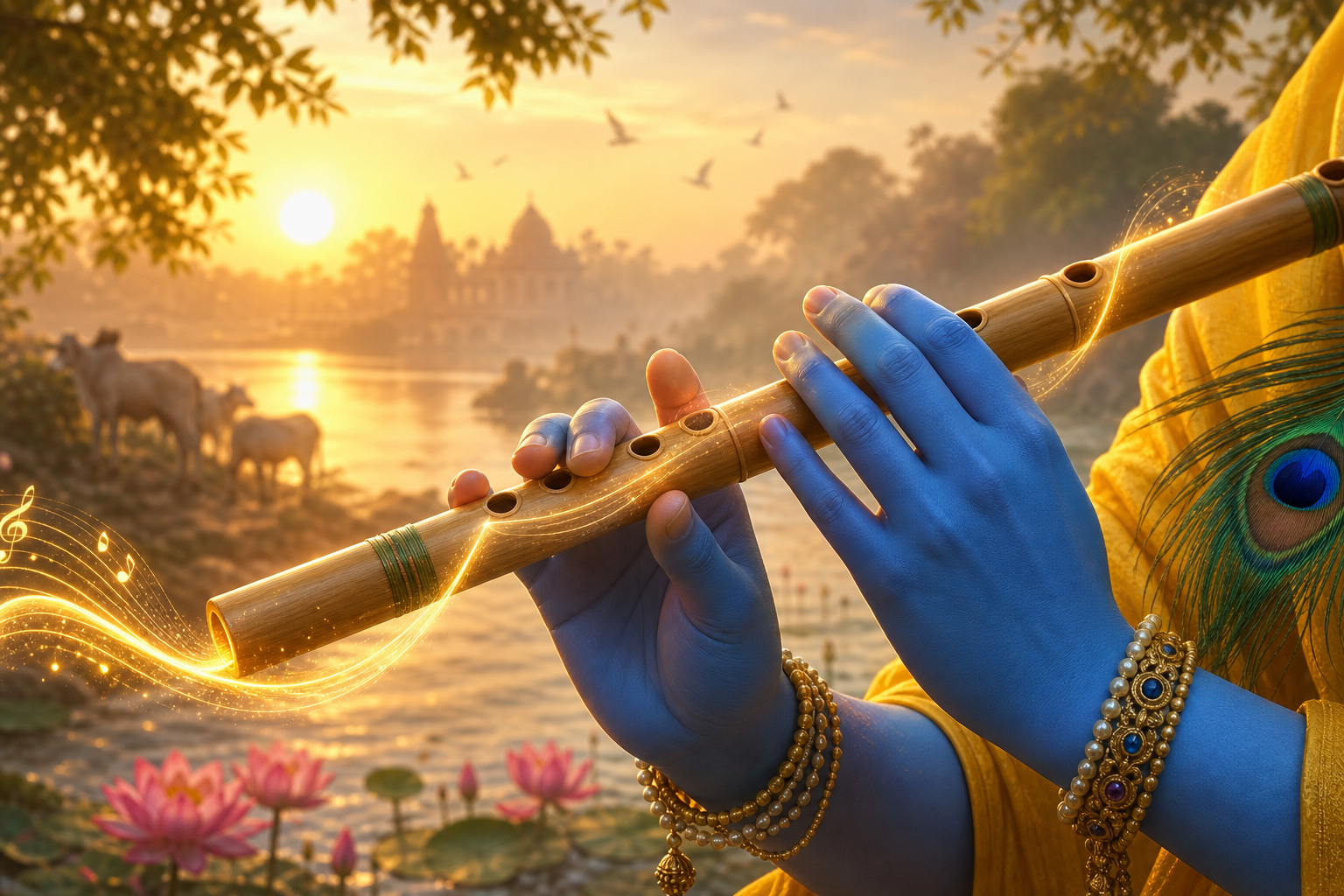
The bamboo flute in Lord Krishna’s hands is a profound symbol of surrender, purity, humility, and devotion. This reflection explains how an ordinary bamboo reed becomes a spiritual metaphor for inner transformation through discipline, emptiness, and divine alignment. It connects the physical working of the flute with prana, sadhana, bhakti, and ethical living. The article…
-
July 7, 2026 Panchang: Powerful Saptami Guide for Tithi, Nakshatra and Rashi
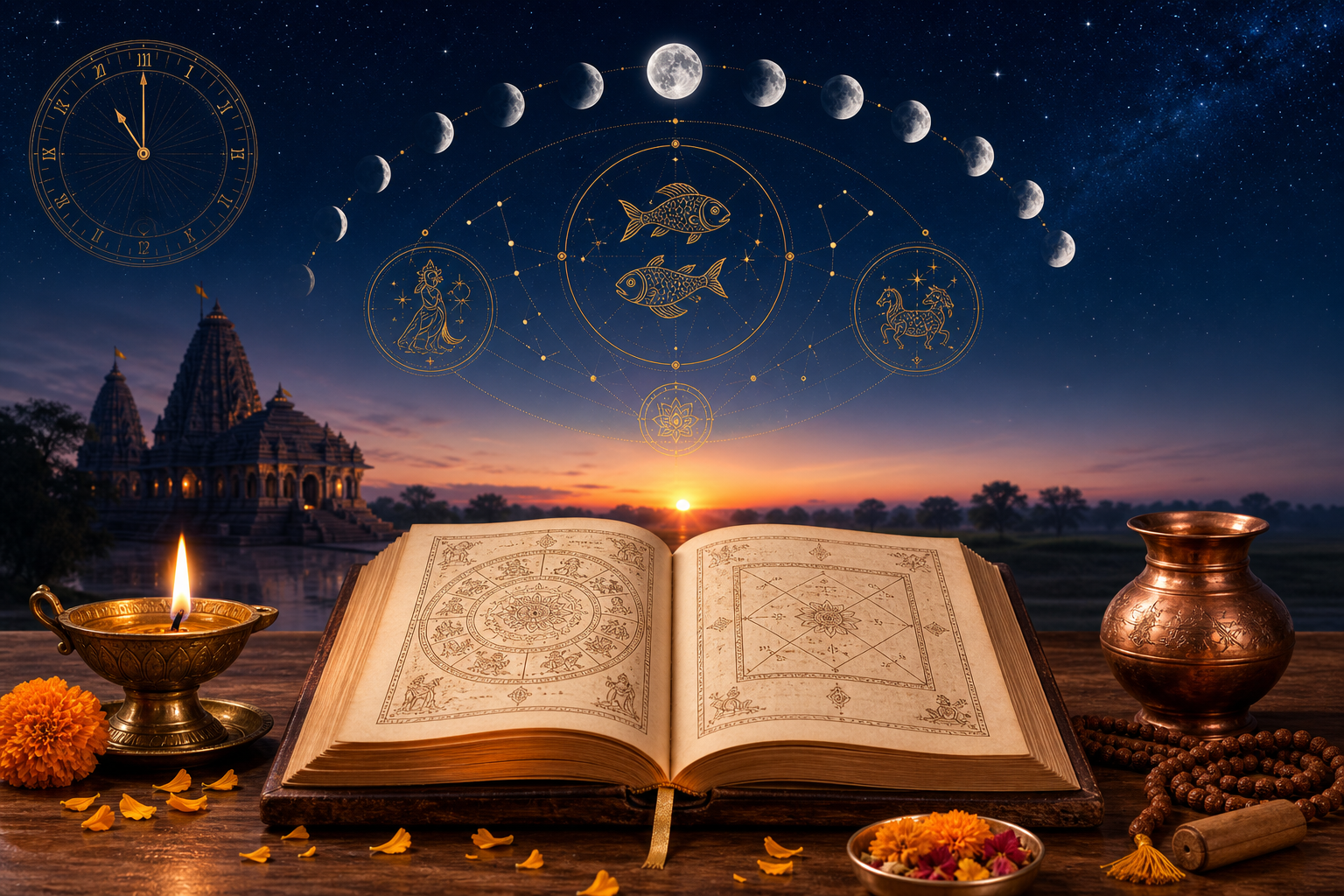
July 7, 2026 is a Tuesday marked by Krishna Paksha Saptami in the Hindu Panchang, with the supplied entry placing Saptami until 8:34 AM and Ashtami afterward. The day belongs to the waning phase of the Moon, a period traditionally associated with reflection, restraint, mantra, and inward discipline. Because tithi, nakshatra, rashi, sunrise, sunset, Rahu…
-
Rudra’s Fierce Birth: Powerful Lessons from Ekadasa Rudras and Sanat Kumaras
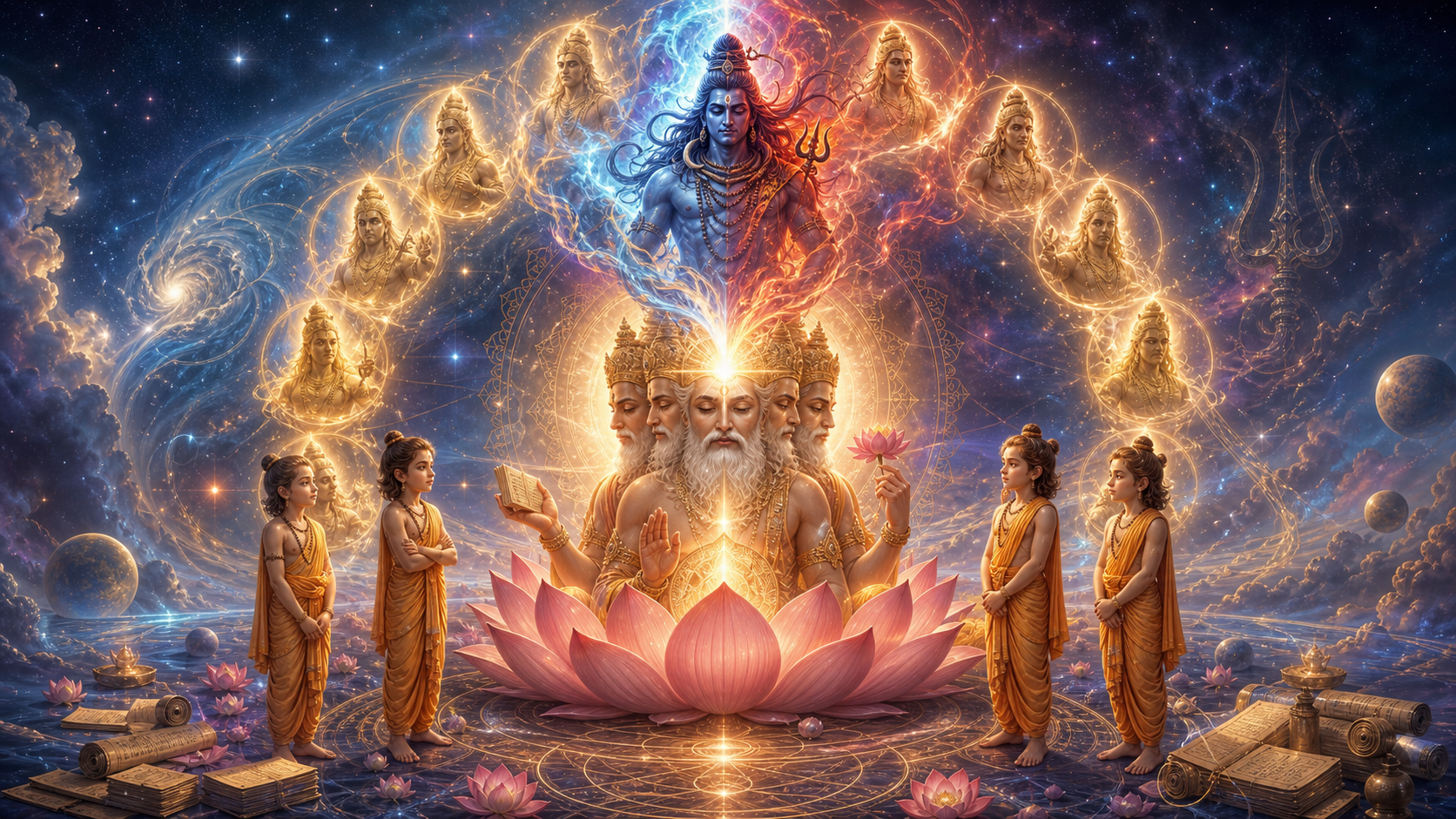
This article explores the sacred Puranic story of Rudra’s birth from Brahma’s wrath and its connection with the four Sanat Kumaras. It explains how Sanaka, Sanandana, Sanatana, and Sanatkumara represent renunciation, wisdom, and the inward path of liberation. The discussion presents the Ekadasa Rudras as both cosmic deities and symbolic forces within the human being.…
-
Krishna, Jallikattu and the Sacred Power of Bull-Taming in Indian History
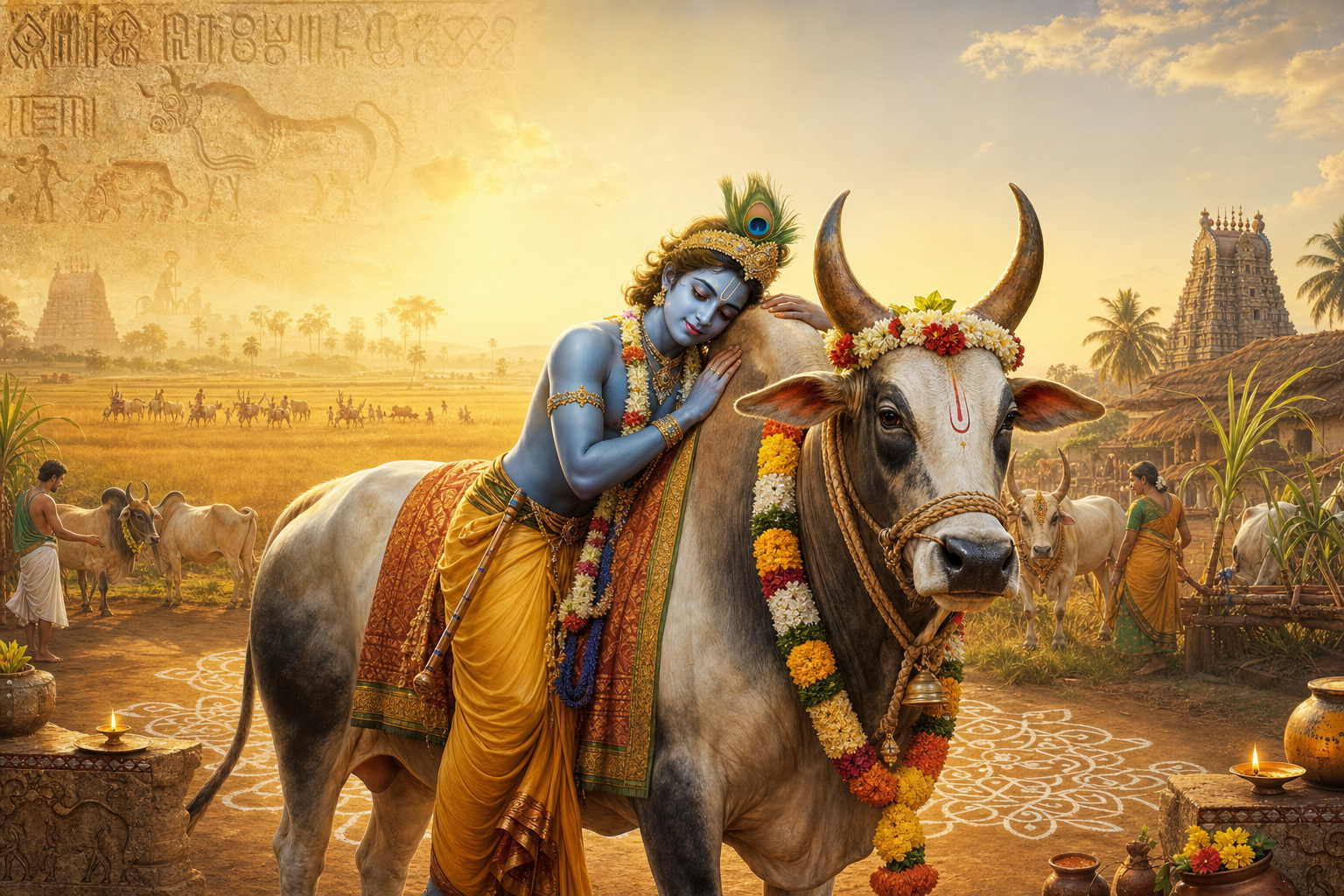
This article explores Jallikattu as a deeply rooted Tamil and Hindu cultural tradition rather than a mere rural sport. It connects ancient bull imagery, Sangam literature, Krishna’s bull-taming narratives, and the agrarian world of Tamil Nadu. The discussion distinguishes Jallikattu from European bullfighting while acknowledging modern animal welfare concerns. It explains the legal turning points…
-
Ramanandis in Hinduism: Powerful Bhakti Legacy of Devotion and Social Unity
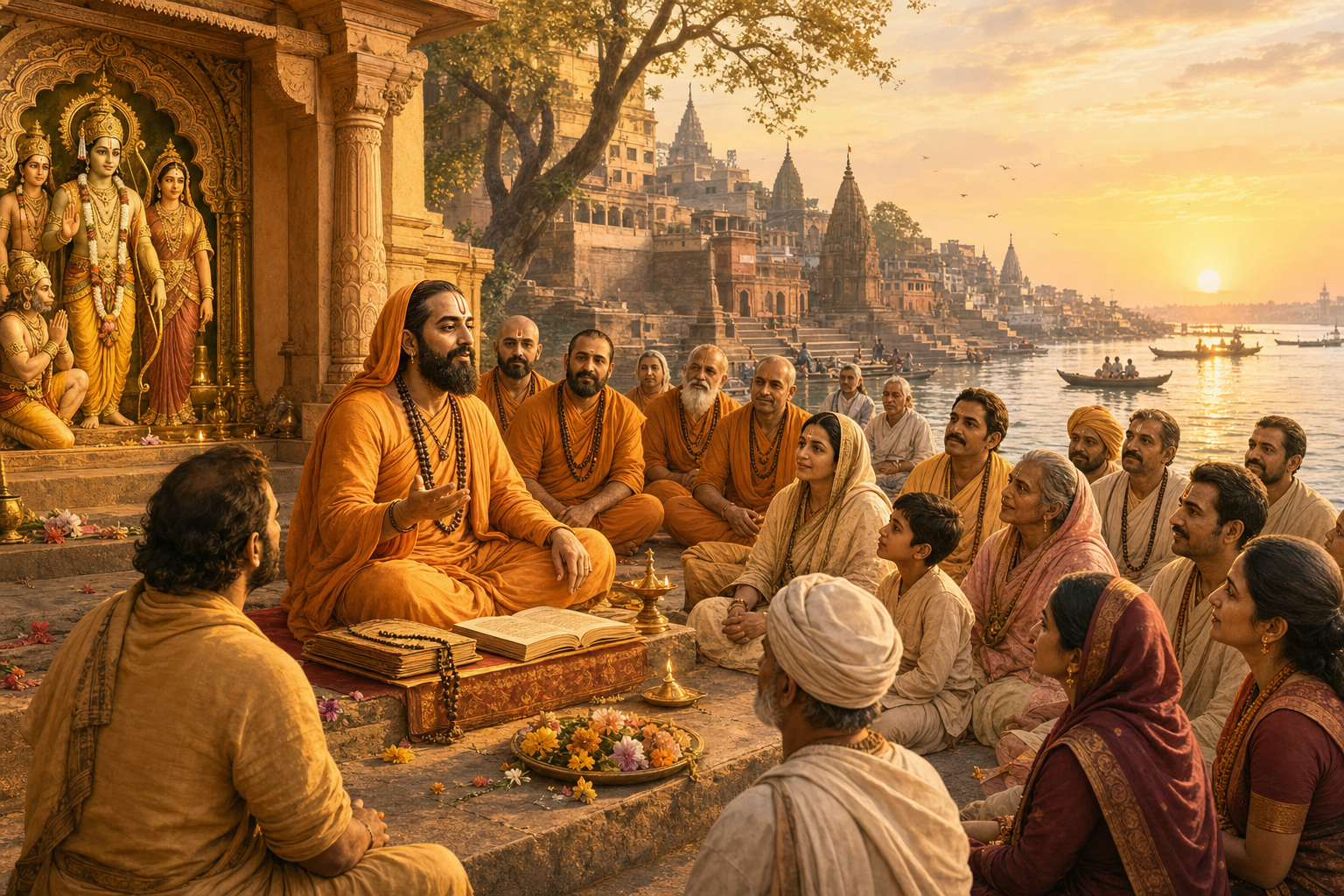
The Ramanandis are one of the most influential Vaishnava orders in Hinduism, rooted in the devotional legacy of Ramananda and centered on Rama-bhakti. Their tradition combines Vishishtadvaita-influenced theology, vernacular devotion, monastic discipline, pilgrimage culture, and a strong emphasis on divine grace. This article explains their history, philosophy, ascetic institutions, literary influence, and continuing relevance in…
-
Sacred Phala in Hindu Sculpture: Powerful Fruit Symbolism, Prosperity and Wisdom
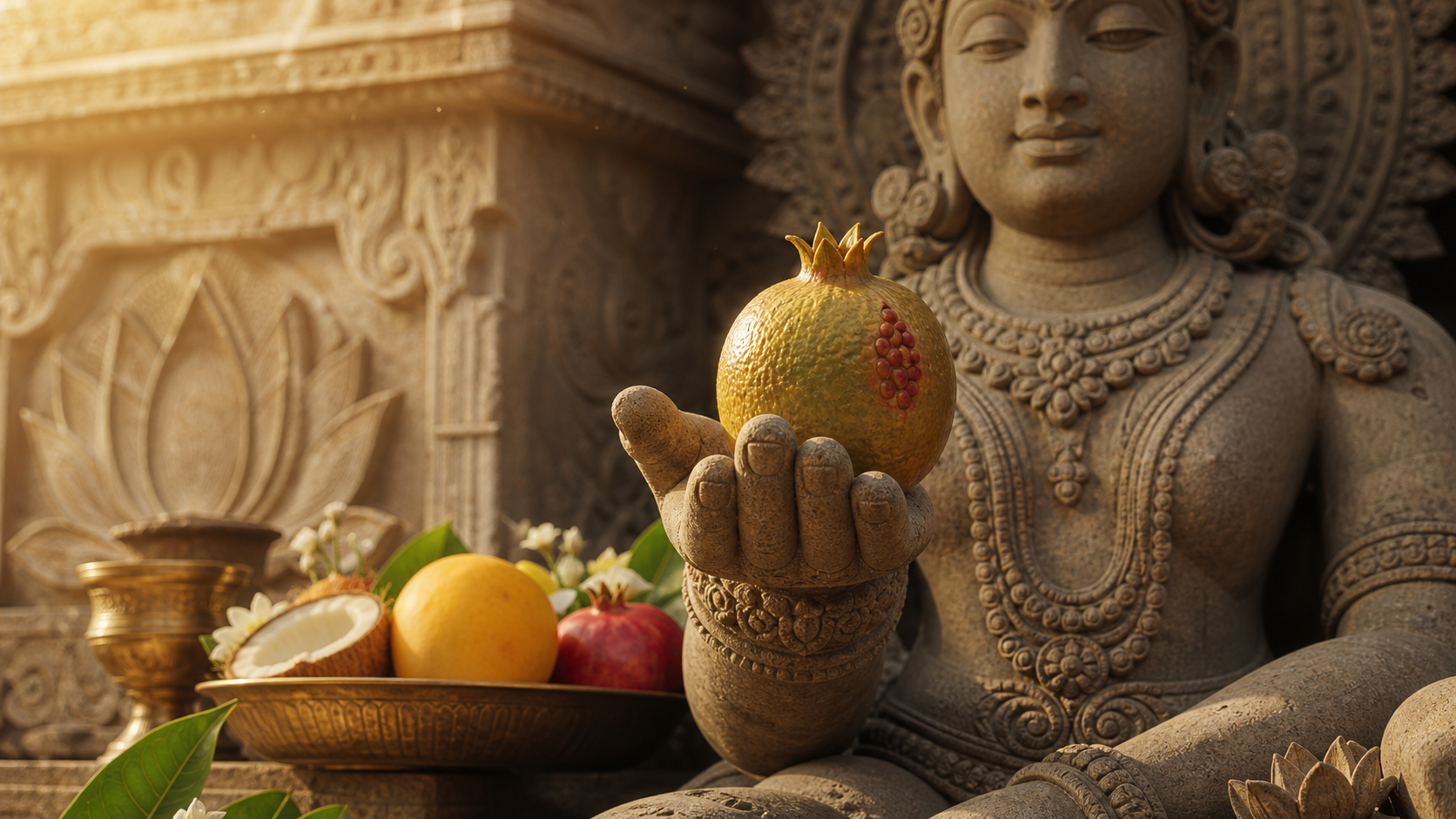
The phala, or sacred fruit, is one of the most subtle yet meaningful symbols in Hindu sculpture. It represents abundance, fertility, prosperity, karma-phala, spiritual fruition, and the transformation of offerings into prasada. This article explains how fruits such as the citron, pomegranate, mango, and coconut function within Hindu iconography and temple art. It also explores…
-
Abhishahas of Kurukshetra: Forgotten Kaurava Warriors and Epic Lessons

The Abhishahas were a lesser-known martial clan aligned with the Kaurava host in the Mahabharata’s Kurukshetra War. Though the epic gives only brief references to them, their presence reveals the vast and complex military world behind the famous conflict between the Pandavas and Kauravas. This study explains their likely role within the Kaurava army, their…
-
Ardha Chandra Mudra in Hindu Sculpture: Powerful Meaning of the Sacred Half-Moon Gesture
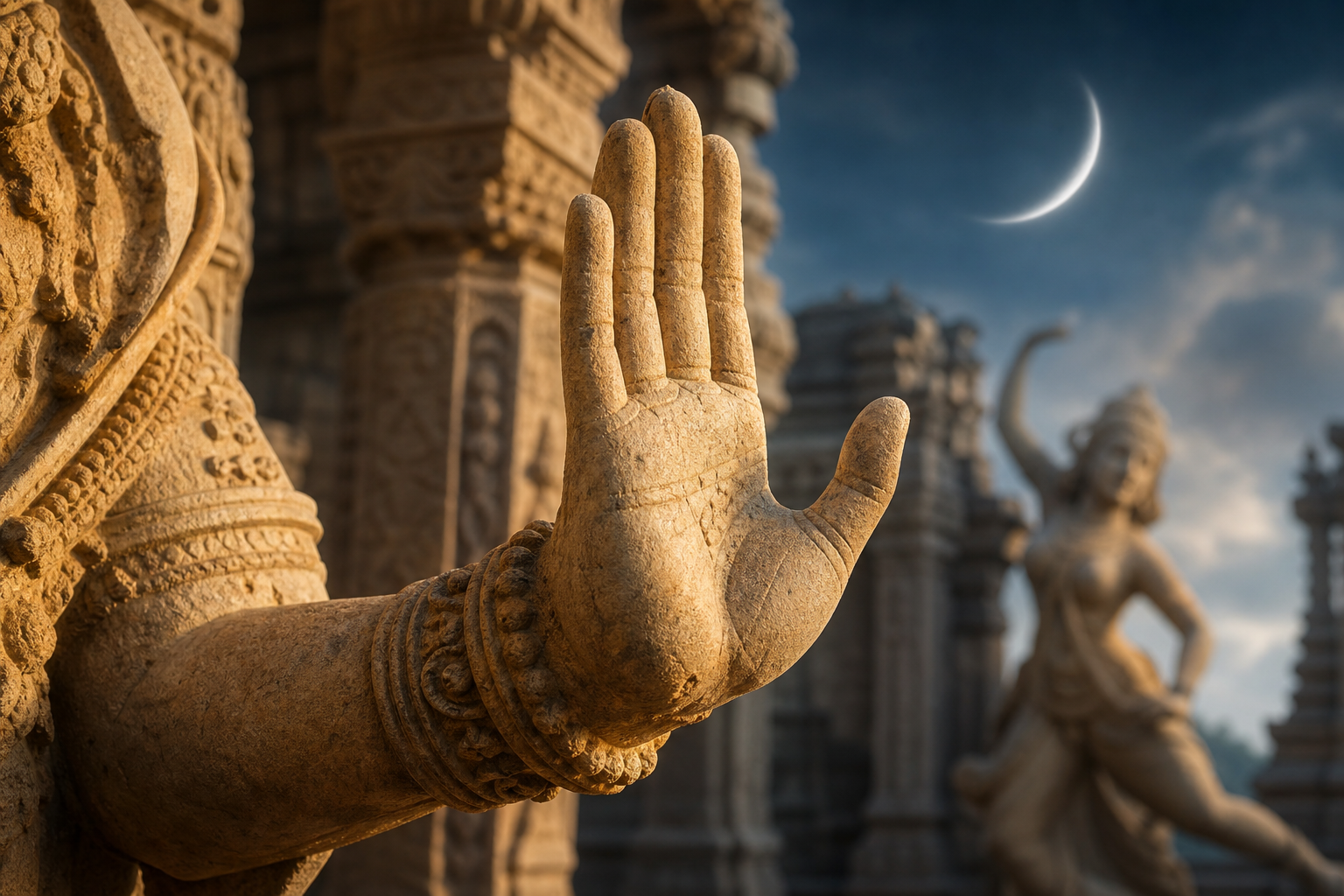
Ardha Chandra Mudra, the Half-Moon Gesture, is one of the most elegant symbolic hand forms associated with Hindu sculpture, classical dance, and sacred art. Its Sanskrit name combines ardha, meaning half, with chandra, meaning moon, creating a gesture rich with associations of rhythm, renewal, beauty, and contemplative balance. In temple iconography, the mudra should be…
-
Less Self-Criticism, Deeper Progress: A Hindu Insight for Inner Growth
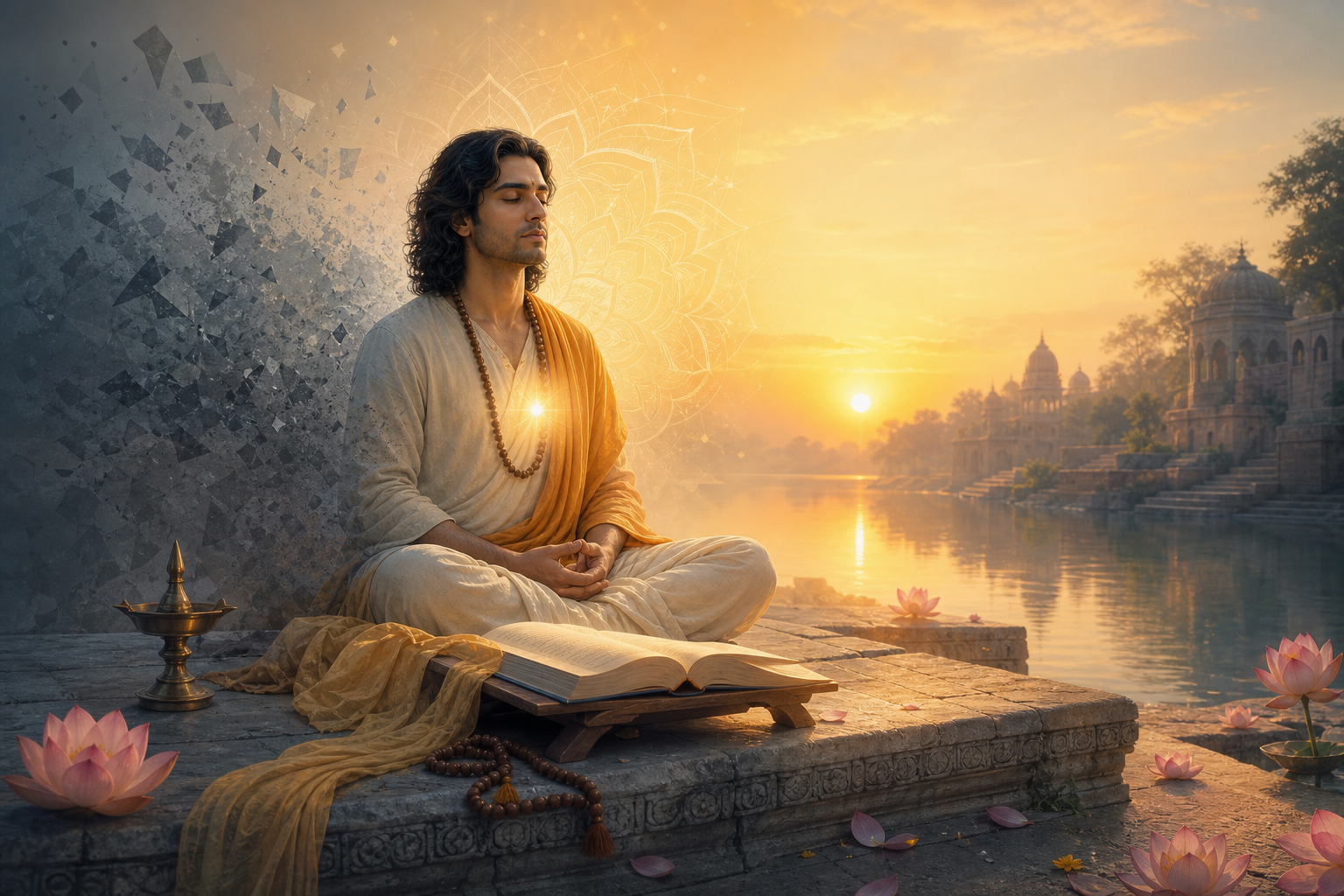
Excessive self-criticism is often mistaken for humility, but Hindu philosophy shows that genuine progress requires clear self-study rather than inner hostility. The Bhagavad Gita, Yoga philosophy, and the principles of dharma, karma, ahimsa, and abhyasa offer a disciplined framework for correcting mistakes without collapsing into shame. This perspective distinguishes self-correction from self-condemnation and explains why…
-
Why Desire Became the Hidden Force Behind Creation in Hindu Thought
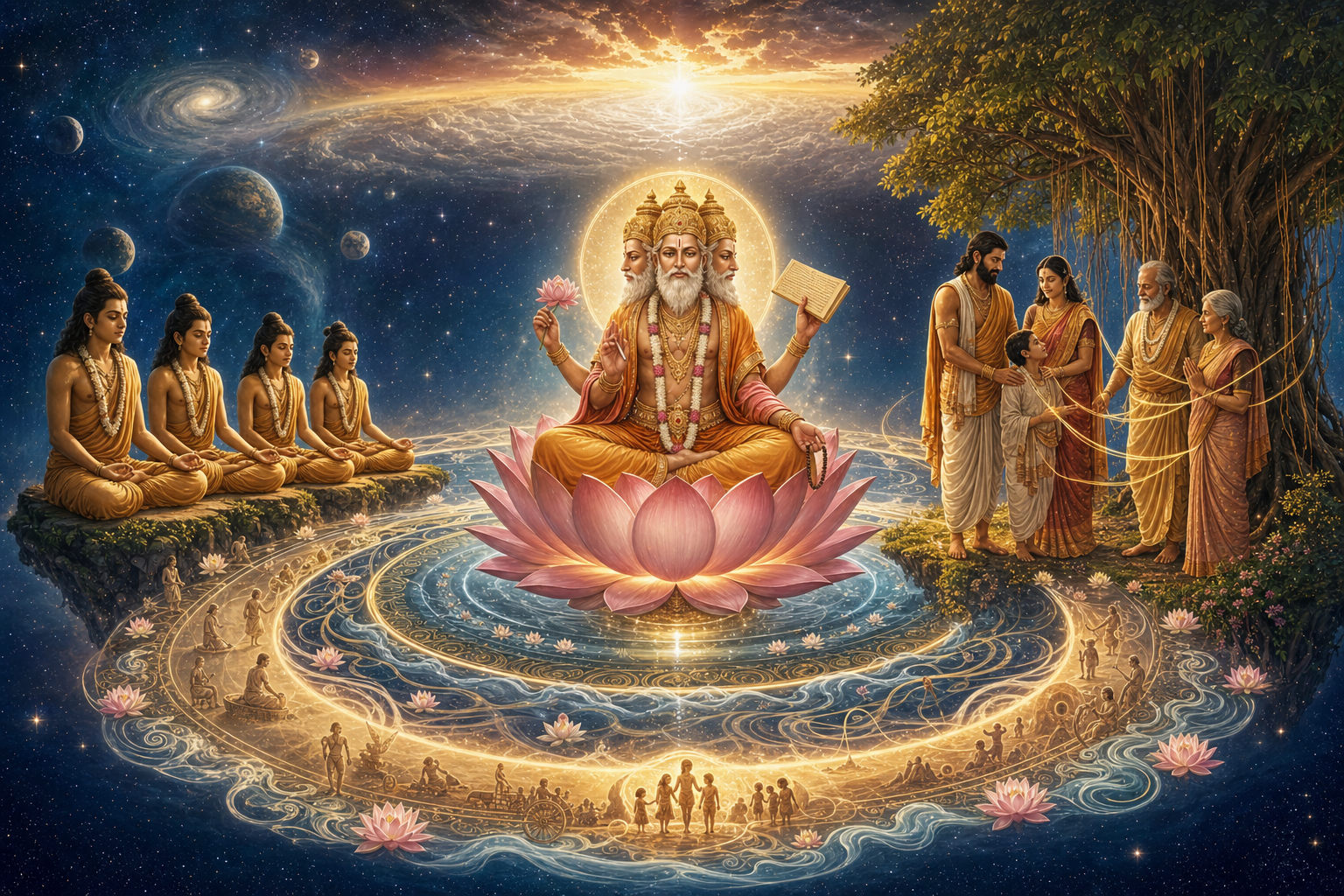
This article explores why Hindu scriptures treat sexual pleasure as more than a biological impulse. Through the story of Brahma, the mind-born sages, and the refusal of the Kumaras to procreate, it explains the tension between worldly continuity and spiritual liberation. The discussion shows how kama, dharma, samsara, and moksha form a sophisticated framework for…
-
July 6, 2026 Panchang: Powerful Krishna Paksha Sashti Tithi Guidance
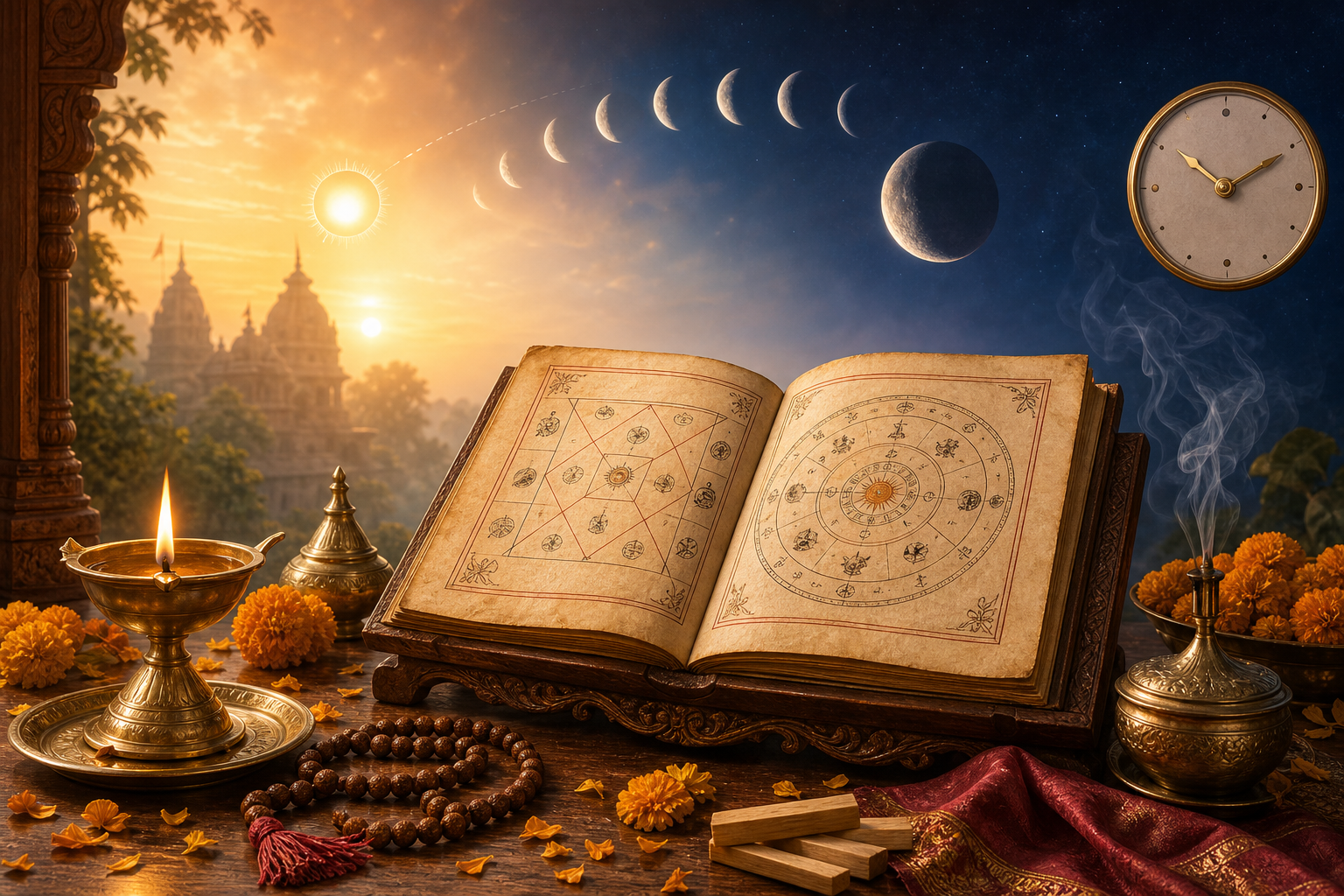
Monday, July 6, 2026 begins with Krishna Paksha Sashti tithi in the Hindu Panchang. Sashti continues until 9:26 AM, after which Krishna Paksha Saptami begins. This daily Hindu calendar reading explains why tithi matters, how it differs from a civil date, and why the waning lunar phase is often linked with reflection and discipline. It…
-
Sacred Power of the Cauri: Yakshini Symbolism and the Divine Feminine in Hindu Art
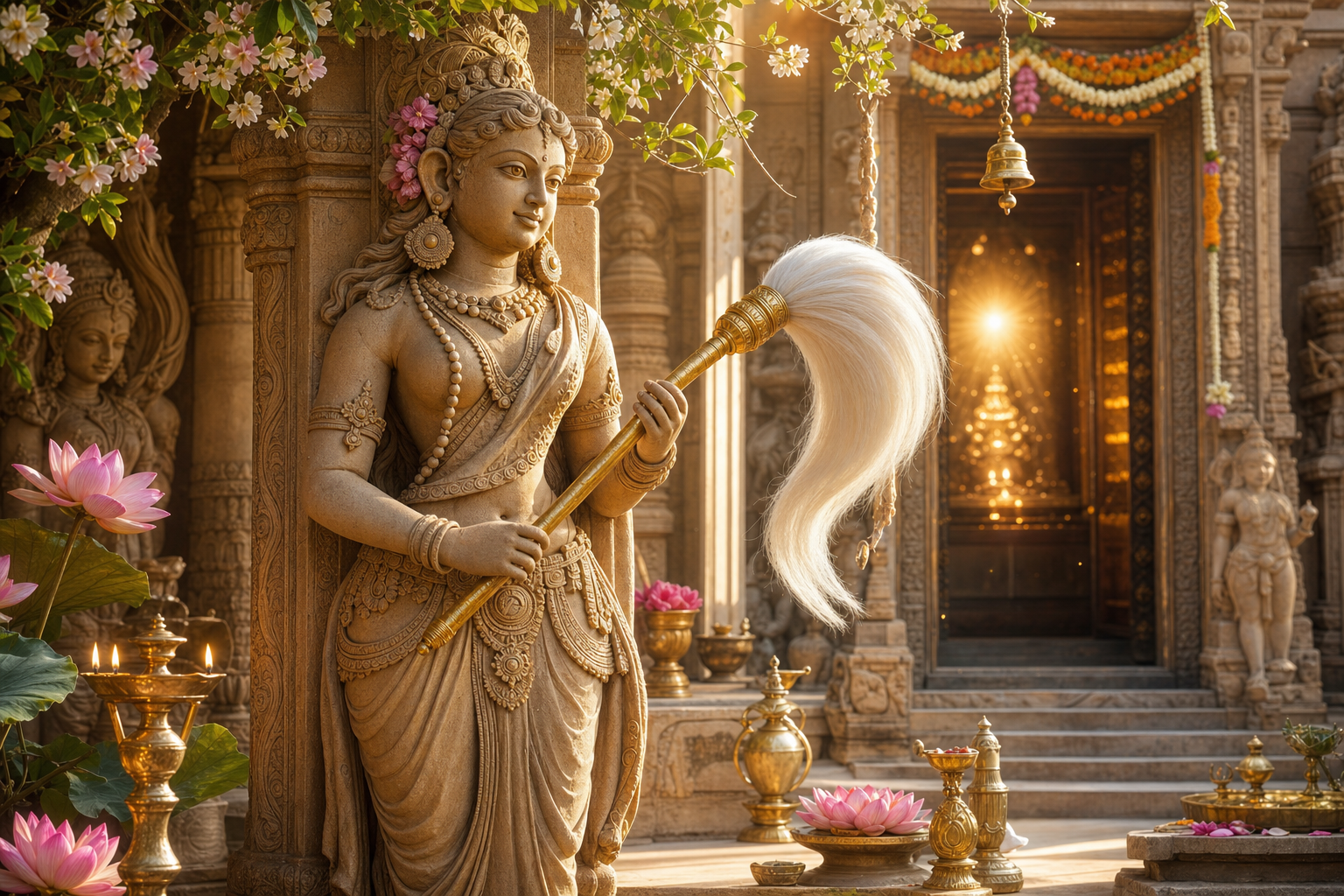
The cauri, or fly-whisk, in Hindu sacred art is not merely an ornamental accessory but a symbol of reverence, purity, sovereignty, and devotional service. When held by a Yakshini, it becomes closely connected with the Sacred Feminine, fertility, abundance, nature, and auspicious power. Yakshinis represent a deep layer of Indic religious imagination, linking trees, water,…
-
Jwalamalini Devi: Powerful Flame-Crowned Shakti and Her Sacred Iconography
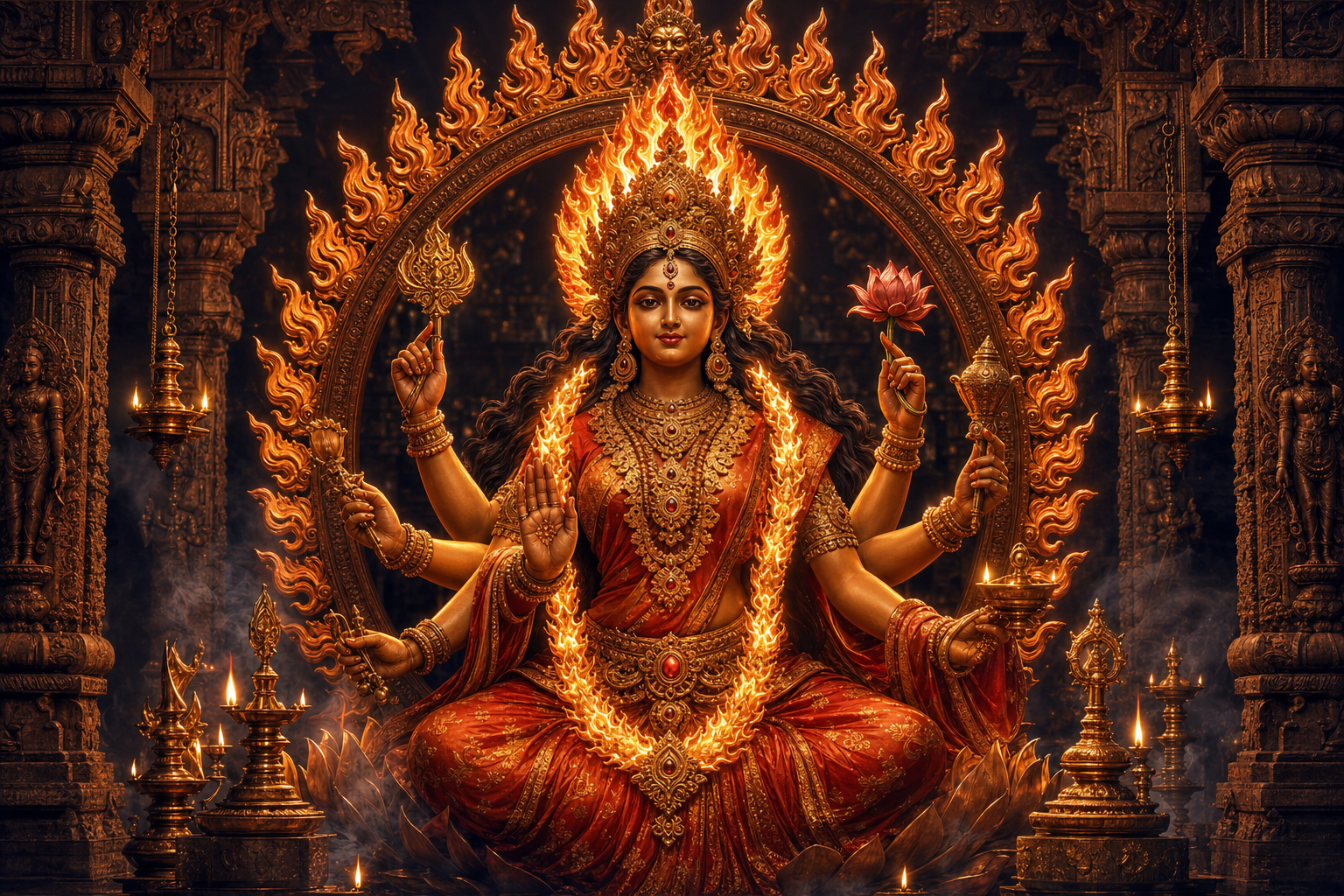
Jwalamalini Devi, the flame-garlanded form of Shakti, represents one of the most powerful expressions of sacred feminine energy in Hindu iconography. Her name reveals her essence, joining Jwala, or flame, with Malini, one who is garlanded. This form is not merely fierce in appearance; it communicates purification, protection, tapas, and spiritual transformation. The article explains…
-
Kamandalu and Kundika: Powerful Sacred Vessels in Hindu Iconography Explained
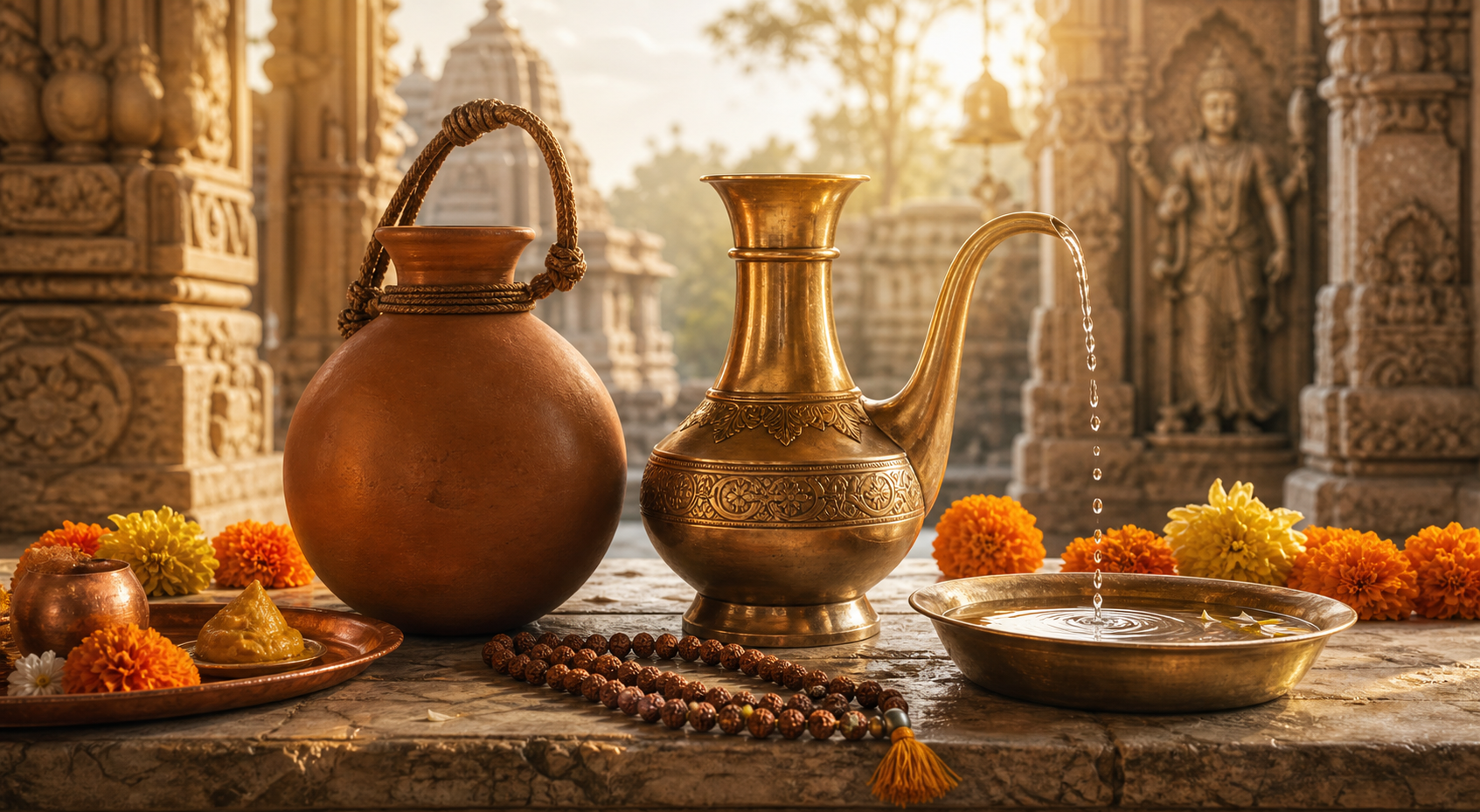
The kamandalu and kundika are two sacred water vessels often seen in Hindu rituals, temple traditions, and iconography, but they are not the same object. The kamandalu is most closely associated with sages, ascetics, renunciation, and spiritual self-discipline, while the kundika is more often linked to controlled ritual pouring, purification, and consecration. Understanding their difference…