
-
The Transformative Science of Kirtan and Abhishek: Glories of Lord Gauranga at ISV

ISKCON of Silicon Valley’s 2026-03-02 gathering integrated kirtan, abhishek, and narrations of Lord Gauranga’s glories under the guidance of H.G. Vaisesika Dasa. The program illustrated how attentive hearing and chanting serve as the core of bhakti-yoga, balancing theology with lived practice. Technical details of the pañcāmṛta abhiṣeka, mantra recitation, and liturgical sequencing illuminated the symbolic…
-
When Sankirtana Met State Power: Lord Caitanya, Chand Kazi, and Enduring Harmony
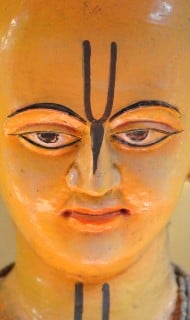
Set in sixteenth-century Navadvipa, the well-attested episode of Lord Caitanya and the Chand Kazi demonstrates how devotional courage, nonviolence, and respectful dialogue can resolve public religious disputes. Drawing from Sri Navadvipa Dhama Mahatmya and Gaudiya sources such as Chaitanya Charitamrita, the narrative shows sankirtana’s harmonizing role alongside lawful civic administration. The sacred mapping of the…
-
Gilaharaj Ji Maharaj at Achal Taal: Hanuman’s Rare Squirrel Form and Timeless Ramayana Legacy

Gilaharaj Ji Maharaj Temple at Achal Taal in Aligarh, Uttar Pradesh, preserves a rare devotional focus: Hanuman is venerated in the form of a gilahari (squirrel), recalling the Ramayana story of Rama Setu and the power of humble seva. Set beside a historic waterbody, the shrine binds narrative memory to sacred geography in a living,…
-
Alidha Stance in Hindu Iconography: Embodied Power, Dharma Readiness, and Sacred Motion
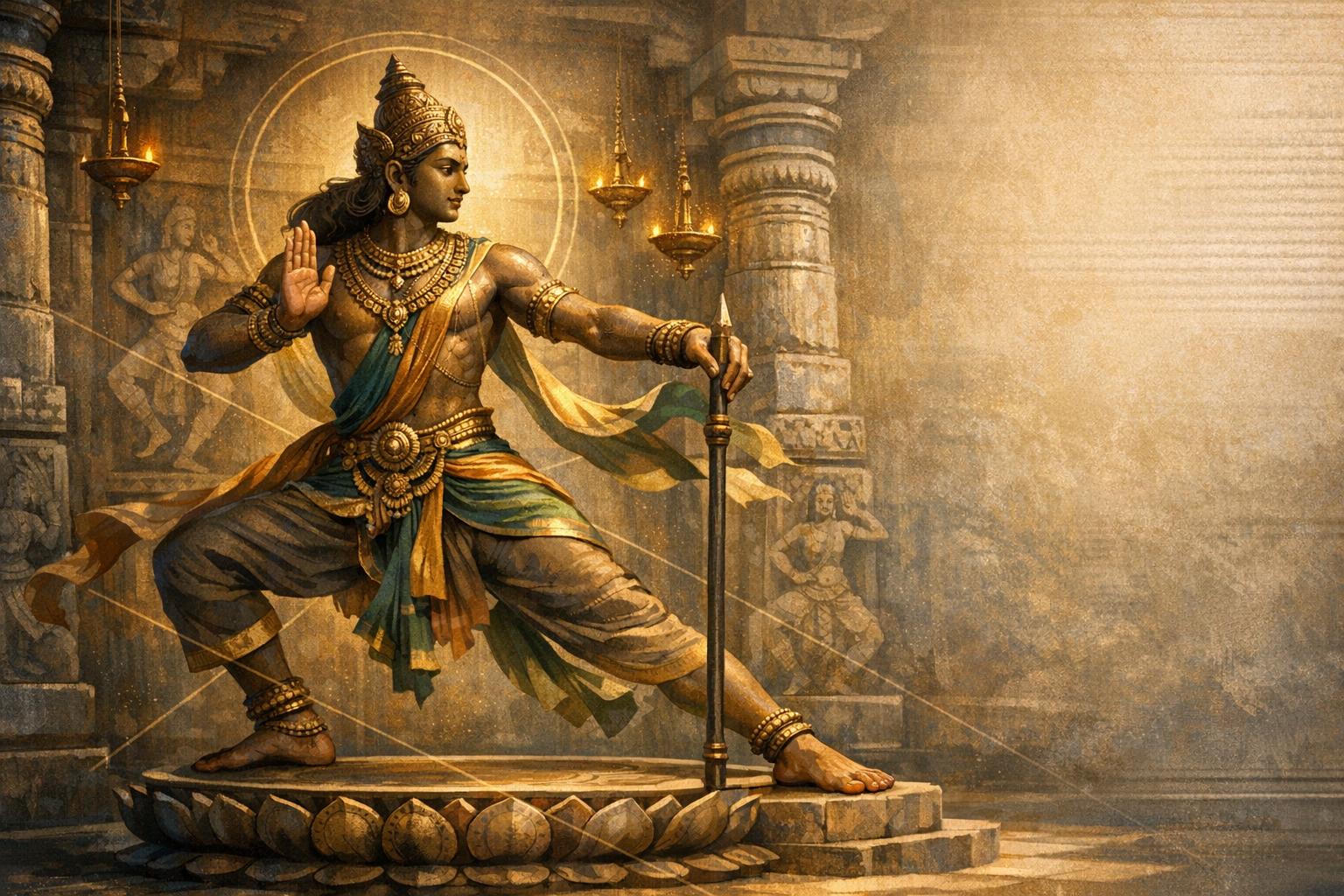
Alidha (ālīḍha) is the forward-striding stance in Hindu iconography where the right leg advances and the left draws back, fusing motion with stability to signal dharma-ready power. Rooted in the Nāṭyaśāstra and Dhanurveda and codified in Śilpa-śāstra, it recurs across Shaiva, Shakta, and Vaishnava imagery and in classical dance such as Bharatanatyam. The stance animates…
-
Laghu Vishnumurti Decoded: A Compact Dharmashastra Masterpiece Shaping Ancient Society

Laghu Vishnumurti (Laghu Vishnu Murti) condenses the dharmashastra tradition into five chapters and 114 verses, offering a precise window into ancient India’s social organization, legal procedure, and restorative ethics. The text’s laghu format enables quick consultation while preserving doctrinal depth, making it ideal for students of Hindu legal history. It balances universal norms with deference…
-
Darshan as Divine Reciprocity: The Two-Way Vision that Transforms Hindu Worship and Life
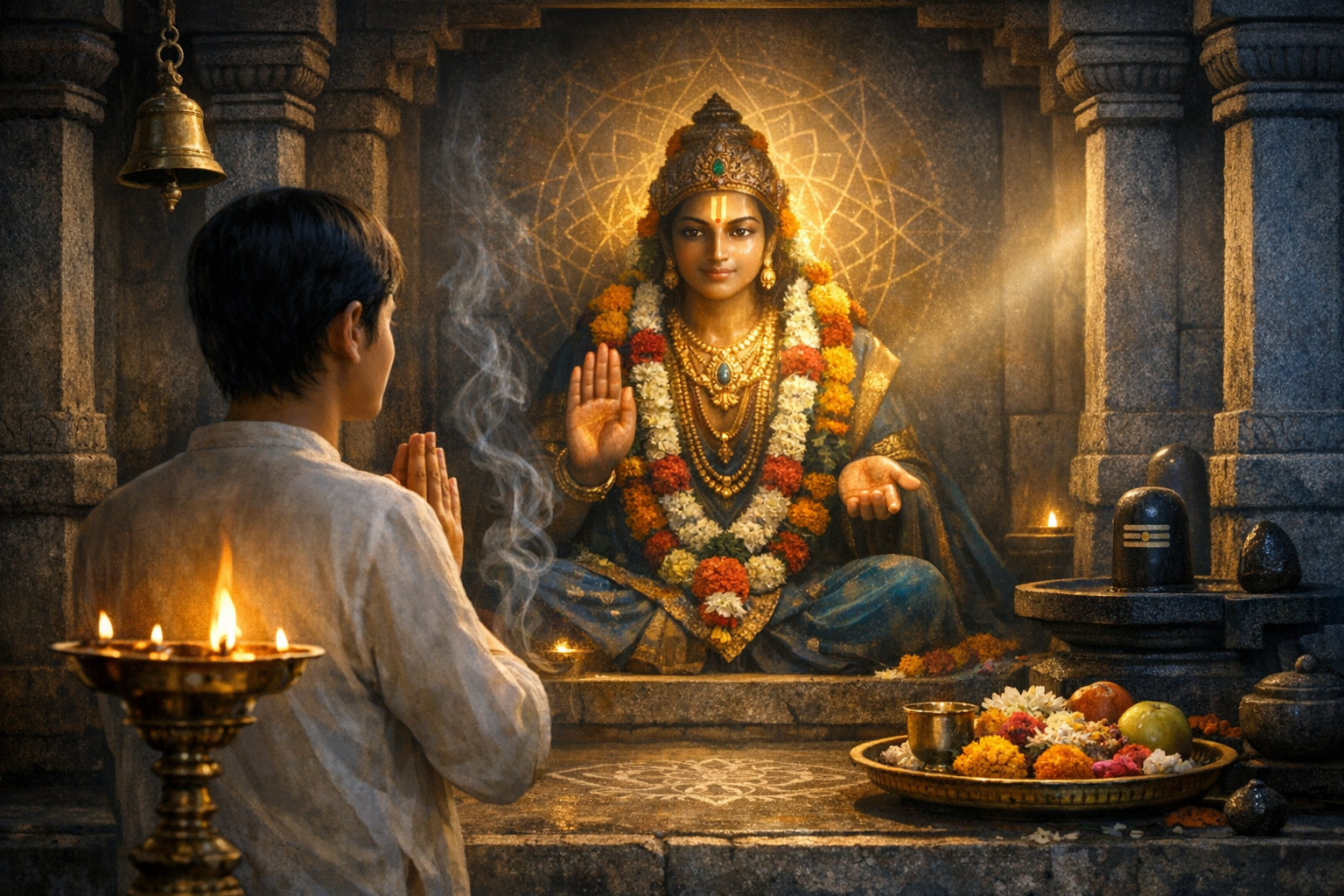
Darshan, derived from the Sanskrit root “drsh,” is presented as a two-way exchange: the devotee beholds the divine and is, in turn, beheld. The article explains how this reciprocity operates in Hindu ritual life through consecrated images, temple choreography, and the distribution of prasad as an embodied blessing. It engages classical Indian theories of perception…
-
Krishna as Purna Purusha: Revealing the Feminine Divine That Completes the Supreme Being
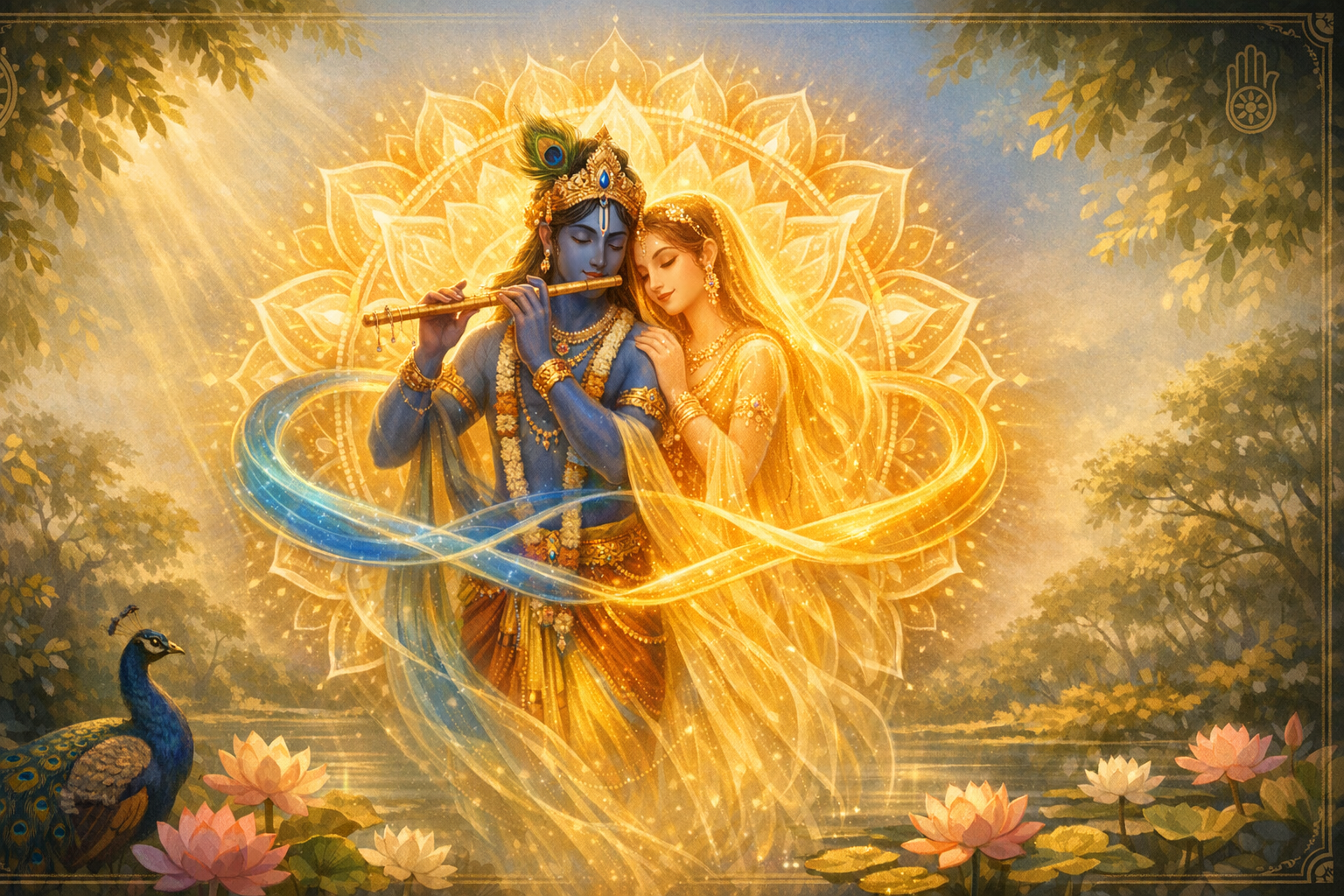
This long-form exploration presents Sri Krishna as Purna Purushathe Complete Beingwho integrates both masculine and feminine dimensions without contradiction. Drawing on the Bhagavad Gita, the Bhagavata Purana, and Vaishnava theology, it explains how Radha as Hladini Shakti reveals the feminine divine at the very heart of Krishna’s identity. The article situates Mohini within Vaishnava-Puranic tradition,…
-
Beyond Facts: Transformative Teaching through DharmaTimeless Hindu, Buddhist, Jain, Sikh Insights

Education is not the mere transfer of facts; in dharmic traditions it is a transformative process that unites knowledge, character, and contemplative depth. Drawing on Hindu, Buddhist, Jain, and Sikh insights, this analysis explains why śravaṇa–manana–nididhyāsana, anekāntavāda, and the triad of śabad–sangat–seva map onto evidence-based practices like active learning and mindfulness. It clarifies the parā/aparā…
-
Chaitra Month 2026 Dates Explained: Sacred Beginnings, Festivals, and Regional Calendars
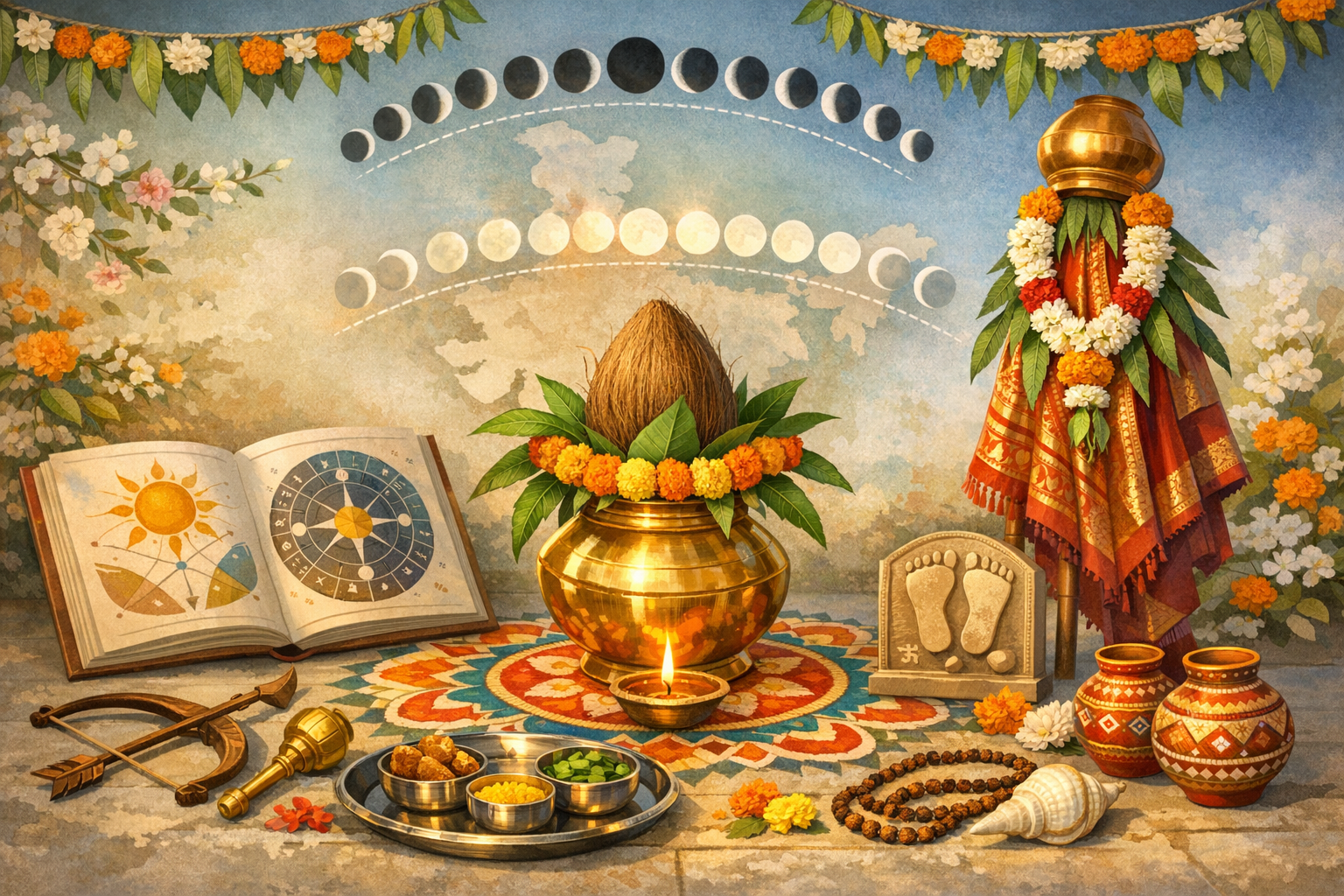
Chaitra Month 2026 in the North Indian Purnimanta calendar runs from March 4 to April 2 (IST), inaugurating the ritual year with spring observances and renewal. The Amanta calendar (used in Maharashtra, Goa, Andhra Pradesh, Telangana, and Karnataka) counts Chaitra from the day after the March new moon through the April new moon, embedding Ugadi…
-
March 10, 2026 Panchang: Krishna Paksha Saptami, Auspicious Muhurtas, Nakshatra & Rashi

Tuesday, March 10, 2026 falls on Krishna Paksha Saptami, the seventh lunar day of the waning fortnight, continuing until 12:11 AM on March 11, when Ashtami begins. This Panchang overview explains how tithi is computed, why end times rarely align with civil midnights, and how to apply practical muhurta guidance. Readers learn to combine Abhijit…
-
Malegaon Flashpoint: FIRs After Hanuman Chalisa Post-NamazLegal Clarity and a Roadmap to Harmony

Police in Malegaon reportedly registered a case after Hanuman Chalisa was recited inside the Malegaon Municipal Office following Namaz on the premises, renewing debates on worship in government spaces. This analysis explains how Articles 25–26 of India’s Constitution protect devotion while permitting content-neutral, time–place–manner rules. It outlines the typical legal toolkit used nationally (e.g., IPC…
-
Beyond the ‘Better’ Trap: A Dharmic Guide to Hope Without Clinging or Burnout

Hope is powerful fuel, but it can become a trap when peace depends on outcomes. This long-form, research-informed reflection clarifies the difference between direction and demand, showing how mindfulness, equanimity, and non-attachment protect motivation without creating pressure. Drawing on a unified dharmic lensBuddhist equanimity, Hindu Karma Yoga, Jain aparigraha, and Sikh hukam and sevait reframes…
-
Charak Puja at Charak Sankranti: A Soul-Stirring Folk Heritage of Bengal, Tripura, and Assam
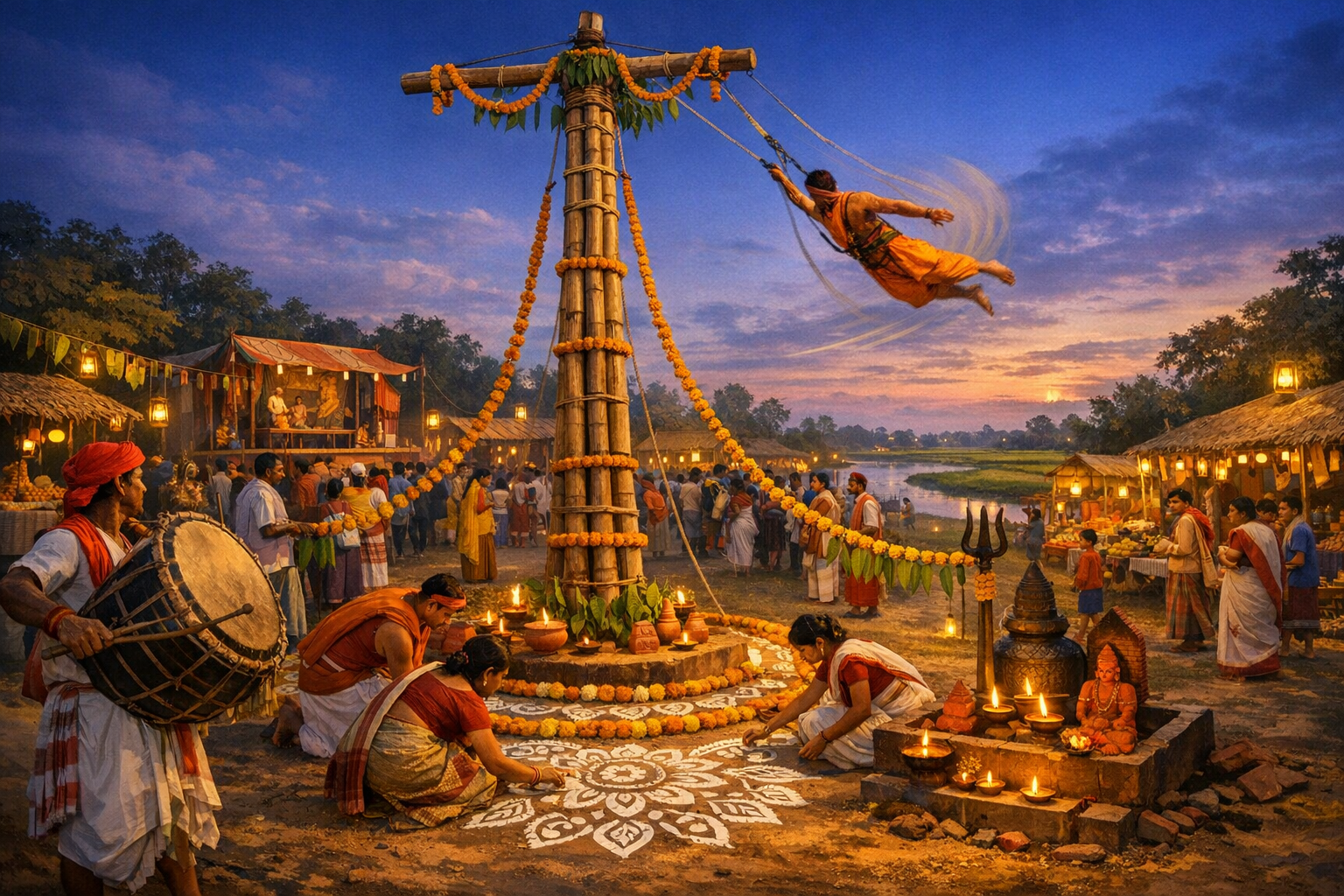
Charak Puja (Nil Puja or Hajra Puja) crowns the Bengali month of Chaitra with a powerful blend of devotion, folk art, and agrarian hope. Observed on Charak Sankrantithe sidereal solar transition into Mesha (Aries)it typically falls on 13 or 14 April across West Bengal, Tripura, and Assamese regions shaped by Bengali and tribal traditions. The…
-
Shravana Kumara’s Devotion in the Ramayana: Enduring Lessons in Matru Pitru Bhakti and Dharma
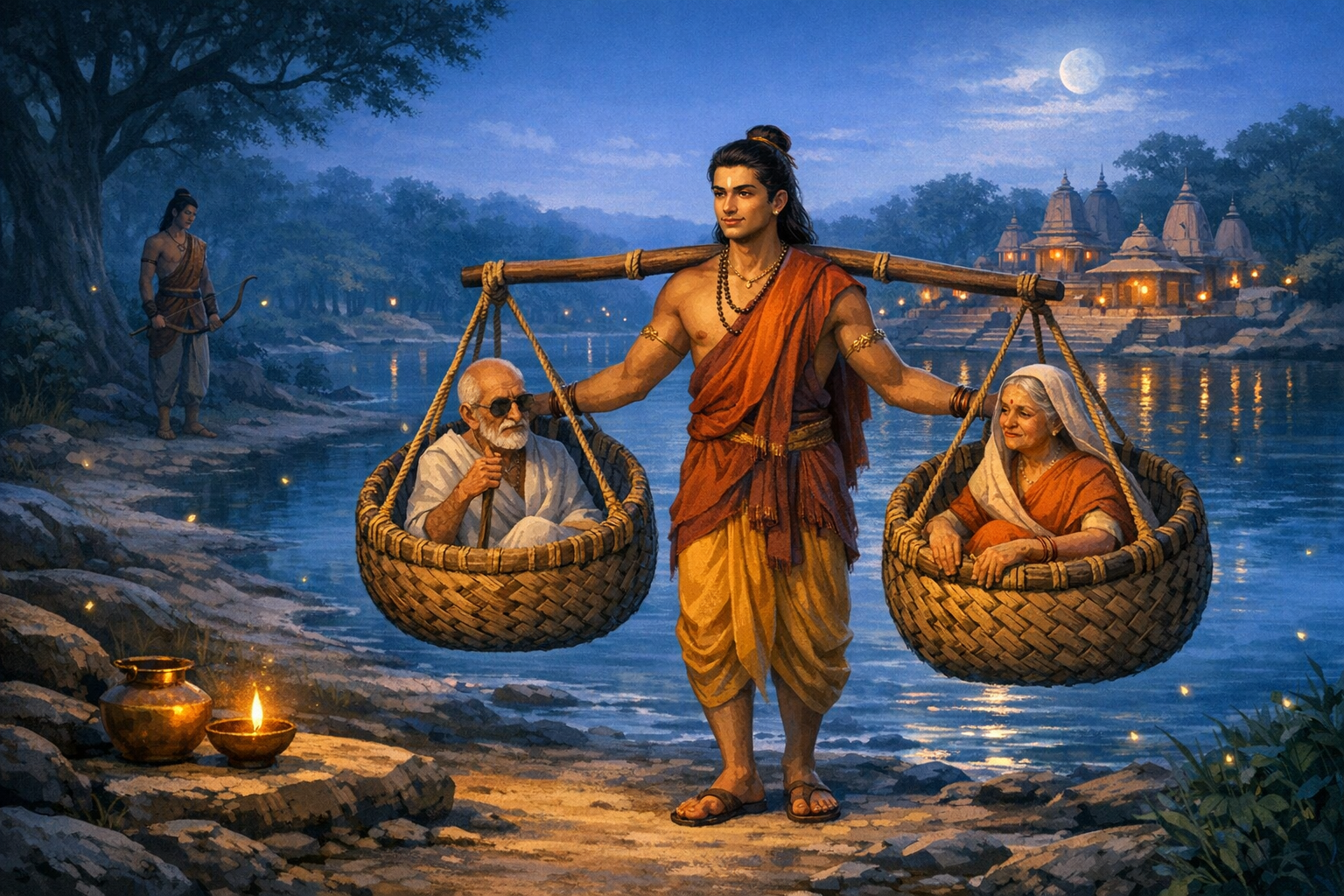
Shravana Kumara’s story in the Ramayana is a powerful testament to Matru Pitru Bhaktidevotion to parentsembodied through a son’s tireless care for his blind, elderly parents during their sacred tīrtha-yātra. The episode, culminating in King Daśaratha’s tragic mistake and subsequent curse, provides the narrative key to understanding his later death from separation from Rāma. Vālmīki’s…
-
Unveiling Venkateswara’s Nagabharana: Sacred Serpent Ornaments and Timeless Symbolism at Tirumala
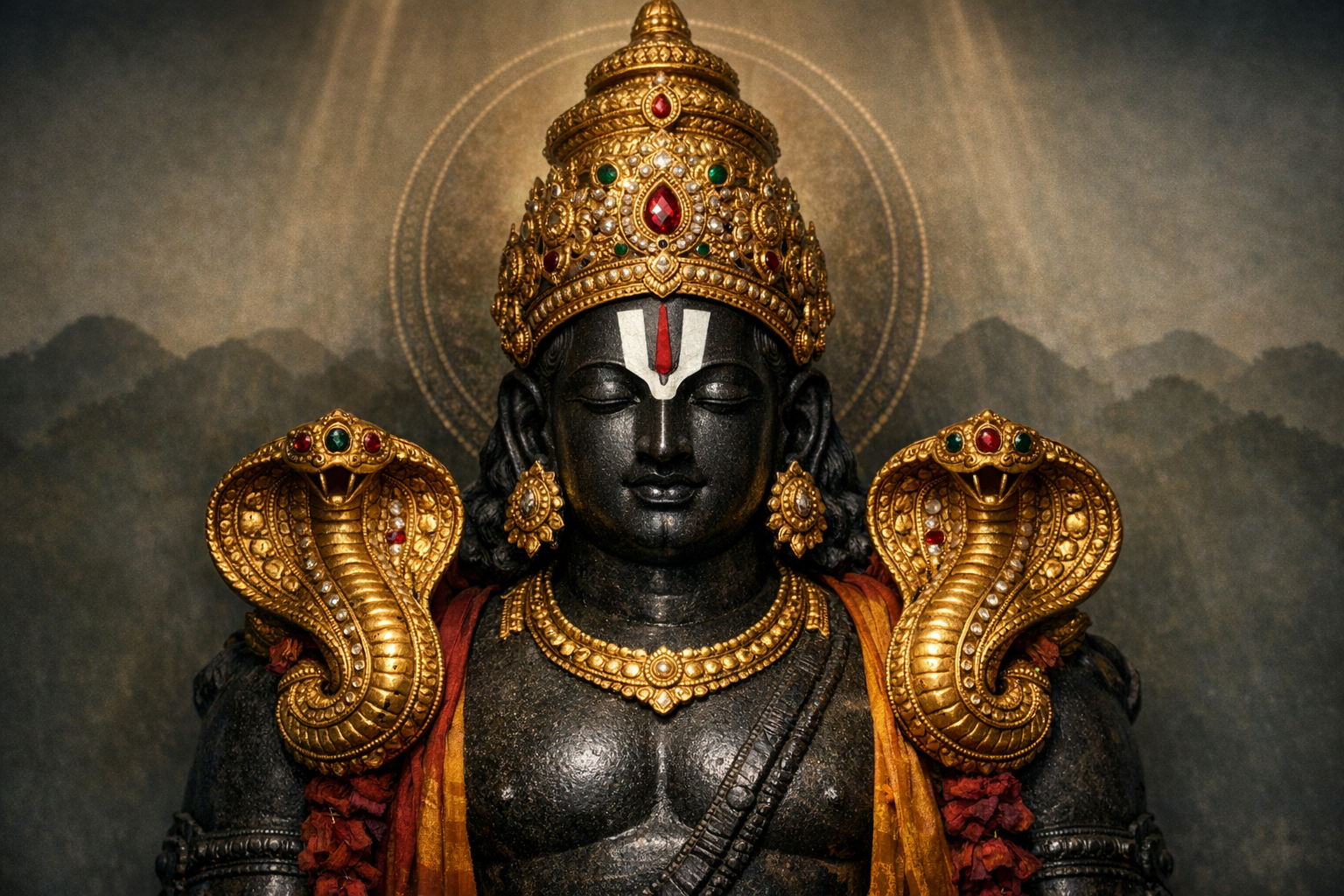
The Nagabharanapaired golden serpent emblems on the shoulders of Lord Venkateswara at Tirumalaembody a sophisticated synthesis of theology, iconography, and craft. Rooted in the Skanda Purana’s Venkatachala Mahatmya, they recall Adisesha’s guardianship and the Seshachalam hills while aligning with Vaikhanasa Agama norms for sacred ornamentation. Their symmetrical design and goldwork techniques ensure both visual clarity…
-
Anantavaram Sri Venkateswara Brahmotsavams 2026: Dates, Rituals, TTD Arrangements & Pilgrim Guide
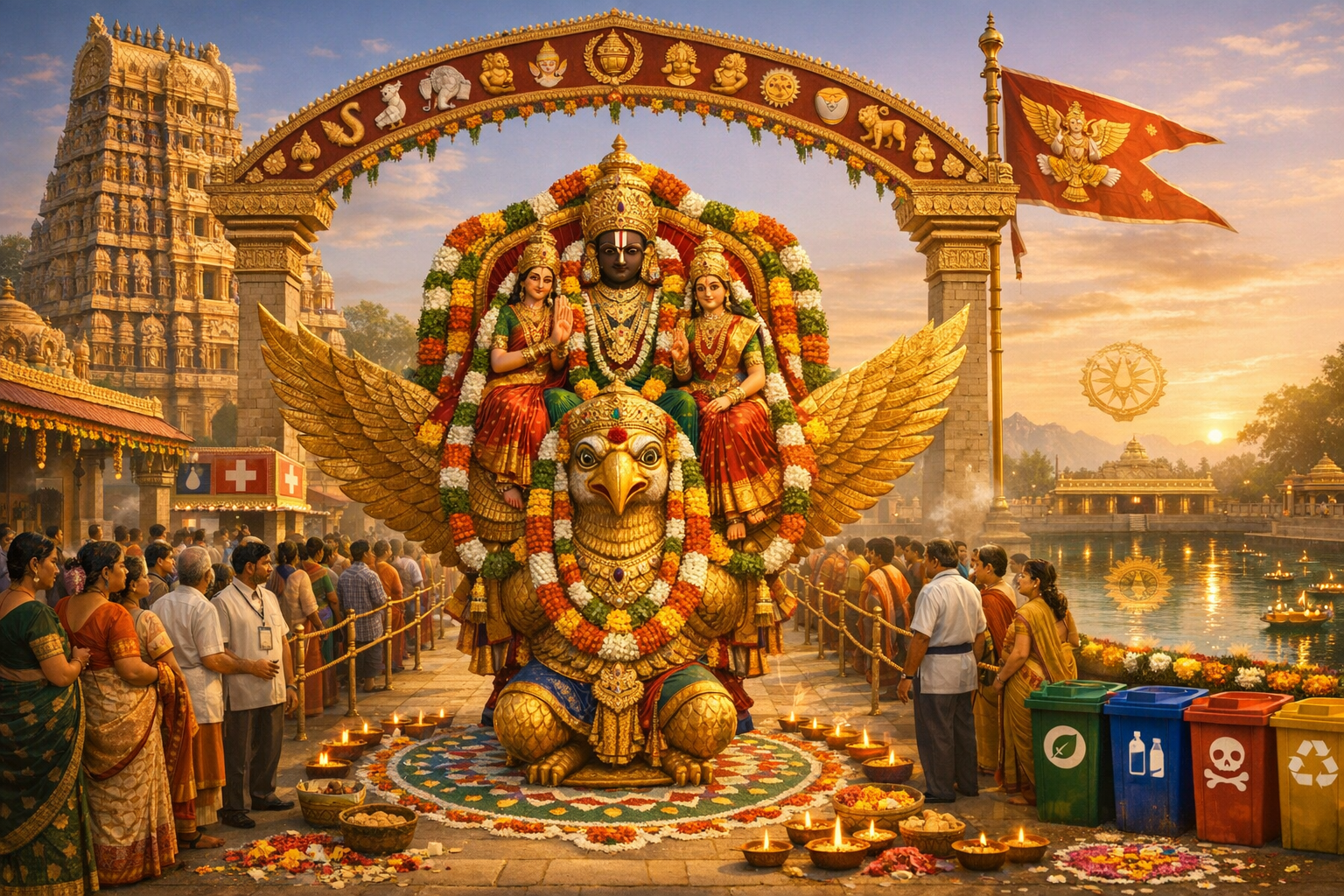
Anantavaram Sri Venkateswara Brahmotsavams 2026 will be observed from 28 February to 4 March at the Sri Venkateswara Swamy Temple in Thullur Mandal, Guntur. This comprehensive guide explains the festival’s ritual arcfrom Koil Alwar Tirumanjanam and Dwajarohanam to vahana sevas, Snapana Tirumanjanam, and Chakrasnanamalong with the theological significance of Sri Venkateswara with Sridevi and Bhudevi.…
-
Sri Govindaraja Swamy Temple March 2026 Festivals: Sacred Calendar, Rituals, Darshan Guide

Sri Govindaraja Swamy Temple in Tirupati observes March 2026 through tithi-governed Vaishnava rites that blend precision and devotion. This guide explains how Phalguna–Chaitra tithis shape Ekadashi vratas, full- and new-moon observances, and select processions. It outlines the agamic logic behind abhishekam, kalyanotsavam, and daily aradhana while highlighting practical planning for darshan and arjitha sevas. Readers…
-
Tirupati Kodandarama Swamy Brahmotsavam 2026: Sacred dates, rituals, vahana sevas guide
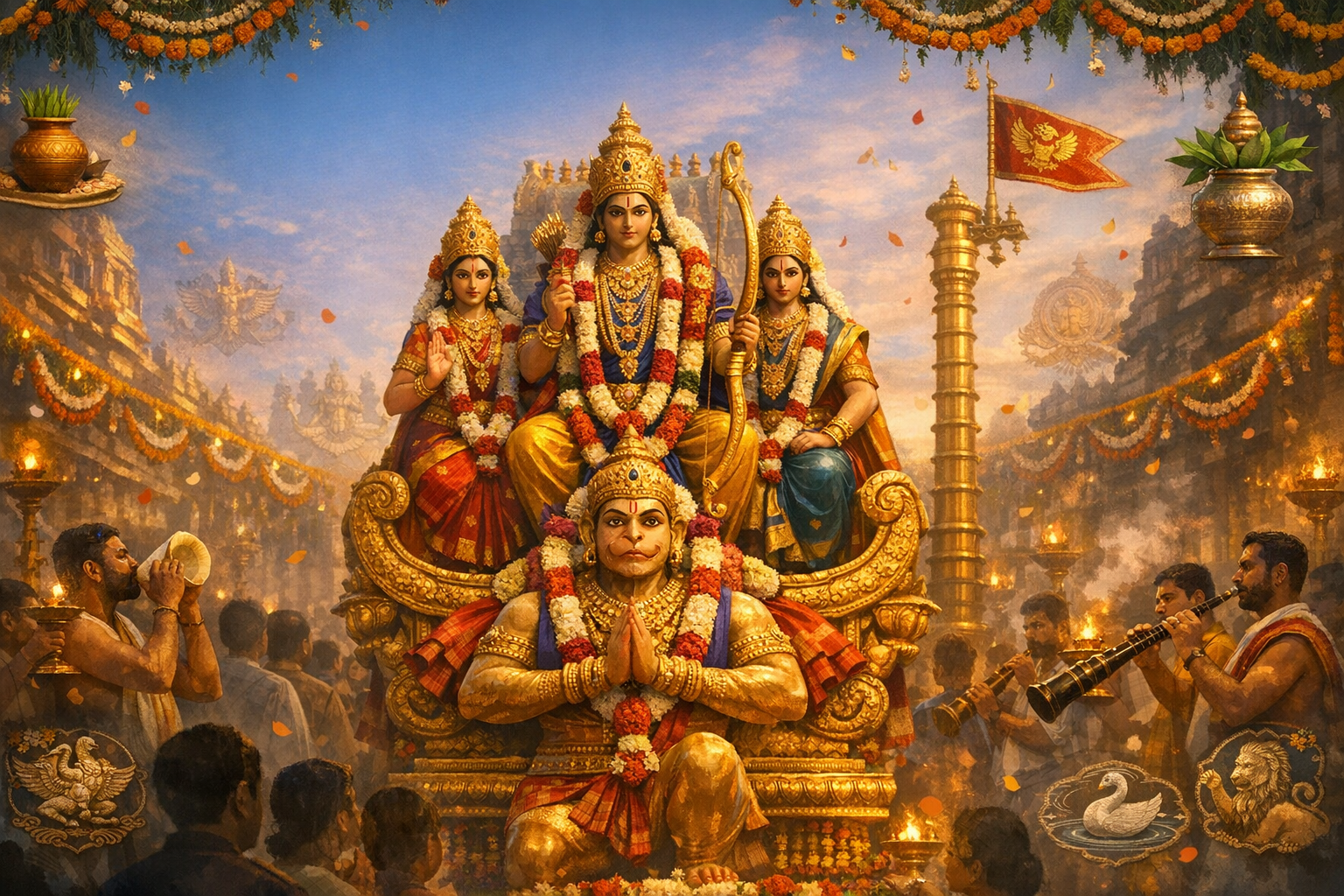
Sri Kodandarama Swamy Temple, Tirupati, will observe its Brahmotsavams from March 17–25, 2026, with Koil Alwar Tirumanjanam on March 13 and Ankurarpanam on March 16. The festival follows TTD’s classical Vaishnava liturgy, featuring daily Vahana Sevas that present the deity’s grace in public space. This guide explains the meaning of Brahmotsavam, the significance of key…
-
Essential March 2026 Festival Guide: Tiruchanur Padmavathi Ammavari Temple Rituals & Sevas
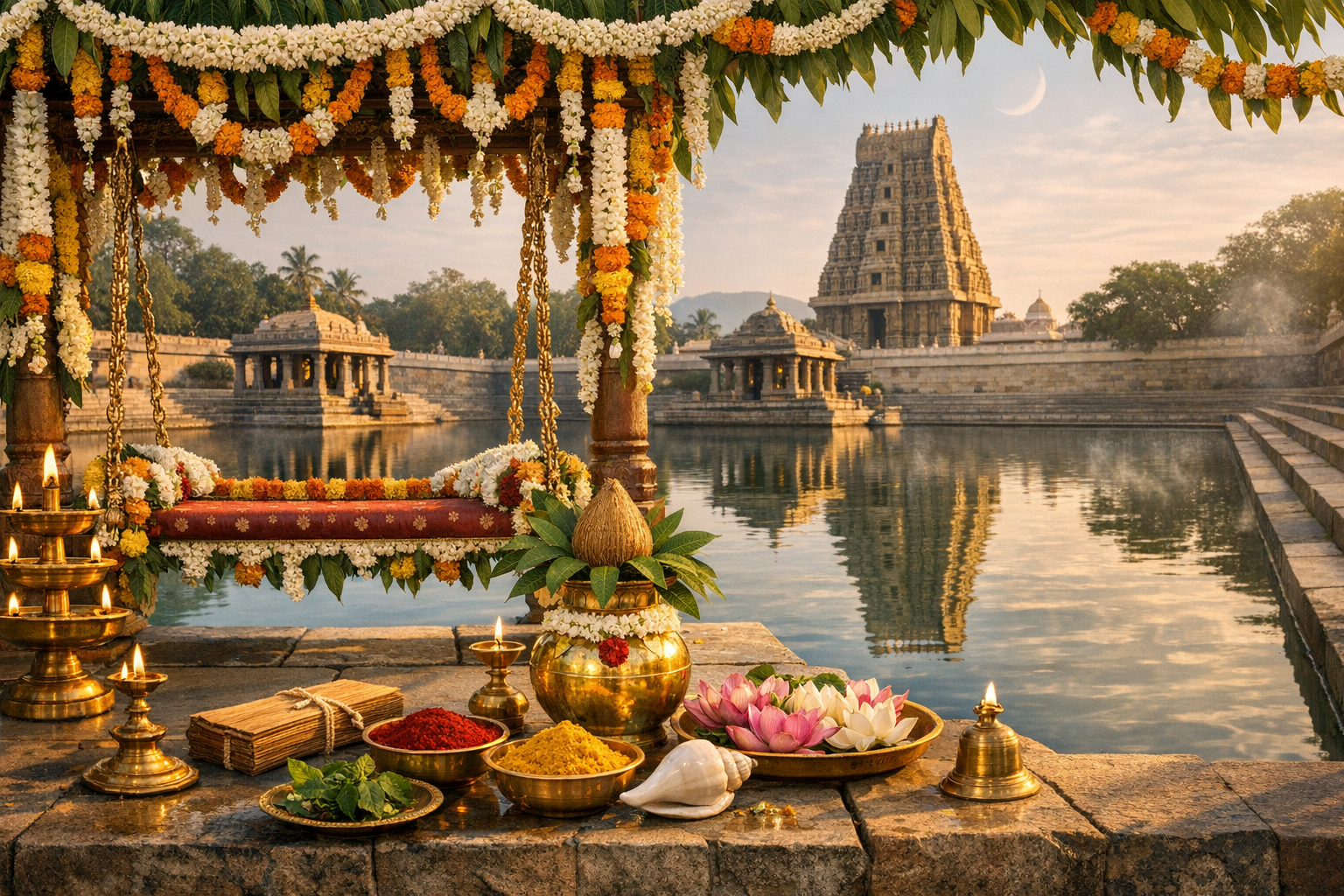
Sri Padmavathi Ammavari Temple in Tiruchanur will host a spiritually rich programme in March 2026, in addition to Ugadi and Sri Rama Navami. This academically grounded guide explains how the tithi-based Hindu calendar shapes the month’s observances and what devotees can expectAbhishekam, Kalyanotsavam, Unjal Seva, Sahasranamarchana, and special alankarams. It clarifies the theological meaning of…
-
TTD’s Important Advisory: Annaprasadam halted on Chandra Grahan, 3 March 2026
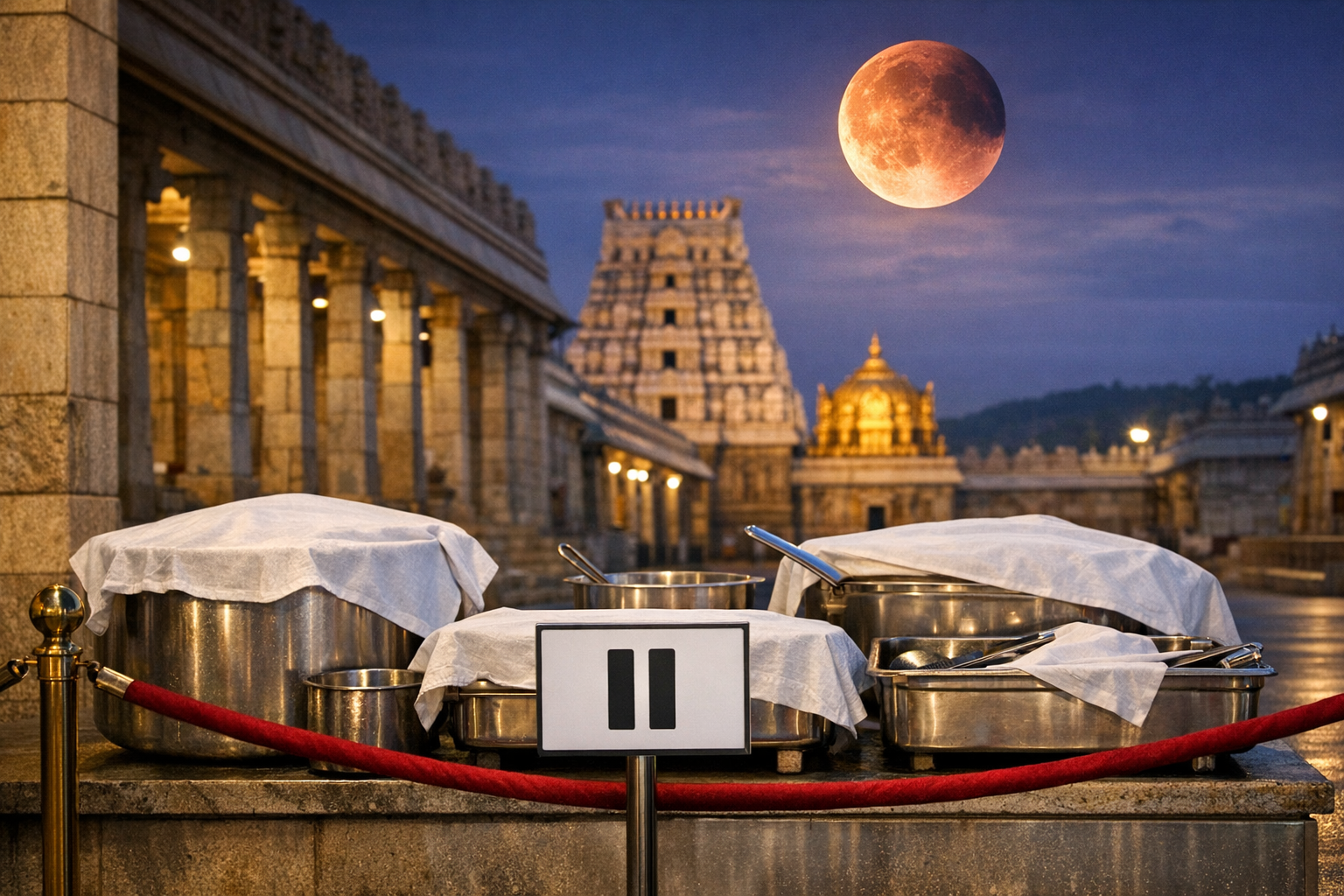
TTD has announced that all TTD-run Annaprasadam centres in Tirupati and Tiruchanoor will remain closed on Tuesday, 3 March 2026 due to the lunar eclipse (Chandra Grahan). The pause follows Agama and Dharma-shastra guidelines on Sutak, during which cooking, naivedyam, and public distribution of sanctified food are withheld. Facilities named by TTD include the SV…