
-
Agamas in Hinduism: A Definitive Guide to Temple Science across Shaiva, Vaishnava, Shakta Paths

Agamas in Hinduism are authoritative temple sciences that unite theology, meditation, ritual, architecture, and iconography into a single living system. This article clarifies what “Āgama” means, how it relates to Veda and Smṛti, and why Shaiva, Vaishnava (Pañcarātra and Vaikhānasa), and Shakta lineages each preserve distinct yet harmonious Agamic corpora. Readers gain a technical overview…
-
Decoding the Black Bee: Bhramari Devi and the Dark Radiance of Shakti in Hinduism

This essay decodes the Hindu symbolism of black bees through Bhramari Devi, a form of Shakti whose dark radiance signifies protection, interdependence, and transformative power. It traces Puranic and regional narratives where the Goddess overcomes adversaries as a coordinated swarm, embodying distributed Shakti. Drawing on Upanishadic Madhu-Vidyā, the Bhagavata Purana’s Bhramara-gītā, and allied motifs in…
-
Timeless Lila: Exploring the Divine Play of Being and Becoming Across Dharmic Paths

This long-form exploration presents Lilathe eternal divine playas a framework for understanding how being and becoming interrelate across Hinduism, Buddhism, Jainism, and Sikhism. Drawing on the Upanishads, Vedanta (Advaita, Vishishtadvaita, Dvaita), the Bhagavad Gita, and Shaiva–Shakta thought, it clarifies how creation, preservation, and dissolution express a living unity. It maps key concepts like dharma, karma,…
-
March 12, 2026 Panchang Guide: Krishna Paksha Navami Tithi, Auspicious Muhurtas, Nakshatra & Rashi

Thursday, March 12, 2026 transitions from Krishna Paksha Ashtami (ending at 02:17) to Krishna Paksha Navami for the remainder of the day. The guide explains how to use Panchang fundamentalsTithi, Nakshatra, Rashi, Yoga, Karanato plan effectively without sacrificing accuracy. It outlines dependable Shubh Muhurat choices such as Brahma Muhurta, Abhijit Muhurat, and the afternoon Vijaya…
-
Charak Puja 2026 (Neel Puja): A Sacred, In‑Depth Guide to Dates, Gajan Rituals and Meaning in Bengal

Charak Pujaalso called Neel Pooja and Hajrha Pujaarrives at Chaitra Songkranti, the Bengali year’s closing threshold. In 2026, Neel Puja will be observed on April 12 and Charak Puja on April 13, aligning with Mesha Sankranti. This in-depth guide explores the festival’s theology centered on Shiva as Neelkantha, the Gajan cycle of vows, the Charak-gach…
-
Chaiti Chhath 2026: Definitive 4-Day Guide to Dates, Rituals, and Devotional Sunrise Offerings

Chaiti Chhath 2026 will be observed over four days22 to 25 Marchculminating in the Sandhya Arghya to the setting sun and the Usha Arghya at sunrise. Rooted in Chaitra Shukla Shashthi, the festival integrates precise Hindu calendar principles with rigorous household discipline and community worship. This guide explains each day’s rituals (Nahay-Khay, Kharna, Sandhya Arghya,…
-
Soubhagya Gauri Vratam 2026 (Gangaur): Date, Puja Vidhi, Chaitra Tritiya Significance & Traditions

Soubhagya Gauri Vratam (Gangaur) falls on Chaitra Shukla Tritiya, and in 2026 it is observed on 21 March. The vrata is dedicated to Devi as Gauri (Pārvatī) and is undertaken for saubhāgya: marital harmony, familial well-being, and prosperity. This comprehensive guide explains the tithi basis in the Hindu calendar, clarifies regional names and practices, and…
-
Compassionate Seva in ISKCON: Ethics, Competencies, and Dharmic Unity at Almviks gård

This analysis reframes a humble Vaishnava greeting from the ISKCON community at Almviks gård into a comprehensive exploration of personal seva within the Guru–Shishya Tradition. It outlines the role’s core domainsscheduling, sadhana facilitation, health support, travel logistics, and documentationwhile emphasizing ethical pillars of consent, boundaries, accountability, and privacy. Practical guidance addresses competencies, intercultural communication in…
-
How $5 Krishna Lunch Nourishes Westwood: Seva, Dignity, and Student Food Security

A Daily Bruin profile of the Krishna Lunch program in Westwood highlights how a $5 meal modelled by Govinda Datta Dasa and Shantatmatranslates Hindu spirituality into practical, dignity-first support for UCLA students. By starting work at 5:30 AM and serving five days a week, the team provides reliable, affordable nourishment that reduces food insecurity without…
-
Replace ‘What’s Wrong with Me?’ with a Science-Backed, Compassionate Question that Heals

This article examines a practical and science-backed reframing that replaces the deficit-based question “What’s wrong with me?” with the context-seeking “What happened to me?” The analysis explains how deficit framing recruits threat physiology and fuels the inner critic, whereas compassionate inquiry engages the ventral vagal system, broadens perspective, and supports mental health. Drawing on self-compassion…
-
Varuna in the Vedas: Majestic Sovereign of rta, Waters, and Nature’s Vital Powers

Varuna, among the oldest deities in the Rigveda, stands as sovereign of rta (cosmic order), guardian of the waters, and witness to truth. The Vedic hymns credit him with distributing nature’s vital powersstrength in horses, milk in cows, vitality in the heart, and even fire concealed within the watersexpressing a grand ecology of interdependence. His…
-
Maharashtra’s Hindu Rashtra-Jagruti Sabhas: Surging Civic Energy, Dharmic Unity, and Japa

A series of Hindu Rashtra-Jagruti Sabhas across Maharashtra drew strong, disciplined participation around three themes: dharma literacy, ethical organization, and contemplative practice through japa. The gatherings situated Hindu society within a larger dharmic family that includes Buddhism, Jainism, and Sikhism, emphasizing unity in spiritual diversity and constitutional respect. Speakers outlined modular, age-appropriate curricula, transparent governance…
-
Plantain-Born Kadaligarbha in Kathasaritsagara: Divine Origins, Relentless Karma, and Vairagya

The Kathasaritsagara’s tale of Kadaligarbha, the plantain-born maiden, fuses literary beauty with precise philosophical instruction. It stages the inevitability of karma while demonstrating how dharma and vairagya (detachment) reshape response without denying consequence. Readers gain a clear map of the classical classification of karmasancita, prarabdha, and agamiand see why only disciplined non-attachment can blunt compulsive…
-
Virat Hindu Sammelan in Saharanpur: HJS joins a powerful unifying call to safeguard Sanatan Dharma

The Virat Hindu Sammelan in Saharanpur convened a diverse gathering to pledge the protection and promotion of Sanatan culture, with the presence of Pujya Swami Raghavendra and Sadguru Dr. Charudatta Pingale and the participation of Hindu Janajagruti Samiti (HJS). Framed as a civilizational forum, the event highlighted Hindu unity while articulating valuesahimsa, satya, sevathat resonate…
-
Maharashtra Temples Adopt Dress Code Boards to Uphold Sanctity and Respectful Darshan

Temple trustees from Savarde and Sarand in Maharashtra’s Ratnagiri district have resolved to install dress code boards, a move intended to preserve sanctity while improving clarity and comfort for devotees. The initiative aligns with long-standing dharmic norms of modesty and decorum, and parallels practices witnessed across Hindu, Buddhist, Jain, and Sikh spaces. Clear, inclusive, and…
-
High Court Halts Peterborough Temple Sale: What It Means for Fairness and Community Cohesion

A High Court injunction has temporarily halted Peterborough City Council’s planned sale of the New England Complex, home to the Bharat Hindu Samaj Mandir since 1986. The order by Mr Justice Fordham preserves the status quo while the court examines whether the council lawfully selected the Khadija Mosque as preferred purchaser after a tender weighted…
-
Navya Nyaya’s New Logic: Precision Tools for Knowledge across Dharmic Traditions

Navya Nyaya, the “New Logic” within the Nyaya tradition, emerged in 13th-century Mithila with Gangesha Upadhyaya’s Tattva-Chintamani and transformed Indian epistemology through unmatched analytic precision. It refines the four pramanaspratyaksha, anumana, upamana, and shabdausing a technical idiom that specifies locus, qualifier, and delimitor to prevent ambiguity. Later masters such as Raghunatha Siromani and Gadadhara Bhattacharya…
-
Beyond Shadows: Plato’s Cave, Dharmic Wisdom, and the Mind’s Illusion of Reality

Plato’s allegory of the cave explains why humans often mistake partial images for complete reality; Dharmic philosophies show how to correct that error through disciplined practice. This article integrates Plato’s ascent with Hindu, Buddhist, Jain, and Sikh frameworksavidya and maya, the two truths, anekantavada, and Naamdemonstrating how perception can be retrained. Readers gain a rigorous…
-
Mayapur as a Living Dham: A Sadhu’s Lens on Navadvipa, Bhakti, and Sacred Geography
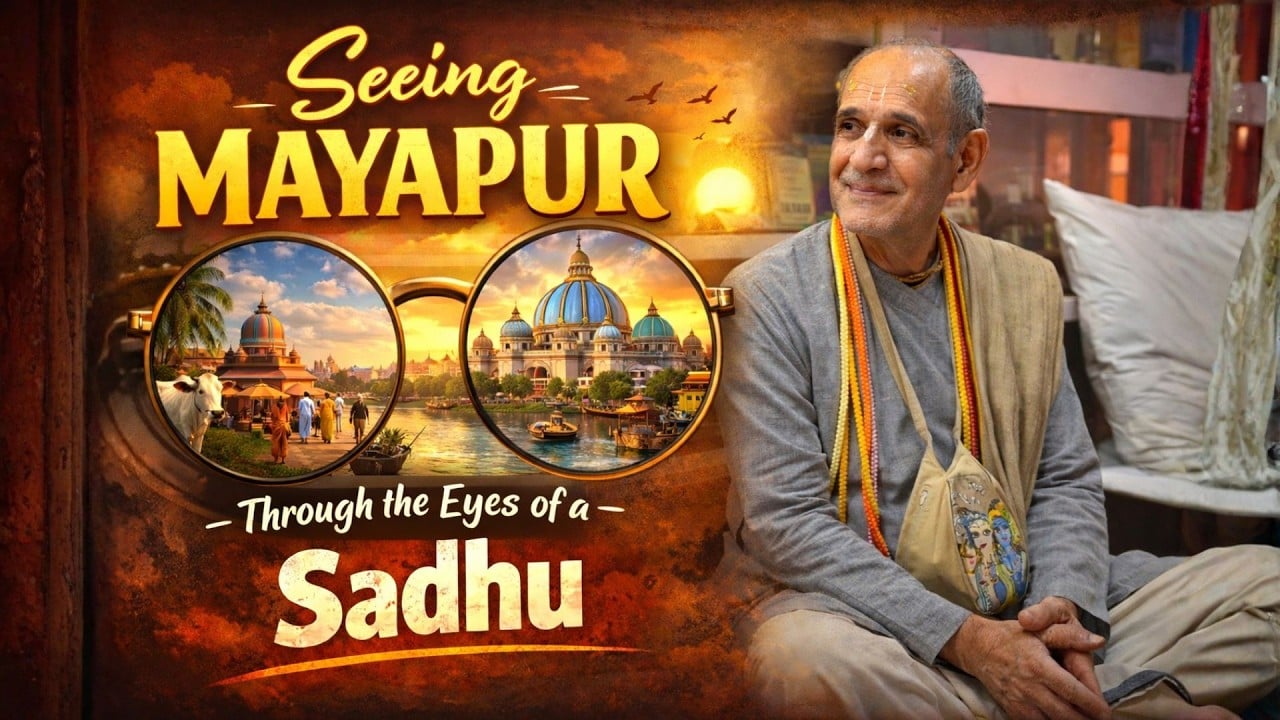
This long-form exploration presents Mayapur as a living dham, observed through the disciplined perspective of a sadhu. It situates Mayapur within the fluvial geography of the Bhagirathi-Ganga and Jalangi rivers and recounts its historic role in Gaudiya Vaishnavism and the saṅkīrtana movement of Śrī Caitanya Mahāprabhu. The sacred mapping of Navadvipa’s nine islands is explained…
-
Collective Karma and National Destiny: Dharmic Ethics That Safeguard a Nation’s Future

This essay examines how collective karma operates across Hinduism, Buddhism, Jainism, and Sikhism to shape national destiny through the normalization of harm or restraint. It synthesizes classical sourcessuch as the Manusmriti, Mahabharata, and the Gita’s doctrine of loka-saṅgrahawith contemporary evidence on public health, environmental externalities, and social trust. The discussion reframes high‑risk behaviorshiṁsā in diet,…