-
Behind the Tree or Face to Face? Unmasking Vali’s Death and Dharma Across Ramayanas

The contested question of whether Rama slew Vali from concealment or in open combat reveals a spectrum of ethical reasoning across Hindu scriptures and regional Ramayanas. By tracing Valmiki’s Kishkindha narrative alongside the Adhyatma Ramayana, Kamba Ramayanam, Ramcharitmanas, and eastern and southern vernacular retellings, the episode emerges as a sustained inquiry into rajadharma, sharanagati, and…
-
Are Animals and Plants Free from Karma? A Dharmic Deep Dive into Choice and Consciousness

Do animals and plants accrue karma like humans? This comprehensive, dharmic analysis explains why many Vedantic interpretations hold that animals and plants seldom generate fresh, morally binding karma, while humansendowed with reflective awarenesscarry heavier responsibility. It synthesizes perspectives from Hinduism, Buddhism, Jainism, and Sikhism, showing a shared insight: karmic weight scales with intention and choice.…
-
Skull Symbolism in Tantra: Decoding Kali, Bhairava, Chinnamasta to Cut Through Ego and Fear

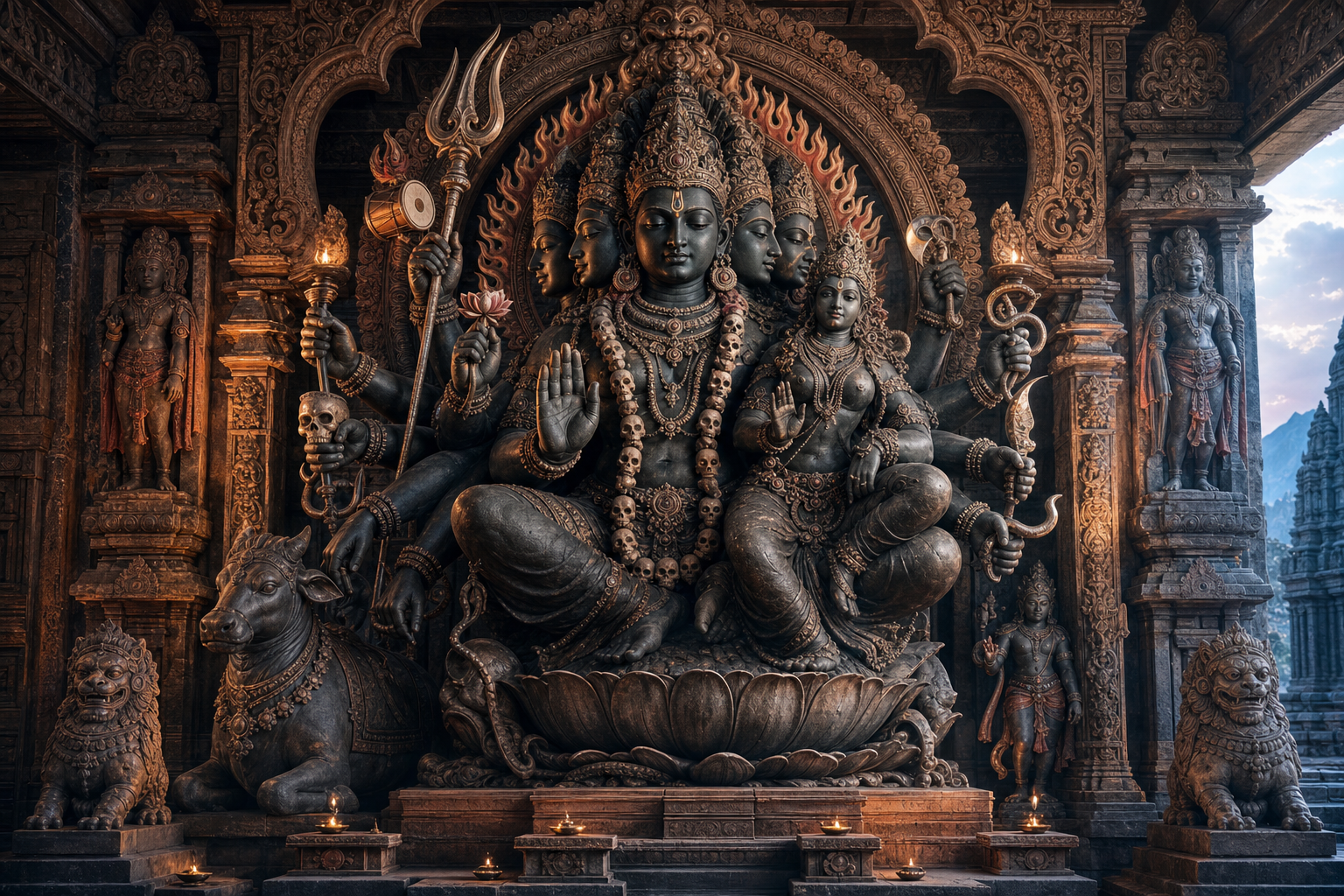
Skull imagery in Tantric art is often misunderstood as morbid when it functions as a precise spiritual pedagogy that cuts through ego, pride, and pretension. This long-form analysis decodes the kapala, mundamala, and self-decapitation motifs across Shiva, Bhairava, Kali, and Chinnamasta, and situates them within the historical currents of Shaiva–Shakta Tantra and Vajrayana Buddhism. The…
-
Shattering the Illusion of Chains: Advaita Vedanta’s Guide to the Ever‑Free Self
Advaita Vedanta proposes a radical clarity: in ultimate truth there is neither bondage nor liberation; the Self (Atman) is ever-free, and only ignorance creates the sense of captivity. This article explains the logic of avidya and adhyasa, distinguishes empirical from absolute perspectives, and shows how moksha functions as recognition rather than attainment. Drawing on the…
-
Sri Dhanasadha and the Plough: A Powerful Bhakti Portrait of Humble Labor in Tamil Village Life

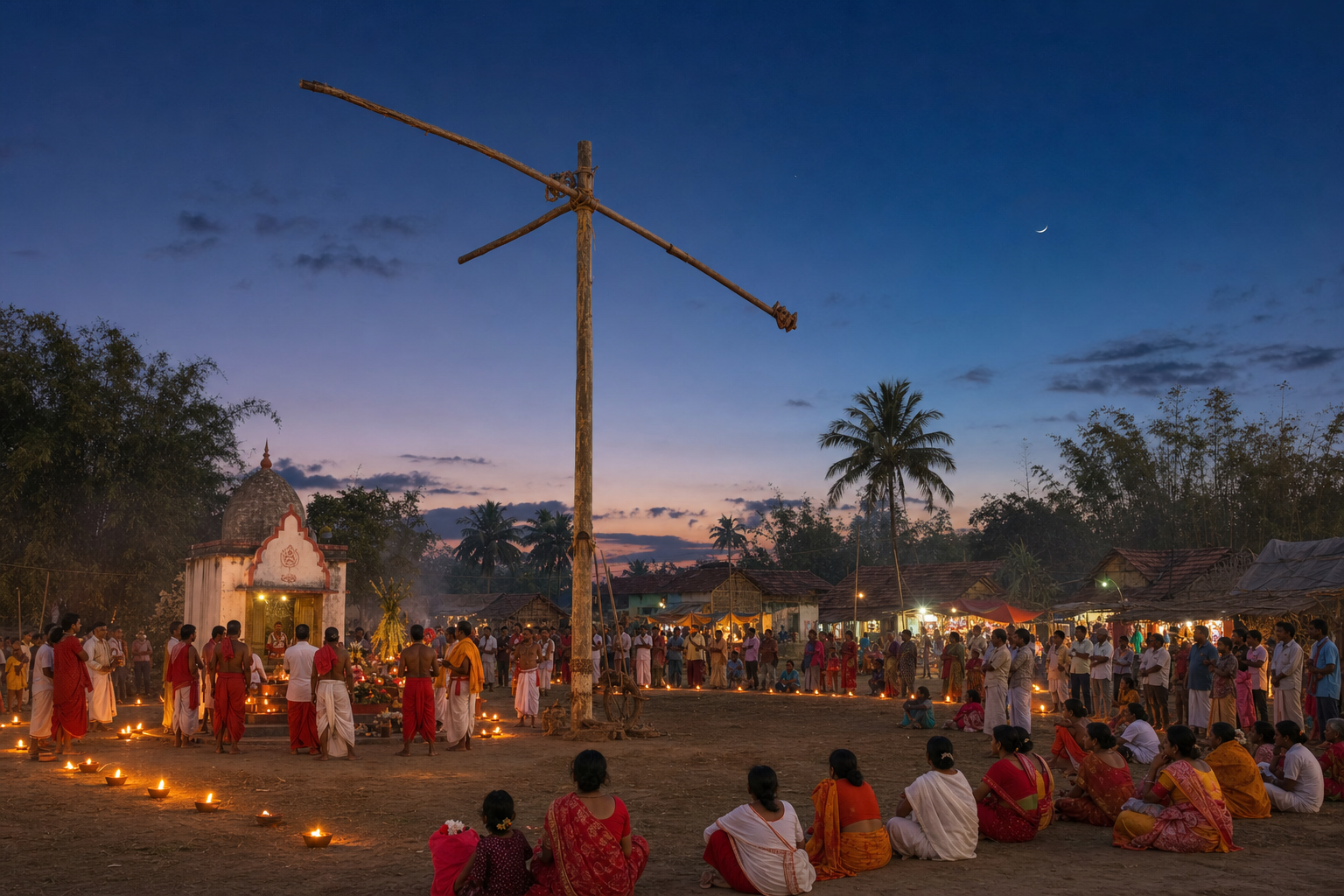
This article presents Sri Dhanasadha as a compelling exemplar of agrarian Bhakti, showing how humble labor can become Karma Yoga through remembrance and community. It clarifies that “marriage qualities of the Lord” should be read as the kalyana-gunasauspicious attributesthereby sharpening contemplative focus. It maps his daily practice to classical Bhakti modalitiessatsanga, śravaṇa, and smaraṇademonstrating their…
-
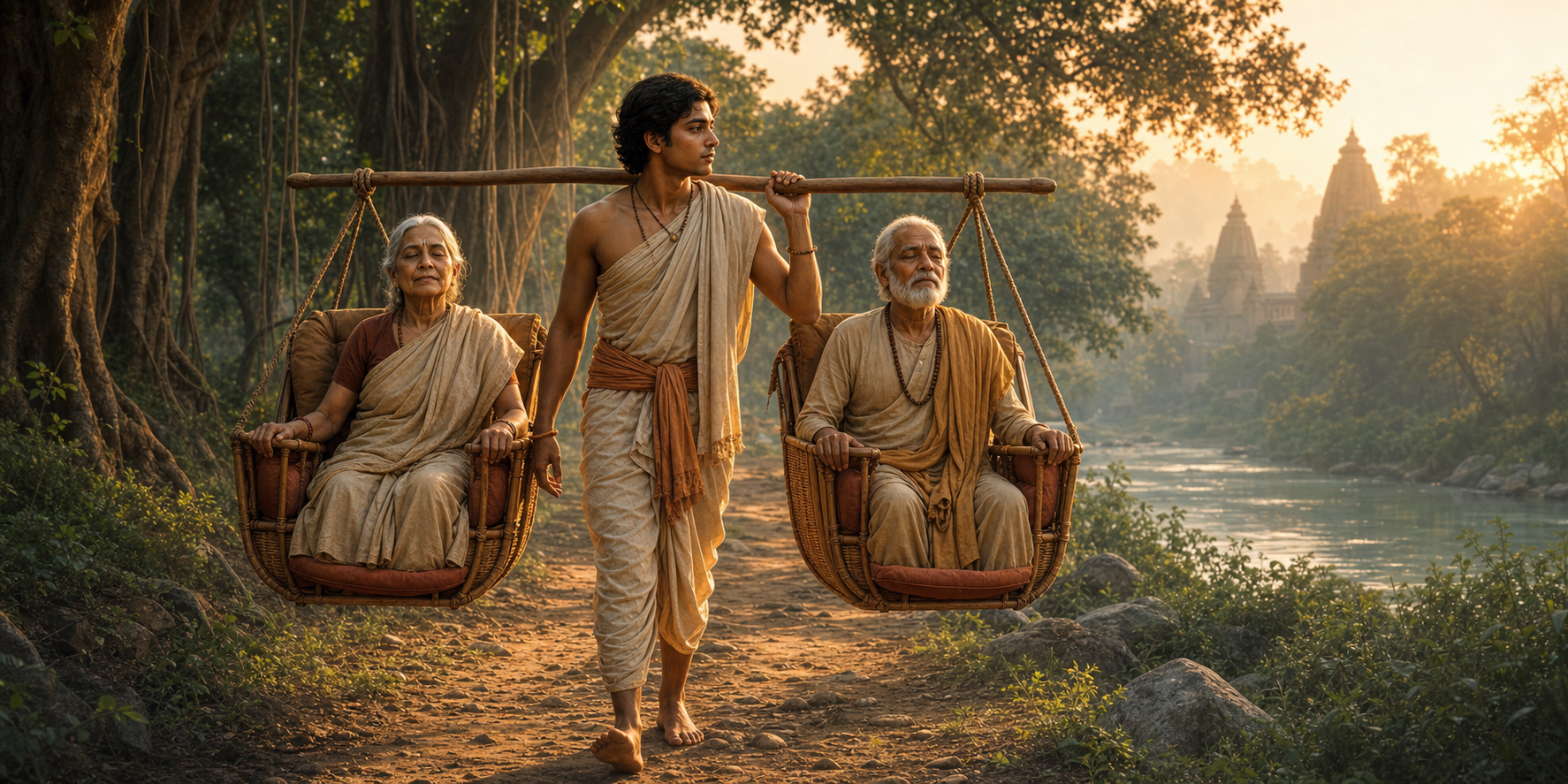
Uddhava Chitguna of Tharoor: How Bhakti and Perumal Worship Nurtured Community Spirit

Tharoor’s devotional memory preserves the figure of Uddhava Chitguna, a pilgrim who worshipped Perumal and enacted the Lord’s pastimes at night, delighting the community. Placed within the Bhakti Tradition and Vaishnavism, this narrative illustrates how lila, Harikatha, and temple-centered seva translate scripture into lived experience. The technical rhythms of Agama-guided worship and the aesthetics of…
-
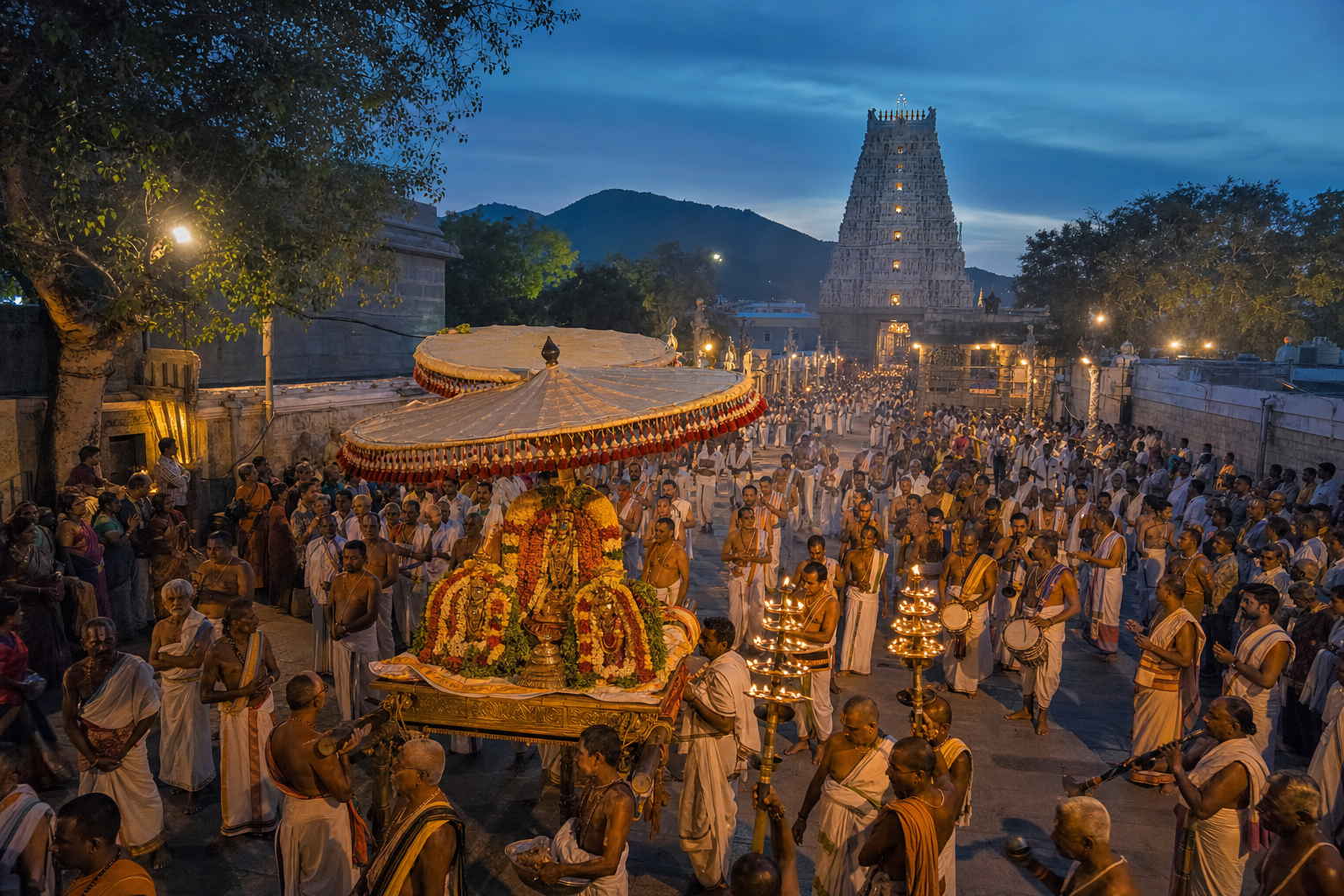
Ugadi Asthanam 2026 at Sri Govindaraja Swamy Temple, Tirupati: Rituals, Panchanga, Devotee Guide

Sri Govindaraja Swamy Temple in Tirupati will observe the Ugadi Asthanam on 19 March 2026, inaugurating the Parabhava Nama Samvatsaram with a precise sequence of Vaishnava rituals. The morning features Suprabhatam, Thomala Seva, Koluvu, Panchanga Sravanam, and Archana; the evening concludes with a second Panchanga Sravanam and the formal Ugadi Asthanam. This guide explains the…
-
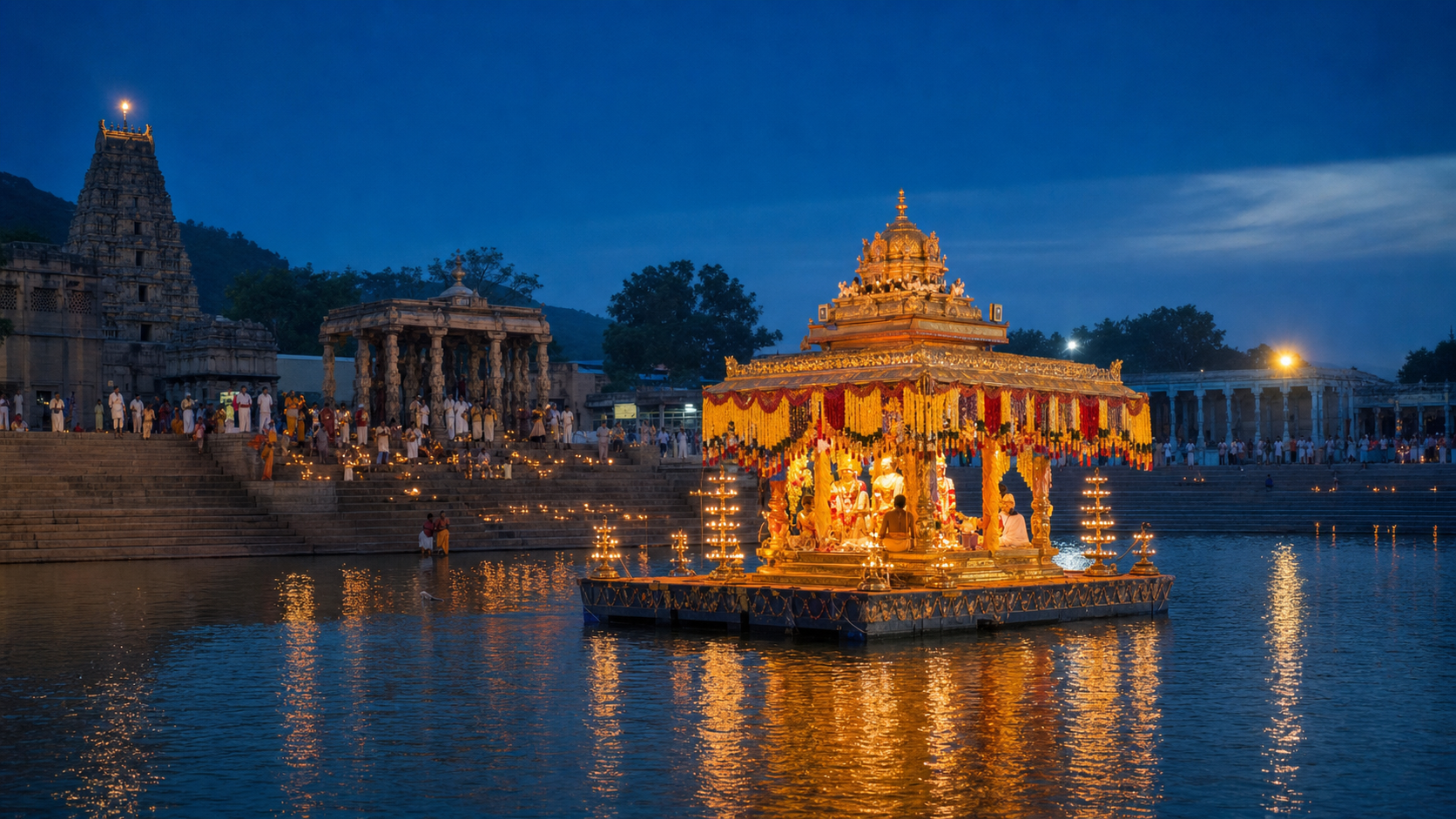
Tirumala’s Sacred March 2026 Asthanams: Ugadi, Sri Ramanavami & PattabhishekaA Complete Guide

Tirumala’s Sri Venkateswara Swamy Temple will observe three major Asthanams in March 2026: Ugadi, Sri Ramanavami, and Sri Rama Pattabhisheka. Conducted at the Garudalwar Sannidhi, these temple-court rituals unite devotional depth with the courtly aesthetics of Vaishnava worship. Ugadi Asthanam ushers in Parabhava Nama Samvatsaram with Panchanga Sravanam and auspicious invocations. Sri Ramanavami centers Rama-bhakti…
-
Sardar Baghel Singh: The Visionary Who Etched Sikh Heritage on Delhi’s Sacred Map (1783)

Sardar Baghel Singh (c. 1730–1802) transformed Delhi’s sacred geography in March 1783 through a negotiated accord with the Mughal court that authorized, secured, and funded the construction of Sikh shrines at historic sites. Rather than a mere military episode, his intervention institutionalized Sikh memorymost notably at Sees Ganj Sahib and Rakab Ganj Sahibthrough a sustainable…
-
Sardar Baghel Singh: The Visionary Who Etched Sikh Heritage on Delhi’s Sacred Map (1783)

Sardar Baghel Singh (c. 1730–1802) transformed Delhi’s sacred geography in March 1783 through a negotiated accord with the Mughal court that authorized, secured, and funded the construction of Sikh shrines at historic sites. Rather than a mere military episode, his intervention institutionalized Sikh memorymost notably at Sees Ganj Sahib and Rakab Ganj Sahibthrough a sustainable…
-
March 22, 2026 Panchang: Shukla Chaturthi from 01:48 AM ISTRituals, Muhurat, Nakshatra & Rashi

On Sunday, March 22, 2026 (IST), Shukla Paksha Tritiya ends at 01:48 AM and Shukla Paksha Chaturthi prevails for the rest of the day, making it suitable for the monthly Vinayaka Chaturthi observance. This guide explains the Panchang frameworkTithi, Vara, Nakshatra, Yoga, and Karanaalong with a technical definition of tithi using solar–lunar longitudes. It outlines…
-
Kelambakkam, 1891: A Vivid Portrait of South Indian Village Life, Learning, and Self-Governance

This research-driven portrait of Kelambakkam (1891) reconstructs a South Indian village’s ecology, governance, and culture with technical precision and human warmth. Readers will see how tank (eri) irrigation sustained five hundred acres for six months, anchoring food security and hydrological resilience in Rural India. The Village Administration SystemMunsiff, Karnam, and Taliyariemerges as an effective model…
-
Viral WWII Memorial Dance: Outrage, Double Standards, and the Erasure of Indian Sacrifice

A brief dance video by two Indian performers at the National World War II Memorial in Washington, D.C., sparked fierce online criticismsome of it justified on decorum grounds, much of it tinged with xenophobic and Hinduphobic rhetoric. This analysis separates rules-based concerns from racialized targeting, explaining what National Park Service guidance actually permits and prohibits…
-
Draupadi’s Two Boons and a Refusal: Dharma’s Quiet Triumph over the Kuru Court in the Mahabharata

The Dyuta Sabha in the Mahabharata showcases Draupadi’s precise ethical reasoning and strategic restraint: she accepts two boons from Dhritarashtra to restore the Pandavas’ freedom and dignity, then refuses a third to avoid greed. This analysis clarifies the legal-dharmic core of her challenge to the Kuru courtcapacity and consentwhile situating the episode in Sabha Parva…
-
Shani Sadesati for Makara Rashi: Master the First 2.5 Years (Viraya Shani) with Clarity

Shani Sadesati for Makara Rashi begins when Shani enters Dhanu Rashi, inaugurating the first 2.5-year phase known as Viraya Shani. This analysis explains how the 12th-house signature reframes the period as disciplined simplification rather than mere loss. It details Saturn’s aspects to the 2nd, 6th, and 9th houses, clarifying implications for finances, routines, and dharma.…
-
Shani Sade Sati for Kumbha Rashi: Master the Final 2.5 Years (Paada Shani), 2025–2027

Shani Sade Sati for Kumbha Rashi culminates in Paada Shanithe last 2½ years when Saturn moves through Meena Rashi (Pisces), typically from late March 2025 to mid-2027. In Vedic astrology, this final phase emphasizes the second house from the Moon, refining finances, family dynamics, speech, diet, and daily discipline. Saturn’s special aspects during this period…
-
Shani Sade Sati for Kumbha Rashi: Master the Transformative Janma Shani (Second 2.5 Years)

Shani Sade Sati’s second 2.5-year phase (Janma Shani) for Kumbha Rashi begins when Saturn transits Aquarius, intensifying responsibility while enabling disciplined growth. Because Saturn is in its own sign, this period behaves like a principled audit of habits, career systems, relationships, and emotional resiliencedemanding structure yet offering durable gains. The analysis explains core mechanics (Saturn’s…
-
Unite for Nav Samvatsar: VHP urges Delhi to celebrate Vikram Samvat 2083 on March 19

The Indraprastha unit of the Vishwa Hindu Parishad (VHP) has urged organisations across Delhi to celebrate the Hindu New Year (Nav Samvatsar) on March 19, 2026, the day of Chaitra Shukla Pratipada marking the advent of Vikram Samvat 2083. Rooted in the lunisolar Hindu calendar, the date reflects the tithi-at-sunrise rule and aligns New Year…
-
Historic Honour: Param Singh MBE Receives Freedom of the City of London, Inspiring Dharmic Unity

Param Singh MBE, founder of City Sikhs, has been awarded the Freedom of the City of London, a historic civic honour that recognizes sustained leadership in community cohesion, interfaith dialogue, and public service. The recognition highlights how Sikh values of seva and sarbat da bhala translate into inclusive civic action within London’s ancient institutions. It…