
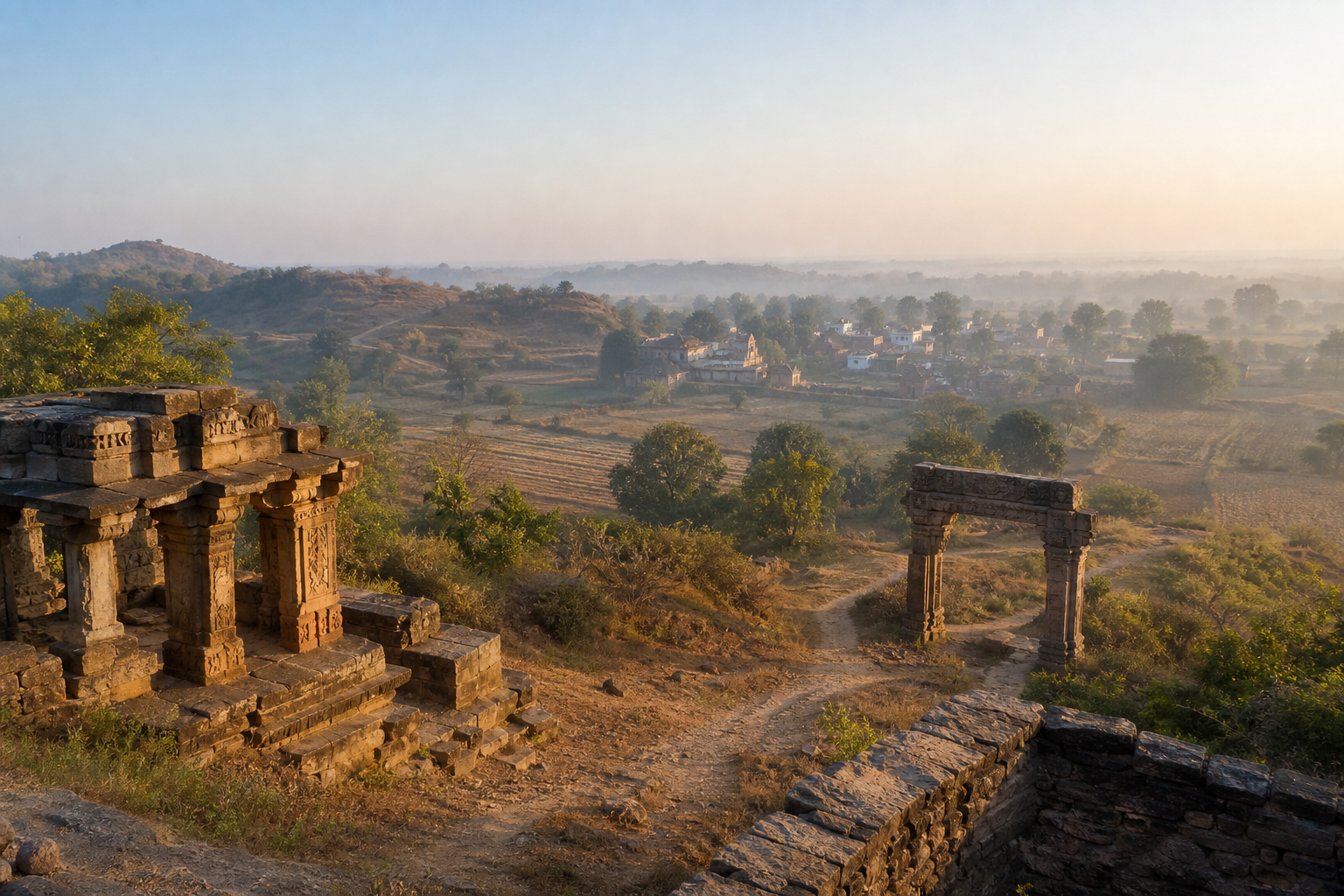
If you are deciding whether Gyaraspur deserves a separate stop from Vidisha or Sanchi, the answer depends on what you want to see. Come only for a famous facade, and the village may seem like a handful of weathered monuments. Come to understand how terrain, ritual memory and Jain-Hindu custodianship shape a sacred place, and Gyaraspur becomes one of central India’s most instructive heritage landscapes.
You do not need specialist training to read it well. You need to slow down, distinguish an original architectural plan from later sacred use, and notice how gateways, ascent and sanctums direct your body before you try to interpret the sculptures.
Read the village as a sacred sequence, not a field of ruins
Gyaraspur lies in the Vidisha district of Madhya Pradesh, within a wider cultural landscape that includes Vidisha, Sanchi and Besnagar, where the Heliodorus pillar stands. Its major remains are associated broadly with the temple-building activity of the Gurjara-Pratihara and Paramara periods between the ninth and eleventh centuries. That regional setting matters: Gyaraspur was not an isolated burst of masonry, but part of a landscape in which religious communities, patrons and artisans invested in enduring sacred forms.
Sacred geography is more than a concentration of old shrines. It is the relationship among place, movement, memory and practice. At Gyaraspur, the hillside changes how you approach a temple. A gateway marks a transition rather than merely decorating the view. The movement from open ground to a hall, vestibule and enclosed sanctum steadily narrows your field of attention. Architecture makes inwardness physical.
Use three questions as you move through the site:
- What did the builder make your body do: ascend, turn, pause or pass through a framed opening?
- Where does ordinary space begin to feel ceremonial?
- Which parts belong to the architectural structure, and which images or ritual uses may belong to a later phase?
This method prevents a common mistake. Visitors often look immediately for a label – Hindu, Jain, Shakta or Vaishnava – and then make every visible feature serve that label. Gyaraspur is better understood in the opposite order: first read the terrain and structure, then the iconography, and only then consider how the identity of a shrine may have developed over time.
Four monuments teach you how the landscape works
Maladevi Temple: begin with rock, structure and ascent
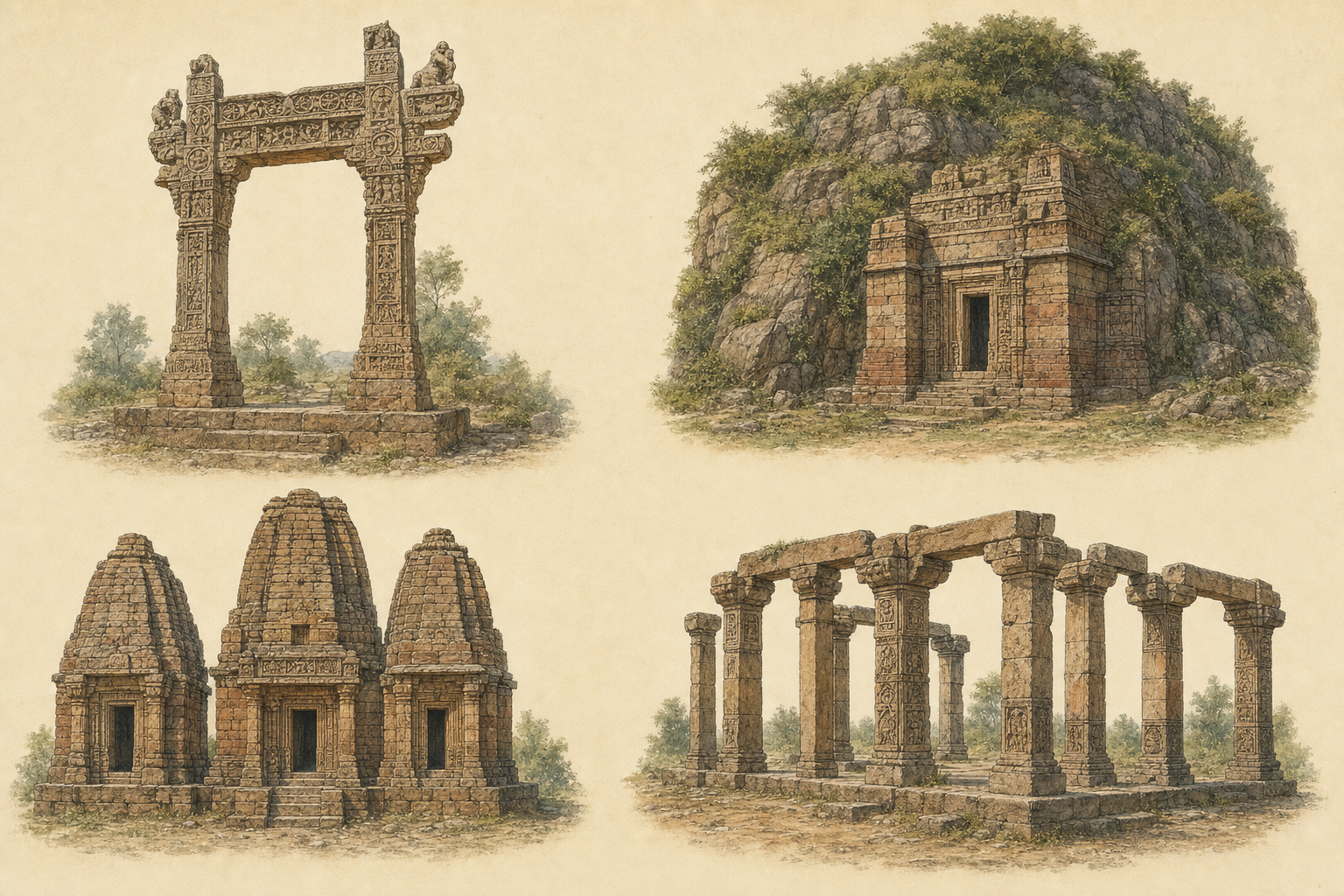
The Maladevi Temple, generally placed around the ninth to tenth century, is Gyaraspur’s most dramatic encounter between architecture and terrain. It occupies the escarpment rather than merely sitting upon a level platform. Parts of the shrine engage the rock, while masonry rises from that setting. The result is a temple that appears anchored in the hill itself.
Read Maladevi at three distances. From farther away, study the relationship between cliff and building. At the entrance, notice the progression through mandapa, or hall, antarala, or vestibule, and garbhagriha, the sanctum. Only then move close enough to examine the surviving chaitya-arch forms, vyalas and narrative ornament. This order matters because the temple’s damaged superstructure can draw attention toward what has been lost; its surviving plan and placement still reveal what the building was designed to accomplish.
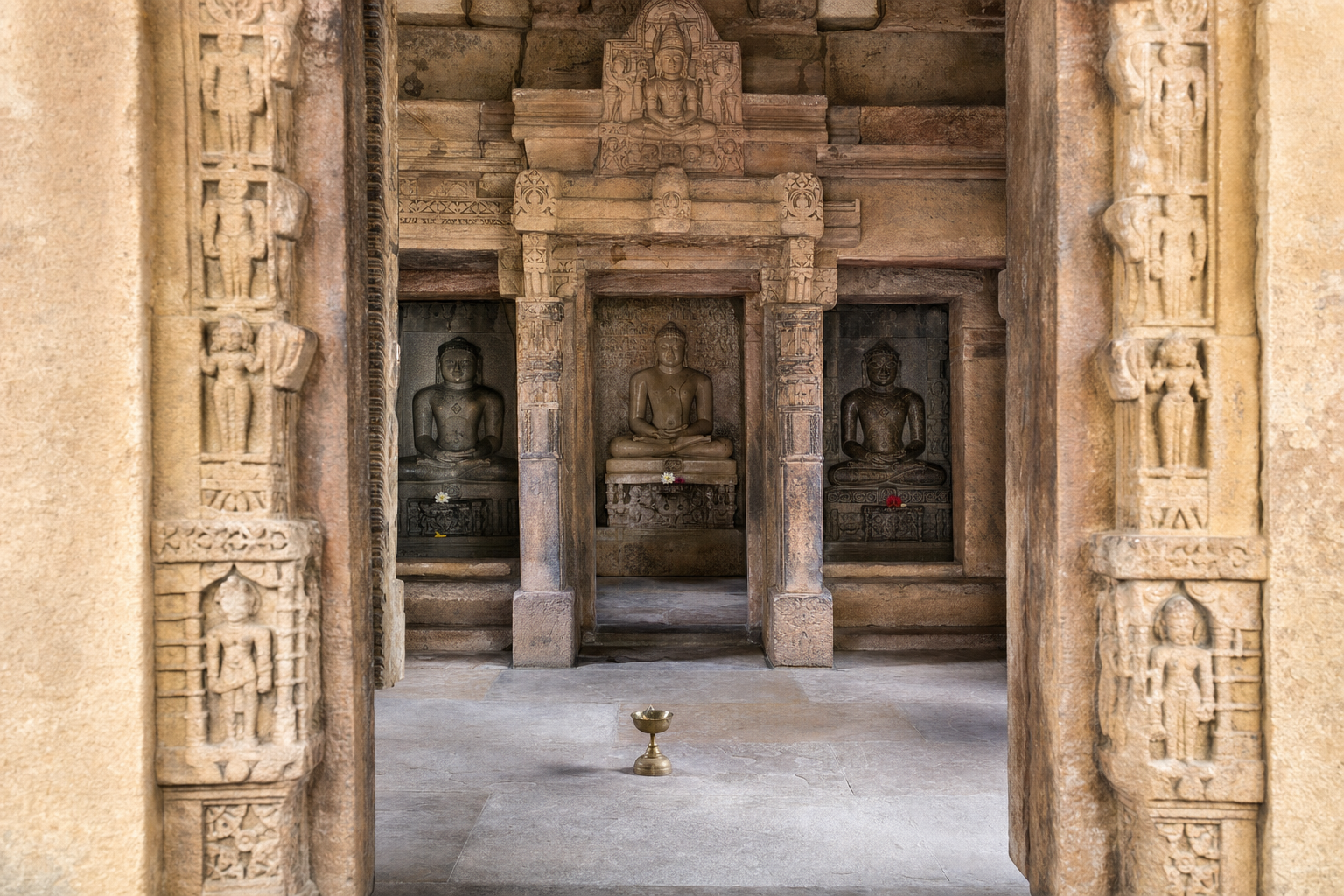
The interior contains Jain Tirthankara imagery, while the name Maladevi carries a possible Shakta resonance. Do not force those facts into an immediate verdict about an exclusively Jain or Hindu origin. They are the beginning of the historical question, not its conclusion.
Bajramath: let the plan speak before the present images
Bajramath, dated broadly to the tenth century, is a trikuta temple: one coordinated building with three sanctums. Its axial arrangement shows that multiplicity was incorporated into a unified architectural conception. Present images of Jinas attest to Jain occupancy, but the plan may have been created to coordinate more than one deity or theological emphasis.
Stand where you can compare the three shrine components rather than inspecting each one as an isolated chamber. Ask what visually holds them together. The useful distinction here is between design and occupancy. The building’s design records one historical moment; the images and practices found within it may record another. Neither should be ignored, and neither automatically explains the whole life of the monument.
Hindola Torana and Athkhamba: study the act of entering
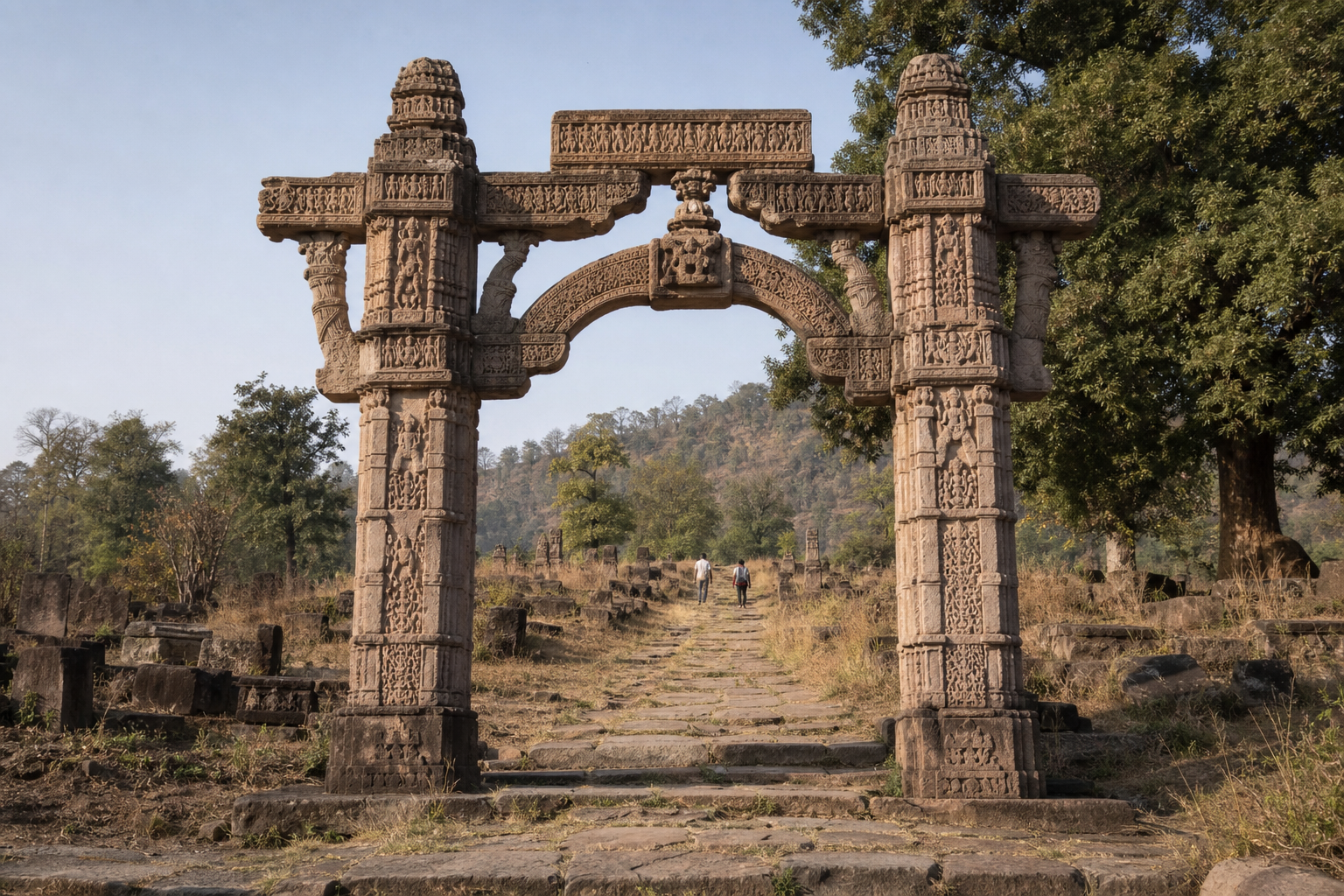
The Hindola Torana is a freestanding ceremonial gateway whose inclined uprights evoke a hindola, or swing. Its superposed architraves demonstrate careful proportion and structural control. Nearby, Athkhamba preserves the remains of an eight-pillared hall. These are fragments, but they are not incidental ones.
A torana tells you that passage itself had meaning. Step back until you can see what the gateway frames, then walk toward and through it without treating it merely as a background for a photograph. Notice the instant at which the view changes. Athkhamba, in turn, asks you to reconstruct a gathering space from its surviving supports. Together they show that temple experience extended beyond the sanctum into procession, assembly and carefully staged transitions.
Read the Jain-Hindu layers without forcing a winner
Gyaraspur resists two easy interpretations. The first freezes every temple under one permanent religious identity, as if buildings never changed custodians or received new images. The second dissolves every distinction into a vague claim that all traditions were the same. Neither approach does justice to the evidence.
At Maladevi, Jain images may have been installed or reinstalled as the shrine’s use evolved. At Bajramath, present Jinas coexist with a triple-shrine design whose original program cannot be settled merely by looking at the images now occupying its sanctums. The responsible conclusion is layered use: communities preserved sacred architecture by adapting it, and the sanctity of the place could endure through changes in patronage or ritual emphasis.
That is a meaningful form of dharmic pluralism, but it does not prove that Jain and Hindu doctrines were interchangeable or that every transition was historically frictionless. Pluralism here means that a sacred structure could remain worthy of reverence beyond one phase of its institutional life. Continuity did not always require freezing a monument in its first form.
When you encounter a mixed or uncertain sacred site, use this sequence:
- Identify what the plan establishes: the number of sanctums, their alignment and the movement between them.
- Identify what the iconography establishes: which sacred figures are present and where they have been placed.
- Keep local names and traditions in view without treating them as conclusive proof of the earliest dedication.
- Separate certainty from possibility. A present image establishes use; it does not, by itself, date the entire building or settle its original identity.
- Respect current reverence even when the monument is also protected and studied as archaeology.
This disciplined reading is more faithful to Gyaraspur than either sectarian possession or sentimental blending. It allows Hindu and Jain histories to remain distinct while showing how both participated in the survival of the sacred landscape.
Let the Ekadashi memory change the pace of your visit
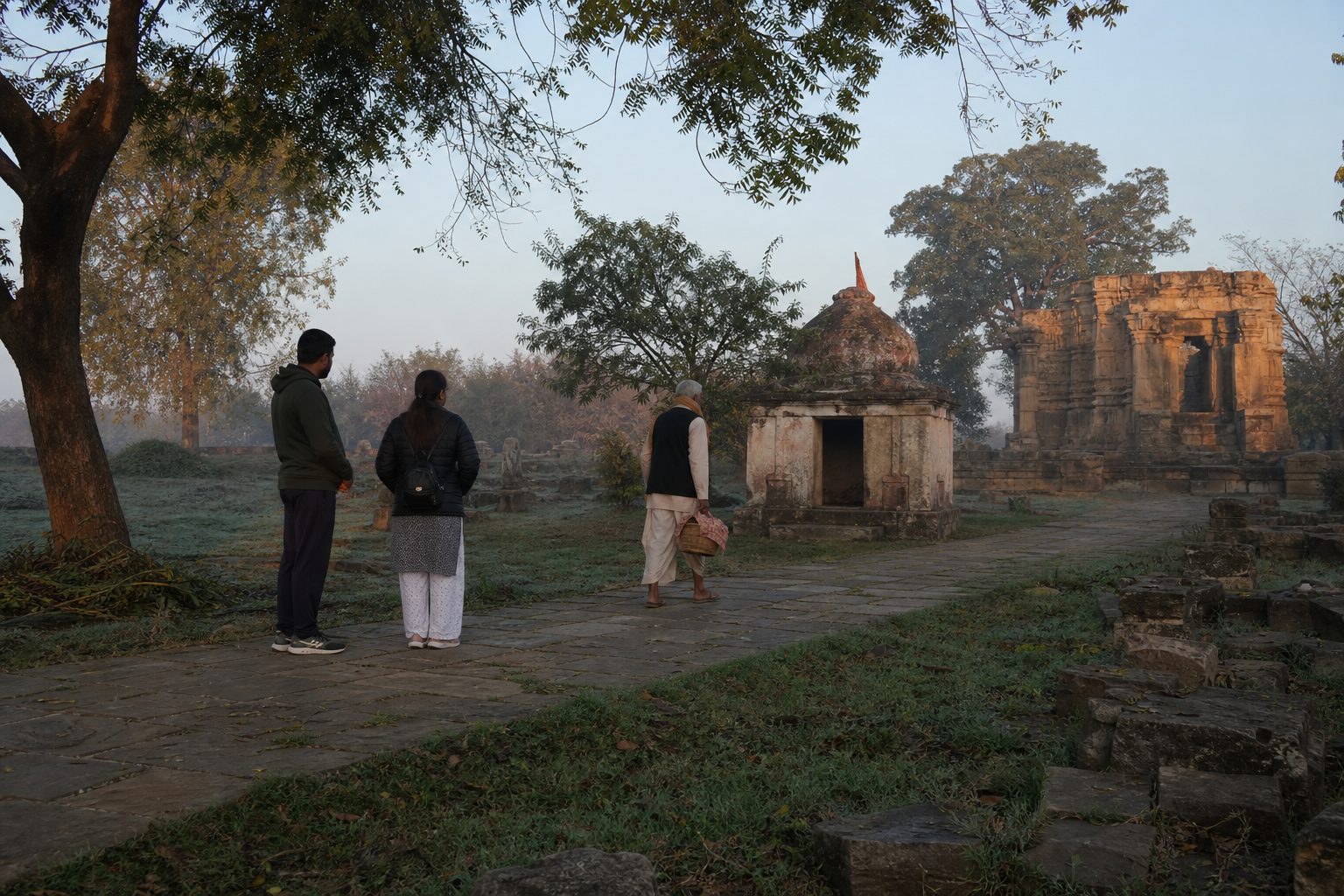
Local memory associates the name Gyaraspur with gyaras, the North Indian term for the eleventh lunar day, or Ekadashi. The connection is an oral tradition rather than a settled philological conclusion. You can honor it without turning it into a claim that the name’s origin has been conclusively proved.
The association nevertheless reveals how the community understands the place. Ekadashi occurs on the eleventh tithi of both the bright and dark fortnights, Shukla Paksha and Krishna Paksha. Its discipline brings time, restraint and remembrance together. In Gyaraspur, that lunar rhythm offers a way to interpret the physical experience of ascent, threshold and enclosure: the landscape narrows outward distraction just as a vrata narrows habitual consumption.
If you want your visit to include Ekadashi observance, do not choose the date from a civil calendar alone. Tithi calculations and the Dwadashi parana, or ritual breaking of the fast, depend on sunrise-based guidance. Smarta and Vaishnava observance can also differ. Check a trusted regional panchang or ask a reliable local religious authority before making plans.
Keep the sankalpa concrete. You might combine simple food appropriate to your capacity with japa, sacred reading, careful speech and an explicit commitment to ahimsa. Do not undertake a nirjala, or waterless, fast simply because severe austerity appears more authentic. Such restraint should be matched to health and capacity. If fasting is unsafe for you, the ethical and contemplative parts of the vrata remain available; visiting Gyaraspur does not require risking your health.
Walk the site in the same spirit. Pause before crossing the Hindola Torana. Let the approach to Maladevi regulate your breathing. Sit quietly where access rules permit instead of rushing from sculpture to sculpture. The aim is not to manufacture a mystical experience. It is to give the architecture enough time to perform its basic work of gathering attention.
Gyaraspur’s layered heritage also points toward a wider dharmic grammar of disciplined renewal. Jain poshadha and the tapas associated with Paryushan, Buddhist Uposatha observance, and Hindu Ekadashi practice are not interchangeable rites, but each joins restraint to ethical reflection. Sikh tradition does not prescribe ritual fasting in the same way; it places self-mastery in seva, simran and honest living. The common ground is therefore not one uniform ritual. It is the insistence that inward discipline must become ethical conduct.
Make your visit useful to the place, not only to yourself
Gyaraspur is commonly approached through Vidisha or Bhopal and can be placed in a regional journey with Sanchi and Udayagiri. Resist reducing it to a hurried add-on between better-known destinations. Its value lies in comparing terrain, gateways, shrine plans and later sacred use, which requires more than a quick photograph at each structure.
Because the monuments receive Archaeological Survey of India protection while remaining part of a living devotional landscape, archaeological and ritual etiquette must operate together. Follow posted restrictions, never scratch or mark stone, and observe the rules governing sanctum access. Ask before photographing worshippers or an active rite. Where possible, direct some of your spending toward local transport, food or other services rather than treating the village as scenery without a community.
Key takeaways for a thoughtful Gyaraspur visit
- Start with the terrain and the movement it demands; do not begin by hunting for a single sectarian label.
- At Maladevi, read the cliff setting and hall-to-sanctum sequence before concentrating on individual sculptures.
- At Bajramath, distinguish the tenth-century trikuta plan from the Jain images that attest to a phase of occupancy.
- Treat Hindola Torana and Athkhamba as evidence of ceremonial passage and assembly, not as detached decorative fragments.
- Honor the Gyaras-Ekadashi association as enduring local memory while preserving uncertainty about the name’s linguistic origin.
- If you observe Ekadashi, verify the tithi and parana through a trusted panchang and choose a discipline compatible with your health.
- Protect both forms of heritage: obey monument rules and behave considerately toward living worship and the local community.
Give Gyaraspur an unhurried visit and carry one question from structure to structure: how did this place teach people to cross from ordinary attention into sacred attention? The hill, gateway, triple shrine and layered images will then become parts of one intelligible landscape rather than disconnected remains.
References
