
You can visit several famous shrines around Tirupati, join a festival crowd, and still come away unsure of what you witnessed. The difficulty is not a shortage of devotion. It is that sacred geography, daily worship, alankara, lunar time, and public processions are all speaking at once.
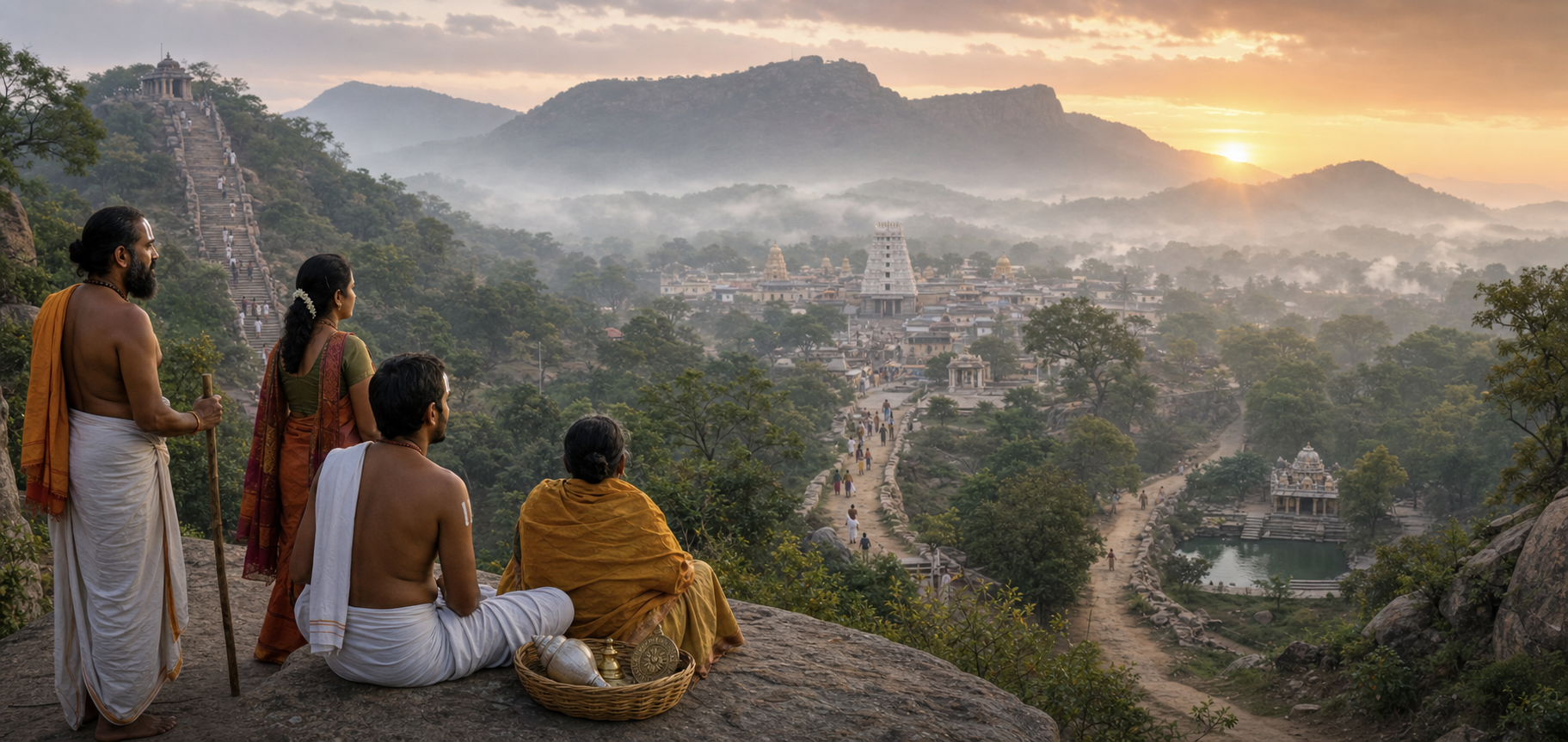
A more purposeful yatra begins with three decisions: which form of the Divine you are approaching, which part of the festival cycle you want to experience, and what you will pay attention to during darshan. Once those are clear, the Tirupati region stops looking like a checklist of temples and begins to reveal one connected Vaishnava world.
Choose the encounter before you choose the itinerary
Tirumala, central Tirupati, and Tiruchanur are not interchangeable stops. Each shrine gives a different devotional emphasis to the relationship among Vishnu, Sri, dharma, service, protection, and community. Your sankalpa need not be elaborate, but it should be more precise than simply wanting to see everything.
| Shrine | Primary encounter | What to bring into your worship |
|---|---|---|
| Tirumala Sri Venkateswara | The sovereign Lord approached through refuge, surrender, and the service of Adisesha | Prepare for a brief, concentrated darshan. The serpent emblems on the Lord’s shoulders give you one clear visual point through which to contemplate protection and steadfast service. |
| Sri Govindaraja Swamy Temple, Tirupati | Vishnu worship expressed through daily aradhana, sacred recitation, Ekadashi discipline, alankara, and processional life | Listen as carefully as you look. Vedic mantra and Divya Prabandham recitation are part of the shrine’s devotional texture. |
| Sri Kodandarama Swamy Temple, Tirupati | Rama with Sita and Lakshmana, accompanied by Hanuman’s unwavering service | Approach Rama as Maryada Purushottama. Let the worship sharpen one question about your own duty, restraint, courage, or service rather than remaining only an admiration of festival pageantry. |
| Sri Padmavathi Ammavari Temple, Tiruchanur | Sri-Lakshmi as compassionate nourishment, auspiciousness, protection, and harmony | Bring prayers for household concord or a new beginning without turning worship into a transaction. Kalyanotsavam, archana, and Unjal Seva present harmony as a sacred order to be cultivated. |
There is also an important geographical distinction. TTD administration extends beyond the immediate Tirupati region. The Sri Venkateswara temple at Ananthavaram is in Thullur Mandal of Guntur district, so it should not be inserted casually into a Tirupati day plan merely because its festivals are organized under TTD. Check both the managing institution and the actual location before you book transport or accommodation.
If time is limited, depth is usually the better choice. Select one primary shrine and one complementary encounter. A second temple should illuminate the first: Venkateswara and Padmavathi can be approached through Narayana and Sri; Govindaraja and Kodandarama through cosmic stewardship and lived dharma. Four hurried queues rarely produce four meaningful darshans.
Read Brahmotsavam as a complete ritual arc
A Brahmotsavam is not simply a run of decorated vehicles. The public procession is the most visible part of a longer sequence that prepares the temple, inaugurates festival time, carries divine presence into the community, and then closes the intensified cycle in an ordered way.
- Koil Alwar Tirumanjanam prepares the divine home. The sanctum and related spaces undergo ritual cleansing and are treated with sanctified, aromatic substances. If you encounter this name on a schedule, understand it as theological hospitality rather than routine maintenance.
- Ankurarpanam plants the festival’s intention through consecrated seeds. Germination expresses renewal, auspicious growth, and the wish that the festival’s merit should take root in the community.
- Dhwajarohanam formally opens festival time. The raising of Garuda’s flag announces the utsavam and invokes protection for the rites and those participating in them.
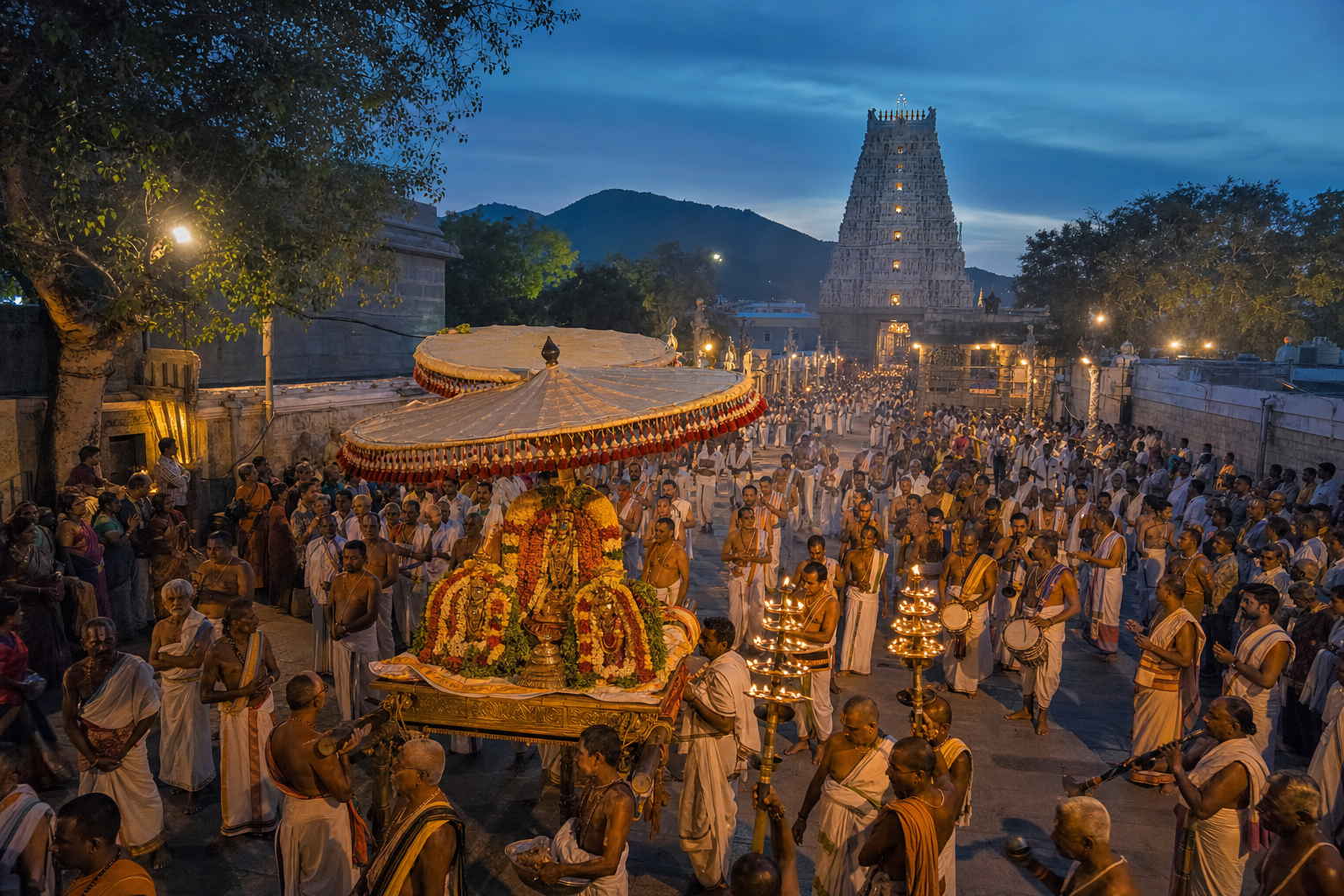
- Morning and evening vahana sevas take the utsava murti beyond the sanctum. The Lord becomes accessible in public space amid mantra, music, lamps, and collective devotion.
- Snapana Tirumanjanam creates a quieter counterpoint to the movement outside. Ritual bathing, alankara, and worship disclose gentleness, peace, purity, and grace through carefully ordered upacharas.
- Chakrasnanam or theerthavari brings the cycle toward completion through the ceremonial bathing of the Sudarshana Chakra. Dhwajavarohanam then lowers the festival flag and returns the temple to its regular cadence.
This sequence matters when you decide which day to attend. Arriving only for the largest procession may give you a powerful public darshan, but it will show you only one movement within the festival. The preparatory rites, daily vahana sevas, sacred bath, and closing rites together reveal why Brahmotsavam is a cycle rather than a single spectacle.
Each vahana also teaches a quality of sadhana. You can use its symbolism to turn waiting time into contemplation:
- Sesha directs attention to steadiness, cosmic support, and service without self-display.
- Hamsa represents viveka, the discrimination needed to separate the enduring from the passing.
- Hanumantha embodies dasya-bhakti: disciplined, humble, tireless service.
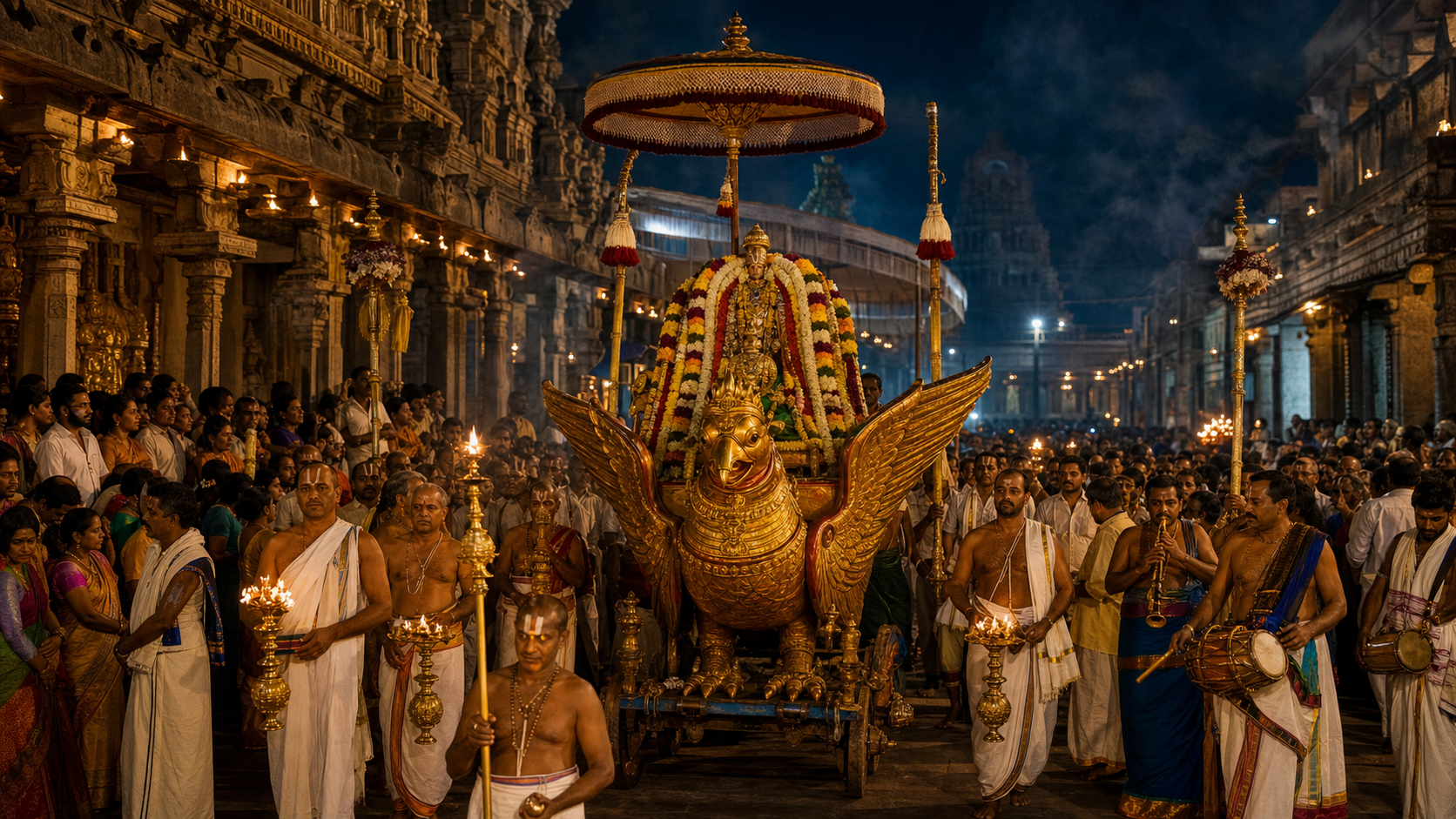
- Garuda evokes devotion, protection, scriptural wisdom, and the defense of dharma.
- Simha communicates courage and rightful sovereignty.
- Surya Prabha and Chandra Prabha place human life within cosmic order and the movement of sacred time.
Garuda Seva commonly attracts especially large congregations. Attend it if that form of shared devotion is central to your yatra, but plan for the crowd it generates. If you are seeking quieter attention, inspect the full schedule instead of assuming the most famous procession is automatically the right one for you. Exact vahana rosters, viewing arrangements, routes, and timings remain temple-specific and must be confirmed through TTD.
Know what to notice during darshan
At Tirumala, let the Nagabharana steady your attention
The moola murti of Sri Venkateswara bears two golden serpent emblems at the shoulders. These Nagabharana invoke Adisesha, also called Ananta, whose Vaishnava meanings include unending time, protection, stability, and complete service to the Lord. They are not incidental decoration. Within the logic of Agamic alankara, an ornament makes a divine attribute visible.
The symbolism extends from icon to landscape. The Venkatachala Mahatmya of the Skanda Purana identifies Adisesha with Seshachalam, the sacred hill formation associated with Tirumala. The same presence is therefore encountered at two scales: as the geography bearing the kshetra and as the paired emblems resting upon the deity’s shoulders.
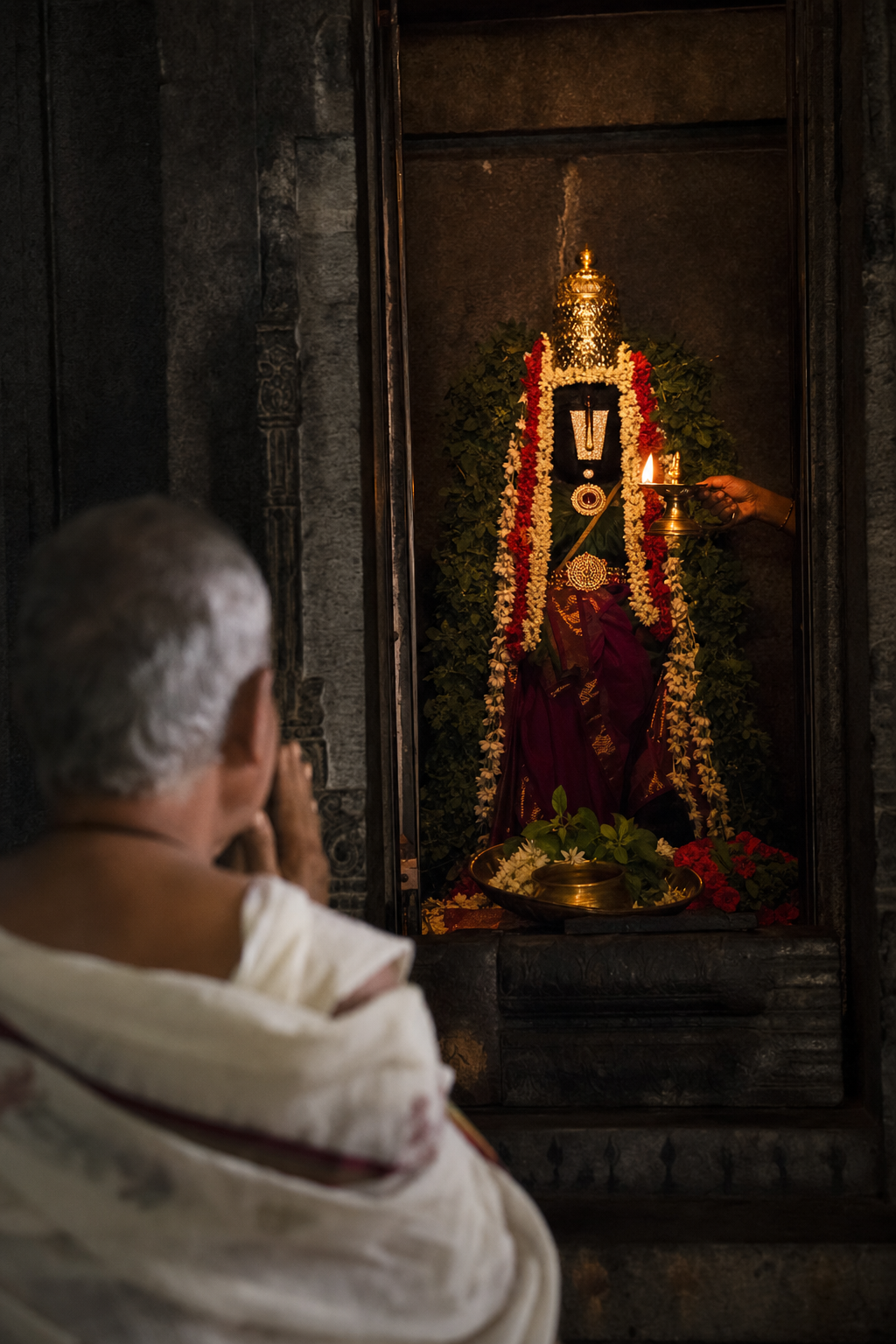
During a short darshan, do not try to catalogue every jewel. Choose one visual pathway before entering: shoulders, face, crown, and then the whole standing form. The Nagabharana can serve as the first point, reminding you of refuge and service before your gaze rises. Keep moving with the queue; disciplined attention is more useful than attempting to prolong the moment by obstructing other devotees.
This also corrects a common misunderstanding about temple ornamentation. Vaishnava alankara is not luxury added to worship. Under Tirumala’s Vaikhanasa tradition, form, placement, and adornment help disclose the Lord’s kalyana-gunas, or auspicious qualities. Beauty becomes a mode of theological instruction.
At Govindaraja and Kodandarama, listen for worship in motion
Sri Govindaraja Swamy Temple rewards attention to the day’s changing cadence. Morning aradhana welcomes the deity with mantra, fragrance, and light; midday worship emphasizes offering and repose; evening lamps draw the precinct toward contemplation. On festival evenings, nadaswaram, tavil, Vedic recitation, and Divya Prabandham make sound part of the darshan rather than background noise.
When an utsava murti moves through the streets, the theological point is direct: divine presence is not confined to the garbhagriha. The Lord comes into shared civic space. Stand where stewards direct you, do not press against the route for a marginally better view, and notice the entire field of worship – bearers, musicians, archakas, volunteers, householders, lamps, and the moving murti. Seva is visible in the coordination of all of them.
At Kodandarama Swamy Temple, the presence of Rama, Sita, Lakshmana, and Hanuman gives that same movement a distinct ethical grammar. Hanumantha Vahana is not merely a recognizable image; it asks whether loyalty has become useful service. Hamsa asks whether devotion is accompanied by discernment. Simha asks whether courage remains governed by dharma. Carry one such question away from the procession and apply it to a duty already waiting for you at home.
At Tiruchanur, distinguish grace from wish-fulfilment
Sri Padmavathi Ammavaru embodies the Sri-Lakshmi dimension of Vaishnava worship: nourishment, auspicious abundance, protection, and the harmonizing of life. This naturally draws families praying about marriage, fertility, prosperity, or household welfare. The shrine’s liturgy, however, should not be reduced to a mechanism for obtaining a desired result.
Kalyanotsavam presents the divine marriage as a pattern of concord and right relationship. Kumkumarchana and Sahasranamarchana discipline the mind through sacred names. Unjal Seva expresses repose and grace through measured movement. The Padma Pushkarini places purity and sacred water within the pilgrim’s approach to the temple. Each practice asks for inner participation, not merely attendance.
If you undertake a family sankalpa here, make it reciprocal: ask for harmony, then identify the speech, restraint, generosity, or repair that harmony will require from you. That turns prayer away from bargaining and toward dharmic responsibility.
Plan with sacred time, not an old screenshot
A Gregorian date is only the outer shell of many temple observances. Ekadashi, Purnima, Amavasya, Ugadi, Rama Navami, and other occasions depend on tithi; some decisions also involve nakshatra, local sunrise, the relevant ritual interval, and rules for transitions between lunar days. A tithi can begin or end during a civil day, so dates may shift between adjacent calendar boxes.
Archived schedules show why copying last year’s dates is unsafe. The Kodandarama Brahmotsavam was scheduled for March 17-25, 2026, with Koil Alwar Tirumanjanam on March 13 and Ankurarpanam on March 16. Ananthavaram’s separate festival was scheduled for February 28-March 4, 2026. Those dates identify particular observances in a particular year; they are not templates for a future itinerary.
- Name your target precisely: shrine, festival or seva, and the experience you want. A request for Brahmotsavam dates is incomplete until the temple is named.
- Check the applicable TTD monthly programme and the Tirupati-based Panchang window. Near the travel date, verify the final time through the official TTD portal, Govinda mobile application, local noticeboard, or current temple announcement.
- If you want an arjitha seva such as Kalyanotsavam, check advance-booking availability, reporting time, identification requirements, quota conditions, and attire rules before paying for travel.
- Separate sanctum darshan from procession planning. Early mornings and late evenings can be calmer, while major vahana sevas increase footfall and may affect approach routes, parking, queues, and security movement. Treat calm periods as tendencies, not guarantees.
- If observing Ekadashi, choose a level of dietary discipline suited to your capacity and verify the local parana period for breaking the vrata. Fasting is a devotional discipline, not an admission requirement or a contest in severity.
- Carry minimal belongings, dress modestly, respect photography restrictions, and keep water in mind during warm weather. Use a refillable container where permitted and follow local rules on plastics, security screening, and disposal.
Families accompanying elders, children, or anyone needing mobility support should build the day around the most demanding queue or procession rather than adding that event after several other stops. Hydration, shade, permitted light food, and extra walking time are not secondary concerns; they determine whether everyone can remain attentive and dignified in the temple environment.
Finally, do not confuse tithi observance with a generic festival label. At Govindaraja, an Ekadashi may center on vrata, nama-japa, Vishnu Sahasranama, tulasi offerings, and correctly timed parana. At Tiruchanur, the same month’s rhythm can foreground Sri-Lakshmi through archana, alankara, or Unjal Seva. Sacred time is shared, but each temple gives it a distinctive liturgical expression.
Key takeaways for your Tirupati yatra
- Choose a shrine by devotional intention, not fame alone: refuge at Tirumala, sacred order at Govindaraja, lived dharma at Kodandarama, or Sri-Lakshmi’s harmonizing grace at Tiruchanur.
- Do not treat every TTD-managed temple as geographically part of Tirupati. Confirm the district and travel time before constructing a multi-temple route.
- Read Brahmotsavam from preparation to closure: cleansing, seed-sowing, flag-hoisting, processions, sacred bathing, Chakrasnanam, and flag-lowering form one ritual arc.
- Choose a vahana seva by the quality you want to contemplate. Sesha, Hamsa, Hanuman, Garuda, and Simha teach different disciplines.
- Use the current TTD schedule for operational details and a Tirupati-applicable Panchang for lunar timing. Never recycle a previous year’s civil dates.
- Prepare one visual, sonic, or ethical focus before darshan. A few seconds of directed attention can be more fruitful than an exhausting attempt to notice everything.
Before you book, write one sentence completing this thought: “We are going to this shrine to contemplate and practise…” Then choose one temple, one festival or seva, and one discipline you will carry home. Verify the current schedule only after those choices are made. That order keeps logistics in the service of yatra rather than allowing logistics to become the yatra.
References
- DharmaRenaissance Blog – Unveiling Venkateswara’s Nagabharana: Sacred Serpent Ornaments and Timeless Symbolism at Tirumala
- DharmaRenaissance Blog – Anantavaram Sri Venkateswara Brahmotsavams 2026: Dates, Rituals, TTD Arrangements and Pilgrim Guide
- DharmaRenaissance Blog – Sri Govindaraja Swamy Temple March 2026 Festivals: Sacred Calendar, Rituals, Darshan Guide
- DharmaRenaissance Blog – Tirupati Kodandarama Swamy Brahmotsavam 2026: Sacred Dates, Rituals, Vahana Sevas Guide
- DharmaRenaissance Blog – Essential March 2026 Festival Guide: Tiruchanur Padmavathi Ammavari Temple Rituals and Sevas
