
-
Mudgala Upanishad and the Purushasukta: Decoding Cosmic Personhood, Unity, and Dharma

The Mudgala Upanishad, preserved in several Rigvedic lists, offers a concise contemplative counterpart to the Purushasukta (Rig Veda 10.90). Read together, they articulate a powerful vision of the Cosmic Person (Purusha) that harmonizes ritual symbolism with precise Upanishadic metaphysics. The essay explains key motifsimmanence and transcendence, cosmic sacrifice, and microcosm–macrocosm mappingswhile clarifying socially sensitive verses…
-
Abolishing Ignorance: How Knowledge of Brahman Ends Suffering across Dharmic Paths
This article explains, in clear Vedantic terms, why only knowledge of Brahman removes avidyathe root of sufferingand how this claim aligns with the Upanishadic distinction between para vidya and apara vidya. It outlines the practical pathway of shravana–manana–nididhyasana, showing how ethics, devotion, and meditation prepare the mind for liberating insight. It compares Advaita, Vishishtadvaita, and…
-
Beyond Perfection: Liberating Dharmic Wisdom on Impermanence, Dharma, and Divine Order

Perfection, as popularly pursued, continually recedes because all conditioned things are impermanent; dharmic traditions convert this problem into a path by aligning aspiration with dharma and the Divine Order. Drawing on the Bhagavad Gita, Upanishads, Yoga philosophy, and the broader insights of Buddhism, Jainism, and Sikhism, the essay reframes success as excellence grounded in clarity,…
-
Decoding Nitya Samsari in Dvaita Vedanta: Meaning, Ethics, and the Path to Moksha

Nitya Samsari, the eternally transmigrating soul in Dvaita Vedanta, is part of a threefold classification that also includes Muktiyogya and Tamo-yogya. This analysis explains the doctrine’s metaphysical basis, scriptural grounding in the Upanishads and Bhagavad Gita, and its ethical implications for daily practice. It clarifies how karma, gunas, and habit formation sustain samsara, while showing…
-
Beyond ‘I Am’: Tripura Rahasya’s Bold Guide to Pure Consciousness and Nondual Freedom

Tripura Rahasya advances a radical Advaita Vedanta insight: genuine Self-Realization dissolves identity so completely that even the thought “I am” no longer arises, without slipping into blankness. The teaching redirects attention from concepts to pure, self-luminous awareness (cit), illuminating all stateswaking, dream, and deep sleepwhile resting as the nondual ground (turīya). It details a rigorous…
-
Mahabrahmana’s Monumental Preface: Viswamitra, Gayatri, and the Atma of Bharatavarsha
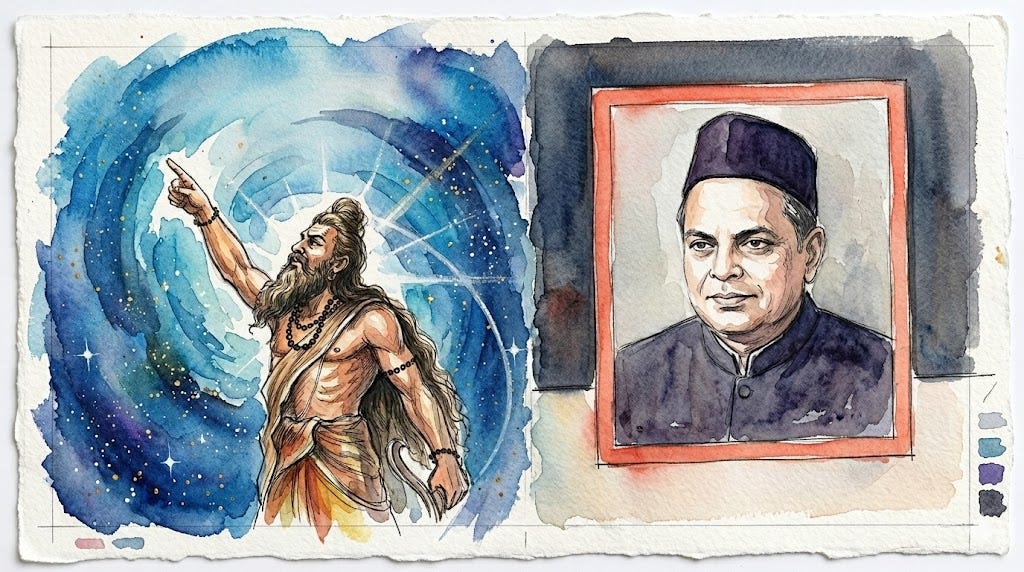
This long-form exploration examines the preface to Devudu Narasimha Sastri’s Mahabrahmana as a self-standing literary and philosophical achievement. It situates the preface within the broader history of prefaces, from Sanskritic invocations to modern print culture, and reads it as a Vedantic manual for attentive reading. Drawing on references to the Rg Veda, Brahmanas, Upanishads, the…
-
Pranavopasana: Mastering Om for Self‑Realization, Inner Calm, and Dharmic Unity
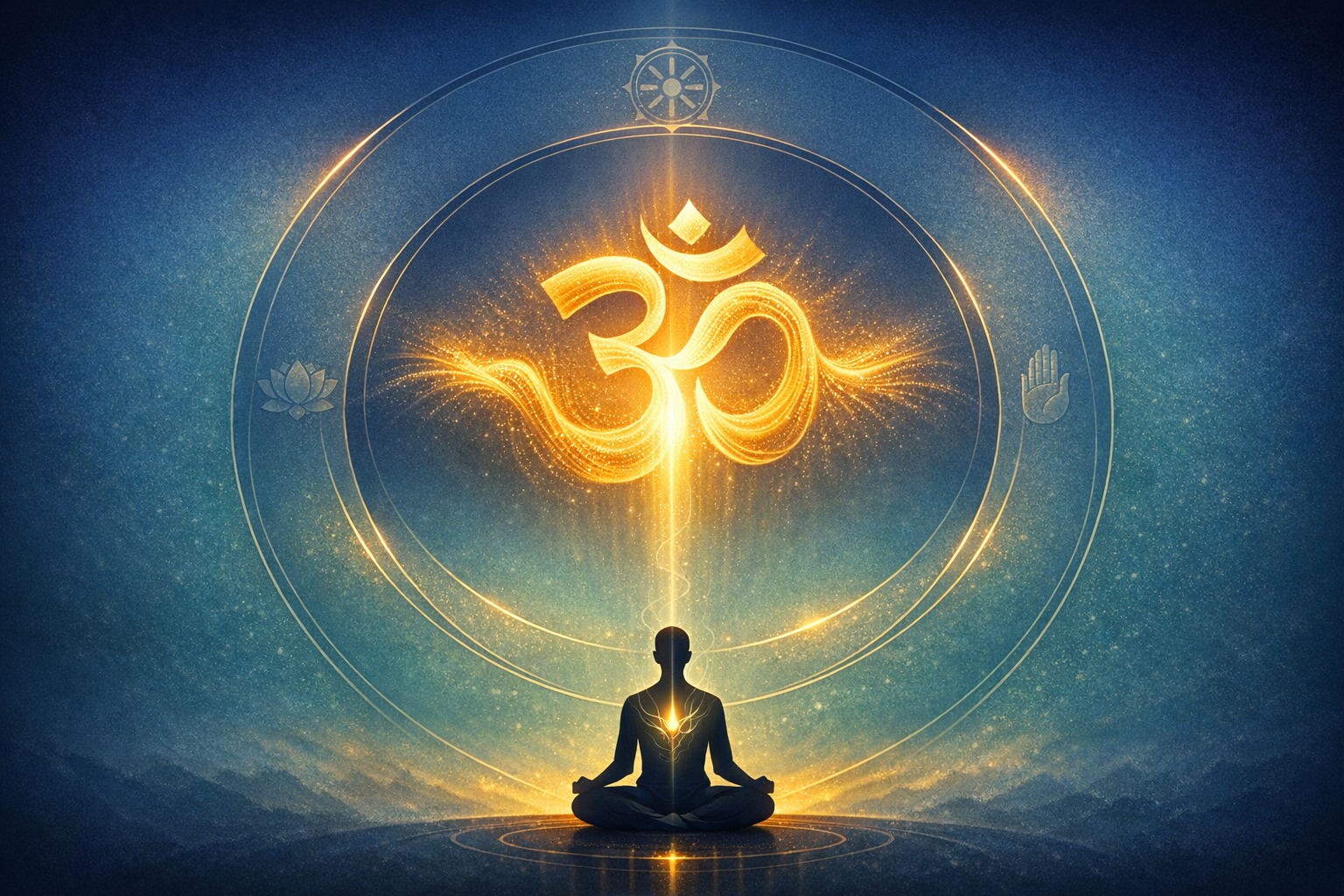
Pranavopasanameditation on the Pranava (ॐ)is a disciplined path in Hinduism and Advaita Vedanta that moves attention from sound to silence and from symbol to the Ultimate Reality. Drawing on the Upanishads, Bhagavad Gita, and Patanjali, it unites devotion, meditation, and inquiry into a coherent practice for Self-realization. The article explains the A–U–M arc, the turiya…
-
A Triplicane Teacher’s Encounter with Ramana Maharshi: Silence, Self-Inquiry, and Grace
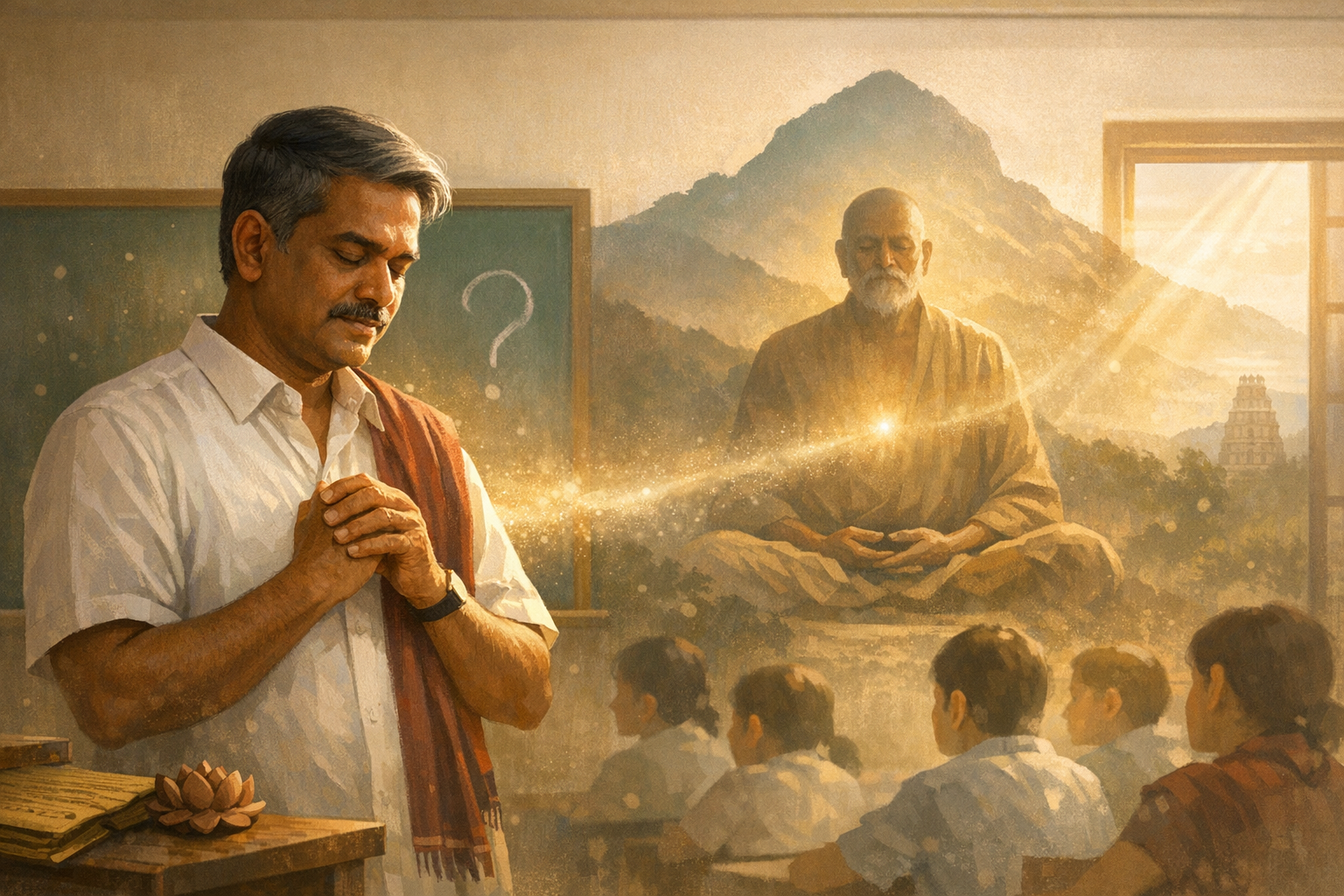
Set in the 1980s at Hindu Higher Secondary School, Triplicane, this reflective account presents a teacher’s encounter with Ramana Maharshi and situates it within Advaita Vedanta. It clarifies the core of self-inquiry (“Who am I?”), explains how silence functions as a rigorous pedagogical medium, and shows how contemplative insight can enrich classroom ethics and student…
-
Gaudapada’s Asparshayoga Explained: The Fearless Non-Contact Path to Advaita Bliss

This essay unpacks AsparshayogaGaudapada’s “non-contact yoga” in Advaita Vedantaas a knowledge-centered recognition that dissolves the subject–object split. It explains why the bliss of the Self is intrinsic rather than a peak produced by sensory contact, grounding the discussion in the Mandukya Upanishad’s map of Turiya. It clarifies how Asparshayoga differs from Patanjali’s technique-driven approach while…
-
Ajati in Advaita Vedanta: Radical Non-Birth, Mandukya Karika, and Deep Clarity

AjatiAdvaita Vedanta’s doctrine of non-birthasserts that ultimate reality never truly originates or changes, while preserving everyday causality and ethics at the empirical level. Rooted in the Mandukya Upanishad and Mandukya Karika, it culminates in the recognition of turīya, the ever-present awareness. By distinguishing absolute from empirical standpoints, Ajati avoids nihilism and affirms a positive, non-dual…
-
Beyond Ego (Ahamkara): Atman, Attachment, and Liberation across Hindu, Buddhist, Jain, Sikh Paths
This comprehensive analysis explains how Hinduism, aligned with Buddhism, Jainism, and Sikhism, understands internal attachment as self-identification with ego (ahamkara/asmita). It clarifies core doctrinesAtman–Brahman, avidya–adhyasa, and the Yoga kleshaswhile mapping practical methods in Karma Yoga, Bhakti, Jnana, and Raja Yoga. Readers gain a technical yet accessible framework using Pancha Kosha Viveka, samskara theory, and Gita-based…
-
A Schoolteacher’s Transformative Encounter with Ramana Maharshi: Silence, Self-Inquiry, and Grace
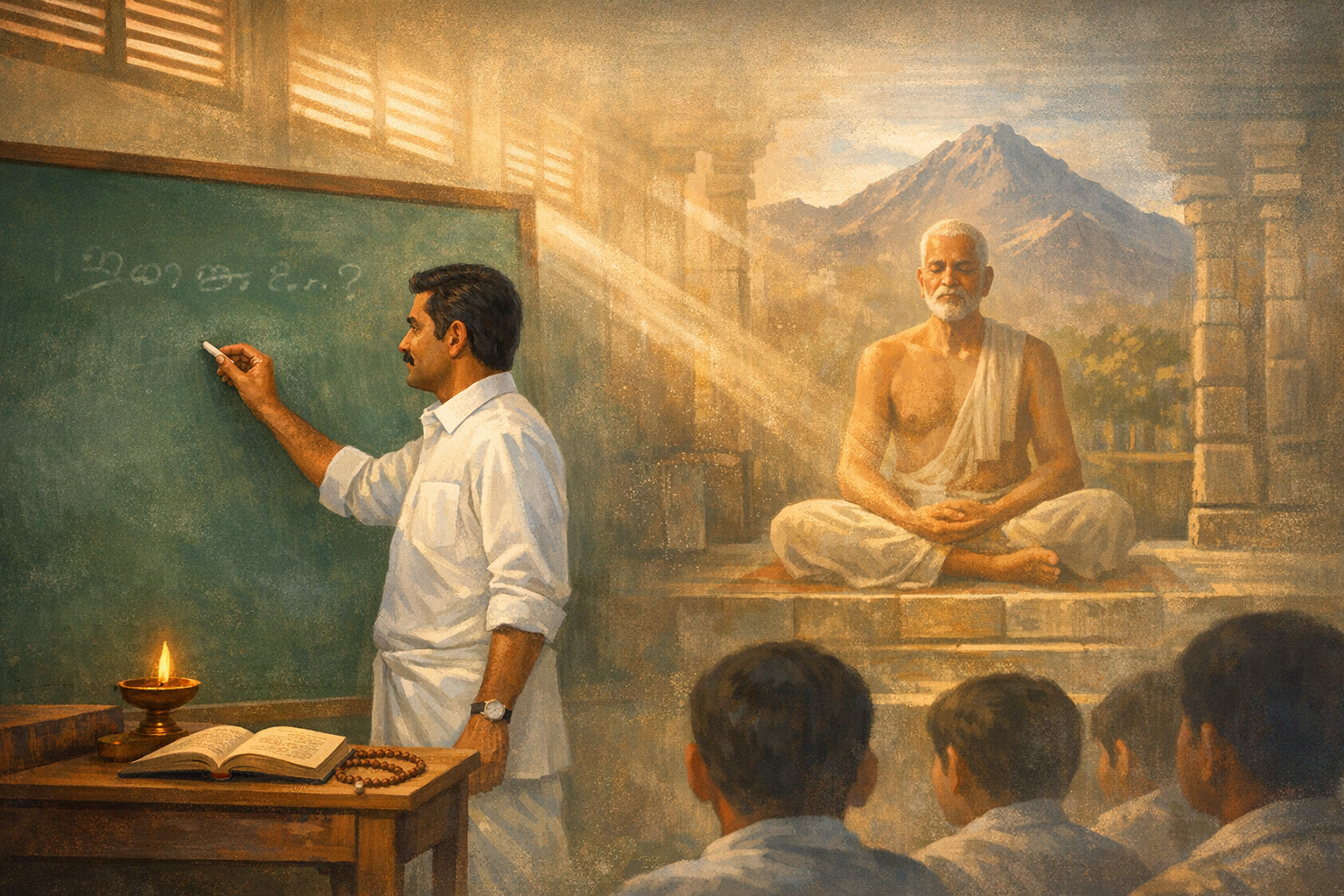
Set in 1980s Triplicane, this narrative documents how a Tamil teacher’s audience with Ramana Maharshi at Sri Ramanasramam became a living lesson in the Guru–Shishya Tradition. The account illuminates Ramana’s method of Self-Inquiry (ātma-vichāra) as a rigorous first-person phenomenology grounded in Advaita Vedanta and supported by devotion, ethics, and steady practice. It situates the encounter…
-
Nirupadhika in Advaita Vedanta: Adjunct-Free Brahman, Practice Insights, and Dharmic Parallels

Nirupadhika“without the upadhis”names Advaita Vedanta’s insight that Brahman is never altered by limiting adjuncts such as body, mind, maya, or avidya. The article maps how nirupadhika contrasts with sopadhika, clarifies tri-level reality, and shows how Upanishadic hermeneutics (neti neti, tat tvam asi via bhaga-tyaga-lakshana) reveal the adjunct-free Self. It unpacks core methodsadhyaropa-apavada, Drig-Drishya Viveka, and…
-
Advaita Unveiled: Realizing Oneness with the Supreme for Freedom from Fear and Sorrow

This article examines the Advaita Vedanta insight that true wisdom is to see the Self (Atman) as not different from the Supreme Being (Brahman), and shows how that vision resonates across Hinduism, Buddhism, Jainism, and Sikhism. It outlines Advaita’s precise metaphysics (maya, avidya, adhyasa) and its methods (sravana–manana–nididhyasana, neti neti, drg-drishya-viveka, panchakosha-viveka). Readers gain a…
-
Ramanujacharya’s Appearance Day: Vishishtadvaita Essentials and the Sri Sampradaya’s Timeless Legacy

This in-depth reflection on Sri Ramanujacharya’s Appearance Day situates the Sri Sampradaya within the four Vaishnava lineages and explains why Vishishtadvaita remains central to Hindu Dharma. It introduces core metaphysical conceptscit, acit, aprithak-siddhi, and the śarīra–śarīrī relationwhile showing how Vedanta informs living culture through temple practice, sevā, and prapatti. Readers gain clarity on Ubhaya Vedanta’s…
-
When Nothing Remains, Fear Ends: A Dharmic Science of Abhaya beyond Ego and Identity

This essay maps a dharmic science of fearlessness (Abhaya) grounded in Hindu philosophy and harmonized with Buddhism, Jainism, and Sikhism. It clarifies how fear originates in avidya and duality, then outlines practical pathsJnana, Karma, Bhakti, and Raja Yogato dissolve misidentification and regulate reactivity. Readers gain scriptural anchors from the Upanishads, the Bhagavad Gita, and the…
-
Unraveling Karma’s ‘Complicated Play’: Dharmic frameworks of action, causality, and grace

This long-form guide unpacks why “Gurudev says that it is a complicated play,” showing how Karma operates across intention, action, impressions, and outcomes. It compares Hindu, Buddhist, Jain, and Sikh frameworks, clarifying doership, responsibility, and grace without collapsing their differences. Readers gain a precise map of sañcita–prārabdha–kriyamāṇa, Buddhist intentionality (cetanā) and dependent origination, Jain karmic…
-
Moksha Beyond the Gunas: A Definitive, Scholarly Guide to Liberation and Dharmic Unity

Moksha in Hindu philosophy is best understood as freedom from the three gunassattva, rajas, and tamasrather than the dominance of any one of them. This comprehensive guide explains how Sankhya, Vedanta, and Yoga converge on transcending material nature, while the Bhagavad Gita clarifies why even sattva can bind. It offers a clear synthesis of Jnana,…
-
Maitrayaniya (Maitri) Upanishad: Origins, Structure, Sixfold Yoga, and Transformative Wisdom
The Maitrayaniya (Maitri) Upanishad of the Krishna Yajurveda blends Vedanta and early Yoga with unusual precision, making it a key late-Upanishadic text. It analyzes time and the timeless, the mind’s role in bondage and freedom, and the threefold nature of suffering, while culminating in a concise sixfold Yoga. Readers gain a clear map from inquiry…
-
Ultimate Reality Cannot Be Taught: Profound, Experiential Wisdom in Hinduism and Dharmic Paths
This long-form exploration clarifies why Ultimate Reality in Hindu philosophy cannot be taught as a mere concept and must be realized through direct experience. It maps the classical triad of śravaṇa–manana–nididhyāsana and the role of Guru–Shishya Tradition, highlighting how scripture and guidance remove ignorance rather than transfer realization. Readers gain a technically sound overview of…