
-
Mahatparinama Unveiled: The Transformative Journey from Subtle to Manifest Reality in Hindu Philosophy
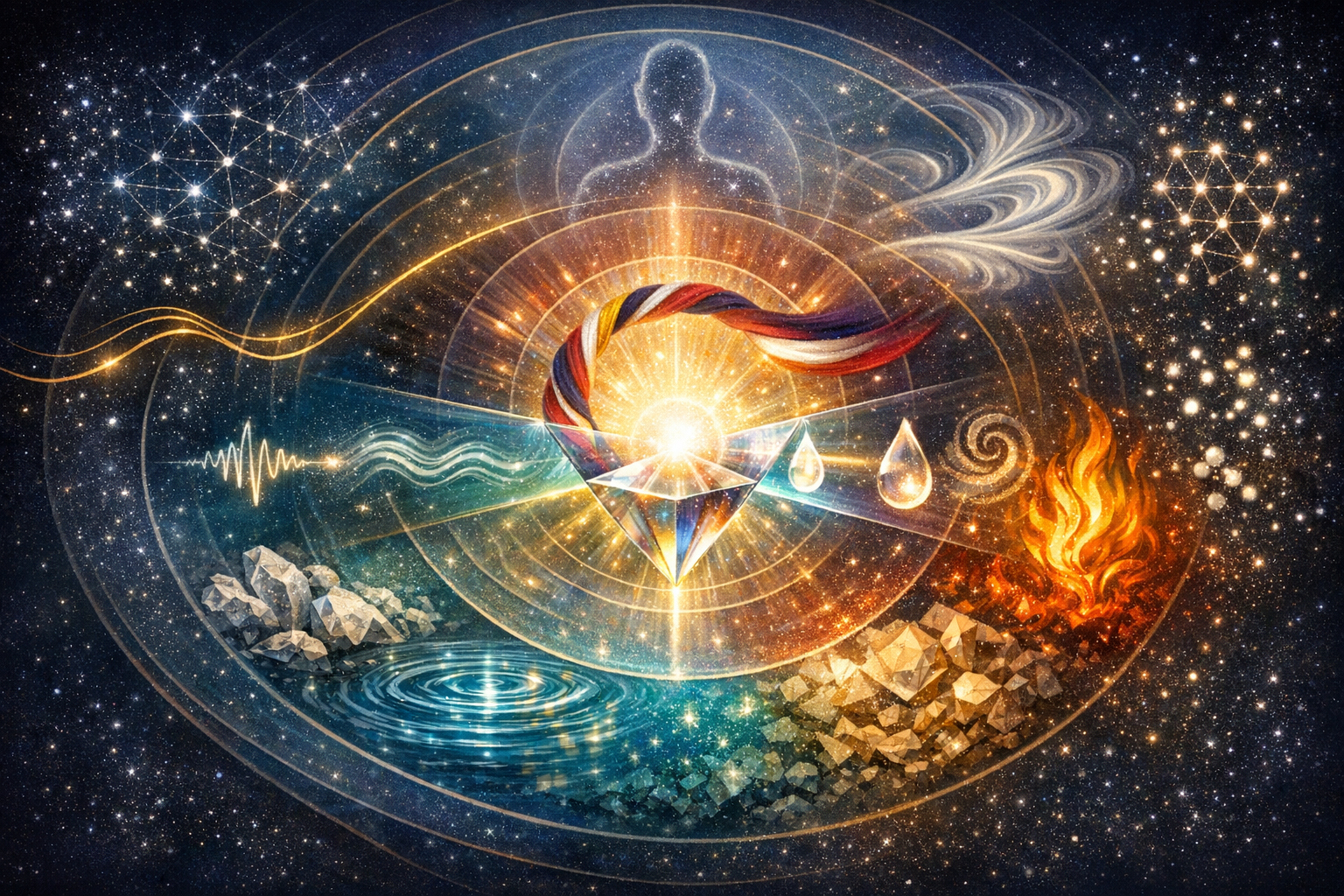
Mahatparinamathe transformation from subtle to manifestprovides a unifying grammar for Hindu philosophy, linking Samkhya’s cosmology, Vaisheshika’s atomism, Vedanta’s metaphysics, and Yoga’s inner practice. This comprehensive explainer maps the emergence from mahat (cosmic intelligence) through ahamkara, tanmatras, and the mahabhutas, clarifying how sukshma processes shape sthula outcomes. It contrasts satkaryavada and asatkaryavada, situates parinama and vivarta…
-
Queen Leela and King Padma in Yoga Vasistha: The Eternal Dance of Desire, Time, and Liberation
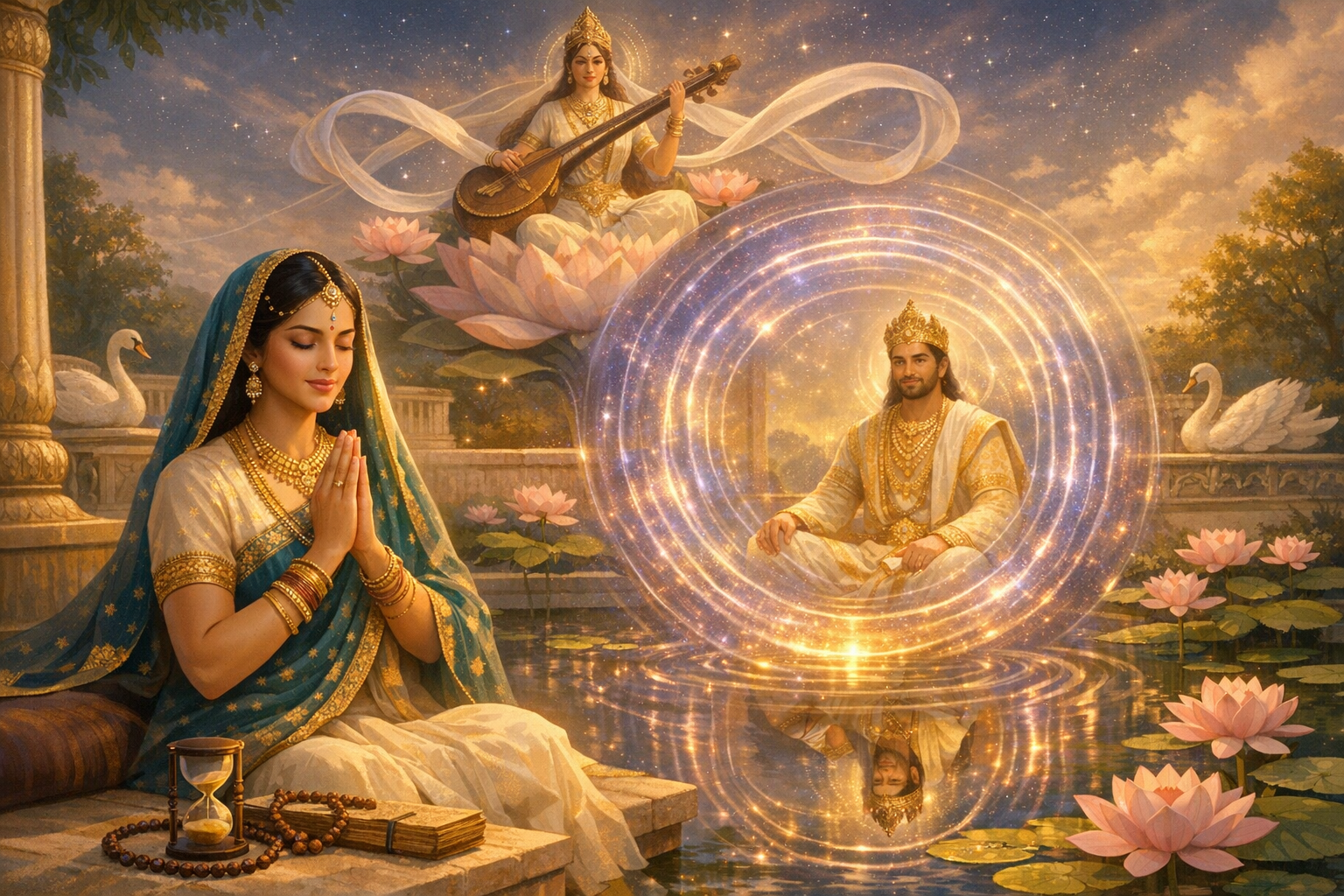
This long-form exploration of Queen Leela and King Padma in the Yoga Vasistha unpacks how consciousness, desire, and time interweave to produce the felt world. Readers learn why the text situates death and rebirth within the triad of gross, subtle, and causal bodies, clarifying continuity without clinging. The analysis translates core methodsshravana, manana, nididhyāsana, and…
-
Beyond Indra’s Heaven: King Arishtanemi’s Bold Renunciation and Yoga Vasishta’s Vairagya

The opening narrative of the Yoga Vasishta, where King Arishtanemi declines Indra’s heaven, distills the text’s core teaching: lasting freedom arises from vairagya (renunciation) grounded in clear discrimination (viveka). Rather than reject joy, the king outgrows the promise of celestial pleasure by recognizing its impermanence and karmic limits. This analysis situates the story within Yoga…
-
Definitive 9‑Lecture Journey into the Bhagavad Gita with Prof. Ithamar Theodor

This nine‑lecture series at Bhaktivedanta Research Center presents a rigorous, text‑based journey through the Bhagavad Gita with Prof. Ithamar Theodor, uniting academic clarity and contemplative depth. Participants gain historical context, philological literacy, and a comparative understanding of Advaita, Visistadvaita, and Dvaita interpretations. Core teachings on Dharma, Karma Yoga, Jnana Yoga, and Bhakti Yoga are examined…
-
Choosing Our ‘Amazing Stories’: A Rigorous Case for Vedic Epistemology and Dharmic Unity
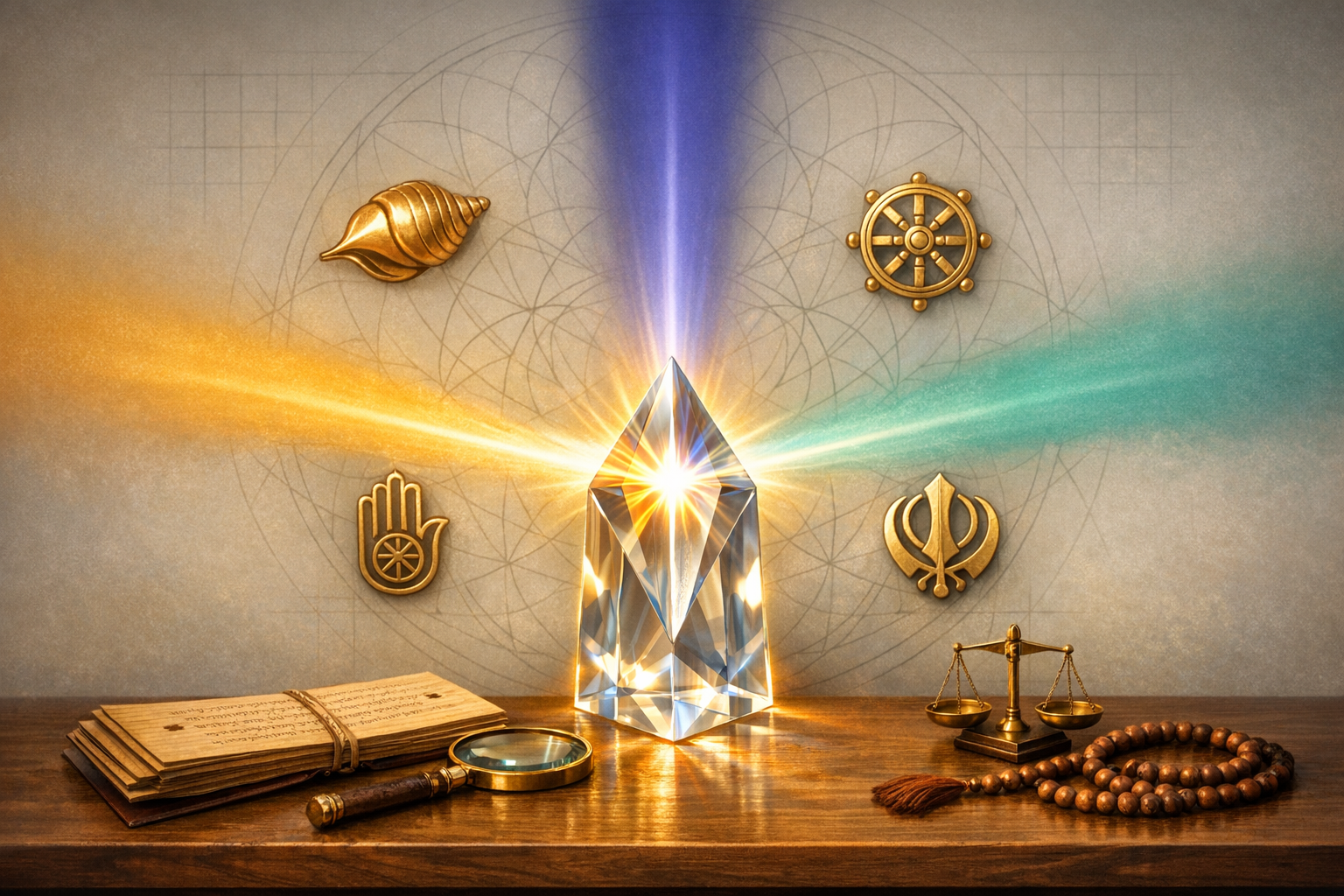
This essay examines the oft-quoted contrast between materialism and the Vedic view by asking how anyone comes to know. Drawing on the dharmic theory of pramāṇaperception, inference, testimony, and moreit distinguishes the legitimate power of science from the unwarranted metaphysics of scientism. It argues that Vedic epistemology offers greater coherence and explanatory breadth, especially for…
-
Shattering the Illusion of Chains: Advaita Vedanta’s Guide to the Ever‑Free Self
Advaita Vedanta proposes a radical clarity: in ultimate truth there is neither bondage nor liberation; the Self (Atman) is ever-free, and only ignorance creates the sense of captivity. This article explains the logic of avidya and adhyasa, distinguishes empirical from absolute perspectives, and shows how moksha functions as recognition rather than attainment. Drawing on the…
-
Beyond the Senses: Unveiling Brahman and the Limits of Perception in Hindu Thought

This article explores why, in Hindu philosophy, ultimate reality (Brahman) cannot be captured by the senses or by conceptual thought, and how Vedanta uses shabda-pramana and Upanishadic teaching to reveal the Self. It clarifies the roles of pratyaksha, anumana, and shabda in Indian epistemology, showing why the senses are necessary yet insufficient. It integrates Advaita…
-
Ishavasya Upanishad on Lobha: Renounce to Rejoice, Practice Aparigraha, Heal Society

The Ishavasya Upanishad opens with a concise yet sweeping ethic that links metaphysics to daily conduct: if all is pervaded by the sacred, then enjoyment must be tempered by renunciation and freedom from greed. This piece unpacks the opening mantra philologically and philosophically, clarifying how “tena tyaktena bhuñjīthā” can mean both to enjoy and to…
-
Unveiling Lingasthala: Shiva as Infinite Brahman in Virashaiva Philosophy and Lived Practice
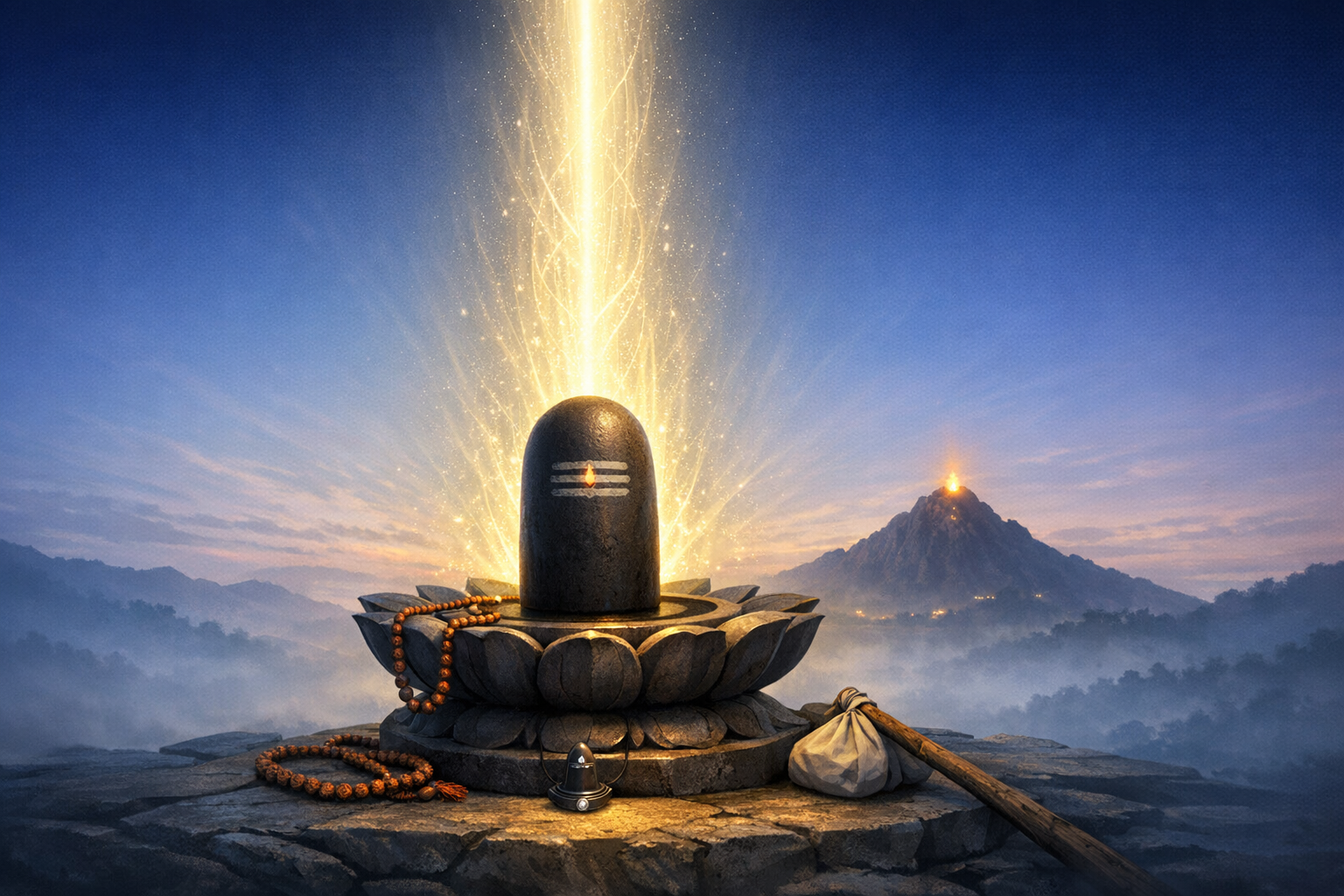
This essay explores how Virashaiva (Lingayat) philosophy recognizes Shiva as the infinite Brahman and makes that insight tangible through linga-centered practice. It clarifies Lingasthala as the field of realization anchored in the Shatsthala path, the Panchacharas, and the Ashtavaranas. It links Upanishadic non-duality with Shaiva devotion, explains the Lingodbhava narrative, and shows how saguna worship…
-
Jagath Samhara Moorthy: How Shiva’s Cosmic Dissolution Fuels Renewal and Liberation

Jagath Samhara MoorthyShiva as the cosmic dissolverexpresses a lawlike rhythm in Hindu cosmology where endings prepare the ground for renewal. Drawing on the Puranas, Upanishads, and Shaiva philosophy, the article clarifies how samhara operates within the five divine acts: creation, maintenance, dissolution, concealment, and grace. It explains the four types of pralaya and situates them…
-
Nish Shreyas in Hinduism: The Life-Changing Choice of Shreyas over Preyas toward Moksha
Nish Shreyas denotes the ultimate good in Hinduismthe enduring well-being that culminates in mokshaclarified through the Katha Upanishad’s contrast between preyas (the pleasant) and shreyas (the beneficial). This article explains how Vedanta, the Bhagavad Gita, and integrated yogic disciplines channel everyday decisions toward freedom rather than compulsion. It offers a clear decision framework and practical…
-
Kalatita Unveiled: A Rigorous Guide to the Timeless Self and Eternal Truth in Hinduism
This article presents a rigorous, accessible exploration of Kalatita’beyond time’in Hindu philosophy, anchored in the Upanishads, Bhagavad Gita, and Yoga Sutra. It clarifies how cyclical time (yuga, kalpa) coexists with the timeless ground of Brahman, using Advaita Vedanta, Sāṅkhya, and Bhakti perspectives. The discussion bridges theory and practice with concrete contemplations, showing how presence, fearlessness,…
-
Relativity, Interconnectedness, and Impermanence in Sikh Philosophy: Clarity for Dharmic Unity
This long-form exploration clarifies how Sikh philosophy integrates relativity, interconnectedness, and impermanence under Ik Oankar and hukam. It explains why perspective-awareness enhances, rather than weakens, commitment to Truth, and how interconnectedness turns metaphysics into concrete seva for sarbat da bhala. It shows how impermanence frees the heart from clinging without collapsing into nihilism, orienting life…
-
Unlocking Truth: Six Pramāṇas in Hindu Philosophy and How They Strengthen Modern Thinking

This long-form guide explains the six pramāṇas of Hindu philosophypratyakṣa, anumāna, upamāna, arthāpatti, anupalabdhi, and śabdaand shows how they collaborate to produce reliable knowledge. It clarifies acceptance across Nyāya, Mīmāṃsā, Vedānta, Sāṃkhya-Yoga, Carvāka, and connects these insights with Buddhist, Jain, and Sikh approaches. Readers learn concrete criteria for perceptual reliability, how to build and test…
-
The Upanishads’ Radical Vision: Beyond Worship to Realize Atman–Brahman Within
This essay clarifies the Upanishads’ radical claim that ultimate reality is not an external deity to be appeased but the Self (Atman), recognized as non-different from Brahman. It explains how ritual and devotion (upāsanā) are honored as preparatory means, while liberating knowledge (jñāna) is the goal. Readers gain a technical overview of key methodsśravaṇa, manana,…
-
Seeing the Banyan in a Seed: Profound Hindu Wisdom on Infinite Potential and Dharmic Unity
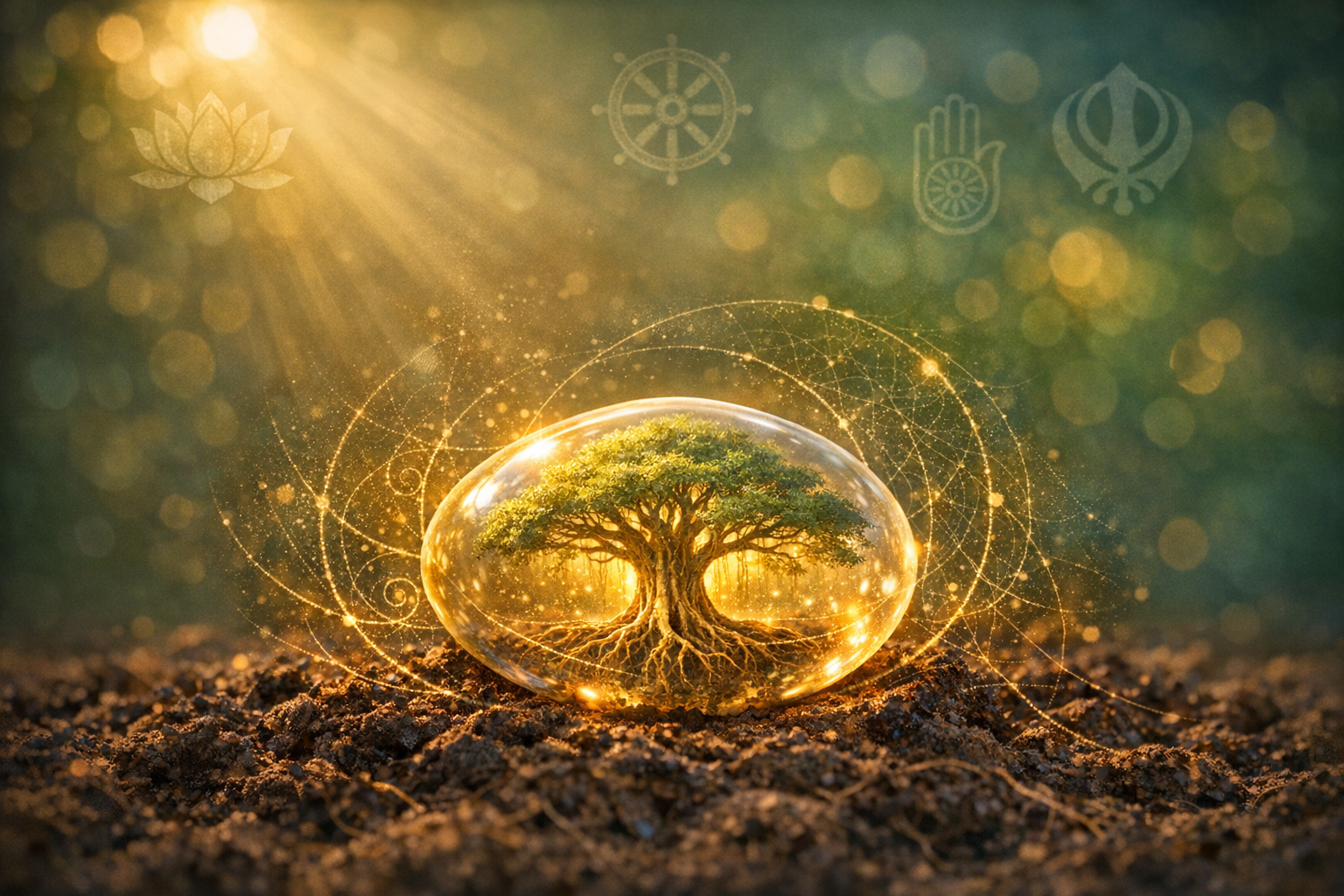
Hindu wisdom describes spiritual vision as the ability to perceive wholeness within the smallest fragment of reality, symbolized by seeing a vast banyan in a tiny seed. Drawing on the Chandogya and Mundaka Upanishads, the discussion clarifies how potentiality unfolds lawfully into form and how this insight aligns with Vedanta, Sankhya-Yoga, and systems science. Convergences…
-
Timeless Lila: Exploring the Divine Play of Being and Becoming Across Dharmic Paths
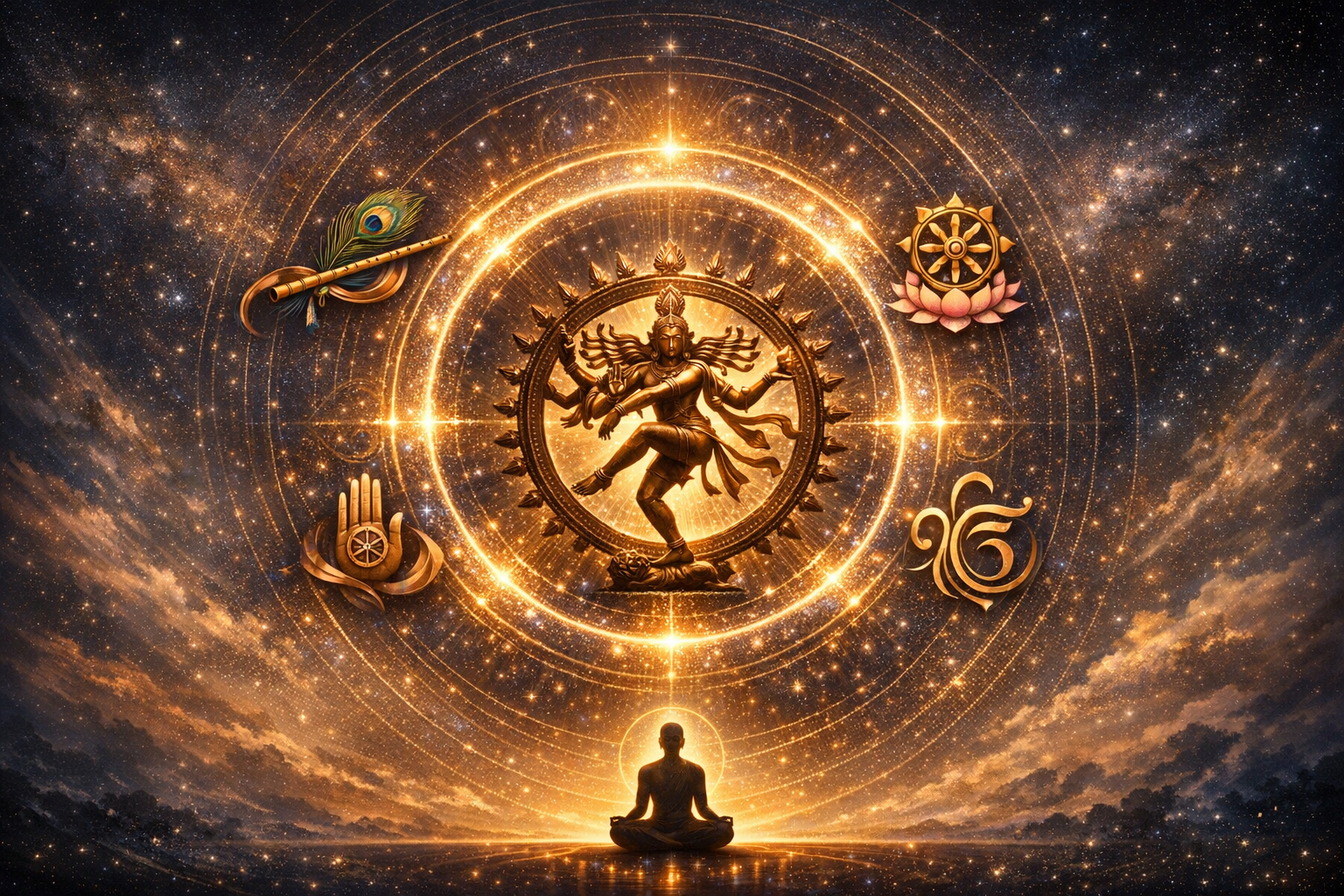
This long-form exploration presents Lilathe eternal divine playas a framework for understanding how being and becoming interrelate across Hinduism, Buddhism, Jainism, and Sikhism. Drawing on the Upanishads, Vedanta (Advaita, Vishishtadvaita, Dvaita), the Bhagavad Gita, and Shaiva–Shakta thought, it clarifies how creation, preservation, and dissolution express a living unity. It maps key concepts like dharma, karma,…
-
Beyond Shadows: Plato’s Cave, Dharmic Wisdom, and the Mind’s Illusion of Reality

Plato’s allegory of the cave explains why humans often mistake partial images for complete reality; Dharmic philosophies show how to correct that error through disciplined practice. This article integrates Plato’s ascent with Hindu, Buddhist, Jain, and Sikh frameworksavidya and maya, the two truths, anekantavada, and Naamdemonstrating how perception can be retrained. Readers gain a rigorous…
-
Two Yet One: Advaita Vedanta’s Science of Oneness and a Dharmic Bridge across Traditions

The teaching ‘you and I are two persons; yet we are one’ expresses Advaita Vedanta’s core insight: empirical plurality and ultimate unity coexist without contradiction. This long-form exploration clarifies Brahman, Atman, and the roles of maya and avidya, situating ethics and devotion within a rigorous non-dual framework. Drawing on the Upanishads and the Bhagavad Gita,…
-
Mukhyartha in Hinduism: Unlock the Power of Abhidha-Shakti for Precise, Sacred Meaning
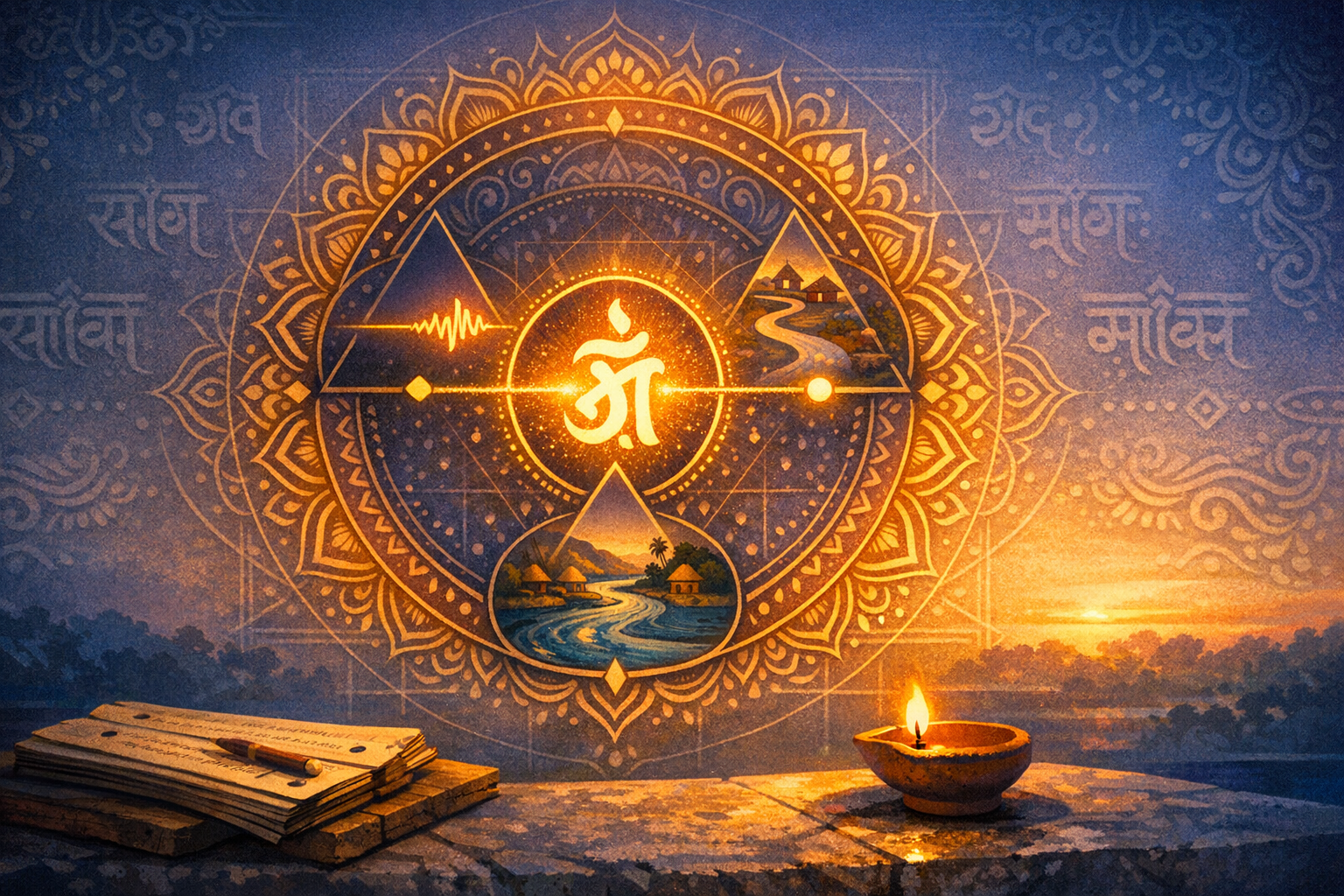
Mukhyarthasecured by abhidha-shaktiprovides the primary, literal meaning that anchors Hindu hermeneutics, ritual, and scripture. This article clarifies how primary sense operates in sentences, why context can trigger shifts to lakshana (secondary meaning) and vyanjana (suggestion), and how classic criteria like akanksha, yogyata, and sannidhi preserve coherence. It surveys perspectives from Mimamsa, Nyaya, Vedanta, and the…