
-
Transcend Forms, Find Clarity: Hindu Wisdom for Locating the Cause Behind All Phenomena

This article examines a central teaching of Hindu philosophy: look past nāma-rūpa (names and forms) to the abiding kāraṇa (cause). Drawing on the Upaniṣads and Bhagavad Gītā, it explains how Vedānta distinguishes empirical from ultimate reality and why māyā is a principle of appearing rather than mere illusion. It shows how forms function as upāyameans…
-
Unlock the Ocean Within: Dharmic Pathways to Atman, Timeless Wisdom, and Resilient Strength

This essay examines the statement “You know little of that which is within you. Within you is the ocean of infinite power” through the shared frameworks of Hinduism, Buddhism, Jainism, and Sikhism. It explains the Upanishadic vision of ātman and Brahman, the yogic map of prāṇa and kundalinī, and the ethical preconditions that make inner…
-
Why Bathing Women Hid from Vyasa but Not Shuka: A Deep Dive into Gaze, Purity, and Dharma

A classic Hindu teaching story contrasts how women bathing in a pond responded to Vyasa and to his son Shuka, and it reveals a layered ethic of consciousness and context. The narrative illustrates how a jivanmukta’s non-objectifying gaze fosters ease, while a revered householder’s presence naturally elicits social modesty. Read through Advaita, bhakti, and yoga…
-
Dvaita vs Advaita in Hinduism: A Clear, Compassionate, Research‑Backed Guide to Vedanta

This research-backed guide clarifies the real differences between Dvaita and Advaita without reducing either system to caricature. It explains Advaita’s non-dual Brahman, Dvaita’s theistic realism, and why both accept the same core scriptures yet read them through distinct hermeneutics. Readers learn how Advaita’s three levels of reality and Dvaita’s Panchabheda lead to different, but equally…
-
Bhurishaya Bhairava: Unveiling the All‑Abundant Essence and Infinite Support of Existence

Bhurishaya Bhairavaone of the sacred 1008 names of Bhairavaencapsulates a Śaiva vision of existence as plenitude and support. Etymologically derived from bhūri (abundance) and śaya (resting/abiding), the epithet signals an inexhaustible ground of being in which the many both arise and find repose. Read through Kashmir Shaivism’s Bhairava triad (bha–ra–va), it highlights the sustaining rest…
-
Beyond Heaven and Hell: Karma, Consciousness, and Self-Reward in Dharmic Philosophy

This essay explains, in clear academic terms, why Dharmic traditions reject an externalized reward-and-punishment model after death while affirming a rigorous moral universe. It clarifies karma-phala using concepts like sanchita, prarabdha, and agami, and links Mimamsa’s apurva and Nyaya–Vaisheshika’s adrishta to a self-executing moral order. Hindu philosophy, Buddhism, Jainism, and Sikhism are presented in harmony:…
-
Bhagavan and Ishvara, One Truth: Why Vishnu and Shiva Bear These Timeless Honorifics

The titles Bhagavan and Ishvara carry precise theological weight in Hindu philosophy without enforcing hierarchy. Bhagavan highlights the plenary, relational fullness of the Divine, while Ishvara emphasizes sovereign lordship and cosmic governance. Scriptures apply both titles across deitiesVishnu is called Ishvara, and Shiva is addressed as Bhagavansignaling complementarity rather than exclusivity. Vedantic schools, Shaiva traditions,…
-
Break Free from Maya: Transcending Superimpositions for God‑Realization in Advaita Vedanta
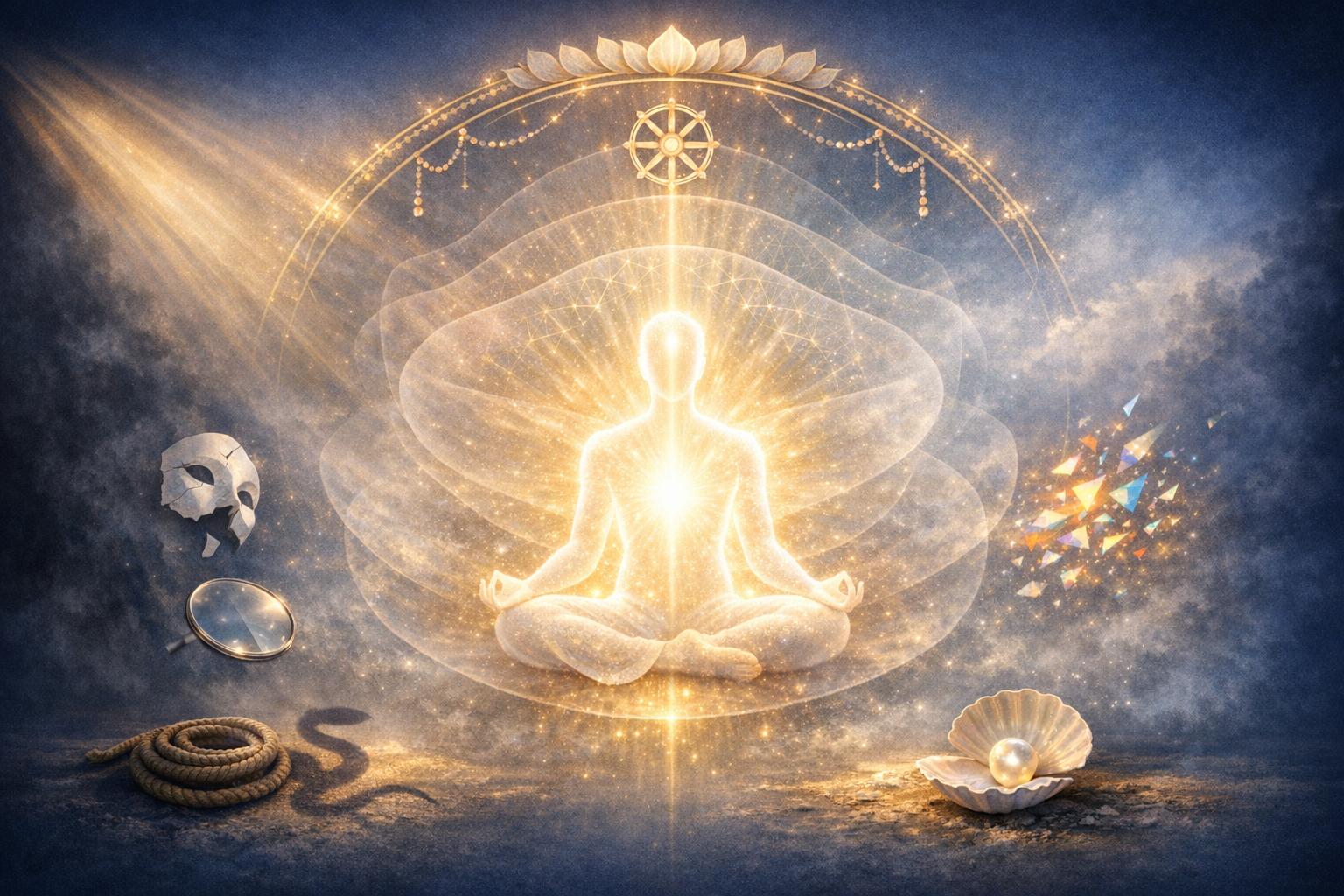
This long-form exploration clarifies why Advaita Vedanta insists that God-Realization demands freedom from limiting superimpositions (adhyāsa, upādhi), and shows how to remove them with rigor and compassion. It unpacks core methodsPañca Kośa Viveka, Drg-Drśya Viveka, neti neti, śravaṇa–manana–nididhyāsanawhile honoring the supportive roles of Karma Yoga and bhakti. Drawing parallels with Yoga’s kleshas, Buddhism’s deconstruction of…
-
Seeking the Supreme: An Academic Exploration of Hindu Pluralism, Ishta, and One Reality
Many seekers raised in temple-centered Hindu life wrestle with two enduring questions: Why so many gods, and who is the Supreme? Hindu philosophy answers with a precise synthesis: the One Reality (Brahman) is accessible both without attributes (nirguna) and with attributes (saguna), and Ishta-devata personalizes that access without denying unity. Rig Veda’s “Ekam sat vipra…
-
From Sensory Illusion to Self‑Realization: A Dharmic Guide to Serving the Supreme

This essay unpacks the Dharmic insight “I am not these senses” and shows how a life changes when the stance shifts from unconsciously receiving to consciously serving the Ultimate Reality. Drawing on the Upanishads, Bhagavad Gita, Yoga Sutra, Buddhist mindfulness, Jain ethics, and Sikh seva, it explains how sense-identification loosens through ethical restraint, pratyahara, meditation,…
-
Bhagavan Alone Is Real: Timeless Vedanta, Living Bhakti, and the Joy of Dharmic Unity

This article unpacks the aphorism “Know that Bhagavan alone is real. Nothing else matters” through the lenses of the Upanishads, Bhagavad Gita, and major Vedanta schools (Advaita, Vishishtadvaita, Dvaita). It clarifies Bhagavan as the sat-chit-ananda ground of being and explains why the phrase does not deny ethical life but re-centers it in the Real. Readers…
-
The Eternal Joy Within: Dharmic Wisdom on True Happiness, Ananda, and Freedom from Suffering

Modern culture often ties happiness to external milestones, yet Hindu wisdom distinguishes this conditional pleasure from intrinsic anandathe steady joy of awareness. Drawing on the Upanishads, the Bhagavad Gita, and Yoga philosophy, this essay maps how attention becomes entangled in craving and how disciplined living restores clarity. It outlines four complementary yogaskarma, bhakti, jñāna, and…
-
Piercing the Veil of Avidya: How Ignorance Blocks Spiritual Growthand How to End It

Avidyamisapprehension rather than mere lack of informationsits at the root of suffering and obstructs spiritual progress. This analysis synthesizes Hindu philosophy with allied insights from Buddhism, Jainism, and Sikhism to show how ethics, meditation, devotion, and knowledge converge to dispel ignorance. Drawing on the Upanishads, the Bhagavad Gita, Vedanta, and the Yoga Sutra, it clarifies…
-
Timeless Union: The Transformative Power of Jnana and Yoga for Moksha in Hindu Philosophy

This long-form exploration shows how Jnana and Yoga converge in Hindu philosophy to deliver both liberating knowledge and lived stability. It clarifies Vedantic epistemology alongside Patanjali’s practical method, demonstrating why insight requires disciplined cultivation. It maps ethical foundations shared across Hinduism, Buddhism, Jainism, and Sikhism, highlighting a profound unity among dharmic traditions. It offers a…
-
Nyaya Darshana Unveiled: How Indian Logic and Epistemology Power Clear Thinking

Nyaya Darshana presents a powerful, time-tested framework for clear thinking through its four pramanasperception, inference, comparison, and testimonyand a celebrated ethics of debate. By detailing the five-part syllogism, fallacies (hetvabhasa), and rigorous tests for reliable evidence (vyapti and upadhi), it equips readers to evaluate claims and avoid common reasoning errors. Its dialogical history with Buddhism,…
-
Nyayamrita of Vyasatirtha: A Dvaita Masterpiece of Logic, Metaphysics, and Pluralist Dialogue
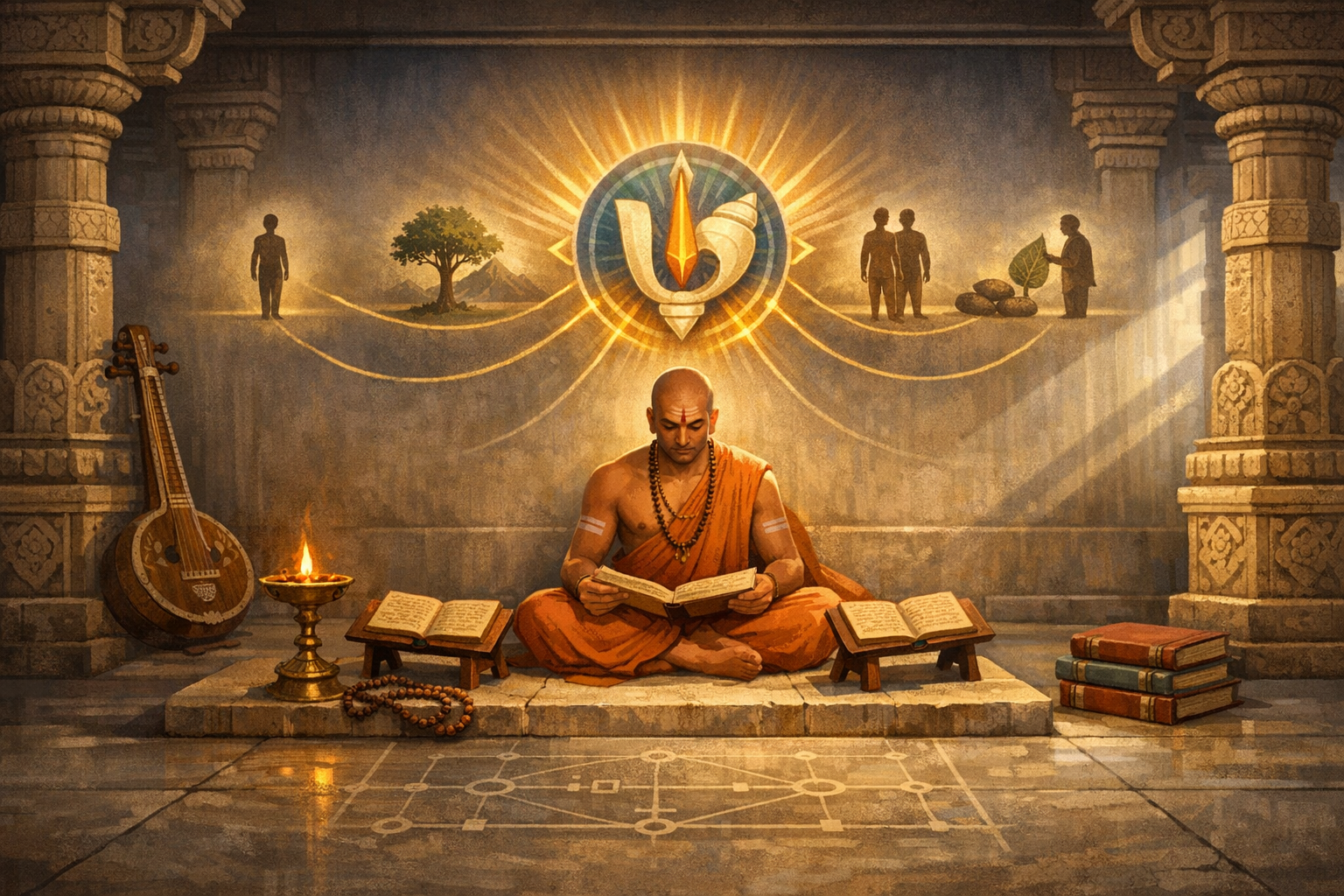
Nyayamrita by Vyasatirtha is a landmark of Dvaita Vedanta that combines rigorous logic, careful scriptural exegesis, and a living devotional ethos. Composed in the Vijayanagara milieu, it clarifies Madhvacharya’s realismaffirming the fivefold difference and the integrity of bhaktiwhile engaging Advaita Vedanta with analytical precision. The work challenges the anirvachaniya status of the world, probes the…
-
Unattached Like the Sun: Dharmic Wisdom on the Divine Light That Impartially Illumines All

This article examines the Hindu aphorism that the Divine is like the sunilluminating all without attachmentand shows how this insight unifies the Dharmic traditions of Hinduism, Buddhism, Jainism, and Sikhism. Drawing on scriptural anchors such as the Bhagavad Gita (13.33; 5.10; 9.9; 15.6; 15.12) and the Upanishads, it explains why Brahman/Īśvara is described as nirlepa…
-
Experience Sri Ramanujacharya Avatara Mahotsavams 2026: TTD’s 3-Day Spiritual Immersion in Tirupati
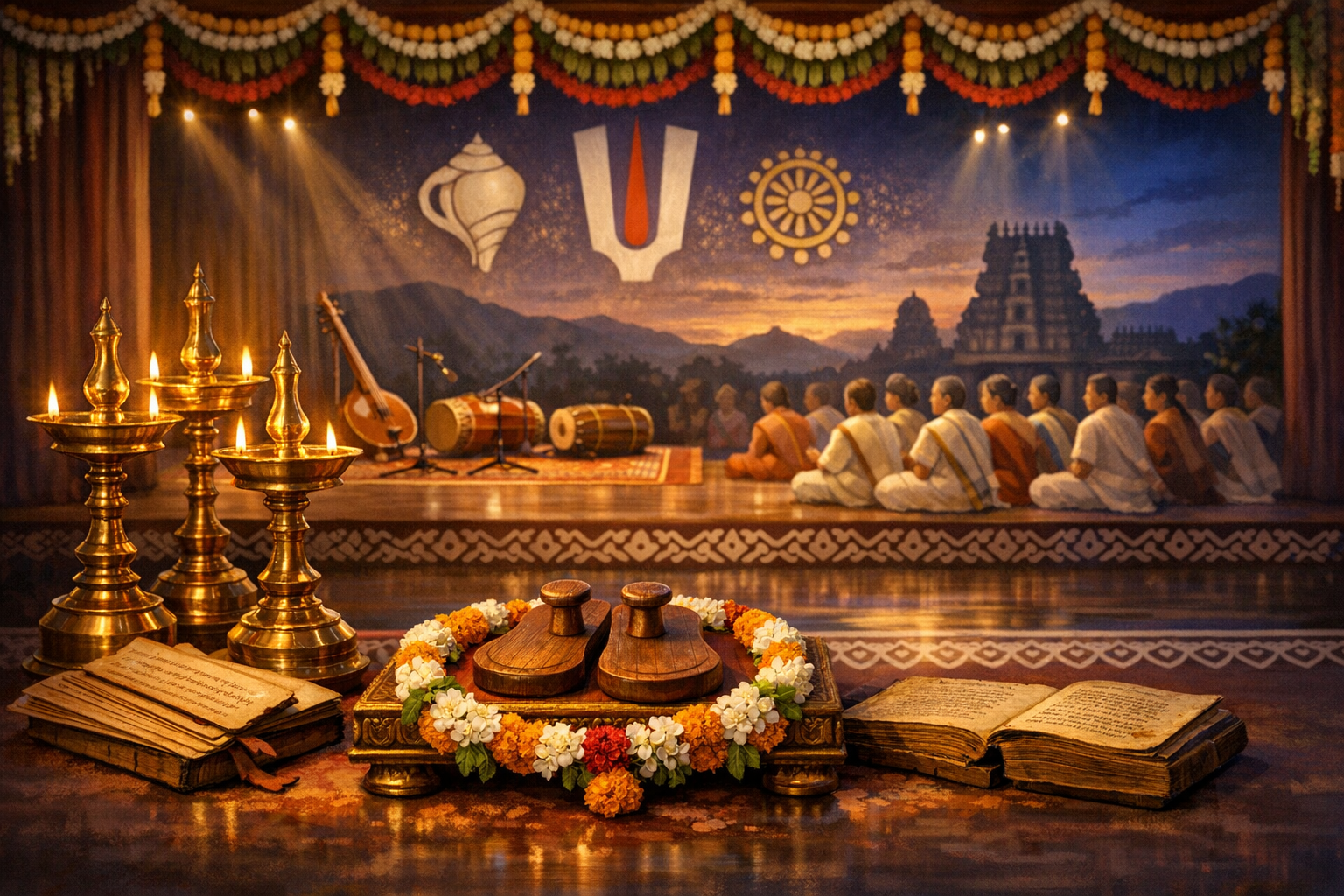
TTD will conduct the Sri Bhagavad Ramanujacharya Avatara Mahotsavams in Tirupati from 20 to 22 April 2026 at Annamacharya Kalamandiram, with daily literary sessions and devotional music from 6:00 PM to 8:30 PM. The programme situates Sri Ramanujacharya’s Viśiṣṭādvaita Vedānta in dialogue with the Nālāyira Divya Prabandham, reflecting the synthesis of scholarship and bhakti at…
-
Usharavṛṣṭi Nyāya: Why Wisdom Fails on Unprepared Mindsand How Dharma Cultivates Readiness

Usharavṛṣṭi Nyāyathe maxim of rain on barren landexplains why even profound wisdom fails when inner preparedness is lacking and how dharma cultivates the conditions for genuine transformation. Drawing on Hindu philosophy and allied dharmic insights, it frames readiness (adhikāra) as a cultivated fitness grounded in ethical discipline, attention, and stability. The essay relates the maxim…
-
Adi Shankaracharya’s Advaita: Timeless Oneness Uniting All Beings, Minds, and Matter

Adi Shankaracharya’s Advaita Vedanta articulates a rigorous, compassionate thesis: all animate and inanimate forms are appearances in one Reality, Brahman. The doctrine’s precision rests on Upanishadic mahavakyas, Shankara’s Adhyasa analysis, and methods like adhyaropa–apavada and neti neti that guide the mind beyond conceptual limits. Practical sadhanasadhana-chatushtaya, shravana–manana–nididhyasana, Karma Yoga, and Bhaktiintegrates inner freedom with ethical…