
-
Unveiling the Panchamukha Linga: Five Faces of Shiva, Agamic Iconography, and Cosmic Meaning
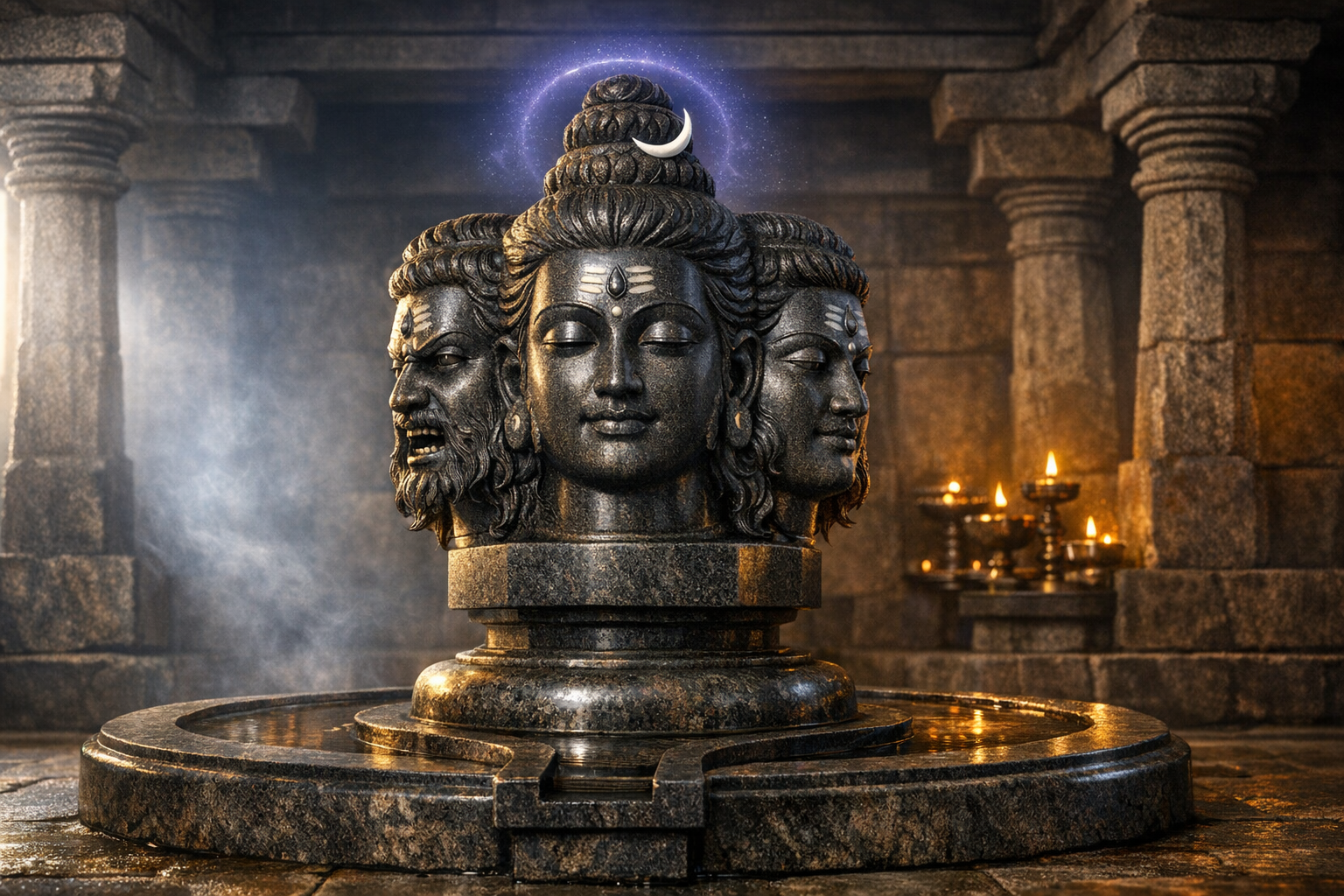
The Panchamukha Linga translates the formless mystery of Shiva into a disciplined iconography where five faces express the universe’s core functions, elements, and inner practices. Drawing on Shaiva Agamas and Puranic references, it aligns Sadyojata, Vamadeva, Aghora, Tatpurusha, and Ishana with directions, mantras, and the fivefold operations of creation, maintenance, dissolution, concealment, and grace. The…
-
Patra in Hindu Sculpture: The Sacred Sheaf of Leaves, Grass, and Paddy as Sattvic Abundance
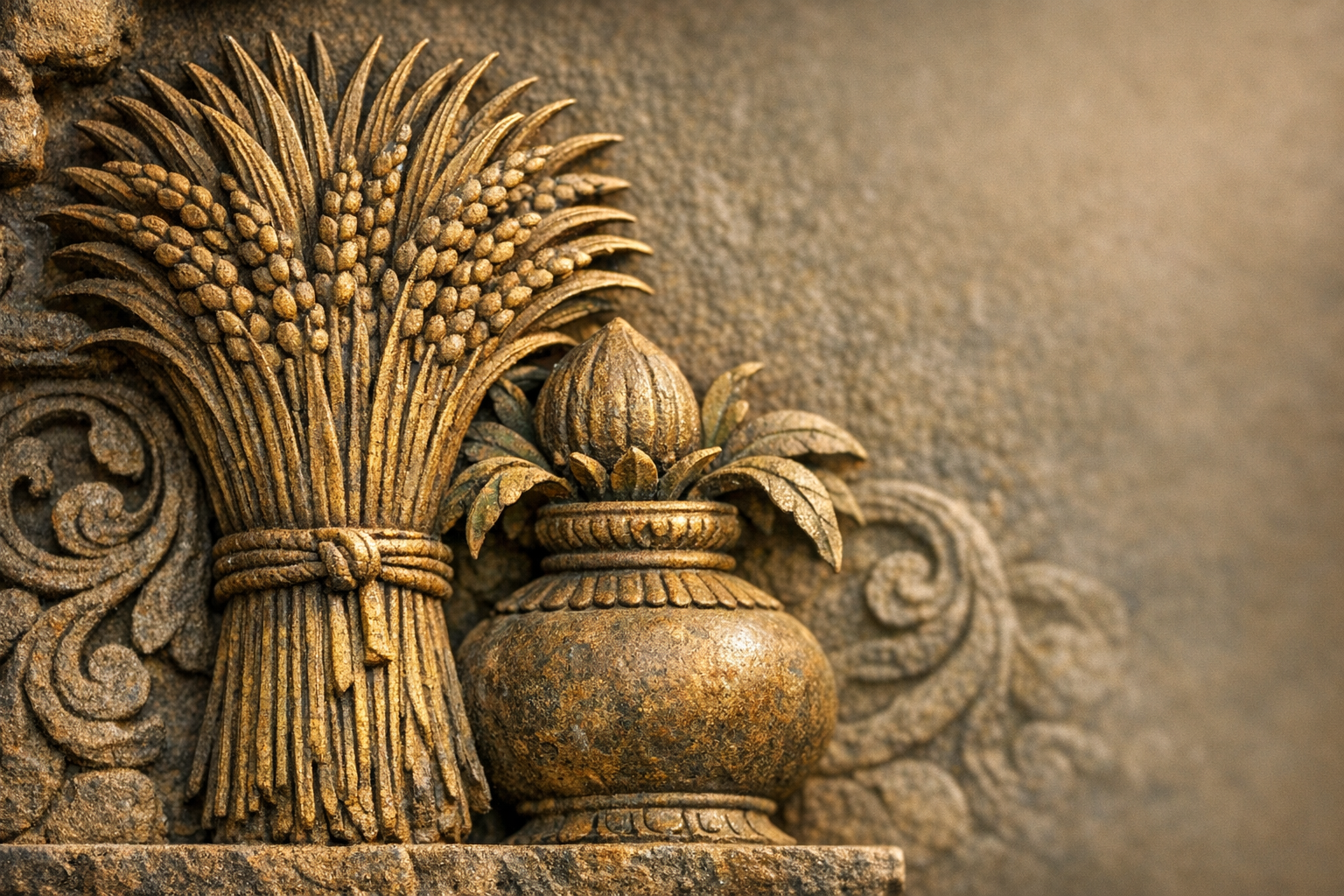
This article examines the patradepicted as a bound sheaf of leaves, grass, or paddyas a quiet but powerful emblem in Hindu sculpture and sacred art. It defines the motif, situates it within the sāttvika spectrum of purity and abundance, and traces its roots through Vedic ritual uses of durvā and kuśa grass. It highlights how…
-
Ekaveni in Hindu Sculpture: Single Braid Symbolism, Shastra Sources, and Living Tradition
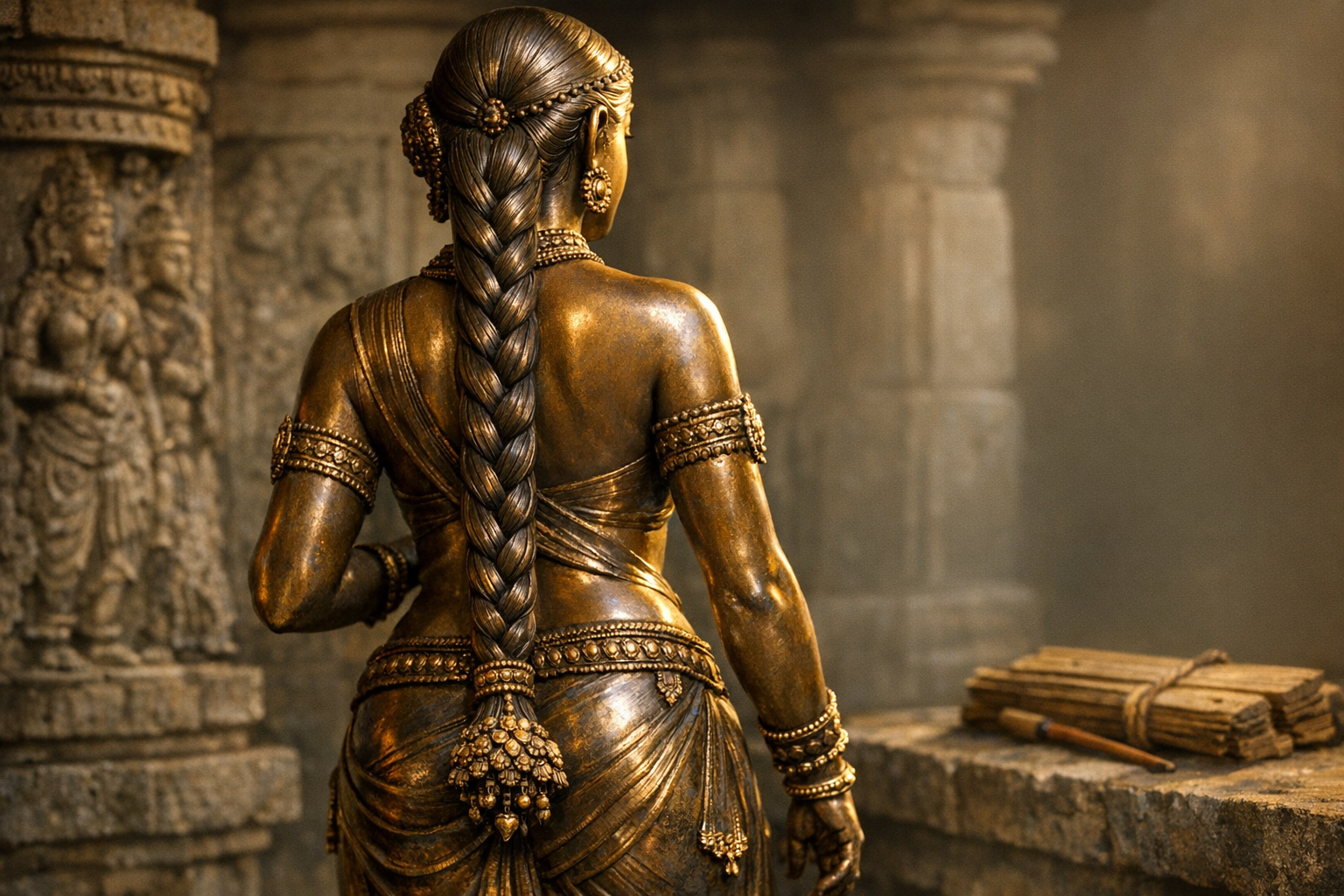
Ekaveni, the single-braid coiffure, is a key visual code in Hindu sculpture and temple iconography that unites style with meaning. Rooted in Shastra (Vishnudharmottara Purana, Shilpa Shastras, Nāṭyaśāstra), it marks youthful auspiciousness, discipline, and one-pointedness. From Chola bronzes to Hoysala stonework, artists render the braid with technical precisionoften finishing in a kunjalam tasselto harmonize with…
-
Lopamudra Devi Iconography Unveiled: A Scholarly Guide to Shakta-Tantric Symbols and Mudras
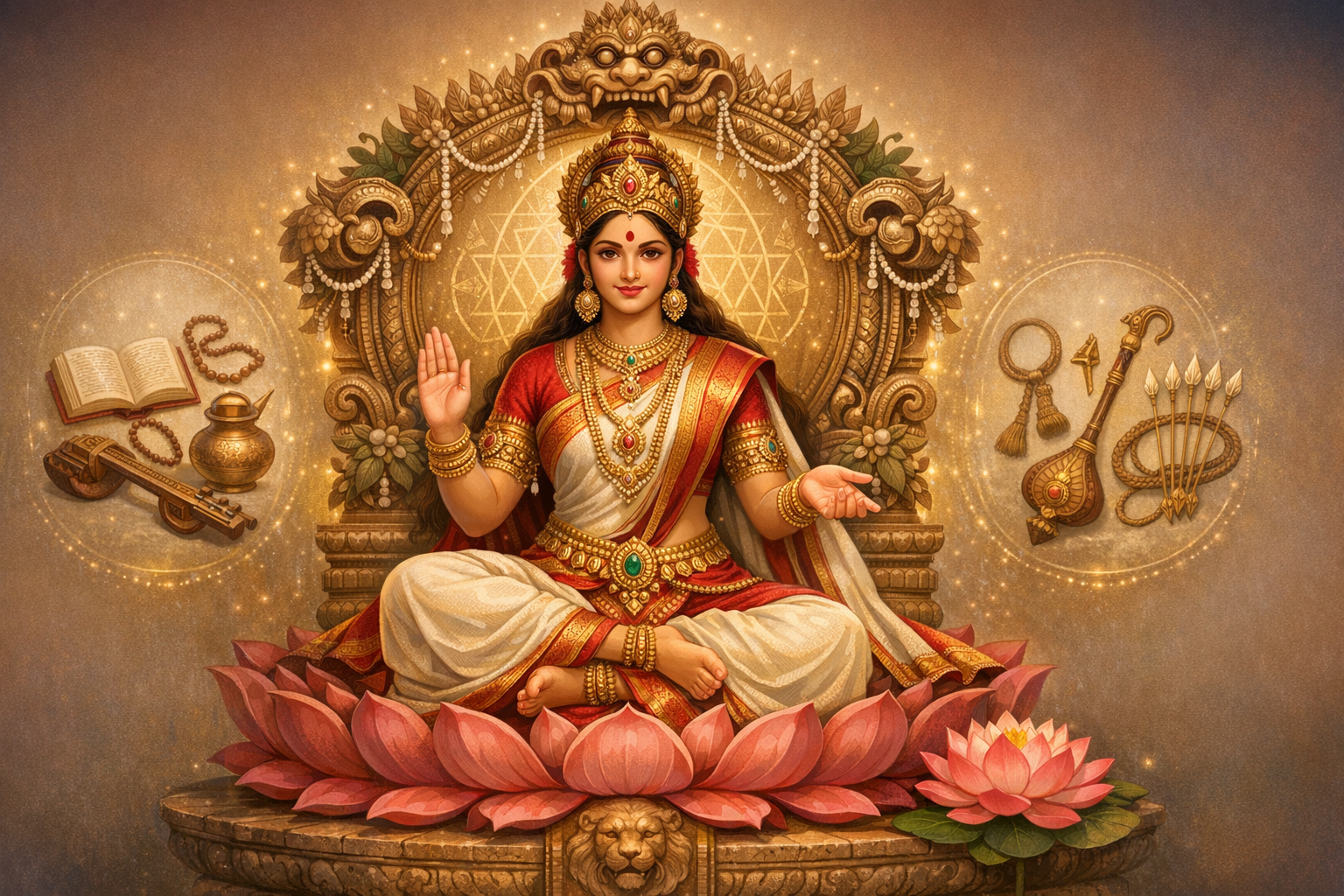
This in-depth guide decodes the Hindu iconography of Lopamudra Devi within Shakta–Tantric tradition, explaining how mudras, attributes, and posture act as visual theology. It clarifies two major lineagesVidyā–Lopamudra and Rājarājeśvarī–Lopamudraand details their implements from pustaka and akṣamālā to pāśa and aṅkuśa. Drawing on Shilpa Shastra and Agama principles, it outlines iconometric proportion (tāla–māna), materials from…
-
Kankala Murti of Shiva: Decoding the Haunting Bone-Staff Wanderer Beyond Death
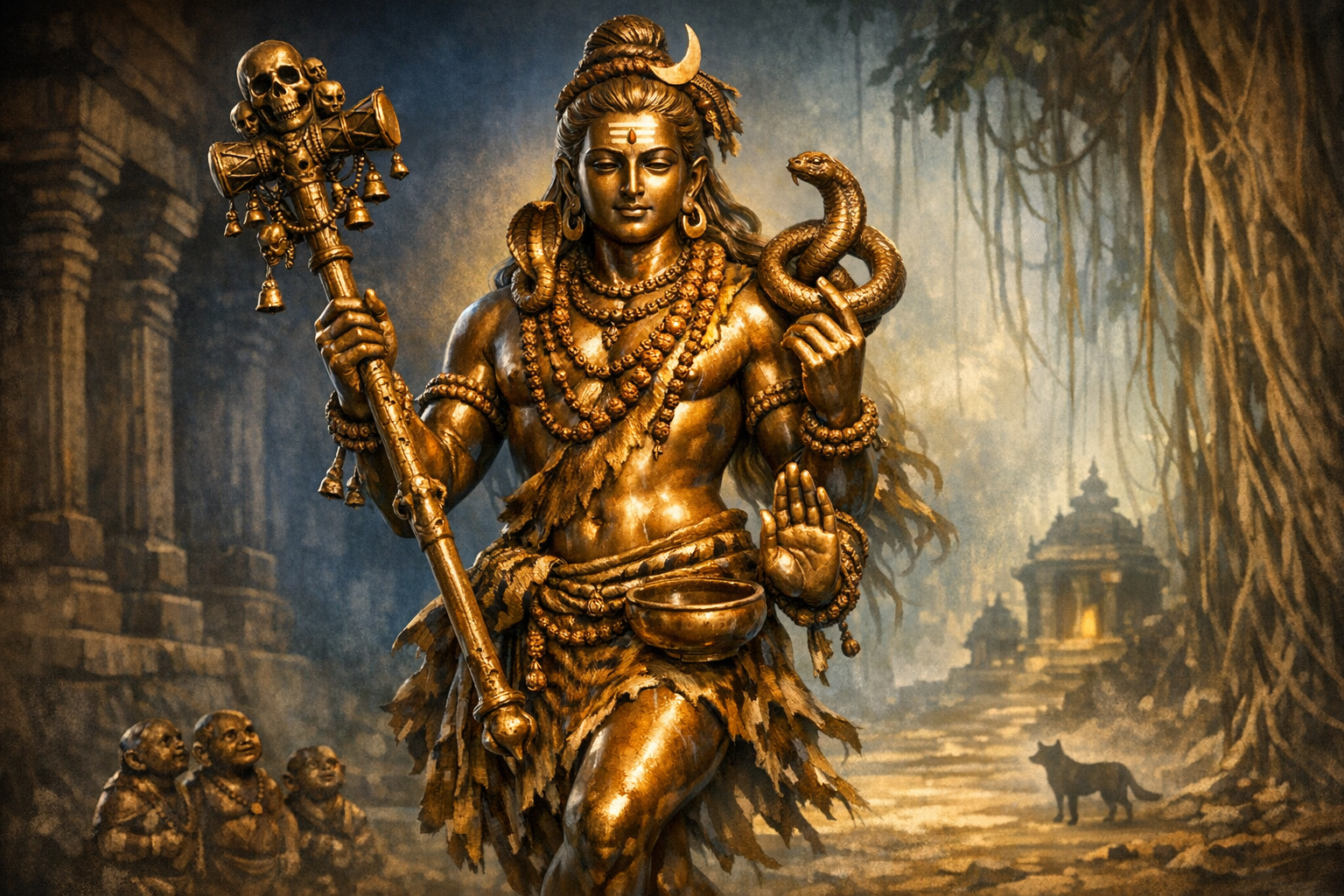
Kankala MurtiShiva as the bearer of the bone-staffunites ascetic grace with a fearless confrontation of death. Grounded in the Shaiva Agamas and the Puranas, the form is distinguished from Bhikshatana by its skeletal staff (kankala-danda), a portable emblem of impermanence. This long-form, academically rigorous exploration decodes core iconographic featuresposture, attributes, attendantsand traces regional and historical…
-
Karkotaka Sayanam at Namakkal Ranganatha Swamy Temple: History, Iconography, Rituals

Karkotaka Sayanam at the Namakkal Ranganatha Swamy Temple presents a rare, regionally inflected image of Lord Ranganatha reclining upon the serpent-king Karkotaka. Set against the granite monolith of Namakkal in Tamil Nadu’s Salem district, the temple integrates rock-cut origins with later Dravidian additions and a vibrant Sri Vaishnava ritual life. Epigraphic and stylistic clues attest…
-
When Hanuman’s Bhakti Moved Narasimha: Karanja Ahobilam’s Miracle, Iconography, Legacy
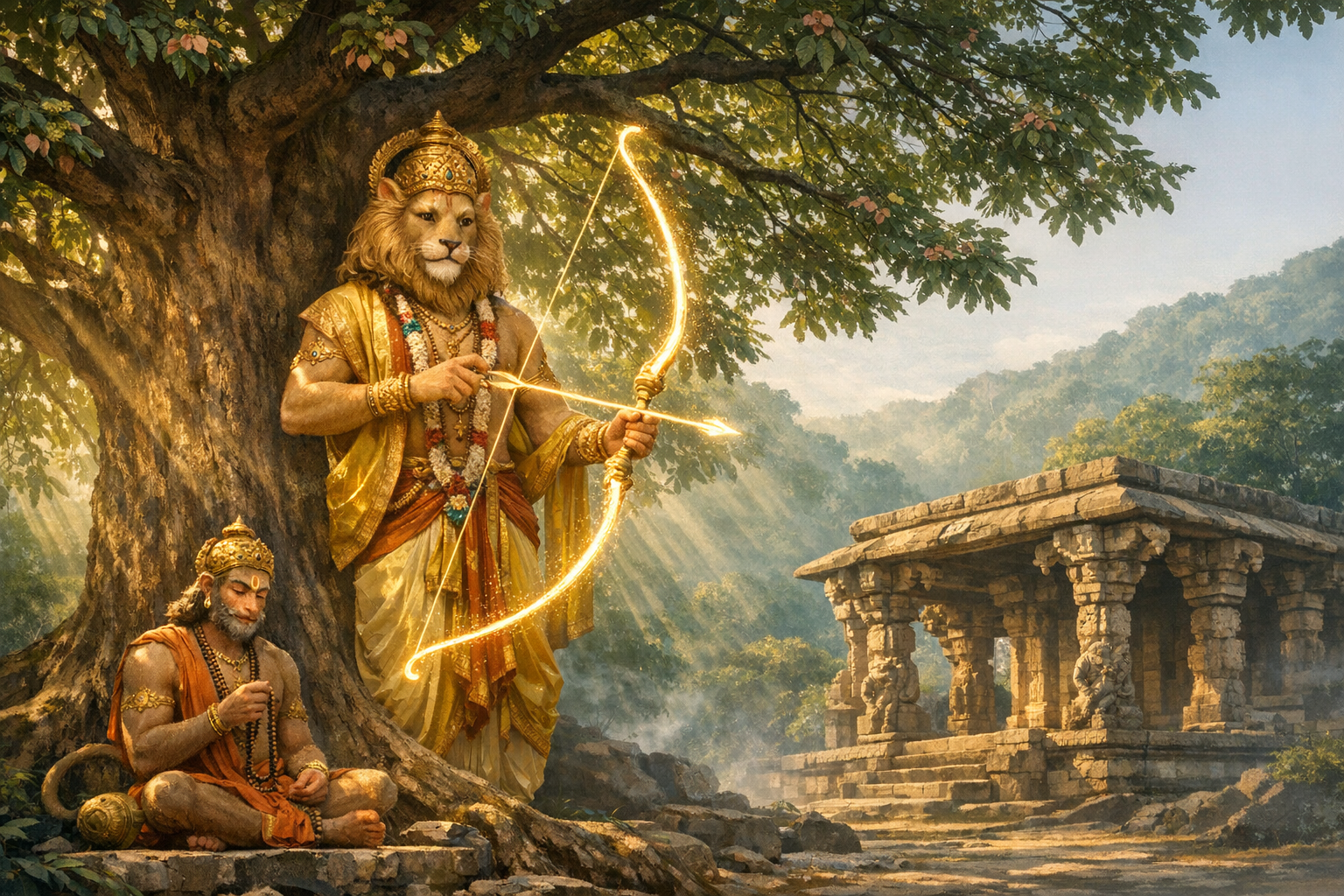
Set in the Nallamala Hills of Andhra Pradesh, this study explores Karanja Narasimha at Ahobilam, where a cherished legend narrates how the Lord adapts form to honor Hanuman’s unwavering devotion to Sri Rama. It unpacks narrative variants, explains the iconographic significance of the bow, and situates the shrine within the Nava Narasimha circuit. Readers gain…
-
Alinga Mudra’s Sacred Embrace: Decoding Shiva–Shakti Union in Hindu Sacred Sculpture
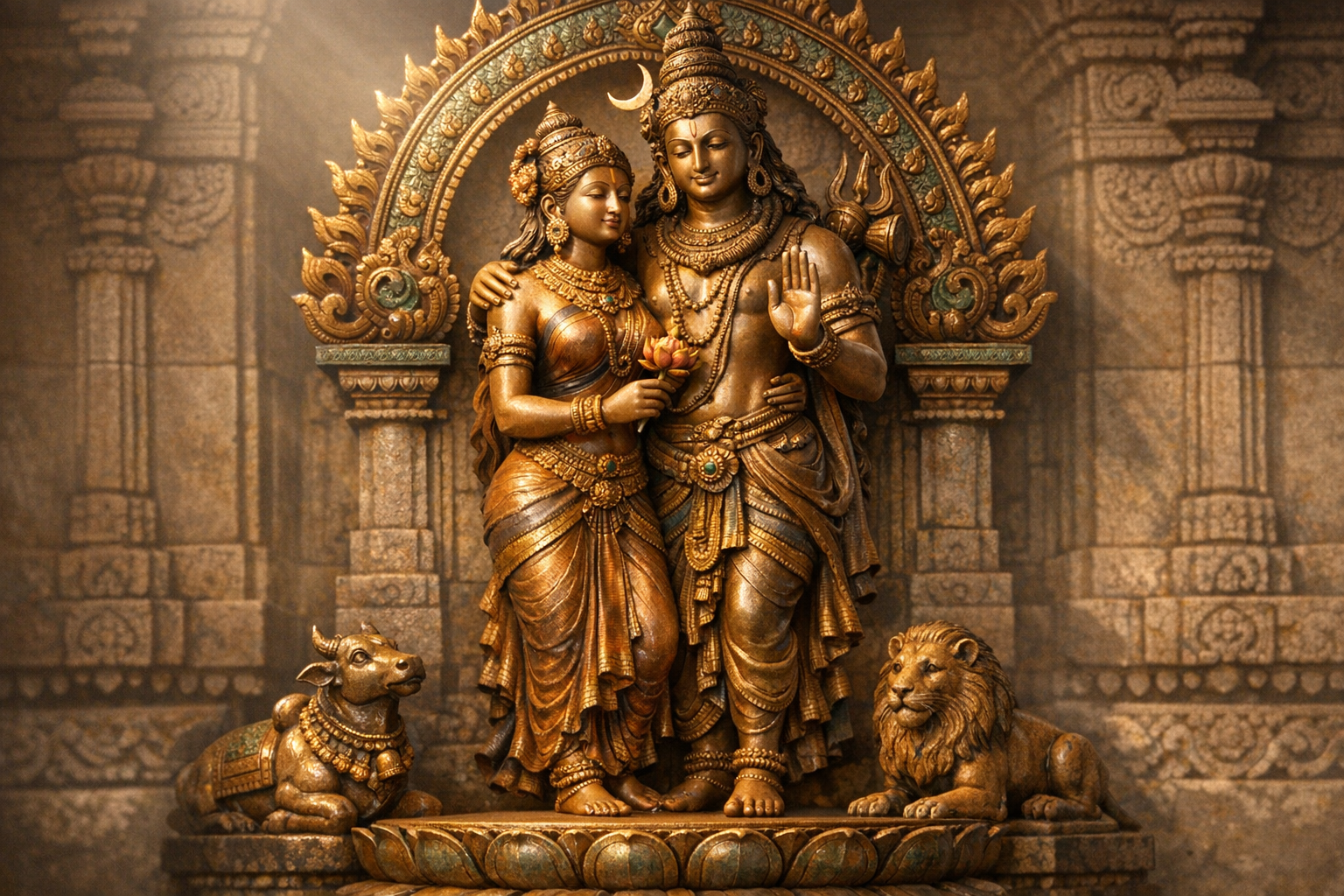
Alinga Mudrathe sacred embraceunifies aesthetics, devotion, and philosophy in Hindu sculpture, especially in Uma–Maheshvara imagery. This long-form analysis decodes how the gesture functions within Agamic and shilpa canons, balancing intimacy with public beneficence through abhaya and varada. Regional case studies (Chola bronzes, Nepal Valley reliefs, Odisha’s Kalinga temples, and Hoysala sculpture) show diverse yet coherent…
-
Prakara in Hindu Temple Architecture: Sacred Walls Guiding the Passage from Worldly to Divine
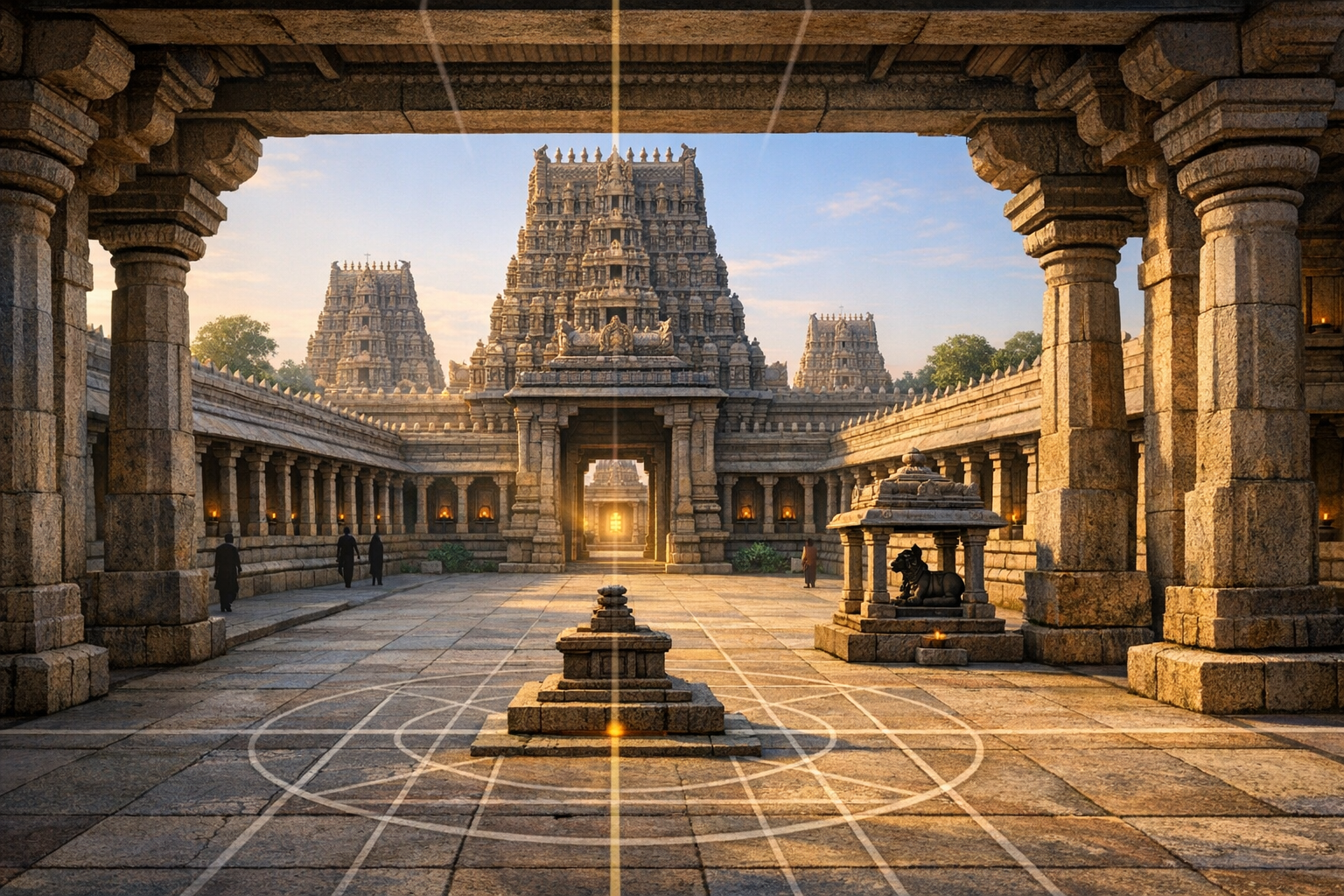
The prakaratemple enclosuredoes far more than mark a boundary; it creates a sacred transition from civic space to consecrated ground. This long-form, research-driven overview situates the prakara within Hindu temple architecture and Agamic thought, explains its role in cosmology and ritual (including pradakshina), and contrasts Dravidian, Nagara, and Kalinga expressions. Case studies from Srirangam, Chidambaram,…
-
Shankha Nidhi Unveiled: Kubera’s Conch Treasure and Guardian of Auspicious Wealth
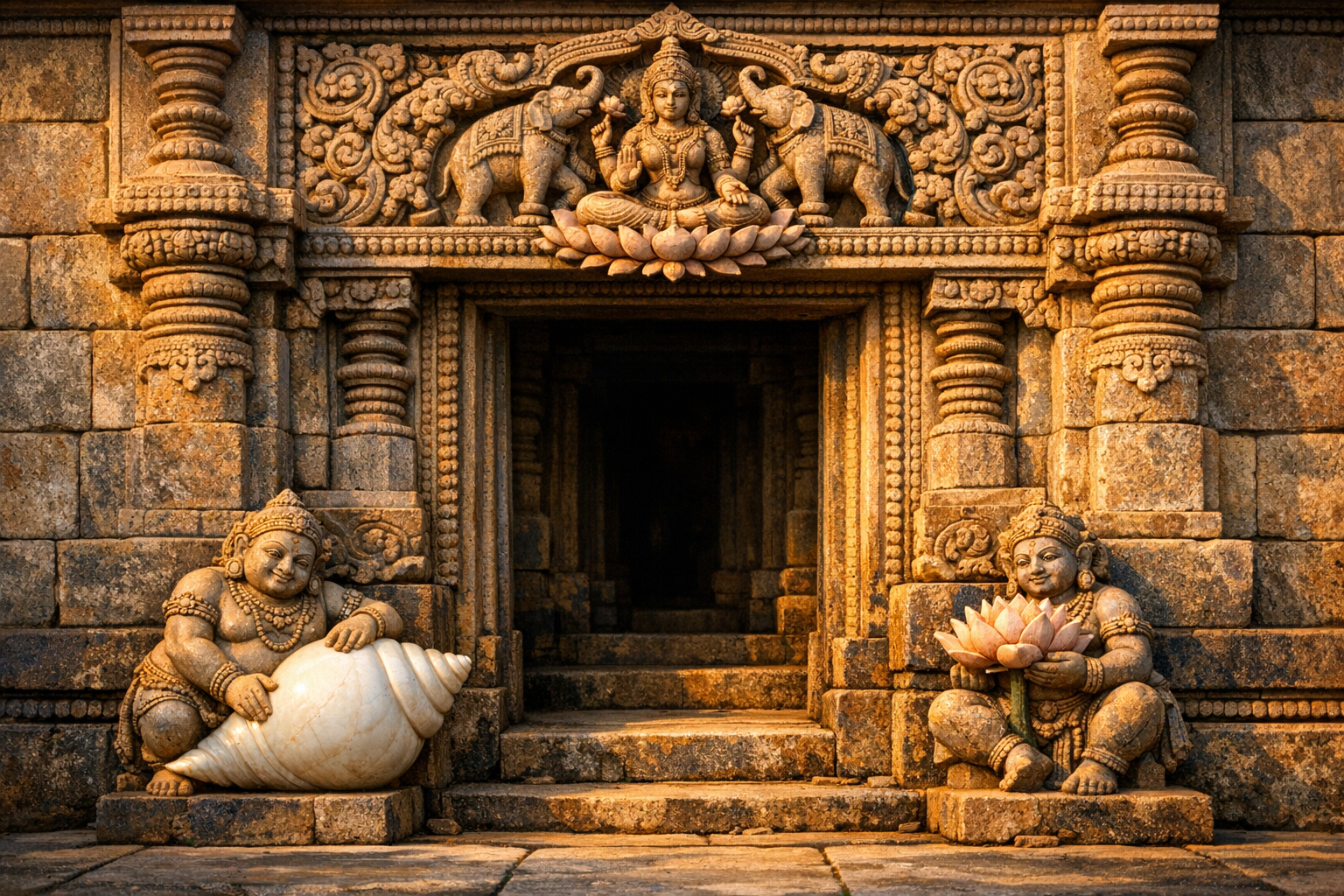
Sankha Nidhi the Conch Treasure of Kuber and an attendant emblem in Hindu temple architecture personifies ethical, auspicious wealth at the very threshold of the sacred. Often paired with Padma Nidhi and placed on door-jambs beneath Gajalakshmi, the figure teaches that resources gain sanctity when devoted to dharmic ends. Śilpaśāstra canons such as Manasara, Mayamata,…
-
After the 1397 Bahmani Raid: How Gunda Dandanatha Raised Belur’s Seven‑Storeyed Gopuram
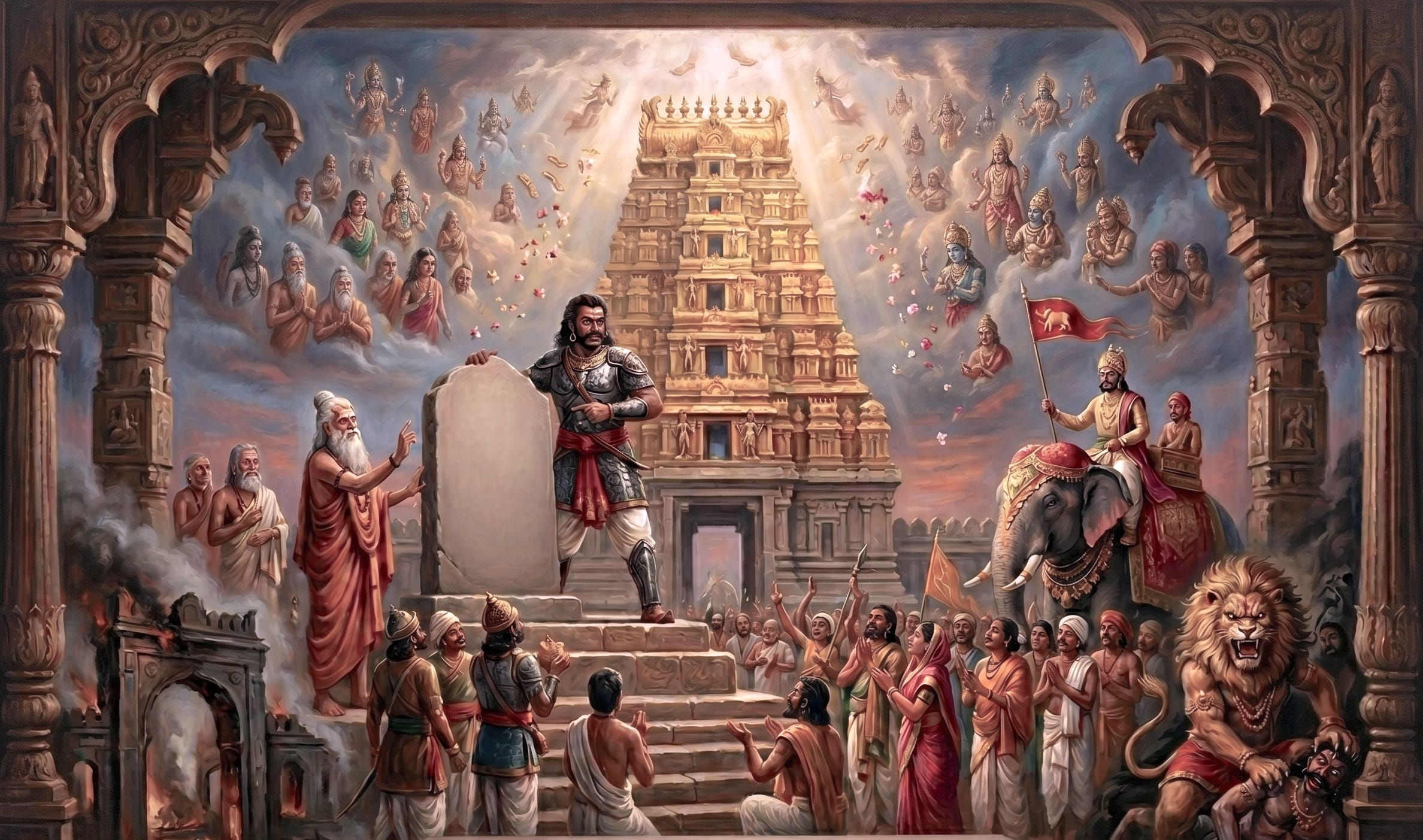
The 1397 Belur inscription records how Gunda Dandanatha, under Harihara II of the Vijayanagara Empire, rebuilt the Chennakeshava Temple’s gateway into a seven‑storeyed gopuram after an attack from Kalaburagi. Placing this event in the wider political and cultural context, the analysis explains how Vijayanagara’s ethos of Pūrvada maryādecontinuity of ancient customsguided practical restoration and renewed…
-
Mapping Sacred Power: How the Sanskrit ‘krānta’ Shapes Tantric Space and Cosmic Order
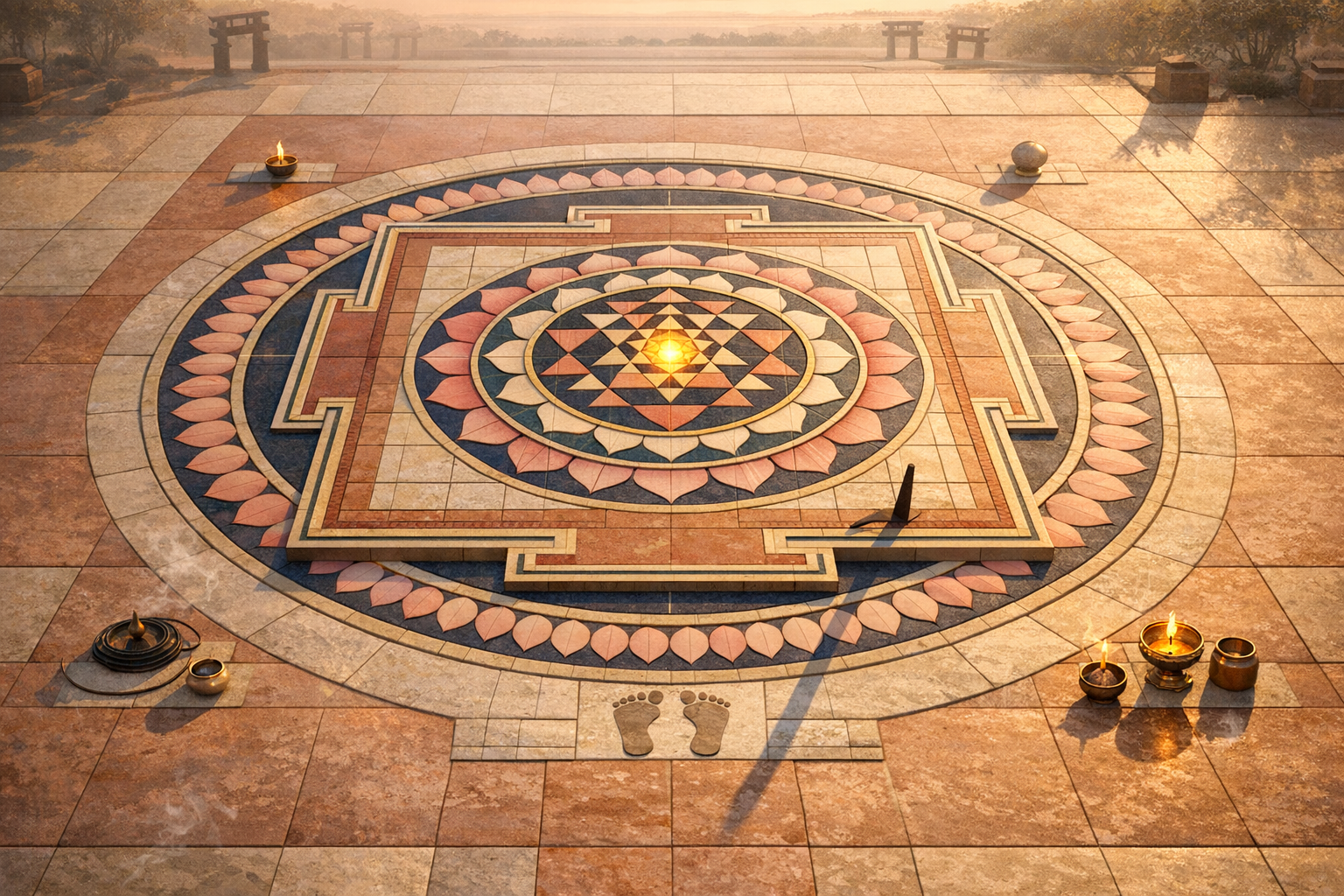
Drawing on the Sanskrit root √kram, this article explains how “kranta” (krānta) evolves in Tantric thought from a simple act of stepping into a precise science of sacred demarcation. It shows how maṇḍalas, Vāstu Puruṣa Maṇḍala, and temple architecture encode cosmic order into measured, traversable space. Readers gain a clear framework for understanding mantra, mudrā,…
-
Ekavali: Sacred Elegance of the Single Strand in Hindu Iconography and Temple Art
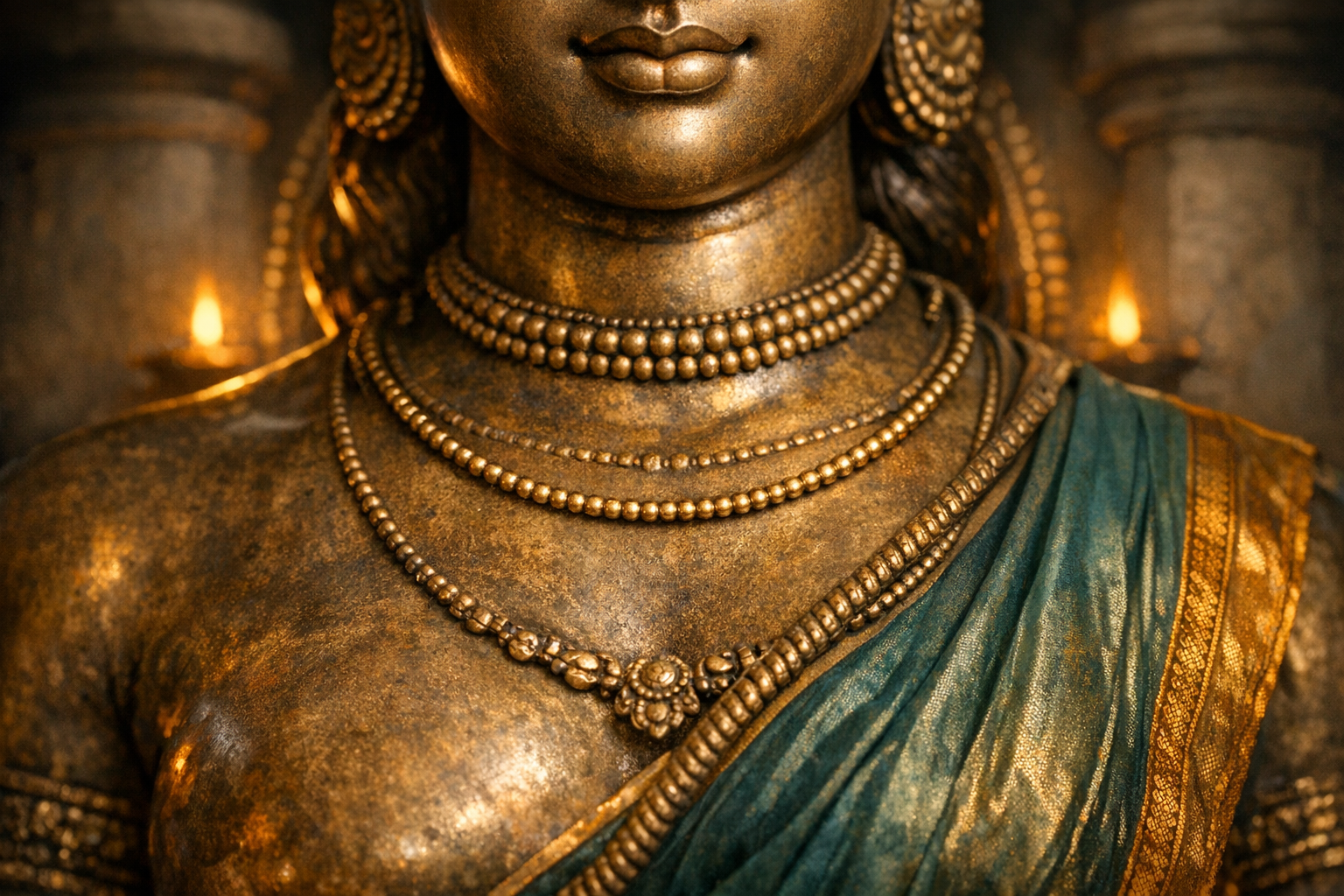
The Ekavaliliterally a single, unbroken strandanchors the visual and ritual logic of Hindu sacred art. Placed just below the throat, it defines the threshold of speech and mantra while harmonizing with longer hāras and garlands. From Gupta and Pāla–Sena stone to Chola bronzes, its form adapts to style yet preserves a consistent function: sacred simplicity…
-
Sacred Banners in Stone: Decoding the Pataka (Dhvaja) in Hindu Sculptures and Temples
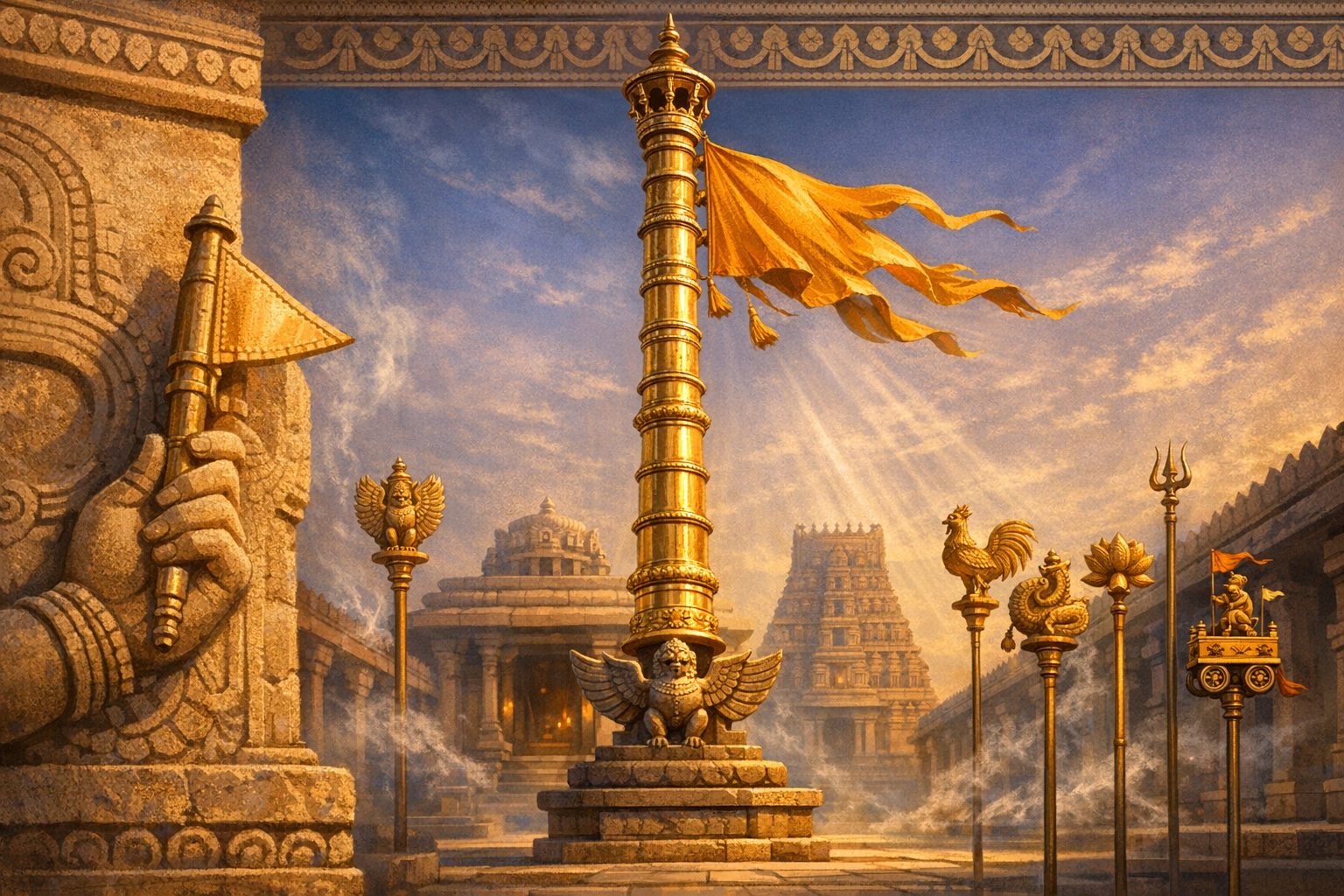
The pataka (dhvaja), or sacred banner, in Hindu sculptures and temples is an emblem of presence, sovereignty, auspicious commencement, and communal identity rather than a weapon. Rooted in Agamas and Śilpaśāstras, it belongs to the category of insignia (chihna) and is rendered in sculpture as hand-held pennons, attendant standards, and the architectural dhvaja-stambha. Emblems such…
-
Unveiling the Sacred Logic: Why Shiva’s Lilāmūrtis Adorn Temples Yet Rarely Receive Puja

Why do Shaivite temples display so many vivid forms of ShivaNataraja, Tripurantaka, Gajāsura-saṁhārayet focus daily worship on the Shiva-liṅga? This long-form, research-driven explainer shows how Shaiva Āgamas and Śilpa Śāstras place the aniconic liṅga at the contemplative center (garbhagṛha), while narrative lilāmūrtis teach theology through sight and participate in festivals as utsava-mūrtis. It clarifies the…
-
Unveiling Dola Kundala: The Pendulous Earring’s Power, Symbolism, and Living Legacy in Hindu Art
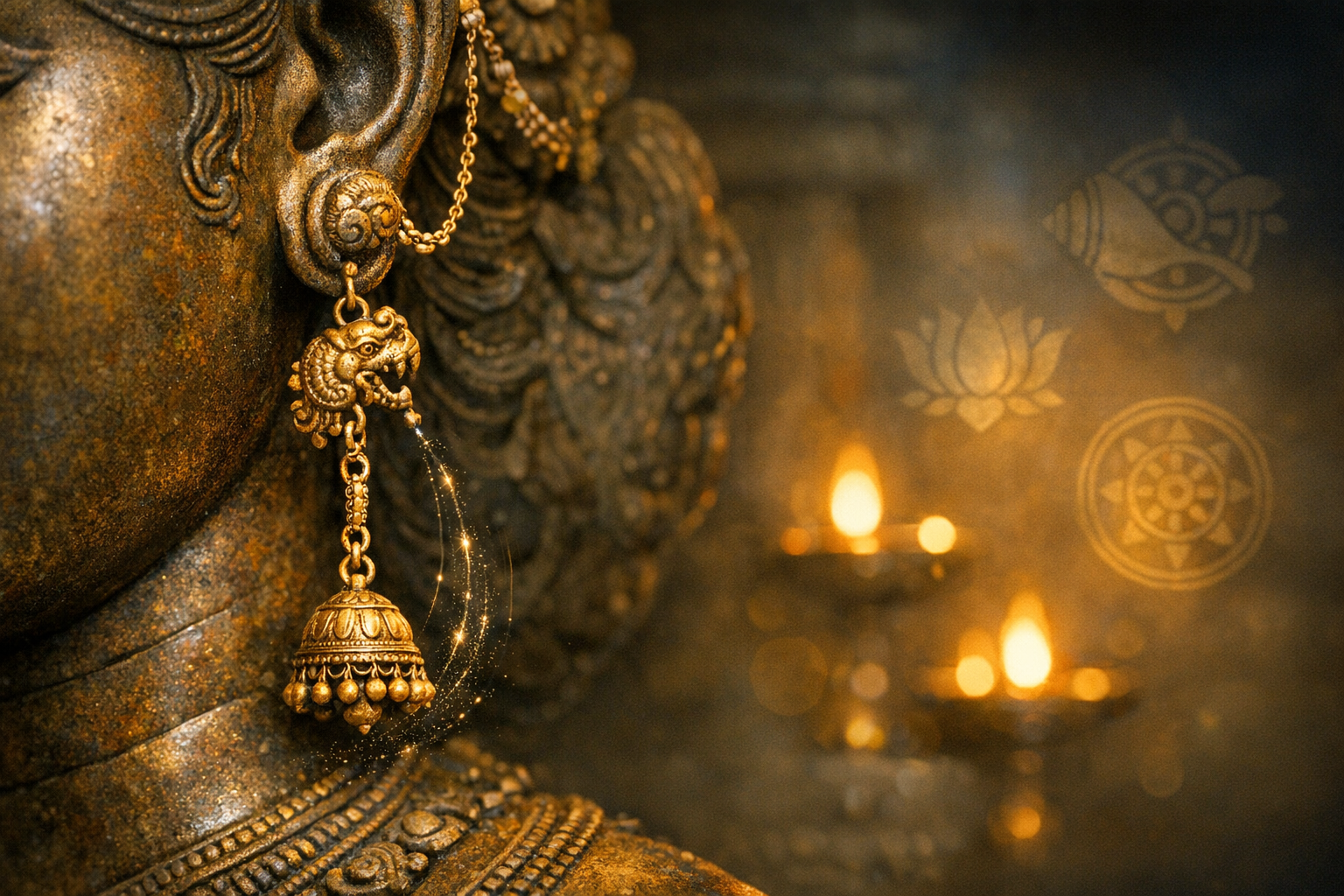
This in-depth exploration reveals how the dola kundalathe pendulous earring in Hindu sacred arttransforms ornament into theology-in-motion. It defines the term’s Sanskrit roots, surveys guidance from shilpa shastras, and shows how Shaiva, Vaishnava, and Shakta images employ swinging earrings to animate the divine face. Cross-dharmic touchpoints with Buddhist bodhisattvas and Jain yaksha–yakshi imagery highlight a…
-
Patteeswaram Durgai Amman Ashtottaram: Sacred Origins and a Step-by-Step Chanting Guide
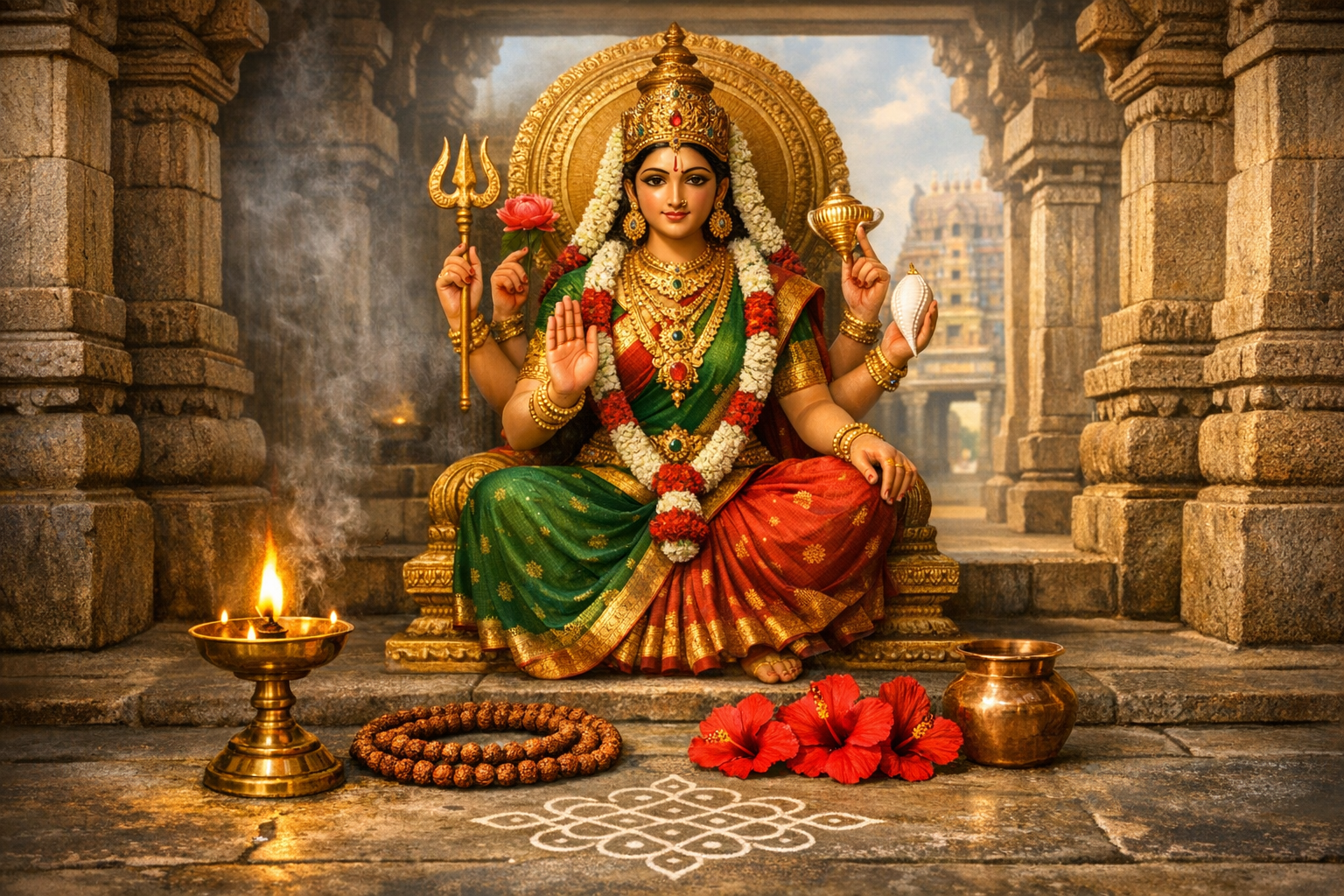
The Patteeswaram Durgai Amman Ashtottaram brings together classical temple worship and Shakta theology within the Chola-era Thenupuriswarar Temple near Kumbakonam, Tamil Nadu. This comprehensive guide clarifies Ashtottaram (108 names) versus Ashtakam (eight-verse hymn), outlines the cosmological meaning of 108, and explains how the Patteeswaram tradition venerates Sri Kaathyayani, Ambica, Kali, and Lokamata. Readers receive a…
-
Parameshvara Samhita Revealed: Pancharatra Masterwork of Ritual, Devotion, and Temple Science

The Parameshvara Samhita is a Pancharatra masterwork that unites theology, ritual science, and sacred architecture into a coherent path of devotion. Across fifteen chapters, it presents precise protocols for prana-pratishtha, nitya-puja, abhishekam, and festival cycles while grounding every act in ethical cultivation and dharma. Its doctrinal core rests on the Vyuha doctrine and the arcavatara,…
-
Rama’s Exile Reimagined: How the Indonesian Ramayana Transforms Vanvas into Sacred Austerity
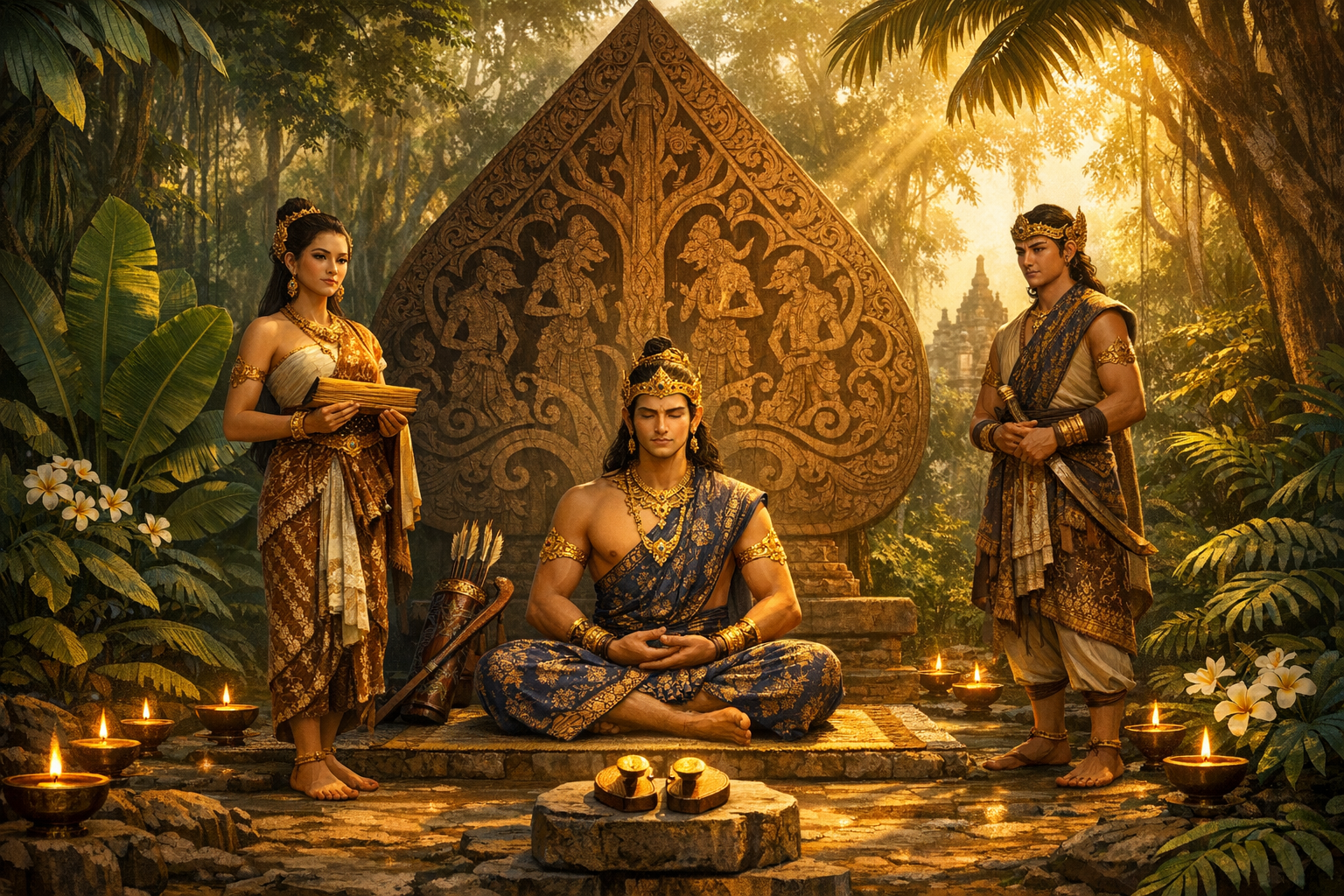
The Indonesian Ramayana preserves the familiar arc of Rama’s 14-year exile while transforming its meaning through Javanese-Balinese ethics, performance, and iconography. Drawing on the Kakawin Ramayana, Prambanan’s ninth-century reliefs, and wayang and kecak traditions, exile (vanvas) is recast as tapa brataa disciplined pathway to leadership rather than mere banishment. Local concepts such as nrimo ing…
-
Jalandhara Samhara: The Rare Shiva with Chatra FormIconography, Symbolism, and Temple Lore
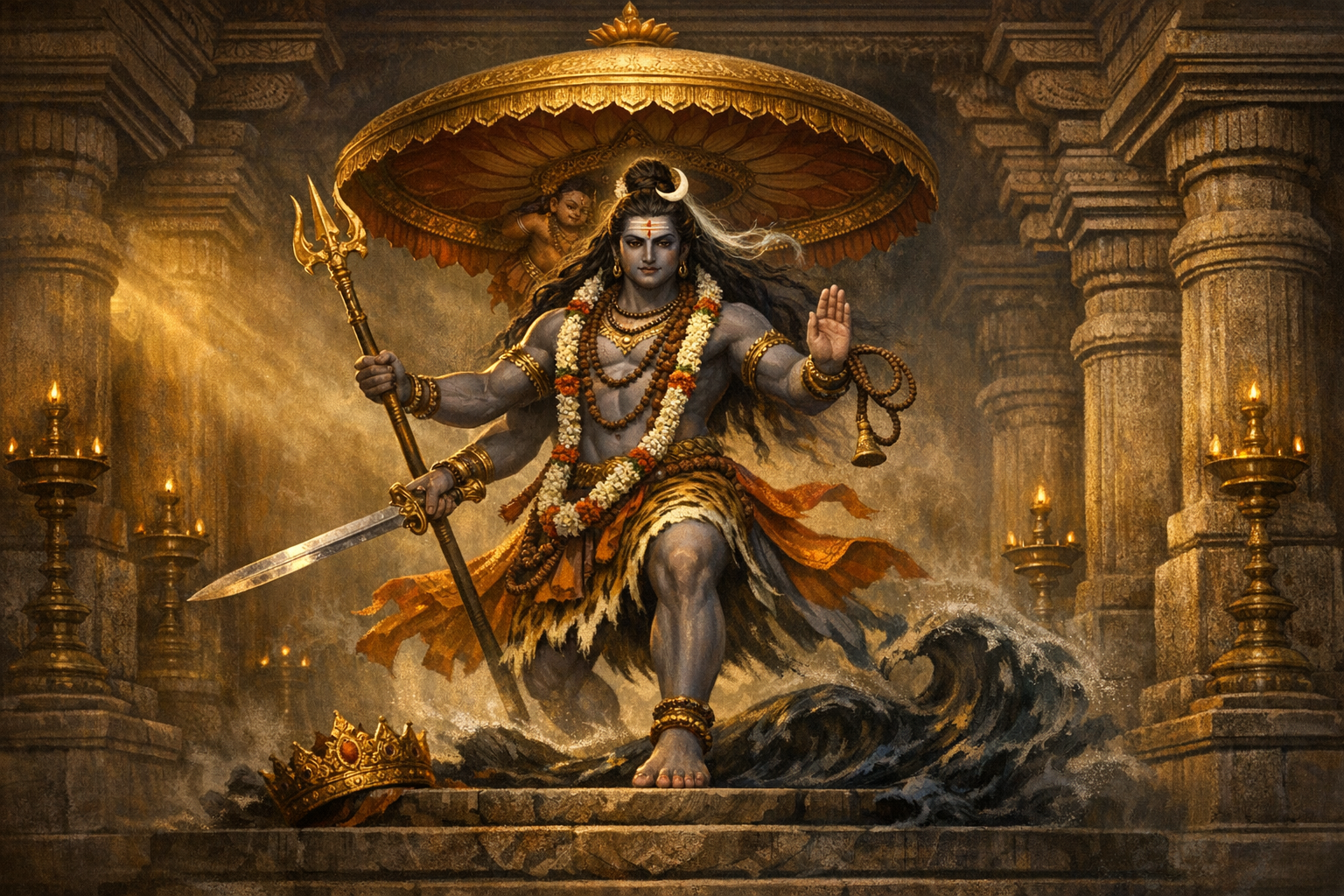
This long-form study examines Jalandhara Samhara, the rare Shiva form sometimes depicted with a chatra (parasol), situating it within Puranic narrative, Agamic prescriptions, and South Indian temple practice. It clarifies how the icon differs from Nataraja, Lingodbhava, and Dakshinamurti by foregrounding righteous protection and ethical sovereignty. The chatra’s symbolism is analyzed as both royal regalia…