
-
Krodha Bhairava Unveiled: Iconography of the Fourth Circle of the Sixty-Four Bhairavas
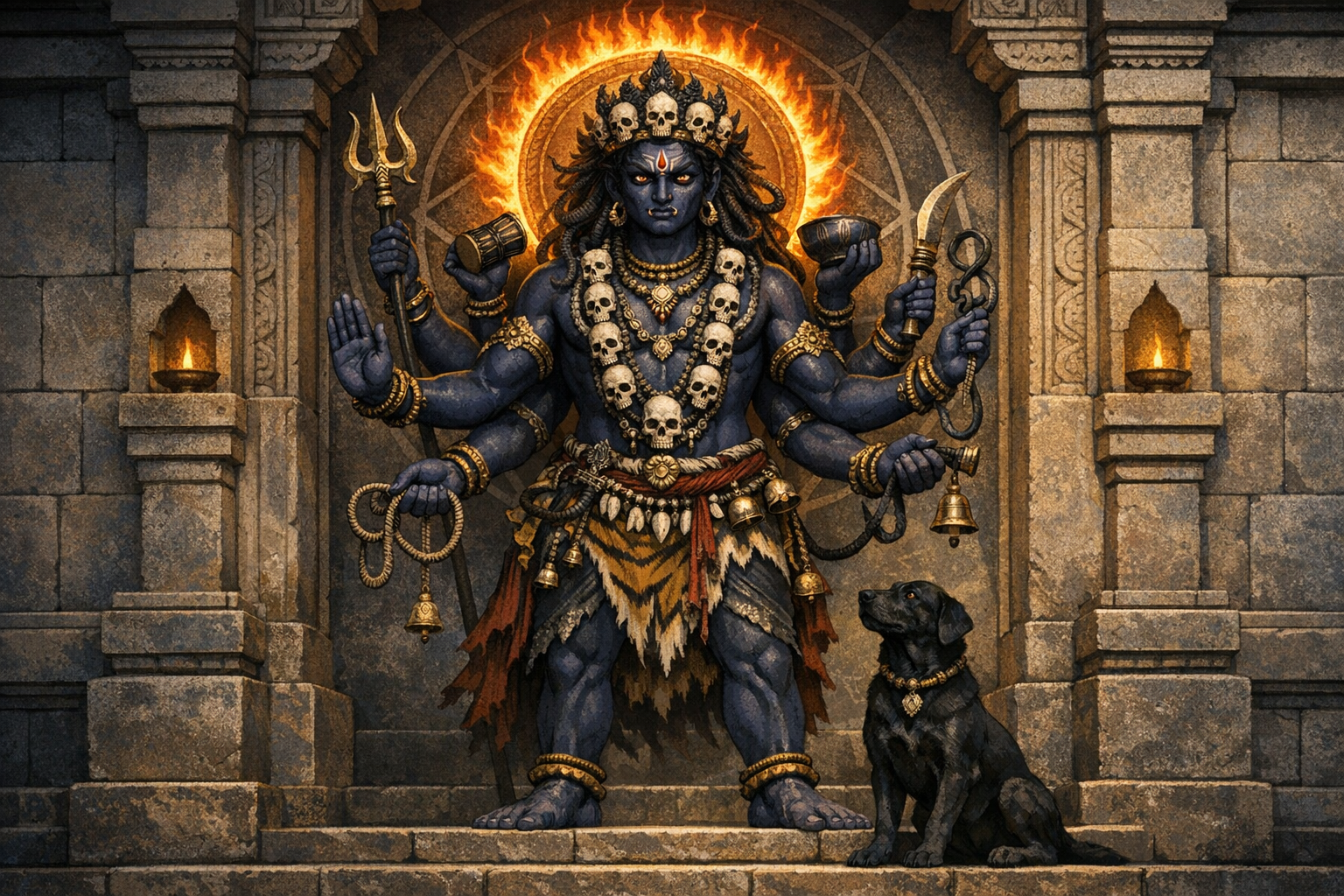
Krodha Bhairava, a fierce and protective manifestation of Shiva, presides over the fourth circle of the Sixty-Four Bhairavas, uniting wrathful compassion with precise Hindu sculptural grammar. Drawing on Agamas, Shilpa Shastras, and Puranic echoes, this in-depth overview explains his stance, weapons, ornaments, vāhana, and cremation-ground motifs. Readers learn how to visually “read” the iconstarting from…
-
Decoding Akarna Mudra in Hindu Sculptures: Archer’s Focus, Sacred Readiness, and Power
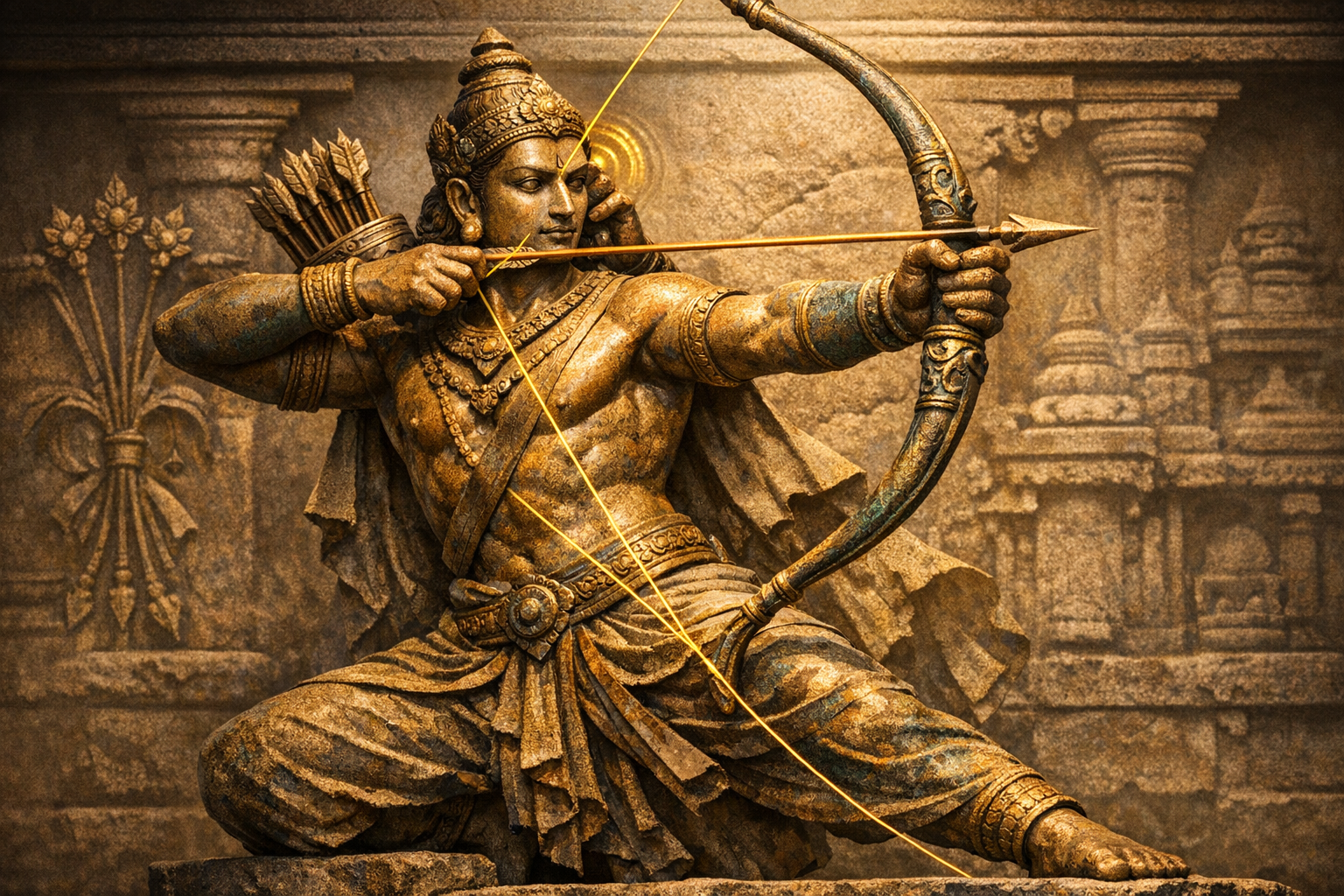
Akarṇa Mudrāliterally “toward the ear”captures the archer’s draw in Hindu iconography as a precise fusion of readiness, ethical restraint, and focused intent. Sculptors encode this moment through a consistent grammar of stance, hand configuration, and gaze, translating Dhanurveda mechanics and Nāṭya Śāstra principles into stone and bronze. Deity-specific bows like Pināka, Śārṅga, and Kodaṇḍa anchor…
-
Nilathingal Thundam Perumal at Ekambaranathar, Kanchipuram: Moonlit Healing at a 108 Divya Desam
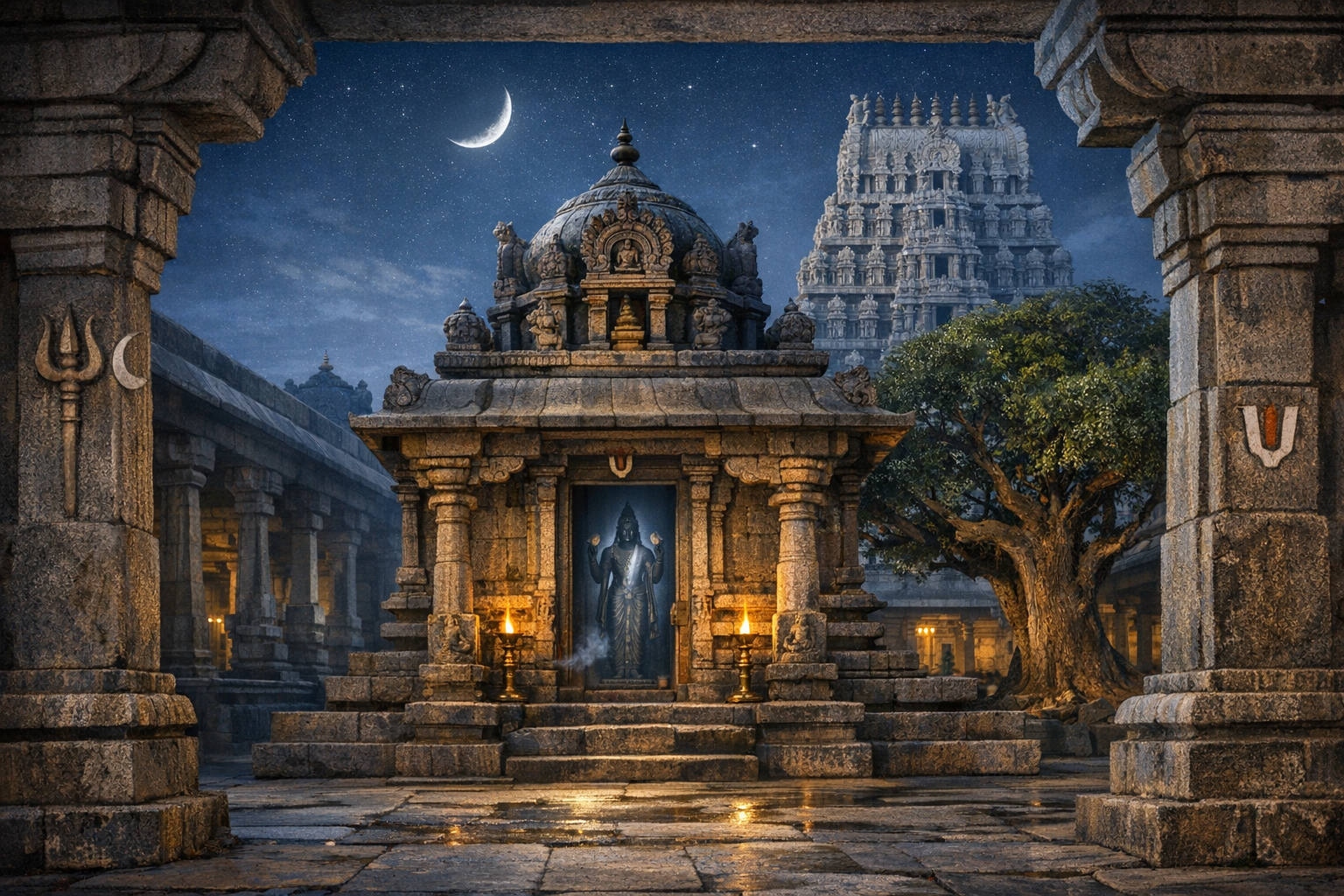
Kanchipuram’s Nilathingal Thundam Perumal is a rare 108 Divya Desam enshrined within the great Shaiva Ekambaranathar Temple, embodying a living harmony between Vaishnava and Shaiva traditions. Local legendcaptured in the name “moon-fragment sanctuary”celebrates Shiva cooling and healing Vishnu with the moon’s radiance, making the site a poetic locus of grace and reconciliation. Architecturally, the compact…
-
Shiva as the Tiger‑Slayer: Sardula Samhara Murti, Darukavana Myth and the Fall of Ritual Ego
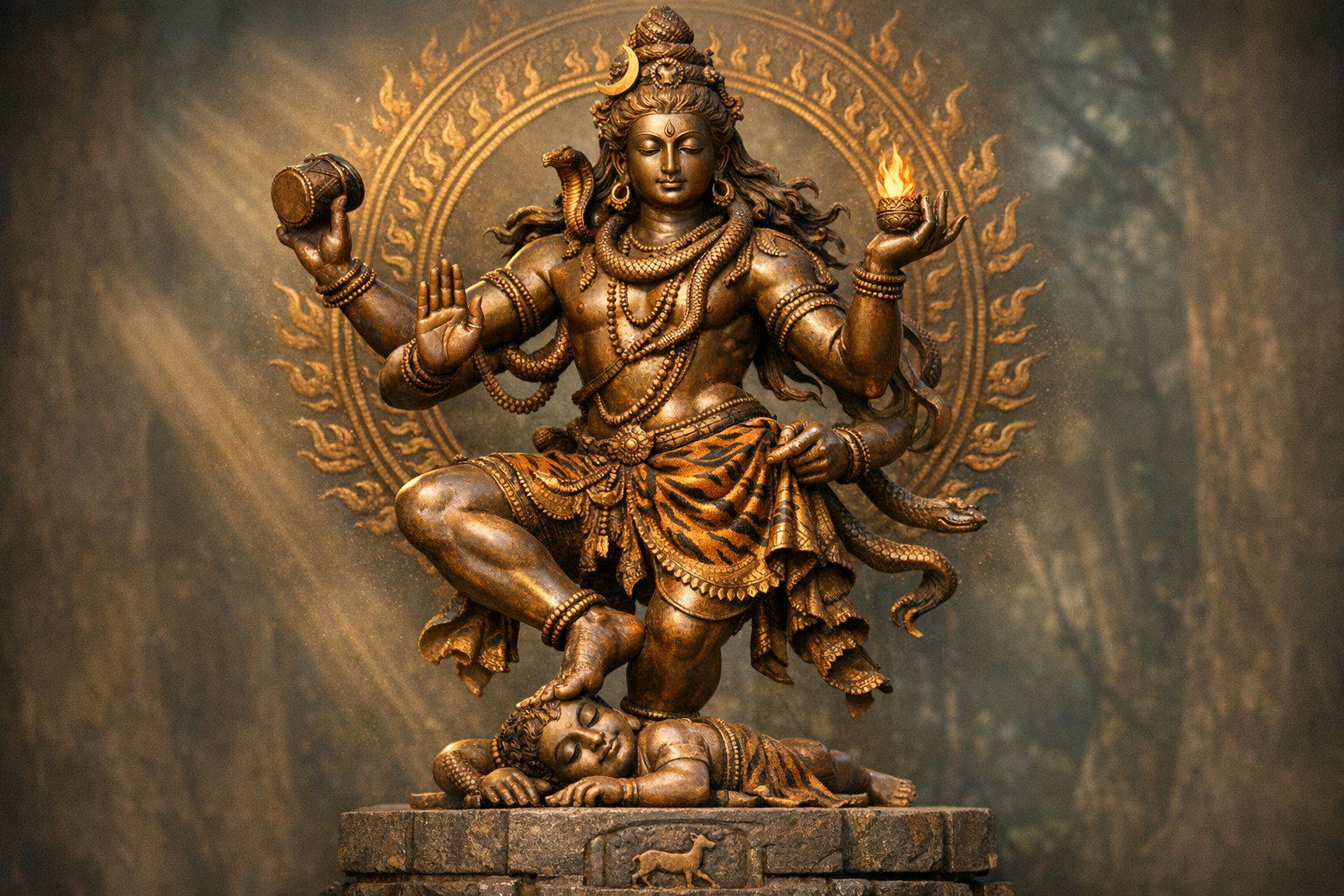
Sardula Samhara Murti portrays Shiva as the Tiger‑Slayer of Darukavana, an image that dissolves ego and ritual pride rather than celebrating brute force. The narrative anchors a subtle theology: saṁhāra is the removal of inner obstructions, not annihilation of life. By reading the icon’s visual grammartiger skin, serpents, ḍamaru, and agnireaders gain a practical key…
-
Ruru Bhairava Iconography Unveiled: The Gentle Guru Among the 64 Fierce Protectors
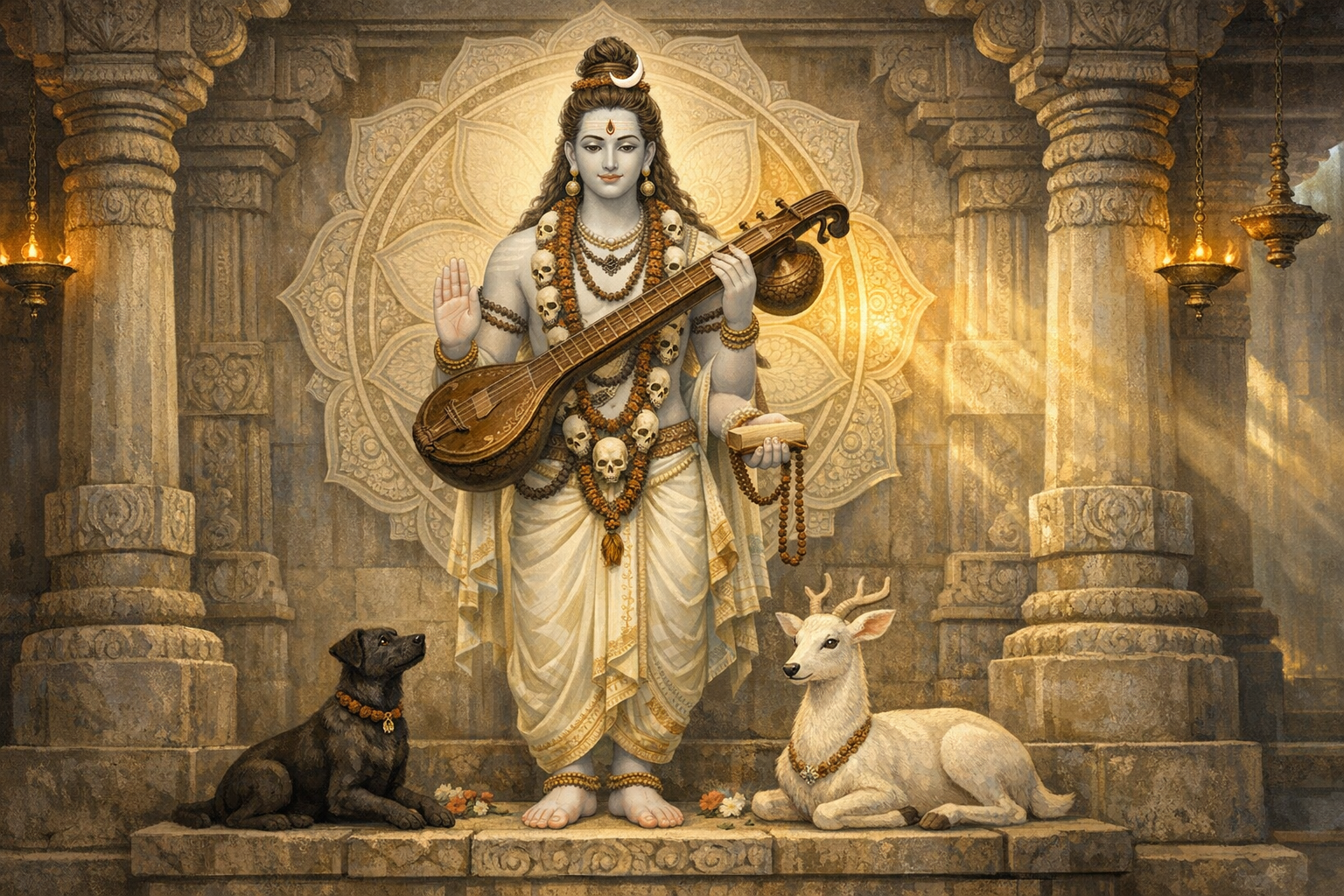
Ruru Bhairava is revered as the teacher among the sixty-four manifestations of Bhairava, presiding over the second group within the Ashtashta Bhairavas. Iconography emphasizes a serene, pedagogical presenceoften with a vīṇā, book, or rosaryset within Bhairava’s standard emblems such as jaṭā, serpent ornaments, and the crescent moon. Regional traditions vary in vāhana and hand-attributes, but…
-
Decoding the Ten Siddhi Devis: Guardians of Mahameru’s Sri Chakra First Avarana
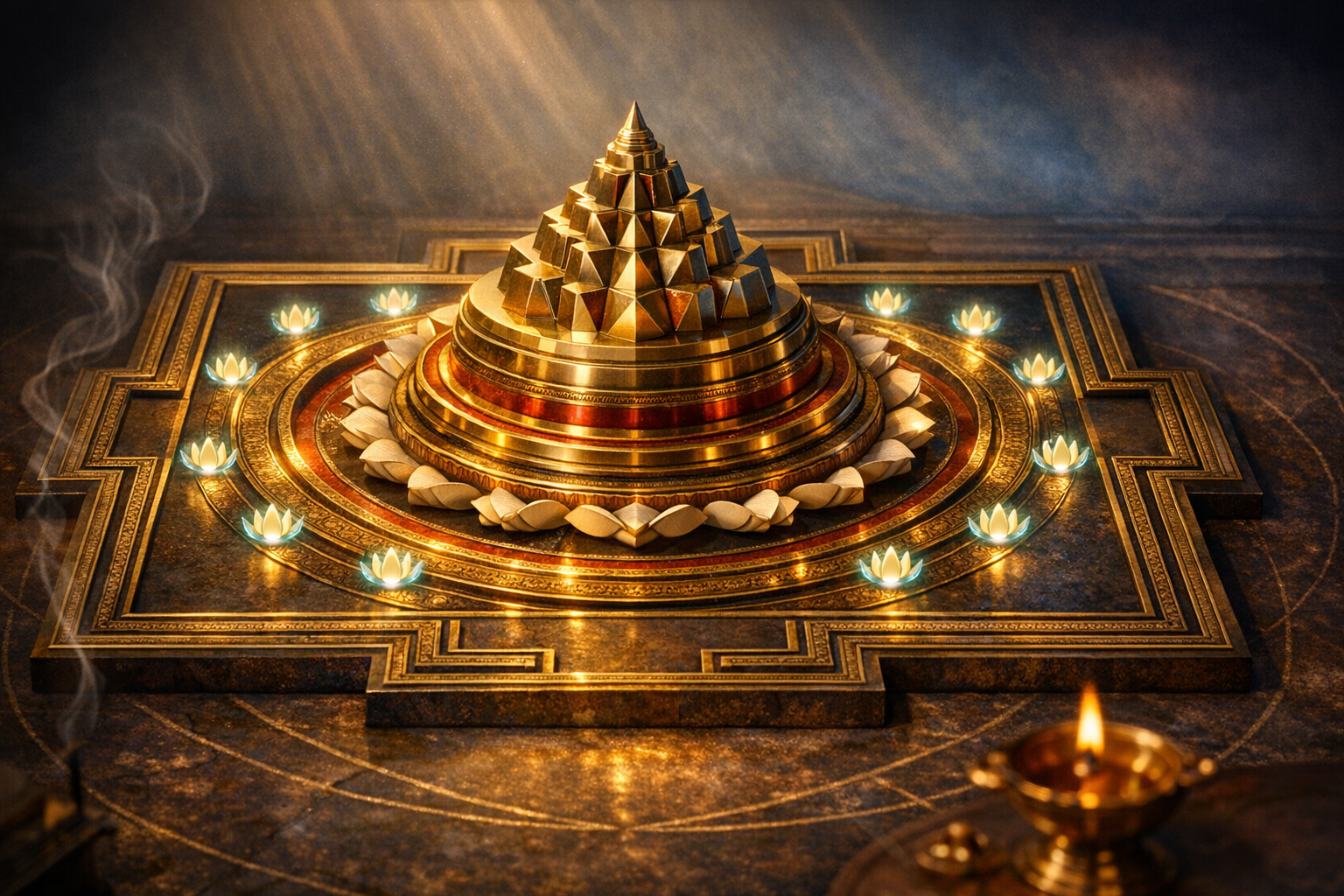
The Mahameru Sri Chakra’s first avaranaTrailokya-mohana, the bhupurahouses the Ten Siddhi Devis who guard the sacred threshold from Anima to Sarvakama. This long-form, research-driven essay decodes their technical meanings, ritual functions in Sri Vidya navavarana puja, and practical correlates in attention, ethics, and resilience. It clarifies variant lineage lists while preserving accuracy, situating siddhi within…
-
Padma Samhita Unveiled: Timeless Pancharatra Rituals to Elevate Modern Spiritual Life
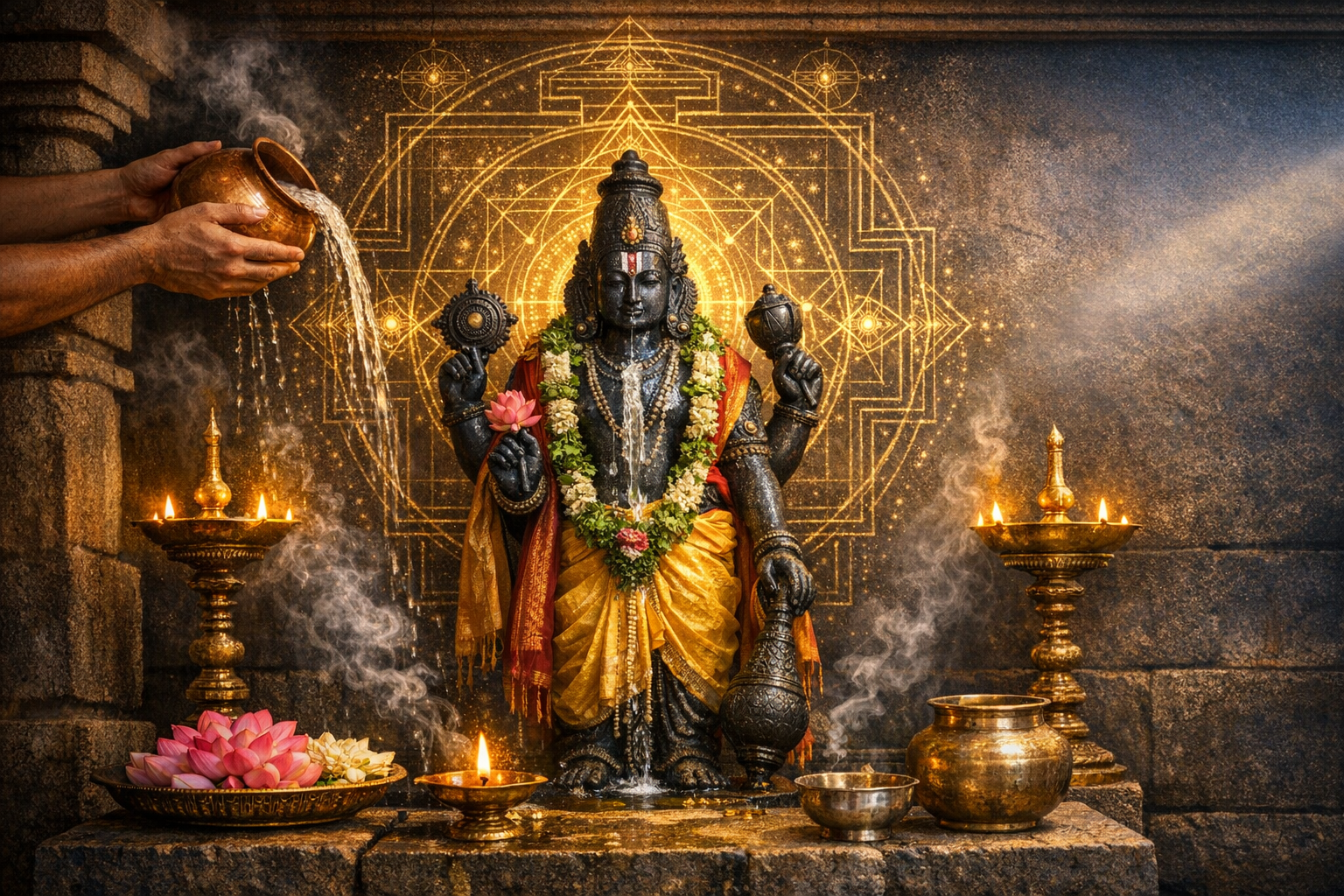
Padma Samhita is a cornerstone of the Pañcarātra tradition, detailing thirty-one chapters that integrate temple construction, mūrti consecration, daily worship, and ethical formation. This overview explains its core theologythe vyūha doctrine and arcā avatāraand shows how mantras such as Om Namo Nārāyaṇāya and Om Namo Bhagavate Vāsudevāya shape steady household practice. Readers gain a practical…
-
Unveiling Goddess Kaveri in Hindu Sculpture: Iconography, Ritual Power, and Sacred Geography
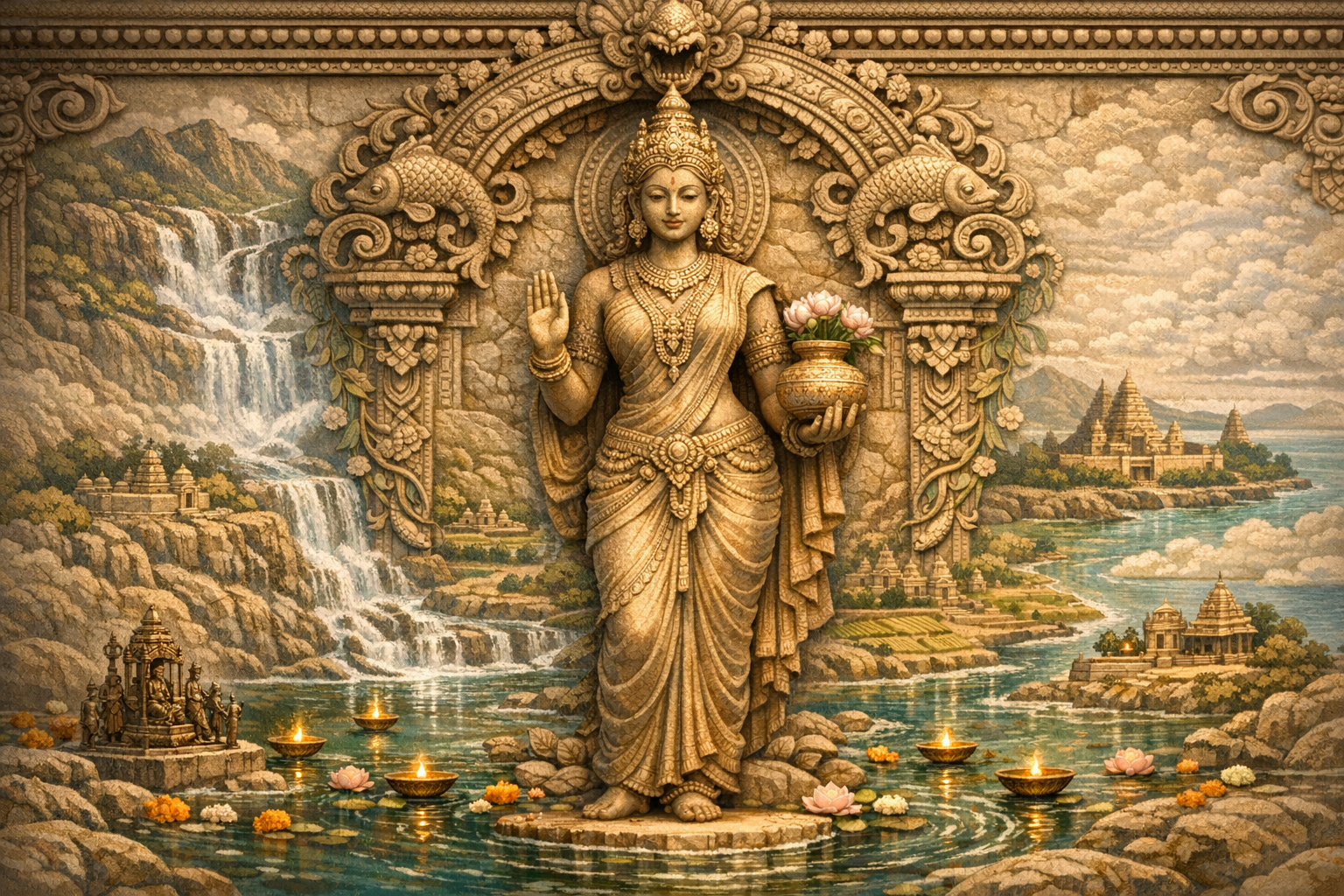
Goddess Kaveri, revered as a living river and divine mother, is rendered in Hindu sculpture through a precise visual grammar that blends Shilpa Shastra canons with the lived rhythms of sacred geography. This essay explains how to recognize her iconography, from kumbha and lotus attributes to makara-toranas and gentle mudras, and shows where she commonly…
-
Asitanga Bhairava Unveiled: Iconography, Mantras, and the Sacred Power of the Golden Lord
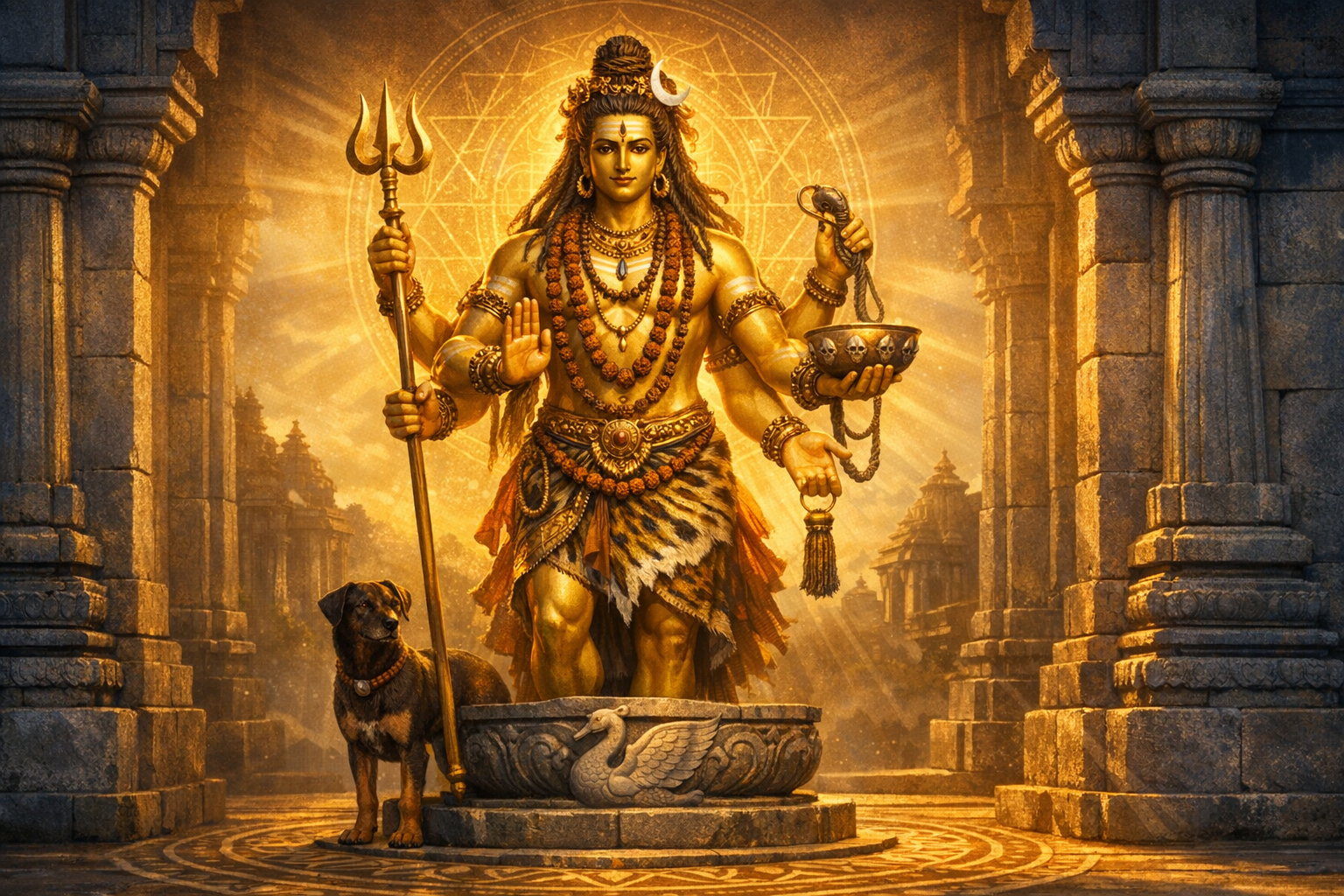
Asitanga Bhairava, the Golden Lord of the First Octet, embodies a luminous, eastward guardianship that unites protection with awakening. This long-form exploration decodes his iconographygolden hue, trident, drum, skull-bowl, and threshold placementso readers can recognize and interpret the form in temples and texts. It clarifies how attributes map to disciplined practice, turning weapons into inner…
-
Padma in Hindu Sculptures: The Lotus as Cosmic Throne, Purity Symbol, and Living Geometry
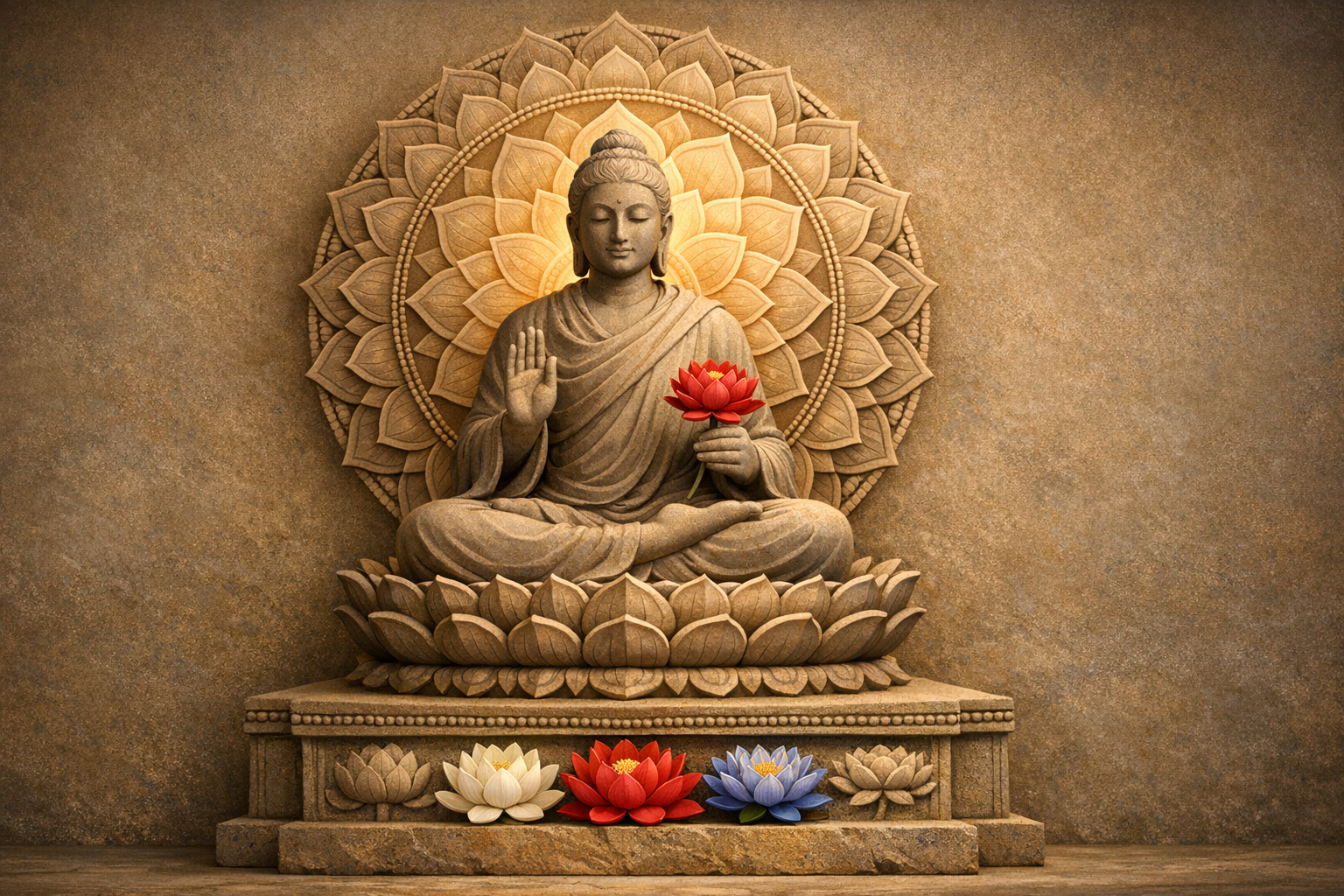
This in-depth guide decodes how the lotus (padma) functions in Hindu sculptures as attribute, throne, halo, and yogic sign, translating sacred meaning into readable form. Readers learn to distinguish bud, half-bloom, and full bloom, recognize color symbolism, and spot double-lotus pedestals with confidence in temples and museums. Clear references to Shilpa Shastra canons show how…
-
Adhi Kandhanatha Swamy of Erakaram: Murugan’s Abhaya Grace, History, Architecture, Rituals
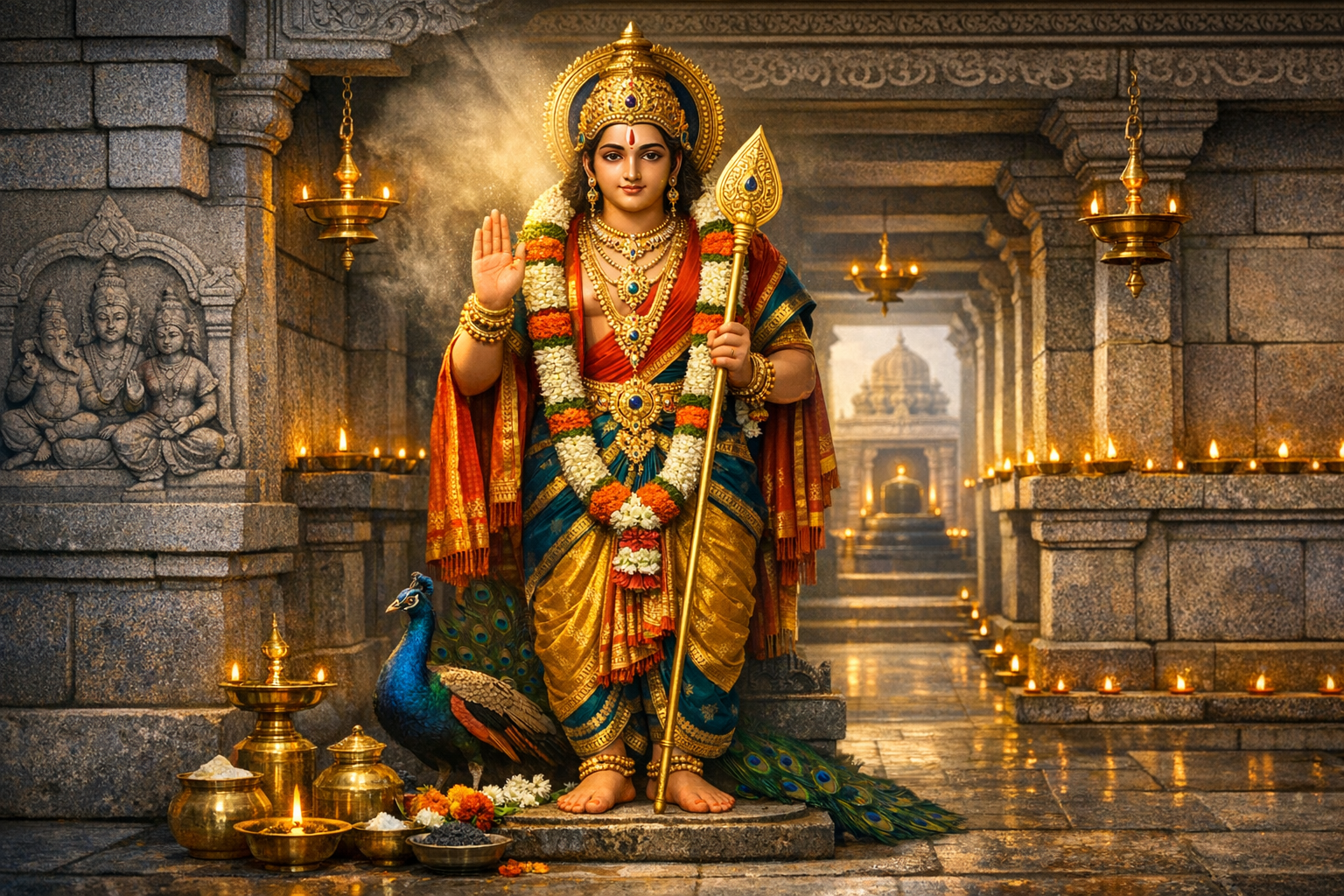
Adhi Kandhanatha Swamy Temple, Erakaram, presents a distinct Murugan shrine aligned behind a Shiva temple, highlighting Tamil Saiva-Agamic Temple Architecture and the Somaskanda ideal. The standing murti with abhaya hastam communicates protection and spiritual assurance, drawing devotees seeking courage, clarity, and peace. The shrine’s association with Arunagirinathar’s Thirupukazh embeds a rich musical-liturgical tradition that educates…
-
Kalaram Mandir, Nashik: Sacred Origins, Peshwa-Era Grandeur, and the Legacy of Panchavati
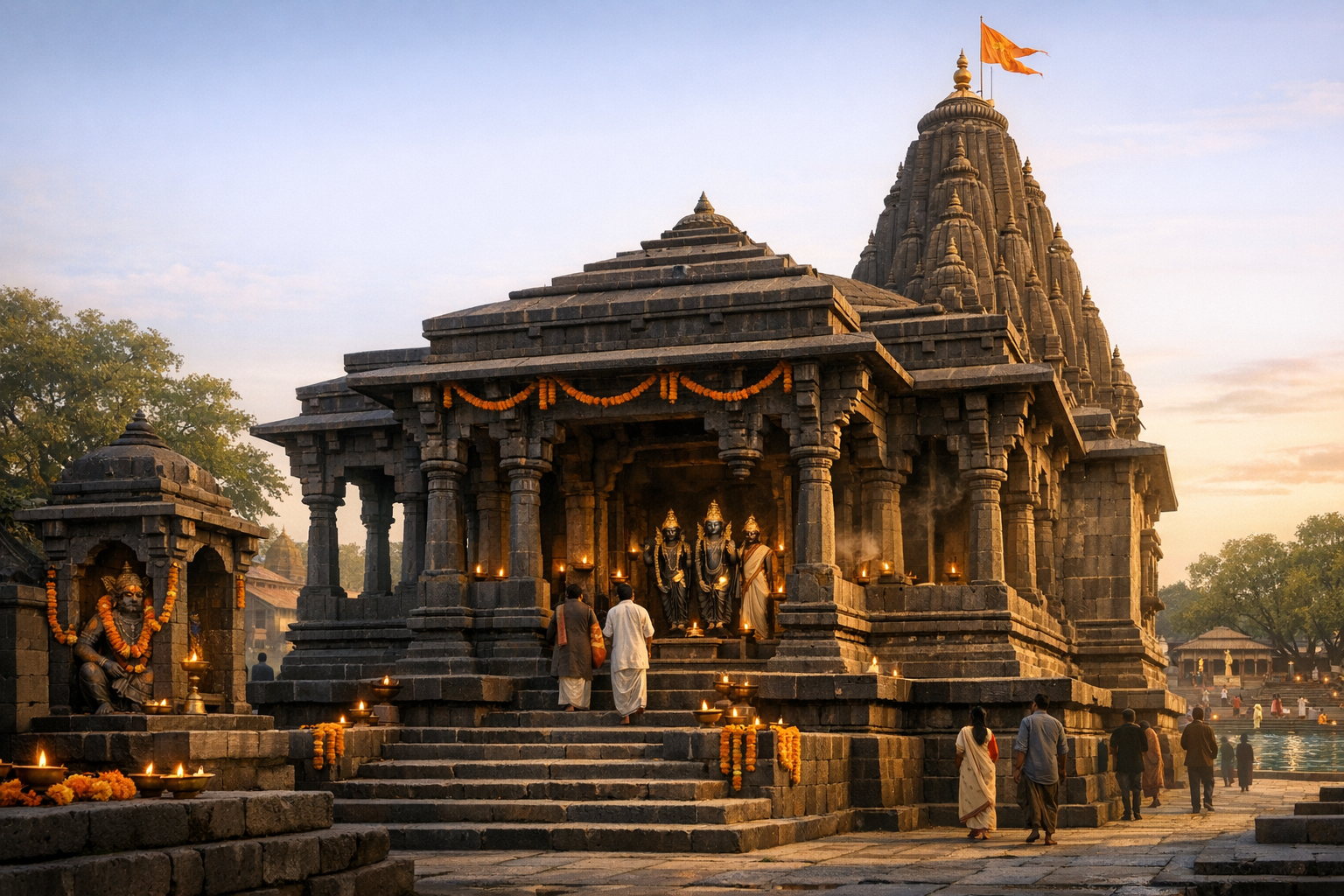
Kalaram Mandir in Panchavati, Nashik, is a landmark of Rama-bhakti and Peshwa-era craftsmanship renowned for its black stone murti of Bhagavan Sri Rama with Mata Sita and Lakshmana. Local tradition venerates the deity as swayambhu, with the temple’s late-18th-century construction attributed to Sardar Rangarao Odhekar. Set within the Ramayana-rich landscape of Ramkund, Sita Gufa, and…
-
Decoding Dhammilla: The Timeless Sacred Hair-Knot of Goddesses in Hindu Sculptures
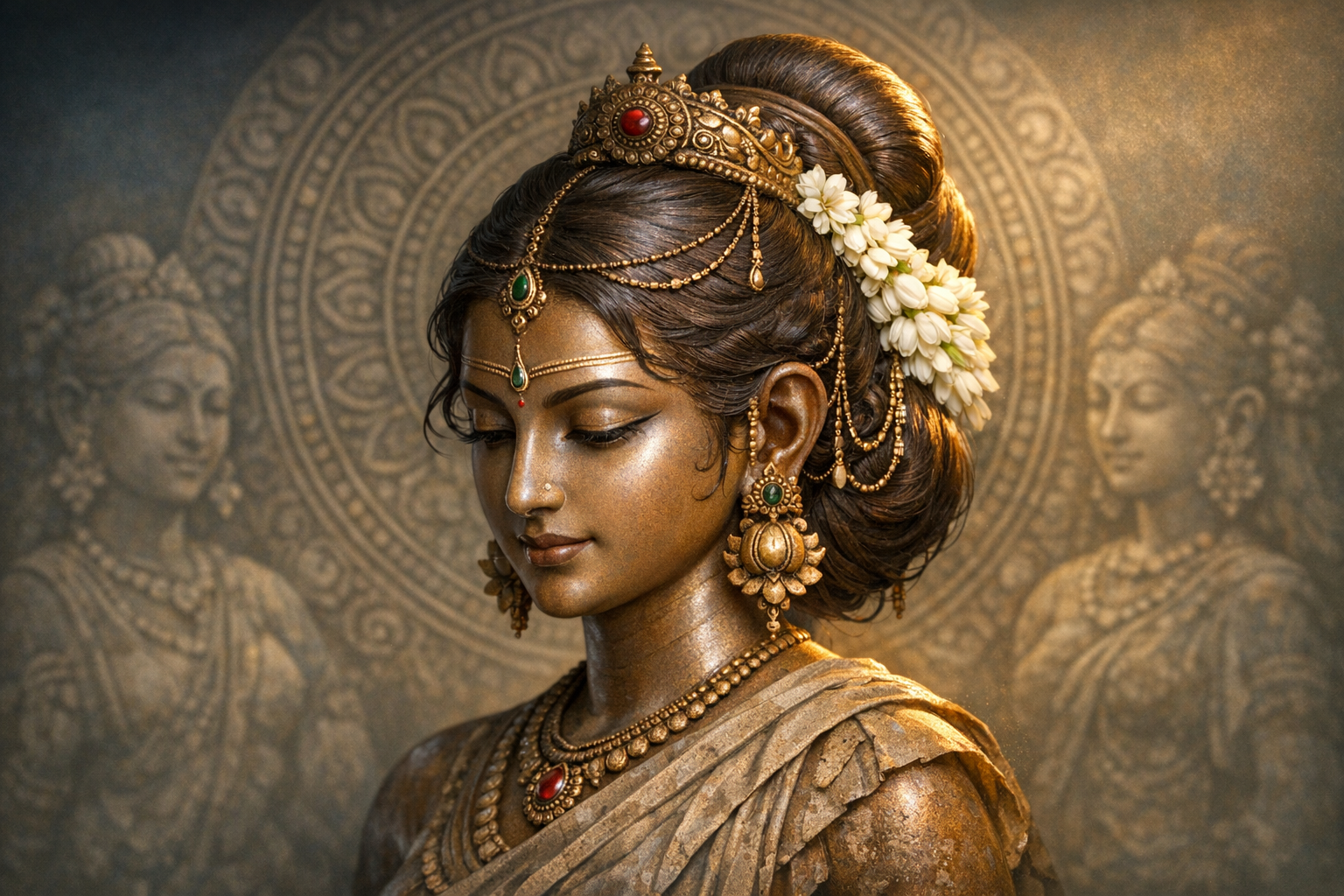
Hair in Hindu sculptures is a precise visual language, and the dhammillathe compact, coiled bunconcisely signals the serene, auspicious presence of the Divine Feminine. This long-form exploration defines dhammilla, traces its regional and historical variants from Mathura to Chola and Hoysala ateliers, and explains how Shilpa Shastra and Agama traditions codify coiffure as theology in…
-
Bhairava as Kshetrapala: Fierce Guardian of Sacred Space and Why Temples Map the Cosmos
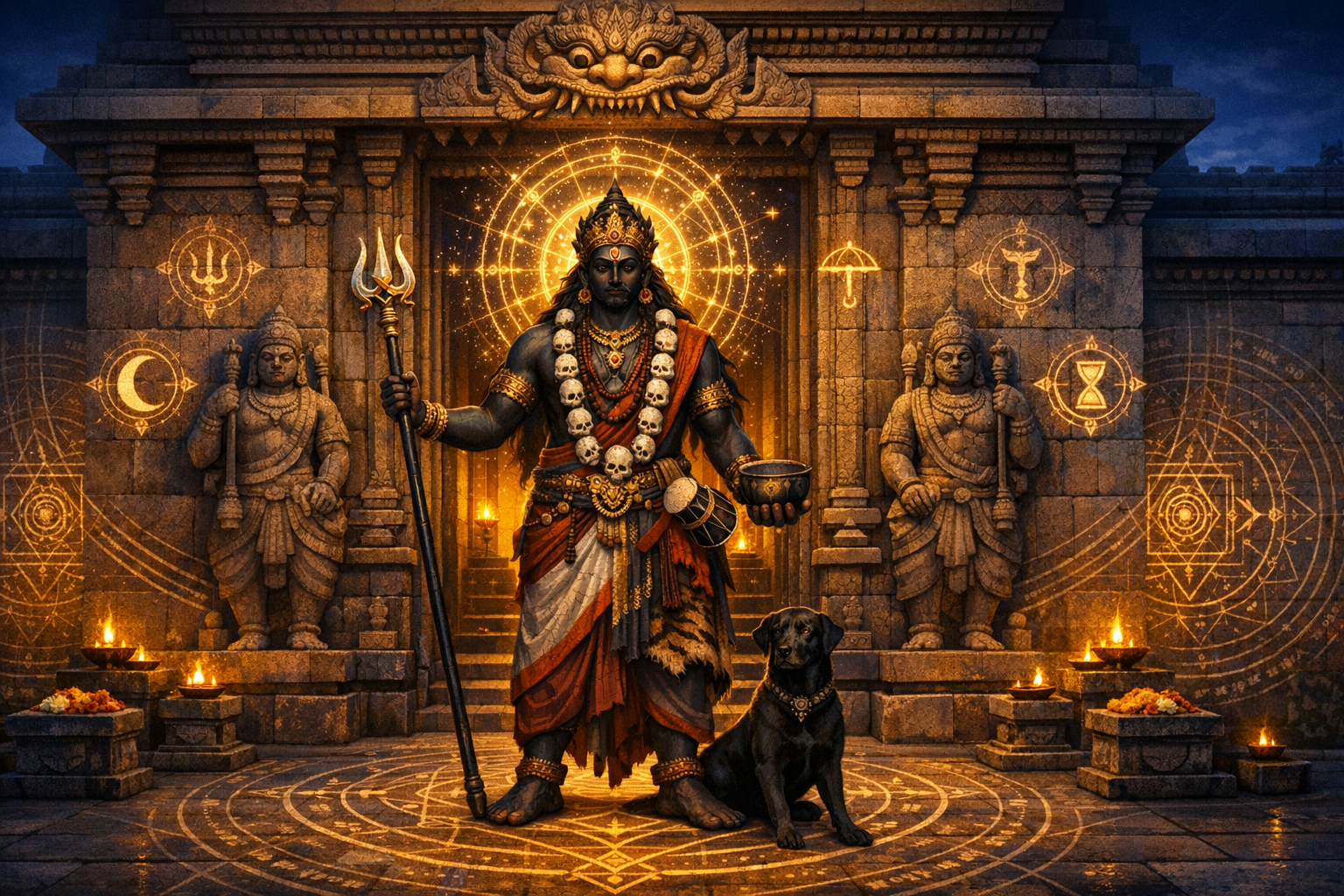
Bhairava’s identity as Kshetrapalaguardian of the sacred fieldexplains why Hindu temples are built and maintained as living cosmologies, not just monuments. Drawing on the Shaiva Agamas, Tantras, and the Kashi Khanda, the discussion shows how guardianship works architecturally (gateways, prakaras, bali-pithas) and ritually (bali circuits, threshold vigilance). It clarifies Bhairava’s fierce iconography as a theology…
-
New Vrindaban’s Palace of Gold: A Living Testament to Devotion, Craft, and Dharmic Unity
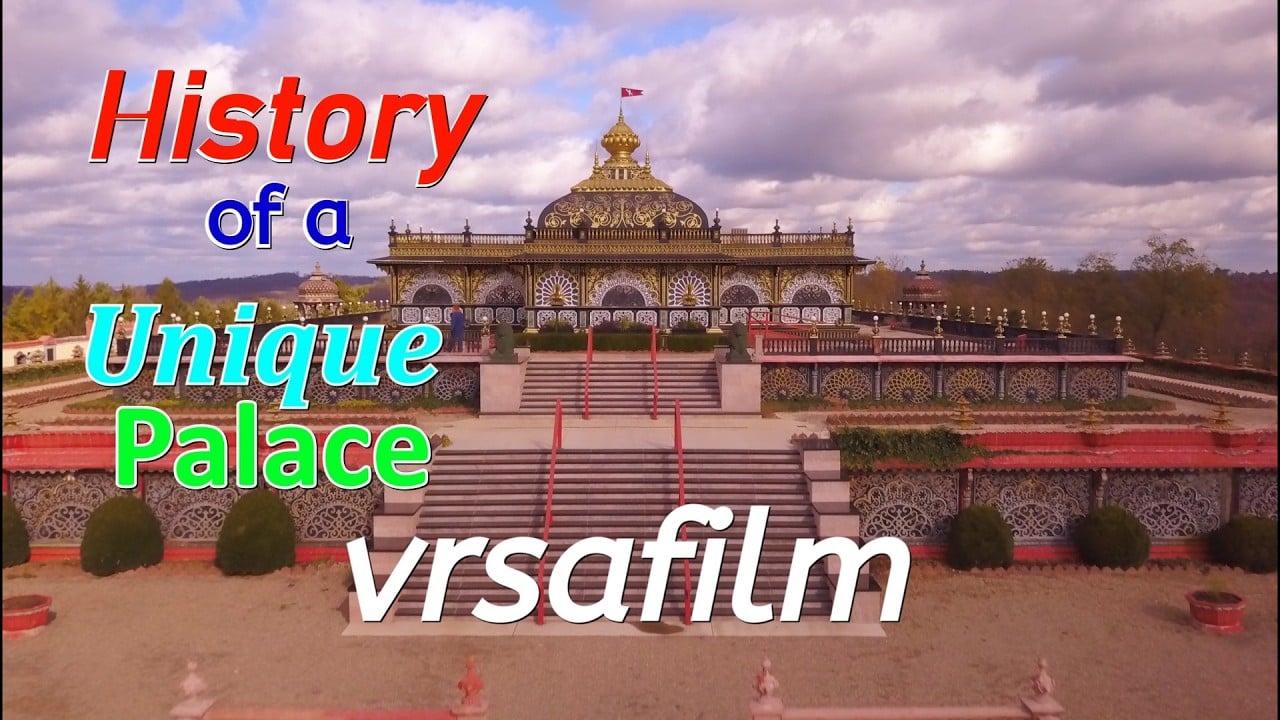
This long-form reflection examines New Vrindaban’s Palace of Gold in West Virginia, the focus of a second documentary by Vrsabhanu das. It traces the site’s evolution from a planned residence for Srila Prabhupada to a memorial shrine and cultural landmark within ISKCON. Readers gain a technical view of materials, methods, and process disciplinemarble inlay, glass…
-
Unlocking the Samakanda Shivling: Sacred Geometry, Agama Proportions, and Trimurti Harmony

The Samakanda Shivling is a mānuṣa liṅga crafted so that the Brahmā, Viṣṇu, and Rudra sections are exactly equal in height. This sacred geometry embodies the Trimūrti’s harmony, turning complex theology into an accessible visual and ritual language. Drawing on Śilpa-Śāstra and Śaiva Āgama guidance, it balances square, octagonal, and circular principles across the vertical…
-
Unveiling Shimanthoor’s Sri Adi Janardhana: A Rare Vishnu Icon Holding Pinda in Karnataka
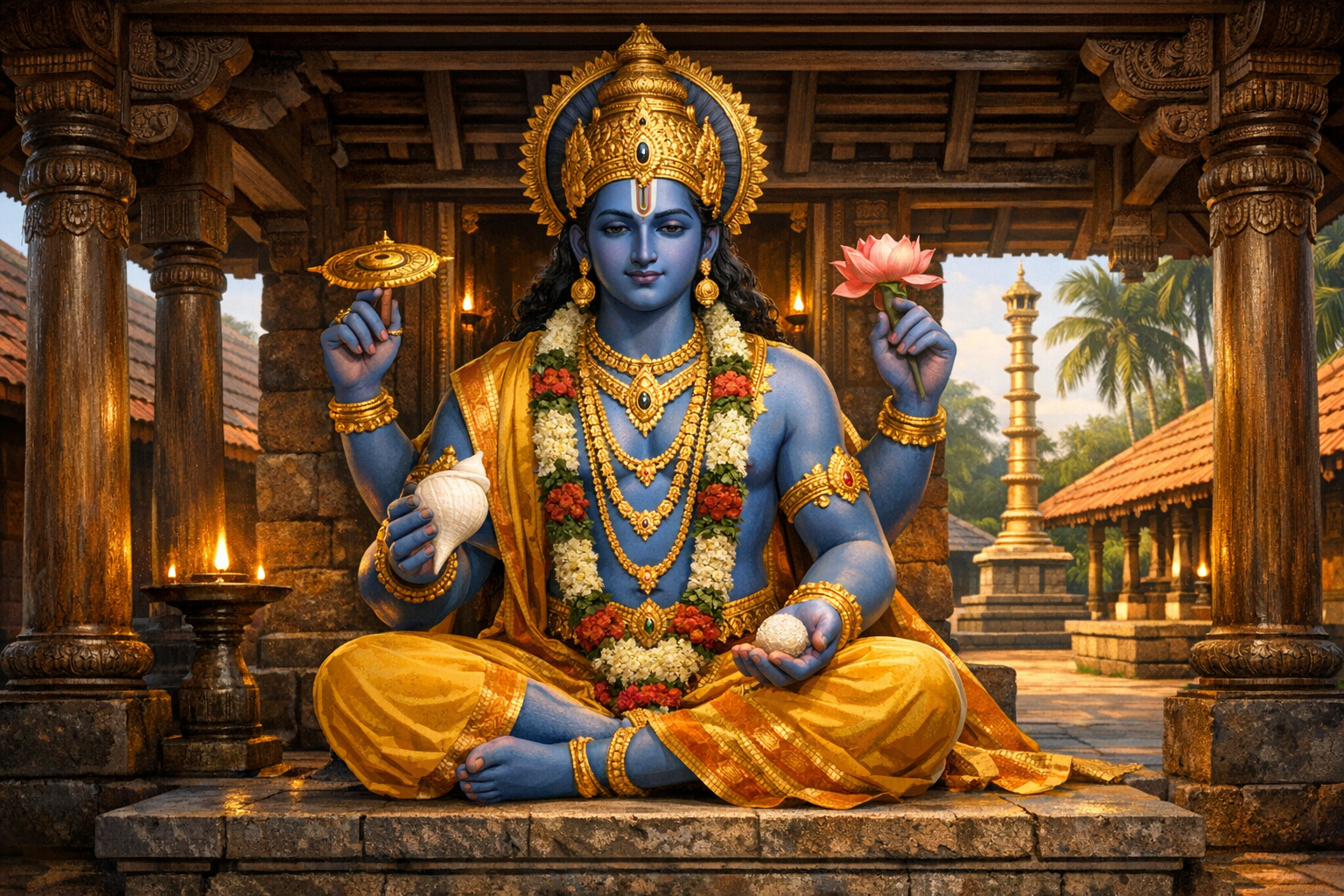
Sri Adi Janardhana Temple in Shimanthoor, Dakshina Kannada, is among the rarest Vishnu shrines in India, featuring Janardhana holding a pinda in the lower right hand. This singular iconography bridges Vaishnava theology with ancestral remembrance, situating śrāddha values within the very form of the deity. Set in Karnataka’s Tulu Nadu, the temple showcases coastal architecture…
-
Alidhasana Unveiled: The Warrior Stance Powering Hindu Iconography and Yoga
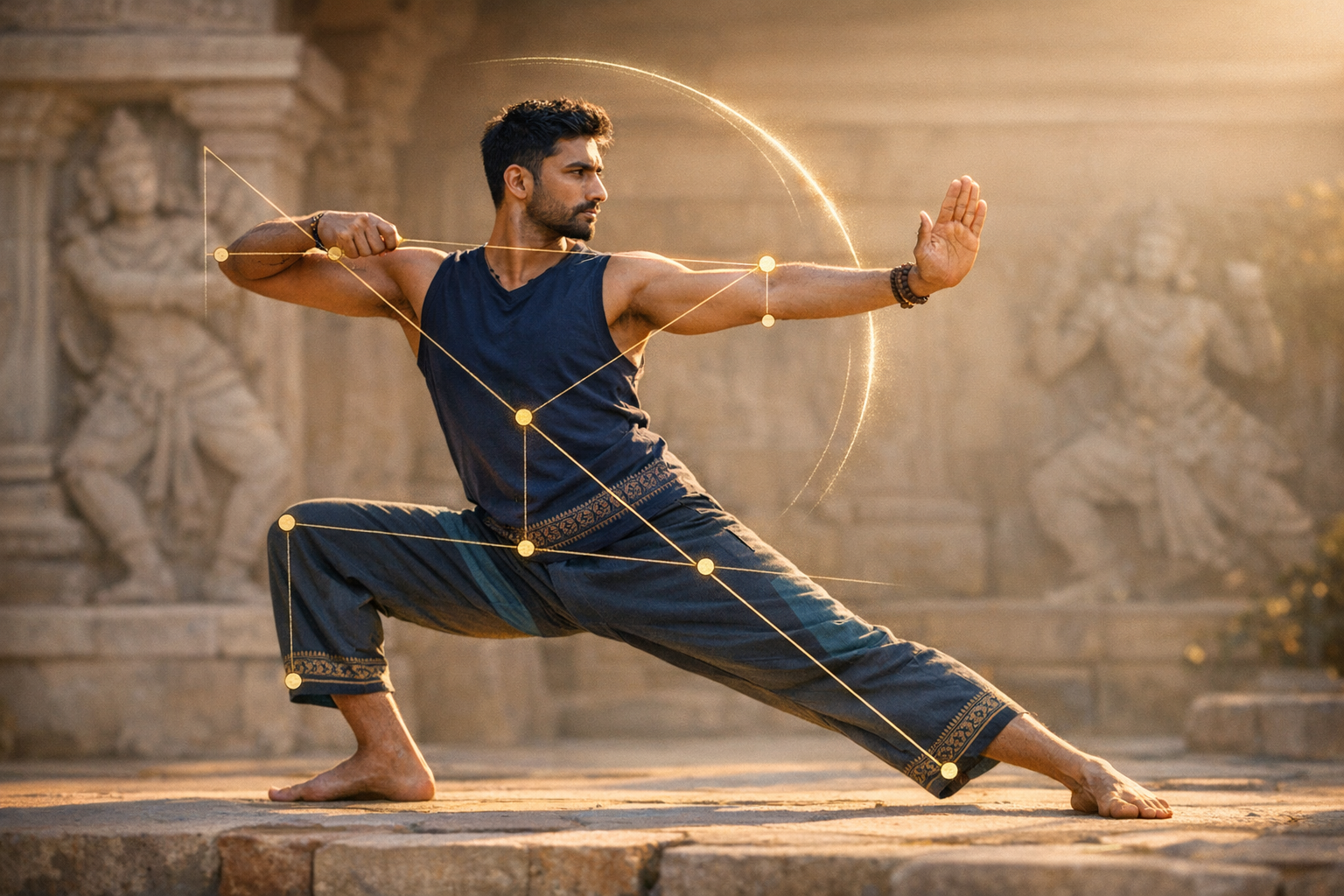
Alidhasana (Alīḍha/Ālīḍha) is the subcontinent’s signature warrior stance, a diagonal lunge that encodes heroic intent in Hindu iconography, dance, and yoga. Grounded in the Nāṭyaśāstra and Śilpa-śāstra, it appears in temple sculpture for Durgā, Bhairava, and Vīrabhadra to signal protective, dharmic power. The same geometry informs Bharatanatyam karaṇas, kalaripayattu lunges, and modern haṭha alignments akin…
-
Decoding the Pitha of the Shivling: Divine Architecture, Agamic Science, and Living Ritual
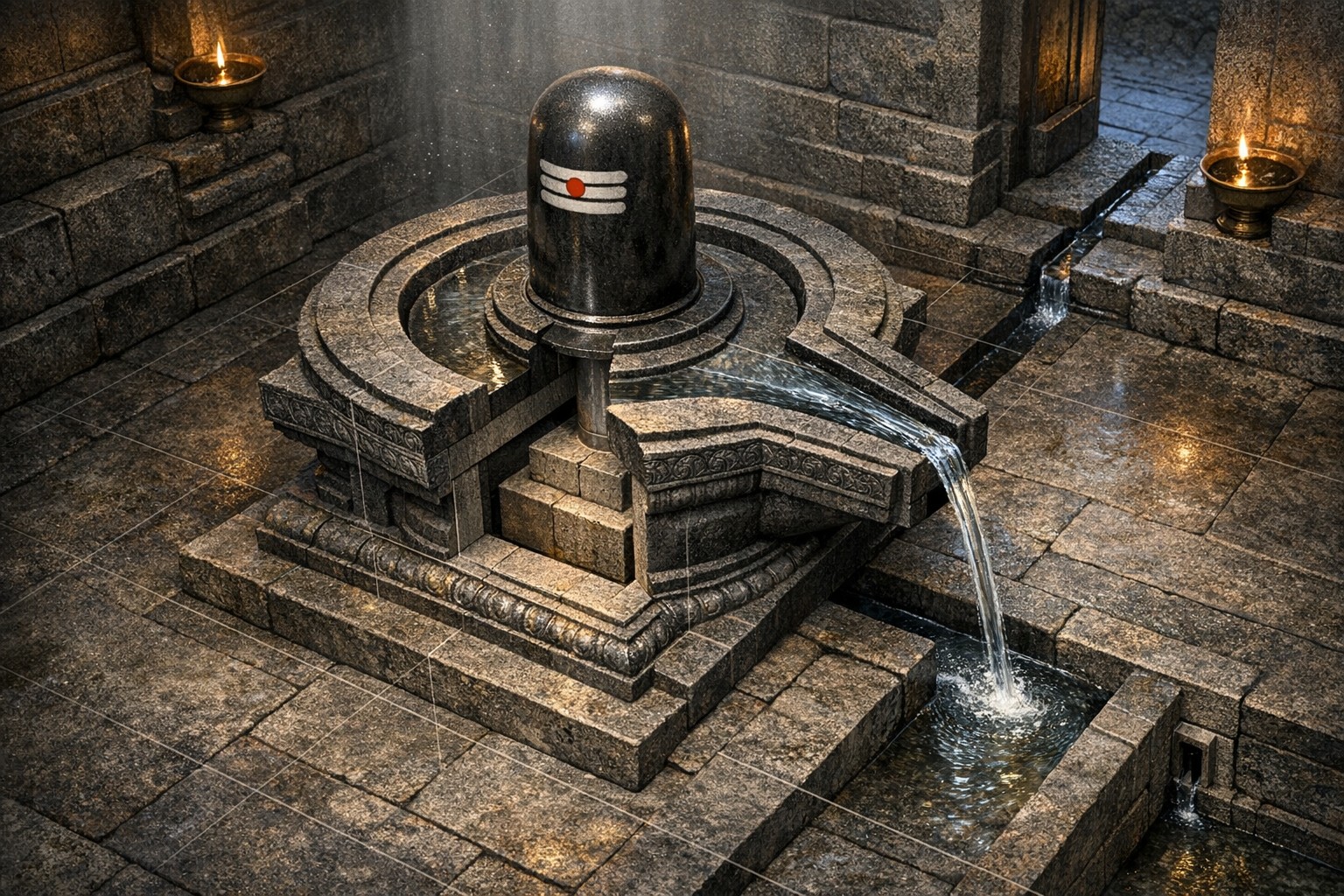
The pitha or yoni-pitha of the Shivling is not merely a base but a sacred support that grounds, stabilizes, and channels divine energy. Rooted in Agamic prescriptions and Shilpa Shastra canons, it integrates precise geometry, structural stability, and a hydraulically sound soma-sutra or gomukha outlet for abhishekam. The linga’s three-part articulation fits into the pitha…
-
Gajasurasamhara: Shiva’s awe-inspiring conquest of ego – history, symbolism, style
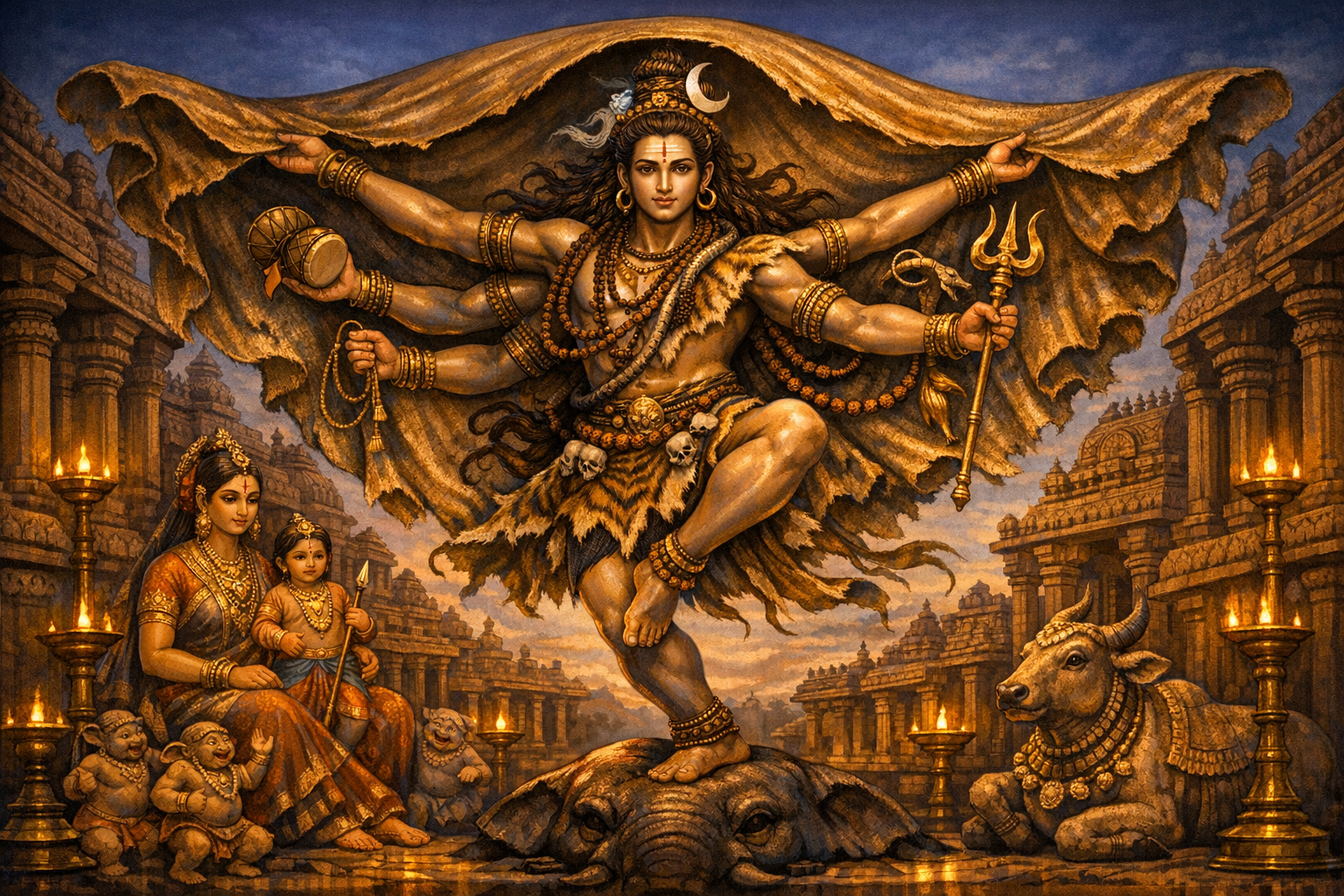
Gajasurasamhara presents Shiva in a fierce, transformative dance that subdues the elephant demonan enduring visual lesson on conquering ego. This long-form, research-driven overview traces the form’s Purāṇic and Āgamic foundations and explains its technical iconography, from multi-armed attributes and the distinctive elephant-hide canopy to posture, ornaments, and attendant figures. It maps stylistic evolutions across Pallava,…