-
Samhara of Shiva: Unveiling the Compassionate Power of Dissolution and Renewal

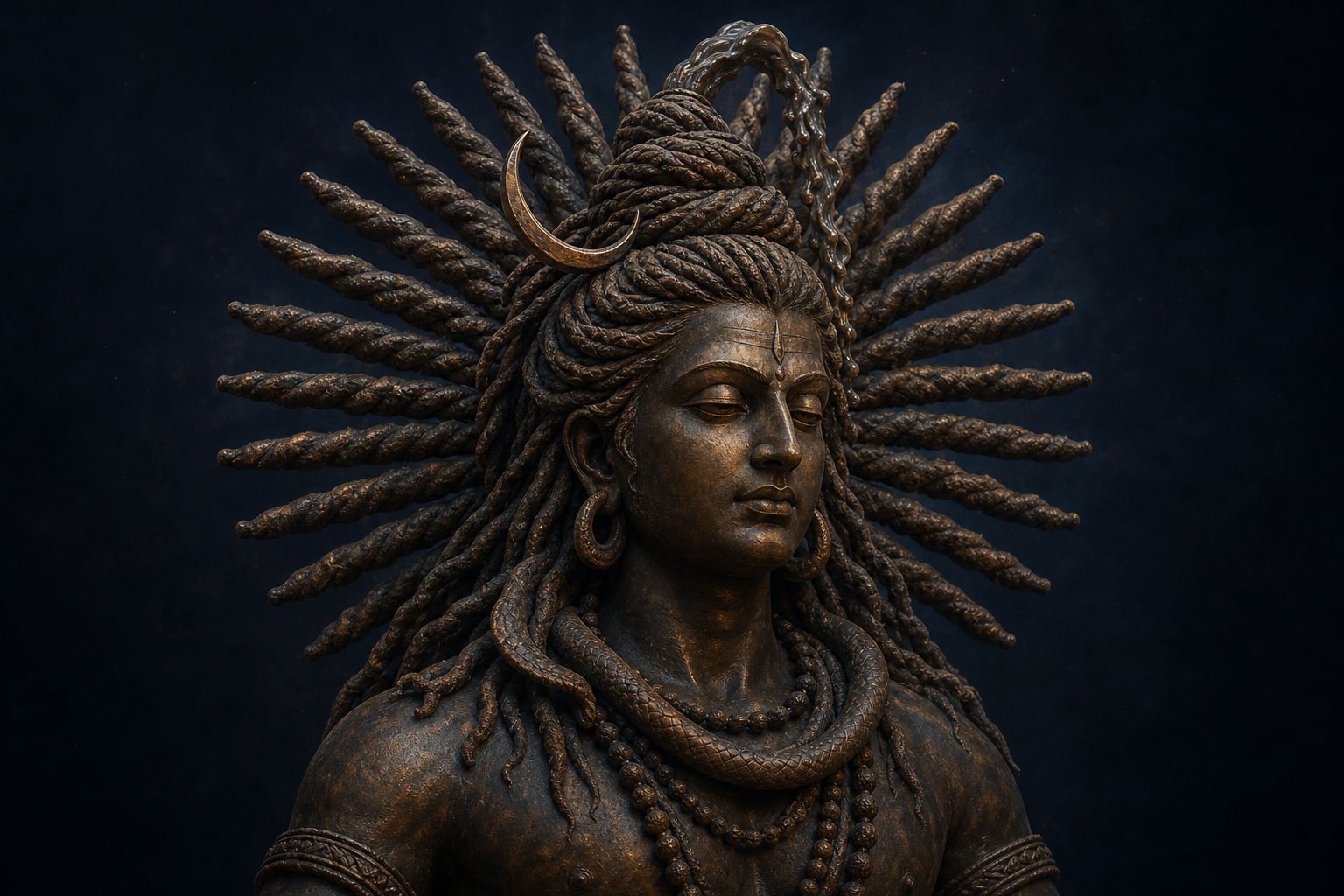
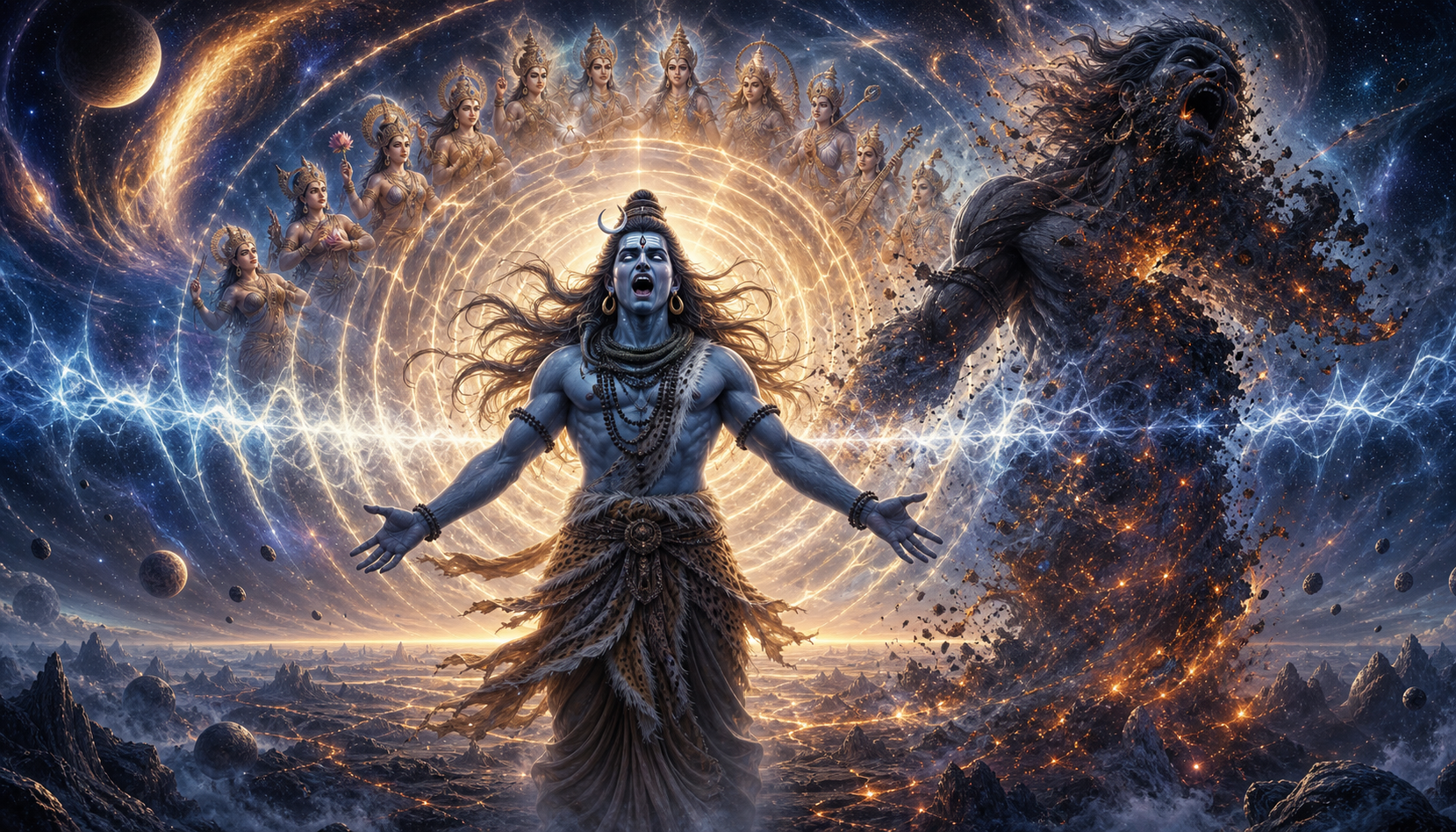
Samhara, the dissolution aspect of Shiva, is not violent destruction but compassionate renewal that clears exhausted forms so truth can shine. Grounded in Vedic, Purāṇic, and Āgamic sources, this long-form analysis explains how Samhara interlocks with Shiva’s five acts to sustain cosmic and personal transformation. The iconography of Naṭarāja, Mahākāla, and Kālābhairava decodes dissolution as…
-
Jwarahareshwara Shiva: Rare Three-Headed Healer Guarding Humanity from Disease and Fear

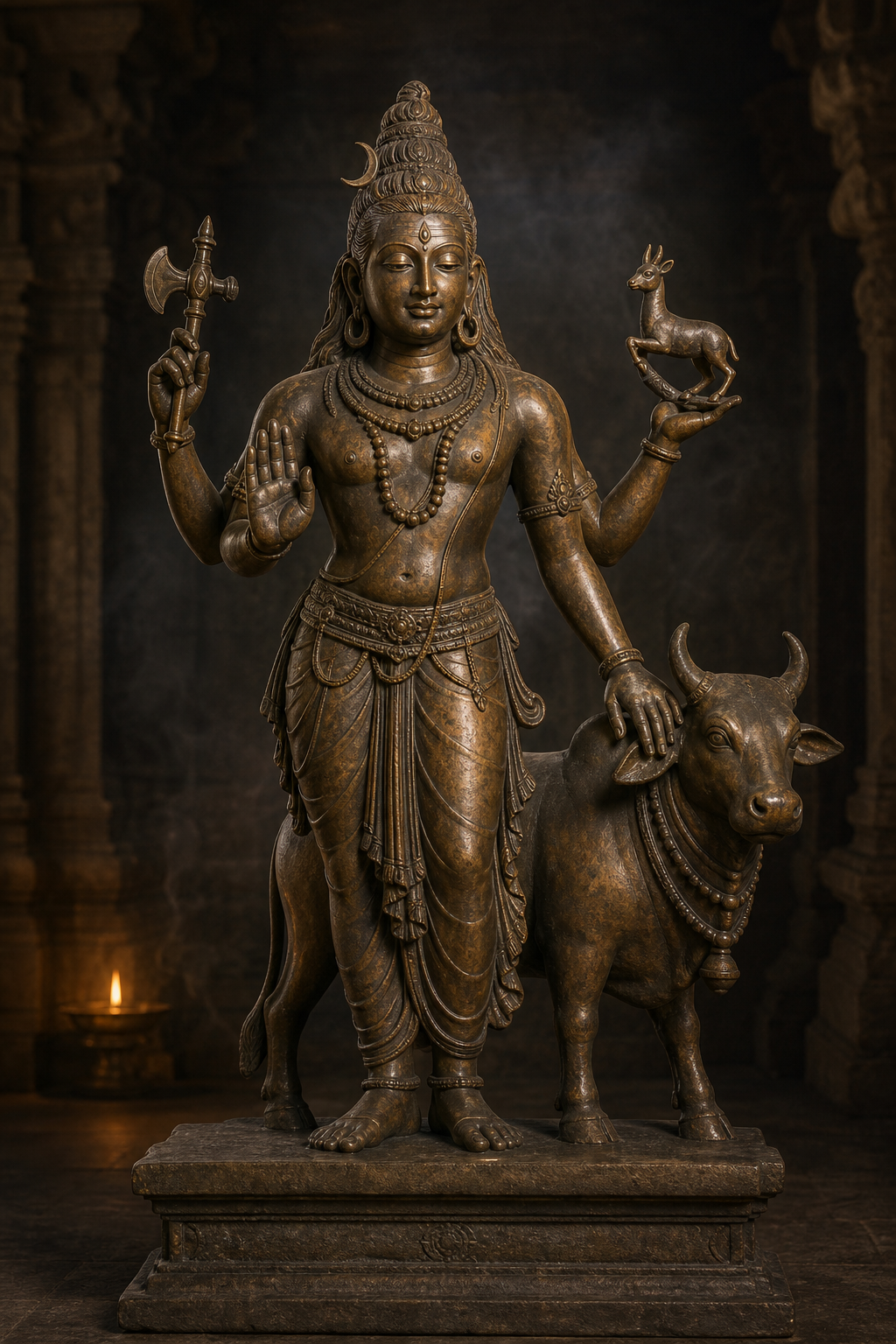
Jwarahareshwara Shiva is a rare and powerful healing manifestation of Lord Shiva, envisioned with three heads, three legs, and six arms to symbolize balance, fearlessness, and compassionate protection. The form integrates Vedic portrayals of Rudra as the supreme healer with Puranic narratives that dramatize the pacification of disease and dread. Its triadic symbolism aligns closely…
-
Ananda Tandava Unveiled: Decoding Shiva Nataraja’s Blissful Cosmic Dance and Living Wisdom

Ananda Tandava, Shiva Nataraja’s blissful dance, is a complete grammar of Hindu philosophy translated into gesture, rhythm, and form. This comprehensive overview traces its roots in the Agamas, Puranas, and Bhakti hymns, and explains how the five divine acts (panchakritya) appear in Nataraja’s iconography. Readers learn how Chidambaram’s Chidambara Rahasya and the Pancha Sabhas embody…
-
Tripura Tandava of Shiva: Decoding the Sixteen-Armed Dance of Cosmic Dissolution

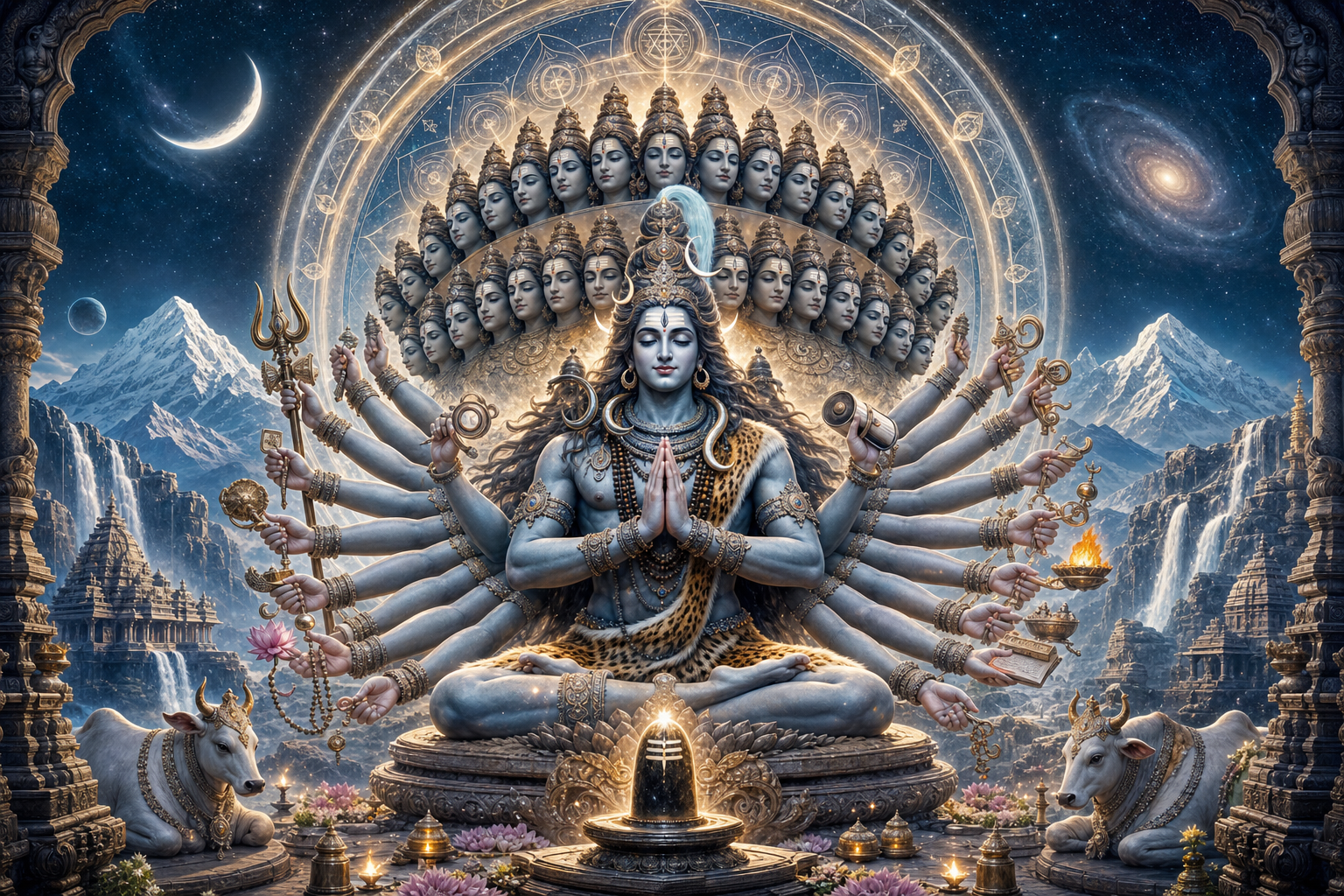
Tripura Tandava, often aligned with Shiva’s role as Tripurāntaka, encapsulates the precise instant of cosmic dissolution where triadic structures resolve into pure awareness. Grounded in the pañcakṛtya framework, it brings together saṁhāra (dissolution) and tirodhāna (concealment) to culminate in laya (absorption). The post examines Purāṇic narratives, āgamic iconography—including the striking sixteen-armed convention—and the dance grammar…
-
Bhairava as Bhudhara Atma: The Unshakable Ground of Kalika, Earth, and All Worlds

This long-form exploration clarifies Bhudharatmajaya Bhairava as the atma of Bhudhara—the conscious support of Earth and mountains—and the Adhara, the unmoving ground of charachar prakriti. It decodes the Sanskrit terms, situates Bhairava and Kalika within Tantric and Purana frameworks, and maps their complementarity across the panchabhuta and Shaiva tattvas. Temple architecture, kshetrapala guardianship, and contemplative…
-
Bhujanga Lalita Tandava: Decoding Shiva’s Serpentine Grace and the Defeat of Avidya

Bhujanga Lalita Tandava unites Shiva’s dynamic tandava with the soft cadence of lalita, translating complex Shaiva metaphysics into a clear, embodied grammar of movement. The dance’s serpentine wave, read through kundalini symbolism, demonstrates how intelligence and grace transform raw force into awakened action. Iconography of Nataraja—especially the subduing of Apasmara (avidyā)—grounds an ethics where clarity…
-
Kalika Tandava Decoded: Shiva’s Eight‑Armed Cosmic Dance of Renewal and Liberation

Kalika Tandava presents Shiva’s eight‑armed dance as a rigorous map of cosmic processes and inner transformation. The iconography—Abhaya and Varada mudras, damaru, agni, trishula, kapala, and more—translates metaphysics into a readable visual grammar. Drawing on Shaiva Agamas, Shilpa‑Shastras, and the Natya Shastra, the form aligns creation and dissolution with a living rhythm practitioners can contemplate…
-
Bhudharaya Bhairava: The Unmoving Ground of Being for Stability, Courage, and Clarity

Bhudharaya, a revered name in the Bhairava sahasranama, proclaims Bhairava as the immovable ground of existence — the adhara that sustains all. This essay clarifies the term’s etymology and scriptural roots, linking Skanda Purana narratives and stotra traditions to a coherent Shaiva metaphysics. It explores how prithvi-tattva, Mūlādhāra, and tantric practices like bhūta-śuddhi translate the…
-
Sandhya Tandava at Dusk: Decoding Shiva Nataraja’s Twilight Dance and Its Living Wisdom

Sandhya Tandava is the twilight expression of Shiva Nataraja’s cosmic dance, performed before an illustrious assembly with Goddess Parvati as witness. It ritualizes the liminal hour when day turns to night, aligning personal worship with cosmic rhythm. Iconography—damaru, flame, abhaya mudra, and Apasmara—maps directly to the five divine acts and becomes especially evocative at dusk.…
-
Bhuridakshinaya Bhairava: Guardian of Dharma, Southern Direction, and Sacred Abundance

Bhuridakshinaya Bhairava unites fierce guardianship with ethical generosity, drawing on the multiple meanings of dakshina as offering, right-hand propriety, and the southern direction. The epithet’s Vedic resonance with bhuri-dakshina illuminates a moral economy in which right giving completes right worship. In Shaiva Tantra, Bhairava’s role as Kshetrapala aligns with directional theology, temple architecture, and observances…
-
Dhumavati and Shiva Unveiled: Origin Myths, Smoke-Clad Symbolism, and Transformative Wisdom

Dhumavati, the smoke-clad Mahavidya, teaches how endings and absence become gateways to discernment across the Dharmic family. This in-depth essay clarifies her origin myths, including the Sati–Shiva narratives and the Daksha yajna smoke motif, and interprets their philosophical stakes. It decodes her iconography—crow, broom, winnowing basket, cremation ground—as a curriculum in viveka and vairagya. Readers…
-
Bhurishaya Bhairava: Unveiling the All‑Abundant Essence and Infinite Support of Existence

Bhurishaya Bhairava—one of the sacred 1008 names of Bhairava—encapsulates a Śaiva vision of existence as plenitude and support. Etymologically derived from bhūri (abundance) and śaya (resting/abiding), the epithet signals an inexhaustible ground of being in which the many both arise and find repose. Read through Kashmir Shaivism’s Bhairava triad (bha–ra–va), it highlights the sustaining rest…
-
Bhagavan and Ishvara, One Truth: Why Vishnu and Shiva Bear These Timeless Honorifics

The titles Bhagavan and Ishvara carry precise theological weight in Hindu philosophy without enforcing hierarchy. Bhagavan highlights the plenary, relational fullness of the Divine, while Ishvara emphasizes sovereign lordship and cosmic governance. Scriptures apply both titles across deities—Vishnu is called Ishvara, and Shiva is addressed as Bhagavan—signaling complementarity rather than exclusivity. Vedantic schools, Shaiva traditions,…
-
Damara Tantra Decoded: Unmatta Bhairava’s Fierce Wisdom, Structure, and Practice

Damara Tantra stands out in Shaiva Tantra by presenting Shiva as Unmatta Bhairava instructing Pārvatī, organizing its teachings into six paricchedas framed by a Mangalacharana. The text’s eight Unmatta Bhairavas, including Kapali, Samhara, and Krodha, function as precise modalities for transforming fear and reactivity into wisdom and compassion. This analysis clarifies structure, core ideas, and…
-
Why Hindu Gods Ride Animals: The Profound Symbolism Behind Ganesha’s Mouse and Skanda’s Peacock

Why do Hindu gods ride animals such as Ganesha’s mouse and Skanda’s peacock? In Hindu iconography, vāhanas are a precise symbolic language codified in Purāṇas, Āgamas, and śilpa-śāstra that maps each deity’s ethical and cosmological function. Animals personify instincts and forces that the deity harmonizes, teaching that spiritual mastery begins with taming subtle habits. Case…
-
Parashurama: The Saint-Warrior Avatar Who Reset Kshatra Dharma and Reclaimed the Land

Parashurama, the sixth avatar of Lord Vishnu and a devoted bhakta of Lord Shiva, embodies the union of spiritual austerity and disciplined strength to restore dharma. Scriptural accounts from the Bhagavata Purana, Vishnu Purana, Ramayana, and Mahabharata portray his mission as a principled reform of Kshatriya power when it strays into adharma. The narrative explores…
-
Bhairava Unveiled: Symbolism, Meaning, Kala-Time Mastery, and Fearless Liberation

Bhairava Roopaya—named first in the Bhairava Sahasranama—presents Bhairava as the omnipresent intelligence of Shiva that creates, sustains, dissolves, conceals, and liberates. This long-form exploration decodes the name’s etymology (bhaya + rava and Bha–Ra–Va), connects it to the Shaiva pañcakṛtya, and situates it within Kashmir Shaivism’s non-dual vision and Vijnana Bhairava Tantra’s contemplative methods. Readers gain…
-
Shiva’s Vibhuti Unveiled: Sacred Ash, the Fire of Transformation, and the Path to Liberation

Vibhuti, or consecrated sacred ash, condenses Shaiva philosophy into a simple, daily practice that is both contemplative and transformative. In Hindu thought, fire is a purifier rather than a destroyer, and ash is the final, stable state that reveals what endures after illusion burns away. The tripuṇḍra’s three lines encapsulate key Shaiva triads—impurities, guṇas, and…
-
‘Gavyapataye’ Bhairava: Tantric Guardian of Cows, Compassion, and Sacred Ecology

Gavyapataye Bhairava reveals Bhairava’s Tantric role as guardian of cattle, food purity, and sacred ecology. The epithet’s Sanskrit morphology (gavya + pati) ties devotion directly to agrarian life and ritual substrates like pañcagavya. Set within Bhairava-sahasranāma practice, it unites vigilant protection with compassionate stewardship. Textual, iconographic, and ethnographic threads—spanning Skanda Purāṇa references, temple sub-shrines, and…