Tag: shiva

  • Unlocking Chandesha Anugrahamurti: Divine Grace, Iconography, and Chola Temple Legacy

    Unlocking Chandesha Anugrahamurti: Divine Grace, Iconography, and Chola Temple Legacy

    Chandesha Anugrahamurti encapsulates Shiva’s tender bestowal of grace upon the devotee Chandesha, weaving together personal bhakti and institutional dharma. Readers will learn the origin story from the Periya Puranam, the ethical meaning behind Shiva’s restorative intervention, and why Chandesha becomes the temple’s vigilant steward. The article decodes the iconography—Shiva’s head-blessing, Uma’s composed presence, and the…

  • Grace in Stone: Decoding Shiva’s Anugrahamurtis to Deepen Temple Darshan

    Grace in Stone: Decoding Shiva’s Anugrahamurtis to Deepen Temple Darshan

    Anugrahamurtis—the grace-bestowing forms of Shiva—translate the Shaiva doctrine of anugraha into a precise, readable visual language. Grounded in Agamas and Śilpaśāstra canons, they employ gestures such as abhaya and varada, gentle asanas, and familial ensembles to stage compassion, assurance, and liberation. Representative types include Ravananugraha, Kalāntaka/Mṛtyuñjaya, Kirātārjuna, Gaṅgādhara, Candeśānugraha, Somāskanda, and Kalyāṇasundara, each encoding a…

  • Shivling Beyond Form: Debunking Phallic Myths with Scriptural and Iconographic Evidence

    Shivling Beyond Form: Debunking Phallic Myths with Scriptural and Iconographic Evidence

    The Shivling is widely mischaracterized as a purely phallic symbol, yet Sanskrit philology, Purāṇic and Āgamic theology, Shilpa Shastra geometry, and the archaeological record point to a more expansive meaning: liṅga as a sign, axis, and cosmogram of the formless. This analysis explains how Lingodbhava and Jyotirliṅga narratives foreground an infinite column of light rather…

  • Purva Linga and Achala Shivlings: Uncreated Symbols of Shiva’s Eternal Presence

    Purva Linga and Achala Shivlings: Uncreated Symbols of Shiva’s Eternal Presence

    This article explains why the Purva Linga is counted among the Achala Shivlings in Shaivism and how it epitomizes an uncreated, immovable presence of Shiva. It clarifies the philology of “pūrva” and the aniconic meaning of the Shivalinga, linking these ideas to Lingodbhava and Maha Shivaratri. Readers learn how temple architecture, Abhishekam, and daily puja…

  • Lakuti Dakshinamurti Unveiled: Tantric Iconography, Sacred Symbols, and Living Wisdom

    Lakuti Dakshinamurti Unveiled: Tantric Iconography, Sacred Symbols, and Living Wisdom

    This in-depth exploration unveils Lakuti (Lagudi) Dakshinamurti as the south-facing Adi Guru whose staff encodes sovereignty, discipline, and the subtle spinal axis of awareness. Readers gain a clear, textually grounded understanding of how this staff-bearing variant fits within the broader Dakshinamurti quartet set out in Agamas and Shilpa Shastra. The article decodes each attribute—chinmudra, akshamala,…

  • Khandoba’s Idol Decoded: Valor, Protection, and Sacred Kingship in Maharashtra’s Jejuri

    Khandoba’s Idol Decoded: Valor, Protection, and Sacred Kingship in Maharashtra’s Jejuri

    Khandoba—revered as Martanda Bhairava, Malhari, and Mallari—unites Shiva’s protective grace, martial valor, and divine kingship in a compelling idol form central to Maharashtra’s sacred geography. The anthropomorphic equestrian murti and the aniconic linga together encode a complete theology of guardianship, justice, and prosperity. Weapons such as the khanda and spear symbolize Kshatra Dharma and Dharma-Yuddha,…

  • Shoola vs Trishul: Decoding Sacred Weapons, Iconography, and the Timeless Power of Dharma

    Shoola vs Trishul: Decoding Sacred Weapons, Iconography, and the Timeless Power of Dharma

    Shoola (single-pointed spear) and Trishul (three-pronged trident) are often confused, yet they carry distinct forms and meanings in Hindu iconography. This article clarifies how a spear encodes one-pointed discernment while a trident integrates triadic powers—iccha, jnana, kriya; the gunas; and the three dimensions of time. Readers learn to identify each implement swiftly at temples and…

  • Sacred Shields of Dharma: 7 Hindu Protection Symbols to Conquer Bhaya and Adversity

    Sacred Shields of Dharma: 7 Hindu Protection Symbols to Conquer Bhaya and Adversity

    Anxiety, understood in Hindu thought as bhaya, can be transformed through symbols that encode ethics, cosmology, and contemplative method. This long-form guide examines seven Hindu protection symbols—Abhaya Mudra, Trishula, Sudarshana Chakra, Narasimha, Hanuman’s Gada, the Svastika, and Tilaka/Tripundra/Urdhvapundra—tracing their scriptural grounding, iconographic form, and practical application. Each symbol functions as a performative technology of calm,…

  • Unveiling Shiva’s Samharamurtis: Fierce, Compassionate Forms of Cosmic Transformation

    Unveiling Shiva’s Samharamurtis: Fierce, Compassionate Forms of Cosmic Transformation

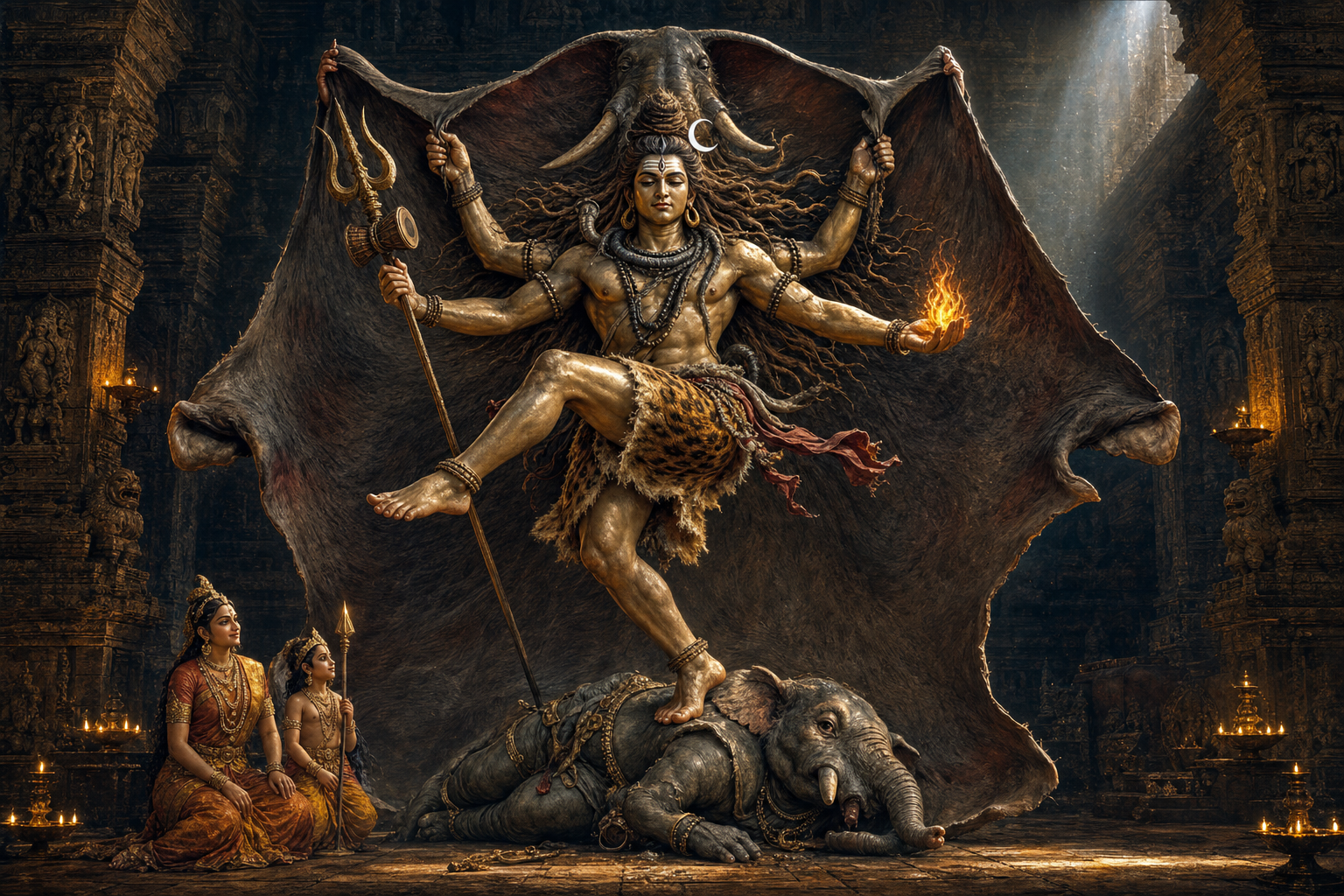
    This in-depth exploration clarifies why Shiva’s Samharamurtis are not emblems of destruction but precise instruments of compassionate transformation. Grounded in the Panchakritya doctrine and classical sources like the Puranas and Agamas, it decodes how Kamantakamurti, Gajasura Samhara Murti, and Kalari Murti model the sublimation of desire, the mastery of force, and the transcendence of fear…

  • Mind Dissolved in Śiva: Technical Pathways to Recognition, Inner Freedom, and Immortality

    Mind Dissolved in Śiva: Technical Pathways to Recognition, Inner Freedom, and Immortality

    This long-form exploration clarifies what “dissolution of mind in Śiva” means in classical Śaivism: not nihilistic blankness, but the quieting of compulsive mentation and recognition of universal Consciousness. Grounded in the Nadabindu Upaniṣad, it outlines Śaiva ontology (tattvas and malas), the epistemology of pratyabhijñā (recognition), and the practical upāyas that mature into samādhi. It surveys…

  • Nāda in Shaivism and Tantra: Unstruck Sound, Creation’s Pulse, and the Path of Awakening

    Nāda in Shaivism and Tantra: Unstruck Sound, Creation’s Pulse, and the Path of Awakening

    Nāda in Shaivism and the Śākta Tantras is more than audible sound; it is the unstruck vibration that initiates creation, structures language, and guides contemplative practice. This article clarifies nāda’s role in the Shaiva triad of nāda–bindu–kalā, the four levels of speech, and the 36-tattva cosmology. It explains how Oṁ, the Maheshvara Sūtras, and the…

  • Unmasking Anavamala in Shaivism: Break the Ego Illusion and Reclaim Shiva-Nature

    Unmasking Anavamala in Shaivism: Break the Ego Illusion and Reclaim Shiva-Nature

    Anavamala, the primordial contraction in Shaivism, explains how the jiva falsely identifies with the body–mind and forgets its Shiva-nature. This long-form exploration clarifies its etymology, its role within the triad of malas, and how different Shaiva traditions—Shaiva Siddhanta and Kashmir Shaivism—diagnose and remedy this subtle veiling. The discussion distinguishes ontological contraction (mala) from cognitive error…

  • Unmatta Bhairava’s Divine Madness: Decoding Shiva’s Fearless Transcendence and Sacred Symbols

    Unmatta Bhairava’s Divine Madness: Decoding Shiva’s Fearless Transcendence and Sacred Symbols

    Unmatta Bhairava, one of the Ashta Bhairavas, encodes the paradox of divine madness as fearless, ethical clarity beyond the discursive mind. This long-form study unpacks the philology of unmatta and the theology of Bhairava, connects the icon’s weapons and emblems to Shaiva metaphysics, and locates Unmatta within living ritual, pilgrimage, and art-historical traditions. Readers gain…

  • Lambakarna Bhairava: Long-Eared Guardian of Avanti Shakti Peetha and Ujjain’s Sacred Power

    Lambakarna Bhairava: Long-Eared Guardian of Avanti Shakti Peetha and Ujjain’s Sacred Power

    Lambakarna Bhairava, the long-eared guardian of Ujjain’s Avanti Shakti Peetha, embodies a pan-dharmic symbolism of deep listening and compassionate protection. The name—‘Lamba’ (long) and ‘Karna’ (ears)—encodes a pedagogy of attentive hearing central to Hindu, Buddhist, Jain, and Sikh paths. Situated within Ujjain’s sacred network of Mahakaleshwar, Harsiddhi Mata, and Bhairava shrines, Lambakarna functions as kṣetrapāla,…

  • From Shiva’s Rage to Sacred Art: Decoding Veerabhadra’s Iconography and Symbolism

    From Shiva’s Rage to Sacred Art: Decoding Veerabhadra’s Iconography and Symbolism

    Veerabhadra stands at the junction of myth, ritual, and art, translating Shiva’s fierce compassion into a precise visual language. This essay decodes the idol’s canonical features—stance, attributes, ornaments, and narrative companions—using Agamas and Shilpa Shastra as guides. Readers learn how trishula, damaru, khadga, and khetaka map to ethical functions such as discernment, rhythm, protection, and…

  • When Pride Breaks a God-Gifted Sword: The Curse that Unmade Ravana’s Chandrahasa

    When Pride Breaks a God-Gifted Sword: The Curse that Unmade Ravana’s Chandrahasa

    This long-form, research-informed reading of the Chandrahasa episode explains how later Ramayana and Puranic traditions frame Ravana’s celestial sword as a dharma-conditioned gift from Lord Shiva. It clarifies why the blade’s power failed: not through metallurgy but through a self-executing moral law that de-authorizes weapons when wielded in arrogance. It surveys variant tellings across regional…

  • Lingodbhava—Shiva’s Infinite Pillar of Light: Iconography, Temple Rituals, and Timeless Wisdom

    Lingodbhava—Shiva’s Infinite Pillar of Light: Iconography, Temple Rituals, and Timeless Wisdom

    Lingodbhava, the manifestation of Lord Shiva as an infinite pillar of light, gathers narrative, philosophy, and temple architecture into a single, luminous symbol. The article recounts Brahma and Vishnu’s failed search for the limits of the jyoti-stambha and frames the episode as a lesson in epistemic humility rather than sectarian triumph. It traces textual roots…

  • Pichandavar Shiva: The Divine Mendicant Who Unmasks Ego and Teaches Aparigraha

    Pichandavar Shiva: The Divine Mendicant Who Unmasks Ego and Teaches Aparigraha

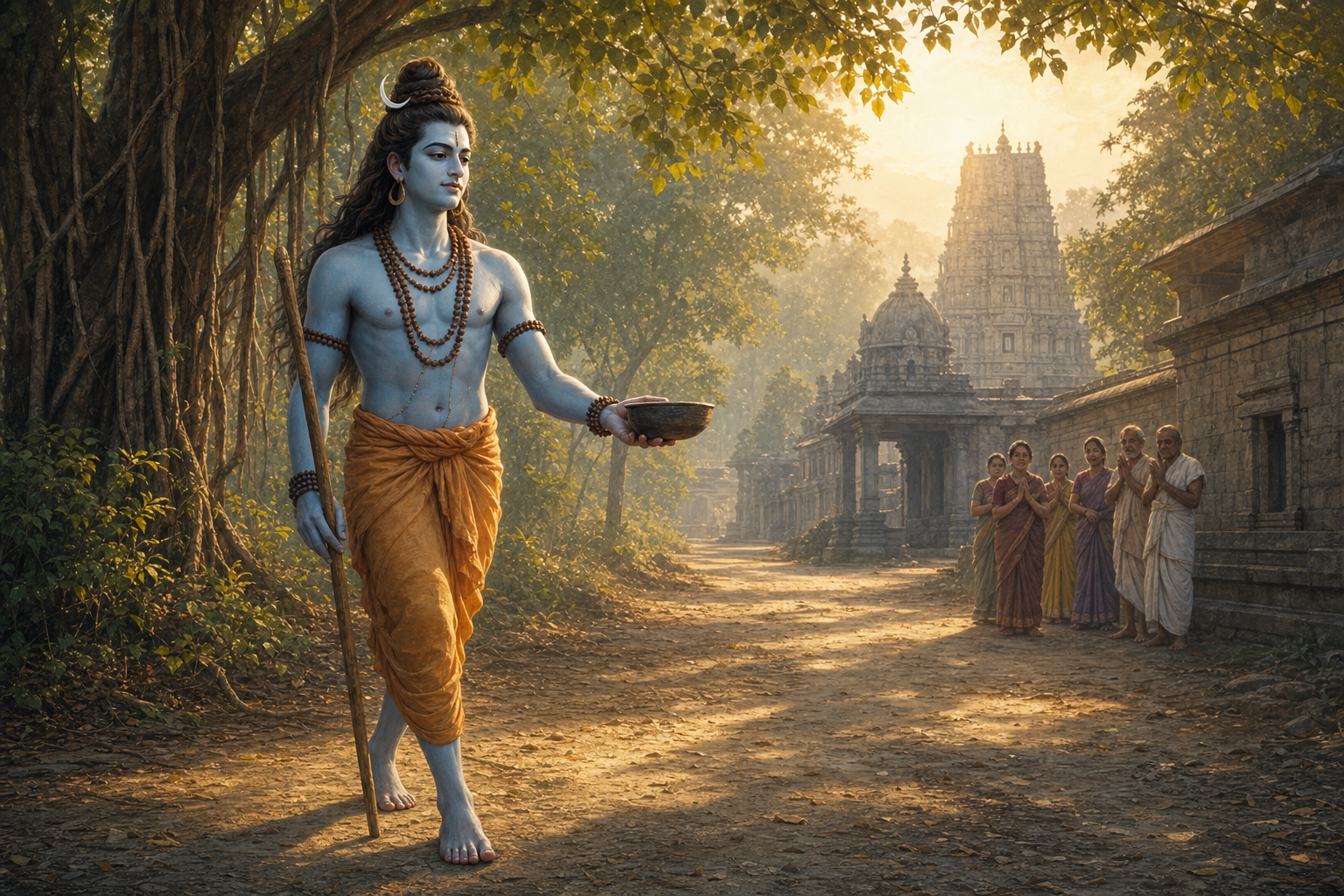
    Pichandavar Shiva—known in Sanskrit sources as Bhikshatana—presents the Supreme Lord as a wandering ascetic whose skull-bowl and gentle stride teach non-possession, humility, and compassion. Grounded in Puranic lore and Shaiva Agamas, this South Indian form flourished in Chola bronzes and continues to animate temple processions where symbolic alms become a mirror for inner transformation. The…

  • Unveiling Ishana: Why the Upward Face of the Shivling Is Revered as Sadashiva

    Unveiling Ishana: Why the Upward Face of the Shivling Is Revered as Sadashiva

    The Panchamukha Shivling encodes a complete Shaiva theology in five faces, with Ishana—the upward, zenith-facing aspect—identified as Sadashiva, the ever-auspicious ground of grace. Drawing on Vedas, Agamas, and Puranas, this analysis shows how Ishana culminates the five cosmic acts and why its supradirectional stance symbolizes omniscience and anugraha. Ritual practice confirms the link, as the…

  • Prabhasa Patan’s Timeless Confluence: Where Krishna Departed and Somnath Inspires Unity

    Prabhasa Patan’s Timeless Confluence: Where Krishna Departed and Somnath Inspires Unity

    Set on Gujarat’s Saurashtra coast, Prabhasa (Prabhasa Patan/Prabhasa Kshetra) is the Triveni Sangam of the Hiran, Kapila, and subterranean Sarasvati, long revered as a threshold of purification and insight. Scripture situates epochal events here: the Mahabharata’s Mausala Parva narrates the Yadavas’ final conflict, while the Bhagavata Purana memorializes Sri Krishna’s departure at Bhalka and Dehotsarg…