-
Sindhara Dooj 2026 (Gauri Dwitiya): Auspicious Dates, Powerful Rituals, and Navratri Day 2 Meaning

Sindhara Dooj (Gauri Dwitiya) marks Navratri’s second day, uniting the ascetic focus of Maa Brahmācharini with the cultural celebration of sowbhāgya. In 2026, it falls on March 20 (Chaitra/Vasant Navratri) and October 12 (Ashwin/Sharad Navratri); the Dwitiya tithi at sunrise guides observance, with local panchang checks recommended for devotees abroad. The guide explains theological meaning,…
-
Kundalini Tantra Unveiled: A Scientific, Dharmic Guide to Awakening the Serpent Power

This comprehensive guide presents Kundalini Tantra as a precise, ethical, and integrative science shared across dharmic traditions. It clarifies yogic anatomy (nadis, chakras, sushumna nadi) and explains how breathwork, bandhas, mudras, mantra, and meditation organize subtle energy safely. A stepwise 12-week framework details how to build foundations with yama-niyama, asana, and pranayama before progressing to…
-
Chakrapani Bhairava at Muktinath: Witness Shiva–Shakti–Vishnu Unity in the Himalayas

Set in Nepal’s Mustang, Muktinath (Chumig Gyatsa) unites Śākta, Śaiva, Vaiṣṇava, and Buddhist traditions in one sacred landscape. The Gandaki Devi Śakti Pīṭha is traditionally identified with Sati’s right cheek, guarded by Chakrapani Bhairava—the kṣetrapāla who protects shrine, pilgrims, and dharma. The analysis explains how the epithet “Chakrapani,” a Vaishnava title of Viṣṇu, when paired…
-
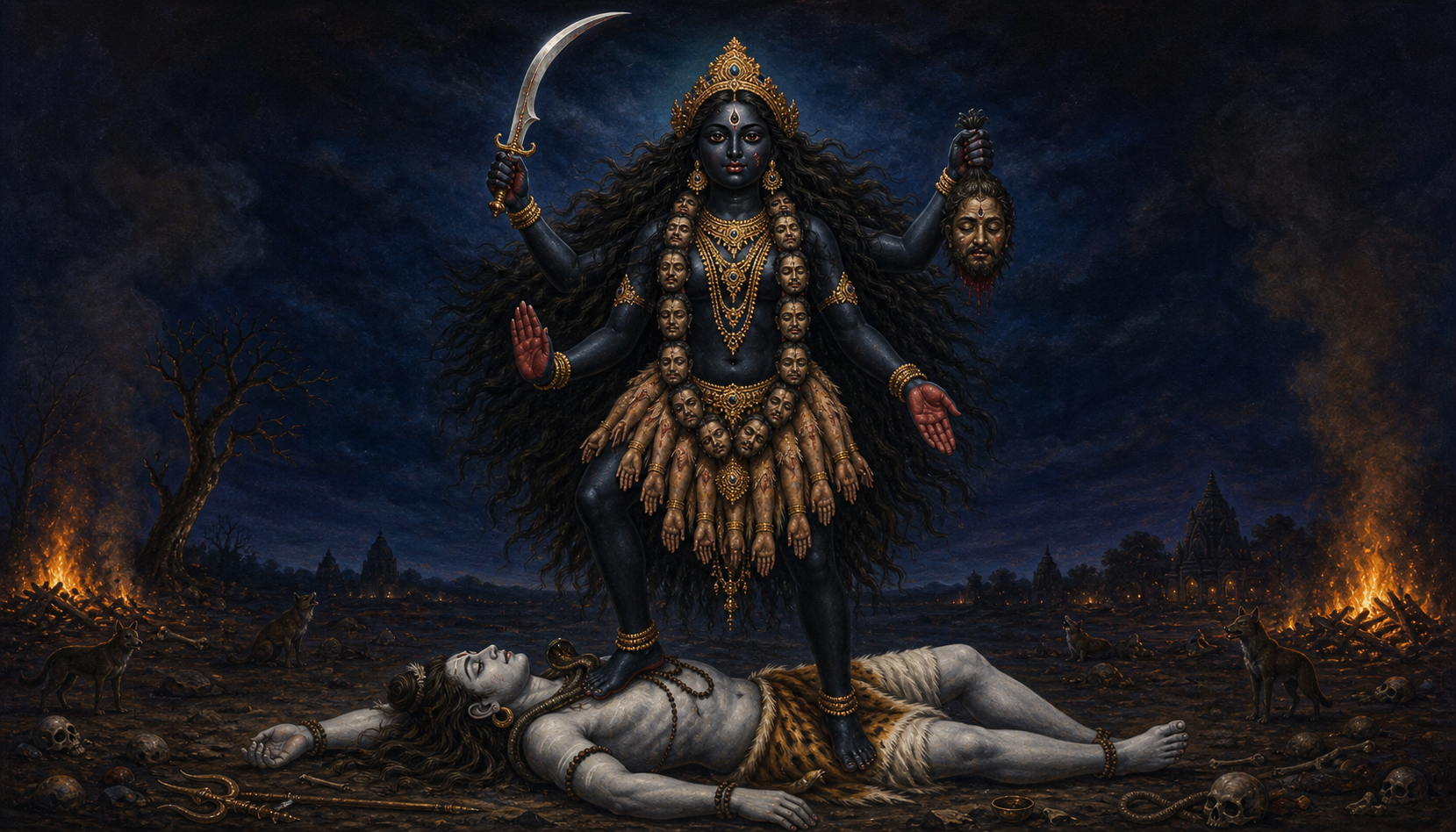
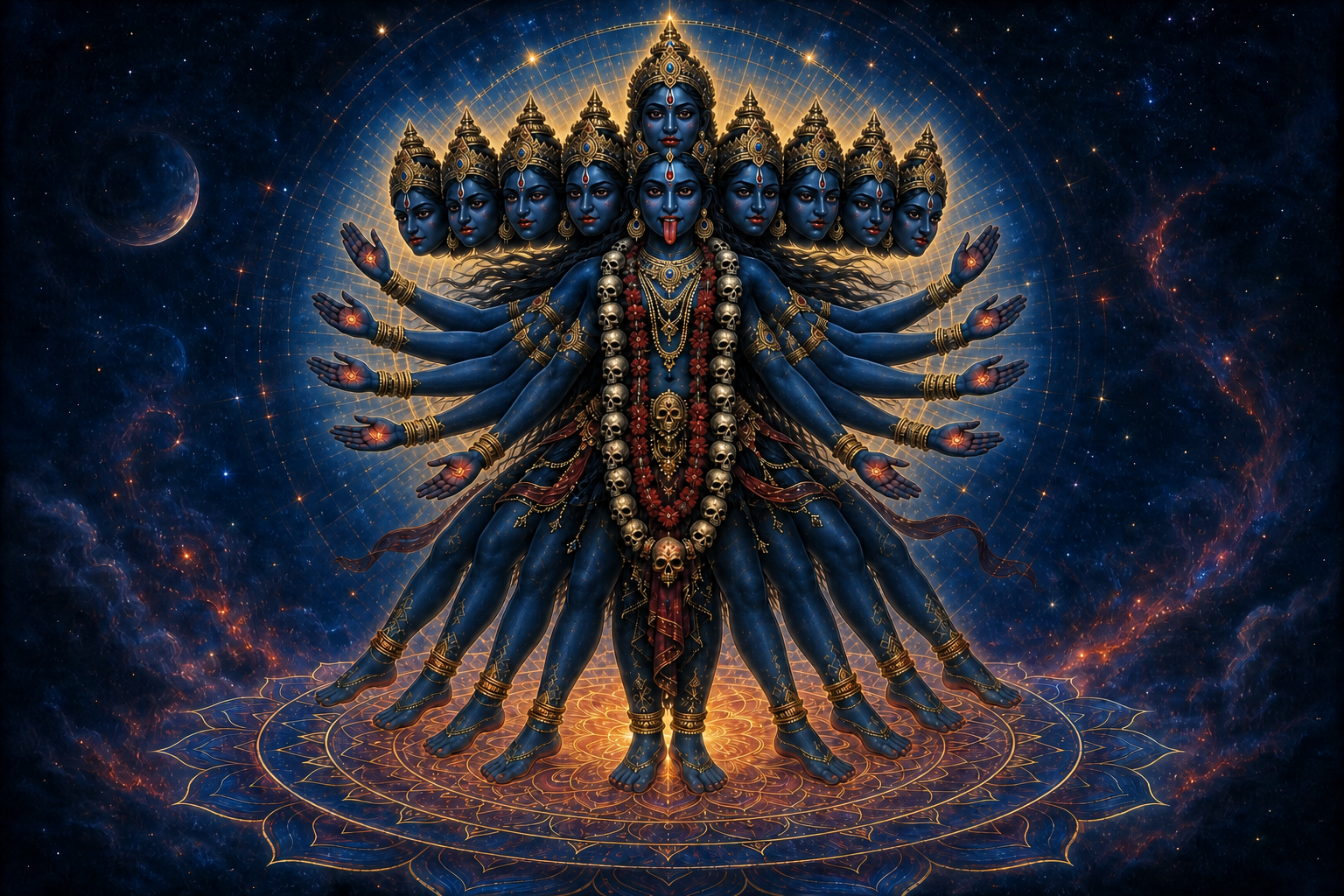
Goddess Kali’s Fearless Paradox: Creator, Destroyer, and Tantric Symbolism of Transformation

Goddess Kali unites the roles of creator, destroyer, and transformer, encoding a precise Śākta metaphysics within striking iconography. Readers gain a clear, research-informed guide to her symbols—from the muṇḍamālā and cremation ground to abhaya and varada mudrās—and how each maps to ethical action and psychological resilience. The narrative situates Kali within scripture (Devī Māhātmya, Kālīkā…
-
Shiva–Shakti Raasa Leela: Unveiling the Cosmic Dance of Love, Consciousness, and Creation

Shivashakti Raasa Leela—also known as Sri ShivShakti Rasalila—presents the union of Śiva and Śakti as a continuous dance and embrace that render Shaiva metaphysics visible and livable. Anchored in Natyashastra aesthetics, Shaiva Āgamas, and Kashmir Shaivism’s rasa theory, it interprets creation as spanda (vibration) and devotion as aesthetic savoring (rasa). Iconography of Śiva Naṭarāja, Somāskanda,…
-
Ashtadasa Shakti Peethas: A Definitive, Heartfelt Guide to the 18 Sacred Seats of Shakti

The Ashtadasa Shakti Peethas—eighteen revered seats of the Divine Feminine—form a pan–South Asian sacred geography integrating myth, ritual, and pilgrimage. This comprehensive guide explains their Purāṇic-Tantric origins in the story of Sati, clarifies why some traditions count 18 while others preserve 51/52/64, and outlines a widely cited working list with regional context. It details the…
-
Gangaur 2026: Sacred Gauri–Shiva Vrat, Dates, Vidhi, and Rajasthan’s Grand Processions

Gangaur 2026, Rajasthan’s iconic celebration of Gauri and Shiva, culminates on Chaitra Shukla Tritiya—21 March 2026 in most Indian Panchangs—after a sequence of springtime observances that often begins on Pratipada. This guide explains the festival’s meaning, the Ganagauri Vrat, and why Isar–Gaur worship symbolizes a balanced and auspicious household. Readers learn how Sinjara, khetri sprouting,…
-
Goddess Trikala: Uniting Trimurti and Tridevi as the Timeless, All-Seeing Power of Shakti

Goddess Trikala synthesizes Hinduism’s core triads—past, present, future and creation, preservation, dissolution—into a single, time-enfolding vision of Shakti. Drawing on Purāṇic patterns in which the Goddess emerges from aggregated divine energies, Trikala Devi is interpreted as arising from the unified gaze and essences of the Trimurti. The article analyzes iconographic analogies (tri-netra, color triads, composite…
-
Shweta Kali Unveiled: The White Radiance of Kali, Creation’s Source and Ash’s Return

Shweta Kali, the white, luminous manifestation of Kālī, embodies both creation’s dawning radiance and the serene return of all forms to ash. Rooted in Shakta Tantra and cherished in Bengal and Nepal, this form unites sattvic clarity with Kālī’s timeless power, offering a sophisticated theology of origin, transformation, and dissolution. The essay surveys iconography, mantric…
-
Kapalini: Shakti’s Terrifying Grace and the Awe-Filled Storm that Seeds Creation Cycles

Kapalini, the skull-bearing form of Goddess Shakti, stands at the threshold where dissolution gives birth to creation. Set against the awe-filled storm of pralaya, Kapalini carries the Brahma-substance—the causal seed from which new worlds emerge—offering a precise map of Hindu cosmology. The narrative clarifies the five cosmic acts, types of pralaya, and the role of…
-
Navaratri Vrata Mahatmyam: Scriptural Roots and Seasonal Science Behind Chaitra & Ashwin Fasts

Navaratri Vrata Mahatmyam explains why the sacred nine-night fast centers on Chaitra and Ashwin: both occur at powerful seasonal junctions near the equinoxes, making them ideal for renewal and inner rebalancing. Scriptural foundations in the Devi Mahatmya and traditions attributed to Veda Vyasa affirm the efficacy of the vow when aligned with Shukla Pratipada to…
-
Vasant Navratri 2026: Dates, Puja Vidhi, Fasting, NavaDurga & Ram Navami’s Sacred Finale

Vasant Navratri 2026 (Basant Navaratri, Chaitra Navratri, Sri Ram Navratri) will be observed from 19 to 27 March 2026, beginning on Chaitra Shukla Pratipada and culminating on Ram Navami. This long-form guide explains the festival’s spiritual architecture, outlines day-by-day observances for the NavaDurga, and details Ghatasthapana, puja vidhi, and fasting practices with attention to health…
-
Decoding the Black Bee: Bhramari Devi and the Dark Radiance of Shakti in Hinduism

This essay decodes the Hindu symbolism of black bees through Bhramari Devi, a form of Shakti whose dark radiance signifies protection, interdependence, and transformative power. It traces Puranic and regional narratives where the Goddess overcomes adversaries as a coordinated swarm, embodying distributed Shakti. Drawing on Upanishadic Madhu-Vidyā, the Bhagavata Purana’s Bhramara-gītā, and allied motifs in…
-
Soubhagya Gauri Vratam 2026 (Gangaur): Date, Puja Vidhi, Chaitra Tritiya Significance & Traditions

Soubhagya Gauri Vratam (Gangaur) falls on Chaitra Shukla Tritiya, and in 2026 it is observed on 21 March. The vrata is dedicated to Devi as Gauri (Pārvatī) and is undertaken for saubhāgya: marital harmony, familial well-being, and prosperity. This comprehensive guide explains the tithi basis in the Hindu calendar, clarifies regional names and practices, and…
-
Phullara Devi at Attahasa Shakti Peetha: Bengal’s Blooming Goddess of Renewal and Vāk

Phullara Devi at Attahasa Shakti Peetha in Birbhum, Bengal, is venerated as the Blooming Goddess of renewal and sacred speech. Rooted in the Shakti Peetha tradition that links the land to Sati’s dispersed body, Attahasa is associated with the fallen lip—symbolizing vāk and ethical communication. The shrine’s aniconic murti, paired with Bhairava as Vishvesh, preserves…
-
Kokamukha Unveiled: The Jackal-Faced Mahakali in Texts, Temple Inscriptions, and Tantra

Kokamukha, remembered as the jackal-faced manifestation of Mahakali, emerges in the Shakta landscape at the intersection of Hindu scriptures, temple traditions, and Tantric iconography. The article clarifies the name’s philological roots and situates the form within cremation-ground theology, where fierce imagery communicates protection, fearlessness, and ethical clarity. It connects Kokamukha with Yogini traditions and early-medieval…
-
Krishna as Purna Purusha: Revealing the Feminine Divine That Completes the Supreme Being

This long-form exploration presents Sri Krishna as Purna Purusha—the Complete Being—who integrates both masculine and feminine dimensions without contradiction. Drawing on the Bhagavad Gita, the Bhagavata Purana, and Vaishnava theology, it explains how Radha as Hladini Shakti reveals the feminine divine at the very heart of Krishna’s identity. The article situates Mohini within Vaishnava-Puranic tradition,…
-
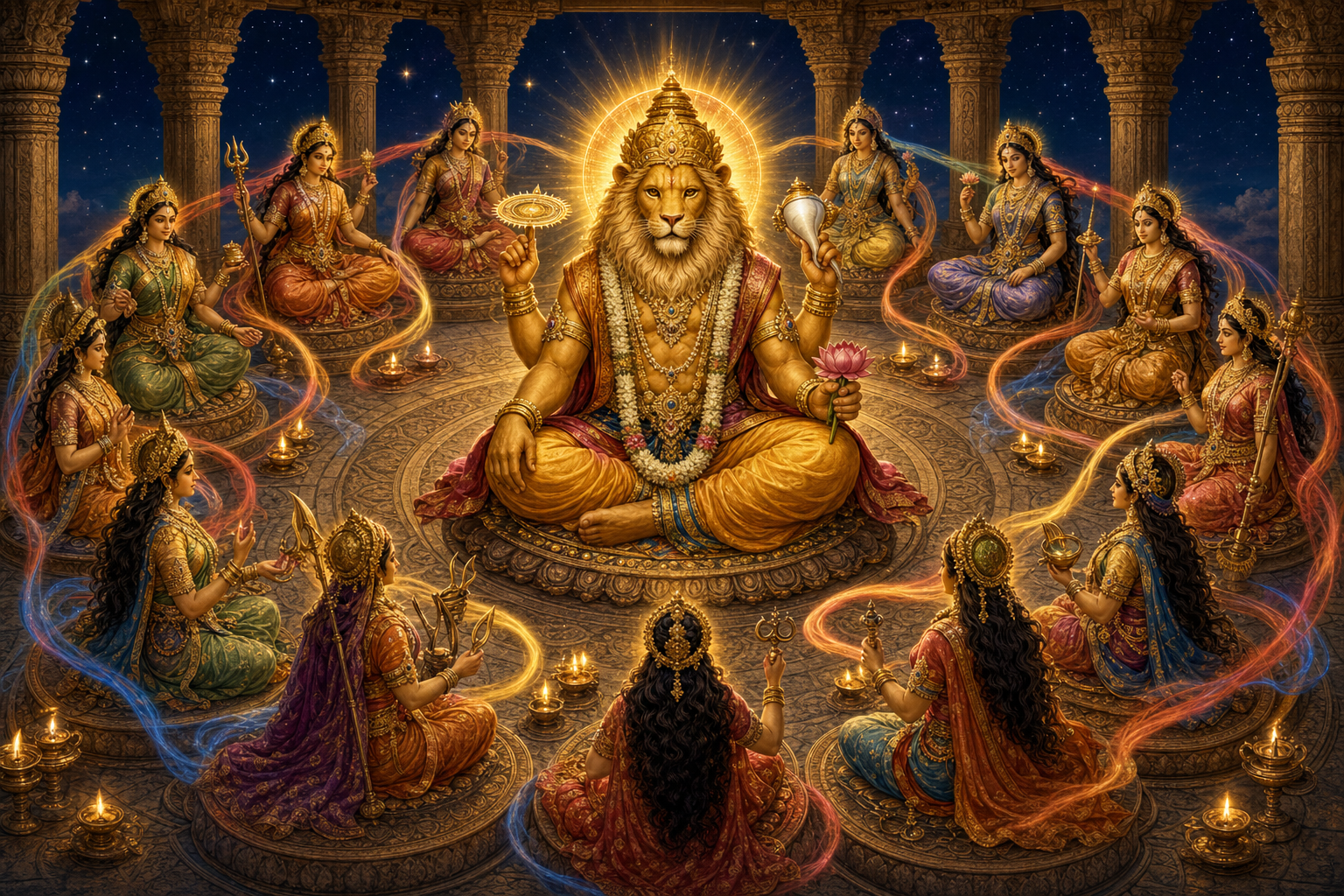
Shakini Yogini Unveiled: Lion-Headed Shakti, Bhairava’s Wrath, and Deep Tantric Symbolism

Shakini Yogini, often depicted with a lion face, crystallizes Tantric teachings about fearless clarity, ethical speech, and disciplined power. Emerging mythically from Bhairava Samvarta as mahauraudra, she embodies purgative intensity in service of transformation, not harm. Many traditions map her to the Vishuddha chakra, where the seed sound HAM refines voice and intention into vāk-siddhi—truthful…