
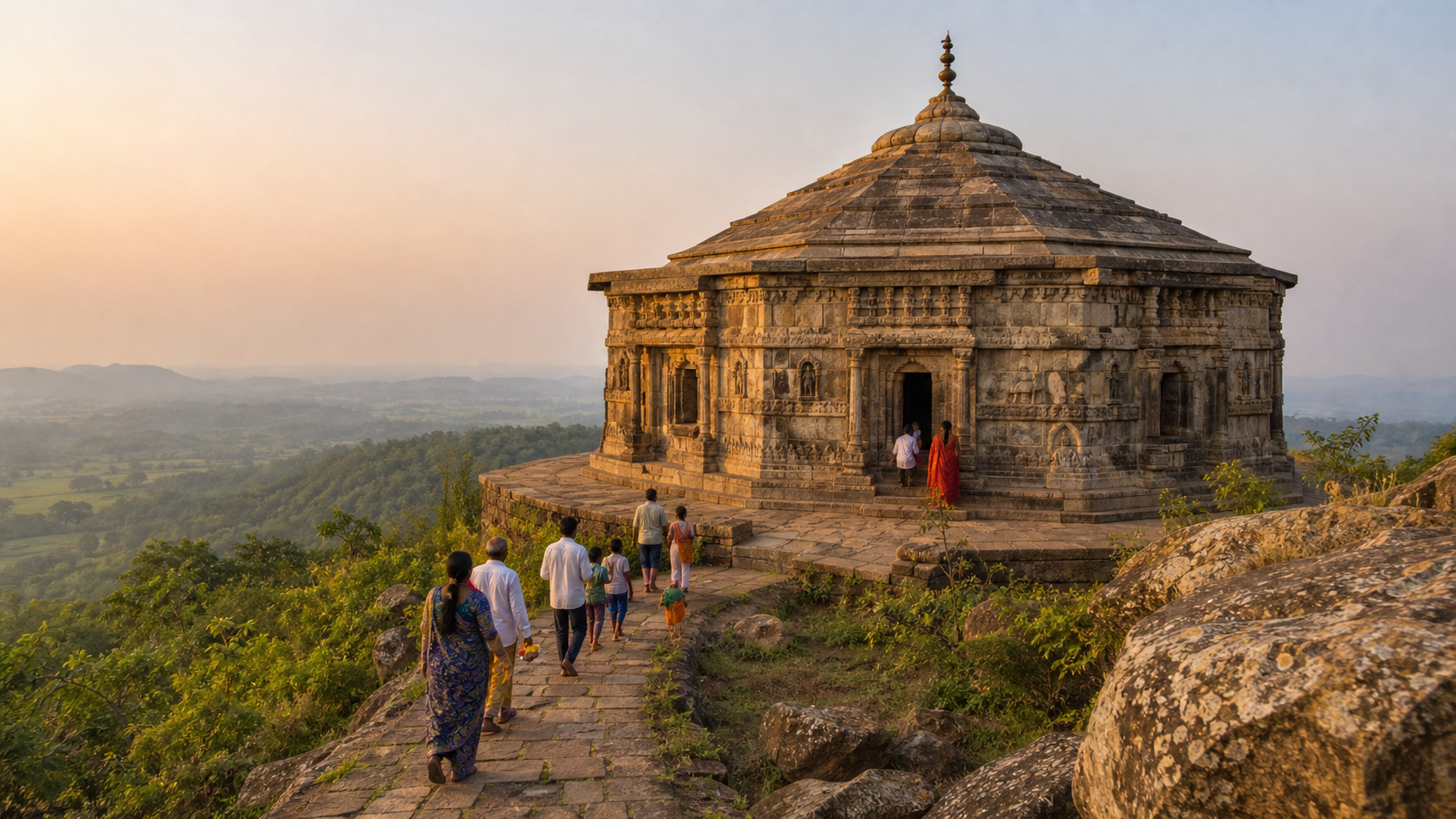
You may know Durga and Chamunda yet still pause at the name Mundeshwari. Is she a form named in a Puranic narrative, a regional Devi of Bihar, or the presiding power of a particular temple? The useful answer is not to force a choice. Mundeshwari is best understood through all three dimensions: sacred narrative, regional identity, and continuous worship.
If you are preparing for darshan, explaining the tradition to your family, or trying to understand why this shrine matters, keep those dimensions distinct before bringing them together. That prevents two common mistakes: reducing a living Devi to a word derivation, or repeating an antiquity claim without noticing what is still being worshipped.
Read Mundeshwari as a layered name, not a loose synonym
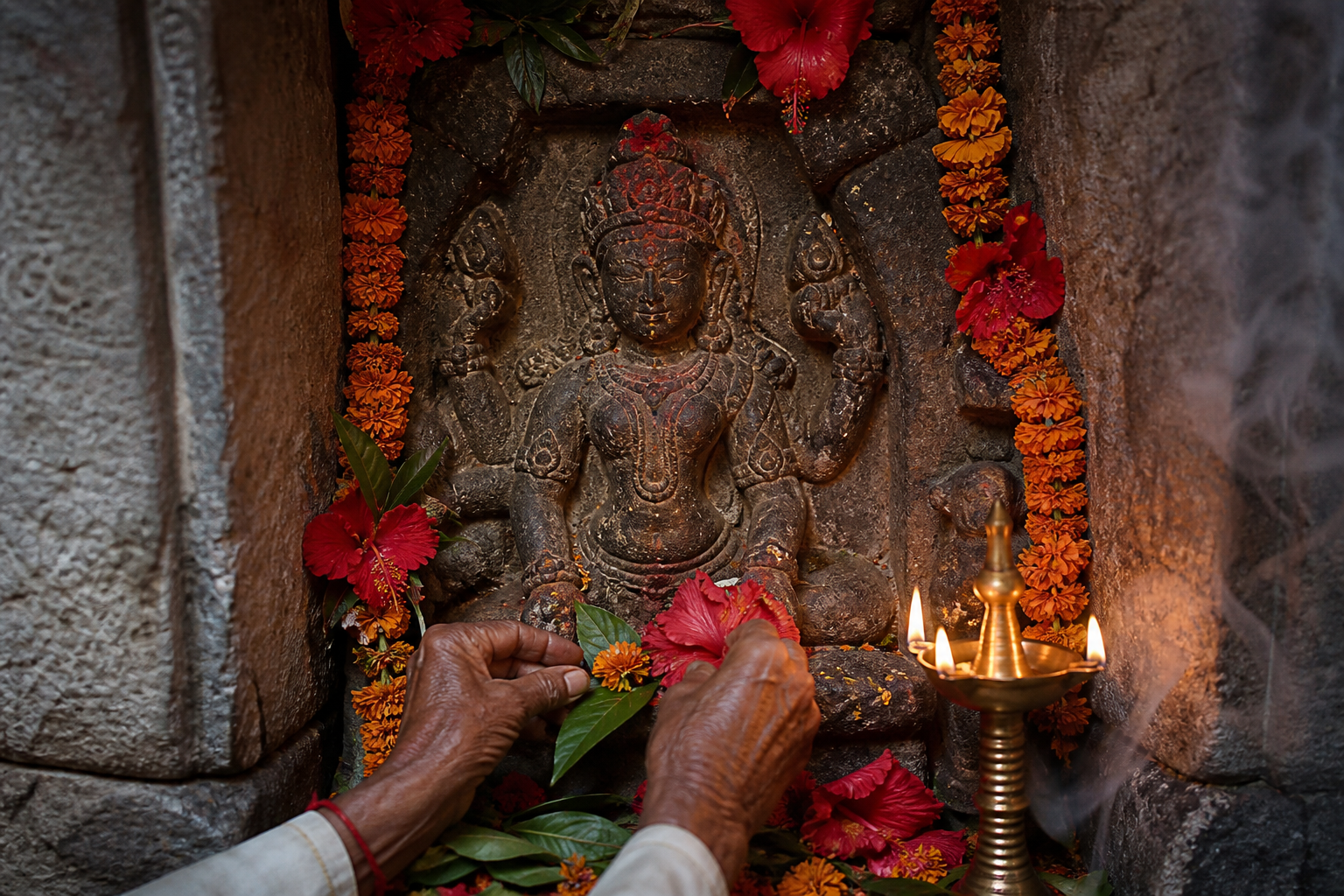
One widely held interpretation divides the name into Munda and Ishwari. Munda recalls the asura defeated by the Goddess, while Ishwari identifies her as the sovereign feminine power. In this reading, Mundeshwari is the Devi who subdues Munda and restores the order that destructive power had disturbed.
The scriptural connection runs through the Devi Mahatmya, a section of the Markandeya Purana. Its celebrated battle narrative associates the fierce Goddess with the defeat of Chanda and Munda, from whose paired names the epithet Chamunda is understood. Mundeshwari is commonly connected to the same mythic field through Munda, but the two names should not be treated as interchangeable spellings.
That distinction matters when you teach or write about the tradition. Chamunda directly recalls Chanda and Munda together. Mundeshwari places the emphasis on Ishwari: sovereignty, mastery, and divine authority over the force represented by Munda. The theological movement is related, but the verbal emphasis is different.
It is also wise to present Munda plus Ishwari as a common devotional and philological interpretation, not as the only conceivable history of the regional name. Oral traditions in eastern India have preserved the association and given it local depth. A sacred name can carry a Puranic memory, a regional history, and generations of devotional understanding without every layer having arisen at the same moment.
- When identifying the deity: describe Mundeshwari as a regional form or epithet of Durga-Shakti.
- When explaining the name: say that it is commonly read as Munda plus Ishwari, linking the Devi with the defeat of Munda.
- When comparing her with Chamunda: point to the shared narrative background, then preserve the difference between the two names.
- When discussing local tradition: allow temple worship and oral memory to interpret the name alongside the Puranic connection.
Let the Kaimur temple correct an overly textual reading
Mundeshwari is not merely an epithet awaiting explanation. She is worshipped at the Mundeshwari Devi Temple in Kaimur, Bihar, where the name belongs to a particular sacred landscape and an enduring community of devotion. The hilltop setting, daily puja, Navratri observances, and recurring pilgrimages turn theology into lived practice.
The temple’s antiquity deserves careful wording. Archaeological study and inscriptions point toward origins in the early centuries of the Common Era, and the shrine is often regarded as one of India’s oldest continuously worshipped temples. “Often regarded” is important. It preserves the strength of the tradition without pretending that a broad superlative is a simple, uncontested measurement.
Continuous worship also does not mean that every stone, surface, or architectural element must have remained unchanged from the earliest period. A temple can be ancient as a sacred institution while its physical fabric bears repair, alteration, and the marks of successive generations. When evaluating claims about an old shrine, separate the age of the site, the age of surviving architectural elements, and the continuity of worship. They are related questions, not identical ones.
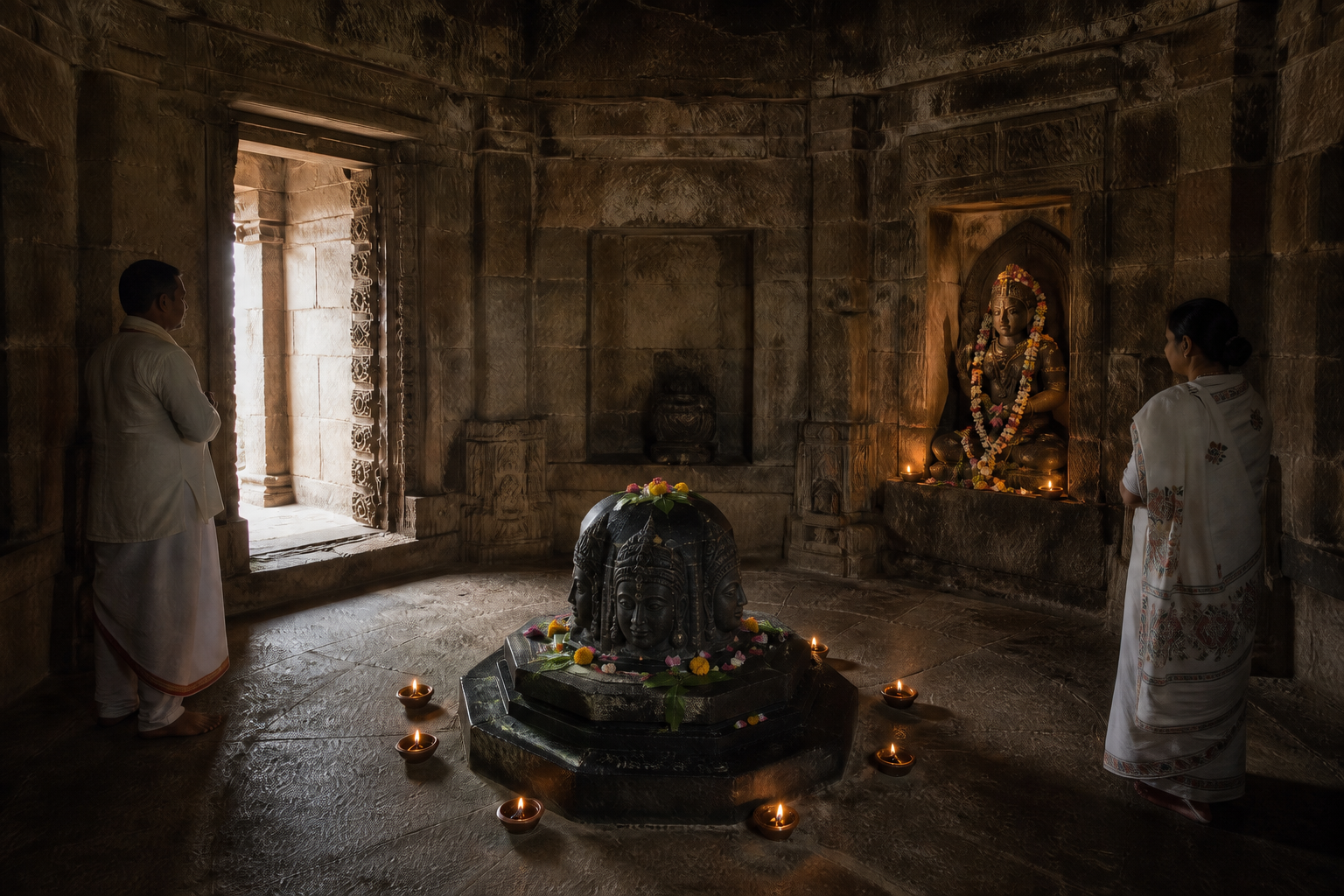
The building’s rare octagonal plan is one of its most recognizable architectural features. Yet geometry is only part of what you should notice. Devi Mundeshwari is worshipped alongside a Shiva linga, making the temple a clear expression of Shaiva-Shakta harmony within Sanatana Dharma. Shiva and Shakti are not presented as competing religious territories. Their presence belongs to one sacred world.
If you visit, read the place in this order:
- Begin with the living shrine. Remember that worship, not architectural inspection, is the temple’s primary function.
- Notice the relationship between Devi and Shiva. The presence of Mundeshwari and the Shiva linga reveals more than a label such as “Shakta temple” can convey by itself.
- Then study the octagonal form. Architecture gives physical shape to the temple’s historical distinctiveness, but it should not eclipse darshan.
- Listen for local memory. Regional names and kathas often preserve meanings that a general account of Durga worship cannot supply.
- Keep devotion and archaeology in conversation. Reverence need not produce careless historical claims, and historical care need not empty the shrine of sacred meaning.
Navratri makes the temple’s continuity especially visible, but ordinary daily puja is just as significant. A festival demonstrates collective intensity; daily worship demonstrates endurance. If you want to understand why Mundeshwari matters to families across the region, pay attention to both.
Turn fierce protection into a discipline of clear action
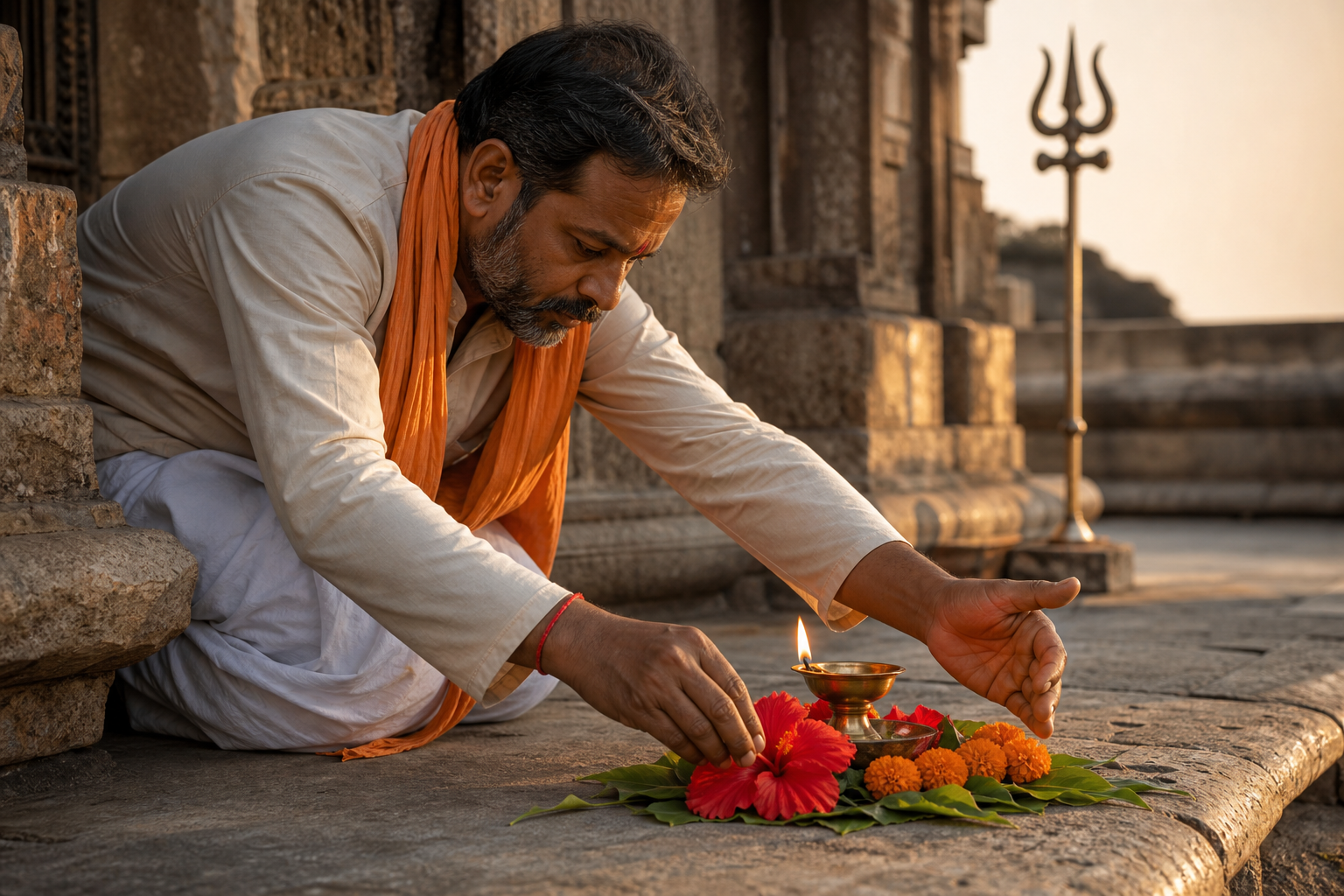
Mundeshwari embodies a form of power that is fierce without being arbitrary. Her force is directed against adharma and toward the restoration of balance. This is why destruction in the Durga tradition cannot be isolated from protection, illumination, and compassion. The objective is not violence for its own sake; it is the removal of what obstructs dharma.
The figure of Munda can therefore be read at more than one level. In sacred narrative, he is an asura overcome by the Goddess. In personal reflection, the battle can direct your attention toward tamas: the darkness, inertia, confusion, or avoidance that prevents a necessary dharmic response. This inward reading does not erase the narrative. It allows the narrative to question the devotee.
Devotees invoke Mundeshwari for courage in trials, clarity in moral difficulty, and resilience under pressure. Those qualities are easy to praise and harder to practice. Courage without discernment becomes recklessness. Clarity without compassion becomes severity. Resilience without a dharmic purpose becomes mere stubbornness. Mundeshwari’s fierceness holds these qualities together by directing power toward restoration.
You can bring that principle into a difficult decision without inventing an elaborate ritual. Use the name as smarana, or sacred remembrance, and work through four questions:
- What exactly is out of order? Name the conduct, habit, fear, or obligation clearly. A vague enemy produces a vague response.
- What part of your reaction is tamasic? Look for avoidance, confusion, passivity, or the desire to act without understanding.
- What would protection require? Ask what preserves truth, responsibility, dignity, or a legitimate duty in the situation before you.
- What is the smallest decisive action? Choose something concrete that can be done now: speak honestly, fulfil the neglected duty, set a necessary boundary, or correct the avoidable error.
This is a personal reflection framework, not a claim about the temple’s prescribed liturgy. If you have received a mantra or method from a qualified guru or inherited family tradition, follow that discipline rather than replacing it with a generic exercise. The practical point is simpler: remembrance should change the quality of your next action.
There is also a necessary restraint. Mythic language about defeating asuras should not become a license to dehumanize people with whom you disagree. Apply the first scrutiny to adharma, confusion, and fear within your own conduct. Fierce compassion protects what is right while refusing to become another form of the disorder it opposes.
Recognize dharmic kinship without erasing differences
Mundeshwari belongs specifically to a Hindu Durga tradition, but the intuition behind her worship resonates across the wider dharmic family. Tara carries wisdom and protective force in Buddhist traditions, Ambika appears as a protective presence in Jain heritage, and Chandi compositions celebrate Shakti in Sikh sacred literature. These parallels reveal a civilizational familiarity with power placed in the service of liberation, protection, or righteous order.
Resonance is not identity. Tara, Ambika, Chandi, Durga, and Mundeshwari arise within distinct texts, communities, practices, and theological frameworks. Saying that they are simply different names for an identical doctrine may sound inclusive, but it makes each tradition less intelligible. Dharmic unity does not require flattening difference.
When you discuss these connections, use three levels of comparison:
- Shared intuition: identify the broad affinity, such as protective power, wisdom, courage, or the triumph of light over darkness.
- Distinct expression: name the tradition, deity, text, and form of worship actually under discussion.
- Historical claim: make a claim of direct borrowing or common origin only when you have evidence for that specific relationship.
This method allows you to affirm a connected dharmic civilization while respecting the integrity of its traditions. Mundeshwari then becomes neither an isolated local curiosity nor a pretext for declaring every sacred feminine form identical. She remains fully herself while illuminating a wider family resemblance.
Key takeaways
- Mundeshwari is a regional form of Durga-Shakti whose identity joins sacred narrative, the Kaimur temple, and continuous devotion.
- Her name is commonly interpreted as Munda plus Ishwari, emphasizing the sovereign Goddess who overcomes Munda and restores dharma.
- Mundeshwari and Chamunda share a connection to the Chanda-Munda narrative, but they are not merely alternate spellings of one name.
- The temple’s early antiquity, octagonal plan, daily worship, and joint presence of Devi and a Shiva linga should be considered together.
- The strongest personal lesson is disciplined courage: identify disorder precisely, overcome tamasic avoidance, and take a proportionate dharmic action.
- Connections with Buddhist, Jain, and Sikh traditions are best described as meaningful resonances, not proof that their sacred forms are doctrinally identical.
If you go to Mundeshwari Devi Temple, begin with darshan rather than a claim about records. Let the octagonal structure sharpen your historical curiosity, let the Shiva linga widen your understanding of Shaiva-Shakta unity, and let the Devi’s name confront the one act of fear or avoidance you already know must be overcome.
References
