
-
Craving the Crowd, Bearing Its Dust: Hindu-Dharmic Insights on Desire, Acceptance, Complaint
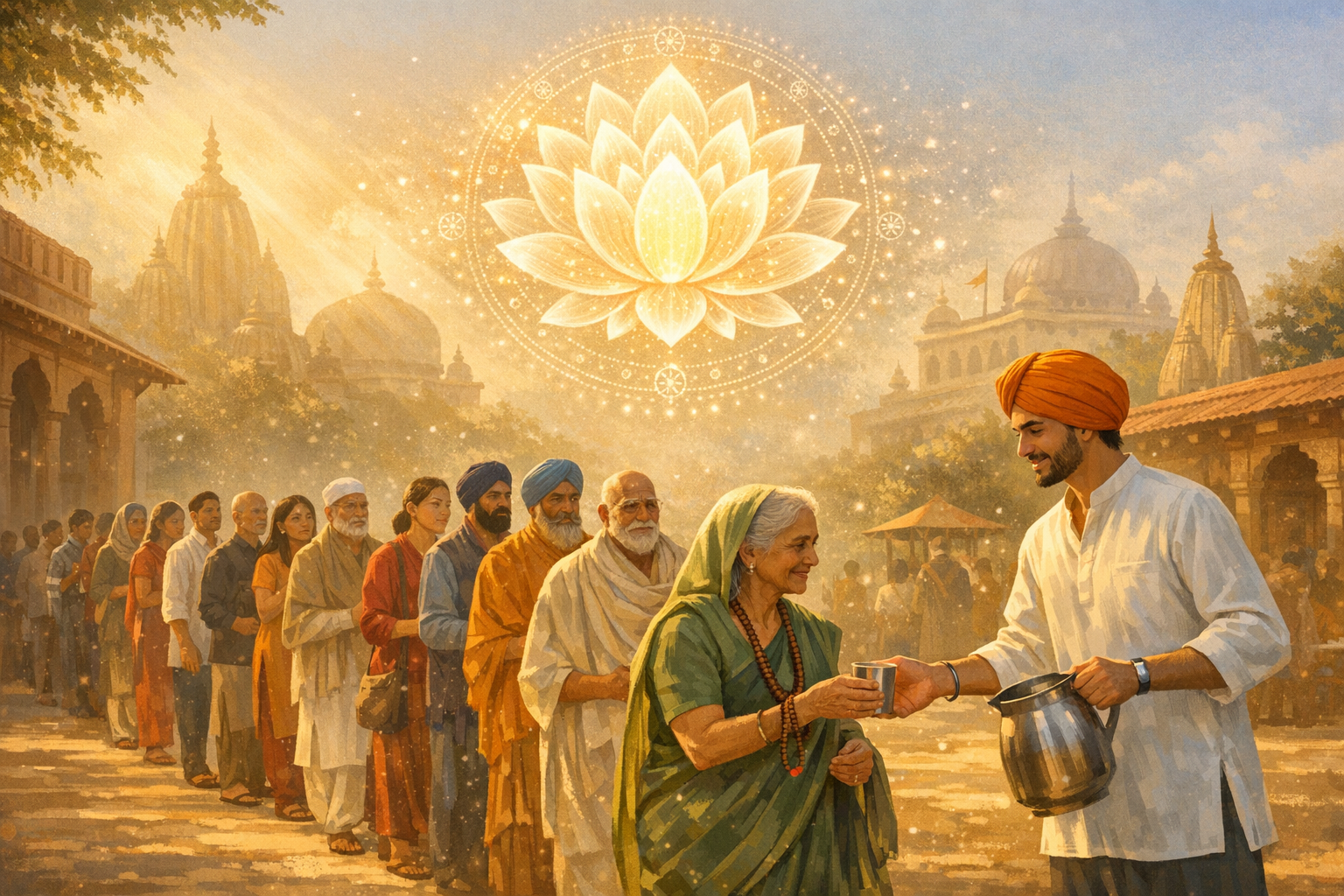
This reflection unpacks the proverb “If you want to be part of the crowd, do not complain about its dirt” through a dharmic, multi-tradition lens. It explains why the human need for belonging carries ethical trade-offs and how Hindu, Buddhist, Jain, and Sikh teachings transform complaint into constructive participation. Drawing on the Bhagavad Gita, Patanjali’s…
-
Ahmedabad Protests Over ‘Kerala Story 2’: Safeguarding Interfaith Harmony, Law, and Rights in Gujarat
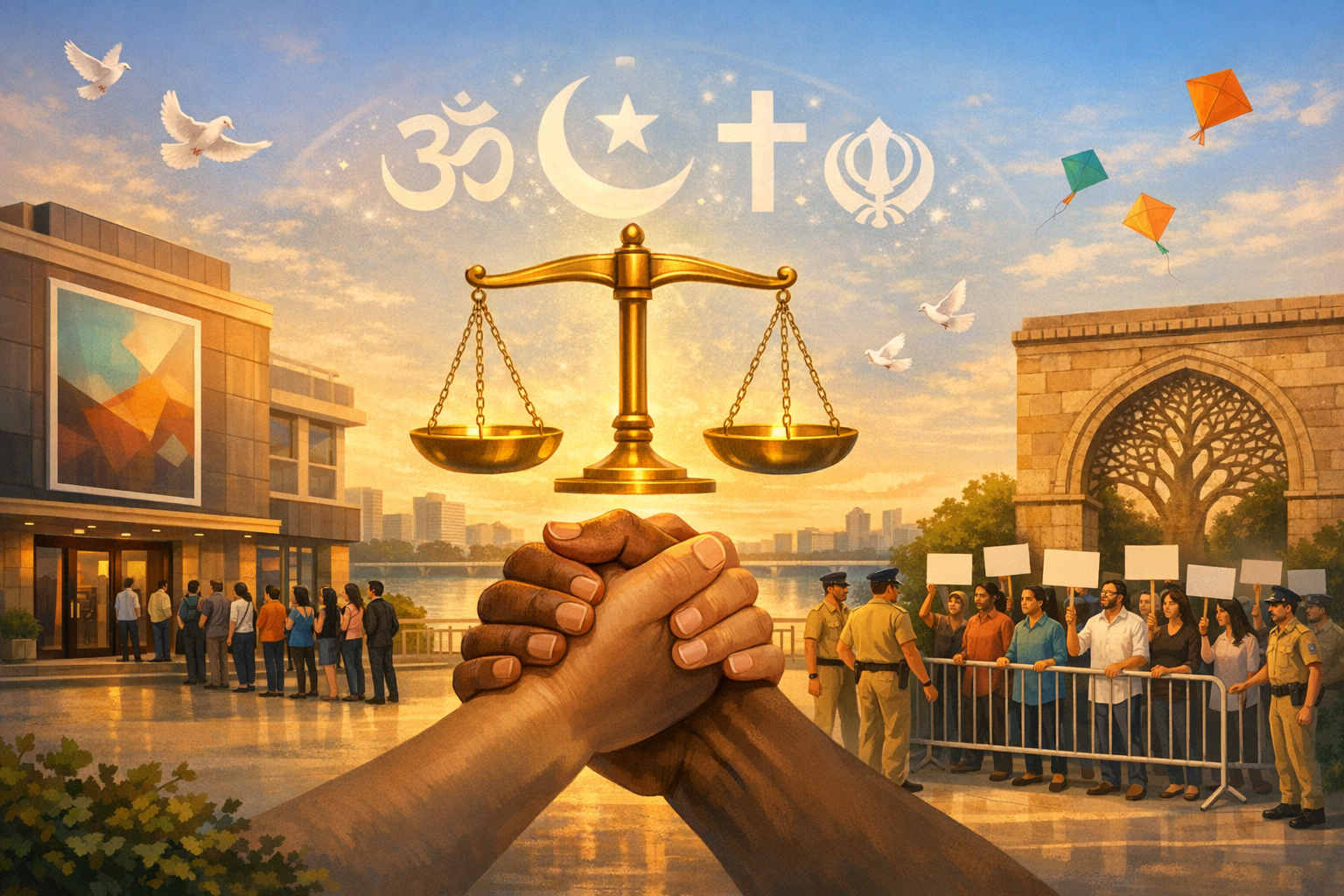
Protests in Ahmedabad over The Kerala Story 2 and an interfaith relationship have brought constitutional rights, community anxieties, and public order into sharp focus. This analysis explains how Gujarat can protect free expression for certified films while ensuring peaceful, lawful protests and rapid action against intimidation. It outlines the legal landscape—from the Cinematograph Act to…
-
Decoding Hindu Iconography: Beyond Idolatry to Metaphysics—Bridging Dharmic–Abrahamic Insight
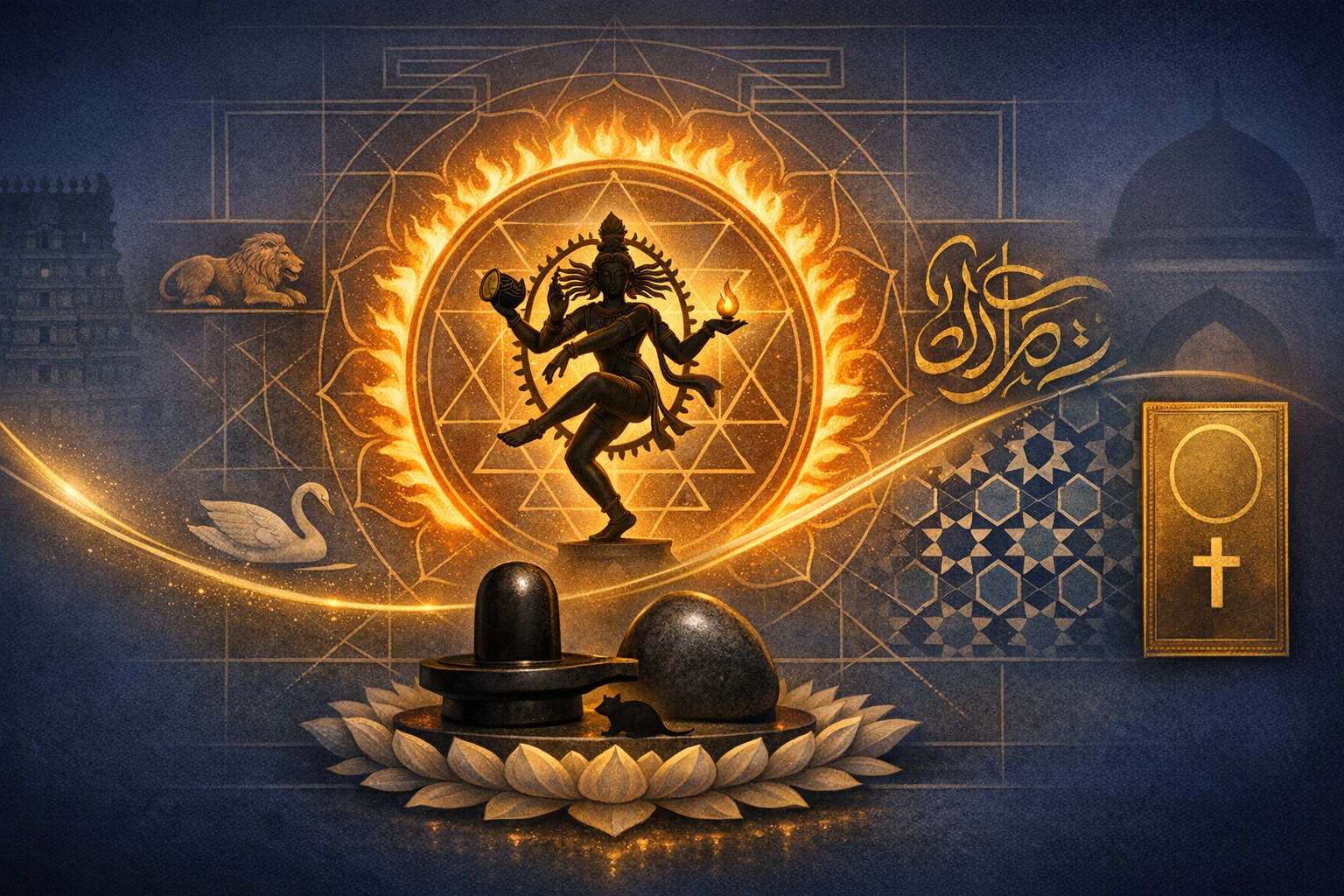
This article decodes Hindu iconography as a rigorous symbolic language that encodes metaphysics, ethics, and contemplative practice, rather than mere ‘idolatry’. It situates medieval misunderstandings within Abrahamic aniconism and outlines how mūrti, prāṇa-pratiṣṭhā, mudrā, and vāhana together form a coherent semiotic system. Readers gain a comparative framework linking Hindu saguṇa–nirguṇa practice to apophatic and cataphatic…
-
Data-Driven Look at Pew’s Projections: Rapid Muslim Growth and India’s Demographic Turning Point
Pew Research Center’s projections consistently identify Muslims as the fastest-growing major religious group globally, driven primarily by higher fertility and a younger age structure. This technical, data-driven overview explains why that pattern does not imply alarmist interpretations and why phrases like “aggregate growth of Christians, Hindus, and Jews” are not part of Pew’s methodology. For…
-
Samastipur Hindu Rashtra-Jagruti: Urgent call for dharmic unity amid demographic change
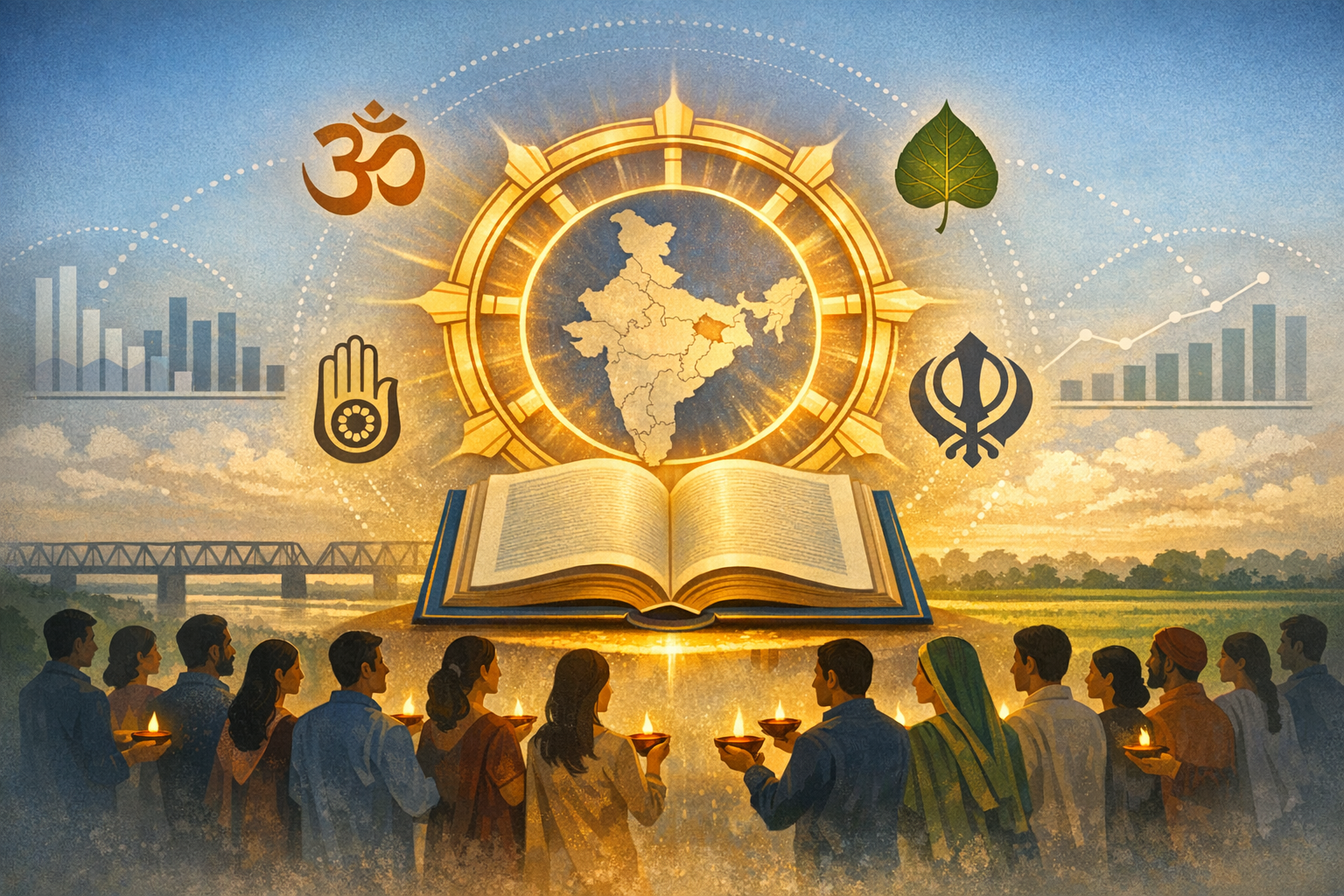
A Hindu Rashtra-Jagruti Vyakhyan in Samastipur, Bihar, examined demographic shifts—population trends, migration, and conversion—through a constitutional and dharmic lens. The discussion, led by Sadguru Nilesh Singbal (HJS), framed “Hindu Rashtra” as a values-centered civilizational ethos aligned with pluralism and the rule of law, not a theocracy. Readers gain a data-anchored overview of India’s religious composition…
-
Timeless Dharmic Debate: From Vada to Anekantavada—A Fearless Path to Truth and Unity
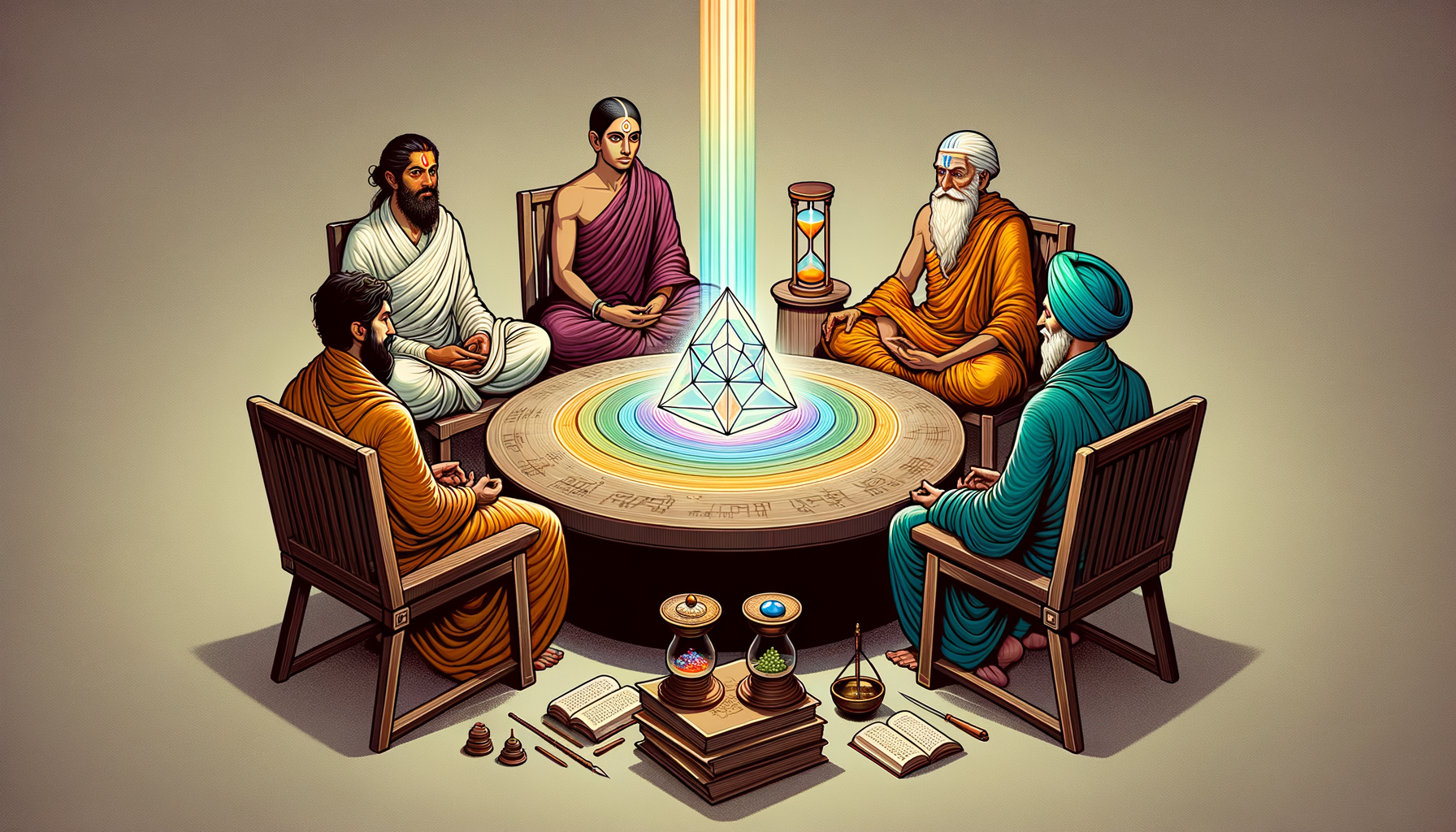
Constructive, unbiased debate sits at the heart of Hindu philosophy as a disciplined path to knowledge and self-realization. Grounded in pramana theory and refined by Nyaya’s robust logic, classical shastrartha privileges clarity over conquest. The Upanishads, the Bhagavad-Gita’s samvada, and traditions across Buddhism, Jainism, and Sikhism model dialogue that is rigorous, ethical, and inclusive. Practices…
-
Jagannath as Dakshina Kali: Odisha’s Powerful Vaishnava–Shakta Synthesis and Symbolism

Odisha’s sacred traditions reveal a powerful Vaishnava–Shakta synthesis in which Lord Jagannath’s presence is experienced as resonant with the compassionate fierceness of Dakshina Kali. Ritual practice at Puri Srimandir, especially the offering of Mahaprasad first to Goddess Bimala, demonstrates a living integration of Shakti within a Vaishnava temple ecology. Jagannath’s iconic form and all-seeing gaze…
-
Hinduism’s Expansive Spectrum: How Flexibility and Pluralism Empower Inner Freedom
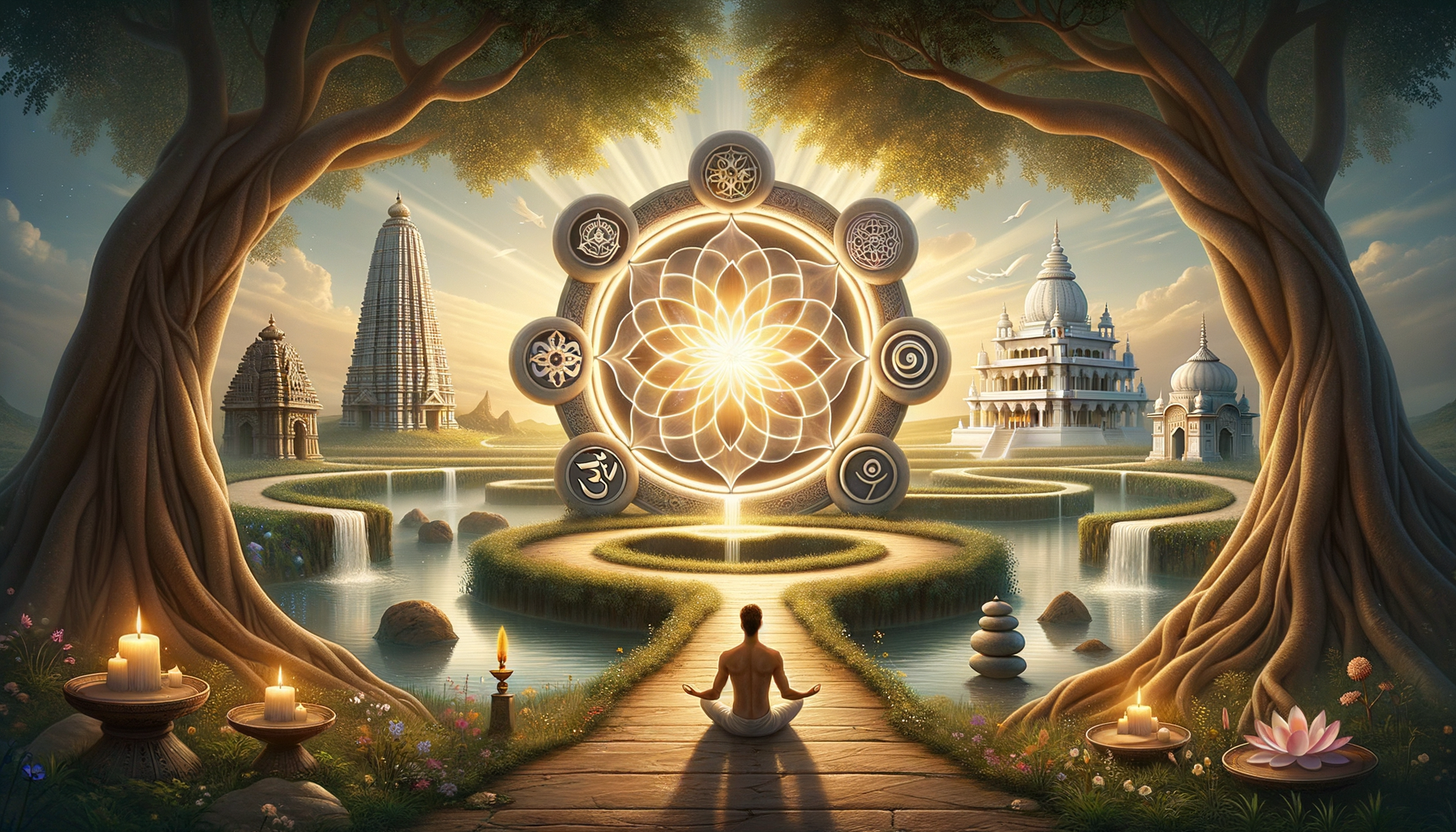
Hinduism’s strength lies in flexibility: a civilizational habit of accommodating diverse ideas, practices, and philosophies under shared ethical principles. This pluralism is mirrored across Dharmic traditions—Buddhism, Jainism, and Sikhism—creating unity in spiritual plurality without erasing distinct identities. The concept of Ishta exemplifies personal spiritual freedom coupled with respect for others’ paths. Historically, Hinduism has evolved…
-
Madan Mohan Brahmotsavam at GEV: Profound Insights by H.G. Shrutkirti Prabhu (17 Jan 2026)
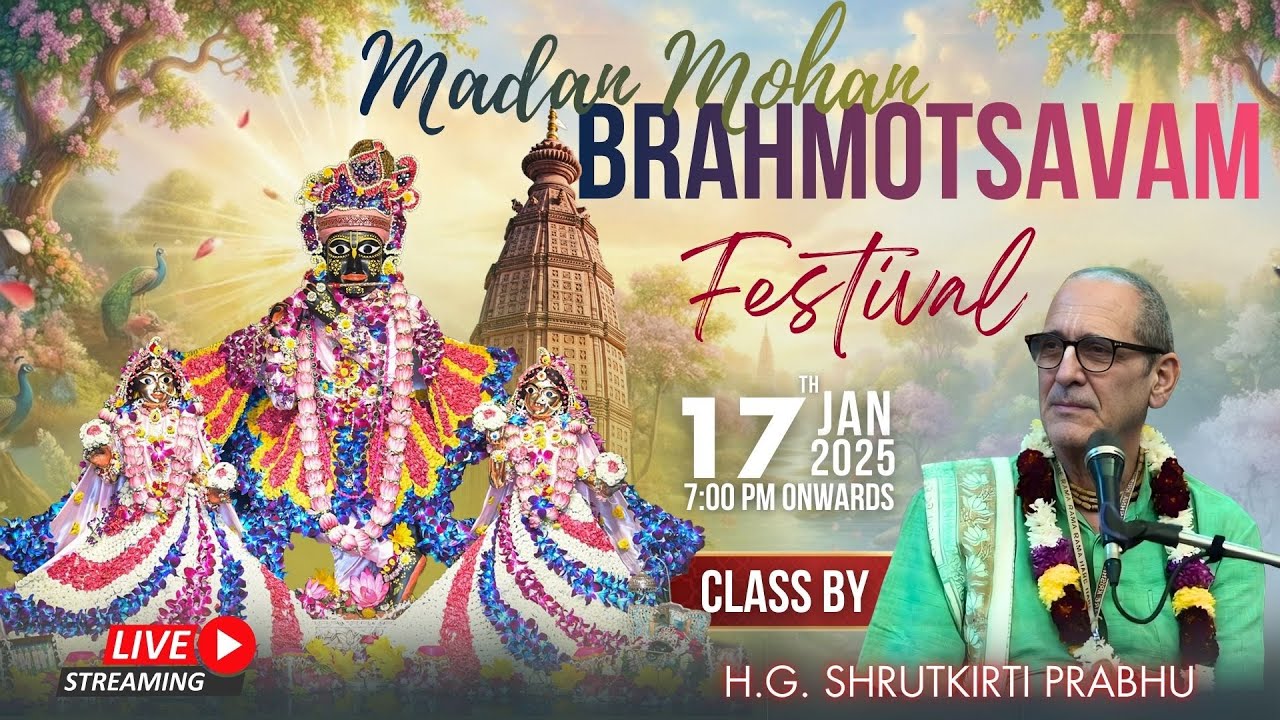
Govardhan Eco Village hosted the Madan Mohan Brahmotsavam Festival on 17 January 2026, featuring a special Brahmotsava class by H.G. Shrutkirti Prabhu. The discourse illuminated Gaudiya Vaishnava themes—compassion, seva, and nama-japa—with practical guidance for daily sadhana. Set within GEV’s contemplative environment, the celebration balanced ritual and reflection, encouraging mindful participation and ethical living. Insights were…
-
Dharma Beyond Black and White: Hindu Ethics Across Time, Circumstance, and Consequence
Hindu philosophy treats ethics as a disciplined, context-sensitive inquiry rather than a fixed rulebook. Grounded in dharma and guided by deśa–kāla–pātra, it balances intention, action, and consequence while honoring ahimsa, satya, svadharma, and lokasaṅgraha. Epic teachings from the Mahabharata and the Bhagavad Gita model how to act responsibly without attachment to outcomes. Parallels from Jain…
-
Infinite Paths, One Truth: How Hinduism Empowers Personal Realization and Sacred Unity

Hinduism (Sanatana Dharma) teaches that no two individuals experience the Divine in the same way—and turns that insight into a strength. Drawing on the Upanishads and the Bhagavad Gita, it validates personal realization through concepts like Ishta and multiple yogic paths. This pluralism resonates across Dharmic traditions through Anekantavada in Jainism, upaya in Buddhism, and…
-
Beyond Religion: How Sanatana Dharma Champions Spiritual Freedom and Unity in Diversity

Sanatana Dharma is presented as a living wisdom tradition rather than a narrow, exclusive religion. Its core emphasizes dharma, experiential understanding, and plural pathways such as Karma Yoga, Bhakti, Jnana, and meditation. The principle of Ishta validates diverse forms of worship and aligns with Buddhist upaya, Jain Anekantavada, and Sikh Nam-simran, strengthening interfaith harmony. Rather…
-
Invoking the Divine in Hinduism: Symbolism, Inner Awakening, and Inclusive Dharma Paths

Deity invocation in Hinduism aligns devotion with inner divinity while honoring inclusive, pluralistic practice. Through puja, mantra, meditation, and seva, practitioners cultivate clarity, compassion, and ethical steadiness. Symbolic offerings like light, water, and flowers transform everyday actions into sacred gestures. The Ishta-devata principle affirms unity in spiritual diversity, enabling practitioners to choose a path that…
-
Beyond Differences: Dharmic Wisdom on Unity, Empathy, and the Illusion of Separation
Modern life often magnifies difference while obscuring shared humanity. Drawing on dharmic wisdom, this reflection shows how Hinduism, Buddhism, Jainism, and Sikhism converge on a vision of unity that honors diversity without erasing conviction. It highlights how concepts like Tat Tvam Asi, Anekāntavāda, pratītya-samutpāda, and Ik Onkar ground compassion and interfaith harmony in a coherent…
-
Upanishadic Wisdom and the Profound Oneness of Life: A Call to Spiritual Solidarity

The Upanishads present a clear and compelling teaching: all life is fundamentally one. By illuminating the non-dual relationship between ātman and Brahman, these scriptures ground ethics in spiritual unity and inspire compassion in action. Their inclusive approach honors multiple paths—jñāna, bhakti, karma, and dhyana—supporting religious pluralism and interfaith harmony. Resonating with Buddhism, Jainism, and Sikhism,…
-
Hindutva and Hind Swaraj: Unforgotten Ideas Reframing India’s Discourse with Harmony

Hindutva and Hind Swaraj are often cast as opposites, yet both seek a civilizational renewal of ethics, culture, and self-rule. This review synthesizes their core arguments, showing how Gandhi’s moral swaraj and Savarkar’s cultural cohesion can be read as complementary responses to colonial disruption. It explains how media and academic narratives shape public opinion, underscoring…
-
Mahant Mukesh Nath Reaffirms Sanatan Dharma’s Timeless Power and Dharmic Unity in Udaipur
Delivered in Udaipur on Dec 09, 2025, the address by Mahant Mukesh Nath Maharaj reaffirmed Hindutva as the living expression of Sanatan Dharma—an inclusive civilizational ethos rooted in dharma, ahimsa, karuna, and seva. The message emphasized unity among Hinduism, Buddhism, Jainism, and Sikhism, highlighting shared ethical foundations that strengthen religious pluralism in India. By linking…
-
Why Shiva Rejected Ravana After Sita’s Abduction: Dharma, Bhakti, and Divine Justice

This analysis explores why Shiva is portrayed as withdrawing protective grace from Ravana after the abduction of Sita, drawing on the Valmiki Ramayana and regional traditions like Kamba and Krittivasi Ramayanas. It shows that divine boons operate within the moral framework of dharma and cannot shield adharma. The piece highlights how Ravana’s sacred deception—misusing the…
-
Murugan’s Many Faces: Skanda Purana vs. Tamil Sangam—Hidden Harmonies and Truths
This essay explores Murugan’s dual portrayal in the Skanda Purana and Tamil Sangam literature, revealing complementarities rather than contradictions. It shows how the cosmic commander of the devas and the intimate hill-god of the kurinji landscape express a single spiritual essence. Readers gain clear historical and textual context that links pan-Indian Puranic frameworks with local…
-
When Murugan Faded from the North: A Powerful Historical Imagination of Lost Worship

This historically grounded imagination traces how Murugan (Kartikeya, Skanda, Subrahmanya) seemed to recede from public worship in Northern India without disappearing from the wider Hindu tradition. Drawing on Gupta-era markers, Mathura sculpture, and regional epigraphy, it reframes the shift as a plural, adaptive process rather than a rupture. Readers gain a nuanced view of sacred…